
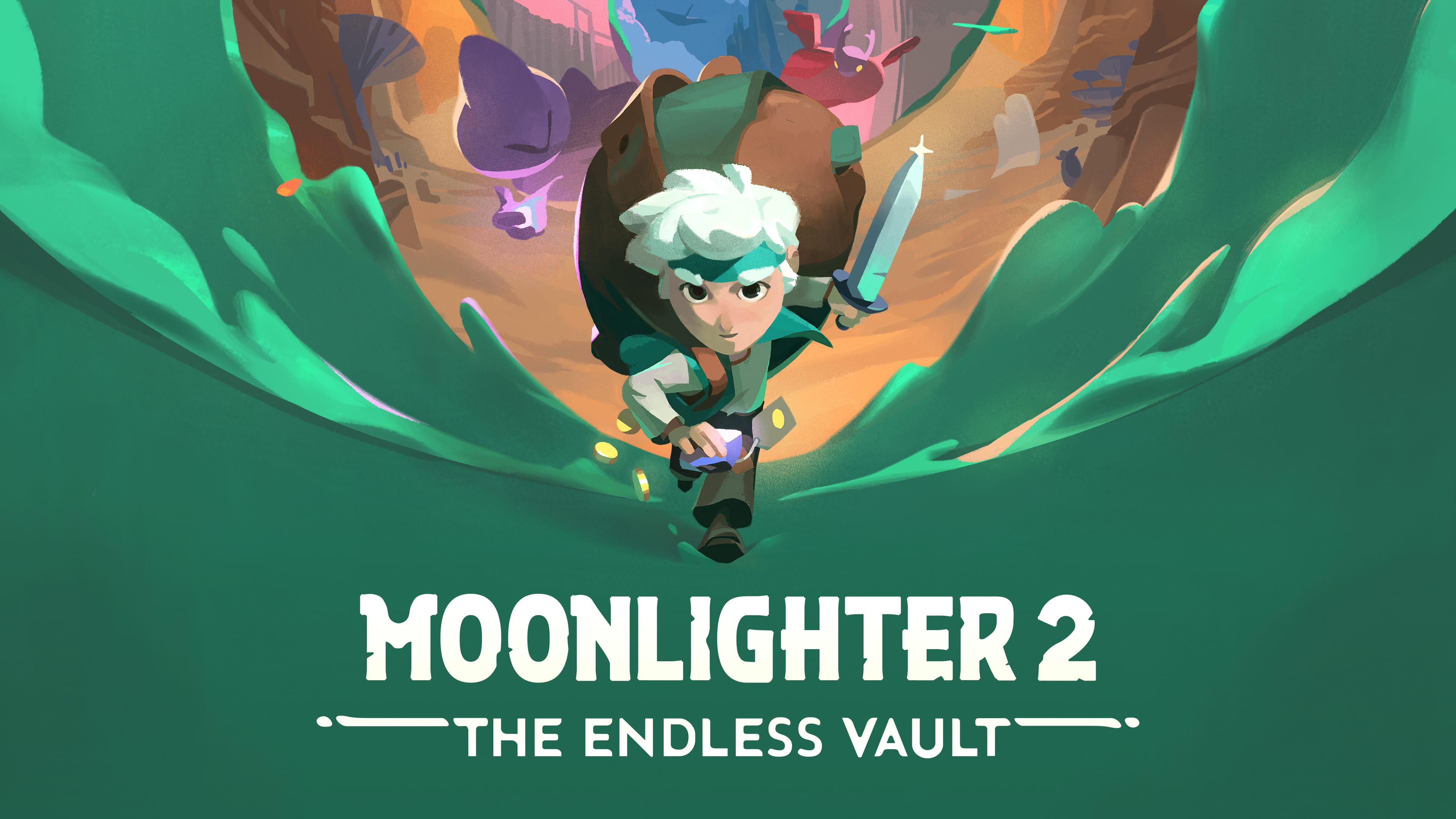
There are sequels that take the predecessor, increase its size by 30%, add a few enemies, a couple of new systems and then proudly hang a "2" at the end of the title. Moonlighter 2: The Endless Vault is not that kind of sequel. And that's probably the reason why it will divide those who loved the first chapter more than expected. If you came here simply looking for Moonlighter, but bigger, longer and with a few more dungeons, Digital Sun may have prepared a small existential crisis for you. The transition to three-dimensional graphics is only the most obvious manifestation of a transformation that involves practically every component of the game. The heart, however, remained exactly where we left it: entering a dungeon, filling your backpack with any junk that may have value, returning to the base, selling it and investing the proceeds to become strong enough, or rich enough, to start all over again. On paper it seems almost trivial. In practice, it continues to be one of those gameplay loops capable of very quickly transforming the classic "I do one last run and takeoff" into an event that, mysteriously, ends six hours later.
Moonlighter 2, however, does not want to slavishly reproduce what was done in 2018. The first Moonlighter already exists, it still works very well and Digital Sun seems to be perfectly aware of it. The Endless Vault therefore takes that structure and bends it more towards the modern roguelite, putting more emphasis on builds, synergies and above all on the decisions made during each expedition.
This content is provided by YouTube. To view it, you must allow external content. Activation may result in data being shared with the third party.
The backpack is more important than the sword
The most interesting difference already emerges from exploration. The expeditions follow a branching path structure that is inevitably reminiscent of Slay the Spire: different stages appear in front of us and it is up to the player to continuously decide whether to favor upgrades, fights, loot or a more direct path to the boss. It might seem like a marginal difference. It is not. In the first Moonlighter, entering a dungeon was mostly about figuring out how long you were willing to risk before returning home with the loot. Here that philosophy remains, but it is diluted in a much greater amount of decisions. Am I trying to build a run strong enough to take down the boss? Or is my goal to simply get out of here with a backpack full of expensive artifacts and let my bank account solve the problems later?
Risk versus reward, baby. Capitalism applied to dungeon crawling.
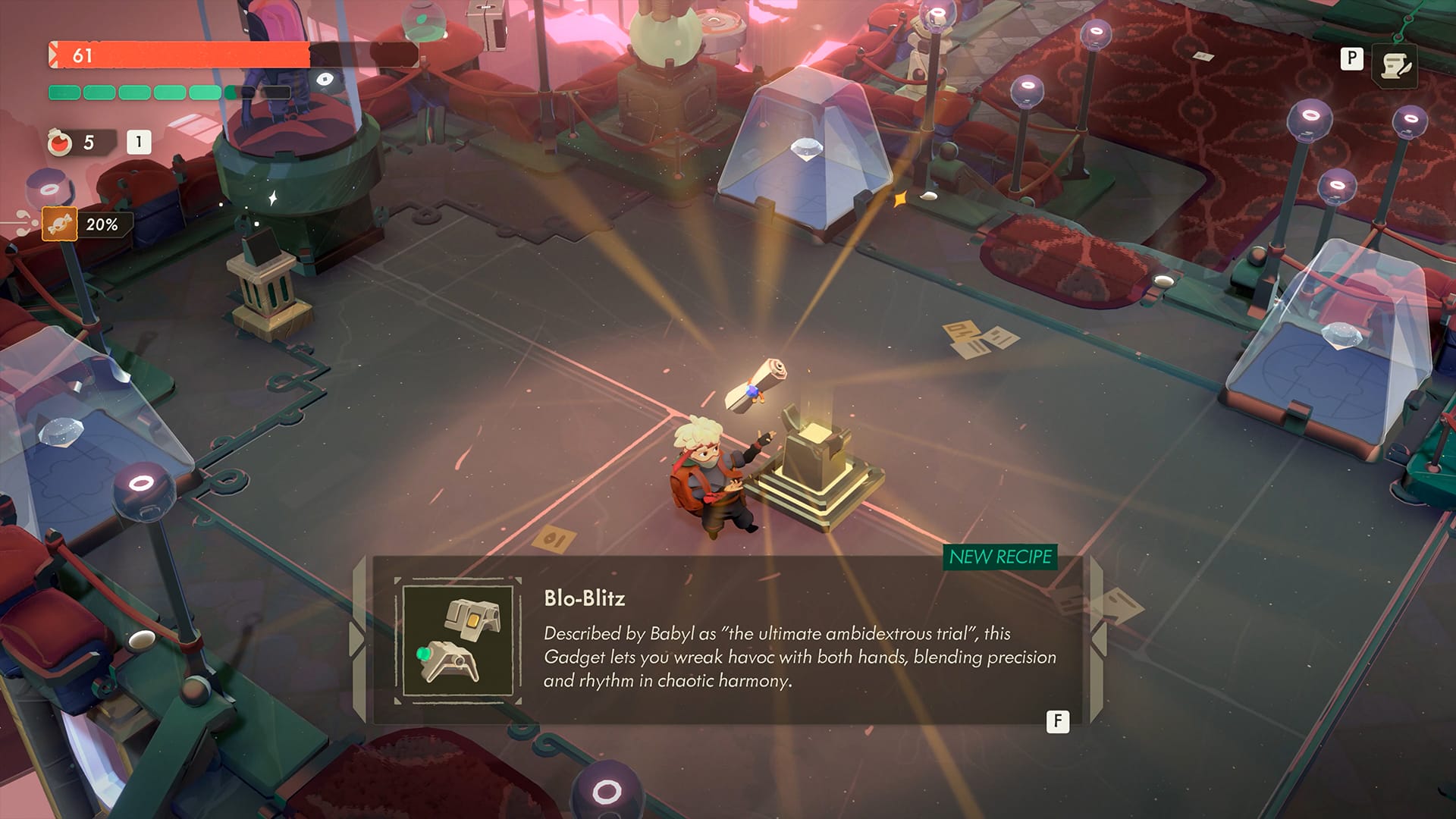
Inventory management was already an integral part of the identity of the first chapter, but in The Endless Vault Digital Sun has transformed what was previously mainly a space problem into a small puzzle game made up of reactions, sacrifices, multipliers and synergies between artifacts. Some objects can increase the value of adjacent ones, others must be sacrificed, others react to certain conditions by creating increasingly profitable chains. And this is where Moonlighter 2 probably shows its best idea. If Balatro has convinced you by now that seeing a small number suddenly become a much larger number is a perfectly legitimate form of dopamine release, prepare for the worst. Properly arranging artifacts, making one react with the next and progressively transforming a piece of junk into something that will be worth a small fortune in the store is tremendously satisfying. We're no longer simply trying to pack as much stuff as possible. We're investing in the items we already own, trying to increase their quality during the run, and deciding which ones to sacrifice to grow others.
Big number.
Brain happy.
Next dungeon.
You don't need a master's degree in roguelikes, fortunately
Fortunately, all this does not mean that Moonlighter 2 has decided to turn into one of those roguelites where, after three hours, you inevitably end up with seventeen browser tabs open to understand if "+4% Ethereal Sparkle" has some hidden interaction with "Grandma's Quantum Damage". Perks and modifiers clearly explain what they do, interactions are generally intuitive and building an effective build requires experimentation without forcing the player to study a wiki beforehand. The same goes for the combat system. We have four main types of melee weapons, to which are added different variants, ranged weapons and gadgets. The fundamentals remain easy to assimilate, but modifiers and perks can significantly change the behavior of a build during a single expedition. Effects that ripple through enemies, chained explosions, elemental statuses, and mutually nourishing bonuses can turn seemingly harmless equipment into a small war machine.
Also because combat requires a fair amount of attention to positioning and target priority. Immediately eliminating the enemy in front of us may seem the most logical choice until, on the other side of the room, a very nice ranged decides to turn the floor into an elemental hell while three other opponents try to use us as a doormat at the same time.
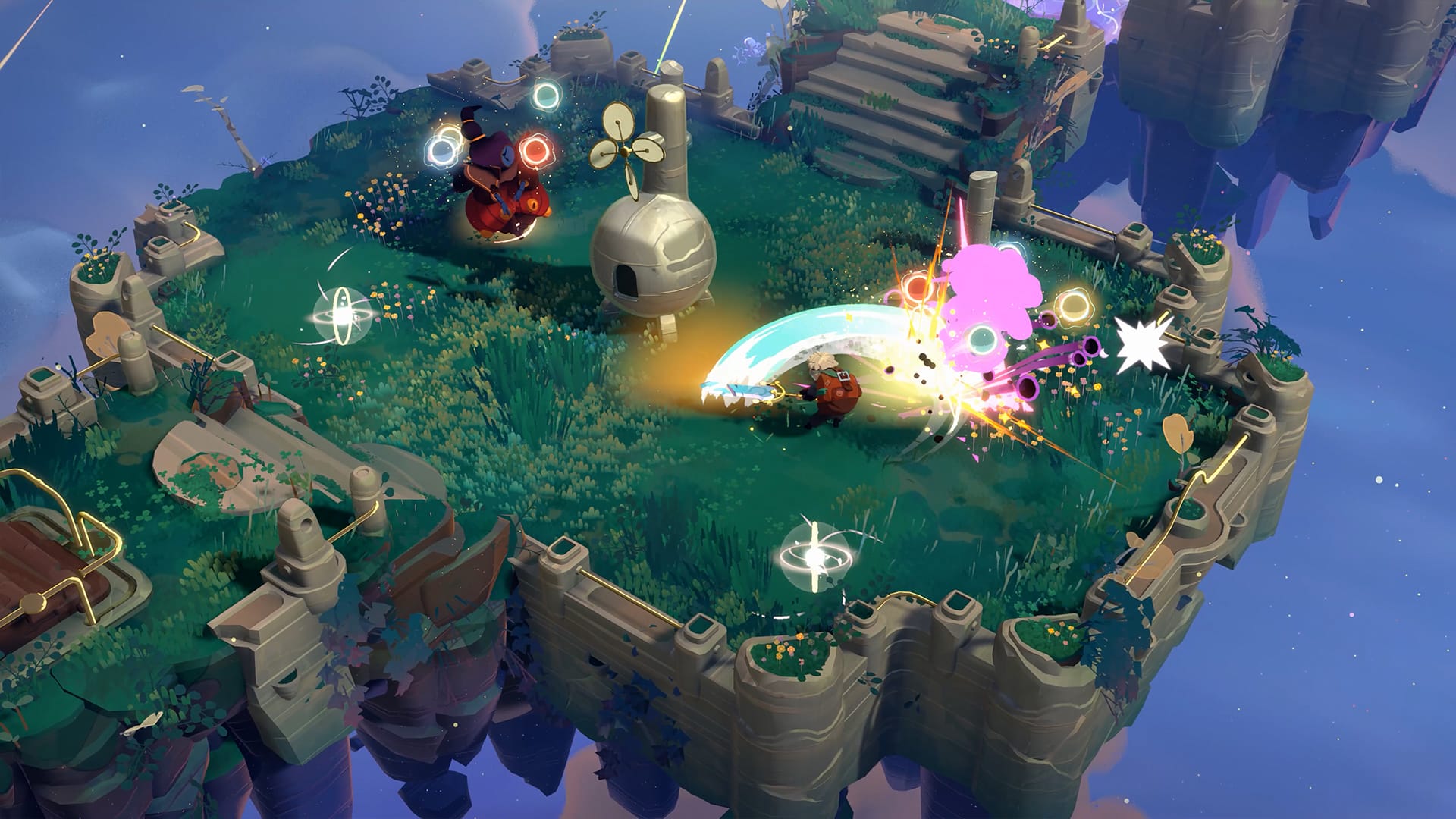
The three main settings offer pleasantly different scenarios, elements that can be used to your advantage and bosses that are sufficiently successful both aesthetically and in terms of clashes. The overall variety is not huge and some minibosses end up showing all their tricks quite quickly, but the whole thing works.
Some roughness also remains in the feedback of the attacks. Most of the enemy offensives are well telegraphed, others decidedly less, and it happens occasionally to take damage wondering for a couple of seconds what the heck actually hit us. Even some weapons deserve some polishing: the heavier ones, in particular, can be too punishing in terms of animation commitment and the possibility of recovering quickly from a wrong attack. The difficulty also tends to fluctuate. There are rooms that can be crossed practically without being touched and others in which the game suddenly seems to remember that it has an entire library of enemies and decides, with great generosity, to present them all to us at the same time.
Fortunately, it is possible to intervene on the level of difficulty, a feature that makes Moonlighter 2 perfectly enjoyable even by those who are more interested in the management component and progression than in demonstrating to the world that they can finish Hades blindfolded using a toaster oven as a controller.
Shopkeeper by day, aggressive capitalist by night
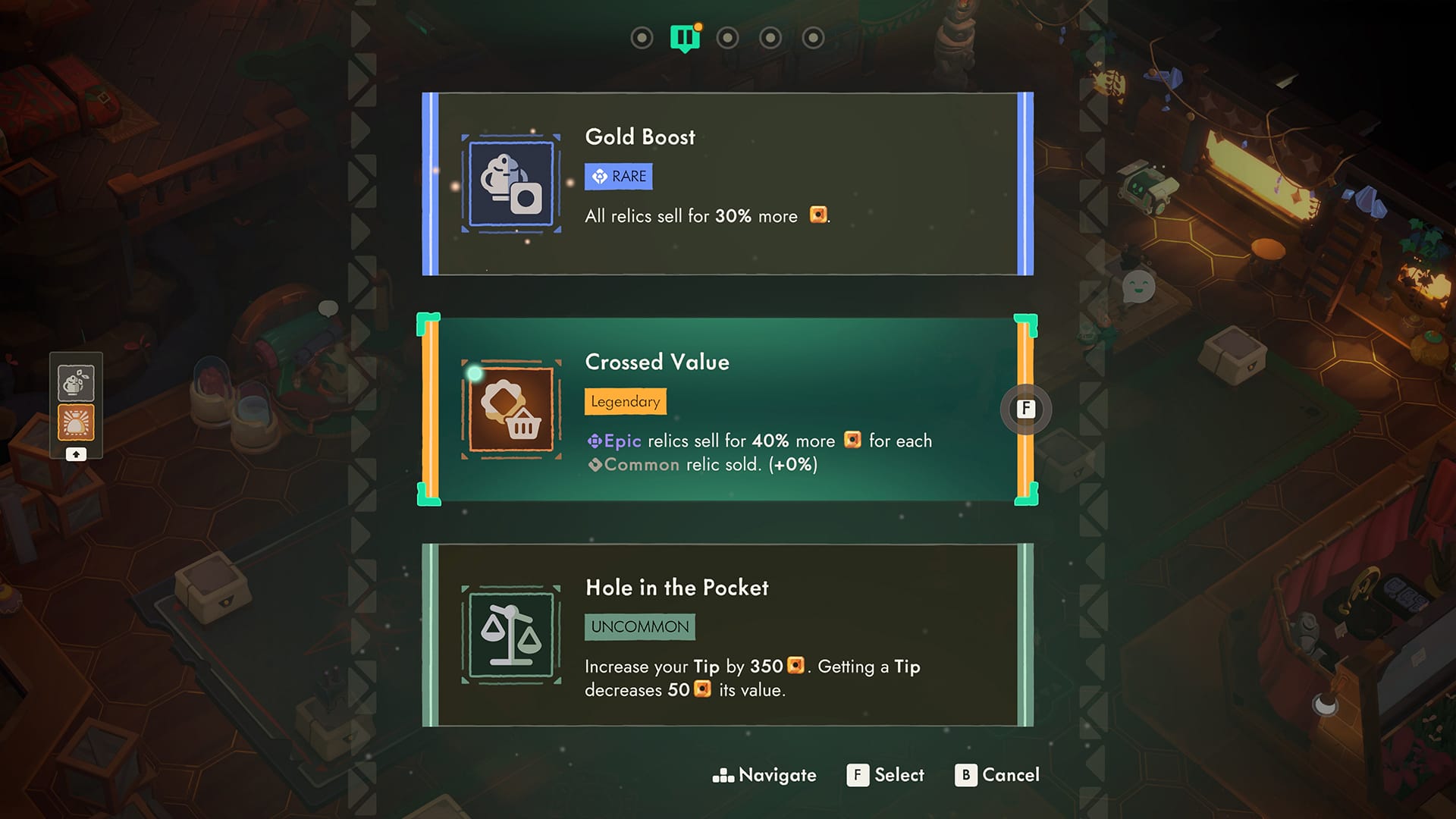
However, coming back alive from an expedition with a perfectly organized backpack is only half the job. Now we have to transform that mountain of artifacts into what really moves the world of Moonlighter: money. A lot of money. The store maintains the fundamentals of the first chapter but expands them through new systems. We can choose different displays, buy furniture that can change sales, use dedicated perks and take advantage of Bloblets to get additional bonuses during commercial sessions.
The pricing system has also been made more readable. Selling an item at the correct price doesn't simply mean preventing a customer from looking at you as if you had tried to sell them an RTX 5090 for 6,000 euros: customer satisfaction is integrated directly into the progression of the store, rewarding those who manage to find the right balance instead of systematically squeezing every poor person who walks through the door.
The real glue, however, remains progression. Exploring produces artifacts. Artifacts produce money. Money produces upgrades. Upgrades allow you to explore better. And that's how I found myself again at the entrance to the dungeon, your honor.
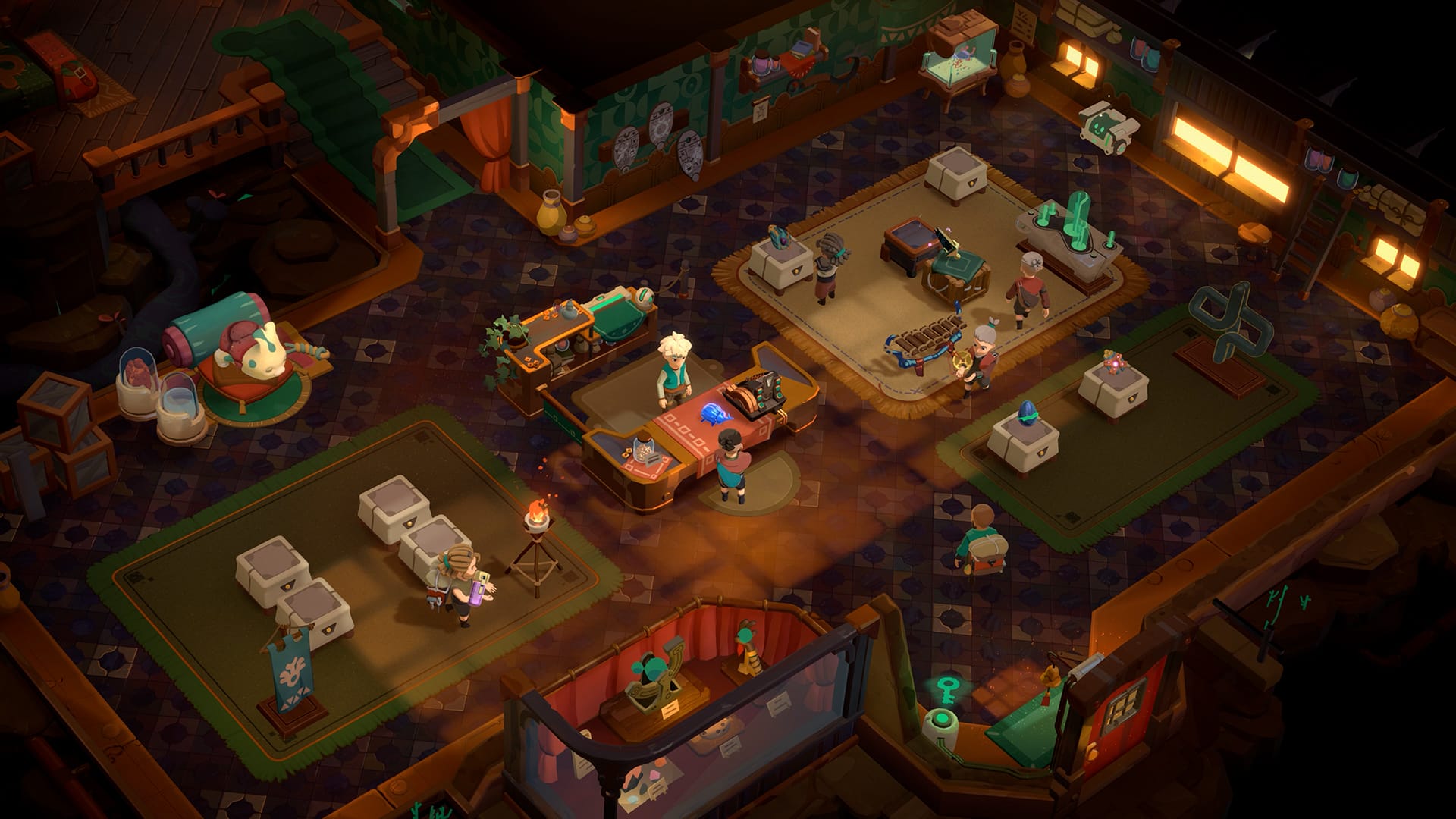
Each system naturally powers the next, which is why The Endless Vault becomes so difficult to give up. Increasing health, upgrading a weapon, improving potions, expanding your backpack, or investing directly in the business are all viable options, especially in the first few hours, when resources always seem insufficient.
One of the main problems of the game then emerges: Moonlighter 2 can be quite grindy.
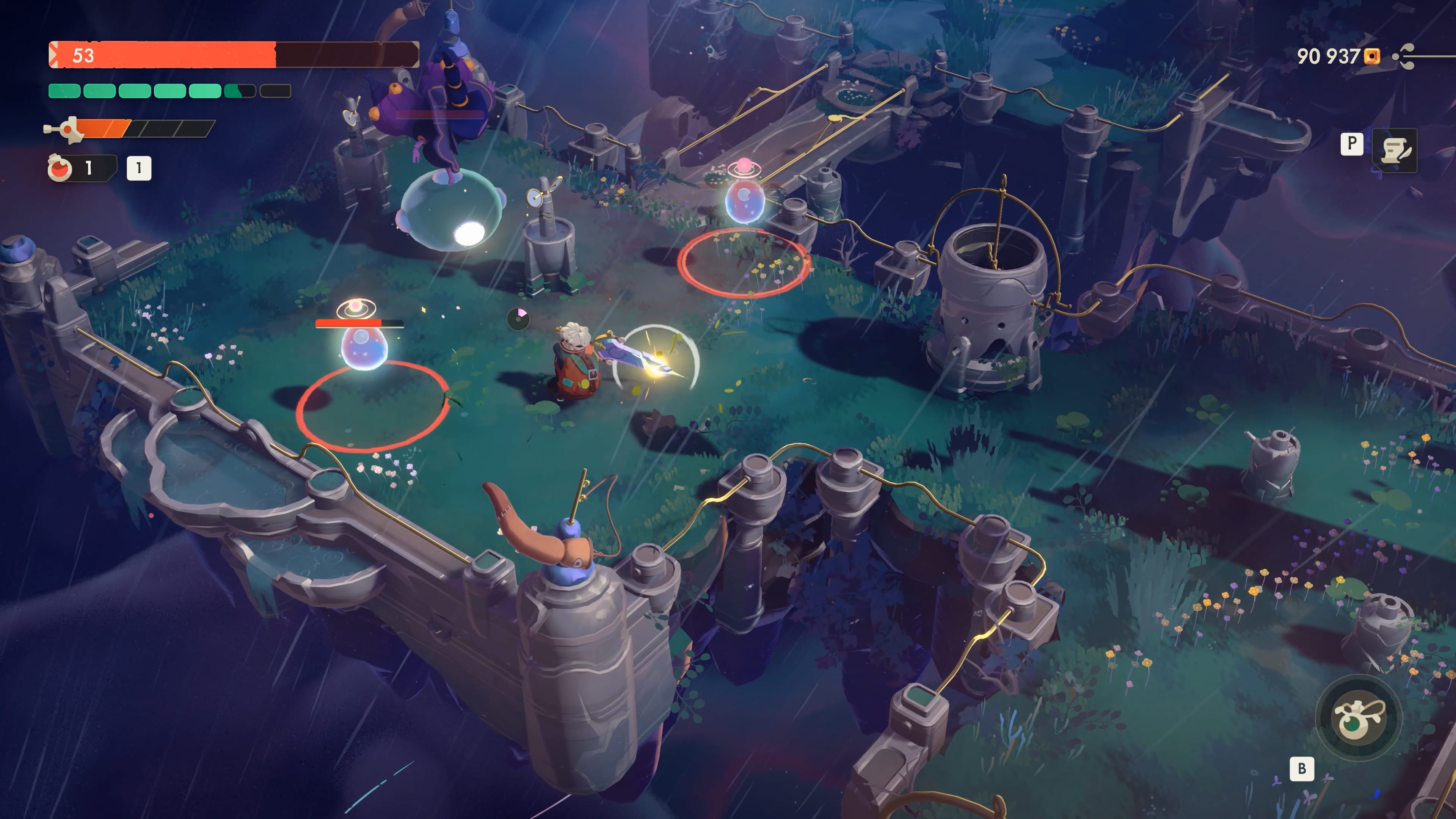
The early stages are particularly stingy and some upgrades initially seem to have prices put there by a particularly vindictive financial advisor. The runs can also become quite long and those who love roguelites especially for that feeling of permanent growth capable, sooner or later, of turning the player into a deity may find The Endless Vault less accommodating than expected. Permanent upgrades help, of course, and as the adventure progresses the economy begins to breathe more, but the player's ability continues to have a considerable weight. It's not enough to accumulate statistics until the problem disappears. Personally, I would also have liked even more freedom in customizing the store. Digital Sun allows us to tinker a lot with the functional part of the business, but if you want to waste forty minutes deciding exactly where to put a lamp, decorate the bedroom or turn the entire building into a crime against interior design... well, you will have to moderate your expectations.
Let me put the lights where the heck I want, Digital Sun.
History knows when to get out of the way
On the narrative front, Moonlighter 2 has no particular revolutionary ambitions. The story continues what was told in the first chapter and inevitably contains references and characters that veterans will recognize, but it is not necessary to know the original by heart to understand what is happening. The story plays above all the role of glue between an expedition, an upgrade and a session at the shop. Some dialogue brings a smile, some characters work better than others, but it will hardly happen to stay in front of the dungeon door thinking: "Damn, I really want to know how this conversation continues".
No.
We want to re-enter the dungeon.
There's loot in there.
And loot doesn't sell itself.
Technically speaking
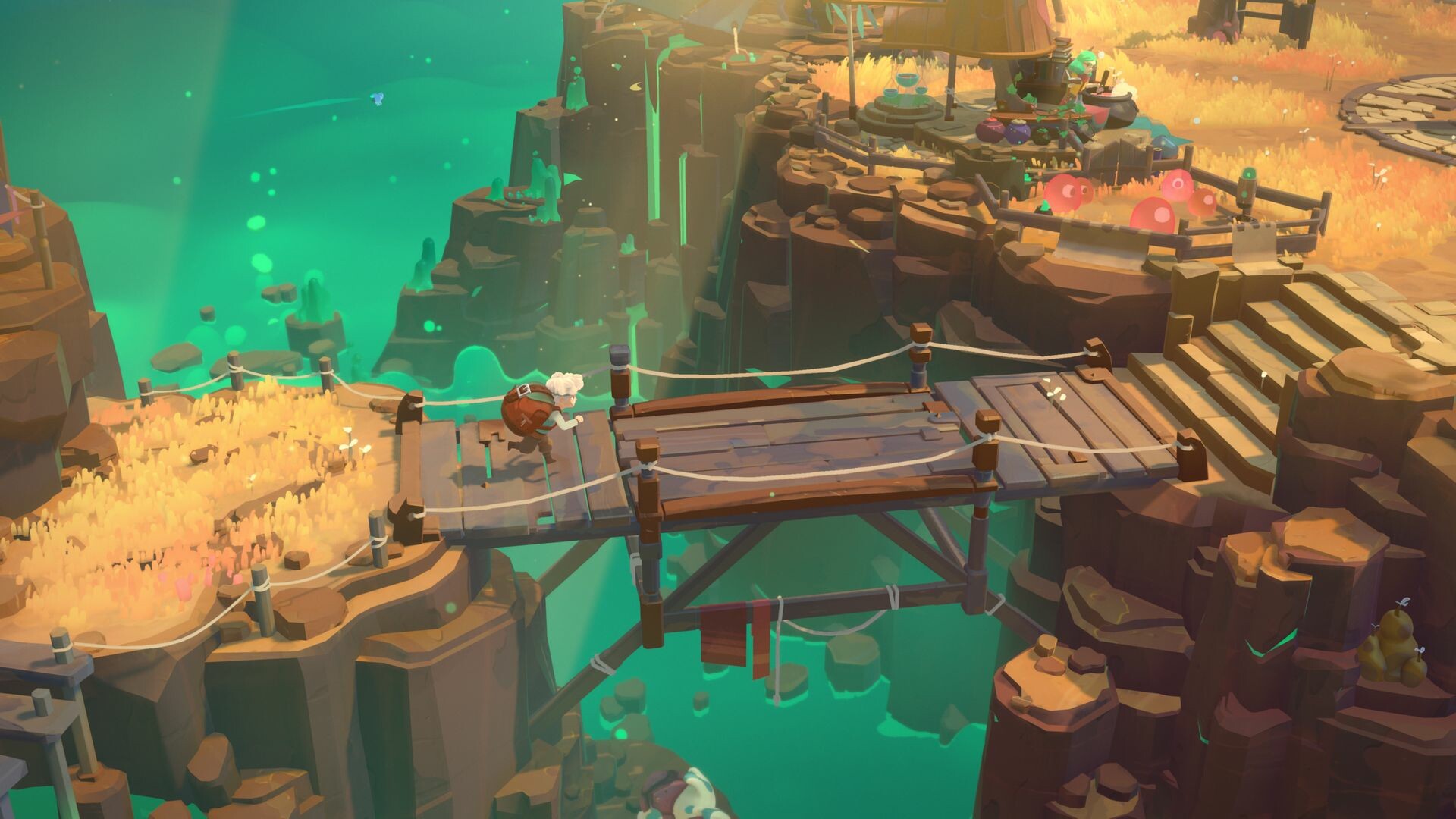
Also on an aesthetic level, Moonlighter 2 immediately marks the distance from its predecessor by abandoning pixel art in favor of a completely three-dimensional presentation. A choice that will inevitably make the aficionados of the first chapter discuss, but which I personally found successful: The Endless Vault remains colorful, readable and sufficiently characterized, with pleasant settings and a good amount of on-screen effects without turning every fight into an indistinguishable blob of particles. On our system equipped with NVIDIA GeForce RTX 5080, AMD Ryzen 7 9800X3D and 32 GB of DDR5 RAM, the experience proved to be overall very fluid and free of particularly relevant technical problems. We are not facing some technological prodigy sent to Earth to redefine the concept of optimization, but neither is it yet another stuttering festival that too often accompanies modern PC versions: Moonlighter 2 runs well and, above all, does not unnecessarily put a spoke in the wheels of its gameplay.
We also spent a lot of time with the title on Steam Deck, where the experience turned out to be more than decent. Inevitably you have to accept some compromises compared to a high-end desktop PC , but nothing that really compromises the usability of the game. Indeed, Moonlighter 2 is probably one of those titles that seem to have been designed almost naturally for a portable machine as well: relatively autonomous runs, store management, progression marked by sessions and the constant temptation to indulge in "just one more dungeon" go very well with the philosophy of Steam Deck. And we all know how it ends when we say "I do a quick run before sleep".
Mouse and keyboard work correctly, although for this genre he continues to clearly prefer the controller. The native presence of PlayStation glyphs, support for Steam Input and above all the possibility of modifying the bindings of both control systems directly from the game is appreciated. Less understandable is the choice to propose FSR 3 as the only upscaling technology, without DLSS and XeSS.
We are in 2026.
Support for the three main solutions should no longer be considered a nice bonus to be included if there is time left over at the end of development, but a standard of the PC version. FSR at least has the advantage of running on hardware from major manufacturers, partially mitigating the problem, but the absence of NVIDIA and Intel alternatives remains difficult to justify.
In Conclusion
The question, in the end, is inevitable: is Moonlighter 2 better than the first?
Wrong question.
The Endless Vault doesn't really try to be. It takes the dualism between dungeon crawling and shopkeeping that had made the original special and decides to build something different on it, closer to contemporary roguelites and much more interested in builds, paths and micro-decisions. The result is not always flawless. Some runs tend to be long, the first few hours can be grindy, certain enemies would need more readable telegraphs and minibosses and combat systems still show some room for refinement. Even those who were simply hoping for "Moonlighter 1, but more" could initially look at it with the same enthusiasm reserved for someone who has just repainted our house without asking permission. Beyond that expectation, however, emerges a roguelite action RPG extremely easy to start and dangerously difficult to stop. The artifact system in the backpack is probably his best insight, the combat is responsive and deep enough, the progression constantly keeps that damn little voice that suggests "one more run" alive, and the shop continues to be much more than just a break between dungeons. Moonlighter 2 still possesses noticeable pieces of the soul of its predecessor. Simply, it decided to invest them.
And considering how rich we got selling relics to unwitting people during this review, it was probably the most economically sensible choice.
About the Author

Biography
- Staff di KotaWorld.itRecent Articles
- EVE Vanguard opens its Alpha 24/7 in November, Steam Early Access postponed to 2027
- Princess of the Water Lilies: Definitive Edition comes to PS5 with a completely renewed version
- MONOWAVE is available on PC e Nintendo Switch
- Screen Stocks turns day trading into a video game: demo available on Steam
- Pokémon TCG celebrates 30 years with a new expansion, available today