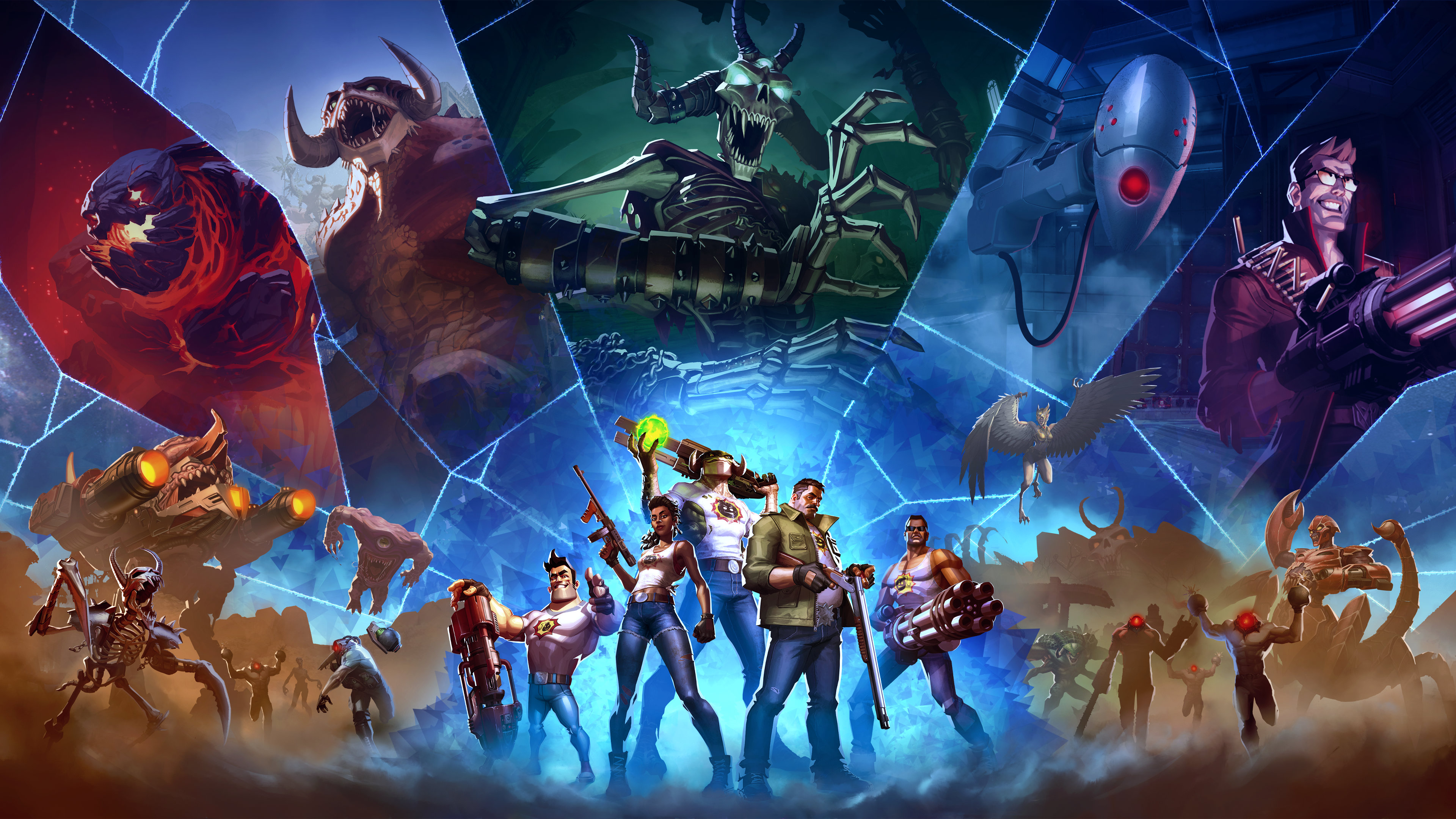
When you put your hand to a saga that has made the history not only of a genre, but even of the media itself, it is really difficult to be able to create a product that can satisfy historical fans and new recruits at the same time. In reality, however, turning Serious Sam into a cooperative roguelite was not, on paper, such an absurd idea. On the contrary: hordes of enemies, arenas to clean up, exaggerated weapons and a progression built on the constant search for increasingly destructive combinations seem perfect ingredients for a formula of this type. Serious Sam: Shatterverse, developed by Behaviour Interactive and published by Devolver Digital, tries exactly to take this path, allowing groups of one to five players to cross alternate universes, collect power-ups and face the forces of Mental one run after another.
The problem is that Shatterverse seems to only partially understand what makes both Serious Sam and a good roguelite fun. There are moments when chaos finally takes shape, arenas are filled with enemies and the game manages to give that instinctive satisfaction typical of boomer shooters. Too often, however, you have to go through an excessive amount of grinds, questionable balance choices and ineffective systems before you reach that feeling. What emerges is a spin-off with some good intuition, but unable to fully exploit either the name it bears or the structure it has decided to adopt.
This content is provided by YouTube. To view it, you must allow external content. Activation may result in data being shared with the third party.
"So it's Serious Sam?"
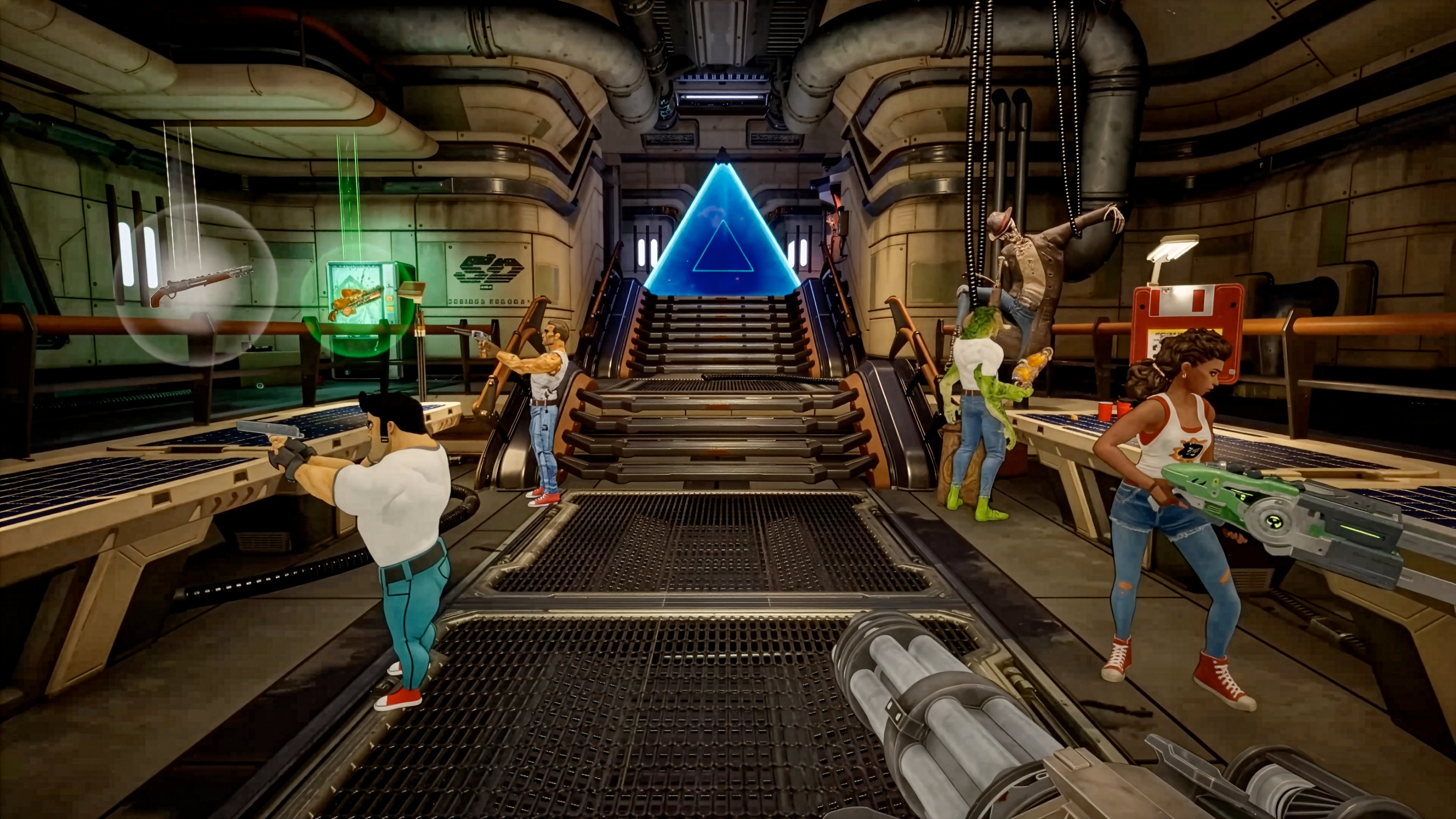
The first question arises almost spontaneously: how much of Serious Sam is really there in Shatterverse? Aesthetically and narratively, enough to recognize the brand. The different versions of Sam maintain the usual attitude of an action hero unable to solve a problem without blowing it up, between deliberately stupid jokes, huge enemies and settings that occasionally openly recall the past of the series. Some scenarios, especially those closer to the classic iconography of Serious Sam, even manage to evoke a certain nostalgia. On the gameplay level, however, the distance from the main chapters is evident. Shatterverse is not simply Serious Sam with roguelite elements, but an arcade shooter much more built around permanent progression, perks, trinkets, rarity of equipment and character abilities. Those looking for the gigantic arenas of the parent series, immediate control of the hordes and a quickly available arsenal therefore risk finding themselves in front of something surprisingly different.
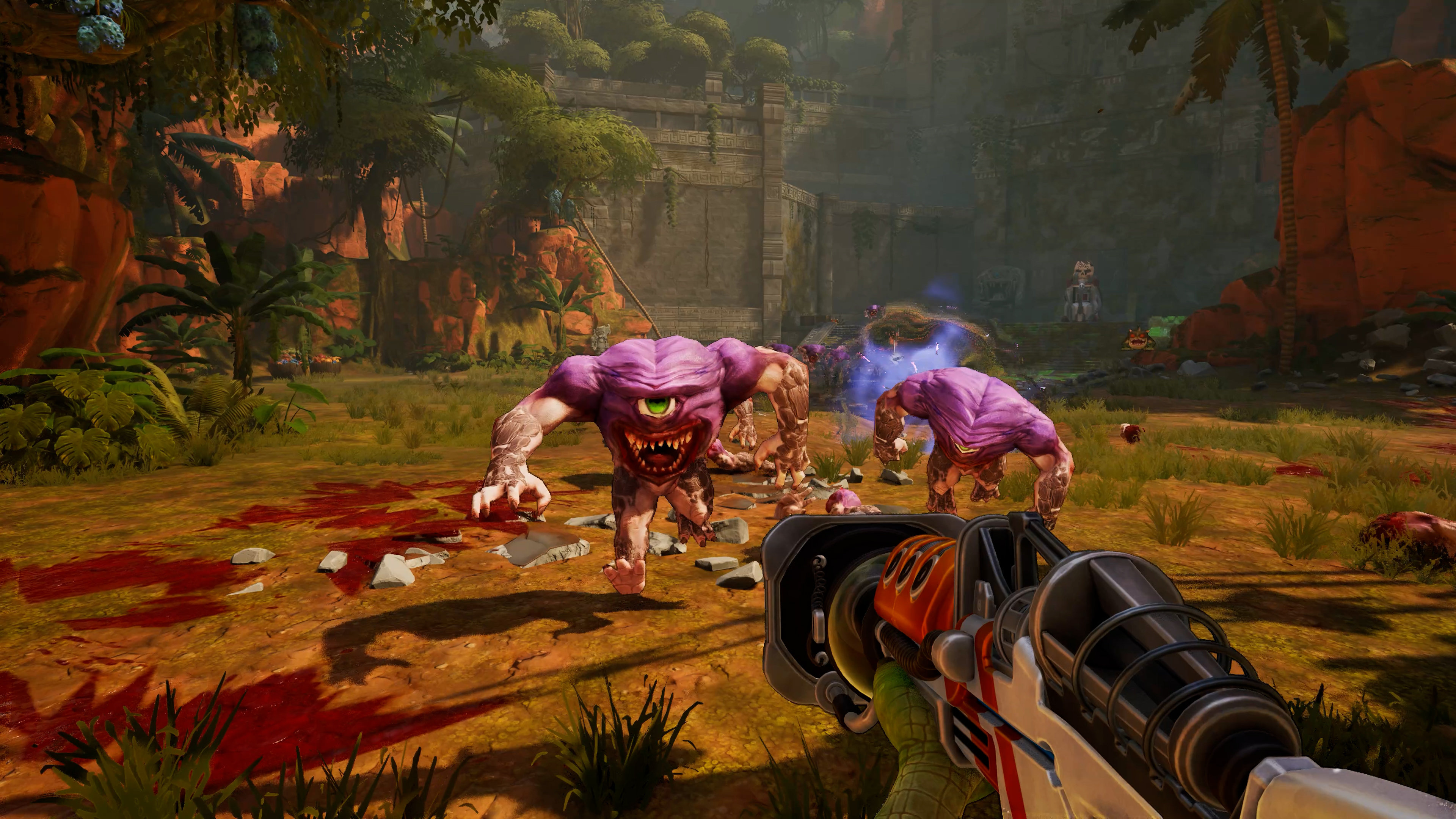
The co-op up to five players certainly helps to enhance the formula. When the arena fills up, enemies come from all directions and the team begins to combine weapons, skills and upgrades, Shatterverse reaches its best moments. The problem is that the movement is slightly buoyant and less precise than expected, while the gunplay often lacks the physicality necessary to sustain a game based almost entirely on the pleasure of shooting. Shots, sounds and feedback from the weapons generally appear not very incisive. The shotgun at least manages to return a decent feeling of power at short range, but the initial pistol and Thompson are extremely anonymous. It is especially a problem in the first few hours, because the game inexplicably decides to show its less interesting version to new players.
"Yes but, nothing serious..."
The most obvious limitation of Shatterverse immediately emerges: progression. The first run is faced with an extremely limited initial selection, essentially consisting of a pistol, shotgun and machine gun. Most of the most interesting weapons, modifiers and customization possibilities are made available only later, through the currency obtained by completing the runs. The concept of starting weak to gradually build a more powerful character is fundamental in many roguelites. The problem is the pace at which Shatterverse distributes this growth. The game asks you to grind out games before you have even proven why it should be worth doing.
A single run can last approximately between 45 and 60 minutes and the first act basically plays the role of a huge tutorial. The enemies inflict little damage, health is distributed generously and the limited arsenal makes the clashes much less spectacular than one would expect from Serious Sam. Getting to the really interesting part therefore means going through a long, repetitive and paradoxically unrepresentative introduction of the rest of the experience. From the second act the situation improves. The difficulty level grows, the pressure and density of the clashes increase and the expansion of the arsenal finally begins to allow the construction of more interesting builds. The weapon prefixes also manage to significantly modify some guns, giving them back part of the personality that the basic versions lack. However, several balance problems remain. Some weapons are significantly more useful than others, certain categories quickly become irrelevant, and many rewards end up looking like mere statistical variations rather than real opportunities to change strategy. Being faced with a new weapon that offers a few percentage points difference from the one already wielded does not generate the curiosity that should fuel a run.
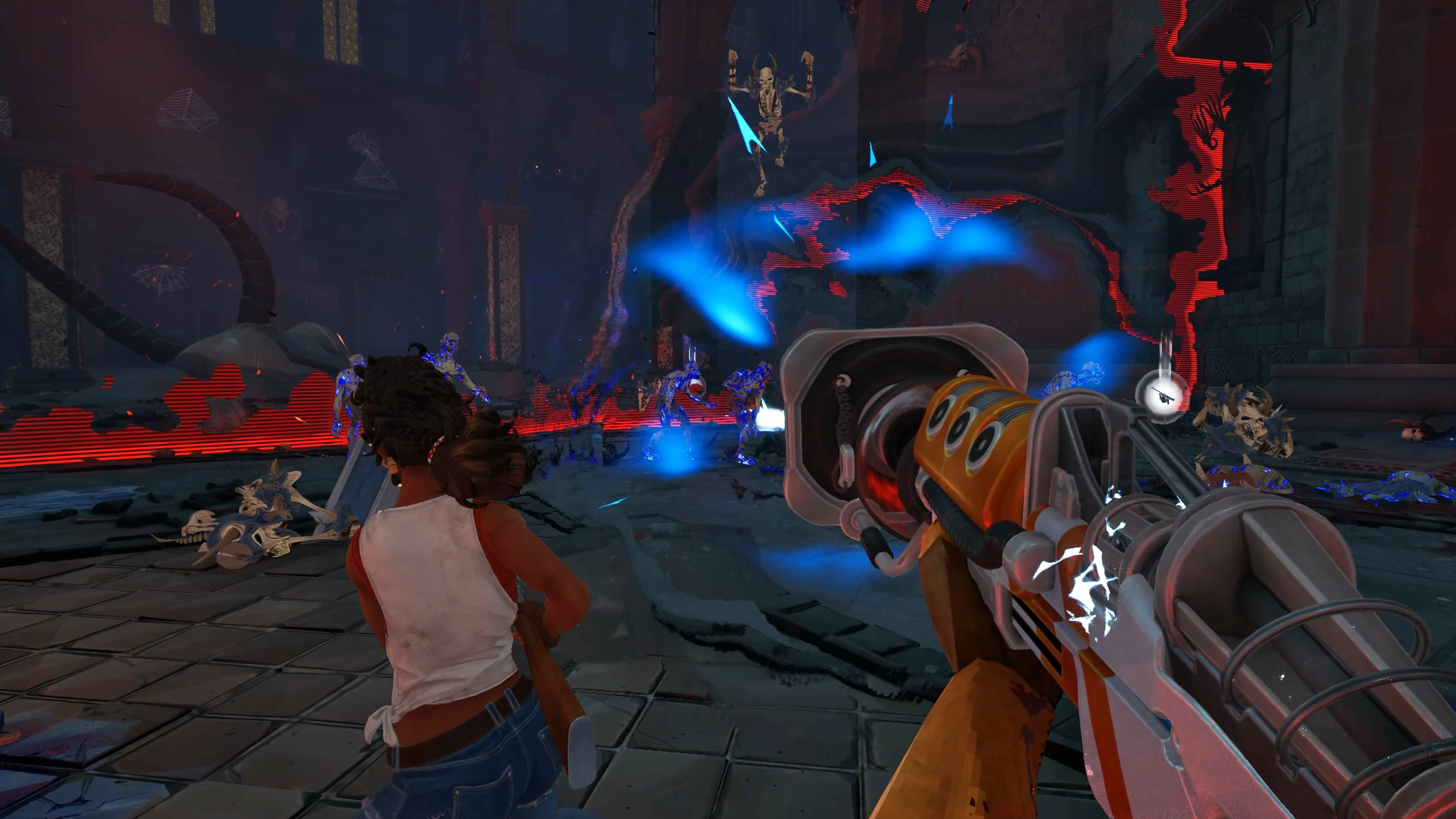
The same goes for Intel, basically perks that can be purchased during games. Many limit themselves to increasing or decreasing a value percentage, while others even seem to conflict with the type of game proposed: bonuses that require you to remain motionless, for example, go rather poorly with an FPS built around constant movement, jumps and hordes that chase the player relentlessly. Skills that directly reward aggression and precision work much better, such as those capable of enhancing the character while keeping a chain of kills high.
The Trinket system is more successful, which can be equipped between runs. It is possible to bring up to six and get bonuses by combining them into sets, adding at least a decent level of planning to the meta component. It's a good idea, but once again the amount of hours needed to build really interesting configurations makes the system less satisfying than it could be.
Do (too much) ut des (too late)
The presence of five different versions of Sam represents one of the most recognizable elements of the spin-off. Each character has specific bonuses, passives and their own Catalyst Ability. The differences are evident enough to encourage some variation in the style of play, especially when you start to understand which weapons best exploit the characteristics of each Sam. Special abilities, however, rarely reach the level of spectacularity that one would expect. In a title that continuously throws dozens of enemies at the player, it would be natural to expect devastating powers, deliberately exaggerated and capable of overturning a fight. Many upgrades of the Catalyst Abilities instead oscillate between small utility improvements and choices so superior to the alternatives that they become practically obligatory. In short, it lacks that progression towards a true power fantasy that makes many roguelites rewarding. Shatterverse certainly allows you to become more powerful, but it rarely offers the feeling of having built such an absurd combination that it turns a run into an uncontrollable spectacle.
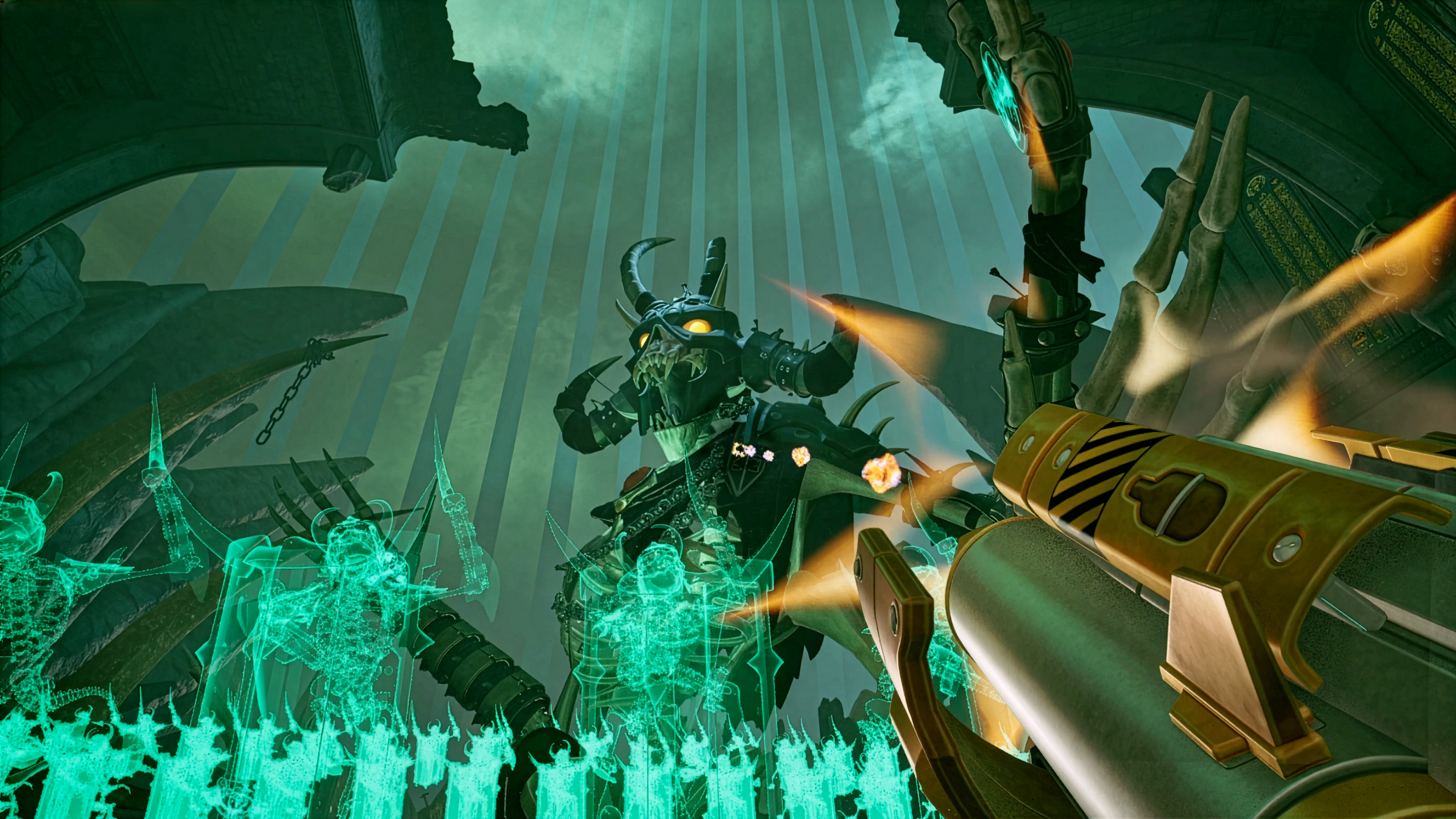
Bosses also show a rather discontinuous quality. Some offer multiple phases and variations capable of keeping the attention high, others become extremely predictable after understanding the pattern. The enrage that intervenes when the fight lasts too long increases speed, damage and extension of attacks, but often ends up turning an unlucky build into a sentence that is difficult to avoid. To further complicate things there is the choice to tie part of the recovery of health to melee executions. During clashes with numerous enemies, the system creates an interesting dynamic: you have to understand when to approach a target and take risks to recover energy. In fights against bosses that summon few or no enemies, however, the mechanism completely loses effectiveness.
Not even the difficulty really manages to evolve convincingly. Leveling up increases above all enemy life points, Elite frequency and general statistics, while the required strategies change little. The Elites themselves are often more resistant versions of already known opponents, without new patterns capable of seriously transforming the player's priorities.
Technically backward
Even technically Shatterverse leaves some perplexity. While not being particularly impressive from a graphical point of view, it can require considerable resources, especially by increasing the settings. The visual difference between high and maximum presets is often modest compared to the impact on performance, making it sensible to reduce some parameters without losing much on the aesthetic level. The artistic direction alternates pleasant settings with others much less characterized. The scenarios that openly mention Serious Sam work much better, while some areas dominated by a few colors and more generic geometries seem to belong to any shooter. Even the boss cutscenes, pre-rendered and integrated in an inelegant way with the gameplay, sometimes give a feeling of an outdated product, and not in an intentional way.
There are some side problems: AI that can get stuck in the geometry, weapon selection not always comfortable, interface that can be improved and some oddities in the maps. None of this makes Shatterverse unplayable, but it contributes to the general feeling of a project that arrived on the market with several roughness still to be filed.
The constant dialogue between the various versions of Sam also divides easily. Deliberately idiotic humor is part of the DNA of the series, but here the amount of jokes and repeated conversations quickly becomes invasive. After several runs, the same lines are repeated too frequently, sometimes even overlapping with NETRICSA's interventions. Considering the repetitive nature of the roguelite genre, more variety or simply a more sparing use of dialogue would certainly have helped. And it is precisely in the repetition that the real problem lies. After the first act and unlocking the first interesting weapons, Shatterverse improves sharply. There are fun fights, successful arenas, some pleasant bosses and a fair number of systems on which to build a build. In co-op it is even easier to ignore the edges and indulge in chaos. But a good roguelite should be able to make almost every run feel like a step forward, even a small one. Here it happens too often to end a game without really feeling closer to an interesting new discovery. The game has weapons, characters, powers and modifiers capable of making it more fun, but it seems strangely determined to make us conquer them through its less successful parts.
In Conclusion
The idea of a roguelite Serious Sam continues to make sense, but Shatterverse fails to fully exploit it. After the first few hours, more interesting weapons, modifiers and combinations emerge, but the path to get there is too slow and the grind ends up stifling some of the fun. Even when the game kicks into gear, there remains a lackluster gunplay, often negligible rewards and a variety that struggles to sustain the repetitiveness of the runs. In co-op it still manages to give some good moments, especially when hordes, explosions and builds finally start to work together. However, they are sporadic flashes of a potential that remains largely unexpressed. Shatterverse is not a bad game, but it is a half-successful experiment, quite fun in small doses, too limited to really leave its mark.
About the Author

Biography
- Staff di KotaWorld.itRecent Articles
- EVE Vanguard opens its Alpha 24/7 in November, Steam Early Access postponed to 2027
- Princess of the Water Lilies: Definitive Edition comes to PS5 with a completely renewed version
- MONOWAVE is available on PC e Nintendo Switch
- Screen Stocks turns day trading into a video game: demo available on Steam
- Pokémon TCG celebrates 30 years with a new expansion, available today