
"Leave every hope, you who enter"
When Dante Alighieri wrote the Divine Comedy, he transformed Hell into something more than just a place: a journey through the faults, fears and weaknesses of the human soul. More than seven centuries later, transforming one of the pillars of Italian culture into a video game is certainly not an easy task. The Alighieri Circle: Dante's Bloodline, developed by ONE-O-ONE GAMES, tries to do so without re-proposing the famous work and without transforming Hell into a simple battlefield. Instead, the studio chooses the path of psychological thriller, exploration and mystery. We play the role of Gabriele Alighieri, descendant of the famous poet, called to confront a family legacy that has been handed down for generations. Every 33 years the barrier between our world and Hell weakens and someone from the family must return to the ancestral villa to perform a ritual capable of closing the gates of Hell. The problem is that this time that someone is us...
Between the melancholic rooms of an ancient villa and a Hell that seems to be born directly from the psyche of the protagonist, The Alighieri Circle builds its experience around a question as simple as it is difficult: how personal can Hell be? And it is precisely from here that our protagonist's journey starts.
This content is provided by YouTube. To view it, you must allow external content. Activation may result in data being shared with the third party.
Beyond the Divine Comedy
The risk, when you decide to build a video game around the figure of Dante Alighieri, is to use the Divine Comedy only as an aesthetic element. The Alighieri Circle instead tries to build something different. We don't play Dante and we don't simply walk through the circles of Hell described in the poem. The game takes some of the most recognizable elements of the work and transforms them into a familiar story, set in the present day.
Gabriele is an Alighieri who has spent most of his life trying to distance himself from the weight of his surname. But that escape inevitably comes to an end when he discovers that the Divine Comedy could be much closer to reality than he ever imagined. The secret kept by his family thus becomes the real starting point of the adventure. The most interesting choice is precisely this: Hell is not presented simply as a place to reach, but as something that is intertwined with Gabriele's personal story. The protagonist's memories, fears and traumas end up influencing what we see, making the descent into Hell something extremely personal.
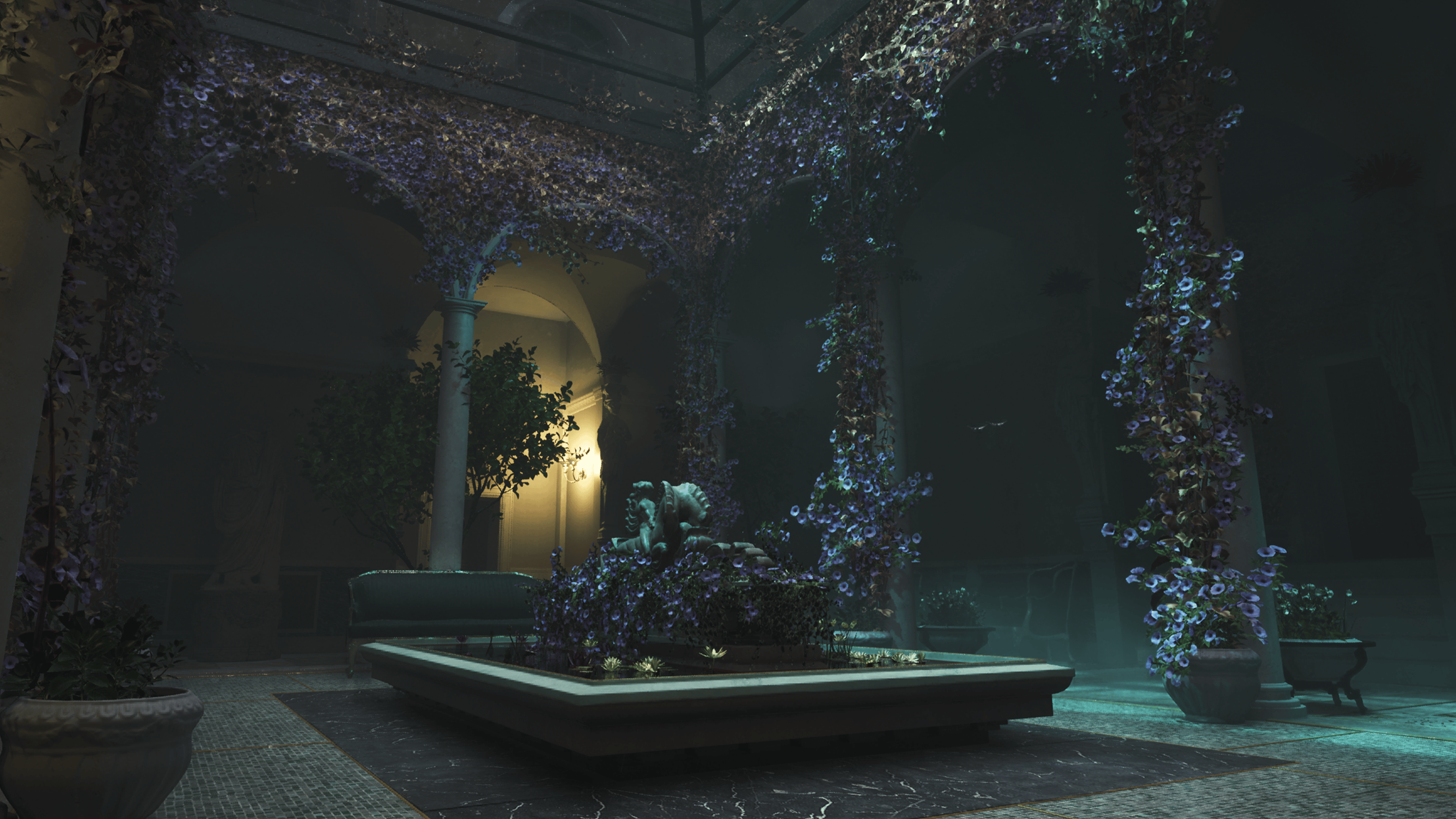
Some references to events and characters related to real history help to give greater identity to the story. These are elements that show how much the developers have tried to build a bridge between the historical figure of Dante, his work and the imaginary history of the Alighieri.
The premise, therefore, is certainly ambitious. And for much of the adventure it works precisely because it does not try to imitate the Divine Comedy directly, but to reinterpret some of its concepts through a completely new story.
Between reality and nightmare
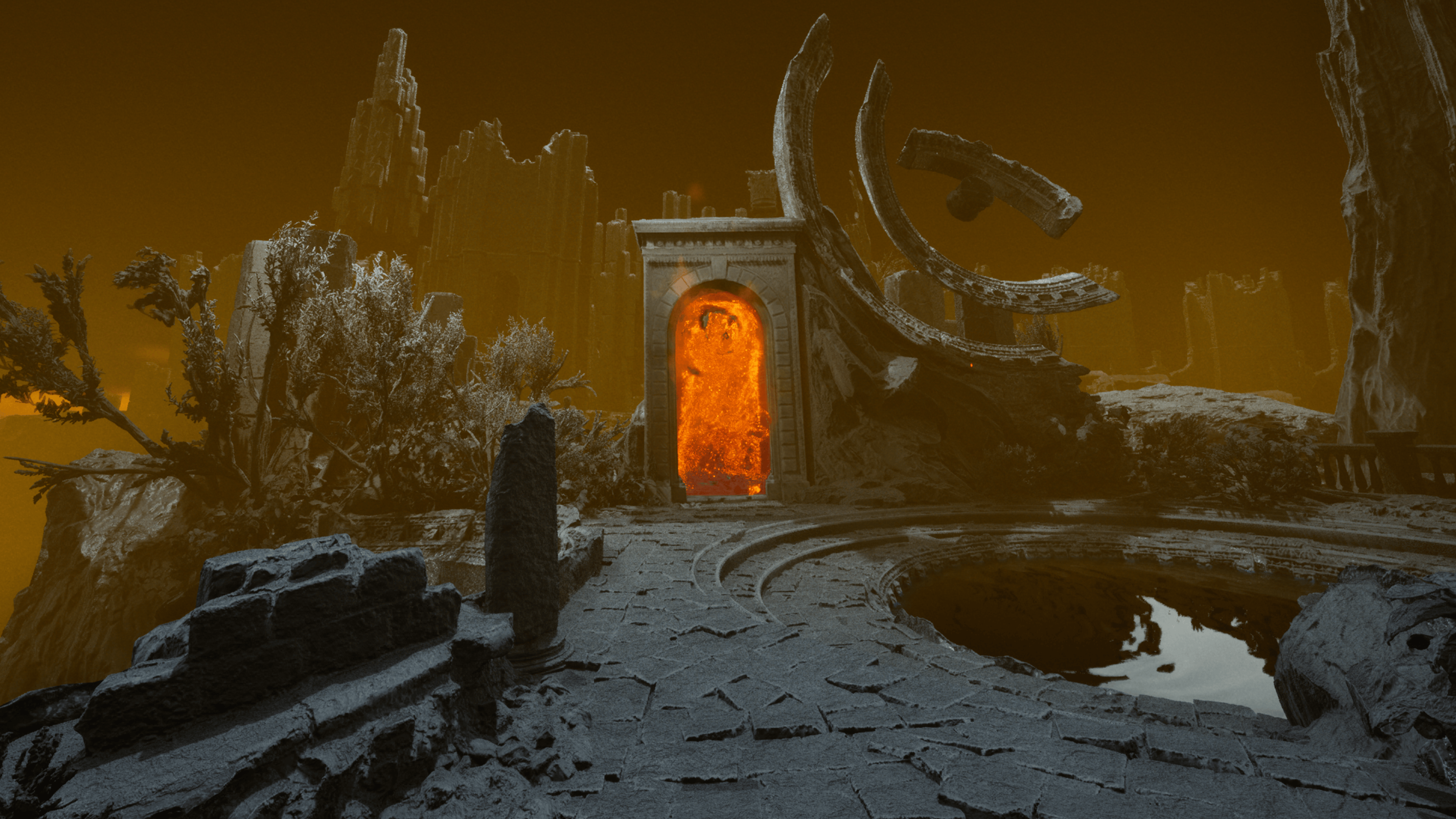
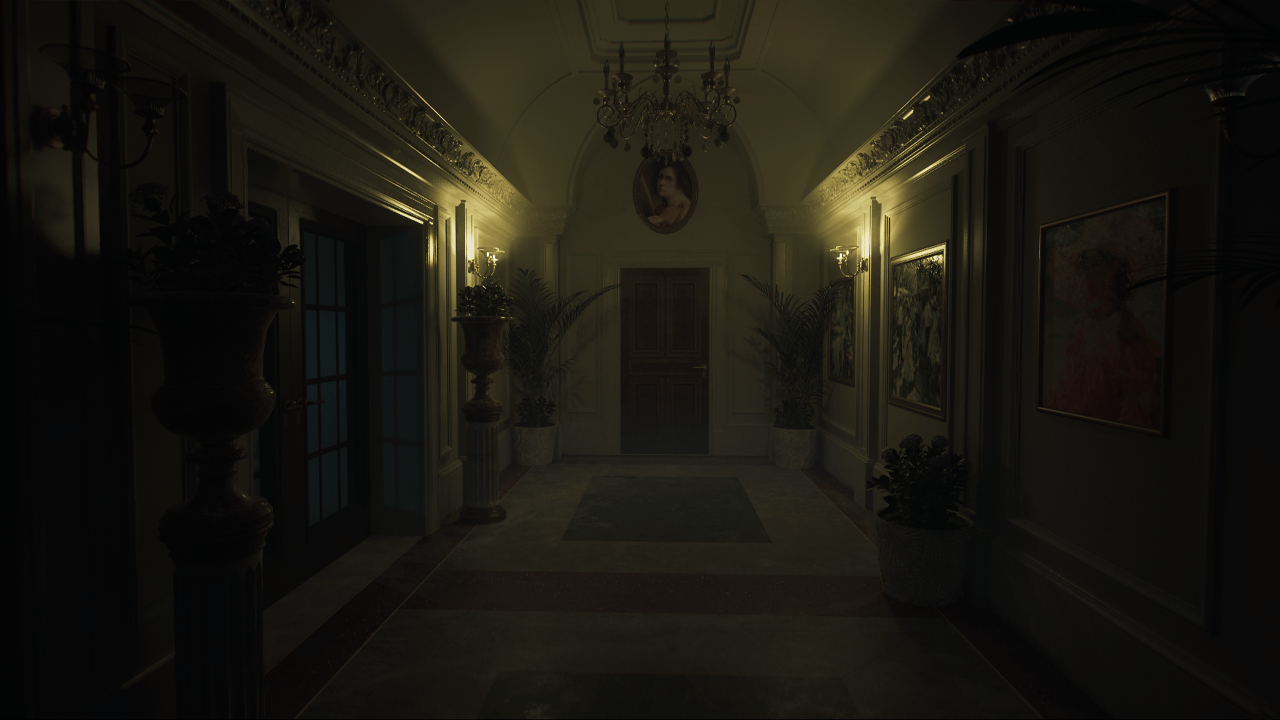
The experience published by Entalto Strudios develops mainly through two very different realities: the Villa and the Dive. The Villa is the most concrete place of the adventure. A huge, elegant and imposing mansion, made up of rooms, corridors, passages and environments full of details. It is a space that continuously invites the player to look around, looking for clues and small elements capable of telling something about the Alighieri family. The Dive, on the other hand, completely breaks this perception of reality. Here the environment becomes deformed, surreal and disturbing. Nature and architecture seem to lose their logic, giving life to a space that appears closer to a nightmare than to a real physical place.
It is precisely the contrast between these two dimensions that works best from an artistic point of view: on the one hand we have something familiar and concrete, on the other an impossible world that takes shape directly from the mind of the protagonist.
We will not find weapons, fights or real action sequences. Gabriele is not a hero capable of facing Hell by force: he can only walk, observe and try to understand what is happening. For those who appreciate walking simulators and strongly narrative experiences, this choice can be interesting. In fact, exploration becomes the heart of the experience, especially inside the Villa, where we find documents, diary pages and several optional details that allow you to deepen the story. At the same time, however, interaction with the environment remains rather limited. We can observe many elements, but only a part of them can really be used or manipulated.
The pace, moreover, remains deliberately slow. It does not try to surprise us at every step, but lets the silence, the atmosphere and above all our own thoughts become the real protagonists of the experience. And it is precisely this slowness that also determines the way in which the game tries to leverage. The adventure of The Alighieri Circle does not arise mainly from monsters or jumpscares, but from uncertainty. From the noise that comes from a corridor, from a voice that we cannot identify, from the feeling that something is not exactly as it should be. The work manages to create some moments of authentic tension just when it leaves room for the player's imagination. In other moments, however, the very dilated rhythm inevitably ends up reducing that tension.
Hell, but without headaches
If there is one aspect of the gameplay that could have offered something more, it is certainly represented by the puzzles. The puzzles present during the adventure are not particularly complex and, in most cases, are based on the search for an object, its correct placement or the identification of some elements necessary to be able to continue. The structure is functional to the narrative: the game never wants to block the player for too long and prefers to keep the journey always oriented towards the next element of the story.
The problem is that, personally, I would have preferred something more.
Some puzzles have interesting ideas from a conceptual point of view, but they rarely require the kind of reasoning that can make us stop for several minutes in front of a situation, observe the environment and try to connect the clues. It's a shame, because the setting and the plot would have offered so many possibilities.
A mansion so full of rooms, paintings and references could have offered much more, especially in terms of exploration and interaction with the environment. Instead, in most cases, the gameplay almost seems to want to take a step back to leave room for the narrative component. Is this a precise choice of the developers? The Alighieri Circle does not want to be a puzzle game. It wants to tell a story and use exploration as a tool to accompany us towards its conclusion. The choice is understandable, but the feeling remains that with more complex puzzles the experience could have gained a lot, especially for those looking for greater involvement also from the point of view of gameplay.
Hell becomes art
From a visual point of view, The Alighieri Circle is probably one of the most successful aspects of the experience. The Villa is extremely detailed and interesting to explore. Paintings, furnishings, architecture and numerous historical references contribute to giving it a precise personality and, above all, manage to convey the feeling of being inside something that belongs to a much larger story.
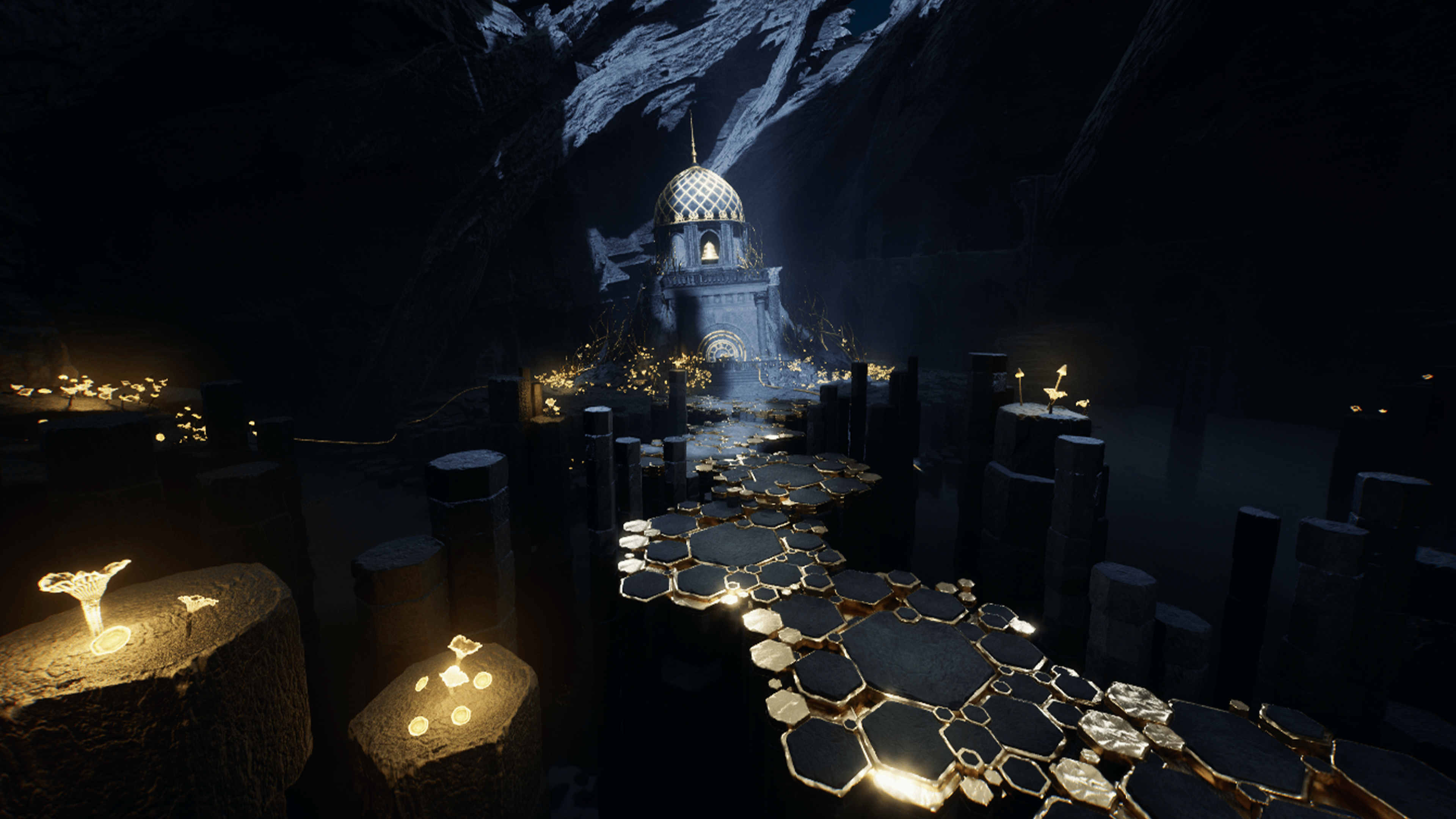
I particularly appreciated the presence of the numerous paintings and references to Italian culture and history. They are small elements that, put together, manage to make the player perceive that he is really inside a videogame reinterpretation of a work that has become legendary. The Dive completely changes register. At first glance, the Inferno is very suggestive and captivating. It does not focus on the classic representation made of fire and flames, but offers decadent landscapes, deformations of nature and almost dreamlike scenarios.
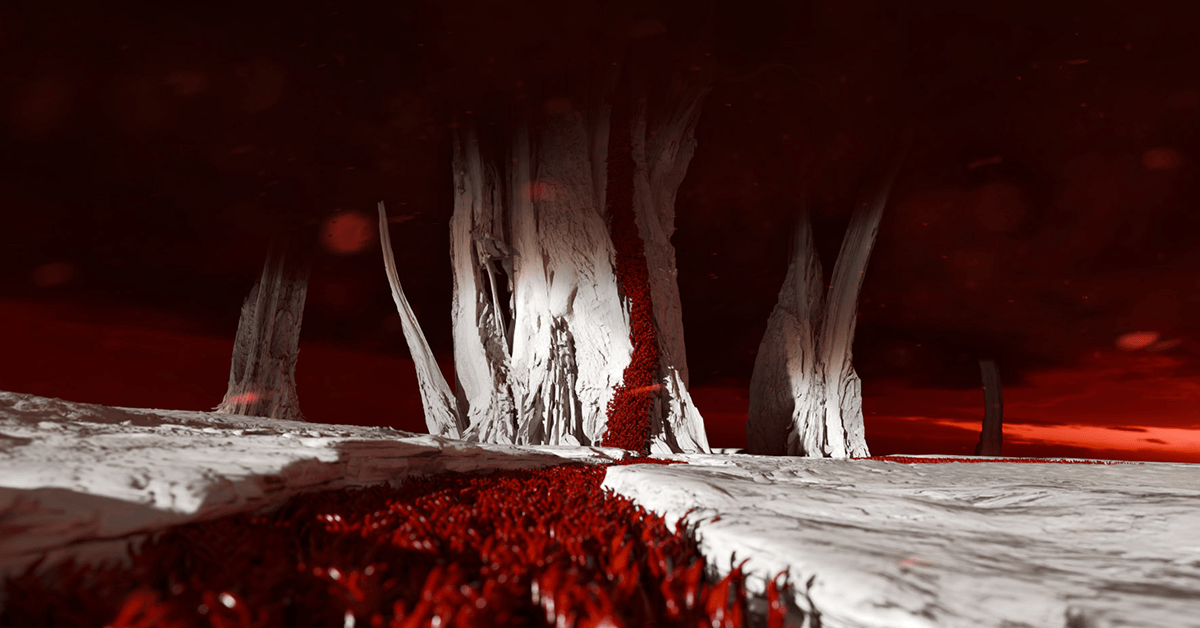
After several hours, however, some of these settings can be slightly repetitive. The initial impact remains strong and demonstrates a good artistic direction. Even technically the game looks good, thanks to the use of Unreal Engine 5. There are some small graphic imperfections and some technical defects, but overall the visual sector remains very pleasant and coherent.
The only real regret is that such well-kept environments would have deserved more interaction...
To complete the work, however, the audio sector takes care of it. Ambient noises, footsteps, squeaks, thunderstorms and distant voices help to build the atmosphere without always needing an intrusive soundtrack. Indeed, it is often the silence that makes the most noise. As far as dubbing is concerned, some interpretations can be less convincing, especially at certain times. Personally, however, I found the Italian dubbing particularly successful, with voices that integrate very well with the characters and the general atmosphere.
And after all, with ONE-O-ONE GAMES, you play at home!
And so we went out to see the stars again
Thus we come to the element that left me with the most mixed feelings: History. The story is interesting and manages to build a mystery that pushes you to want to find out what is really hidden behind the Alighieri family. Some twists come especially towards the final part and help to give greater meaning to various elements encountered during the journey.
The problem in my opinion is the rhythm with which all this is told.
For much of the adventure I felt like I was still in some sort of introduction. The game slowly builds its atmosphere, introduces the characters, shows its environments and scatters clues, but when the story finally starts to get really interesting we are already quite close to the conclusion. I don't necessarily consider this an absolute flaw. It is a narrative choice that can be appreciated by those who like slow experiences and want to take their time to explore and reconstruct the mystery. However, it becomes an element to take into account for those who expect a richer progression of events, spectacular moments or sequences capable of giving greater acceleration to the story. Personally, I appreciated the conclusion.
In fact, the ending manages to close the circle of what is told during the adventure and, at the same time, leaves the "portal" open for a possible sequel. A possible chapter could start from the foundations built with this game, increasing the complexity of the puzzles, the interaction with the environments and the variety of situations, while maintaining that particular artistic identity that represents one of its strengths.
After about 15 hours of play, including exploration, documents, details and history, my opinion therefore remains positive, but with some reservations.
In Conclusion
The Alighieri Circle: Dante's Bloodline is a title that I recommend especially to those who are fascinated by the Divine Comedy, the figure of Dante or looking for a narrative adventure capable of intriguing and accompanying the player through a mystery. If, on the other hand, you are looking for combat, action, great spectacular sequences or particularly challenging puzzles, this is probably not the right experience for you. It is a game that chooses to walk slowly, observe and tell, instead of running. And perhaps this is its greatest strength, but also its main limitation.
About the Author