
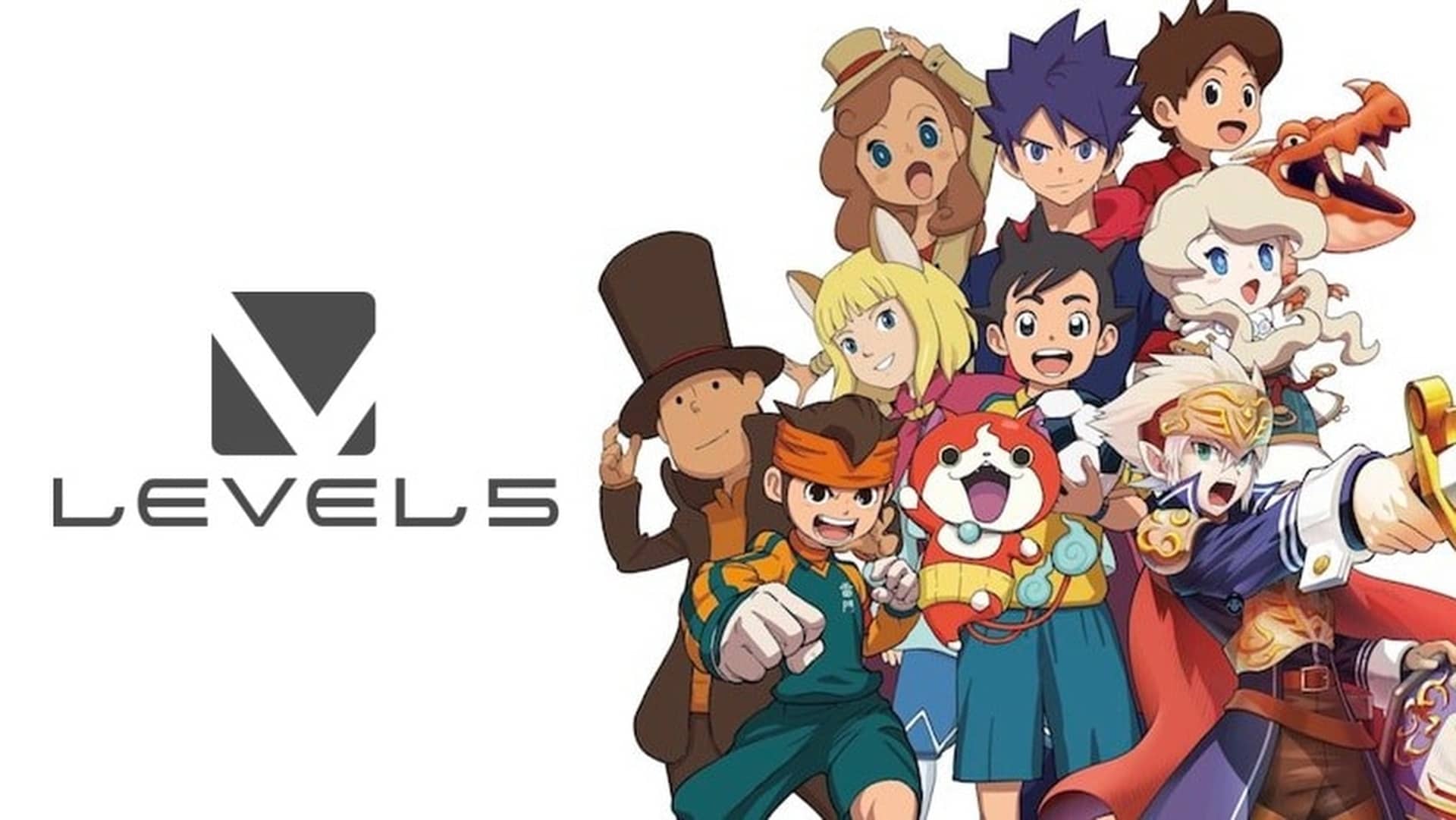
The recent live broadcast of the LEVEL-5 VISION II has reignited the debate on the use of generative AI by the Fukuoka video game company, best known for the strong narrative and artistic direction of its games. In light of the latest events, players are wondering: how far can Level-5 go in the use of artificial intelligence without risking losing part of its identity?
A story that began years ago
The "AI" issue is not new to Level-5 and dates back to at least 2023, a period in which artificial intelligence began to take hold more and more in the gaming industry as well.
The developers, admitting the use of tools such as Stable Diffusion, ChatGPT, VOICEVOX and GitHub Copilot, showed drafts of loading screens of "Megaton Musashi: Wired" and visual references of the protagonists of "Yo-kai Watch".
The development house, however, immediately clarified that AI was used to facilitate the development of games and above all their promotion.

That famous 80-90%...
In 2025, then, the president and CEO of Level-5, Akihiro Hino, returned to talk about the increasingly cumbersome presence of AI in video games, suggesting that about 80-90% of the code of games was written using artificial intelligence tools and that only then was it subjected to a check by real programmers.
What seemed like a resounding own goal was later clarified by Hino himself with an official note on the Level-5 website. The CEO explained not only the origin of that percentage, but more generally the company's position on artificial intelligence.
According to Hino, AI has already entered the productions of many companies in the sector and could be an important tool for reducing development times and costs. Hino, then, does not consider the use of AI as plagiarism: the problem, in fact, would not be the tool itself, but the way it is used.
For Level-5, therefore, the goal remains to use artificial intelligence to support human creativity, not to replace it.
A concrete example: Inazuma Eleven
Shortly after these statements, the title "Inazuma Eleven Victory road" was released on November 13, 2025.
The title, in addition to having had a good success, is precisely the concrete case of the integration of artificial intelligence in Level-5 products: the developers have stated, complete with images, that generative AI was used for background elements, such as large crowds of characters and groups of buildings, then integrated with the work of the artists, and to improve the resolution of some screens.

Vision 2026 II: between news and storm
Thus we arrive at the live broadcast of a few days ago which presented the new games of the Level-5 IPs.
During the event, the presence of generative AI in trailers and images was more evident than ever: artificially upscaled screenshots, inconsistencies in animations , and suspicious images in general.
The problem, however, was not limited to the games alone, but also affected the way they were announced.
The whole presentation, in fact, had Hino's AI avatar as the protagonist for long stretches, making the artificial component really difficult to ignore and very annoying.
For the umpteenth time, apologies and clarifications arrived punctually from the president, who explained how artificial intelligence was used in the live broadcast to make it "more spectacular", to experiment with the latest technologies and to free up time to allow developers to focus more on the creative aspects of the upcoming games.

Tool or author?
Level-5 has always stated that AI plays a subordinate function in their games, being intended for draft layouts to be given to artists, reference images, temporary voices and programming support.
In this case, it can be said that the generation of content does not coincide with the final work and that therefore artificial intelligence is a sort of "faster pencil" controlled by those who decide for themselves what to draw.
However, a sort of gray area is reached with the Inazuma Eleven case, since AI was used for sections of backgrounds and actually contributed to the final product. So, can we still talk about a "tool"?
In light of Hino's various statements, the boundary between tool and author does not seem to depend solely on the presence of artificial intelligence in the production process.
What would make the difference would rather be the space carved out by human choice: using a model to speed up repetitive tasks is not the same as entrusting it with substantial parts such as the character design, the script or the visual identity of a game.
The price of identity
Level-5 has always been a software house with recognizable IPs and a well-built artistic style thanks to its characters, worlds, colors, stories.
Just think of "Ni no kuni", a title born from the collaboration between the company and Studio Ghibli. An important part of the studio's identity, therefore, comes from human creative direction.
And, if the identity of level 5 is born precisely from this human component, what happens from the moment artistic decisions are proposed by generative models?
If it is the AI that proposes ideas and the artist chooses from those proposed, the titles risk losing the soul that has always characterized them.

Level 5 is not alone
It may be the most striking case, but Level 5 is not the only video game company to use AI within video games, quite the contrary.
According to the CESA Video Game Industry Report 2025, carried out by the Computer Entertainment Supplier's Association, i.e. the organization that also manages the Tokyo Game Show, out of 54 Japanese video game companies surveyed between June and July 2025, about 51% said they use generative AI in video game development for visual assets, character images, writing and programming, and about 32% also use AI in the development of internal game engines.
The survey includes companies of different sizes, from giants such as Sega and Capcom to the smallest indie studios, demonstrating how the use of generative models is now common in Japanese industry.
Conclusions - Is the problem only AI?
Artificial intelligence now seems destined to take hold more and more in every area, even the gaming one.
Level-5 is just one of the most evident cases of a change in the entire industry, now called upon to draw a line between AI as a tool or an author.
The real risk, otherwise, would be to end up with more and more models full of ideas and fewer and fewer artists with something to tell.
Sources
Japanese game developer Level-5 reveals how they use generative AI like Stable Diffusion
LEVEL-5 CEO Issues Apology Over AI Usage in Recent Showcase
Over 50% of Japanese game companies use AI in development, according to Tokyo Game Show organizer
About the Author