
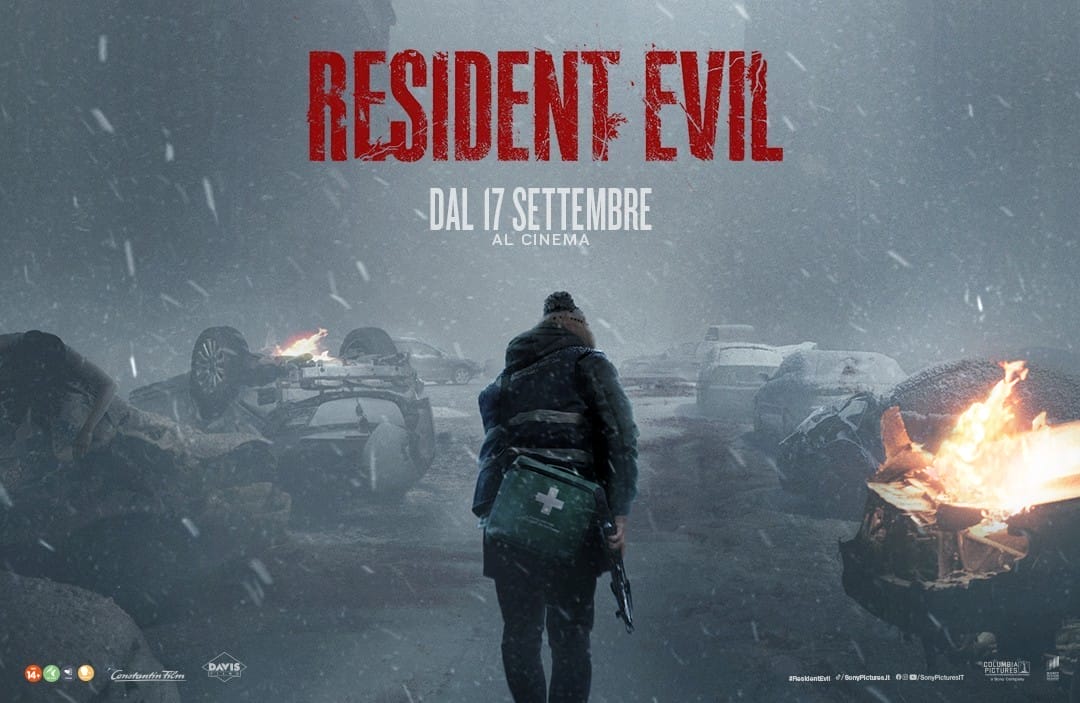
There's something almost comical about the way audiences approach each new Resident Evil movie: a mixture of curiosity, hope, and inevitable mistrust, tempered by years of film adaptations that have rarely managed to fully capture the spirit of Capcom's video games.
From 2002 to today, the Resident Evil film saga has gone through live action, CGI productions, zombies, mutations, explosions and more or less free reinterpretations of the source material. With a few exceptions that have become cult for a part of the public, the result has often been far from the survival horror atmosphere that has made the video game series famous: fluctuating scripts, a progressively more tired zombie imagery and films increasingly focused on spectacular action.
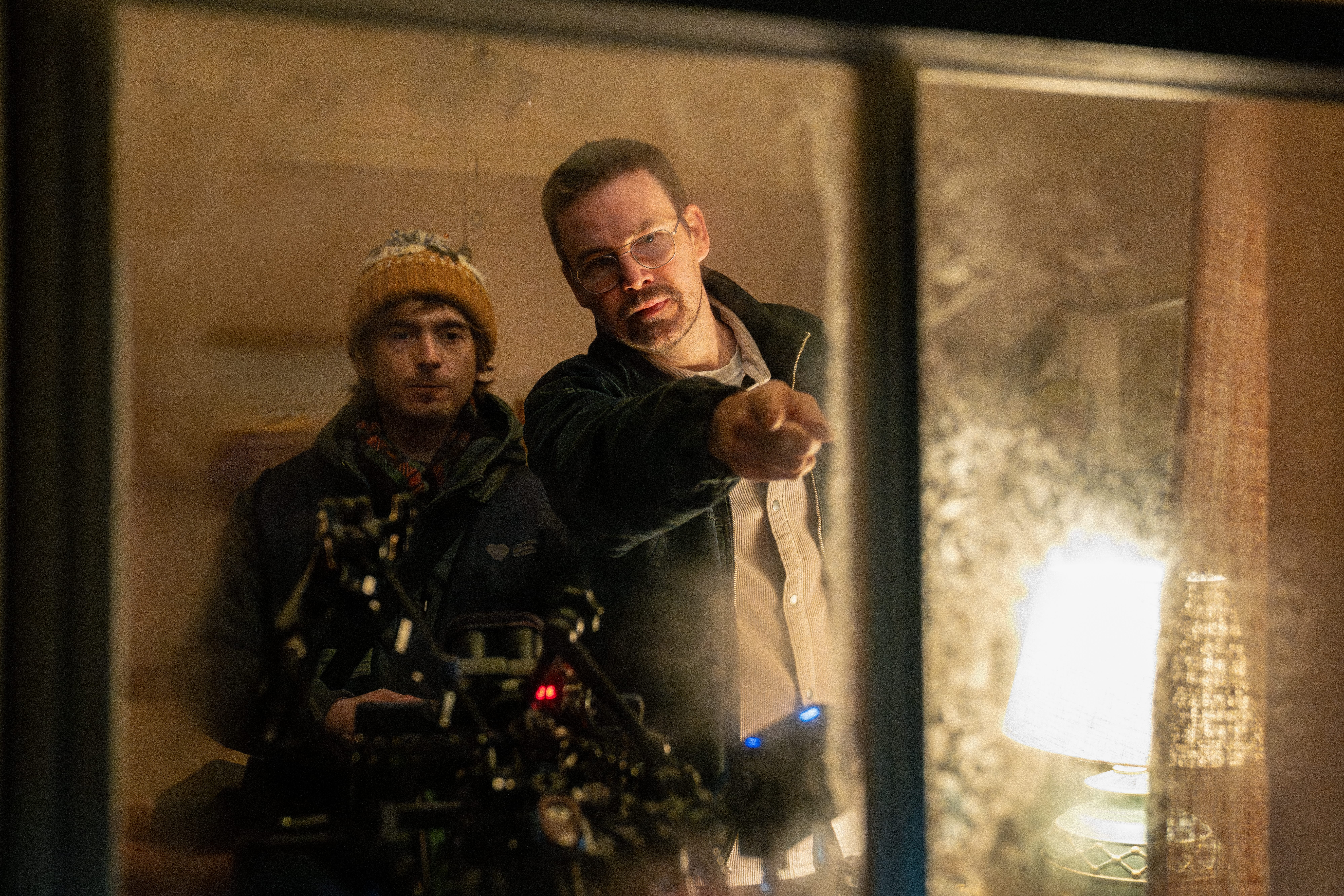
This time, however, something seemed different since the announcement of the project. A good part of the curiosity was inevitably linked to the name of Zach Cregger, director of Barbarian and Weapons, as well as a declared fan of video games and, in particular, of the Resident Evil saga.
"Games are an amazing benchmark for survival horror. I celebrate everything I love about them by telling a story that might exist on the fringes of one of the games."
It is precisely this philosophy that represents the heart of Resident Evil (2026): a completely new and autonomous story that moves within the universe of the saga, recovering places, iconography and above all the language of survival horror without limiting itself to slavishly reproducing one of the video games.
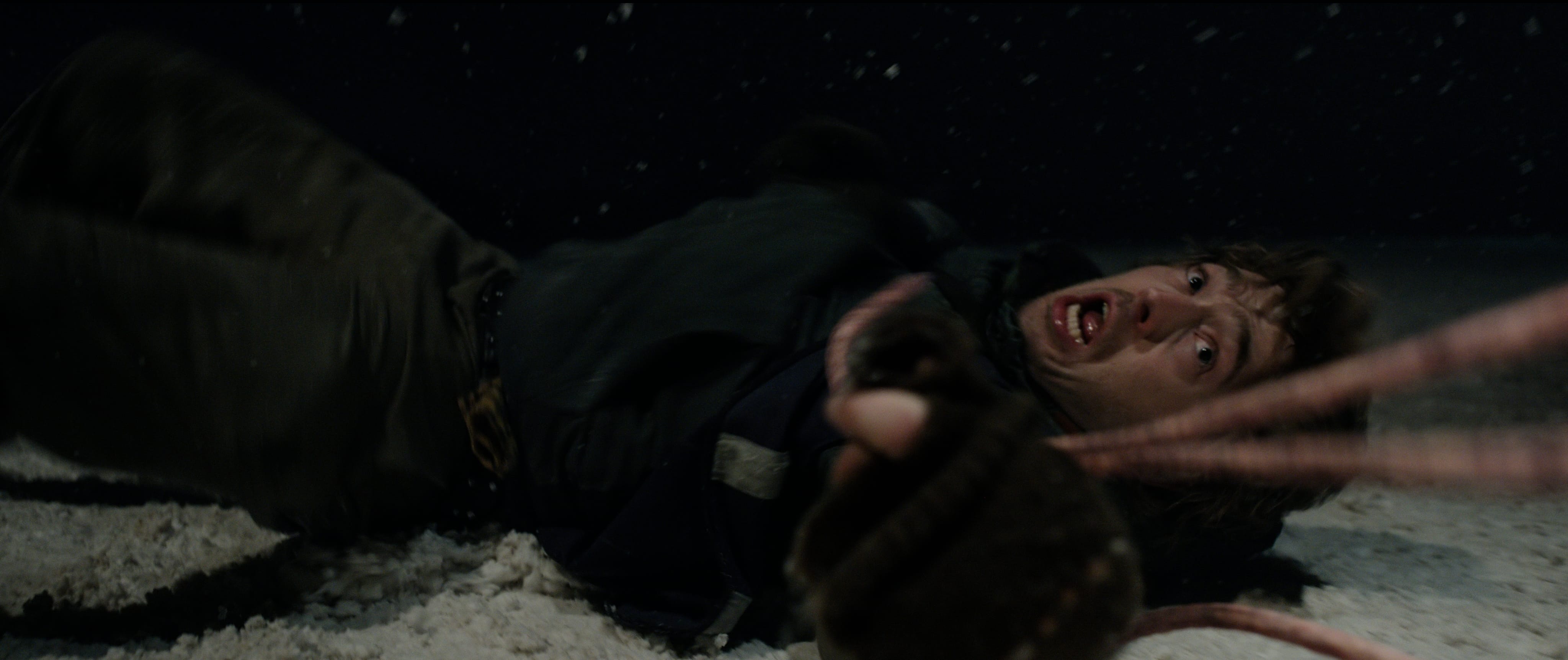
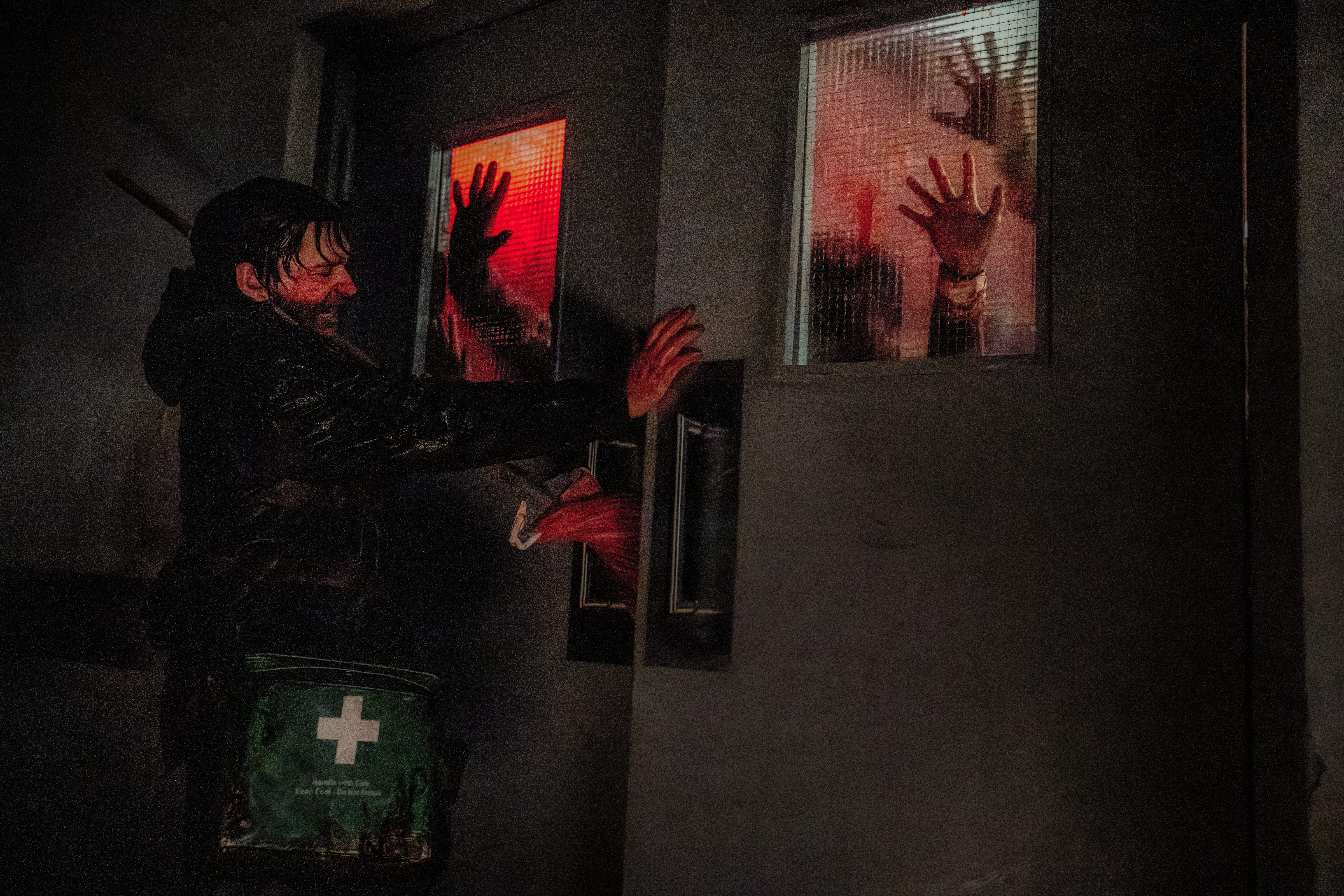
At the center of the story we find Bryan, played by Austin Abrams, a medical courier in charge of transporting a cooler bag containing a human organ from one hospital to another. What initially seems like a normal work shift quickly turns into a race for survival, as Bryan heads towards Raccoon City through an increasingly hostile territory overrun by the infected.
Resident Evil 2026: a finally ordinary protagonist
One of the main strengths of Resident Evil, in my opinion, is Bryan.
He is not a genetically enhanced soldier, he is not a special agent and, above all, he does not have any particular training to deal with what is happening to him.
He is simply a normal person who ended up in the wrong place at the worst possible time.
Zach Cregger's humor and Austin Abrams' ability to play a character progressively taken to the limit generate a protagonist in whom it is easy to recognize. In some moments Bryan almost seems to represent the reaction that a normal gamer would have if he was suddenly catapulted into a game of Resident Evil.
Panic, disbelief, improvised decisions and a single goal: to try to stay alive.
"Zach's humor makes me laugh because it's really sharp. I love his job because one moment he can terrify you and the next he can make you laugh. It's kind of his way of seasoning things."
Abrams manages to sustain this balance between horror, action and comedy very well. Bryan shows immature and sometimes selfish qualities, but at the same time he constantly tries to adapt to the situation and become, in spite of himself, the man of the situation.
His emotional evolution is not particularly deep, but it works. Austin Abrams brings a convincing sense of resilience to the role: he has the physical presence necessary to sustain the most intense sequences, but he also manages to give the protagonist heart, fragility and a dose of hope enough to push the viewer to constantly root for him.
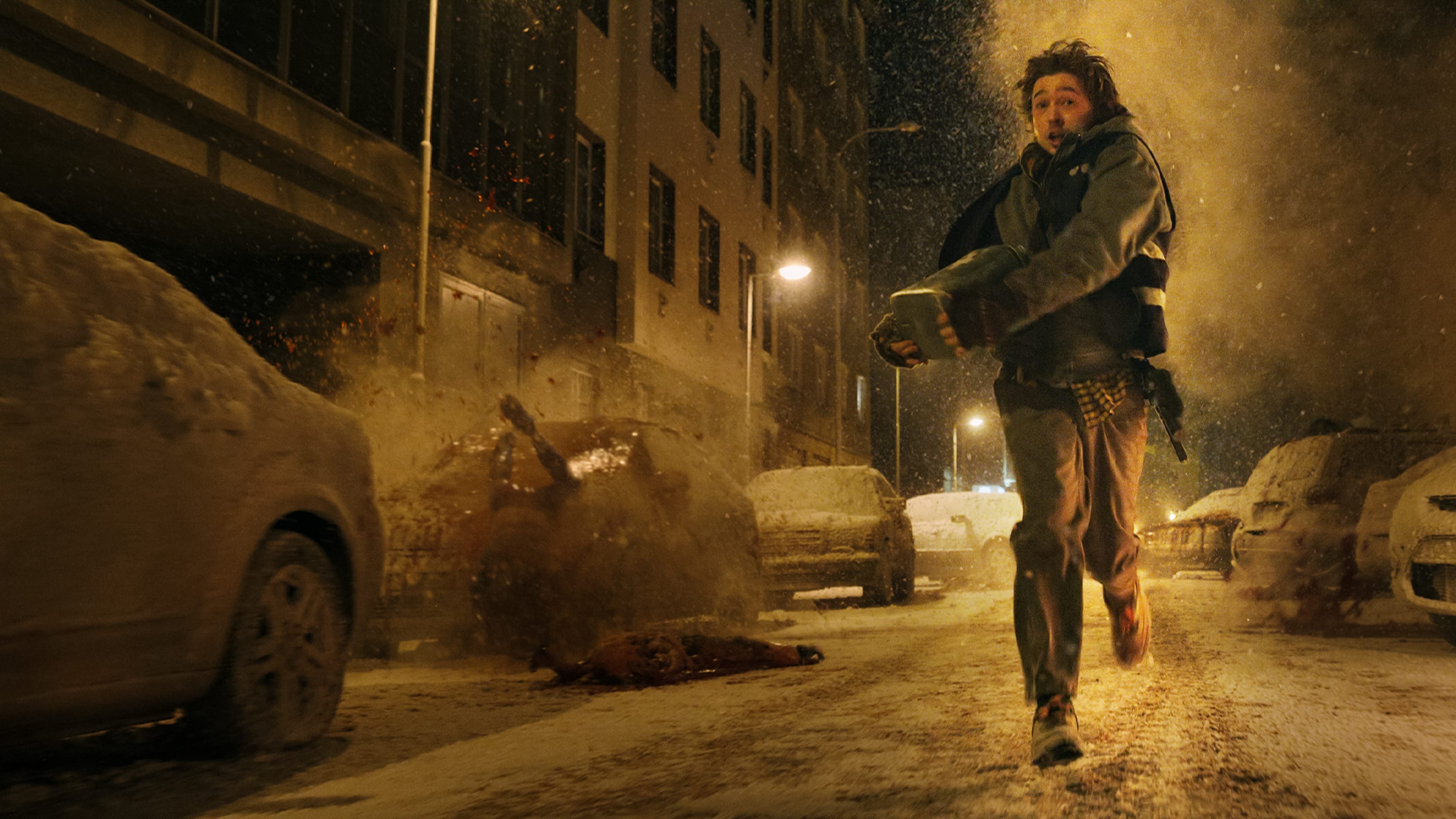
His progressive physical deterioration also helps to communicate the brutality of the journey. Mud, snow, blood, wounds and dirt accumulate on Bryan's body and clothes as the situation degenerates, making the price of his endless night visible on the character.
Umbrella Corporation: the return of the Resident Evil nightmare
Of course, talking about Resident Evil without talking about the Umbrella Corporation would be almost impossible.
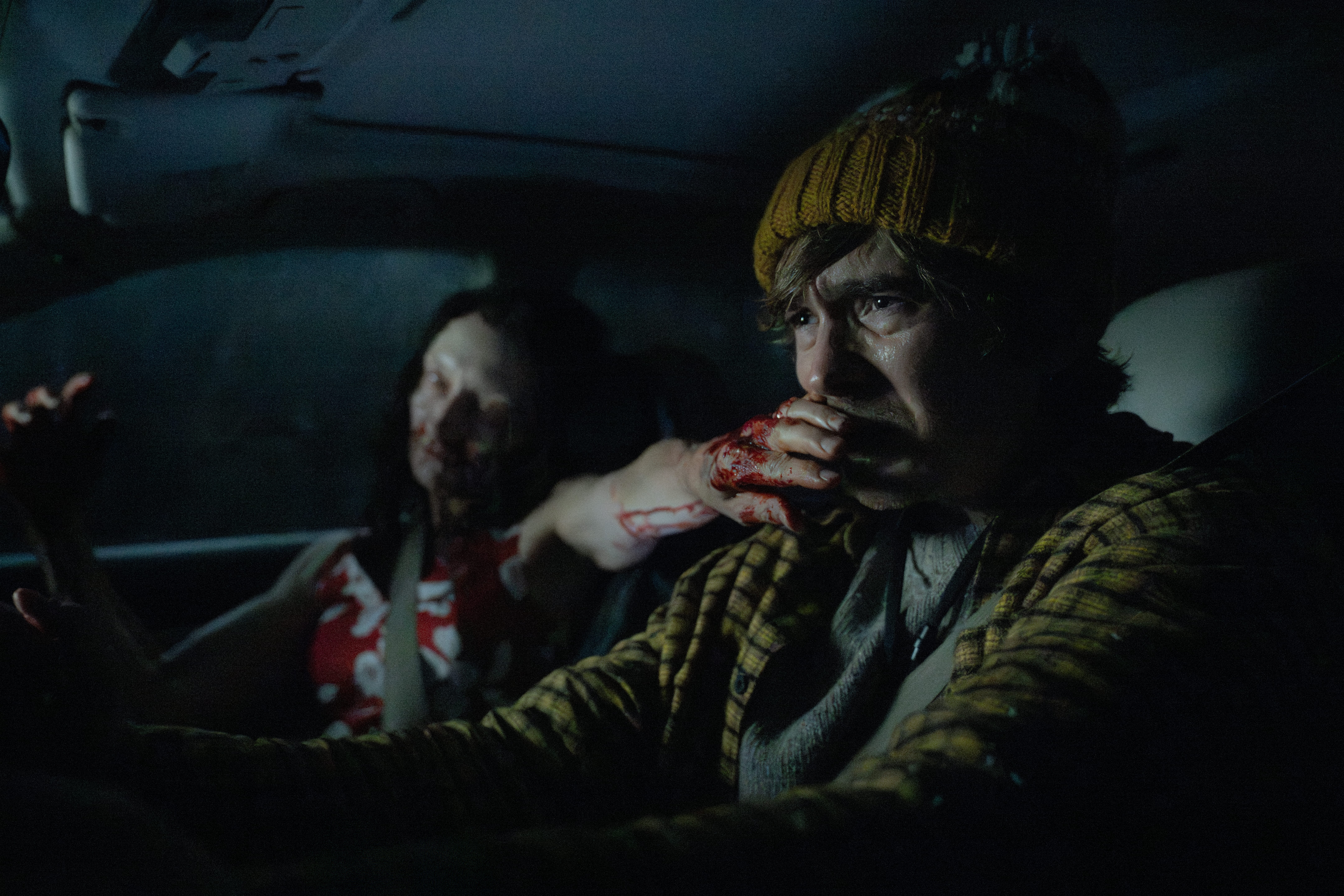
During his journey to Raccoon City, Bryan crosses paths with two employees of the infamous organization: Paul, played by Paul Walter Hauser, and Maxine, played by Kali Reis.
The meeting between Bryan and the two representatives of the Umbrella Corporation does not occupy a huge part of the film and is brutally interrupted by the creatures that have now invaded the territory. However, it is enough to provide the protagonist with fundamental information about the spread of the epidemic and the true nature of the task he is trying to complete.
Paul and Maxine
Maxine has a military background and is significantly more competent in dealing with the infected than Bryan or Paul. She is prepared, pragmatic and knows exactly how to react when the situation escalates.
Paul, on the other hand, represents a completely different figure, decidedly less prepared to directly face the horrors that surround them.
It's a shame that the film doesn't give more space to interactions between these three characters, because the chemistry between Austin Abrams, Paul Walter Hauser and Kali Reis works surprisingly well.
It is precisely some of their scenes that best show the film's ability to move from horror to comedy without completely destroying the tension.
The creatures of Raccoon City and attention to detail
One of the most successful elements of Resident Evil 2026 is certainly the work done on the creatures.
Zach Cregger and the production team show that they know the aesthetics of the saga well. There are not all the iconic monsters that fans could want, but the visual research is evident.
Teeth, mutations, tentacles, deformed anatomies and color palettes clearly recall the visual language of video games, helping to make the world of the film immediately recognizable.
The production worked starting from the visual anatomy of the games, analyzing gameplay and selecting elements such as teeth, tentacles, mutations and specific color palettes to be used as the basis for creatures and settings.
A work that is not limited to digital effects. Legacy Effects and WETA collaborated on the creation of the creatures, combining practical effects, animatronics and visual effects with a very specific goal: to maintain a strong visual shock without sacrificing that sense of realism necessary for even the most absurd moments to work.
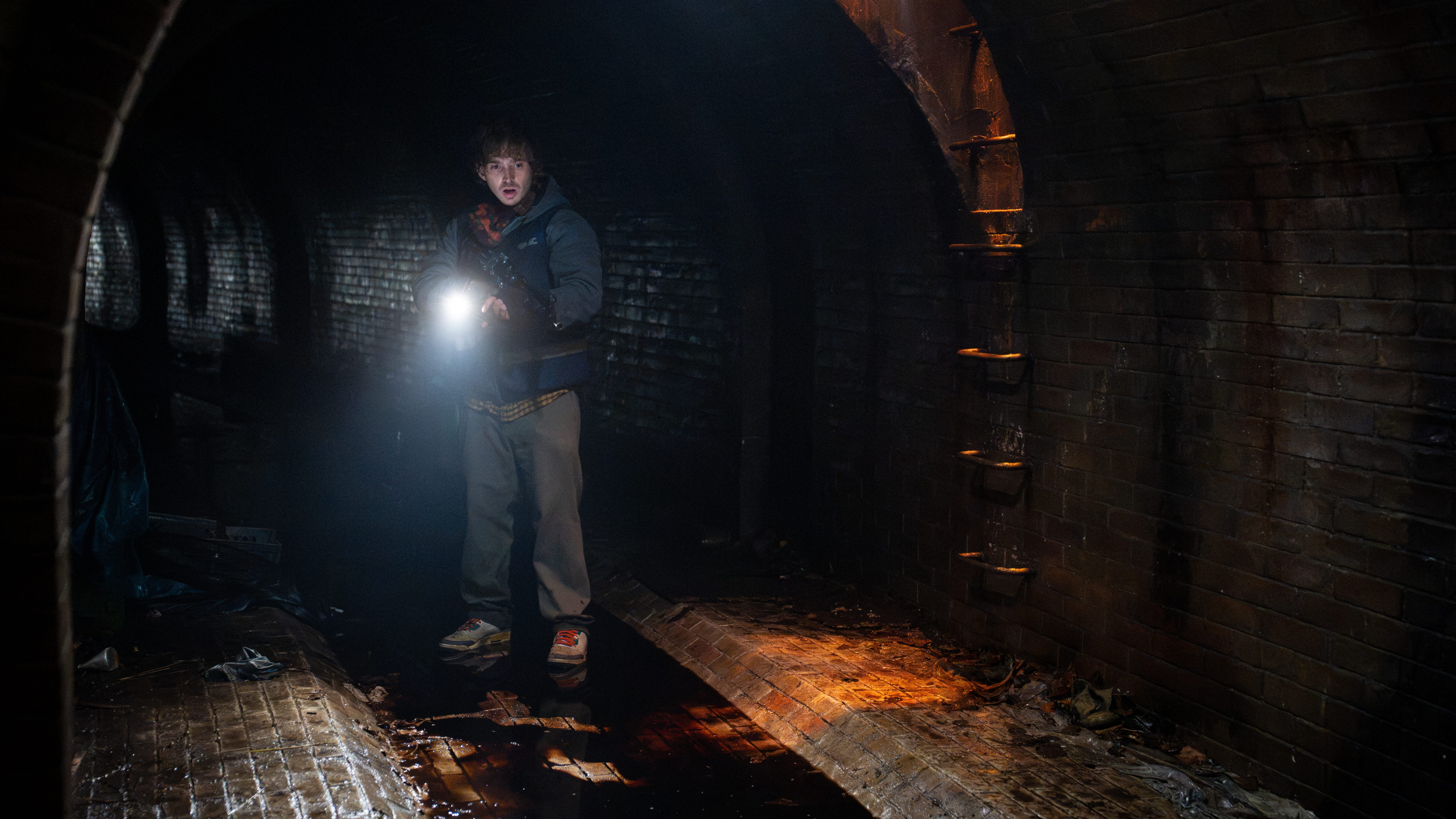
Particularly impressive is one of the creatures encountered in the sewers, made through a gigantic animatronic about two and a half meters high and weighing close to a ton. A physical model so detailed that it even reproduces the texture and pores of the skin, activated on the set by several technicians and puppeteers.
The result is a type of monstrosity that does not seem to simply be digitally resting on the image, but actually present in the same space occupied by the actors.
Resident Evil Easter eggs: green herbs, sprays and weapons
The attention to the original material, however, goes far beyond a few simple quotes placed in the background.
The production spent numerous hours directly analyzing the gameplay of the video games, selecting objects and small details to transfer into the film.
Among the Resident Evil easter eggs appear the iconic healing sprays and green herbs, elements immediately recognizable by anyone who has spent enough time within the Capcom saga.
Even more interesting is the progression of Bryan's equipment.
As would happen within a video game, the protagonist starts with extremely limited resources and progressively expands his arsenal: from the pistol to the shotgun to the MP5.
Cregger has gone so far as to reproduce with particular attention even the specific shotgun, the ammunition box and the cartridges present in the games.
These are tiny details for those unfamiliar with Resident Evil, but they represent exactly the kind of attention that an enthusiast immediately notices.
A Resident Evil designed even for those who do not know video games
However, the film manages to find a good balance between those who have known Resident Evil for decades and those who enter this universe for the first time.
You don't need to know the history of video games in depth to understand the story. Easter eggs, quotes and references to the video game saga work on two different levels.
For a viewer outside the series, they simply remain part of the setting and world-building. For a fan, however, they become a sort of small parallel game, made up of objects and details to be recognized while watching.
It's a smart choice because it allows the film to use the Resident Evil mythology without turning it into a narrative obstacle.
Gore, blood and jumpscare: Resident Evil does not hold back
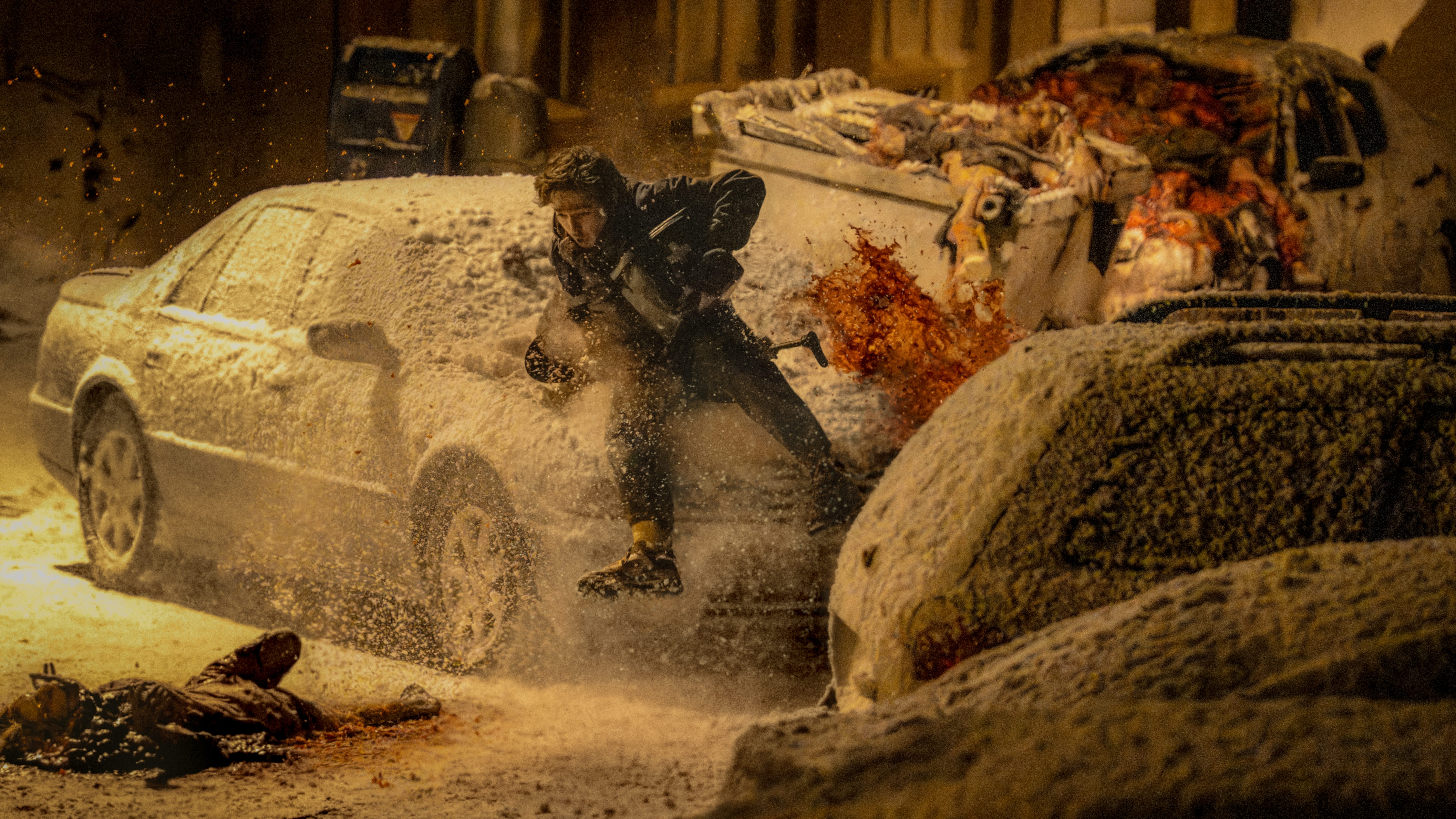
Among the aspects that I appreciated the most there are also the more gore and violent sequences.
Resident Evil does not particularly try to hold back and, when he decides to show the consequences of the epidemic, he does so with some conviction.
Warped bodies, blood, guts, slimes and mutations become an integral part of the film's visual construction. In several sequences, the physicality of the effects contributes a lot to making the action dirtier and more convincing.
There is probably a few too many economic jumpscares , especially in situations where the direction could have relied more on the tension of the environment.
What really works, though, is the timing.
Shock value, tension and comedy alternate with a naturalness that we have rarely seen in other film adaptations of the saga.
The result is a sustained rhythm, deliberately unpredictable and capable of going from a brutal scene to an almost absurd situation without seeming completely out of tune.
Resident Evil like a video game: a progression made up of "levels"
One of the most interesting aspects of Zach Cregger's Resident Evil is the way in which the film tries to recover not only characters, creatures or objects from video games, but even a part of their structural language.
While watching I constantly had the impression that Bryan was going through a series of consecutive horror levels.
And it's interesting to find out that this feeling is absolutely intentional.
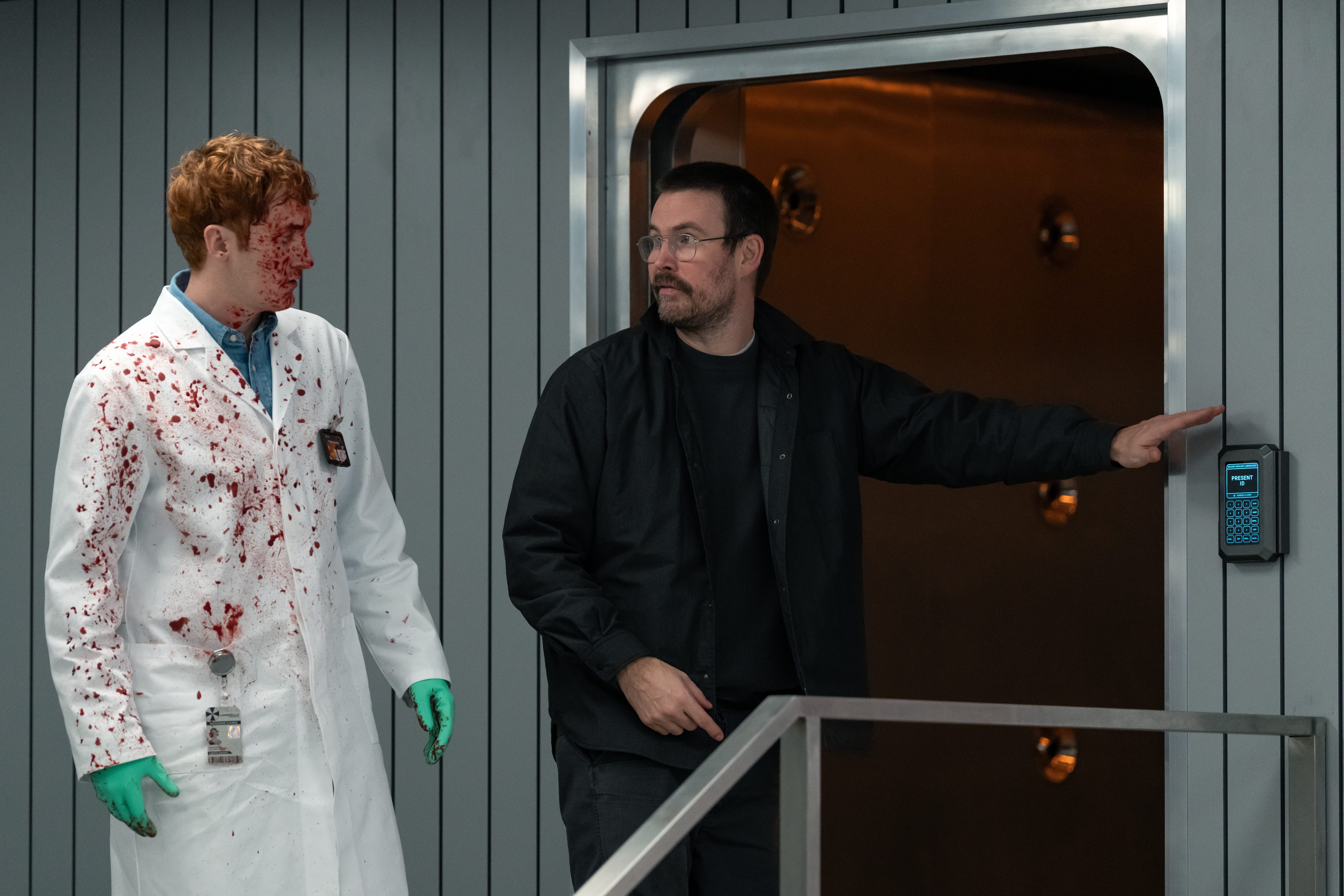
Cregger has in fact built the journey by changing the setting approximately every seven to eight minutes, precisely to give the viewer the impression of advancing together with Bryan from one horror level to the next.
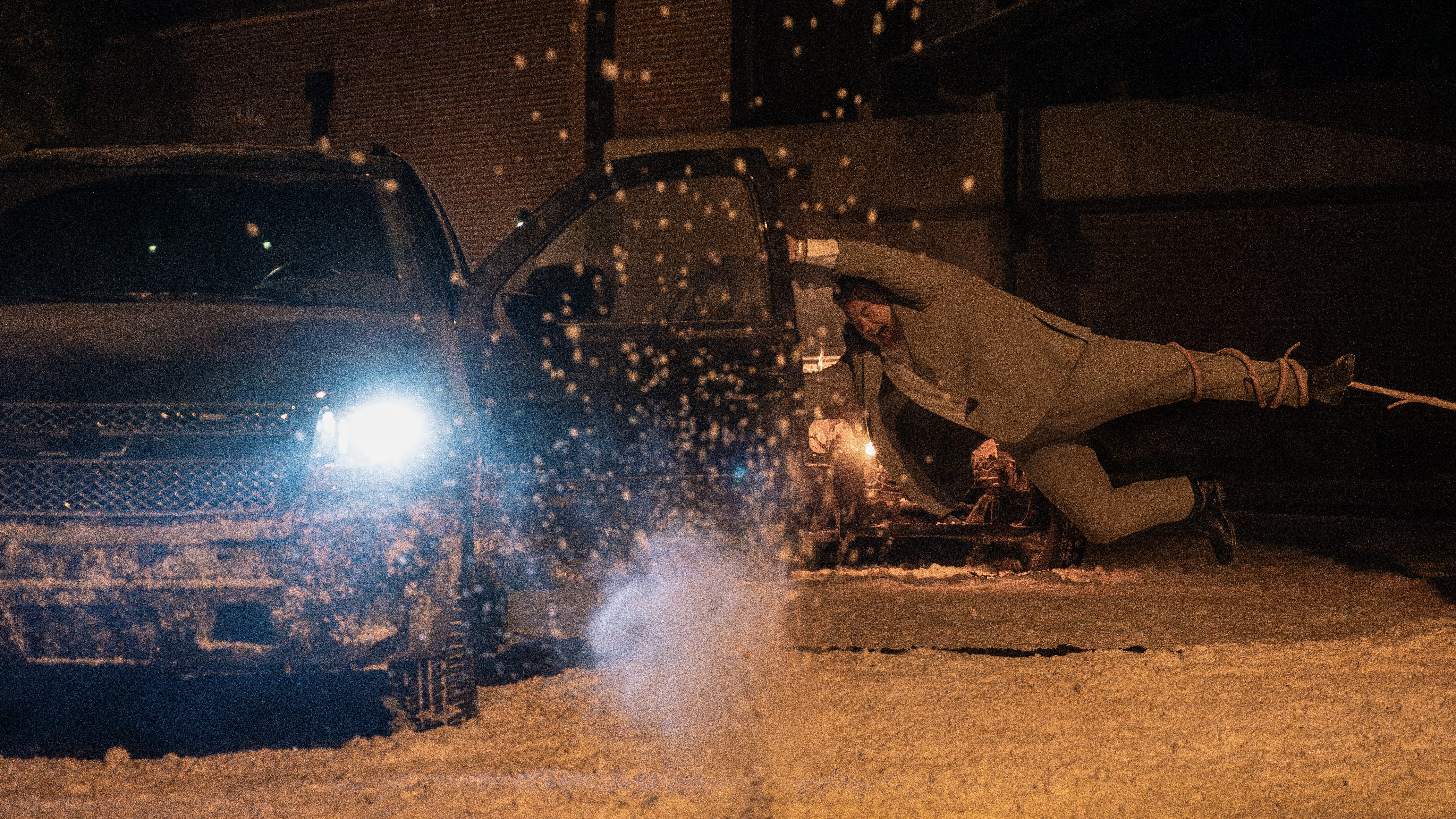
So you go from a snowy road to a barn, then to a farm, to an abandoned tunnel, to a camper van, to the alleys of the city and finally to the sewers.
Some of these settings are deliberately archetypal and sometimes even a bit cliché. Within this structure, however, they work well because each new zone represents a further step in the nightmare.
"One of the most interesting aspects of the story is the long journey that Bryan undertakes. We put together several very different environments, and it's really fun, especially visually."
The feeling is therefore very similar to the progression of a video game: you overcome an environment, acquire new resources, increase the threat level and are catapulted into the next area.
The camera mimics the point of view of Resident Evil
The same concept is applied to the way Bryan is filmed.
The camera follows the protagonist practically without abandoning him, accompanying him from one place to another while simultaneously trying to complete his delivery and survive.
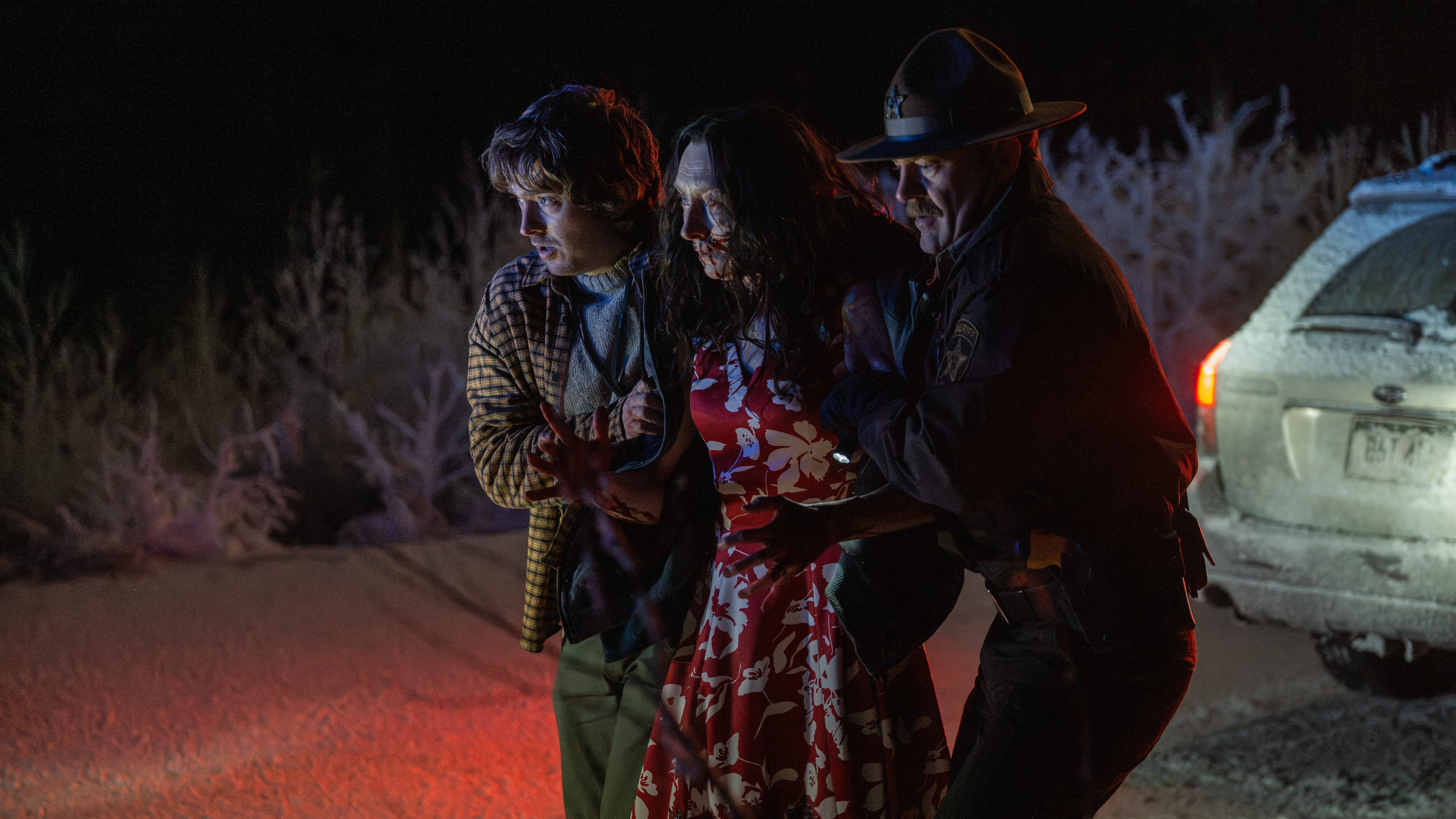
Cregger often chooses to stay behind him, filming him with a composition that deliberately recalls the third-person camera of modern Resident Evil video games.
When Bryan looks to the left, the camera moves to show us what caught his attention. When he moves his gaze in the opposite direction, the camera reacts along with him.
It's a deceptively simple solution, but extremely effective in transferring that visual grammar that players know very well to the cinema screen.
The same principle emerges in the work of cinematographer Dariusz Wolski. Pans, tilts and tracking shots constantly accompany Bryan, with an extremely mobile camera that often seeks unconventional perspectives.
More than just recording what happens, the camera therefore seems to participate directly in the action.
Photography in the dark, Sony Venice 2 and IMAX
Even from a technical point of view, some decisions have been made specifically to support this idea of diving.
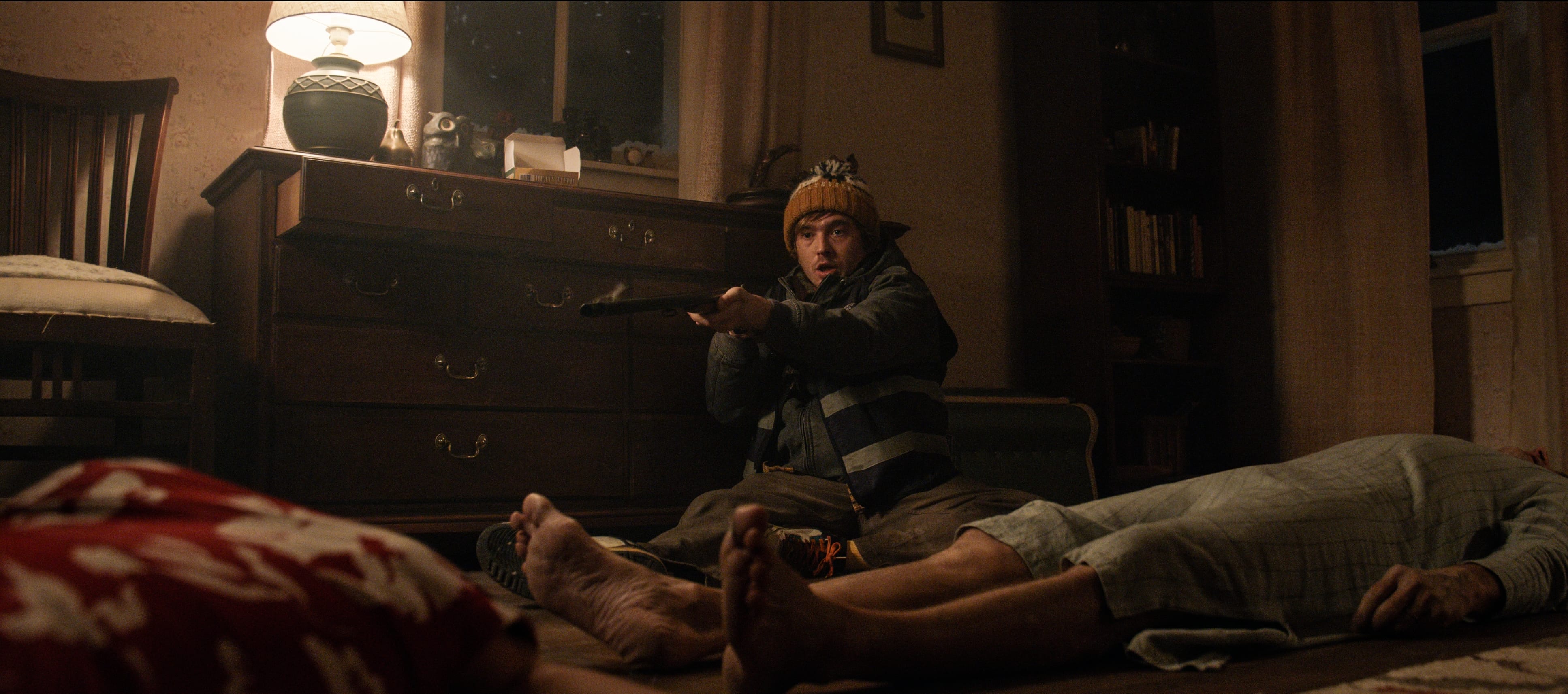
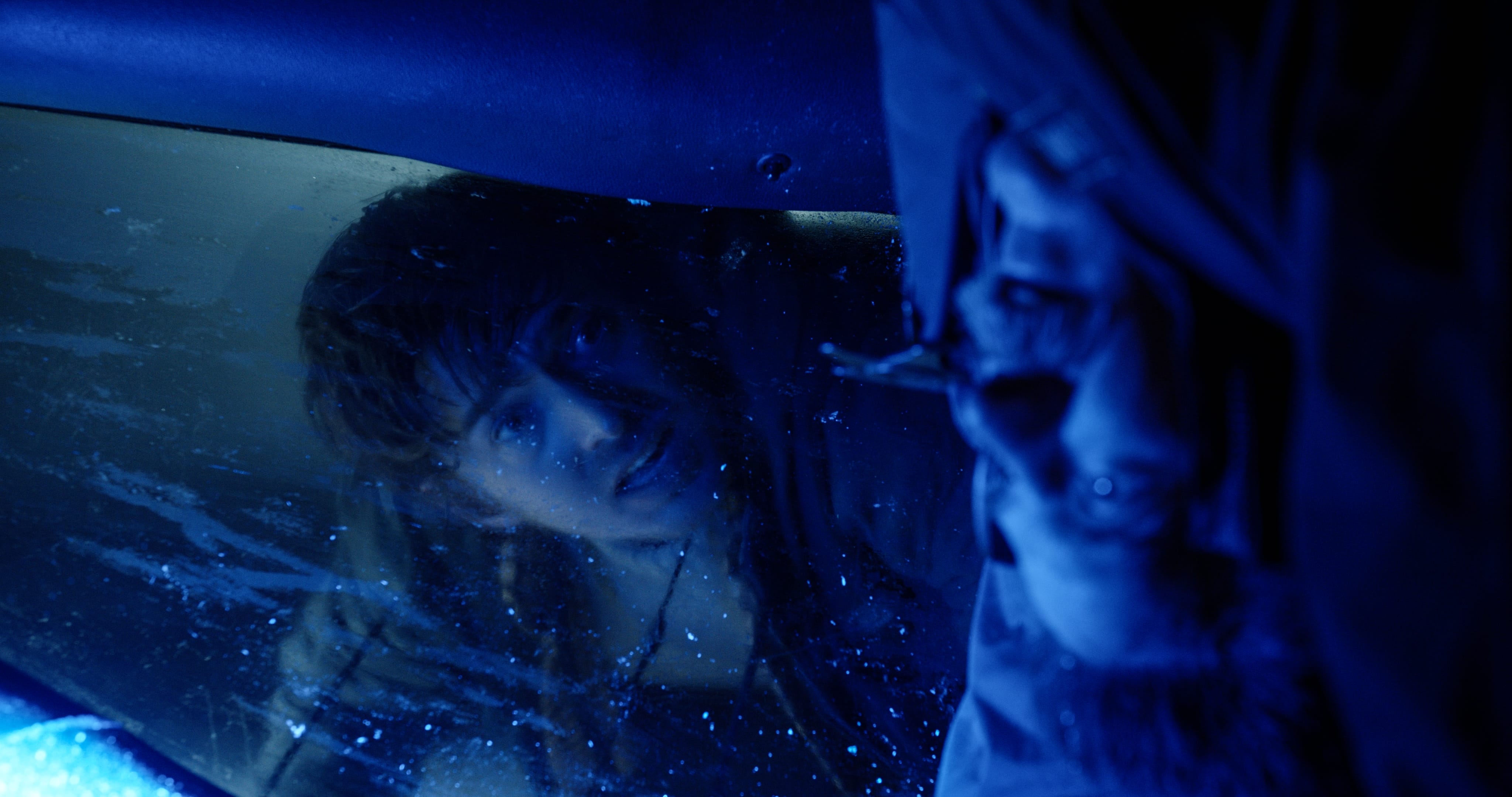
Much of the film takes place at night, and some sequences are lit almost exclusively by Bryan's phone flashlight or car headlights.
To work in extremely low light conditions, Wolski used the Sony Venice 2, a camera that is particularly suitable for shooting in low light conditions.
The result is an image that keeps the shadows very present without completely losing legibility, a fundamental feature for a film in which danger can hide in practically every corner of the frame.
Cregger also chose to use the IMAX format to emphasize the growing scale of the adventure. The reasoning is consistent with the structure of video games: the journey proceeds from point A to point B, while the environments, creatures and set pieces become progressively larger.
Bryan's physical transformation chronicles the journey
Then there is a production detail almost invisible to the viewer, but which shows how much the continuity of the journey has been planned.
Bryan wears basically the same outfit throughout the night, but the costume never really stays the same.
To represent the various stages of his descent into the nightmare , over fifty versions of the courier's clothing have been created, each with different amounts of mud, blood, slime, gore, tears and bite marks.
In parallel, the makeup department developed different stages of the protagonist's physical transformation, following the accumulation of snow, dirt, wounds and fluids on his body.
It is a detail that probably goes unnoticed during a first viewing, but it contributes to making the journey perceived as one long night without a reset: Bryan arrives at the end literally carrying everything that happened to him.
Resident Evil 2026: review conclusions
In the end, this is above all the feeling with which you leave the theater: Resident Evil is not a perfect film and certainly does not try to rewrite the rules of the horror genre, but it is one of the cinematic chapters of the saga that seems most interested in understanding what made video games so loved.
Zach Cregger doesn't try to slavishly replicate a single game and doesn't even build yet another horror blockbuster that uses the name Resident Evil only as a nostalgic reference.
He prefers to absorb language, irony, a sense of progression, resource management and that particular ability to alternate tension and absurdity without allowing one component to end up canceling out the other.
And it is perhaps precisely here that the film finds its identity.
The progression of weapons, the continuous transition from one environment to another, the shot behind Bryan, the familiar objects scattered throughout the sets and even the progressive deterioration of the protagonist do not seem simply quotes intended to wink at fans.
They become part of the way the film is constructed.
There are several elements that can be improved.
Some solutions are quite conventional, some jumpscares could have been avoided and the script could have given more depth to both the protagonist and some supporting actors, especially considering how well certain dynamics between Bryan, Paul and Maxine work.
I also wish I could have seen even more space dedicated to some of the creatures and secondary characters, because several encounters end just when they start to get particularly interesting.
However, these are defects that often end up in the background in the face of the vitality of the whole.
Resident Evil is funny, dirty, violent and above all aware of what it wants to be.
After years of adaptations that seemed to pursue a cinematic identity increasingly distant from video games, it is almost ironic that it took a standalone story, apparently disconnected from the most famous protagonists of the saga, to recover part of that spirit.
Perhaps this is the most important result achieved by Zach Cregger.
For once, in front of a new Resident Evil movie, you don't find yourself constantly wondering how far it is from the video game.
You simply find yourself wanting to find out what awaits you in the next room.
About the Author

Biography
- Articolista di KotaWorld.itRecent Articles
- WARDOGS starts with a bang: over a million copies sold at its debut in Early Access
- DRAGON BALL XENOVERSE 3 shows the creation of the avatar: six races and the skills of 130 heroes
- The Last of Us: here is the official trailer of the HBO series!
- Apex Legends: Christmas Event Coming Soon!
- Mario Kart Tour: Stop in Paris!