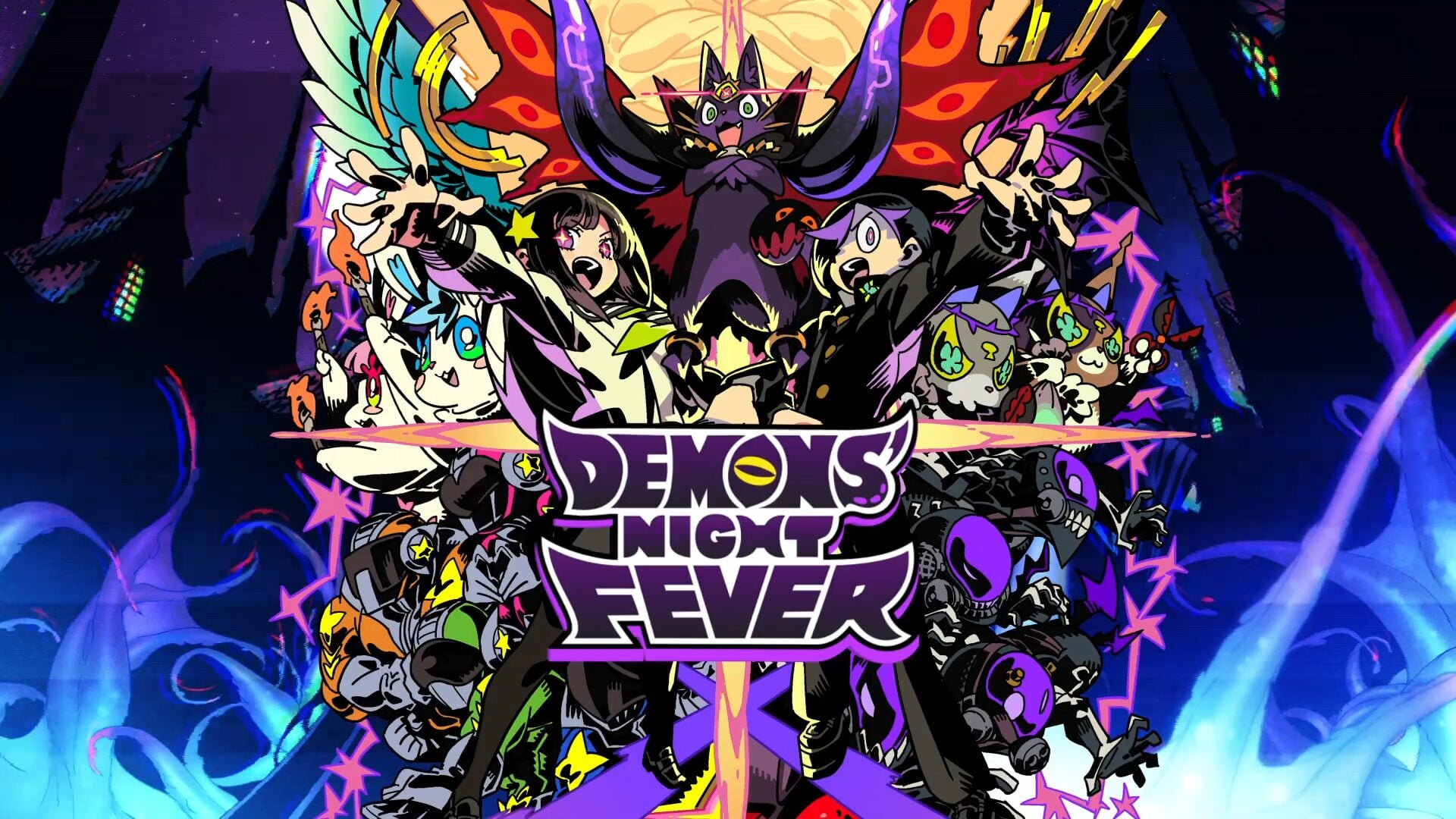
There’s a particular category of Japanese video games that seems to have been conceived during a meeting where no one had slept enough and someone, probably, had consumed an excessive amount of energy drinks. These are productions that take a perfectly understandable mechanic, flip it on its head, add an unbearable protagonist, and build an entire progression system around the result. Sometimes the outcome is something genuinely brilliant; other times it’s an experiment that would have been better abandoned before reaching the publishing stage. Demons' Night Fever sits exactly in the middle, in that grey zone where interesting ideas coexist with decisions so questionable that it suggests the developers decided to apply the game’s philosophy to its design: causing harm to someone, possibly the player, and seeing what happens.
The new strategy game from Drecom, published by Arc System Works, stems from the collaboration with Sohei Niikawa, a figure historically tied to Nippon Ichi Software and the Disgaea series. A background that immediately explains the project’s nature: demons, madcap humour, numbers to make you grow, and a rather flexible conception of the value of life. The difference is that, while in traditional strategy games we desperately try to keep our companions alive, here the most effective way to win often consists in making them explode voluntarily.
A system that, one must admit, could find interesting applications in more than a few companies today.
This content is provided by YouTube. To view it, you must allow external content. Activation may result in data being shared with the third party.
God is a problem, the Devil too
The story begins with a rather unpleasant situation for Giga Super Death, a powerful demonic entity that, just as it seemed about to eliminate God, is stripped of its powers and transformed into an harmless infant. A rather humbling regression for someone who had dedicated their existence to conquering the cosmos. To recover what they have lost, our aspiring infernal sovereign activates a resurrection ritual called Demons' Night Fever, involving Killshiro Katanaka, an adolescent misanthrope who hates practically everyone and seems to have built their personality around the idea of being as unpleasant as possible. The two form an alliance based on an extremely simple principle: do enough harm to the next person to regain the power necessary to exact revenge.
The premise is deliberately ridiculous and introduces a world in which evil is not a moral deviation, but a true resource to be managed. The villains are the protagonists, criminal acts represent everyday activities, and even God is portrayed as a character far from commendable.
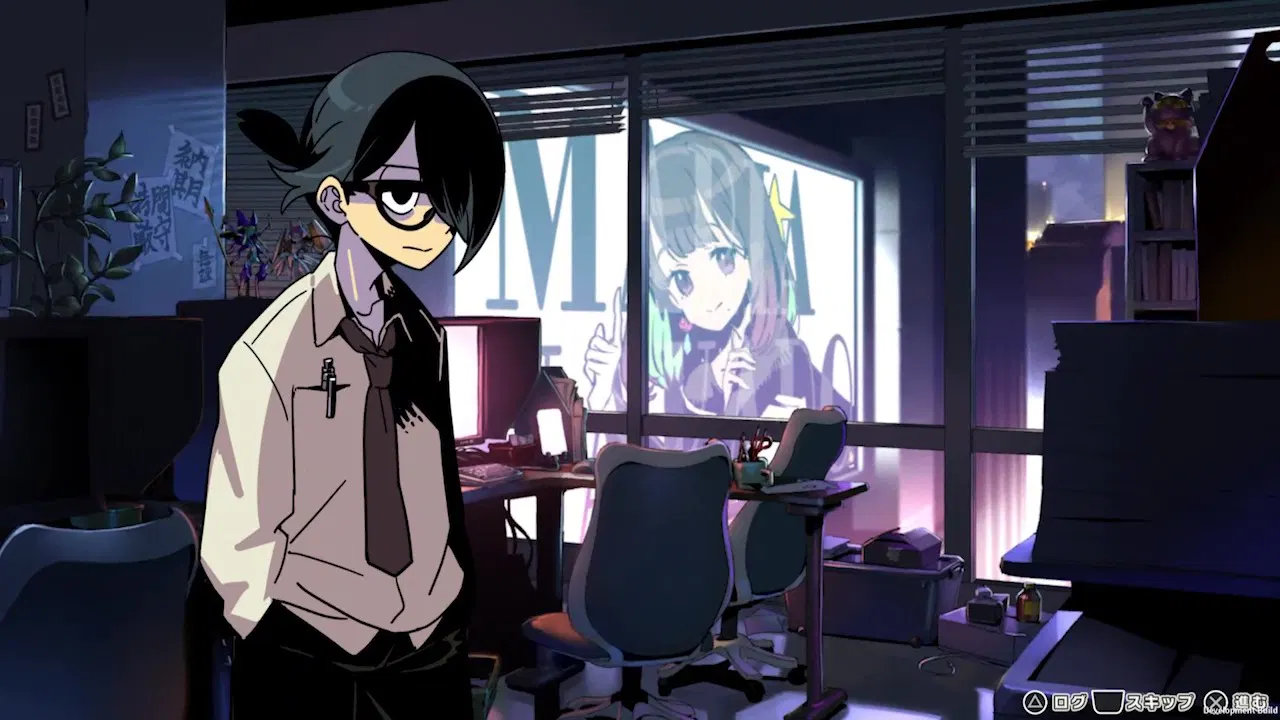
The story progresses through chapters that constantly shift settings and targets, bringing us to face improbable teams of superheroes in a sentai style or to embody monstrous creatures pursuing magical girls. It’s a constant subversion of Japanese animation tropes, with references, parodies, and jokes aiming to keep the atmosphere perpetually off the rails. Unfortunately, however, Demons' Night Fever confuses excess with comedy too often.
The dialogue in Killshiro seems to have been written to portray a teenager convinced that saying something offensive is automatically sufficient to make it funny. At first, some comebacks even manage to elicit a smile, but after a couple of hours, the constant pursuit of provocative punchlines becomes rather tiresome. I don’t naturally expect a philosophical reflection on good and evil from a video game featuring a neon devil intent on conquering the world through the sacrifice of its employees. The point is that even the most absurd comedy requires rhythm, balance, and characters capable of sustaining a conversation without turning it into an endless sequence of adolescent jokes.
And on this point, the comparison with Disgaea — inevitable given the people involved in the project — does not particularly favour Demons' Night Fever.
Human resources are finally expendable
The real peculiarity of the experience lies in the combat system, built around what is known as the Peon Exploitation System. At first glance, we’re presented with a turn-based strategy game somewhat traditional, featuring maps divided into tiles, units to deploy, and enemies to eliminate through careful positioning management. The protagonist can be controlled directly, while much of the grunt work is delegated to the Peons, recruited through our criminal activities. These latter combatants, however, act predominantly autonomously, and we can only influence their behaviour by issuing generic orders — without precisely deciding where they must move or which enemy they must target.
A limitation that initially seems rather odd for a strategy game, but which finds its justification in the game’s central mechanic. The Peons are essentially living ammunition. You can sacrifice them via specific Kill Skills, generating explosions capable of hitting nearby opponents. Each subordinate possesses different traits, with effect areas that can take circular, cross-shaped, or extended forms, as well as offensive properties tied to the damage dealt.
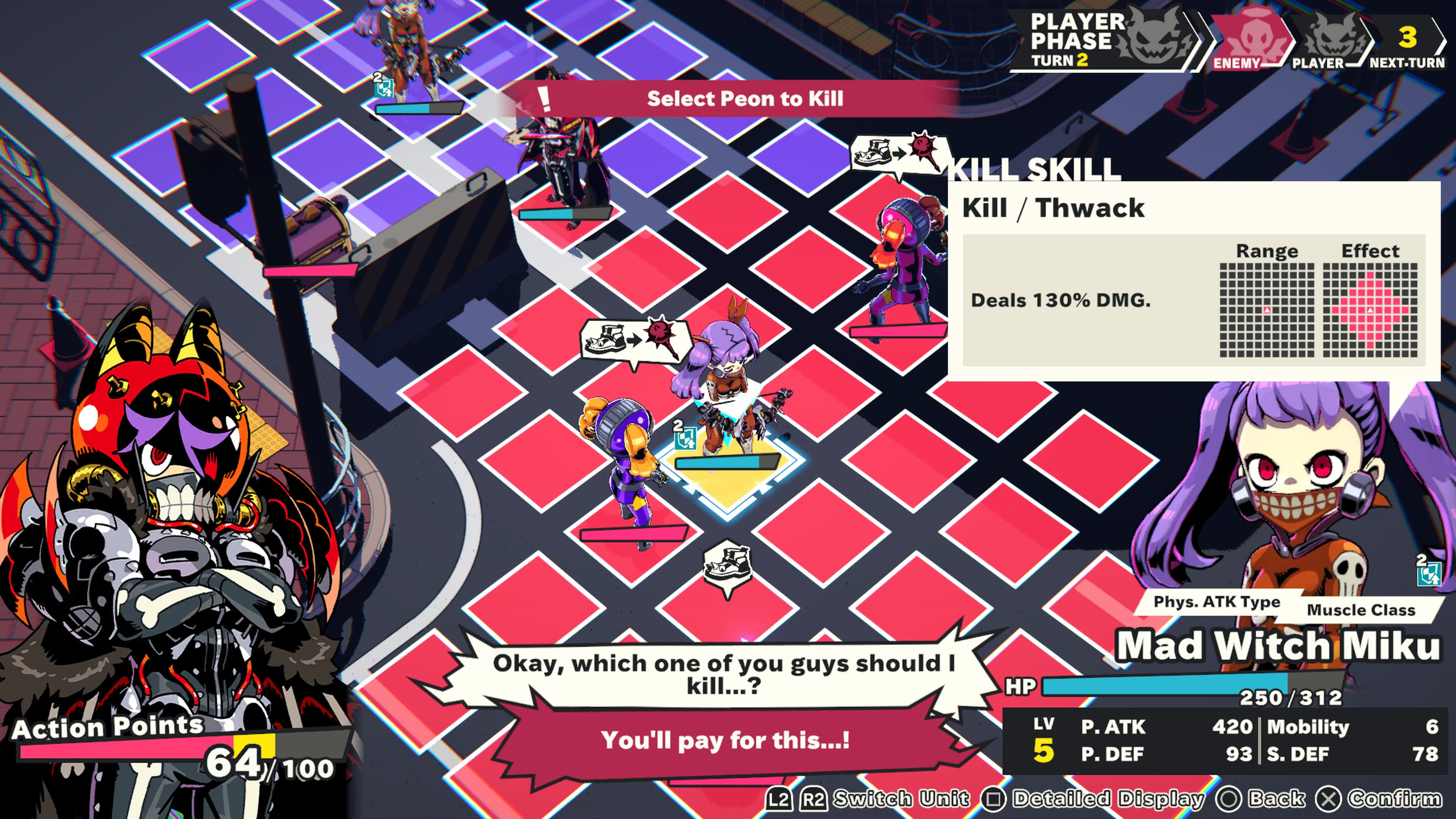
The real fun should therefore come from the ability to properly manage your subordinates and turn them into improvised bombs, exploiting positioning to eliminate multiple enemies simultaneously. The protagonist can use abilities to swap positions with a Peon, absorb their health, or prepare conditions to sacrifice them at the most opportune moment. The system thus introduces a unusual tactical dimension, in which we are no longer simply required to protect our units, but to decide when it is advantageous to eliminate them personally.
The most interesting thing is that the sacrificed Peons can reincarnate and become progressively stronger, while those killed by opponents are permanently lost. Death, therefore, does not necessarily represent a failure, but can become a form of investment. It’s a grotesque mechanic, perfectly coherent with the setting and potentially capable of distinguishing Demons' Night Fever from much of the other SRPGs. Unfortunately, once the initial curiosity has passed, the system begins to show a series of problems difficult to ignore.
Strategy as an act of faith
The main limitation of the combat system lies precisely in the lack of ability to control our subordinates. In a strategic game, satisfaction typically arises from the capacity to anticipate events, plan a sequence of actions, and observe the outcomes of one’s decisions. Demons' Night Fever, however, attempts to build this component around units that move autonomously, leaving us to correct their behaviour through rather generic orders. The result is that a significant portion of the battles consists of waiting for the Peons to do something vaguely useful, then intervening to move or sacrifice them when the opportunity finally presents itself. We cannot precisely target a specific objective, nor can we determine exactly which tile they must reach. Some behavioural priorities can be adjusted, but rarely does one feel they possess sufficient control to construct truly elaborate strategies.
The situation worsens due to the lack of clarity with which key information is communicated. Each Peon possesses its own explosive ability, but the game does not always explain the damage calculation in a sufficiently understandable way. Percentages, stats, and modifiers thus take on a rather vague meaning, especially when trying to compare the effectiveness of units that appear similar. In some circumstances, it is difficult to predict whether a sacrifice will produce devastating results or negligible damage. This inevitably encourages an approach based on trial and error, rather than thoughtful planning.
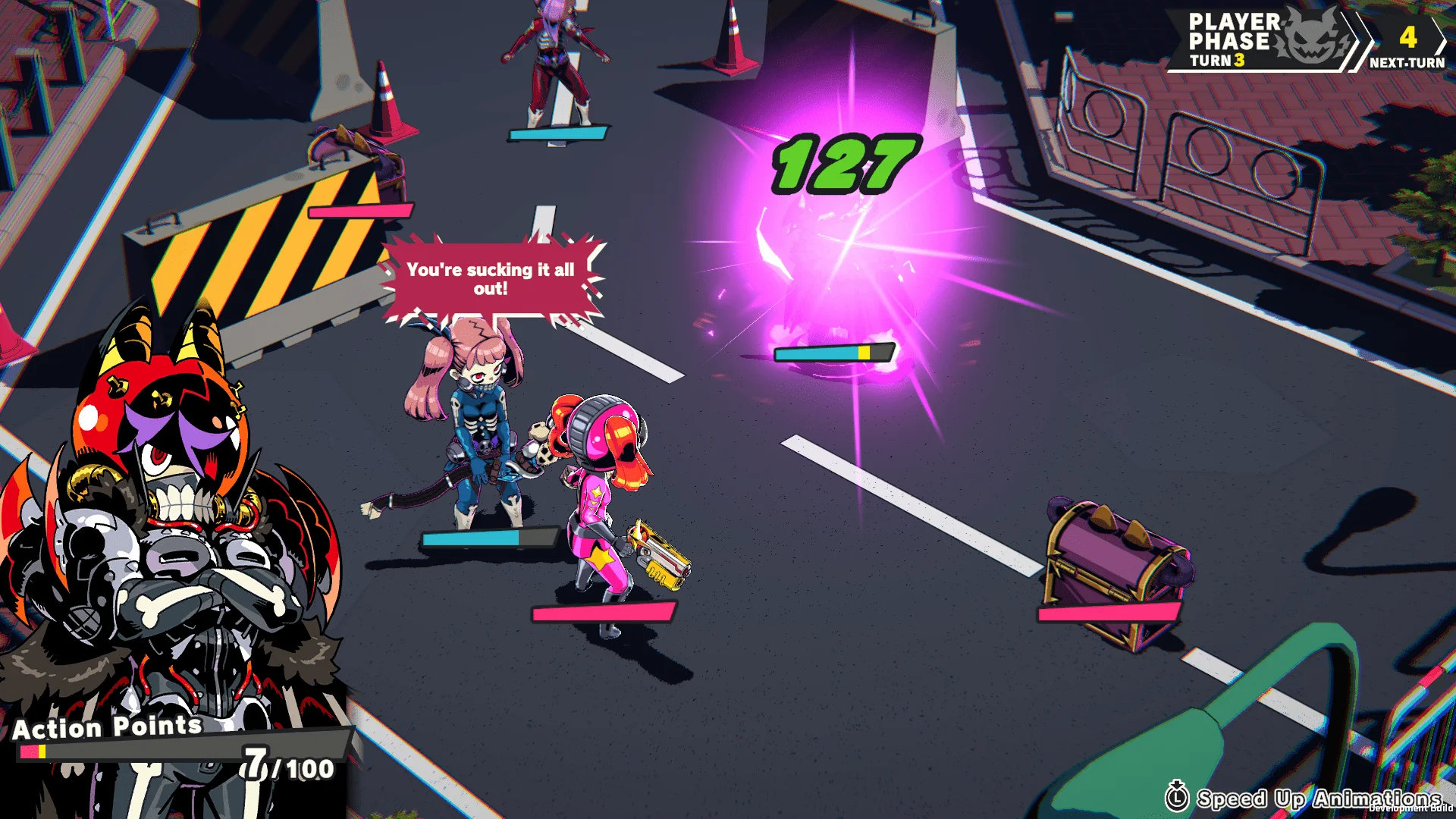
The paradox is that Demons' Night Fever contains a considerable amount of tutorial. From the very first battles, the game constantly interrupts the action to explain basic operations, occasionally forcing us to perform specific commands and accompanying every new mechanic with dialogue that seems to never end. It is extraordinarily verbose when it needs to teach us something obvious, but suddenly becomes reticent when we need to understand the rules that determine the effectiveness of our strategies.
At a certain point, the temptation to skip conversations becomes almost irresistible, especially because the combat system, despite its apparent complexity, often ends up being a series of fairly repetitive operations. It’s not a disaster, mind you. Some combinations manage to be satisfying, and organising a sacrifice capable of eliminating multiple enemies simultaneously delivers enjoyable moments. But the game rarely succeeds in turning its central idea into a genuinely convincing tactical system.
Doing harm makes sense
Outside the battlefield, Demons' Night Fever offers a management component based on resource accumulation and investment. In our hideout, we can commit crimes, organize kidnappings, loot, recruit new Peons, and improve the protagonist’s traits through the Perverse Points, earned naturally by behaving as badly as possible. These activities consume turns and must be scheduled within specific time limits, creating a structure that vaguely resembles a management simulation with speedrun elements.
The goal is to prepare a sufficiently effective army before facing decisive battles, trying to make the best use of available time and resources. It’s a component that has its own appeal, especially for fans of numerical progression and systems in which every activity contributes to the character’s overall growth. The preparation is often more interesting than the battles themselves, because it allows you to plan investments, develop skills, and decide which traits to prioritise.
There is also a storage system that allows you to save certain items and retrieve them through subsequent playthroughs. The game encourages you to revisit already-completed chapters, leveraging accumulated resources to gradually improve your chances. The structure lends itself to a certain replayability, allowing you to view failure as an integral part of the growth process, rather than simply a wasted time.
Here, too, some questionable choices emerge: unit management is entrusted to a rather clunky interface, navigating between classes, attributes and upgrades requires more steps than necessary. During battles, especially when we have a large number of Peons, unit selection can become particularly annoying. A clearer organisation of different roles, or immediate navigation between categories, would have been sufficient, rather than forcing us to constantly consult lists and filters. Also, the absence of manual saves, with the game relying solely on autosaves, unnecessarily restricts management freedom, especially in a product that should encourage experimentation.
They’re minor issues that, added together, end up making a progression system that deserved far more attention less enjoyable.
A lovely hell, but recorded inside a wardrobe
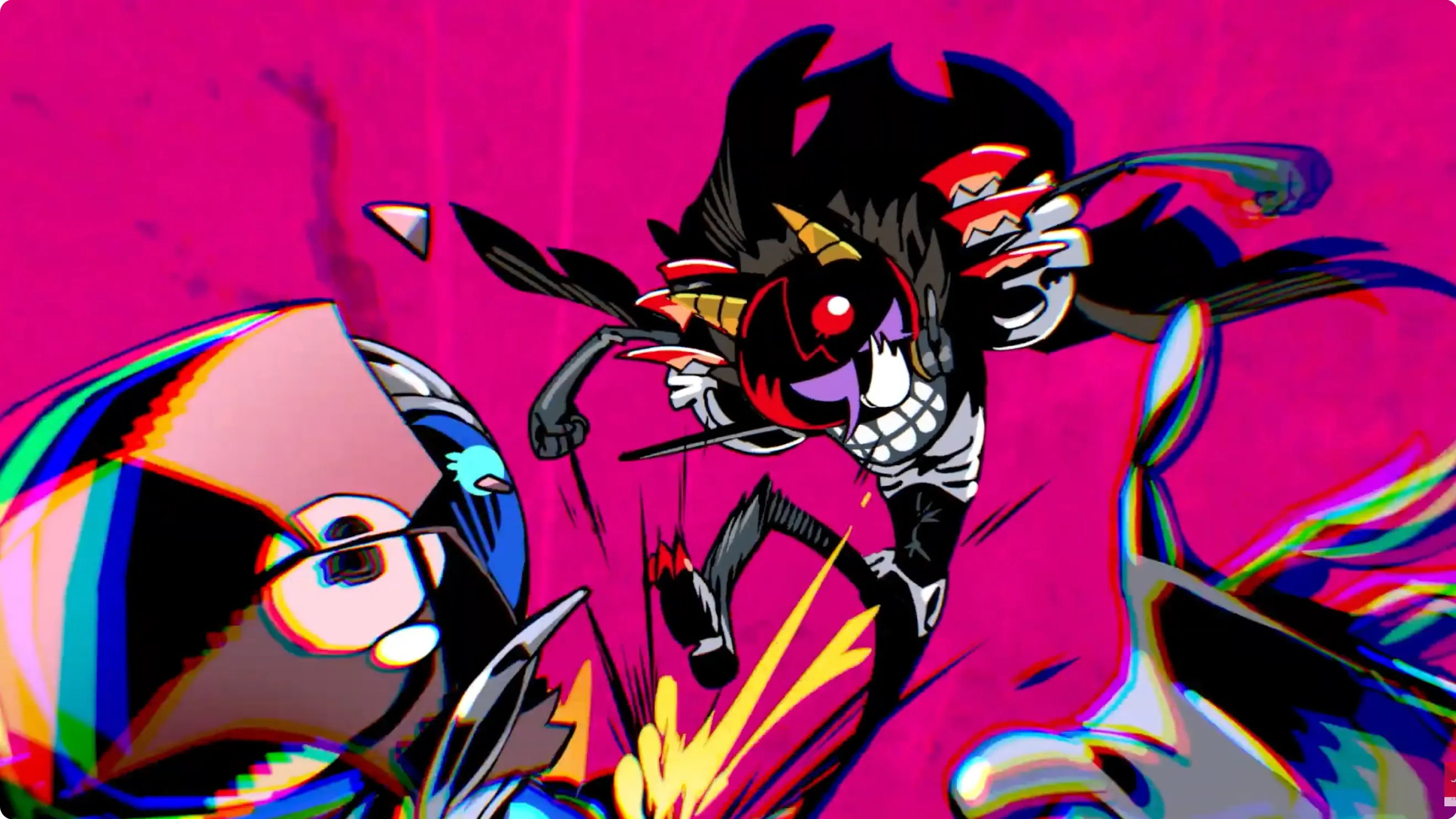
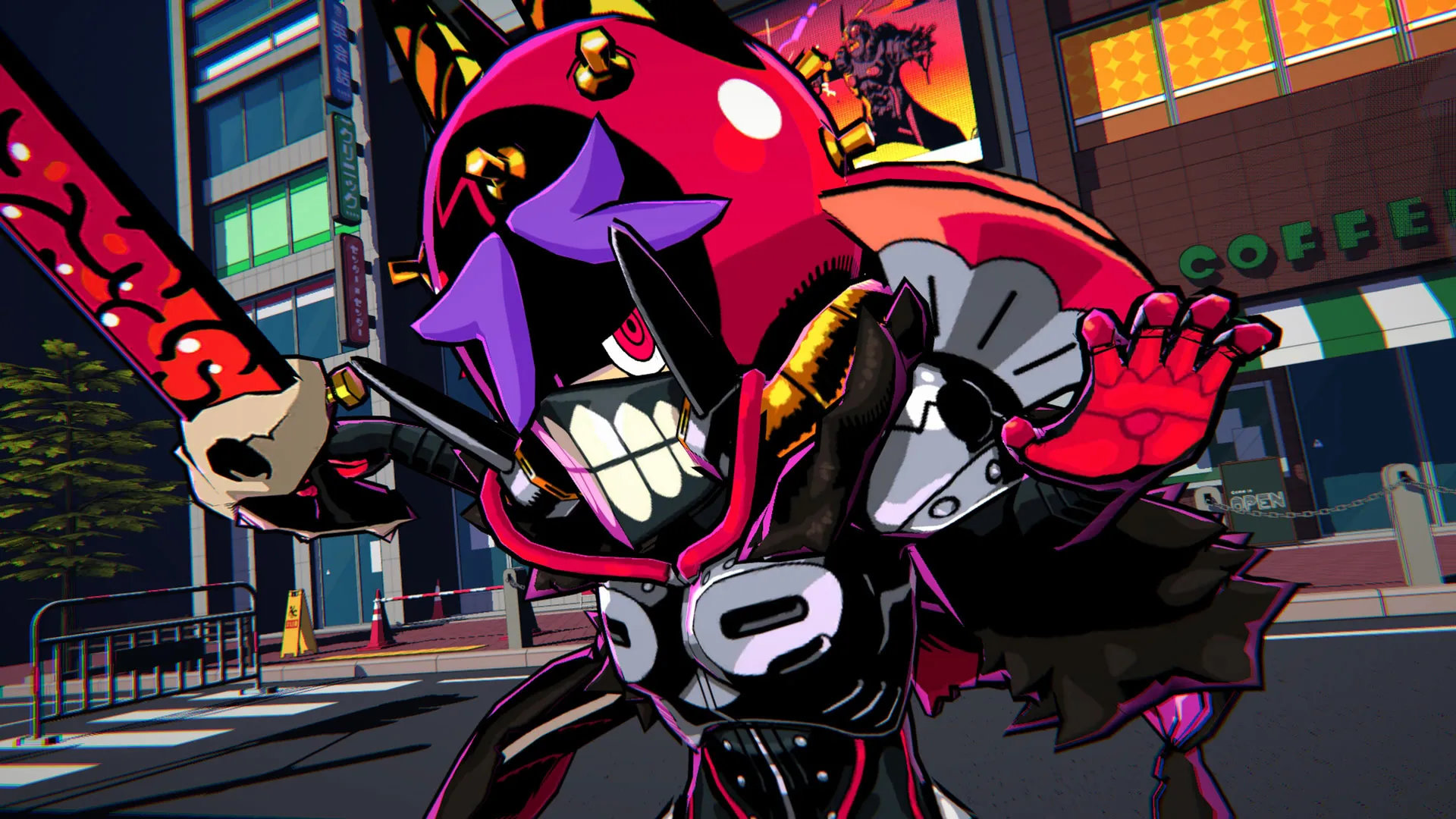
From an artistic standpoint, Demons' Night Fever manages to defend itself quite well. The character design by Yuji Himukai gives the project an immediately recognisable personality, with characters featuring exaggerated proportions and expressions, and a deliberately childish aesthetic that pleasantly contrasts with the brutality of the mechanics. The 3D models faithfully reproduce the illustrations, and the environments are vibrant in colour, helping to build a world that seems to constantly oscillate between a madcap comedy and an animated series with morally dubious content.
It’s a pleasant style, though technically quite modest. We’re not facing a particularly ambitious production, and the overall result reminds, in certain respects, of those Japanese strategy games born for portable consoles, where the project’s weight was chiefly entrusted to character design and progression structure. A choice that doesn’t necessarily pose a problem, provided the rest of the experience adequately supports the game’s ambitions.
The audio department, unfortunately, is decidedly less convincing.
The voice acting, both in English and Japanese, often lacks punch, with recording quality and mixing not always delivering the care we’d expect from a product sold at full price. Some voices seem overly compressed or poorly integrated into the audio context, while the constant reliance on intentionally over-the-top performances ends up making already quite demanding dialogue even more taxing.
The problem isn’t simply that the characters shout a lot. It’s that they often shout without possessing the comedic timing precision that could genuinely make their exasperation entertaining. Fortunately, the soundtrack by Tatsuya Yano has a stronger personality, especially in the more energetic tracks, while the excellent opening theme “Dropout”, performed by syudou, manages to convey that frenzied madness within minutes — exactly what the rest of the game aims to maintain constantly.
On the localisation front, the English adaptation clearly aims to amplify the characters’ provocative humour, with mixed results. I don’t necessarily consider it problematic for an adaptation to take some liberties with the original text, provided it manages to preserve its intentions and characterisation, but in this case some jokes seem desperately trying to appear irreverent without having enough substance to succeed.
Technically speaking
From a purely technical standpoint, Demons' Night Fever is certainly not a title designed to trouble modern setups. PC requirements are quite modest, with just 4 GB of RAM and a GeForce GTX 1650 listed among the minimum specs. Our reference configuration, consisting of NVIDIA GeForce RTX 5080, AMD Ryzen 7 9800X3D and 32 GB of RAM DDR5, is therefore significantly over-specced compared to the game’s needs.
The title is available on PC, PlayStation 5 and Nintendo Switch, a distribution consistent with a structure that seems to fit particularly well with relatively short sessions. Yet the feeling remains that some solutions, especially in the menus and management of subordinates, have remained tied to conventions now outdated, without offering the comfort that today should be guaranteed even for smaller productions.
In conclusion
Demons' Night Fever is a video game that has a solid central idea, a pleasing visual presentation, and enough personality to avoid disappearing immediately within the crowded landscape of Japanese strategy games. The Peon Exploitation System represents an interesting innovation, as it flips one of the core principles of traditional SRPGs and turns the sacrifice of your allies into an essential component of progression. The reincarnation system, resource management, and the ability to transfer parts of progress between different games also offer ideas that could have supported a far more convincing experience. The problem is that Demons' Night Fever seems to enjoy telling us how bad it is more than demonstrating how interesting its mechanics are.
The combat suffers from a lack of control over subordinates, the formulas determining the effectiveness of sacrifices are not communicated with sufficient clarity, and the game insists on an excessive amount of tutorials and dialogue that ultimately undermine the pace. The writing lacks the brilliance necessary to support such persistent humour, while the voice acting and some interface choices further contribute to the impression of a production that is not fully finished.
The result is not a bad game, but a niche strategy title that seems constantly on the brink of becoming something much more interesting without actually making the decisive step. And here we arrive at probably the hardest problem to ignore: the price. With a European list price of €39.99, Demons' Night Fever sits in a segment where competition is extremely fierce. It’s an economic request that I find poorly proportioned to the overall quality of the experience, especially considering how modest some aspects of the production appear. At a significantly lower price, it would be much easier to recommend it to fans of Japanese strategy games looking to try something unusual. At full price, however, it becomes difficult to ignore missed opportunities.
Drecom has built a hell in which the player must learn to exploit and sacrifice their subordinates to achieve maximum profit. An interesting idea, even amusing, at least until we realise that the system meant to make it satisfying is often more tedious than rewarding. Perhaps this is precisely the game’s best joke: convincing us that we are the merciless demons, when ultimately what is most at risk of being sacrificed is our wallet.
About the Author