

Dark Scrolls start from an interesting premise: take the classic fantasy action platformer, contaminate it with a self-scrolling structure, add roguelite elements and season it with a rhythm near the shoot ’em up. doinksoft and published by Devolver Digital, the title seems to have on paper all the ingredients to become a small arcade madness: fast, noisy, cooperative and full of personality.
The problem is that, once the initial impact is exceeded, Dark Scrolls quickly shows all the limits of an experience that would probably need much more time to be finished. The basic idea is good, the presentation works, but the gameplay struggles to support the weight of its ambitions.
This content is provided by YouTube. To view it, you must allow external content. Activation may result in data being shared with the third party.
An eye shot to frame
On an aesthetic level, Dark Scrolls knows how to be noticed. The pixel art fantasy is coloured, funny and sufficiently recognizable, with a visual taste that seems to mix the immediacy of a classic platformer with a medieval imaginary over the lines. There are small sympathic details, such as the gym where you hit a lot of boxing to make it oscillate in an exaggerated way, or some general personality that emerges from settings, characters and tone.
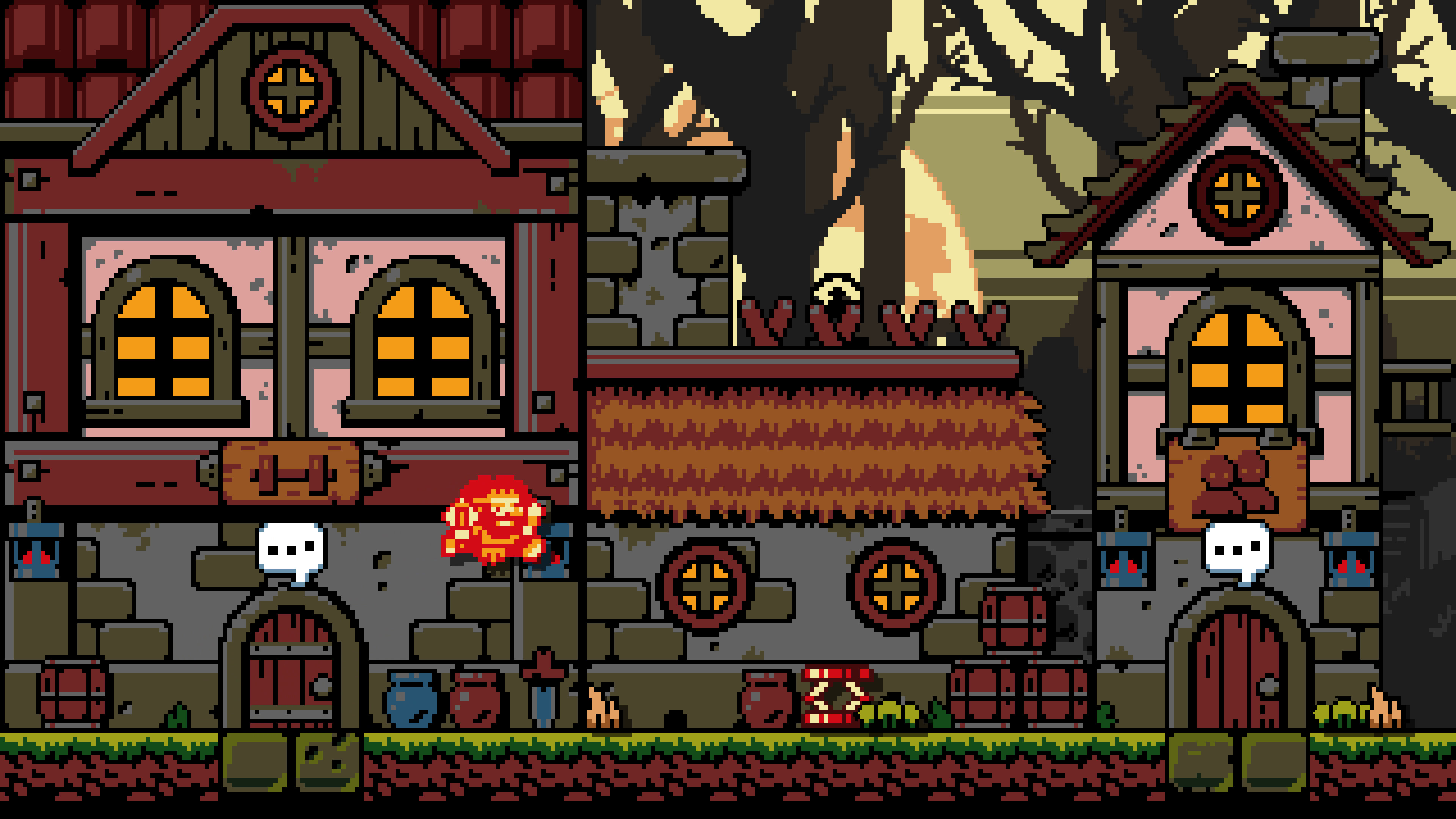
Even the fight, at least in its bases, works with immediateness. It attacks simplely, you can hold down the button to shoot quickly and some characters have cute ideas. The magician, for example, is among the most fun thanks to its bouncing bullets, able to turn the screen into a small flipper of magic and wandering blows. In those moments we can see the potential of Dark Scrolls: a chaotic, fast and cooperative platformer, capable of generating unpredictable situations.
Under the surface, cracks
Unfortunately, that potential almost immediately collides with one of the main criticalities of the game: the controls. The jump is imprecise, unsatisfactory and often frustrating. The first jump seems too short, the double jump tends to activate movements or abilities not always desired, and the whole system returns a constant feeling of slippery. The characters seem to move as if everything was sprinkled with oil, making even the most basic actions complicated. In an automatic sliding platform, where the error margin is already reduced by definition, this lack of precision weighs a lot. Reach a casket before it disappears out of the screen, hit it in time and maybe receive in return only a few coins becomes more irritating than rewarding. Similarly, the aerial combat is often uncomfortable, because the attack is limited and the air control does not offer the necessary precision to manage enemies and bullets naturally.
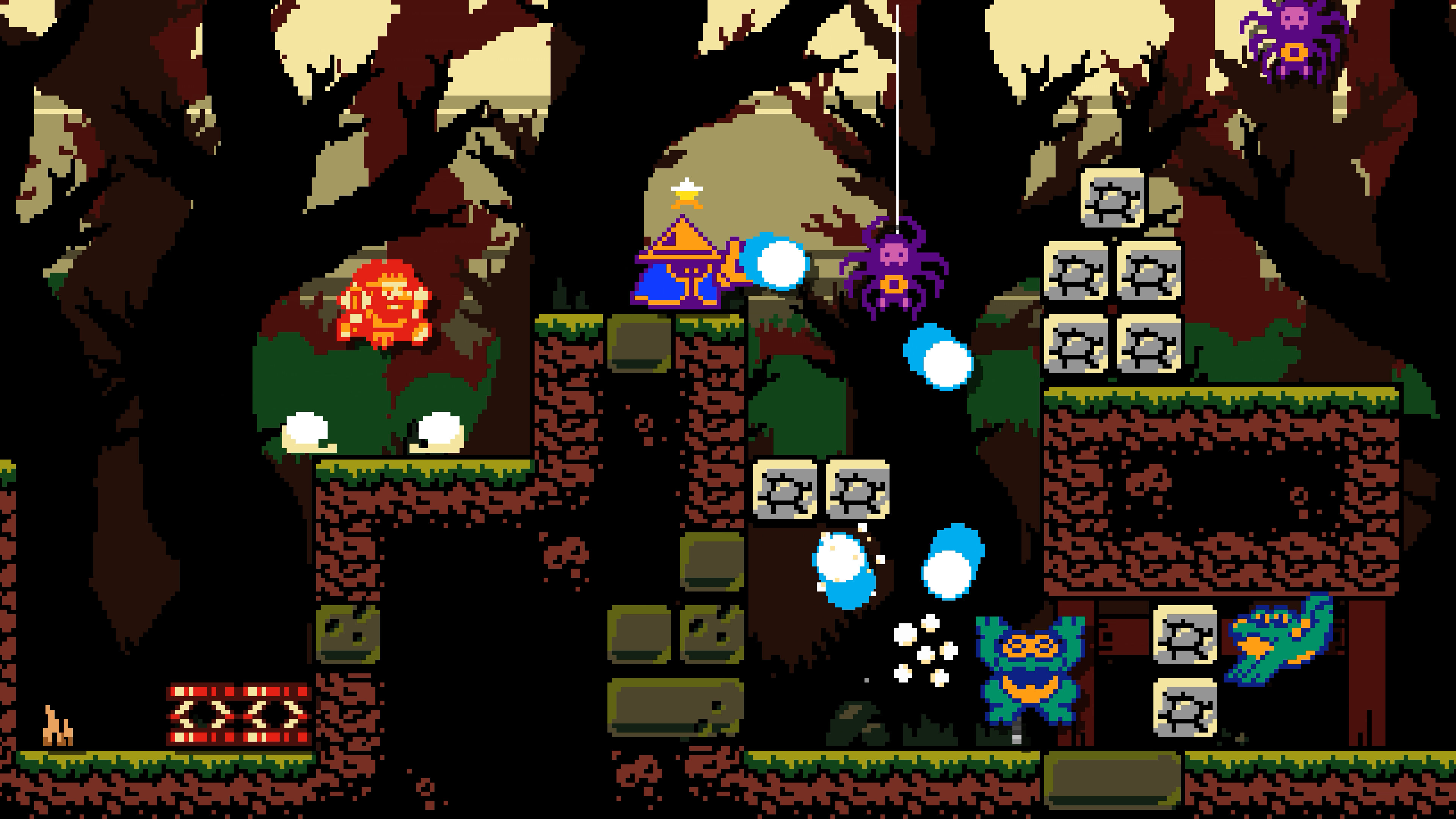
The readability of the action is another obvious problem. Dark Scrolls loves to fill the screen with effects, blows, enemies, companions and objects, but can't always make it clear what's happening. Some bullets of the characters end up confused with those enemies, especially when they share similar colors. In a title that focuses on chaos, visual clarity should be fundamental; here, instead, chaos often becomes simple confusion.
The Roguelite structure He can't make up for these weaknesses. The game introduces coins, progression, crystals, temporary upgrades and a star-level system, but explains little and bad. Coins and points end up seemingly the same: you can spend on levels to get upgrades, or keep up to death, when they are converted into progression. The idea of choosing between immediate advantage and long-term growth could work, but the economy appears unbalanced and unsatisfactory. The level-star system is perhaps the most interesting element, but also one of the least successful. During a run you can assign skills to certain slots, which are activated by reaching specific levels through the elimination of enemies. The problem is that these upgrades last little, they must be re-activated cyclically and often do not seem to really change the trend of the game. Considering that they cost valuable resources, the feeling is that the game asks a lot without returning enough.
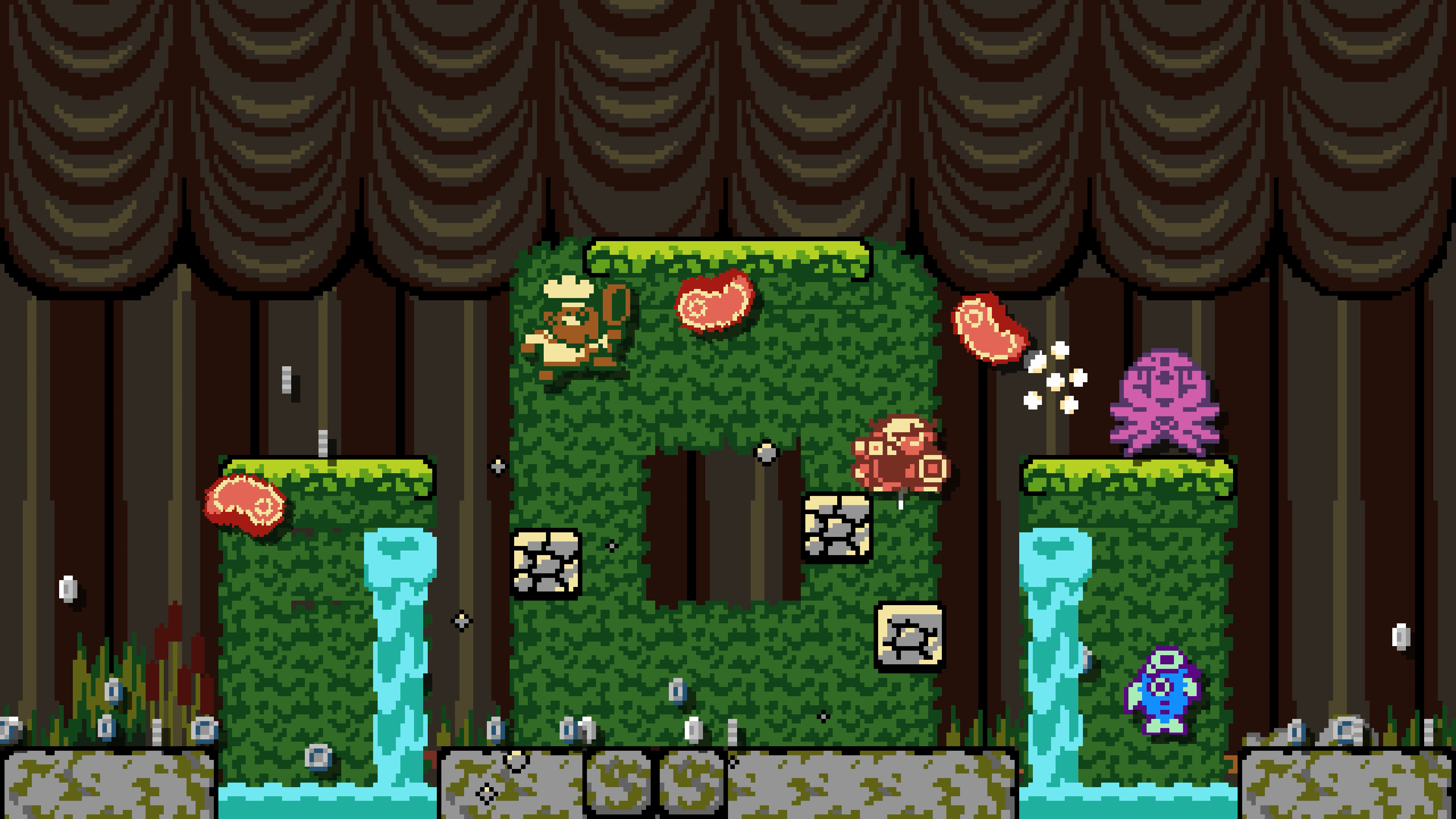
To worsen the situation there is one general lack of explanations. Dark Scrolls offers very few tutorials, it does not properly clarify the operation of skills and communicates even commands badly. Prompts are generic, often based on slightly elegant texts instead of specific icons for controllers or keyboards. The controller support is therefore less cared for than you would expect, with little legible and little natural indications.
The problem is not the difficulty. A game can be hard, punitive and even deliberately uncomfortable, if it builds around these features a coherent system. Here, however, many frustrations seem to be born not from a well calibrated challenge, but from interface, controls, communication and balance not quite finished. Also the cooperative, who could have represented the true heart of experience, leaves quite bitter in the mouth. Playing together surely adds energy, but brings with it new criticalities: annoying collisions between players, too small screen space, unconvincing management of gold and care, and the possibility to remain almost useless for a long time after a premature death. Online, moreover, the experience can be weighted by desincronizations, glitch and netcode problems. The result is that Dark Scrolls, instead of enhancing collaboration, often ends up turning it into a additional friction element. Players do not seem to be put in the condition of really helping each other, rather than getting in the way of already chaotic and unreadable levels.
In the long term the poor run variety. The characters do not all seem equally effective, some are much more useful than others, and the upgrades rarely really change the way to play. The classic choice between three bonuses appears quite basic and cannot give that boost to the replay that would be expected from a roguelite. After a few games, the feeling of repetition begins to be felt. And it is a shame, because Dark Scrolls is not a game devoid of ideas or identity. In fact, its concept is strong, the presentation has character and some moments can also have fun. The problem is that every positive aspect is braked by little elegant design choices, from poorly explained systems and a general feeling of product still acerbic.
In conclusion
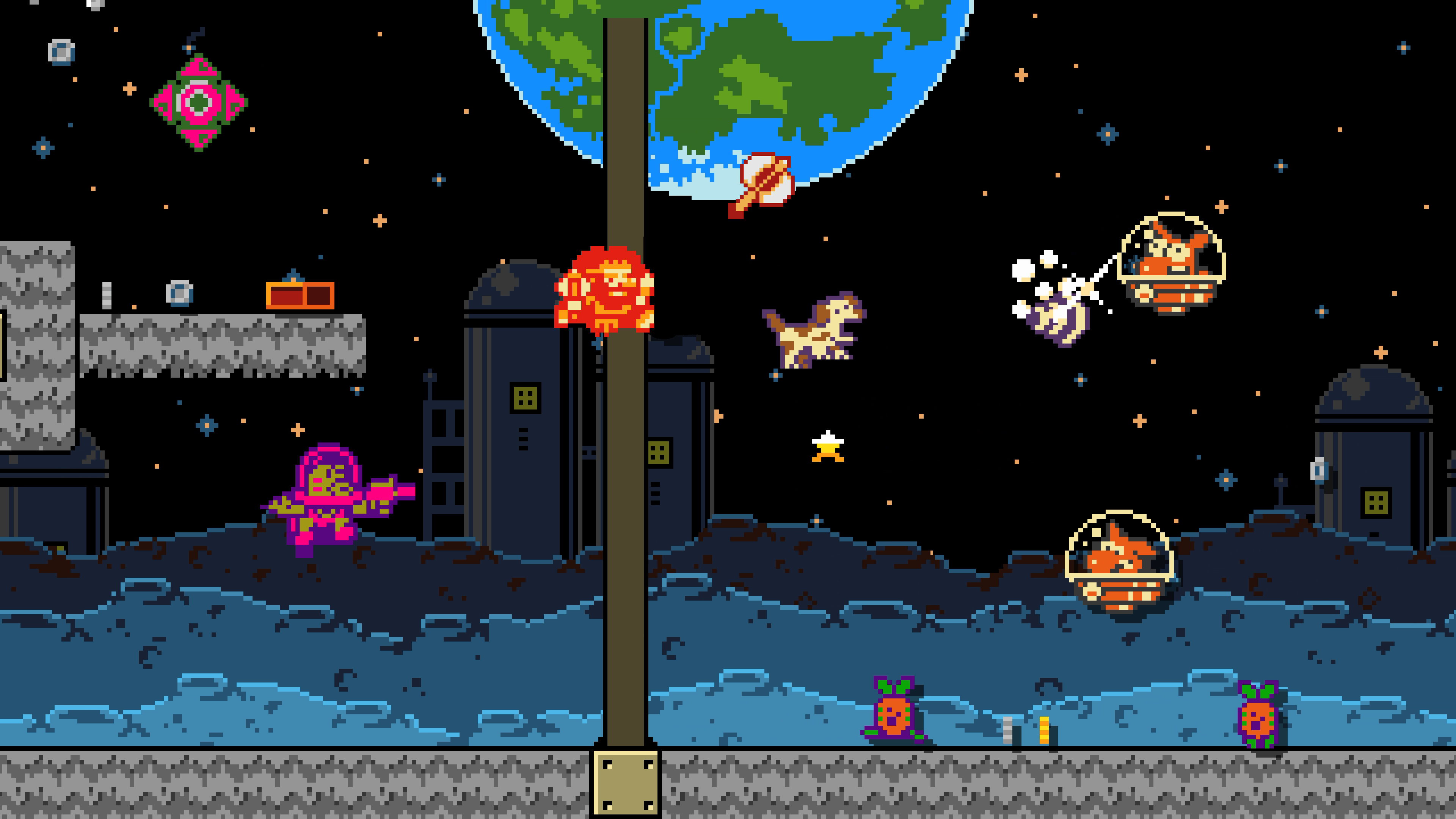
Dark Scrolls looks like a good intuition transformed into a too rough experience to really convince. The auto-scroll could have become the creative engine of the game, the cooperative its strength and the progression roguelite the reason to return to play it again and again. Instead, all these elements remain unfinished, present but rarely valued as they should. Those who love the deliberately chaotic, punitive and unpredictable platformers might find some interesting moments, especially if they are willing to pass over to slippery controls and unclear systems. For everyone else, Dark Scrolls is likely to be more frustrating than fun. Ultimately, Dark Scrolls is one of those titles that you would like to appreciate more than it is actually possible. It has style, has personality and starts from an intriguing premise, but it stumbles right where an action platform should be more solid: control, readability, rhythm and clarity. With more refinement it could have been a little fantasy surprise. As it is, there remains a parchment with great potential, but still too difficult to decipher.
About the Author