

In WARDOGS you can have the aim of a Chris Kyle, know every corner of the map and win most of the firefights, but if you continue to spend more than you earn, sooner or later the time will still come to show up at the front with empty pockets. In fact, money is not a simple accessory reward: it is one of the foundations of the entire progression and directly affects weapons, equipment, vehicles and, consequently, what you will be able to do during each life.
Every new player starts with $10,000, but it's crucial to understand immediately that it's not $10,000 given away on every game or respawn. That amount is your starting capital, and your balance is maintained between games. You'll need to buy what you plan to use before you return to the field, and when you die, the cost of that gear is gone.
This is where WARDOGS begins to think differently from many other multiplayer FPS. A kill may be satisfying, but profit and gain are not the same thing. If you enter the game with $6,000 worth of equipment, earn $4,000 and die, you fought well but still produced an economically negative life. Conversely, a medic who entered with less than $2,000 of equipment and spends ten minutes treating and resuscitating can get out of the same situation by a vastly greater margin.
The first tip for getting rich is therefore paradoxically very simple: before thinking about how to earn, learn not to lose money.
The Hot Zone of the economy
If we had to indicate only one mechanic to understand to immediately improve one's earnings, it would be the Hot Zone. It is the smallest zone that moves within the larger Control Zone and being inside it means exposing oneself more to opponents, but also significantly increasing the performance of one's actions: in the Hot Zone the economic rewards for EACH ACTION are multiplied, and the presence of the player also weighs more for the purposes of controlling the objective.
Simply staying in the Control Zone generates $160 per tick, which becomes about $320 in the Hot Zone, with each tick lasting around 22 seconds. So let's do the math: staying five minutes in the Hot Zone, overall during the match, means going through about 13-14 ticks. At $320 each, we're talking about over $4,000 earned just by staying on the target, even before adding kills, healing, revivals, spotting, and any other activity done in between. And here's the important point: the Hot Zone shouldn't be considered a separate source of income. It's a multiplier of the work you're already doing.
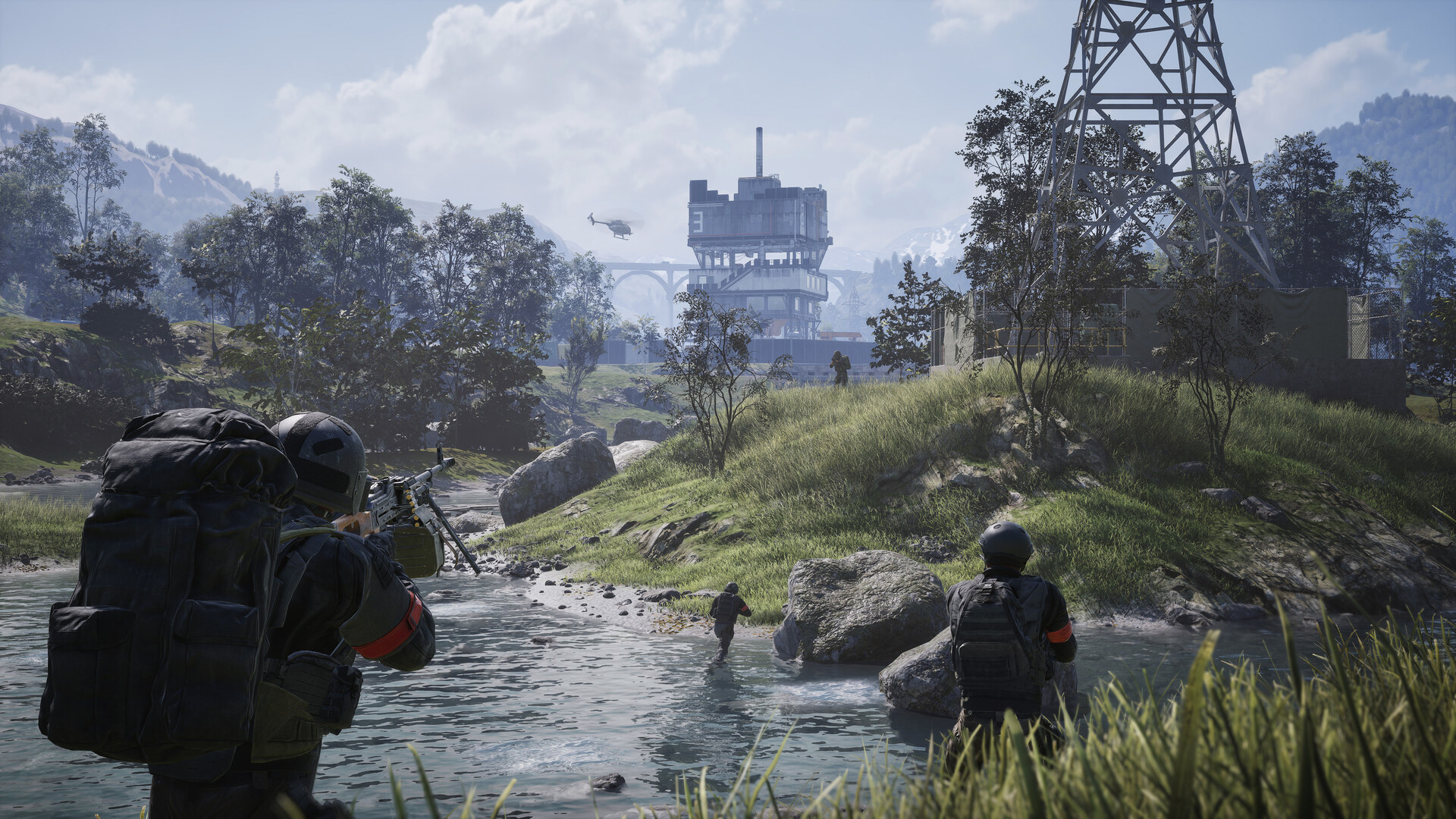
If you're a doctor, heal there. If you're Recon, spot targets from there. If you're transporting players, get them towards the objective. If you're fighting, try to do it inside the zone when tactically possible. It doesn't mean running into the middle of the circle and dying thirty seconds later: a covered position on the edge of the Hot Zone can be much more economically viable than a perfect position a hundred meters back.
The doctor is probably the best job for those starting from scratch
One of the most interesting aspects of WARDOGS is that the most reliable way to build capital doesn't necessarily require exceptional aim. The Medic is a real money machine, just like in real life! (seh, maybe ed.)
A normal revive is valued at $400 out of target, $800 in the Control Zone and therefore $1,600 in the Hot Zone. Then add the healing: a cure performed on a teammate through bandages can make you collect about 400 dollars (depending on how much life you restore), not to mention that frequently players on the ground or injured will be able to give you "tips" if you manage to revive or heal them, we are talking about a few hundred dollars at most, but "everything does". The result is that a very trivial sequence such as revive + heal + stay in the objective can generate more money than an inexperienced player can get by hunting for kills.
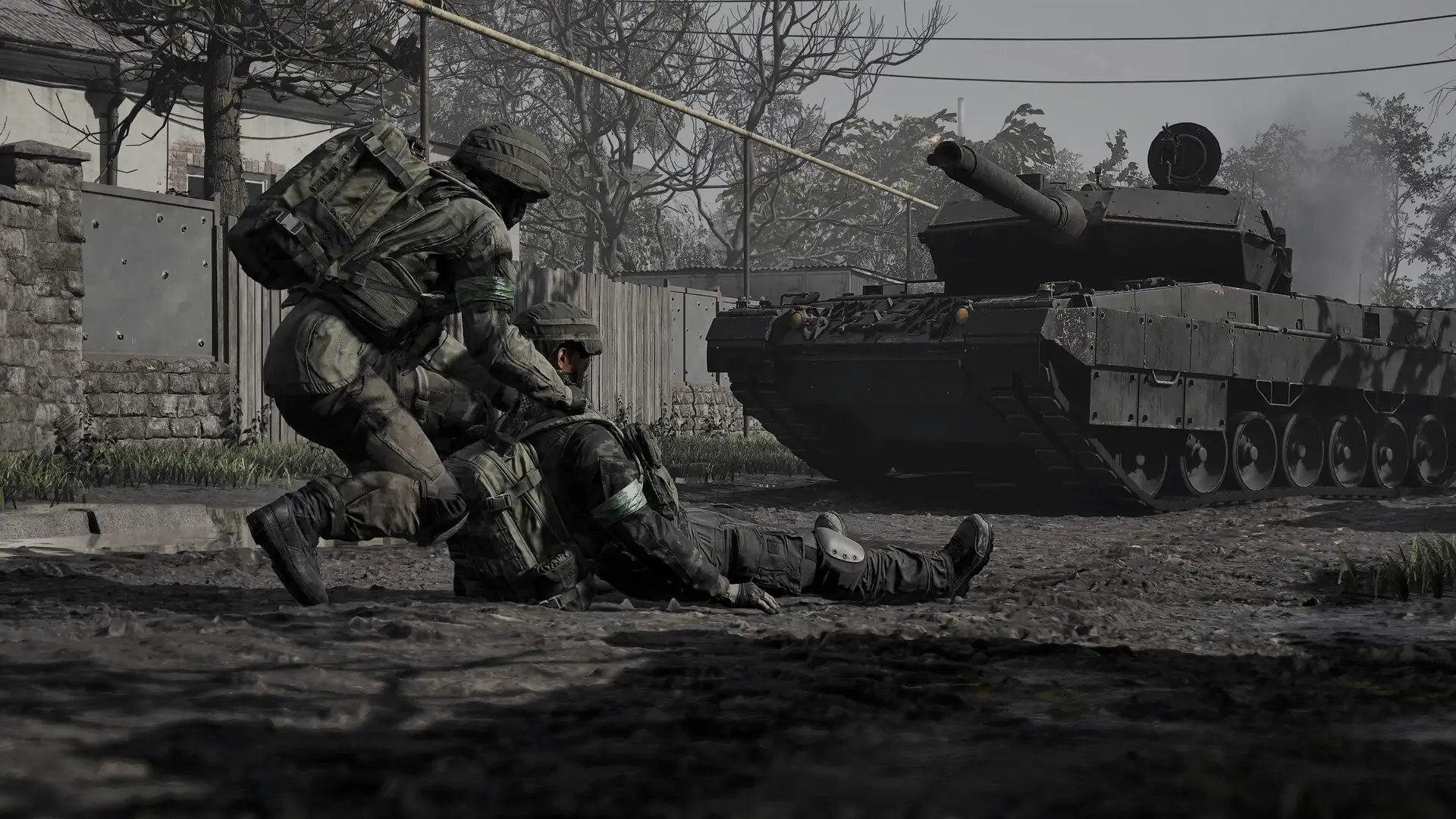
And we're not just talking about theory. A compilation of results from pre-launch testing cites $250,000-$320,000 sessions overall playing Medic with an organized team, with about $80,000 average per life and a reported peak of $148,000 in a single life in the Hot Zone. These are clearly extreme results, achieved under favorable conditions and not something to expect in every game, but they show how high the economic ceiling of the role can become.
However, there is an interesting detail: continuing to revive the same player repeatedly seems to produce diminishing returns. Some measurements indicate a reduction in the order of 25% on subsequent revives of the same ally, which is why, whenever possible, it is better to distribute your work over the entire team rather than turning a single particularly suicidal teammate into your personal source of income.
Recon: $100 can become thousands without shooting
If you prefer to keep away from chaos, the Recon offers one of the most interesting risk-investment ratios, which I personally use very frequently when money is scarce. In fact, spotting allows you to earn money simply by identifying targets that will later be eliminated by your companions, and not only. With 75 dollars of binoculars you will repay the investment to the first enemy spotted, which will earn you about 100 dollars, and that's not all: when the identified target is eliminated, 800 dollars will arrive in your coffers for a Spot Assist. You can get paid for a kill that you didn't physically make. For a player with little money it is a huge advantage. You don't need to buy a rifle worth thousands of dollars and risk it in direct confrontation: you can follow the team's advance, maintain a relatively safe position, and turn every correctly identified target into a potential source of income.

Being a taxi driver is a real job
Then there are Driver and Pilot, two roles that might initially seem secondary but become much more interesting when you realize that WARDOGS literally pays to get people where they are needed. The fee for transporting a player to the Control Zone is generally $500, with a possible bonus of another $500 if the passenger survives after getting off. Now multiply the concept by a full vehicle. Transporting five players on a $6,000 light helicopter can already mean $1,500-$2,250 just for delivery, to which can be added up to $2,500 if everyone survives long enough to trigger the relevant bonus. A single well-executed run can therefore theoretically approach $4,000 or exceed it, almost recouping the entire investment of the vehicle.
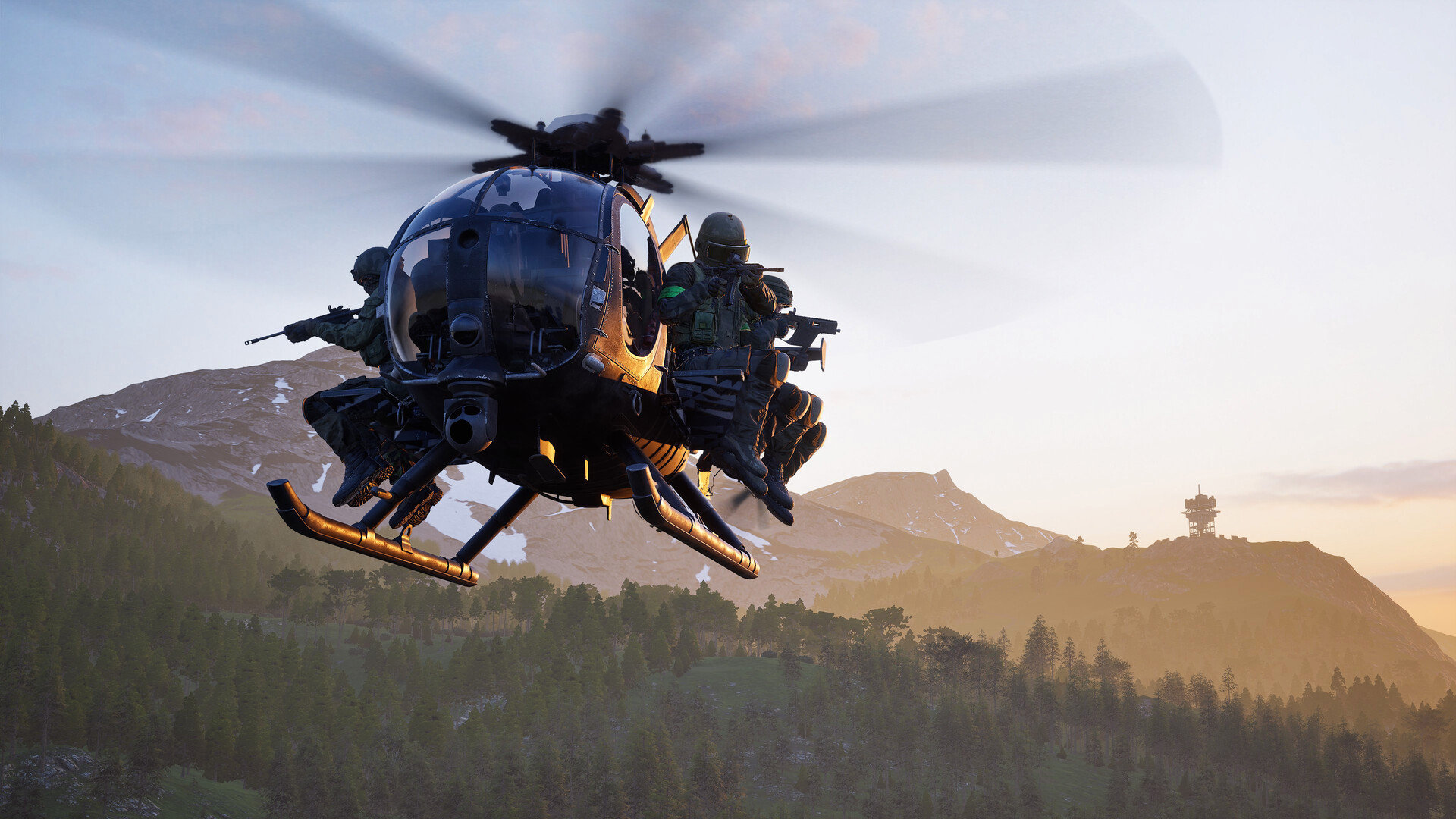
And instead of abandoning the vehicle once you arrive, do what a real taxi driver would do: go back and pick up other customers.
The only caveat: learning how to fly a helicopter in Wardogs is not easy, because helicopters were designed by an aeronautical engineer and, as a result, behave very realistically. If you can become a reliable pilot, though, transporting allies to the control zone and then back to pick up other passengers is one of the fastest ways to earn a lot of money.
Logistics can be even more profitable than passengers
Once you're familiar with the vehicles, the next step is to start transporting not only soldiers, but also supplies. A $400 logistics pallet rewards you $2,500 when you unload it safely at the FOB, equivalent to $2,100 in gross margin on a single delivery. If a teammate subsequently uses that pallet at a FOB, you'll receive an additional bonus in the range of $1,800. That's more than ten times the initial cost of the pallet.
Of course, it doesn't mean that every delivery will automatically yield $4,300 – you have to arrive alive, deliver to the correct place, and have teammates who actually use the resources. But it's a perfect example of WARDOGS' economic philosophy: utility for the team is monetized directly.
Don't ignore the Spawn Vehicle
Among the simplest and most profitable activities documented by the community is also transporting the Spawn Vehicle to the combat zone. This is a pretty slow APC, but once it's in the control zone and no longer moving, allies can use it to teleport from the spawn point to the APC, and you'll earn money every time someone does.
We are talking about $3,000 for bringing the vehicle to the required area, to which additional compensation can be added when teammates start using it as a spawn point, about $250 for each player who uses the vehicle. Ten spawns mean another $2,500. Twenty become $5,000. If you manage to place the vehicle in a sufficiently useful and protected position, the result can then turn into a form of almost passive income, while in the meantime you are free to carry out other activities.
Support: a few dollars at a time, but virtually non-stop
Building also pays off. The rewards for a single hammer blow are understandably much lower than for a revive or logistics delivery, about $1 for a normal hammer strike, $6 for hitting the highlighted construction point, and $15 as a bonus upon completing the structure. Taken individually, it seems like pocket change. The point is that building a FOB means performing a lot of consecutive actions and, above all, the game does not force you to compete with your teammates for the reward: several players can contribute at the same time and receive their respective payouts.
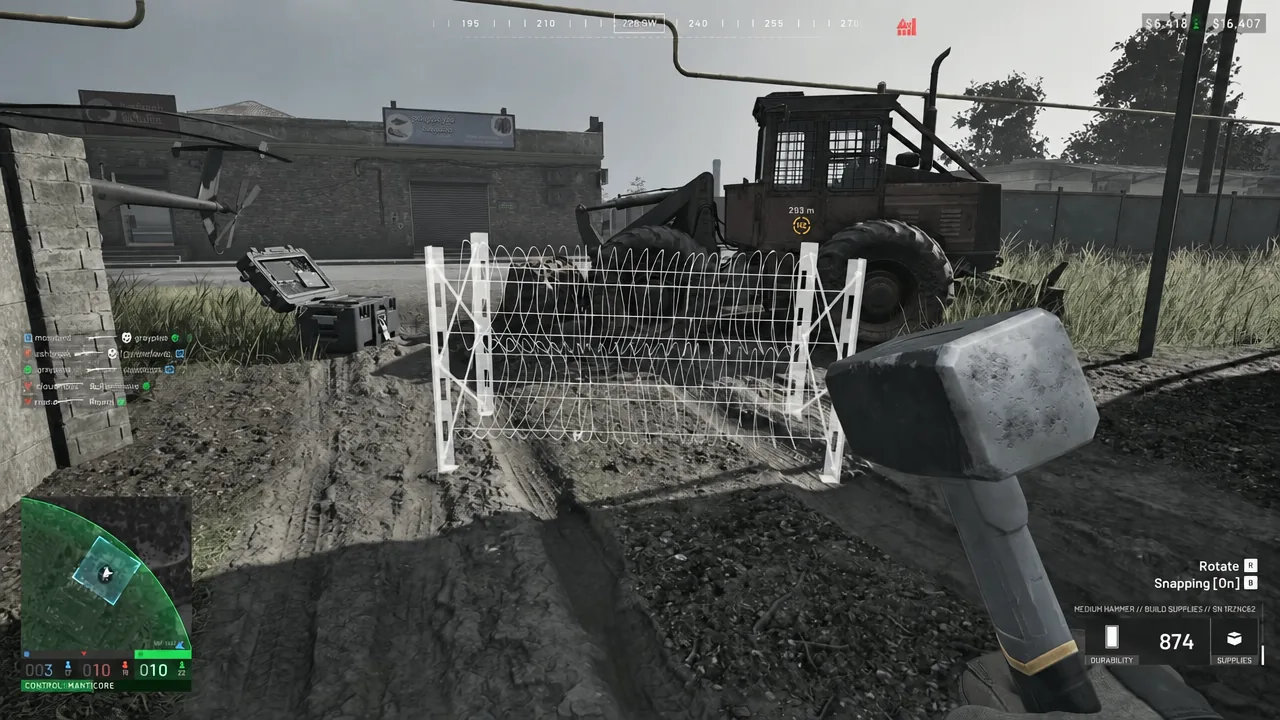
It probably won't be the method by which you will become a millionaire overnight, but it is exactly the kind of activity you should look for when you are almost broke: minimal risk, minimal investment and constant return, while simultaneously creating something useful for the whole faction.
Destroying vehicles can also make you rich, but here the risk increases
For those who want to continue fighting, however, there are very interesting rewards. The bounties observed on enemy vehicles can reach important figures: about $5,000 for an enemy Spawn Vehicle, $7,000 for a tank, $9,000 for an attack helicopter and up to $14,000 for an artillery vehicle. Beautiful numbers until we remember that our equipment also costs. A launcher, the necessary ammunition and the rest of the loadout can turn a seemingly huge bounty into a much more modest profit, especially if we die before destroying the target. It is therefore one of the strategies with the highest potential, but also one of those in which it is more important to calculate the return on investment rather than just looking at the final reward.

Kills pay off, but they're not necessarily the best way to get rich
It's perhaps the biggest mental trap for those coming from Battlefield, Call of Duty or other FPS: thinking that to make money you need to kill as many players as possible.
WARDOGS doesn't work exactly like that.
A normal elimination generates between $1,500 and $2,000, with values that can change significantly based on conditions and multipliers. It's a good gain, but to get it you have to find an opponent, win the fight, and survive long enough to make your loadout economically viable. A Medic can generate similar amounts with a Hot Zone revive, a Driver can accumulate them by bringing more players to the objective, and a Recon can earn while someone else physically pulls the trigger.
There is also another interesting variable: as with the revival of the same ally, killing the same enemy will also lead to progressively decreasing returns. Also beware of friendly fire! A teamkill can therefore cost much more than a normal elimination has just earned you.
In other words, shooting everything that moves is not a financial strategy.
If you're broke, don't try to recover everything with a lifetime
And here we are with the mistake that probably destroys more accounts than any opponent. You just lost a $6,000 loadout. You get angry, you go back to the store and buy another $6,000 because "this time it will be better."
Then a grenade enters through the window, or a sniper makes the shot of your life on your little head.
The correct strategy is exactly the opposite. When capital drops, immediately lower the cost of your next life. Use a cheap weapon, give up non-essential accessories, and choose an activity that generates money without requiring large investments: Medic, Recon, building, transport, or simply staying on the target.
The initial $10,000 should be considered working capital, not the budget to build the dream loadout. A $3,000 setup means your initial capital can absorb three disastrous lives. An 8,000 means you have practically a chance.
The real secret is to combine sources of income
In the end, looking for the single best method to make money in WARDOGS almost risks losing sight of what makes its economic system interesting.
The activities are not mutually exclusive.
A Medic can stay in the Hot Zone, earn from objective ticks, revive a teammate, heal them, and maybe eliminate an opponent. A pilot can transport five players, receive delivery payment, get bonuses related to their survival, bring supplies at the same time, and then return to base to start the cycle again. A Recon can occupy the objective while spotting targets that will be eliminated by teammates.
The most profitable philosophy can therefore be summed up in one sentence: do your job, but try to do it where the game pays you the most.
Play the objective, use the Hot Zone when the risk is acceptable, keep the loadout cost low until you've built up enough reserve, and stop considering kills as the only indicator of a good game. WARDOGS is one of the few FPS games where you can end a life without killing anyone and find that you've earned more than the player who spent the last twenty minutes collecting heads.
And when your account finally starts to have five or six figures, you can afford a few more luxuries. Until then, remember one thing: a $6,500 FAL left on your corpse is not an investment. It's charity to the enemy.
About the Author