
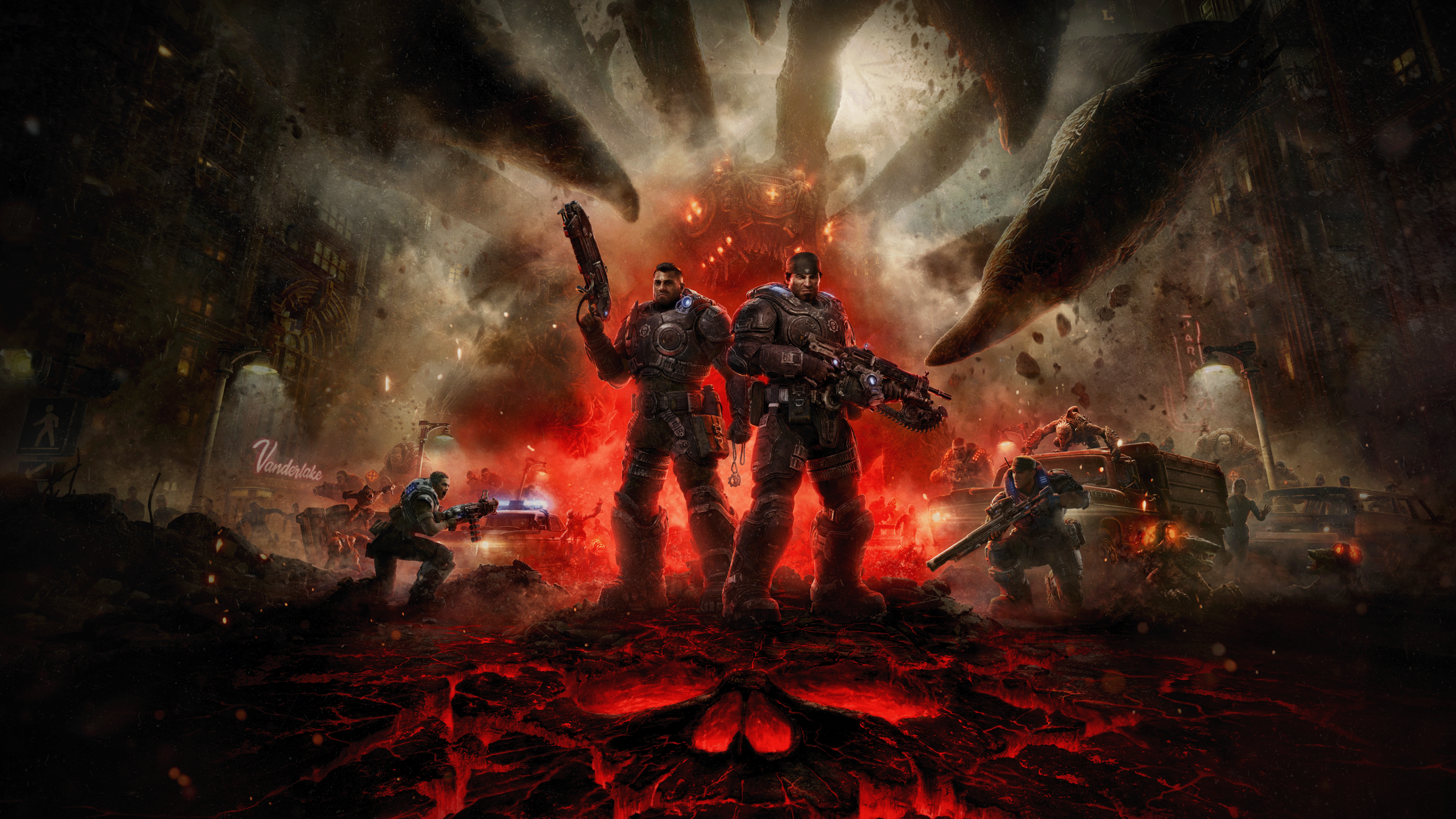
Kalona's return to its roots
Gears of War E-Day is the new third-person shooter chapter developed by The Coalition and People Can Fly and published by Xbox Game Studios. It is the sixth main chapter in the Gears of War series and arrives on PC PC and Xbox Xbox with the aim of bringing the series back to its roots. This time, however, we’re facing a prequel that tells the story of the infamous E-Day, the day when the Locusts emerge from underground tunnels to set humanity ablaze. It’s precisely at this moment that we meet the Gears, Marcus and Dom and Dom, along with new characters who help expand the series’ lore.
In my view, The Coalition’s decision to go back in time is one of the most interesting choices they could have made. After several chapters and years spent with these characters, returning to such an important moment allows the series to restart from its foundations without abandoning what made it famous. E-Day therefore doesn’t attempt to completely reinvent Gears of War. Instead, it takes the formula everyone knows and tries to understand how much it can still work in 2026 how much it can still work in 2026, adding new possibilities without losing that sense of heaviness and brutality that has always defined the series.
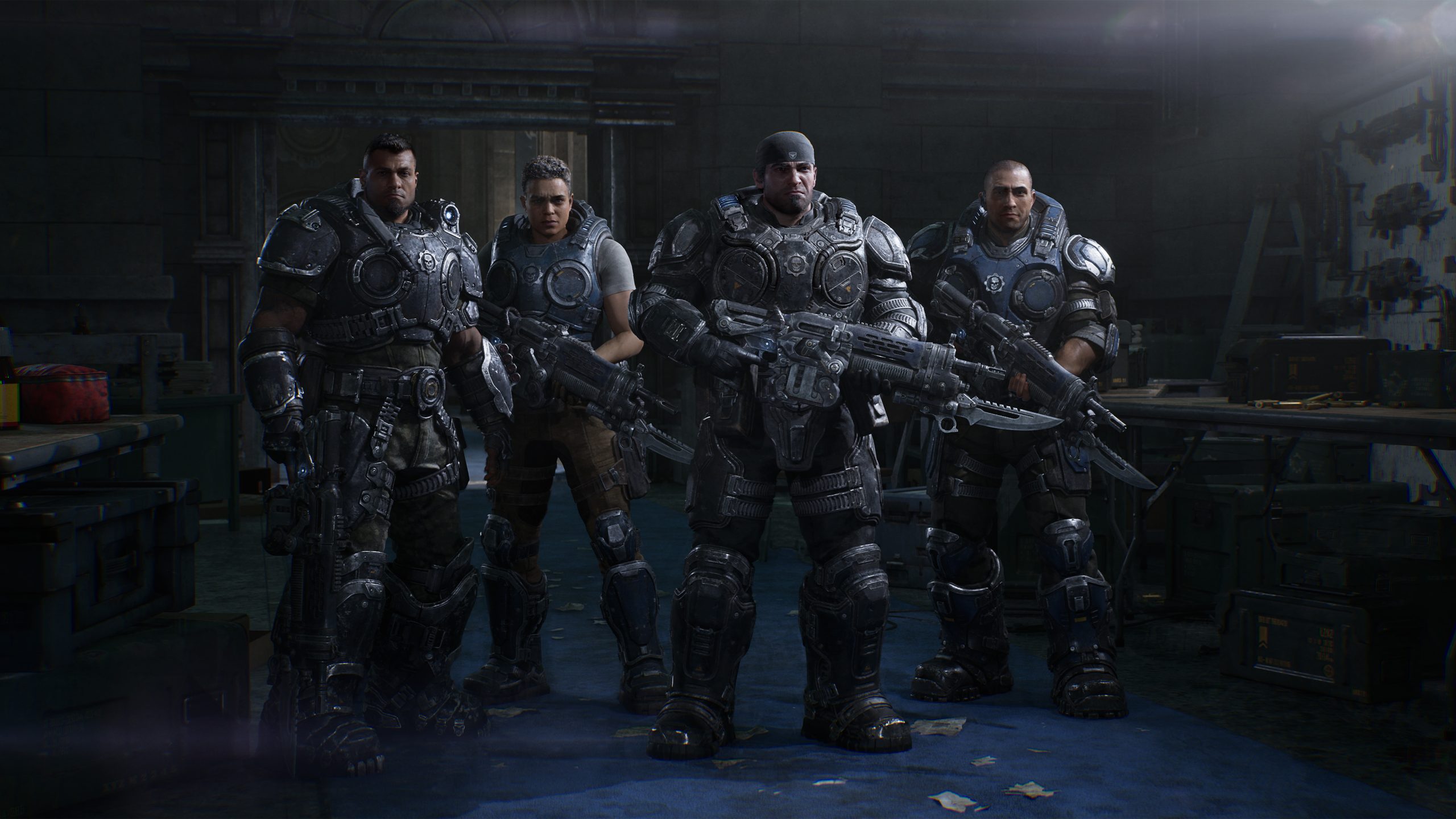
With bayonet-style shots using the Lancer prototype
The gameplay is where the game convinces most.The Coalition, however, has not only modernised the formula, but also preserved everything that made the saga famous. In the game, we find the classic cover mechanics that defined Gears of War from the very first chapter. covers that characterised Gears of War from the very first chapter. Lancer, though it won’t be available immediately at the start, the Gnasher and the active reload, which has now been moved to the centre of the screen. For long-time Gears veterans like me, who may initially feel disoriented by this change, there’s still the option to restore the reload to its original position in the top right. Personally, however, I recommend trying to get used to the reload in the centre — exactly as I did. After giving it a go, I found it more comfortable, and especially more useful when thinking about multiplayer and Orda mode. reload in the centre, exactly as I did. After giving it a go, I found it more comfortable, and especially more useful when thinking about multiplayer and Orda.
The movement system, meanwhile, has been made much smoother and more dynamic. Transitions feel less stiff, movements feel more natural and everything seems to respond better to commands. This feeling is most noticeable during the most chaotic combat, when you need to quickly move from cover to cover or change position to avoid enemy fire. At the same time, I'm convinced you, just like me, will miss the Roadie Run, one of the most iconic features of Gears. It's one of those small things that may not seem essential on paper, but after years spent with the series, they become integral to the game’s identity.
E-Day introduce finalmente anche alcune nuove meccaniche di movimento, come la scivolata e il salto, che vengono utilizzate sia durante l'esplorazione sia negli scontri. La cosa che ho apprezzato maggiormente è che queste novità non sembrano inserite soltanto per dare una rinfrescata al gameplay. Riescono effettivamente ad ampliare le possibilità del giocatore senza trasformare Gears in qualcosa che non è. Anche l'ambiente ha finalmente un ruolo più importante. E-Day non è un vero e proprio open world, ma offre una maggiore libertà di interazione rispetto al passato. Molti elementi presenti nelle mappe non sono più semplici decorazioni e possono avere un impatto concreto durante l'esplorazione e gli scontri. Un esempio è il fuoco, che non rimane semplicemente un elemento estetico ma può danneggiare il giocatore. Allo stesso modo possiamo distruggere diversi oggetti presenti nella mappa, rendendo gli ambienti più dinamici e credibili. Peccato solamente che non tutto sia realmente distruttibile. In un gioco come Gears of War, dove la distruzione ha sempre avuto un ruolo importante anche a livello visivo, avrei voluto vedere qualcosa in più sotto questo aspetto.
Despite this small flaw, the gameplay of E-Day really surprised me. It’s been years, and I never thought the classic formula could still be so effective, especially without feeling like a mere copy of the previous chapters.Honestly, it’s the best gameplay I’ve ever tried in a Gears of War..
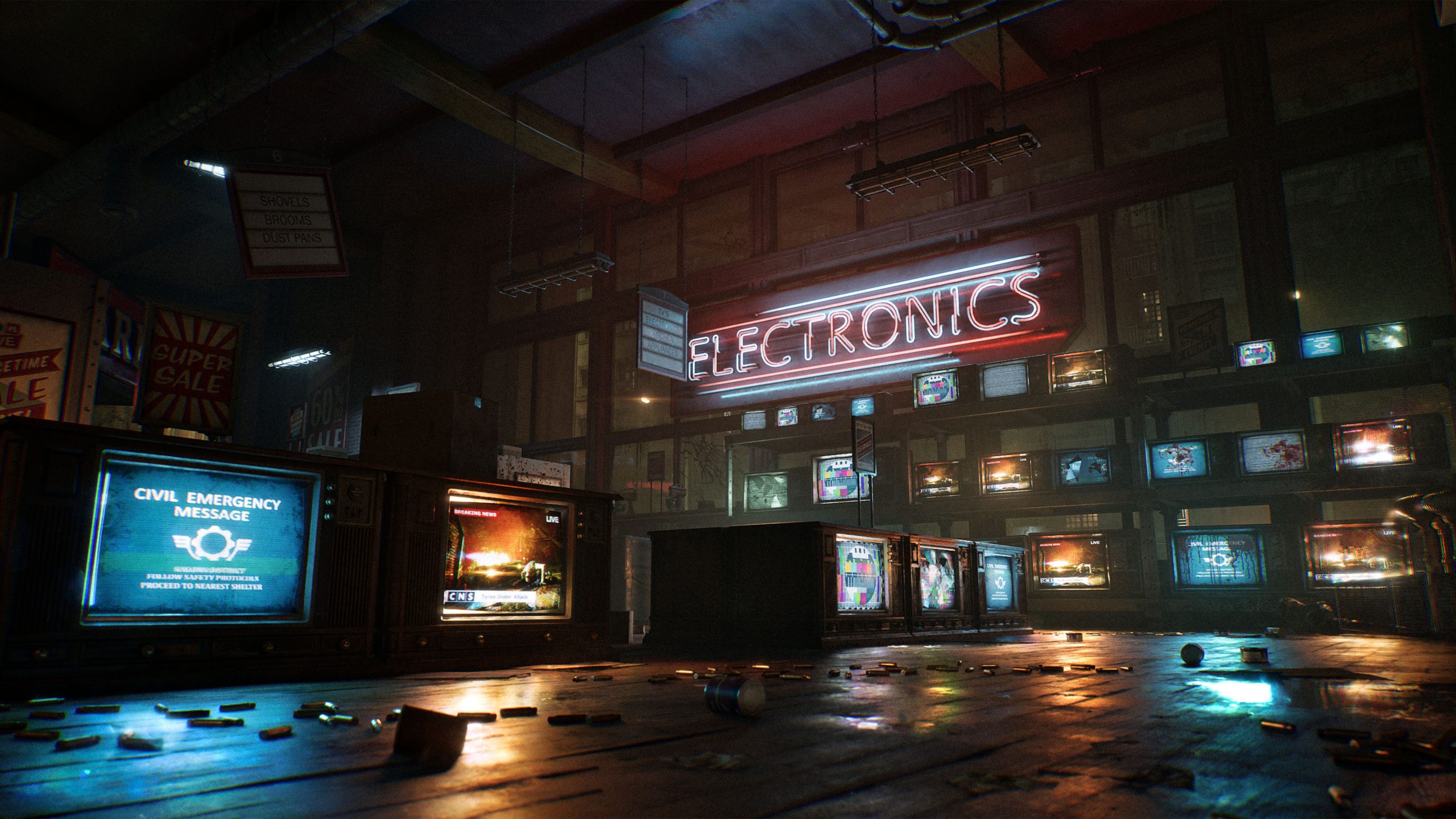
A visually perfect Kalona, or almost
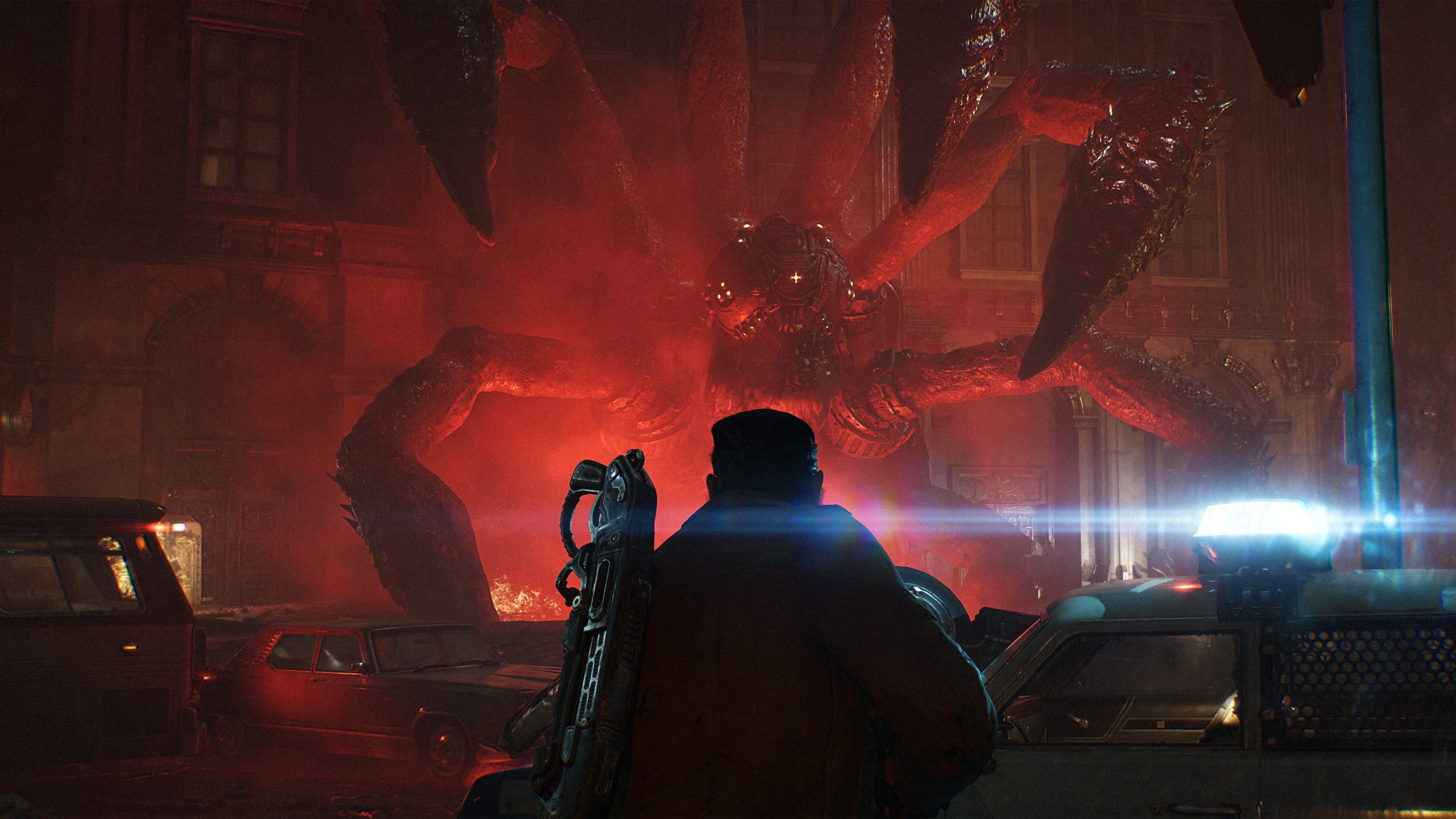
Well, Unreal Engine has always pleased us graphically, and with all the technologies offered by the engine, combined with The Coalition's accumulated experience — a studio that, obviously, isn’t here to sell bruscolini, gear fans will understand the reference — the result had to be interesting. The studio used a huge amount of modern technology to create extremely detailed environments, lighting, and characters. The detail is extreme.E-Day is one of those games where you just need to stop and look around for a few seconds to realise how much work goes into every scene.
Lighting is probably the aspect that impressed me most. MegaLights allows you to manage a huge number of dynamic light sources, while Lumen handles indirect lighting and reflections. The result is most evident in complex environments. Lights, fire, smoke and fog react realistically and contribute to creating far more vivid scenes than those we saw in the previous chapters.
It’s precisely when all these elements come together that E-Day truly shines. It’s not just about more detailed textures or more complex models. It’s about how all the scene elements work together to make the final image so convincing. The characters have also made a massive leap in quality thanks to the use of Nanite on their geometry. The models are much more detailed than in previous episodes, and after all these years, I’d say there’s no shortage of that.
What stands out most are the facial animations, which seem almost real in some moments. It’s an important aspect because it allows characters to better convey their emotions and makes narrative sequences more believable. Then we have NVIDIA and the much-discussed RTX Mega Geometry. RTX Mega Geometry. We’d heard so much about it that I didn’t expect anything else than a game like Gears to see this technology in action.
Unfortunately, however, I was utterly disappointed. delusissimo.
In some areas it genuinely improves shadow quality and certain small geometric details, but the visual impact isn't always obvious. It's definitely an interesting feature to witness in action, but the problem is that the performance cost is truly high. When a technology demands such a large amount of resources and yet you have to be careful to notice its benefits, I find myself asking a question. Is it really worth sacrificing so much performance for something so hard to see?
I'd say no.
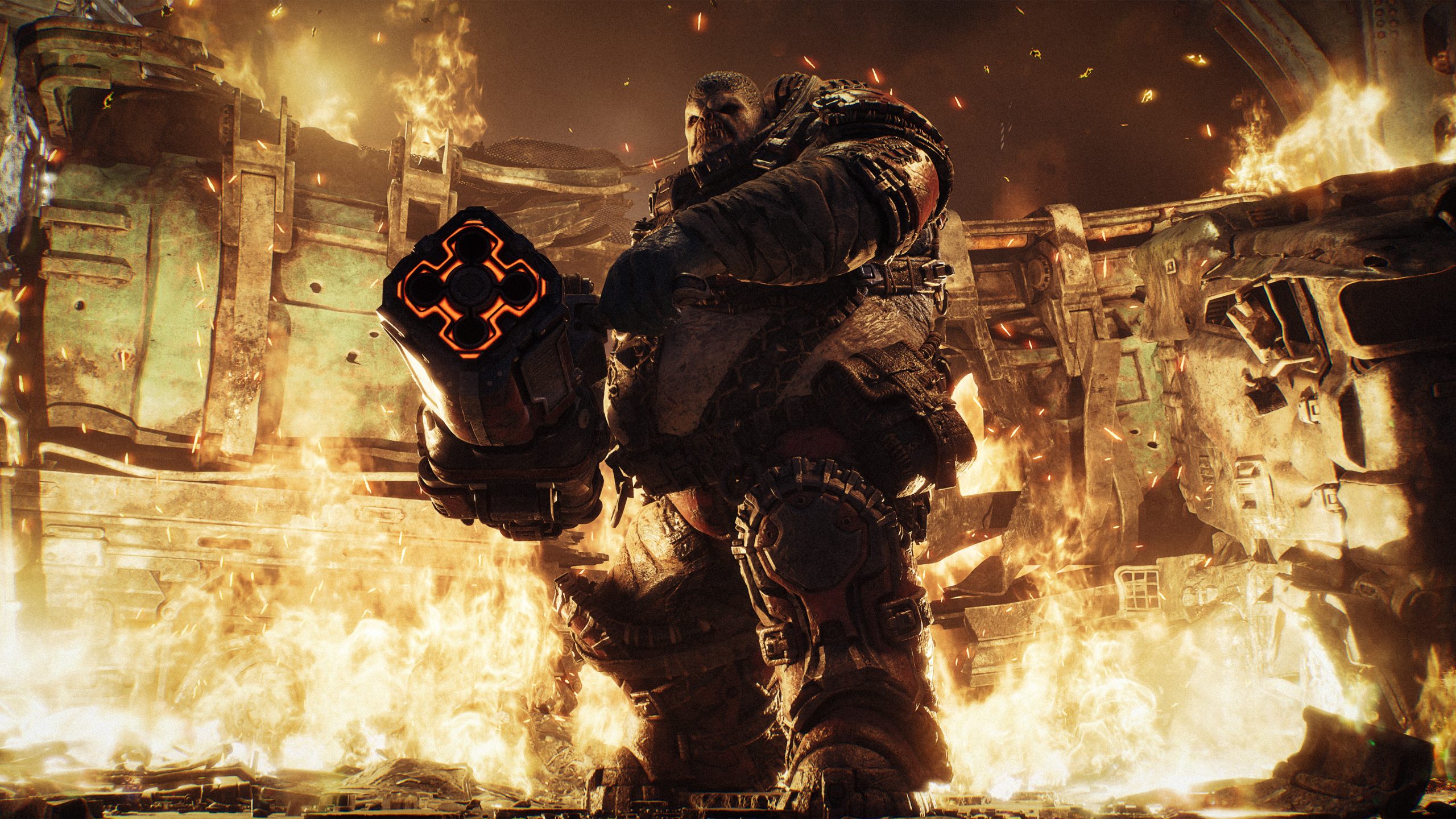
Even the top experts on UE5 have had problems with optimisation
As the title suggests, E-Day has shown its most problematic side here.The game is not merely heavy, but literally a brick and requires high-end hardware to run properly. Even with my setup, consisting of an RTX 5070 Ti, a Ryzen 7 7800X3D and 32 GB of RAM, RTX 5070 Ti, a Ryzen 7 7800X3D and 32 GB of RAM, the game has seriously stressed both the GPU and the CPU. CPU usage is often very high, and the RAM situation is even more unusual. E-Day has reached 30 GB of RAM, 30 GB of RAM, even reaching 31 GB. These figures are quite impressive given the hardware used. The positive note, however, comes from the GPU's VRAM, which is used in relatively modest quantities. At least something positive we have.
The main issue arises when you try to push everything to the maximum. The highest preset, remembering that Gears goes beyond simple Ultra mode, carries an enormous performance cost compared to lower settings and doesn’t always deliver a proportionally improved visual result. For this reason I recommend using a custom profile, custom profile, keeping the maximum on some heavier settings such as lights, shadows, ray tracing and textures, while lowering those that have the greatest impact on performance without significantly compromising image quality. In this way you can find a far more sensible compromise.
And here we’re back to talking about lighting and shadows. As I mentioned earlier, they’re probably among the best visual elements, but they’re not without issues. In certain situations, they can manifest as noise, instability and graphical artifacts, especially when using more aggressive upscaling modes or lower resolutions. It’s a fairly annoying flaw because, given how meticulously the rest of the graphics have been crafted, these problems inevitably draw attention.
There are also some streaming issues with textures, with certain environmental elements occasionally loading late. texture streaming, with certain environmental elements occasionally loading with a delay. Added to this are some micro-stuttering and the classic loading issues we’ve long come to expect with games developed in Unreal Engine 5. The most problematic aspect is that all of this occurs even on high-end hardware. high-end hardwareWhen a game manages to put such a heavy load on a setup like this, it’s natural to think there’s still room for optimisation work. E-Day manages to mitigate this situation to some extent thanks to the visual quality it delivers. When everything runs as it should, the result is truly impressive and demonstrates just how powerful the underlying technology is.
The problem is that power isn't always used in the most efficient way possible.
So is it worth firing again at the Locusts?
This is the question that everyone is probably asking themselves, and to which I want to answer immediately. Gears of War E-Day is a special case. As a video game, I consider it totally excellent. I enjoyed the story, the gameplay, the graphics and practically every element that makes up the experience. I found no flaws capable of truly spoiling the game, and, most importantly, I had fun from start to finish. The 12 hours of campaign didn’t suffice for me. Once I reached the conclusion, I’d have liked to continue — and it’s probably one of the biggest compliments I can give to a campaign of this kind..
The gameplay works because it takes a formula we’ve known for years and gives it a fresh twist without losing its own identity. The new movement options, environmental interaction, and how the fights are structured make the experience feel more modern, but when you grip the Lancer, you still know you’re playing Gears of War. E-Day is one of the most technically impressive titles I’ve seen, particularly in terms of lighting, environments, and character detail.
The problem is that all this technology comes at a very high cost in terms of performance. The optimisation isn't up to what I expected, and some of the visual issues become even more annoying because they appear in a game that, otherwise, has been so thoroughly polished. It’s a shame, because with better optimisation and a little work on the graphical artefacts, E-Day could have been even more convincing. Nevertheless, it's genuinely hard not to be impressed by the final result..
For those who love the Gears saga, E-Day represents a solid return to the roots.It recaptures its origins, places key characters at the heart, and at the same time modernises a formula that, after so many years, still has something to say. For those who’ve never played a Gears of War, this could be an excellent entry point into the series. You don’t necessarily need years of franchise experience to appreciate what The Coalition has built.
In the end, the answer is simple.
Yes, it’s still worth it.
And if, after twelve hours of campaign, I found myself thinking I’d have happily kept shooting Locusts, I think that already says a lot about how much I enjoyed Gears of War E-Day.