
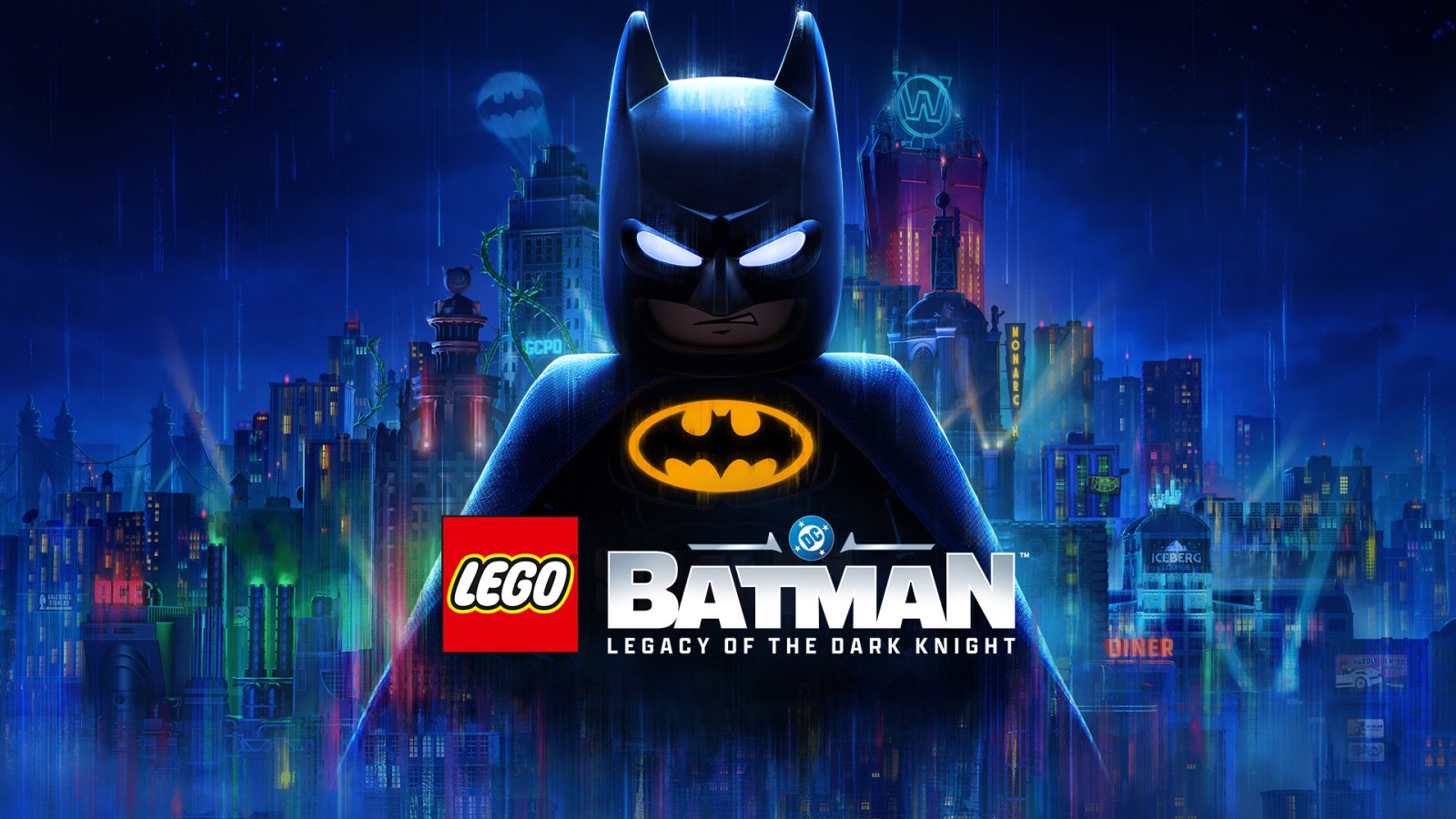
There are characters who seem destined to work regardless of how they are told. Batman is certainly one of these, but when the Dark Knight meets the LEGO universe LEGO the result inevitably takes a different direction. Gotham remains Gotham, its protagonists are always those we’ve come to know over the years, but everything is filtered through bricks, irony and that typical LEGO ability to never take itself too seriously. LEGO Batman: The Dark Knight Returns tries to restart from here, taking one of pop culture’s most recognisable universes and once again transforming it into a video game adventure aimed at both Batman fans and those seeking a lighter, more immediate experience.
But the question remains inevitable: after so many years of LEGO video games, what can a new chapter dedicated to the Dark Knight still offer?
It’s a question I’ve been asking myself since the first hours spent in Gotham, because the risk of working with such a well-known formula is relying solely on the safety of what already works. LEGO Batman must therefore find a balance between tradition and innovation, keeping that identity that made the series famous without turning it into a simple rehash of the past.
And it’s precisely while playing that the first responses begin to emerge.
This content is provided by YouTube. To view it, you must allow external content. Activation may result in data being shared with the third party.
A Gotham entirely waiting to be built
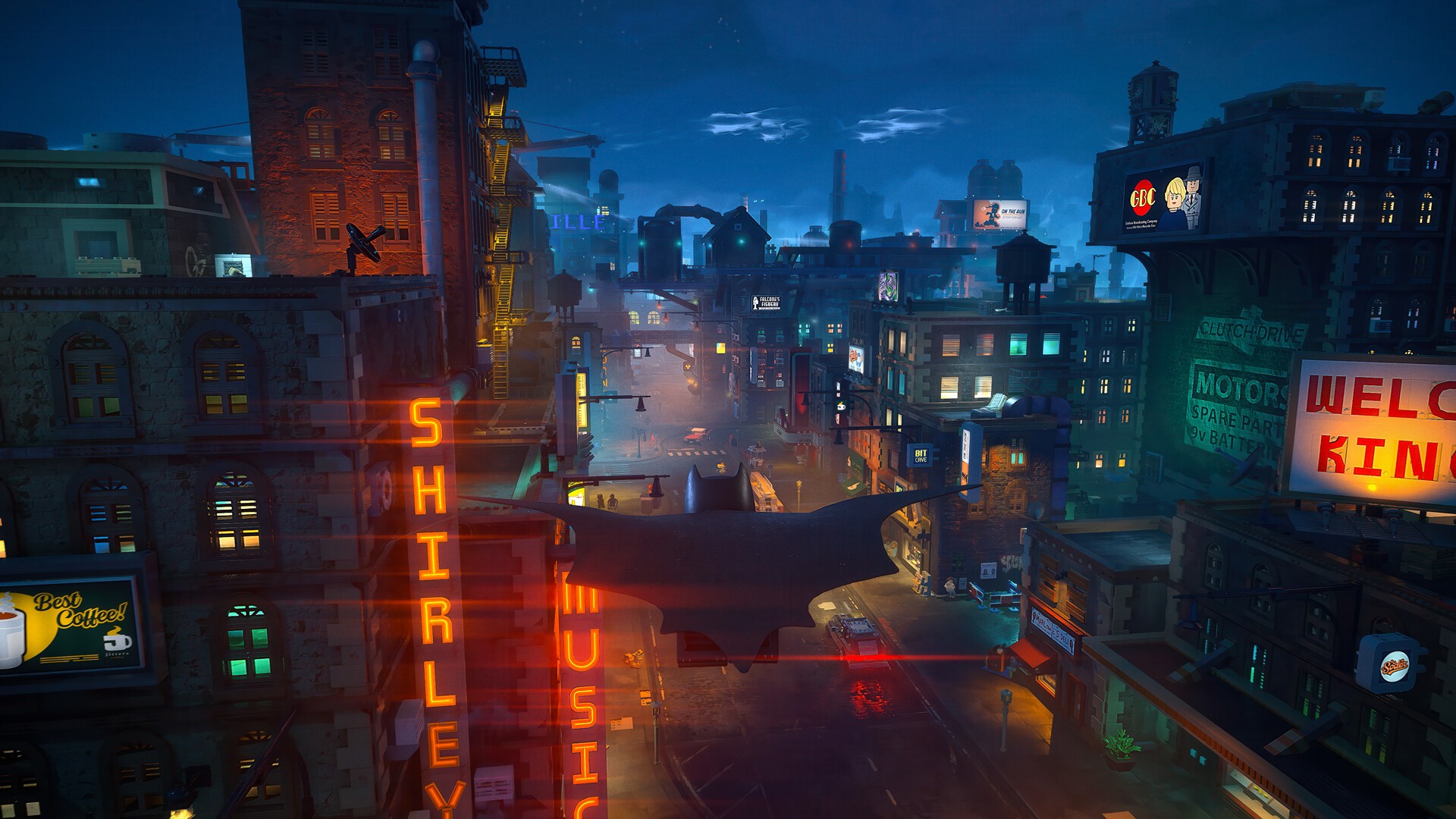
Gotham is, inevitably, one of the first things that catches the eye. It's not only the setting for Batman's adventures, but a fundamental part of the character's imagination. The city has taken on different shapes over the years, moving from the darker tones of the comics to cinematic atmospheres, right up to the brightly coloured and comedic LEGO interpretations.
Here the game attempts to find its own identity.
The Gotham of L'Eredità del Cavaliere Oscuro manages to coexist with two seemingly distant universes: that of the Batman world, built around crime, heroes and villains, and that of the LEGO universe, where practically anything can become an opportunity to make someone smile. The result is a city that doesn't necessarily aim to mimic the most mature interpretations of the Dark Knight. Instead, it reinterprets them, playing with their most recognisable elements and transforming them into something accessible, colourful, and, above all, fun. And it’s precisely this awareness that makes the difference.
The game doesn't seem to need to prove it's "the most serious Batman". On the contrary, it seems fully aware of what it wants to be.
Batman, Robin and a team yet to be revealed
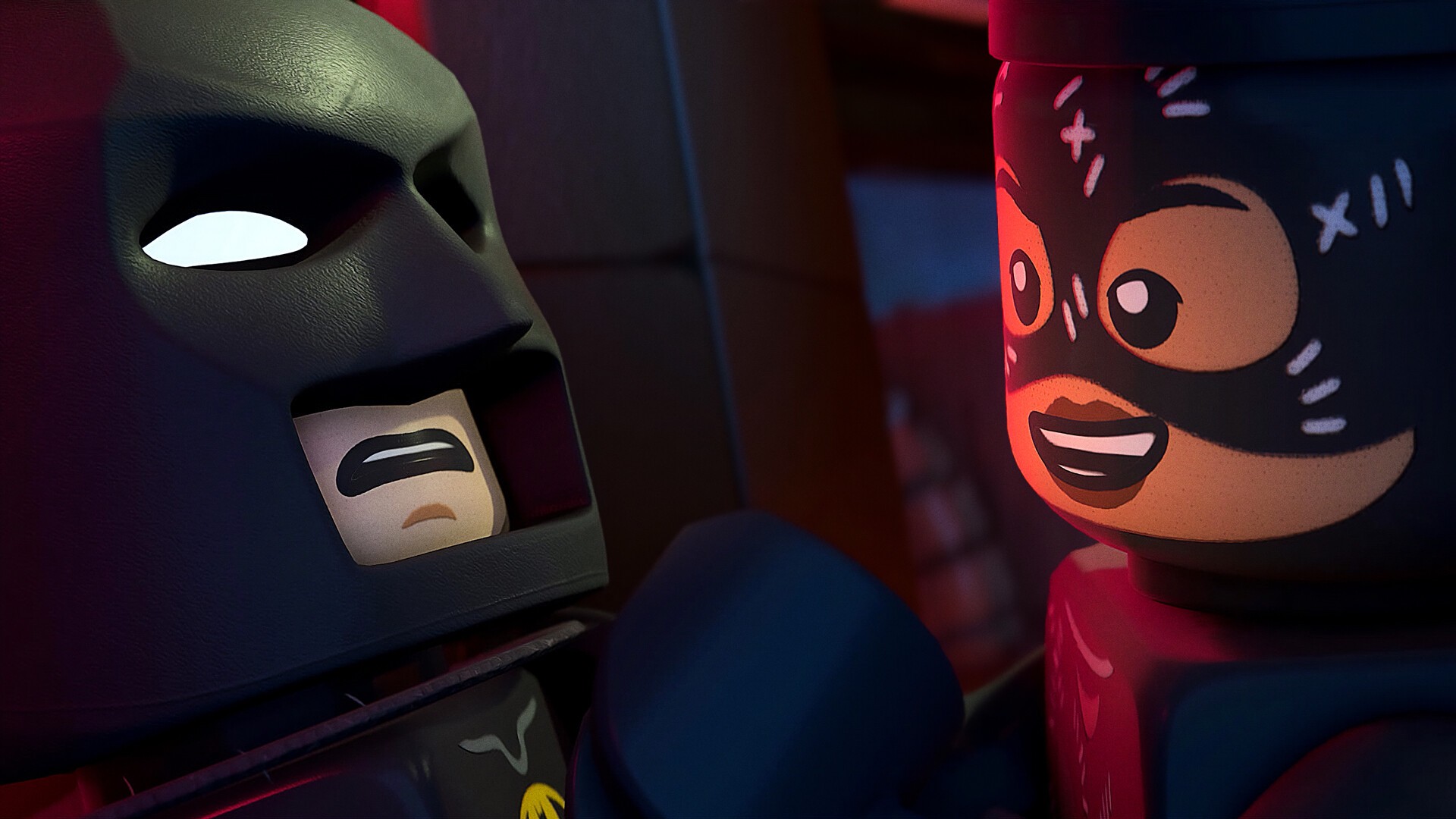
Of course Gotham wouldn't be the same without its protagonists. Batman is at the heart of the adventure, but one of the most distinctive aspects of the LEGO experience remains the ability to switch between different characters, each with their own specific traits and abilities. It's a formula we know, but one that still has its own reason for being, because it turns the variety of characters into a concrete component of the gameplay. It's not just about picking the character we prefer. The different abilities become part of exploration, puzzle-solving, and the ability to reach otherwise inaccessible areas. This makes the player look at the environments with a different kind of attention.
An apparently insignificant item can suddenly become important when you have the right character, while a previously visited area can hide something that was unreachable during the first playthrough. It’s one of the elements that most contributes to the exploratory component and the desire to revisit your own footsteps.
When Batman meets LEGO
But talking about LEGO Batman without mentioning the humour would be impossible. These games have always relied on their strength to take beloved characters and put them in situations that downgrade their solemnity. Batman can be the Dark Knight, Gotham’s detective, and one of the most iconic superheroes of all time, but within a world built from bricks, he can just as easily become the star of a joke. And it’s precisely this juxtaposition that represents one of the most recognisable characteristics of the experience.
The game doesn't abandon Batman's identity, but observes it through a lighter lens. References to the DC universe become integral to the experience, with characters and situations capable of eliciting a laugh, especially for those familiar with the source material. It's a humour that doesn't need to constantly explain its jokes. Often, all it takes is taking something the audience knows and slightly shifting its meaning.
And in this regard, LEGO continues to have a formula difficult to replicate.
A gameplay that knows its roots well
From a gameplay perspective, The Dark Knight's Legacy builds on well-established foundations. Exploration, combat, puzzles, environmental destruction and item collection coexist within a structure designed to alternate different moments without unnecessarily complicating the experience. Simplicity remains one of its key elements. No complex systems need to be understood to start playing, allowing the title to retain that immediate nature that has always accompanied LEGO productions.
The real question that now arises is: how well does this formula maintain its interest throughout the journey? Because what works perfectly in the early hours can become less effective once the player has already seen certain dynamics repeat. It is here that variety becomes critically important. Missions, settings, characters and situations must frequently alter the pace of the experience, preventing the structure from becoming predictable. And this will be precisely one of the areas worth paying closer attention to.
The pleasure of destroying everything
There’s also an apparently banal element, but one that continues to represent an important part of the charm of LEGO games: destroying practically anything we find in front of us. Objects, structures, environmental elements. Destruction is not merely an aesthetic device, because it often becomes also a tool through which to acquire materials, discover alternative routes, or solve specific puzzles.It’s a simple mechanic, almost childlike in its immediacy, but precisely for this reason effective.
There’s something deeply satisfying in watching an apparently orderly environment turn into a mountain of bricks after passing through Batman. And maybe that’s exactly one of the reasons the LEGO formula continues to work: it doesn’t ask the player to always be serious.
Sometimes, it just wants to let him play.
The experience on Nintendo Switch 2
We then turn to the version we're looking at most closely: the one for Nintendo Switch 2. The new Nintendo console Nintendo represents a key opportunity for third-party developers who want to offer a technically more ambitious experience than was possible on the previous generation. In the case of LEGO Batman, therefore, it’s not enough to ask whether the game is fun. You also have to understand how this version manages to exploit the console’s hardware.
Image quality, smoothness, environment management, loading times and overall stability all become important factors in assessing the experience. And there’s another aspect to consider: the ability to play Gotham either on TV or directly on the console screen. The console screenIt’s one of the reasons why Switch 2 could be a particularly interesting platform for a game like this.
A big LEGO adventure doesn't necessarily have to be tied to the living room. It can join us outside too, preserving its structure without losing the joy of exploration. Naturally, it'll be necessary to test on the ground whether this version actually keeps its promises.
A formula that still needs to prove something
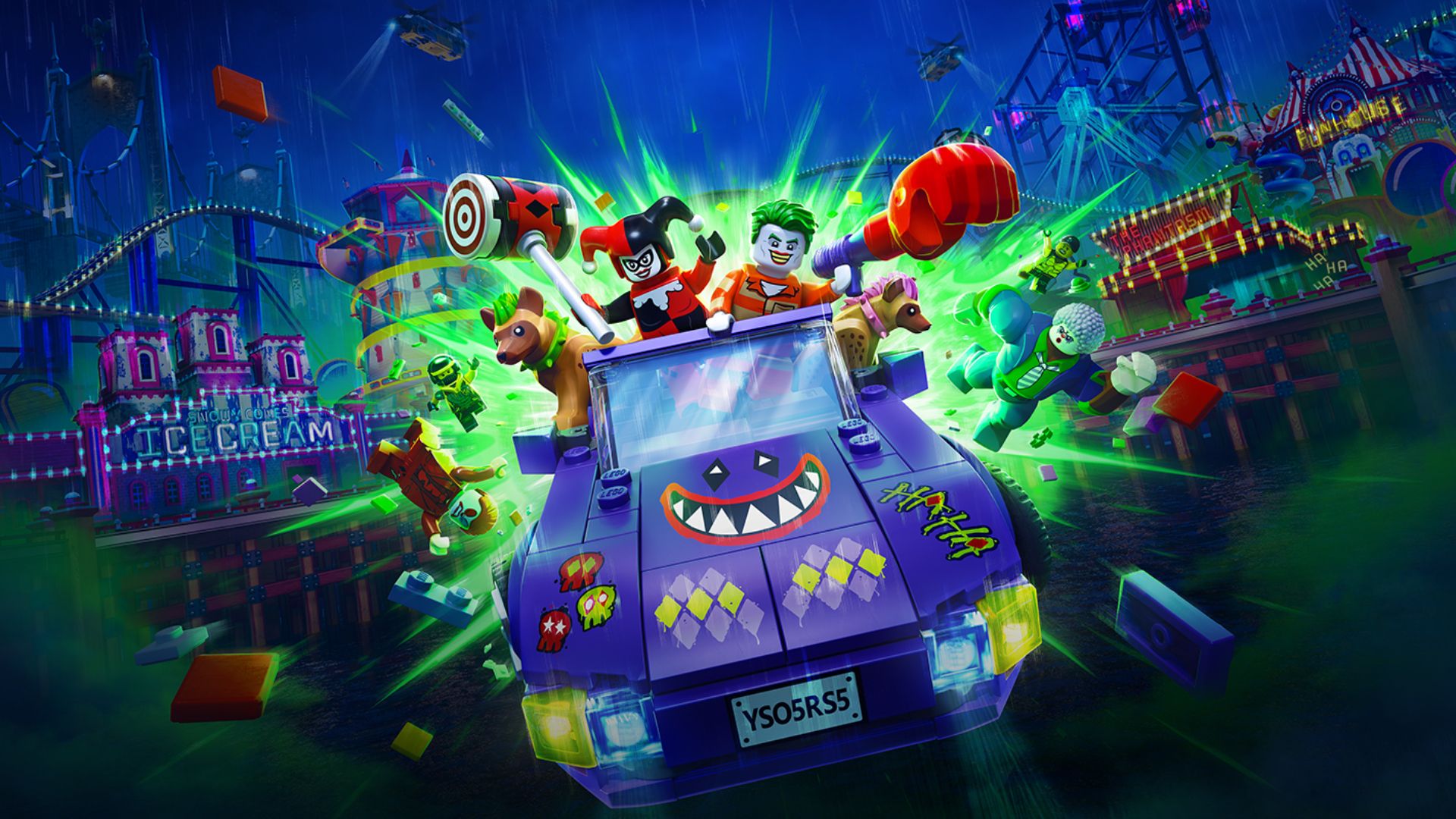
The real focus of the review, however, won’t be determining whether LEGO Batman: The Legacy of the Dark Knight whether it’s simply a good game. The real question is more interesting. After so many years, does the LEGO formula still have something to say? The answer will largely depend on the game’s ability to blend what we already know with something that actually surprises. Because returning to Gotham inevitably means confronting an important legacy. Batman has been reinterpreted countless times, as have the LEGO games, which have built their own distinct identity over time. The new chapter must therefore navigate between two very different legacies.
On one side is Dark Knight, with eight decades of history on its shoulders. On the other is LEGO Batman, a series that has already shown it knows how to transform that universe into something completely different. The Dark Knight's Legacy seems to want to place these two animated series side by side, without forcing either to abandon its own identity.
And it's there that its strength might lie.
In the end, perhaps the best way to understand LEGO Batman is to stop for a moment wondering whether it's serious enough, complex enough or modern enough. We must ask whether it still manages to do what a LEGO game was born to do:Gotham, its heroes, its villains and everything revolving around the Dark Knight become, in effect, a massive LEGO-themed playground of combat, puzzles, exploration and irony. The real challenge will be to see whether all this manages to retain its own charm from start to finish. Because behind Batman's cape, behind his mask and behind every single brick, there remains a very simple question.
Do we still want to go back to Gotham?
After playing LEGO Batman: L'Eredità del Cavaliere Oscuro, we can confidently say yes.