We find ourselves in an alternate reality where the supernatural has always existed, even if for most of human history it remained confined to the realms of legend and belief. Everything changed with an event that occurred toward the end of the 19th century, during an eclissi. That event, known as Maelstrom, triggered the opening of mysterious portals called Astral Gates, appearing in various parts of the world. For the first time, humanity faced a reality impossible to ignore: magic and supernatural forces were no longer simple myths!
Fifty years later, the story of Deadlock takes us to the Cursed Apple, an alternative and supernatural version of New York, where the boundary between the earthly and the otherworldly has become much more blurred.
But let’s take a step back…
At the outset, Valve’s latest creation had a completely different name: Neon Prime. The game originally emerged as an ambitious project with a strong sci-fi character, an evolution of an idea previously known internally as Citadel. During development, however, the developers gradually shifted direction, abandoning the sci-fi aesthetic to build something entirely different.
So by May 2024 came Deadlock. A project that, while retaining some of the original idea’s foundations, would change its setting, artistic style, and identity, until becoming the competitive shooter we know today.
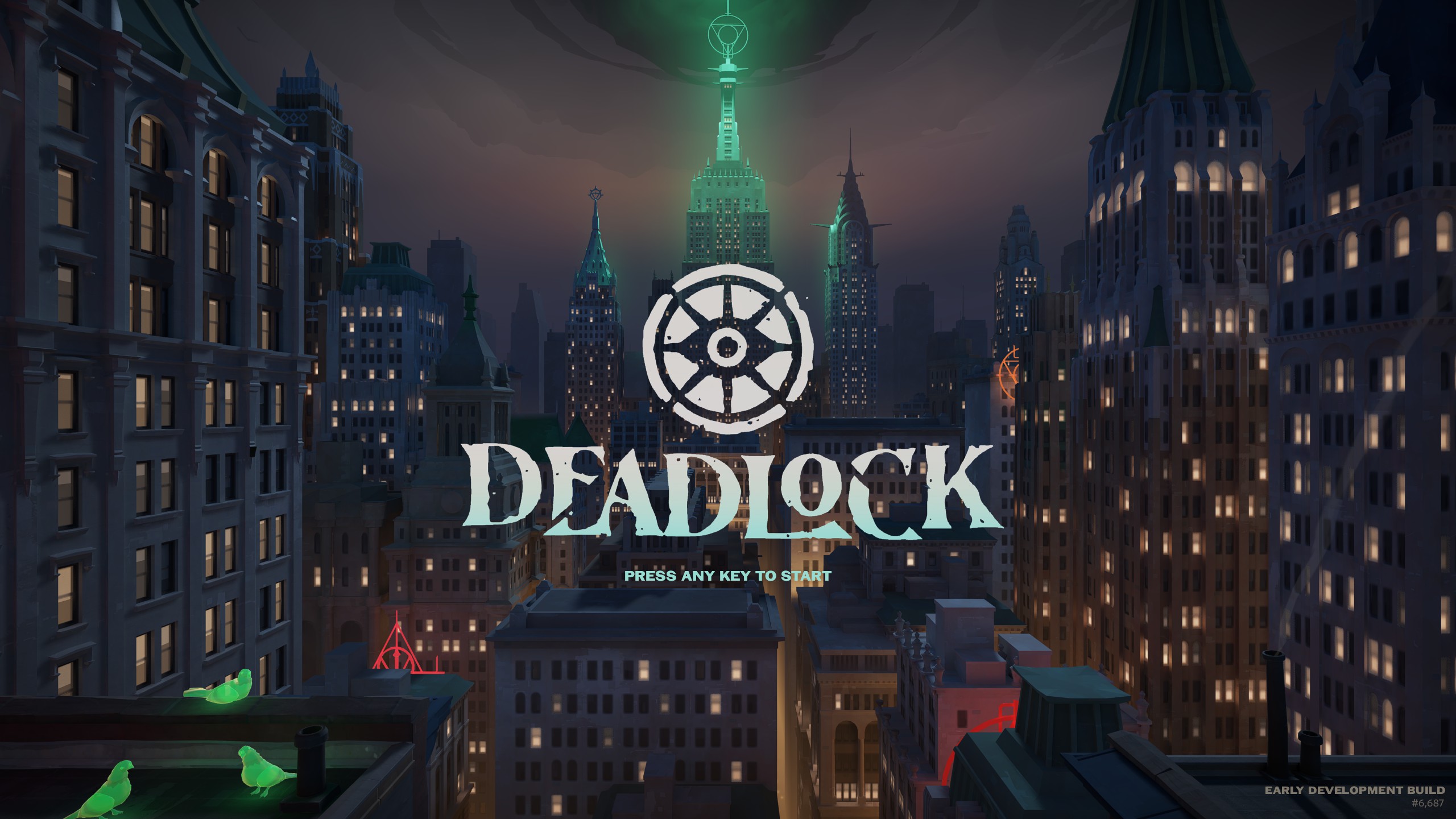
Deadlock is a competitive multiplayer team shooter that blends the mechanics of a hero shooter with those of a MOBA. Two teams face off within a large map divided into "lanes," with the objective of advancing toward the opponent's base and destroying their defenses. Each player controls a hero characterized by a weapon, specific abilities, and a unique playstyle. Killing opponents is only the tip of the iceberg. During the match, players must eliminate minion, collect Souls, purchase items, build their own build, and decide how to spend the accumulated resources.
And so far, it might seem like a familiar description, right?
A shooter with the soul of a MOBA
The first match may give the impression of being in front of a standard hero shooter. There are weapons, abilities, cooldowns, frantic battles, and very different characters. But the more you play, the MOBA element becomes more evident.
Every choice has consequences
Gear correctly means obtaining more resources. Having more resources means being able to buy better items. A properly built setup can completely alter an hero’s behaviour and allow you to tackle situations that, with a different configuration, would be nearly impossible. You must learn to read the game, understand when to push a lane, when to retreat, when to assist a teammate, and above all, when to avoid a fight. It’s an approach that may initially confuse those coming from traditional FPS games, but it certainly represents one of the strongest points of the game.
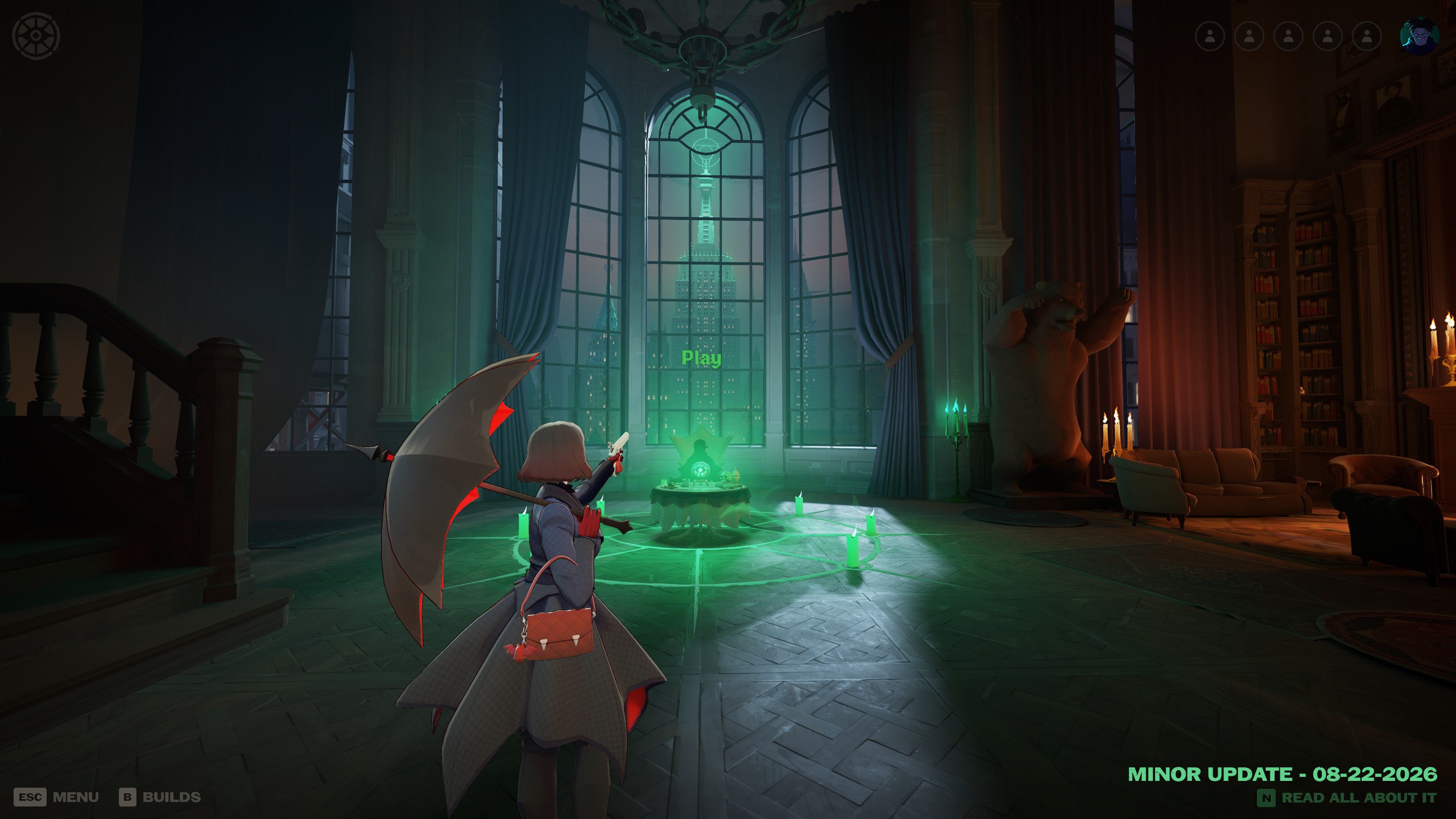
Despite its strong MOBA component, Deadlock never forgets that it’s a first-person shooter. Weapons play a central role, and aiming remains fundamental, especially in long-range engagements. The difference from the competition, however, is that precision must constantly coexist with skill, movement, and resource management. This creates unique situations. A player may have excellent aim but find themselves at a disadvantage against an opponent with a build more suited to the situation. Similarly, a good skill used at the wrong moment can turn an advantage into a disadvantage.
NEVER STOP!
If there’s one element that immediately distinguishes Deadlock from most of its competitors, it’s movement. The game offers multiple ways to move quickly across the map and combine movement with abilities. Dash, jumps, zipline and verticality turn fights into extremely dynamic combat scenarios. You can’t simply hide behind cover and wait for the opponent to emerge. You must keep moving. A fight can begin on a street, continue across a rooftop, and end mere seconds later inside a building. Movement across the map thus becomes an integral part of combat — not just a means of navigating the map.
A continuously expanding roster
One of the aspects that most strikingly impresses about Deadlock is certainly the design of its characters. Valve has managed to create an cast extremely varied and recognisable, in which each hero possesses a clearly defined visual identity. From costumes to animations, through weapons and abilities, every element contributes to telling something about the character and the world they inhabit. The result is a roster that manages to be original without losing coherence: each character stands out immediately from the others, and, above all, seems to have its own story to tell. But this variety extends beyond aesthetics or abilities: items allow players to further modify their character’s behaviour.
The question becomes: how do we want to build it?
This system greatly increases strategic depth, but also brings with it one of the main problems of MOBA: the learning curve.
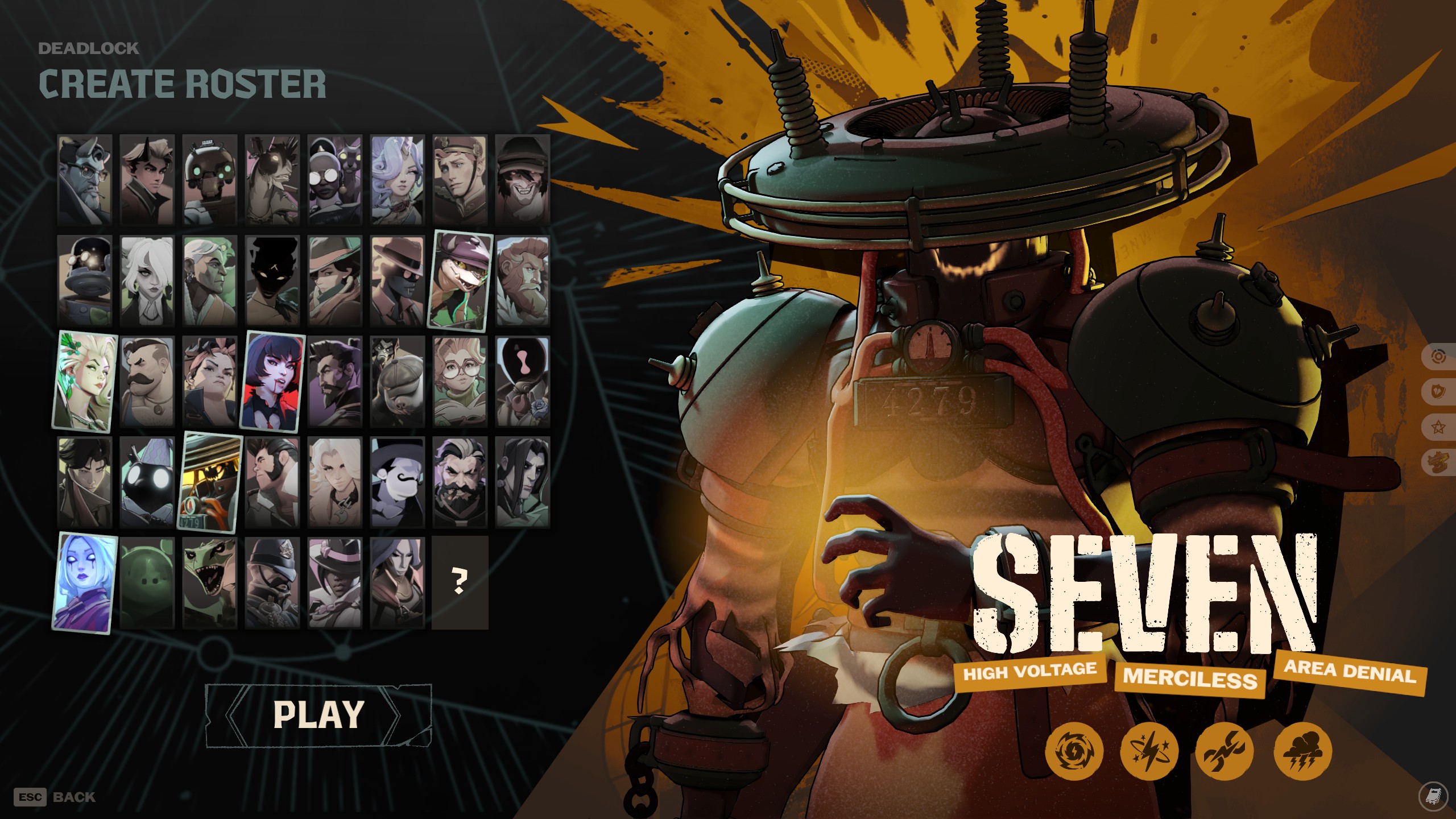
Among the latest additions, we have six new characters: Silver, Graves, Celeste, Venator, Rem, and Apollo. Their introduction was accompanied by a voting system through which the community could decide the release order. By the end of the event, there had been more than 60 million votes.
It’s an interesting example of how Valve is using this development phase to engage its community and, at the same time, gather feedback.
An alternative New York
From an artistic standpoint, Valve has chosen a rather unique path. The world of Deadlock is a supernatural reinterpretation of 1930s New York, where urban elements, magic, technology, and occultism coexist within the same universe. We are therefore not facing the classic medieval fantasy nor a futuristic city. The setting has a strong identity and manages to stand out precisely due to the cohesion of elements that appear very distant from one another.
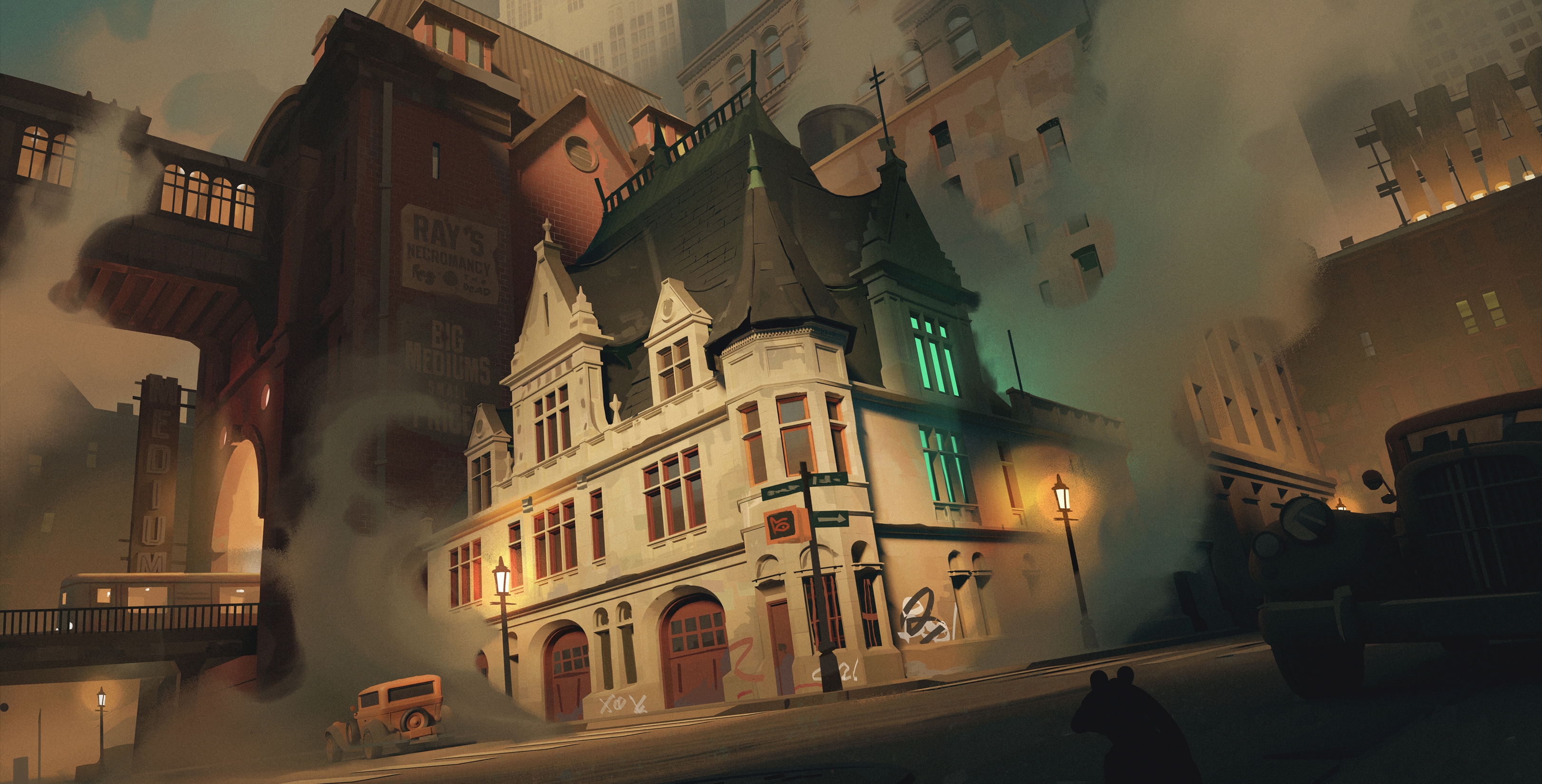
The map is not just a simple arena, but a living city where anything can happen.
Hard to master
Between Souls, items, abilities, stats, lanes, and map management, the amount of information to absorb can be quite high. Someone coming from an FPS might initially focus solely on eliminations, discovering early on that this approach doesn’t necessarily lead to victory—indeed… Similarly, someone coming from a MOBA might struggle with the shooter component and a much more complex movement system. The game therefore requires learning two languages simultaneously. Precisely for this reason, the first few hours can befrustrating; and when I say frustrating, I mean truly frustrating.
MA past this barrier, the game becomes much more readable and, above all, much more fun.
So don’t let yourselves be intimidated! We all started from the bottom.
LORE
Two powerful entities known as Patrons, the Hidden King and the Archmother, are attempting to reach Earth. To achieve this, they require that a specific ritual be completed, and in order to obtain what they desire, they are willing to make a very simple promise: fulfill the greatest wish of whoever helps them. The ritual thus pits two teams against each other across the streets of the Great Apple.
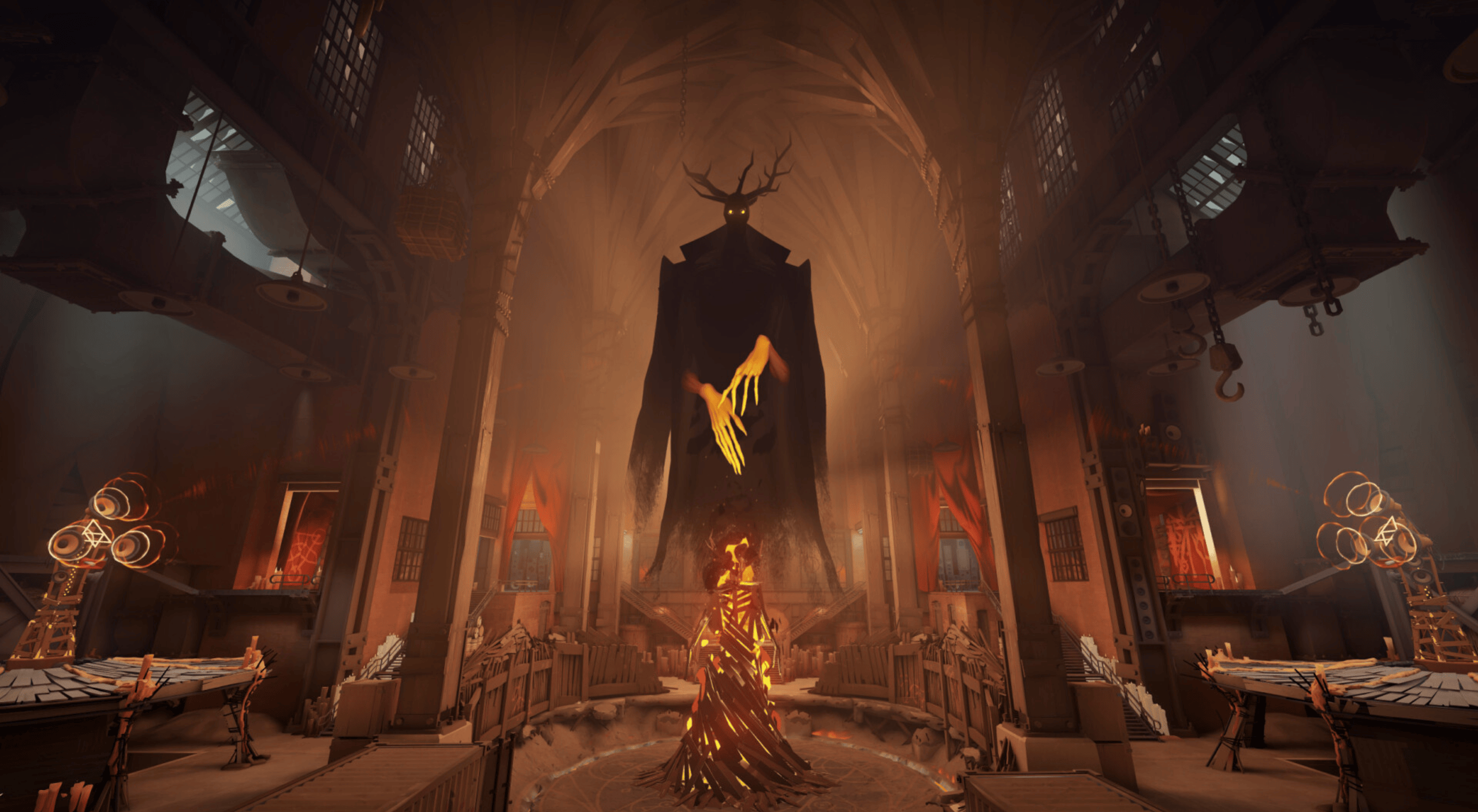
On one side are those who seek to summon the entity, on the other those who try to prevent it from happening. Deadlock’s lore is told within the game: in the stories of the individual heroes, in their banter during matches, in the setting and in the numerous details present in the map. Behind what seems to be a simple competitive match lies a much larger supernatural conflict, still yet to be uncovered.
And now?
Valve continues to regard Deadlock as an ongoing development project, and access remains tied to an invited playtest phase. Even in 2026, the game continues to receive substantial updates and patches that significantly alter its mechanics. A system that appears definitive could be completely reworked, or a character might receive changes so significant they fundamentally alter their role. Valve is using this phase to experiment and determine what works and what needs to be changed.
The flip side is that the player must be willing to accept a certain instability. Bugs, balance changes, modified mechanics, and systems still in development are part of the experience. The game can count on an average of around 80,000 players, reaching peaks of 170,000. Impressive numbers for any title, but even more so if we consider that it’s still in Early Access.
But so…When will Deadlock be ready? It’s hard to say. What Valve has built so far is already something hard to ignore. Every update adds new pieces to a game that seems to have plenty more to offer. A major update is expected at the end of September 2026 and could represent another important step in development. For now, however, one thing is certain: Deadlock has already shown it has its own identity and enormous potential.
And if this is just the beginning, the real question is one: How far will it go?
About the Author