
There are games that arise from a strong idea, even brilliant, and then have to deal with everything else: rhythm, finishing, technical compartment, artistic direction, sound, artificial intelligence and legibility of action. Doctor: Pacific War fits perfectly into this category. The concept is immediately interesting: we do not dress the cloths of the new armed soldier until the teeth engaged to assault trenches and bunkers, but those of a Military physician catapulted in the chaos of the Pacific War.
I admit, as a doctor, I could hardly have ignored such a project. The video game market has accustomed us to impersonate soldiers, generals, pilots and even entire nations, but rarely puts us in the shoes of who, in the middle of the battlefield hell, has the task of save lives instead of removing them. The idea of living the Second World War through the eyes of a military rescuer was enough to immediately capture my attention and bring me closer to the game with a curiosity perhaps greater than that of the average player.
This content is provided by YouTube. To view it, you must allow external content. Activation may result in data being shared with the third party.
The concept is immediately interesting: we do not dress the cloths of the new armed soldier until the teeth engaged to assault trenches and bunkers, but those of a Military physician catapulted in the chaos of the Pacific War. Our task is to recover the wounded under enemy fire, stabilize them with limited resources and decide, often in a few seconds, to those who devote time and materials. It is an extremely rare perspective in the videoludic panorama of the war and, precisely for this reason, fascinating. Medic: Pacific War does not want to tell heroism through the number of enemies shot down, but through the lives saved. A premise that, at least on paper, has all the cards in order to distinguish itself in a genre often trapped in the same settings and in the same archetypes. The problem is that a great idea alone is not enough, and current early access shows clearly how much work is still necessary to transform this intuition into a great game.
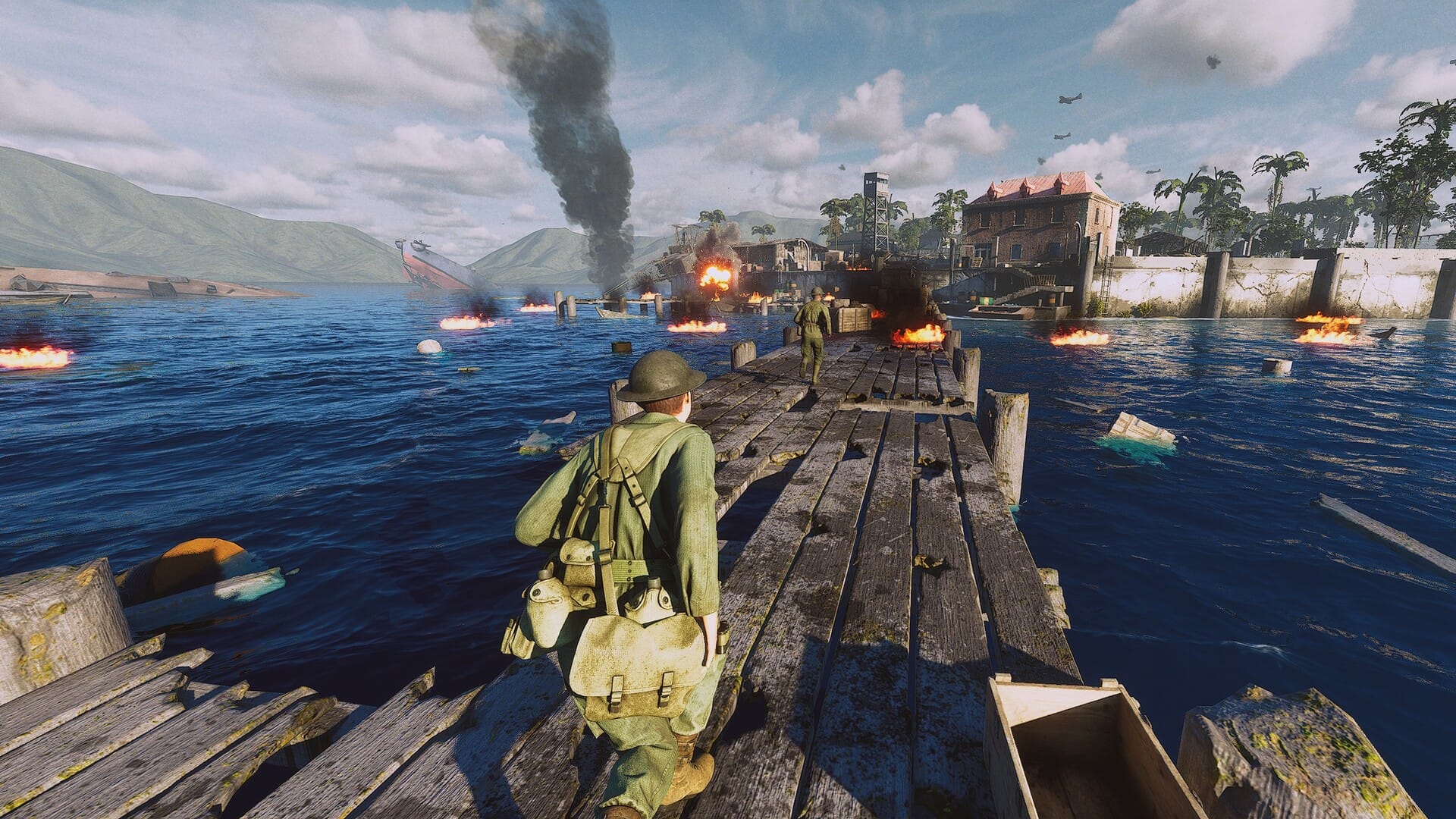
The content available at the moment is quite reduced. The playable missions are few and resemble more to a demonstration of the mechanics than to a real campaign. The opening set in Pearl Harbor introduces the tone of experience: explosions, confusion, wounded by rescue and a constant feeling of emergency. The next mission in the Philippines expands the picture and shows one of the most promising ideas of the project: explore less represented World War II fronts in video games. In this sense, the choice of the Pacific is already an added value.
Each soldier has different injuries and requires a specific sequence of interventions: apply haemostatic laces, use gauze, bandages, hemostatic powders, sticks and other tools. Everything is translated into a series of minigames and QTE that, without reinventing anything, they generally manage to work. The management of resources is probably the most successful aspect. It is not always advisable to completely cure a patient: consuming too much material on a stable wound can mean no longer having enough supplies to save someone in critical condition shortly after. The constant pressure of the battlefield also helps maintain high tension. You can't stop too long and you can't reason with the calm of a medical simulator. We must move, assess the situation and act quickly. It feels vulnerable, useful but never almighty. It is probably the main strength of the game and the reason it is worth following its development.
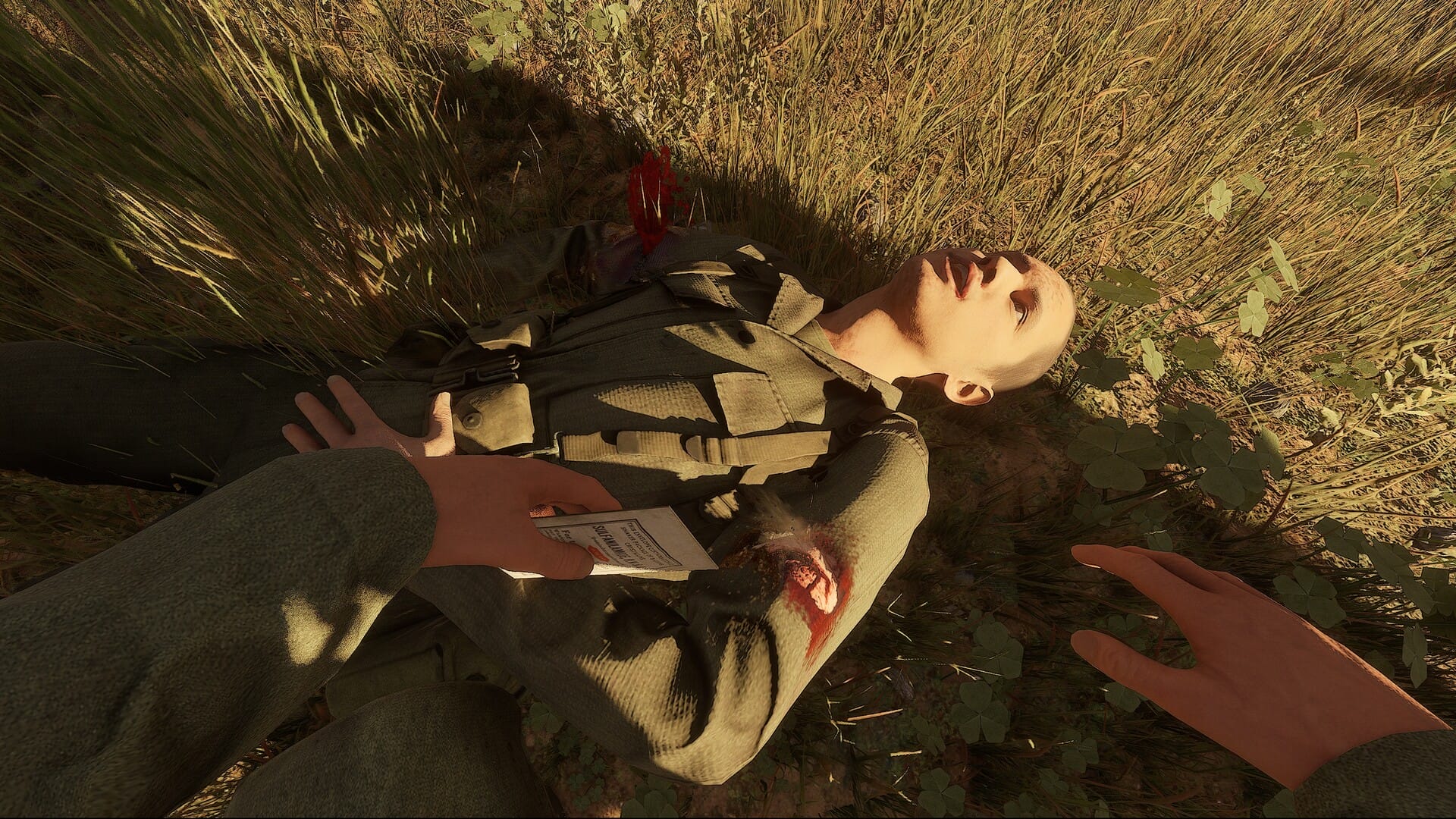
Not all the minigames, however, were equally successful. Some are intuitive and satisfying, others more frustrating than stimulating. The bandage system, for example, requires you to click at the right time on a white or golden area of a rotating indicator. On paper, the perfect window is often too small and unreadable. As a result, instead of looking for the bonus, you often end up pointing to the safest solution. It is not a serious problem, but it is one of the aspects that would need a better calibration. They also remain some perplexity on medical plausibility of certain procedures. Some treatment sequences appear questionable and allow combinations of little credible tools. In a purely arcade title would be a negligible detail, but Medic: Pacific War builds much of its charm on the fantasy of being a credible military rescuer. There is no need for absolute realism, but greater coherence in procedures would significantly increase dive.
The most obvious problems arise when the game abandons the medical component to turn into a third-person action. Transporting or dragging wounded is often sniper. The animations block the character for short moments that, in normal situations, would be irrelevant; under enemy fire instead become fatal. It often happens to start the animation of recovery, stay exposed and get knocked down before even being able to shelter. In these cases, frustration derives more from the limits of the system than from the ability of the player. The vulnerability of the doctor is an understandable and consistent choice with the concept, but at the moment there are no adequate tools to manage threats. It would not be necessary to transform the protagonist into an assault soldier: there would be enough options such as smokers, cover fire requests, alerts to allies or more permissive management of movements during transport of the wounded. Small tricks that would make some sections much less frustrating.

Also the allied artificial intelligence convinces little. Commitons often seem to be scenographic elements more than real battlemates. They shoot, scream and occupy space, but rarely give the impression of influencing events. This strengthens the feeling of being alone in one war that often appears more as a background that as a dynamic system. The moral system, at least in its current implementation, leaves some doubt. The idea of affecting the spirit of troops through medical aid is interesting, but the value tends to decrease too quickly and continues to descend even during times when the player has little control of the situation. More than a dramatic mechanic, it sometimes ends up looking like a simple Punishment timer.
Technically, Doctor: Pacific War is still acerbo. The performance is also unstable on medium-high configurations, with evident calis in the most concise situations. Reduce details improves the experience, but does not completely eliminate stuttering and uncertainties. Considering that it is a Early Access, some roughness is understandable, but optimization still requires a lot of work. The audiovisual sector is probably the weakest aspect of experience. The sound design fails to convey all the power of the conflict that the game would like to represent. Explosions, shots of firearms and anti-aircraft guns are often incisive, while some vocal lines emerge in the mix with disproportionate volumes. The overall impression is that of an audio compartment still incomplete and unfinished. The dubbing also leaves to be desired. Many interpretations appear flat and devoid of the emotional charge that similar situations would require. In a game focused on the rescue of wounded soldiers, pain and fear should be central elements of the sound experience. Instead, many characters seem too controlled and little credible. If current entries are simple placeholder, the problem is intended to solve itself; Otherwise, they risk seriously compromising the dive.

The cutscenes, in the same way, are still in a state to the most embryonic: rigid animations, imprecise synchronization and dialogues that leave late or do not act properly compromise the narrative. In some moments it almost seems that the game is trying to compress too many events in the same time space, with little natural results and often involuntarily comic. From a visual point of view alternating good insights and obvious limits. Uniforms, weapons and historical context suggest a dignified documentary research, but models, animations and settings still betray raw production. Not everything convinces, but one sees a basis on which to build something more solid.
Despite all, it would be unfair to liquidate Medic: Pacific War as a failure. When you are next to a wounded, with few resources available and enemy fire a few meters, the game manages to express something different than most wartime titles. It is precisely this uniqueness to make its defects even more evident: under the acerba surface you can see a project that could really stand out. At the moment, however, early access is recommended above all to those who are willing to live with bugs, swinging performance and still evolving systems to support a promising idea. Those looking for an experience already finished and complete would better wait for more substantial updates. The hope is that developers continue to listen to the community and intervene on the main issues: optimization, audio, animations, artificial intelligence and tactical options. They also need more content, because two missions, however interesting, are not enough to support the long-term experience.
Medic: Pacific War is therefore a Early Access in the most authentic sense of the term: not an almost finished game with some missing content, but a project still fragile, full of edges and with wide margins of improvement. It has a good idea, some convincing mechanics and moments capable of conveying the urgency of the rescue in battle. For now, there is a promise. An interesting promise, but still far from being fully maintained.
About the Author