
Moros Protocol is one of those games that, from the very first moments, makes it clear exactly what it wants to be: a fast, nasty retro shooter blended with roguelite mechanics and a distinctly unsettling sci-fi setting. I played it on PS5 and the first thing that struck me was just how fast the pace is. It’s not a shooter where you’re meant to stay still and take aim calmly: you need to move, dodge, know when to fire, and when it’s better to get close to the enemy and use close-quarters combat.
This content is provided by YouTube. To view it, you must allow external content. Activation may result in data being shared with the third party.
The plot
The story takes us aboard theOrpheus, a massive warship abandoned in deep space and now overrun by creatures called Darkphage. The protagonist, Alex, wakes up with no memory. He doesn't know what happened to the crew or why he's there. Guiding him during the exploration is a mysterious voice that pushes him to keep moving forward.
The plot isn't certainly the main reason I kept playing, but it works pretty well as a glue for the experience. The game prefers to tell what happened through the environment, encounters and progression, rather than becoming a long narrative adventure. And there's a narrative element that fits perfectly with the roguelite structure: when you die, the Moros Protocol kicks in, letting Alex continue through a new body. Death, therefore, isn't simply a 'game over', but is part of the story and the game's own structure.
Gameplay
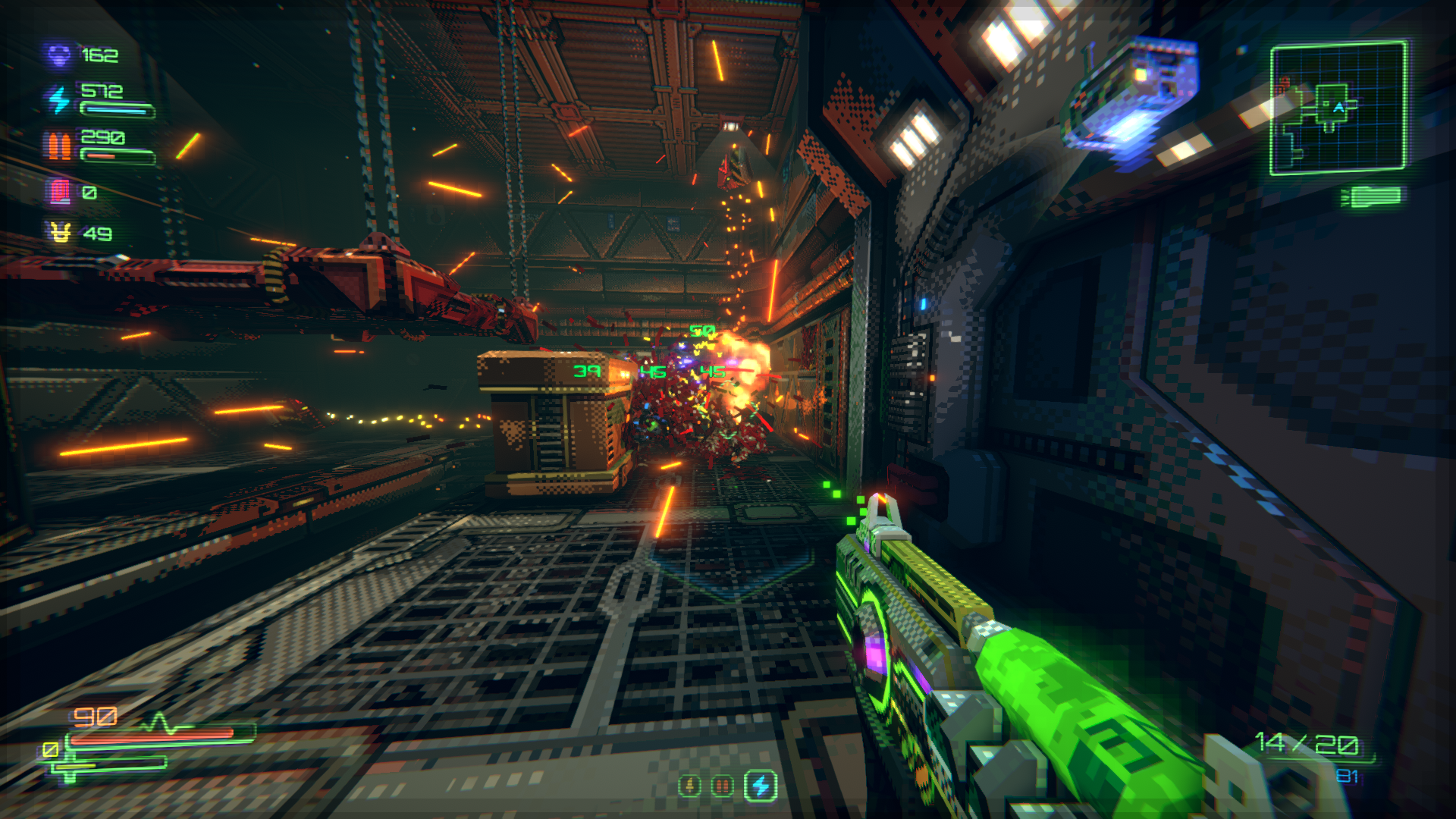
It’s here, in my view, Moros Protocol delivers its best.The game takes the speed of 90s and early 2000s FPS titles and combines it with a roguelike structure. Maps are made up of hand-crafted and procedurally generated environments, so each run can differ. Even the weapons and upgrades we find during a match affect how we tackle the fights. At the start, we don’t have devastating firepower and must learn to make the most of what we find.
One thing I particularly appreciated was the ammunition management. It’s not infinite, so firing without strategy can quickly get us into trouble. This leads to using close-quarters combat and even kicks to handle certain situations. This creates a particular rhythm: you enter a room, enemies arrive, you start shooting, you must constantly move, while simultaneously keeping track of how much you’re consuming. When you finally clear an area, that feeling of "okay, I’ve done it" hits and you take a deep, satisfying breath.
The roguelike system
Death is a fundamental part of the experience. During runs, you collect resources and experience that allow you to gain permanent upgrades. In this way, even when you lose a match, not all your effort is wasted. The problem is that progression isn't always rapid. And it's probably one of the aspects that convinced me least: after several deaths, it's easy to feel like you've made considerable progress without gaining an upgrade significant enough to genuinely alter your playstyle.
The game therefore focuses more on improving the player than on the progressive transformation of the character into a war machine.
Difficulty
Here, a distinction needs to be made. Moros Protocol is tough, but not simply difficult at all times. The biggest challenges come mostly with certain bosses, which can feel like true barriers. So, there are genuinely tough moments during these encounters. Personally, this would be one of the main things I’d consider before buying it: if you dislike having to replay sections repeatedly to learn enemy patterns and behaviours, certain moments could become frustrating.
On the other hand, I’d consider the difficulty generally severe but fair, because the game puts you in tough situations but allows you to improve by learning to make better use of movement, weapons, and resources. severa ma corretta, because the game puts you in tough situations but allows you to improve by learning to make better use of movement, weapons, and resources. Therefore, I wouldn’t call it simply "unfair": it’s more accurate to describe it as a challenging game with some difficult spikes.
Graphics
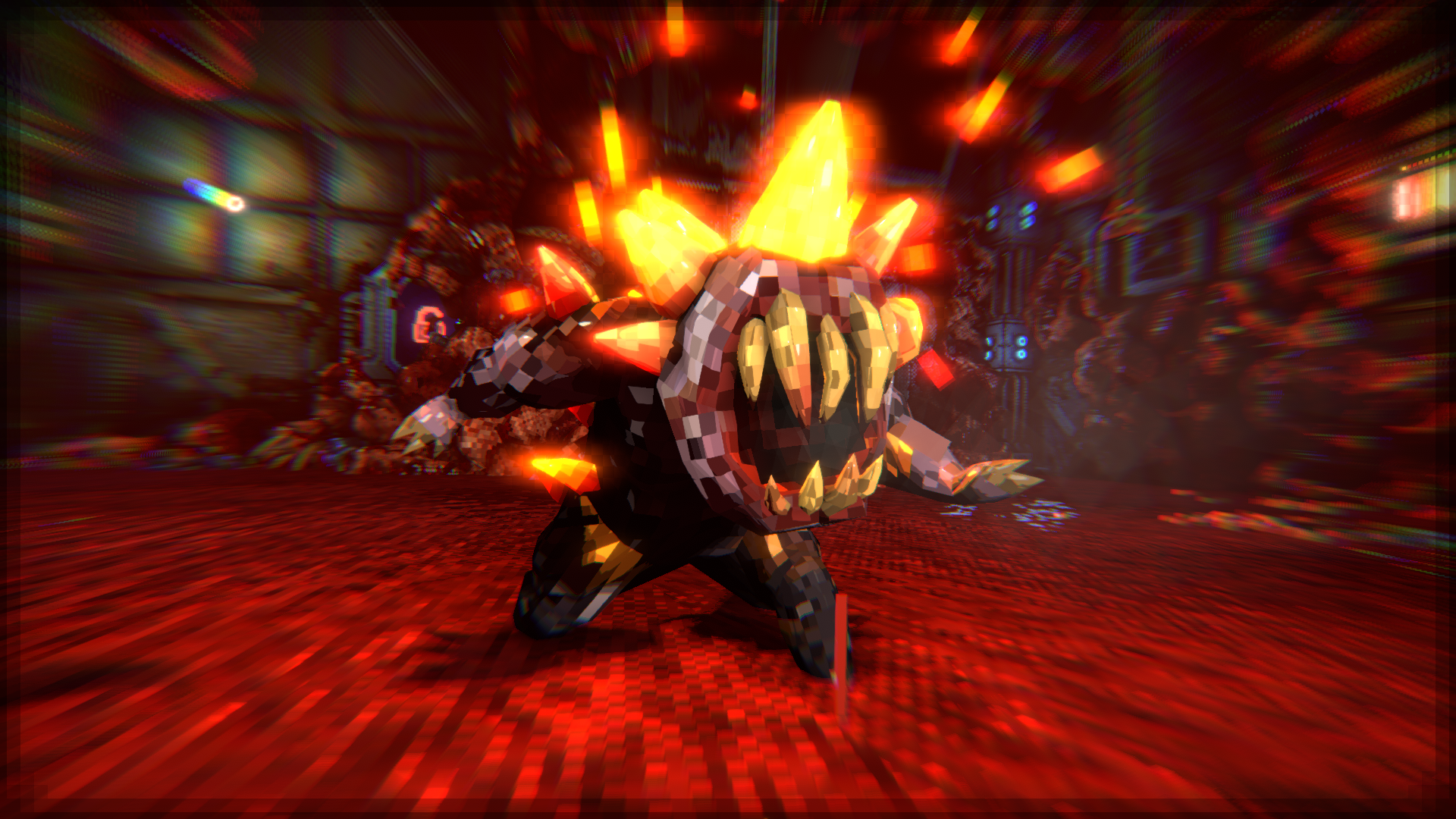
From a visual standpoint, Moros Protocol has a very precise stylistic choice. It absolutely avoids photorealism. It uses low-poly models and intentionally pixelated textures, but combines them with modern rendering and lighting techniques. The result is distinctive because it appears simultaneously old and new. Orpheus is dirty, dark, filled with metal corridors, blood, pipes and flickering lights. The sci-fi/horror atmosphere works chiefly thanks to lighting and environment design.
On PS5 the game runs smoothly and the loading times are convincing. It’s not a game I’d buy to see "how powerful the PS5 is", but for the art direction, which is clearly distinctive. PS5" direction, which is clearly distinctive.
Audio and atmosphere
The sound design works well alongside the visuals. The gunfire, impacts, the ship’s noises and creature sounds all contribute to a distinctly claustrophobic feeling. The soundtrack alternates between ambient, electronic and industrial atmospheres, mostly accompanying the most intense combat phases. It’s not necessarily a soundtrack that lingers for days, but it does its job and helps set the mood.

What didn't convince me
One of the issues I've noticed is the repetitionThe roguelike system works precisely because it pushes us to retry, but after several runs, some situations can start to feel familiar.
Even the permanent progression doesn’t always seem to reward enough the time invested, and this can make some failures more frustrating than necessary. There’s also a particular choice linked to the secrets: secretsSome hidden entrances can be unlocked by hitting specific points in melee combat, which can come at the cost of health. Personally, I find this mechanic quite questionable, as it can make secret hunting feel like an unavoidable risk.
On one hand we have the classic fast-paced FPS, with continuous movement, powerful weapons and close-quarters combat; on the other, a roguelike structure that forces us to accept death and learn from our mistakes. What I appreciated most was the combat. When you start to understand how to move, when to conserve ammunition and when to instead go for close combat, the game becomes much more satisfying. On the other hand, progression could have been more rewarding, and some difficulty spikes risk breaking the flow, especially when a run is lost after a long time.especially when a run is lost after a long time.
Not therefore a shooter for everyone. If you're looking for a linear campaign with story at the heart of the experience, it’s probably not its strongest suit. If, however, you enjoy boomer shooter, roguelike, sci-fi horror and challenging combat, Moros Protocol has an interesting formula and above all its own distinct personality. On PS5 it’s an indie title that definitely deserves consideration, especially for those who want to get back into a shooter where dying, retrying and learning from failure is part of the fun. PS5 is an indie worth considering, especially for those who want to return to shooting games where dying, trying again, and learning is part of the fun.