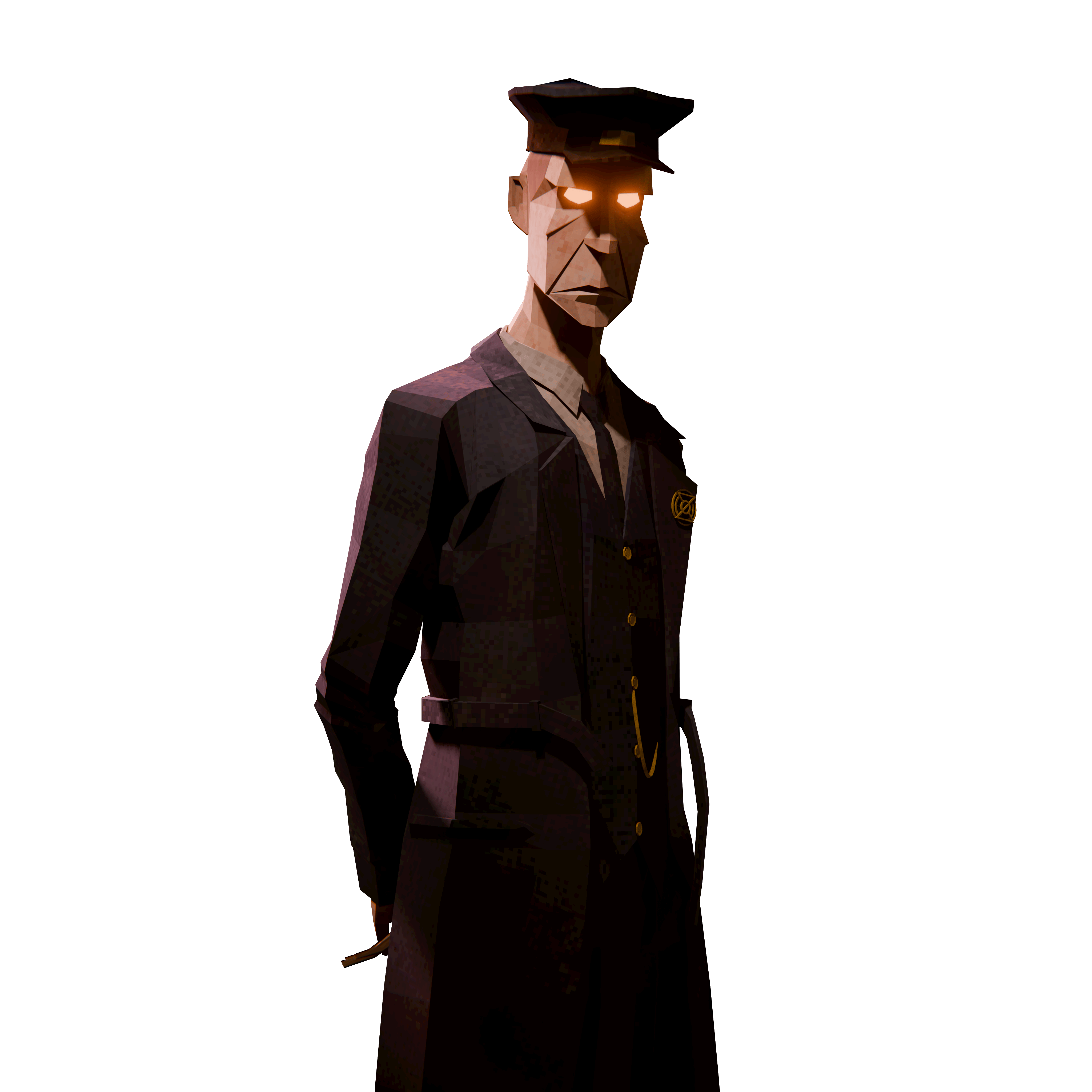
You are sleeping, lulled by the mechanical and repetitive sound of the train moving along the tracks. Suddenly, a loud siren jerks you awake. You find yourself in a cabin you don’t recognise, lit only by the dim glow of several candles. Everything seems out of place, and from the window, you can’t make out anything, except a strange red glow.
In the silence of the room, a raspy voice bursts from the intercom, echoing along the entire carriage: “We expect your full cooperation. All hail the Supreme Engineer!”
This content is provided by YouTube. To view it, you must allow external content. Activation may result in data being shared with the third party.
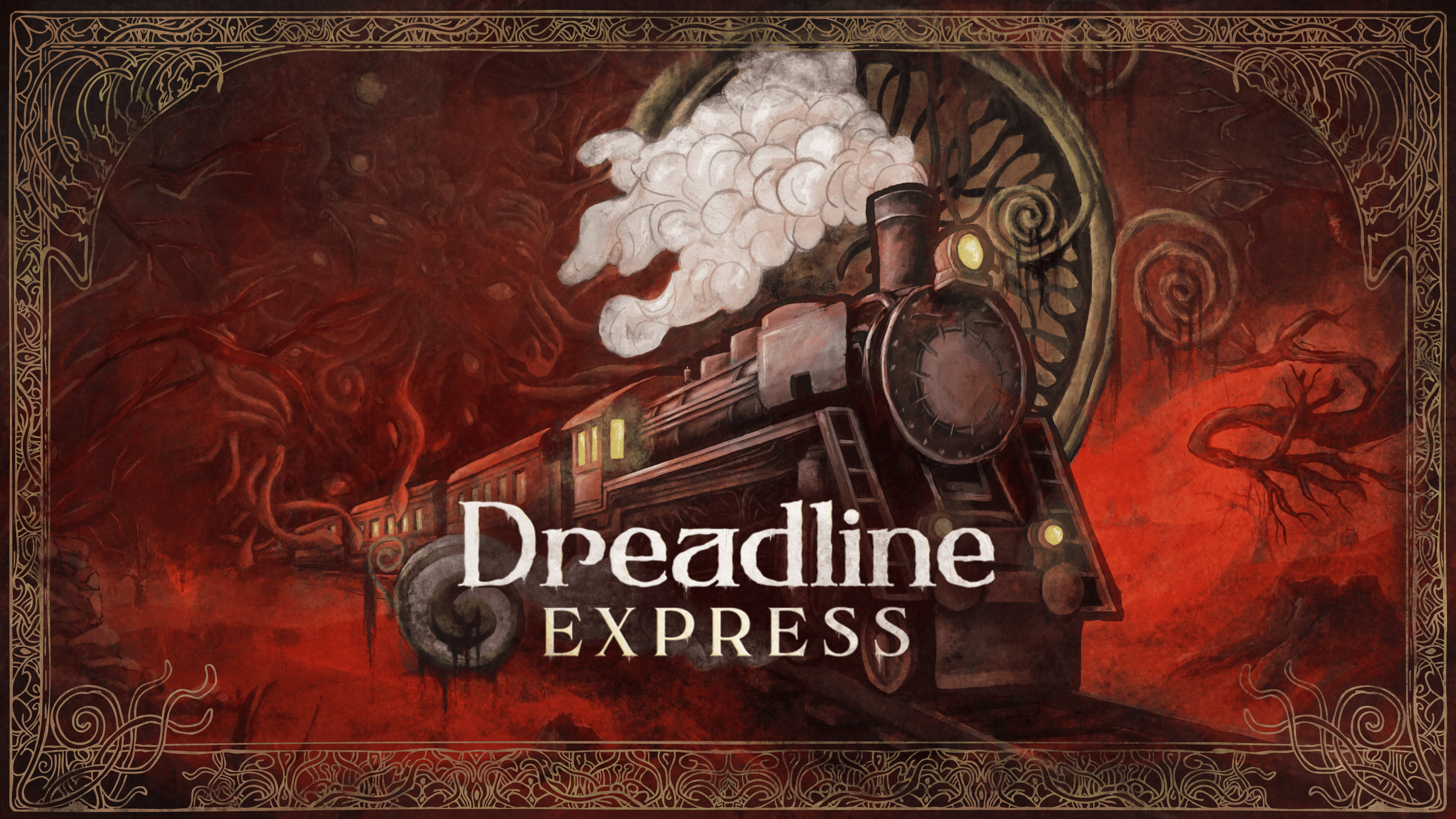
This is the premise of Dreadline Express, a first-person psychological horror adventure developed by David Konecny and published by Shoreline Games, which takes us into a world now unrecognisable, devastated by an apocalypse that evokes the cosmic horror of H.P. Lovecraft. In this bleak and melancholic setting, an old steam train becomes the last refuge of humanity.
Ticket, please!
One of the aspects I appreciated most is the way it chooses to tell its own story. From the very first moments, we find ourselves in a world of which we know very little, surrounded by strangers and immersed in a situation whose true motivations are hard to grasp. The protagonist’s past is wrapped in mistero, and his ricordi frammentati leave room for more questions than answers. Each seems to hold a frammento di verità, and it is up to us to ask the right questions, piecing together slowly the fragments of a story in which nothing seems to be as it appears.
Who are the other passengers really? What happened to the world? And above all, what connection do we have with the events that led humanity aboard the last remaining train?
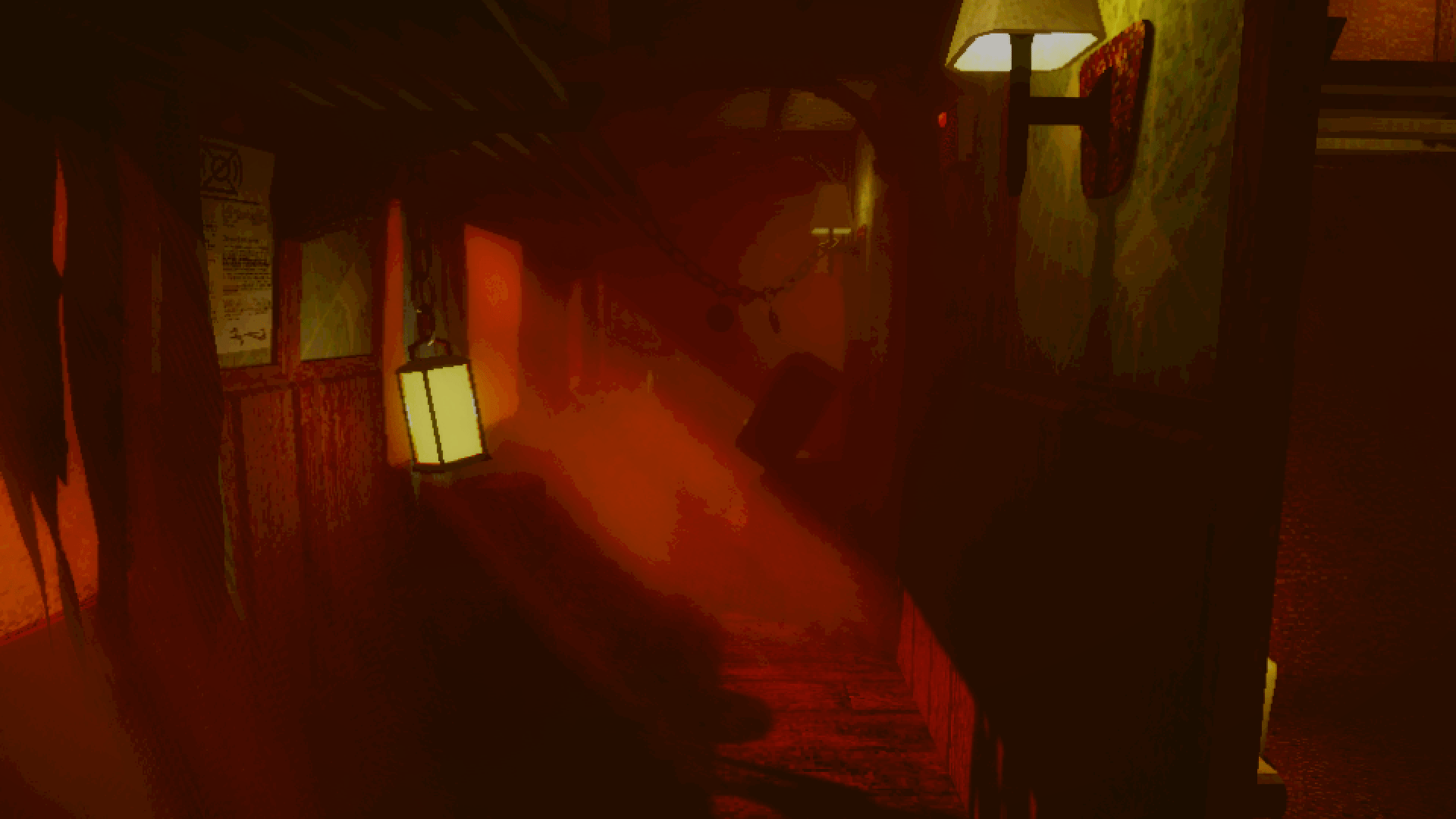
The train, with its dark corridors and its cabins, is a place both fascinating and oppressive: a small isolated world where every encounter can reserve new surprises. Even after several hours of gameplay, the desire to better understand the passengers, reconstruct our past, and grasp what events led humanity to this situation has not faded. It’s a story that manages to intrigue without needing constant reliance on plot twists, letting the unresolved mysteries push the player toward the next discovery. Conversations assume a fundamental role; behind the passengers’ words may lie precious details, forgotten memories, and truths not revealed openly.
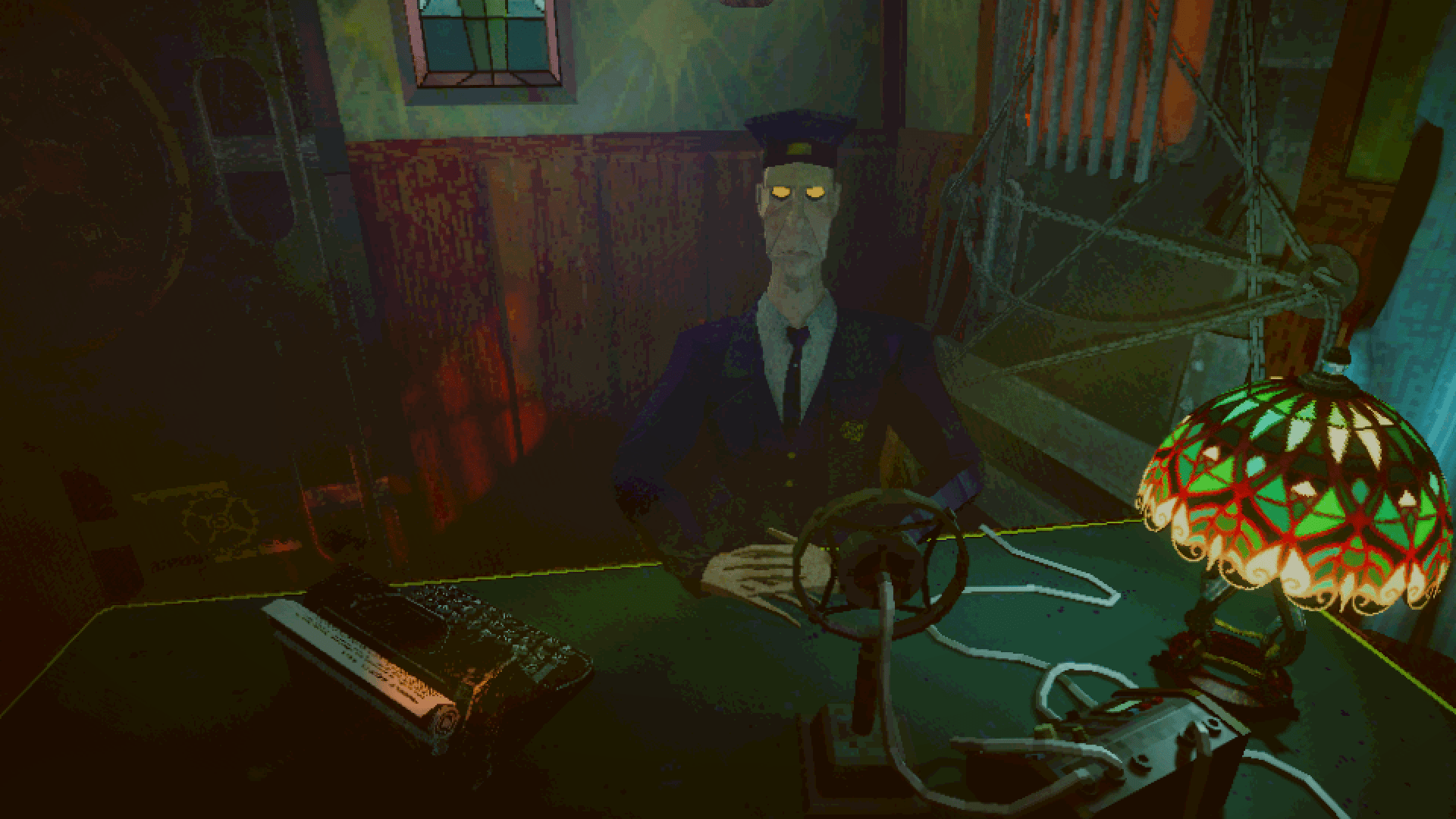
To make everything even more unsettling, the paranormal element intervenes, contributing to transforming the journey into something far darker. The feeling of being unable to rely on one’s memories fuels a constant sense of uncertainty, while the events and presences we encounter suggest that aboard the train there exist forces difficult to comprehend.
The audio department plays a significant role in the success of the experience. The sound of wheels on tracks, the creaks of carriages, and other ambient noises accompany the journey without disrupting its rhythm. Music, in particular, supports a gloomy and melancholic atmosphere that echoes the Lovecraftian influences of the game, conveying a sense of unease that permeates the entire adventure. A subtle yet effective accompaniment, capable of enhancing both reflective moments and those where mystery gives way to more disturbing sensations.
A card for every secret
If the story and setting form the foundation of the adventure, it’s primarily through the gameplay that Shoreline Games’ latest title seeks to distinguish itself from other productions in the genre. Forget weapons, fights, and desperate escapes from monsters: here, our most valuable tool is knowledge, and the ability to exploit it will determine the continuation of the journey. During exploration, we will collect clues, uncover new details about the passengers, and assemble information that will be represented through cards. Each of them constitutes a piece of our memory, and by combining them, we may create unexpected connections, open new lines of investigation, or discover narrative hints to explore later.
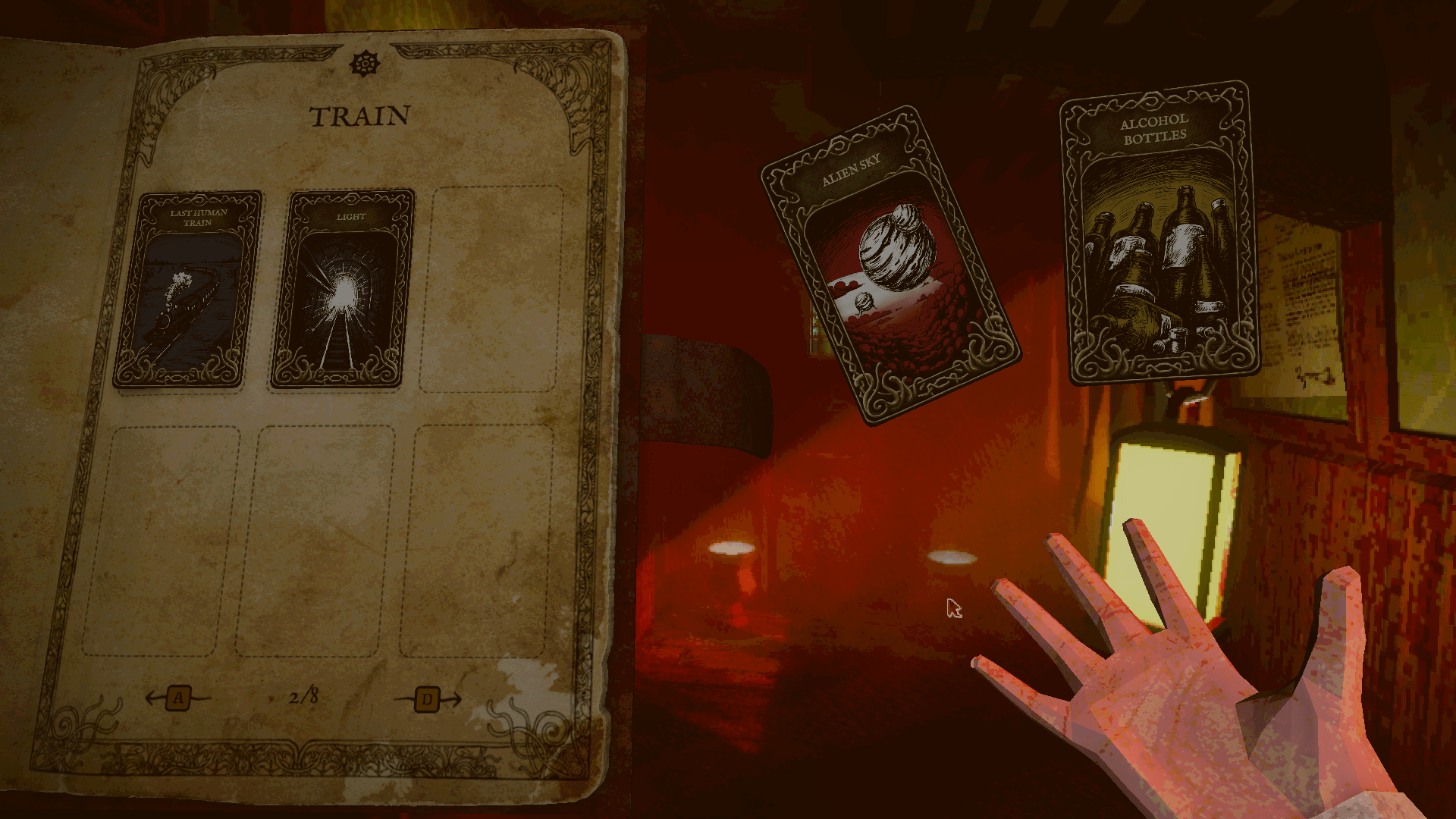
Building thoughts and deductions through the cards is a particularly effective solution for an investigative adventure, because it directly links the game mechanics to the central theme of the narrative. Naturally, a deduction-based system also requires a certain willingness to experiment and think outside the box. An approach that some players might find stimulating, while others might occasionally find a bit dull.
There’s something wrong here…
This structure inevitably brings some doubts. At certain points, in fact, figuring out how to proceed can prove more than expected, especially when one fails to identify the correct connection between the collected information complicated than expected, especially when one fails to identify the correct connection between the collected information. The risk is that it may disrupt the flow of exploration, forcing the player to try various random combinations in the hope of finding the right one. I believe a possible solution could be the introduction of an assisted mode, capable of offering small hints to the player when they are stuck for too long. While still preserving the pleasure of reaching the final deduction independently. A choice that would make the experience more accessible without compromising its mechanics.

“People here tend to forget”
The narrative pace convinced me, keeping my interest alive from start to finish. The desire to discover what lies behind the events and what fate awaits the protagonists serves as a constant motivation to continue, even during moments when the gameplay demands a bit more patience. Contributing to replayability are also the various endings, determined by the choices made throughout the adventure. An interesting incentive that encourages revisiting the journey to explore alternative paths and discover how different decisions can affect its outcome.
Dreadline Express asks the player to align with their investigative approach, accepting its pace and peculiarities. Some less intuitive steps may slow the experience, but they do not undermine the value of an adventure that finds its strength in the storytelling and the desire to discover one’s own purpose.
Capolinea
In a market where many horror productions end up resembling each other, David Konecny’s work attempts to build its own identity through a gloomy and oppressive atmosphere, a narrative rich in mysteries, and a gameplay system that places knowledge at the heart of the experience. The story, revealed gradually, keeps alive the desire to understand what happened to the world, who the passengers truly are, and what the train’s fate is.
What convinced me was primarily the card system, successfully tying investigative mechanics to the core theme of the adventure. Gathering information, relating it, and building new deductions turns the player into an active part of the narrative, rewarding attention rather than relying solely on traditional horror tropes. I finished the game in about 10 hours, trying to discover as much as possible, and I find that duration satisfactory for an adventure of this kind. I admit, however, that I wouldn’t have minded having more opportunities to explore the game world, perhaps through other characters to meet or new activities to undertake.
Naturally, it’s not an experience designed for those seeking a horror packed with action or constant progression. The more reflective pace and the need to reason about gathered information might not appeal to everyone. Yet, these traits define the title’s personality, making it very interesting for those looking for something different.
In conclusion, Dreadline Express really impressed me. The combination of a solid and intriguing story, a suggestive setting, and a gameplay mechanic I’d never encountered in other titles gave me an experience capable of captivating and engaging me from start to finish.
Welcome aboard