
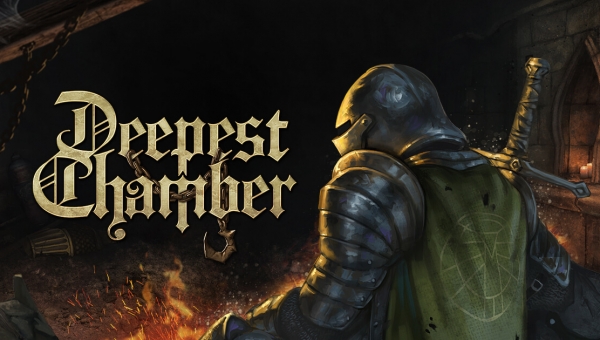
Who among you has played Slay the Spire (or if not, you can read what we think of it) will notice many similarities with this title. Deepest Chamber blends the deck-building component of card games with dungeon crawling and the re-playability typical of titles rogue-like. The title was developed by Balcony Softworks, an independent Hungarian studio, and is available in Early Access on Steam and Epic Games since last July 22 at the interesting price of 12,99€. Are you fans of this niche genre but unsure whether to invest that amount in this project? Well, we’ve tested it ourselves and here’s what we think...
This content is provided by YouTube. To view it, you must allow external content. Activation may result in data being shared with the third party.
Descend into the depths
The premise of Deepest Chamber isn’t certainly among the most original: in a dystopian dark-fantasy medieval world, a mysterious dome envelops the kingdom’s capital, plunging it into a hell of death and plague. The population retreats underground, only to discover that even beneath the earth’s depths, escape from the monstrous horrors summoned by the dome remains impossible. As captains of the city guard, our task is to assemble a small squad and delve into the labyrinth of corridors and hidden rooms beneath the city, in search of salvation—for us and for its inhabitants. Death, our constant companion, no longer frightens us, for after every defeat we will rise again, ready to continue our journey of suffering and desperate search.
Have you thought of Darkest Dungeon? I honestly have.
A deadly Briscola
Now let’s move on to the most delicious part of the title: the gameplay. Like every rogue-like that deserves its name, even Deepest Chamber characterises its gaming experience with “run” at increasing difficulty. Of the 3 maps that will be available in the future, currently only one is playable: the sewers. The sewers are divided into 3 floors: to reach the lower floor, we must free 3 rooms of our choice for each floor. Inside each room there are between one and three enemies, and some rooms feature special gameplay mechanics, such as having to complete them within a predetermined time limit or with reduced healing capabilities.
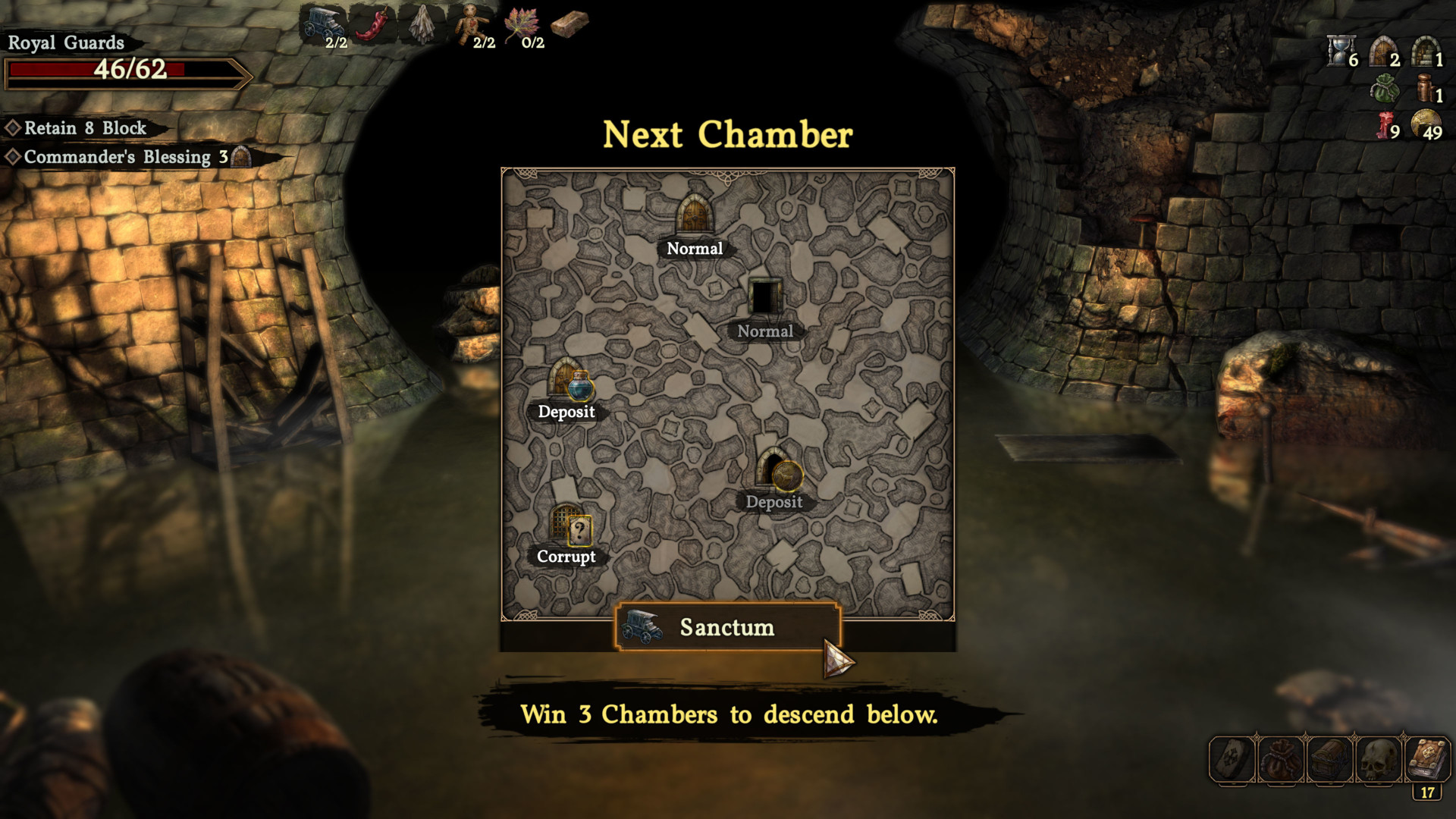
At the start of every run, we begin with a predefined deck and some trinkets — little items that grant us special abilities capable of radically altering our approach during the match. Completing rooms and floors rewards us with money, which we can spend at the "store," or cards to add to our deck and trinkets. The variety of cards and trinkets is interesting and certainly destined to expand, which is a good thing. Unfortunately, however, during our gameplay experience, we couldn’t help but notice how strategically, rare are the true synergies that can be formed in the deck — an element that, in a card game, should be more heavily emphasized.

The various battles take place turn by turn: during our session, we’ll find ourselves holding a certain number of cards, each with an Energy cost ranging from 0 upwards. Our total Energy per turn — excluding bonuses and penalties — is 3 points. We’ll therefore need to play our cards optimally to deal damage to enemies, but, above all, to protect ourselves from their attacks. What becomes immediately apparent from the tutorial is the overall complexity and overwhelming abundance of information that hits you right away: not only must we keep track of the effects of our cards, but we must also be aware of the “intentions” of the enemy, i.e., which move each unit controlled by the AI will perform during its own turn, visible above the heads of the various antagonists. There’s truly an enormous amount of effects, active and passive abilities, buffs, debuffs, and so on.
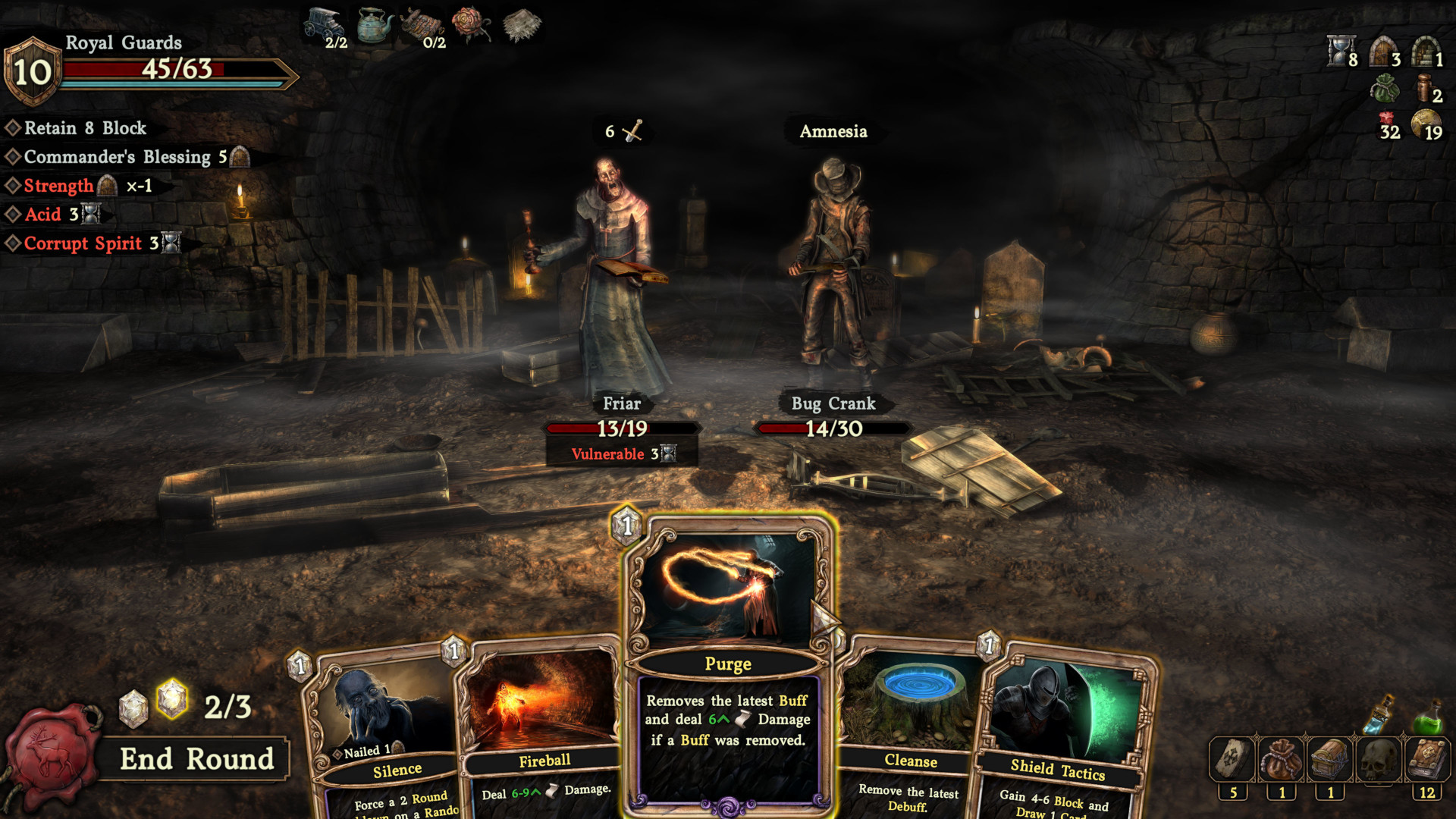
Even the simplest fights prove difficult after multiple runs, and the interface certainly doesn't help, being confusing and generally unclear. Ah, the title is completely in English, so if you can't stomach it, I can't help but advise against it, since reading will be the main gameplay activity for several hours.
A full run through the sewers takes about a half hour, boss included. And... well, essentially, that’s it: despite the decent amount of cards and trinkets, the gameplay possibilities remain limited by the substantial lack of content. After defeating the boss for the first time, you’ll hardly feel the urge to return to Deepest Chamber, even though the developers have implemented mechanics to extend the longevity a bit, such as difficulty modifiers or special quests to complete during the run. Honestly, there doesn’t seem to be a compelling reason to choose this title over others that are far more complete and rich in content.
Technically speaking
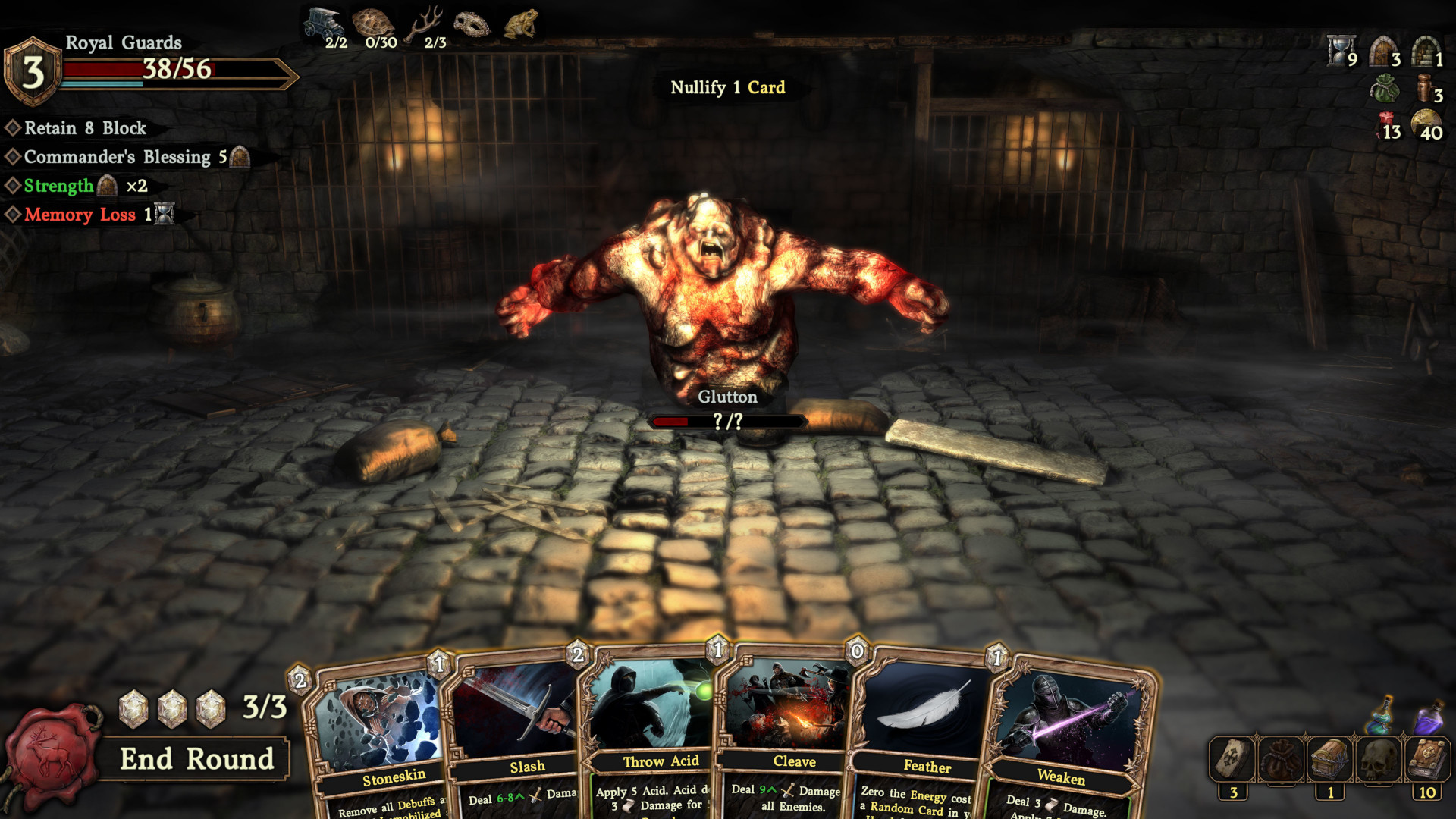
Although in Early Access the title didn’t cause us any particular problems and we managed to play it calmly on a non-gaming laptop, I didn’t particularly appreciate the graphical style, which at times felt a bit rough and repetitive, but as they say, de gustibus. The card artwork is barely sufficient. The same can be said for the audio, which is often just sketched out and features an absolutely unmemorable soundtrack, though at least it doesn’t distract excessively during the game. Definitely worth revisiting the game’s and menu interfaces, which are unnecessarily disorganised and chaotic.
In conclusion
So you’ve understood the answer to the question we posed at the beginning. Is it worth investing in Deepest Chamber? At the moment, unfortunately, we can only conclude negatively. It’s true, the price is competitive, but given the content offered and the current lack of longevity, it seems almost excessive. Certainly, the title has solid foundations , and with time and effort, it could certainly be enriched and become worthy of attention. We hope so, but if you’re not in the mood to support the team and are instead looking for a title ready to give you hours of fun, then we recommend you look elsewhere.
About the Author