
How many men does it take to change a lightbulb? Said a rather unsuccessful joke. How many men, instead, does it take to develop The Ascent? I’ll tell you: 12. You’ve got it right: Neon Giant, the Swedish indie studio behind this title, consists of just 12 people. Of course, veterans of the industry, but still an extremely small number, which, thanks to experience, cohesion, and dedication, has nonetheless managed to pull out a very enjoyable title — perhaps a victim of a bit of overblown hype surrounding it, but on the other hand, this is a story already seen with another Cyberpunk-inspired title developed by a much more famous studio... what was its name?
This content is provided by YouTube. To view it, you must allow external content. Activation may result in data being shared with the third party.
Welcome to Veles, you are now ours
The Ascent is a hybrid of a Twin-Stick Shooter and an isometric RPG, but, to be fair, the dominant component is certainly the first. The title is playable solo or co-op, up to four players, online or comfortably seated side by side on the sofa, the old-fashioned way. The Ascent is also the name of the corporation that tyrannically governs the arcology in which the story is set, owning not only factories and industries within it, but also the poorest inhabitants who work there (read: are enslaved). We are one of these, an Indent, which we can customise in a moderately sufficient way at the start of our adventure, between dehumanising modifications and questionable hairstyles.

In the couple of hours of initial prologue, we’ll be introduced to the scenic premises in which the story unfolds, as well as the fundamentals of gameplay. The Ascent is failing and the race to seize its assets has begun, and the participants have absolutely no scruples. We’re merely a doomed pawn in this deadly game, a kind of mercenary ready to perform any task without blinking (or speaking, given that our character is voiceless).
The various main story missions will keep you occupied for roughly a ten-hour stretch, which stretches indefinitely depending on how many side quests you decide to tackle and when you decide to explore the magnificent yet depressing arcology to the fullest. That said, the writing isn’t even close to being a standout feature — one of the elements that perhaps deserved more attention: beyond a uninspired and bland main quest, the side quests don’t deliver a miracle, often reducing to dull, repetitive fetch quests, with only a few charming exceptions, but too few to matter.
Stop reading and start shooting
Unlike the explicit plot, the title benefits from a rich and overall interesting lore, aided by the detailed Codex containing in-depth information on every element of the game world. Of course, once you’ve experienced the adrenaline and fun of the first firefight, it’ll be hard to detach from the frenetic shooting pace to enrich your knowledge about Veles by reading long pages of text. Ah, by the way, the title is not localised in Italian, which may represent an insurmountable drawback for many players. Don’t let this discourage you, though, because the real strength of The Ascent lies in its captivating yet arrogant gunplay, and to shoot and kill, knowing English will be irrelevant.
The title is a twin stick shooter with an isometric view, but it can be played quite comfortably with mouse and keyboard too. Movement direction is controlled with the left stick, while the right stick manages aiming direction, highlighted by a red laser beam emerging from the barrel of our weapon. The shooting phases are extremely hectic and frenetic, and even more so if played with friends. The variety of enemies isn’t particularly exciting, nor is the artificial intelligence, which often pushes waves of enemies relentlessly, forcing us to move continuously but strategically. The title also features a rudimentary cover system, along with a dual aiming option (to the side and over the shoulder). In practice, these elements — while appreciated for their detail — prove rarely useful, given the constant need to move to evade melee enemies (we don’t have a traditional melee attack, though).
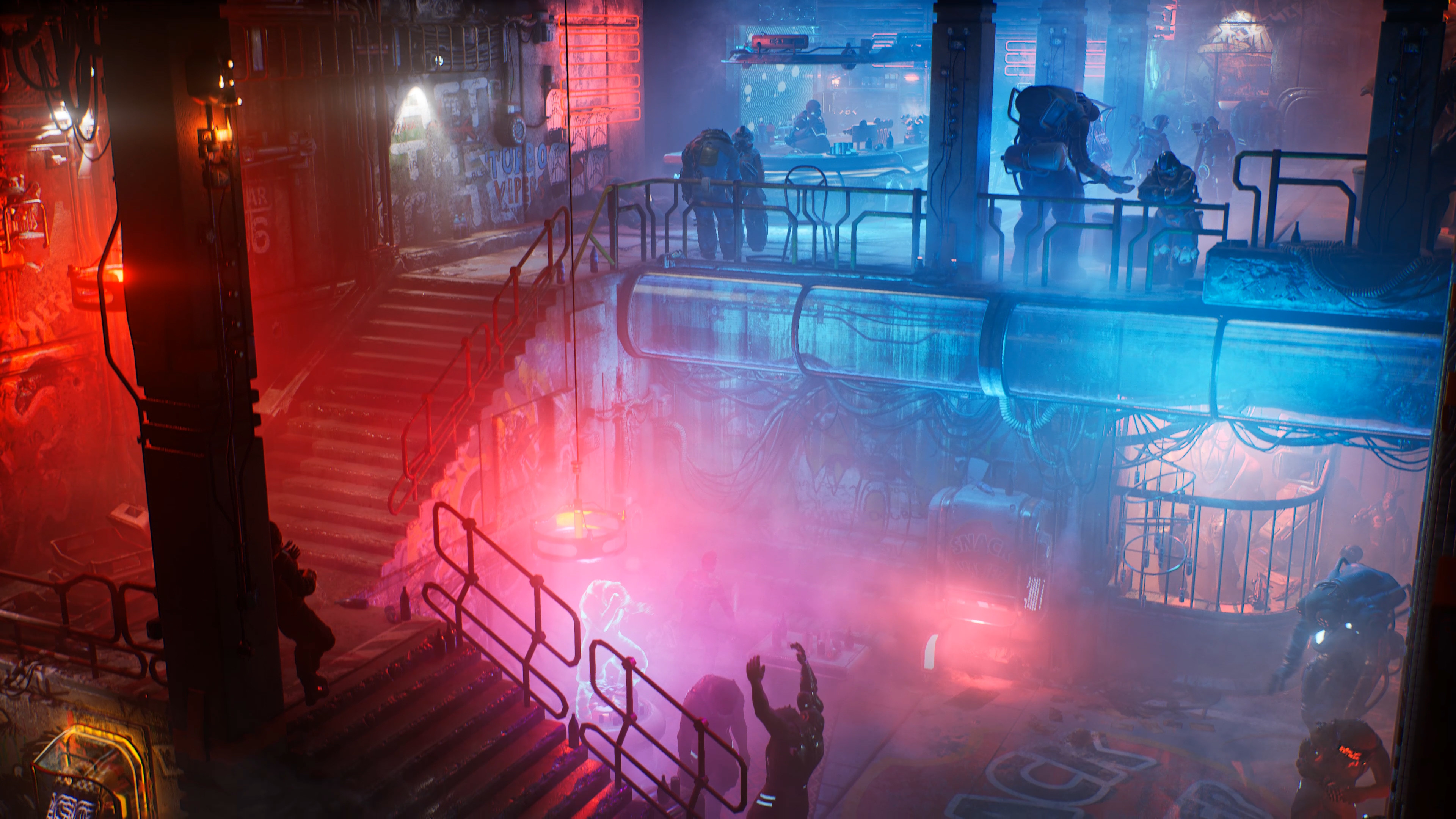
Beyond the two weapons you can equip, your character is also armed with various types of grenades and the so-called Augmentations, devastating physical modifications that include powerful punches, drones that freeze enemies to then explode them brutally, and more. Among automatic rifles, pump-action shotguns, pistols, grenades, drones, and various abilities, there’s truly a dizzying array of options for how to take down enemies — and, inevitably, also civilians, innocent victims of the fierce gunfights that will erupt without consequence anywhere within the arcology.
For every enemy we kill, we’ll earn experience points for our character, and, if we’re lucky, also some loot, including weapons or armor pieces that can be equipped by our character. Leveling up will unlock ability points that we can spend to improve various aspects of our character, equipping better weapons and armor will gradually enhance their lethality and resistance. The role-playing component, however, remains barely sketched out, to the point that it quickly becomes evident how choosing one build over another on the battlefield is largely irrelevant, as the only thing that truly matters is the level difference between us and the enemies, and the player’s skill at dodging enemy projectiles.
Cyberpunk aesthetics
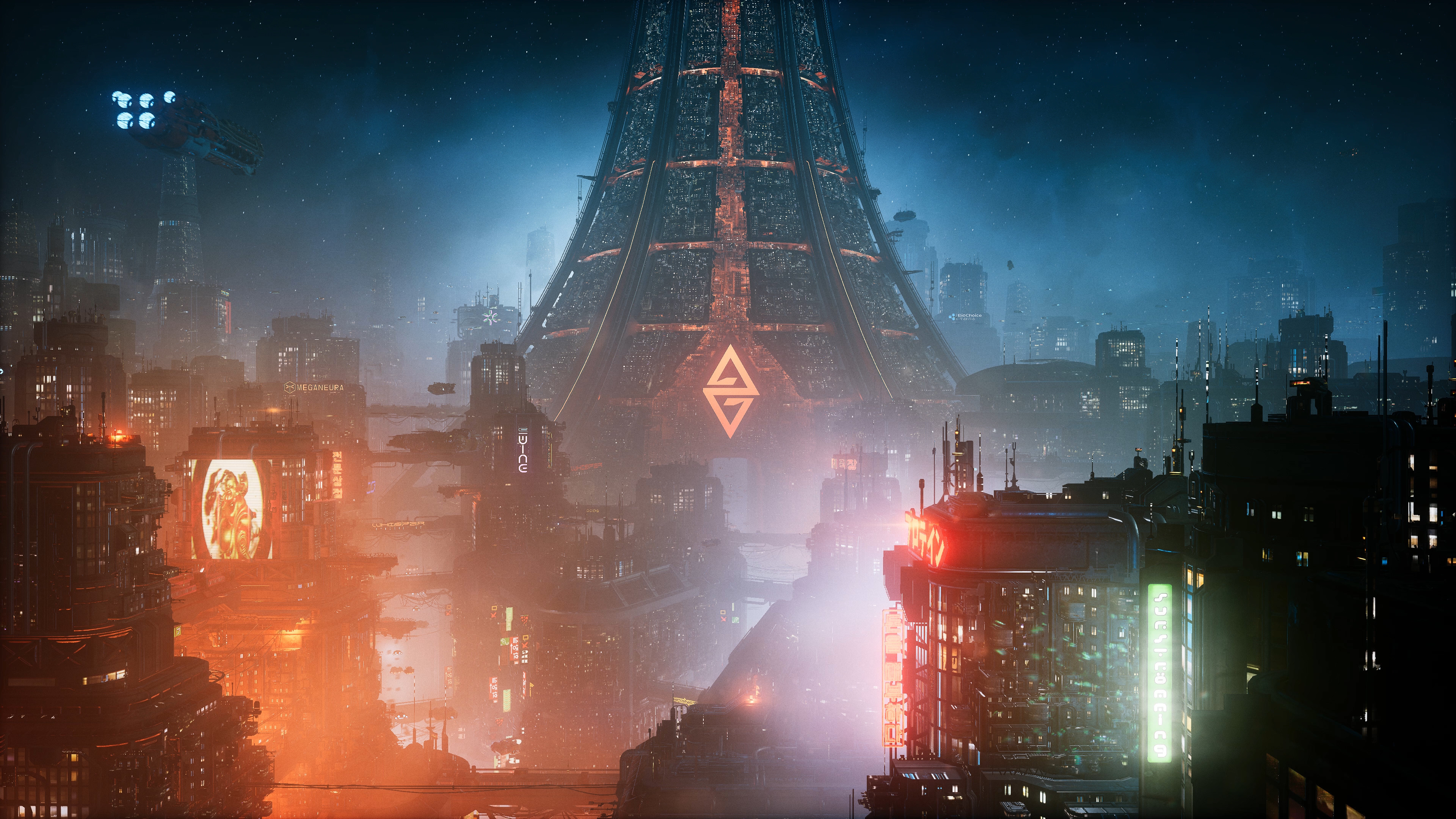
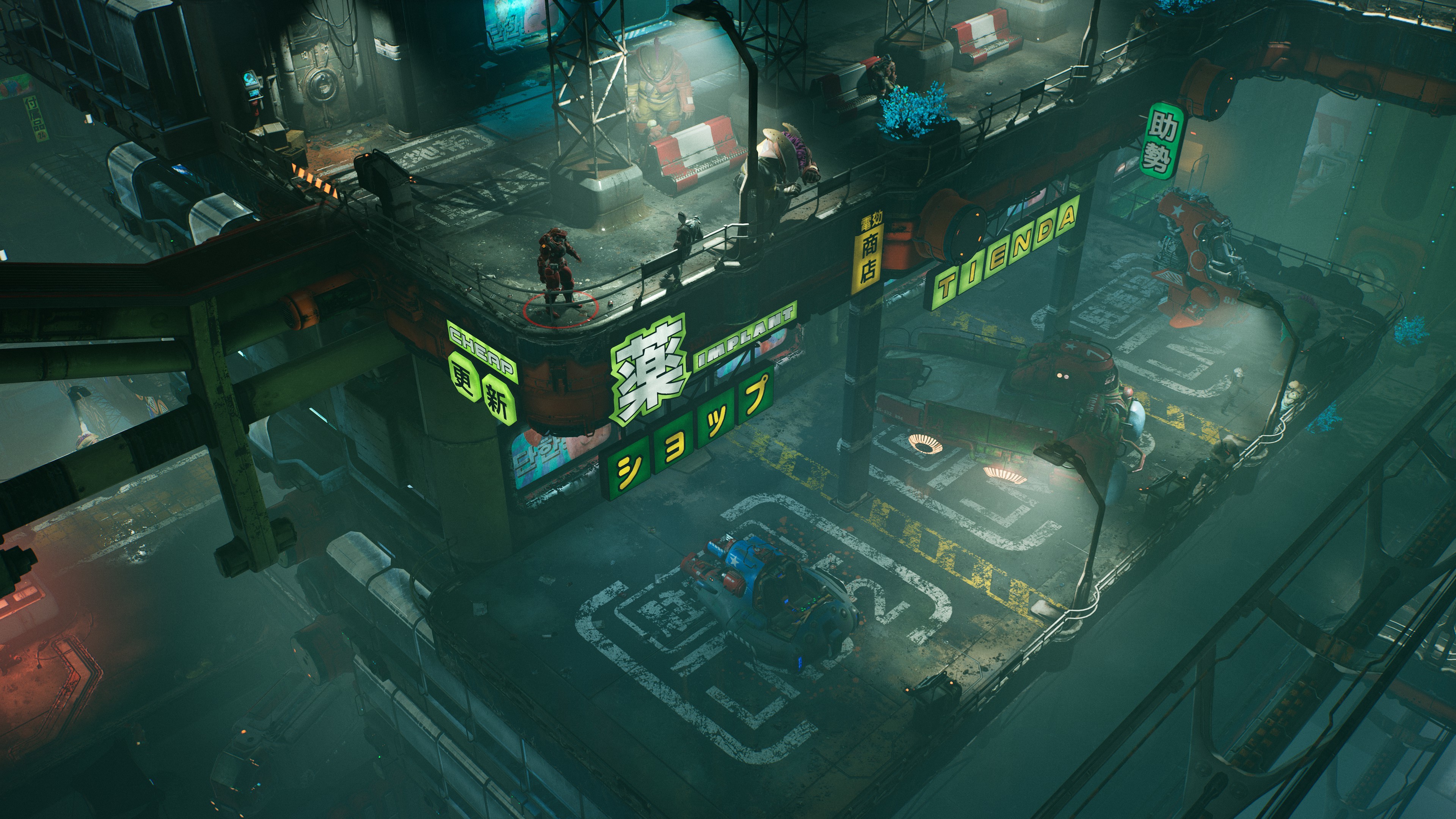
Wandering through the archology, passing from the sickly miasmas of the lower floors to the bustling urban areas, from the dangerous peripheries to the high and affluent floors, it’s impossible not to notice and appreciate the immense care invested by Neon Giant’s team in the game’s world-building. Veles pulses with life, in a chiaroscuro of dark alleys and sparkling neon signs. The use of an isometric view makes us feel as if we’re inside a high-end cyberpunk aesthetic diorama. The use of ray tracing further enhances the realistic and captivating interplay of light that characterises every environment, highlighting the details of every surface. A mod that allows first-person gameplay has also been created, with results even more mind-blowing, see to believe:
This content is provided by YouTube. To view it, you must allow external content. Activation may result in data being shared with the third party.
Despite all that, the undeniable beauty of the environments contrasts with the sometimes honestly less inspiring design of the NPC models and the protagonist, and even the level design suffers from a few limitations.
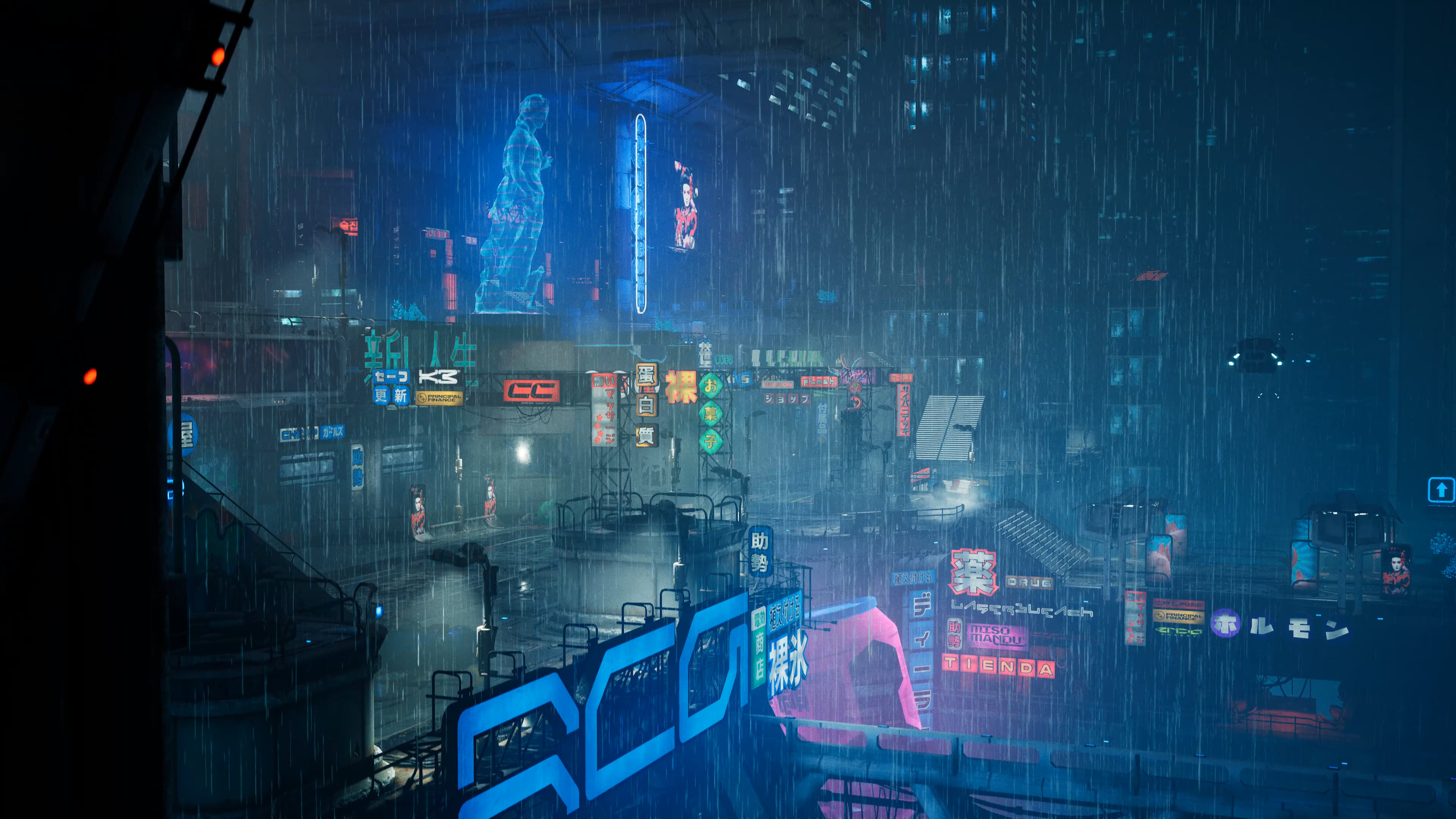
It’s understandable that developers, after investing so much work and care into building the game world, want players to actively experience and explore every corner of it. However, this clashes with the core needs and nature of The Ascent, which is fundamentally a shooter before being an RPG. Let me explain: navigation within the arcology primarily occurs on foot. There are two ways to travel quickly: using the metro for free, heading to scattered stations scattered across the game world; or calling a taxi anywhere we are, and being transported to a zone we’ve already explored. The cost of this latter option, however, is quite steep. Often, travelling toward the mission objective turns into a massive disruption of... the game’s rhythm, obviously. This is compounded by a map that’s difficult to navigate (and the rest of the menus are certainly labyrinthine and poorly organised), the constant need to activate a command that briefly indicates the path to follow and the distance to the objective, and, perhaps the most culpable of all, the fact that the game doesn’t indicate the height difference between player and objective. Getting lost through the streets of Veles can also feel pleasant and immersive during the first few hours, when the initial sense of wonder still persists, but becomes honestly irritating after those hours pass.
Technically speaking
We tested The Ascent on the following configuration: Ultra Details - Raytracing Active - DLSS Quality:
AMD Ryzen 7 3700x @ 3.60 GHz
Gigabyte RTX AORUS Master 3080 Ti 12Gb
Kingston Hyper X FURY (2x8Gb) DDR4
Resolution 3440x1440 (21:9)
The title has performed exceptionally well, with a frame rate that is generally stable, though some minor dips do occur, particularly in crowded map areas or during intense firefights. Although we weren’t directly hit by them, the game still contains several bugs — some quite serious — that can cause objects and equipment to vanish entirely, even leading to the complete loss of progress. We’ve also discovered that certain missions remain broken, preventing advancement in the adventure. A major patch is scheduled for August, which we hope will resolve most of these unavoidable issues.
Regarding the audio department, the voice acting is adequate, as is the soundtrack. All weapons feature solid feedback, contributing to a good sense of immersion, as do the ambient sounds of the city and its inhabitants. Neon Giant demonstrates a savvy use of the now-familiar Unreal Engine 4, combined with new technologies such as ray-tracing and DLSS, producing a title that, despite being an indie in every respect, has nothing to envy with more established titles, technically speaking.
In conclusion
It’s never nice to compare things, especially between two titles that share only a vague aesthetic foundation, but speaking with other editors, I quickly distilled my position on The Ascent into this: it’s everything Cyberpunk should have been to avoid flopping. A solid title in its foundations, with clear strengths and weaknesses, but one that maximises its strengths and cleverly hides its weaknesses. A fun title, despite having a plot that’s unlikely to excite or drag you through the 15–20 hours needed to complete it, it’s driven by excellent gunplay, further elevated by the ability to play it entirely with friends. A primarily playable title from the start, even if it has a few issues that now characterise any ambitious project (remember there are 12 people behind this title). The price is competitive (€29.99 at the time of review) and, if you’re a subscriber to Xbox Game Pass, you can play it for free. Unless you deeply dislike cyberpunk aesthetics, top-down shooters, or simply don’t enjoy playing, I see no reason why you shouldn’t try The Ascent.