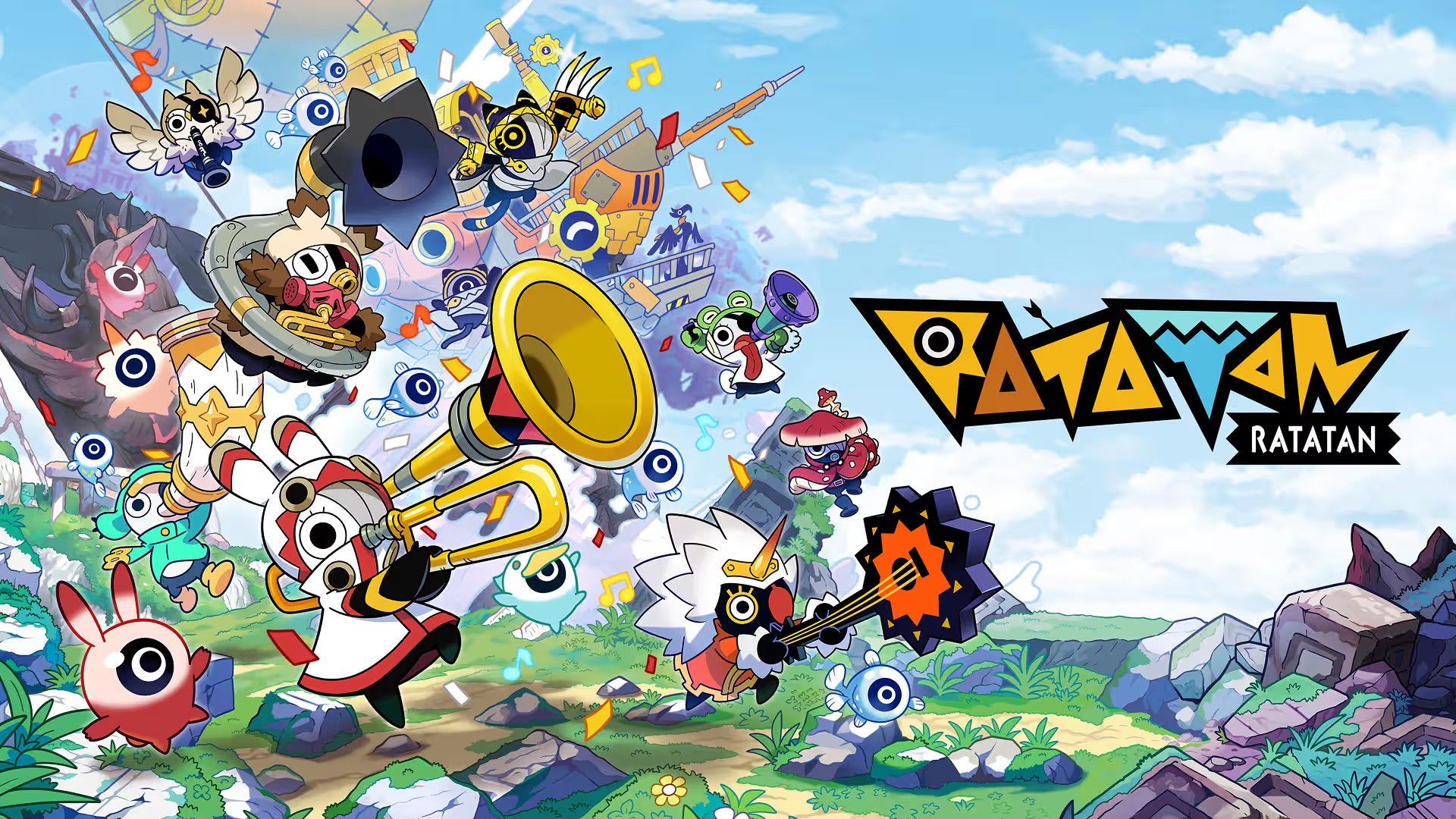
Ratatan inherits the legacy of Patapon, a PSP cult classic from 2007, without merely replicating it. It is led by Hiroyuki Kotani, the original game’s designer, alongside some of its historic collaborators. After the Early Access on Steam in 2025, the game reached its full version on 14 October 2026, also arriving on PlayStation 5, Xbox Series X|S and Nintendo Switch 2.
This content is provided by YouTube. To view it, you must allow external content. Activation may result in data being shared with the third party.
An inheritance that changes rhythm
The comparison with Patapon is unavoidable, but Ratatan tries to find its own identity. We control one of the eight Ratatan, colourful creatures that traverse the island of Rataport alongside the Cobun, small soldiers ready to follow our orders. The objective is to reach the Empireo and meet the Dea, in an adventure that uses narration mainly as a framing device for the action.
The pace is all. Through carefully timed button sequences, we issue orders to our troops: attack, retreat, gather, or use special abilities. Unlike the predecessor, however, we can directly control the Ratatan, moving it across levels and protecting it from enemy attacks. We must therefore coordinate the army in real time, while simultaneously dodging arrows and explosions. Achieving the necessary precision activates the Fever state, which boosts our troops.
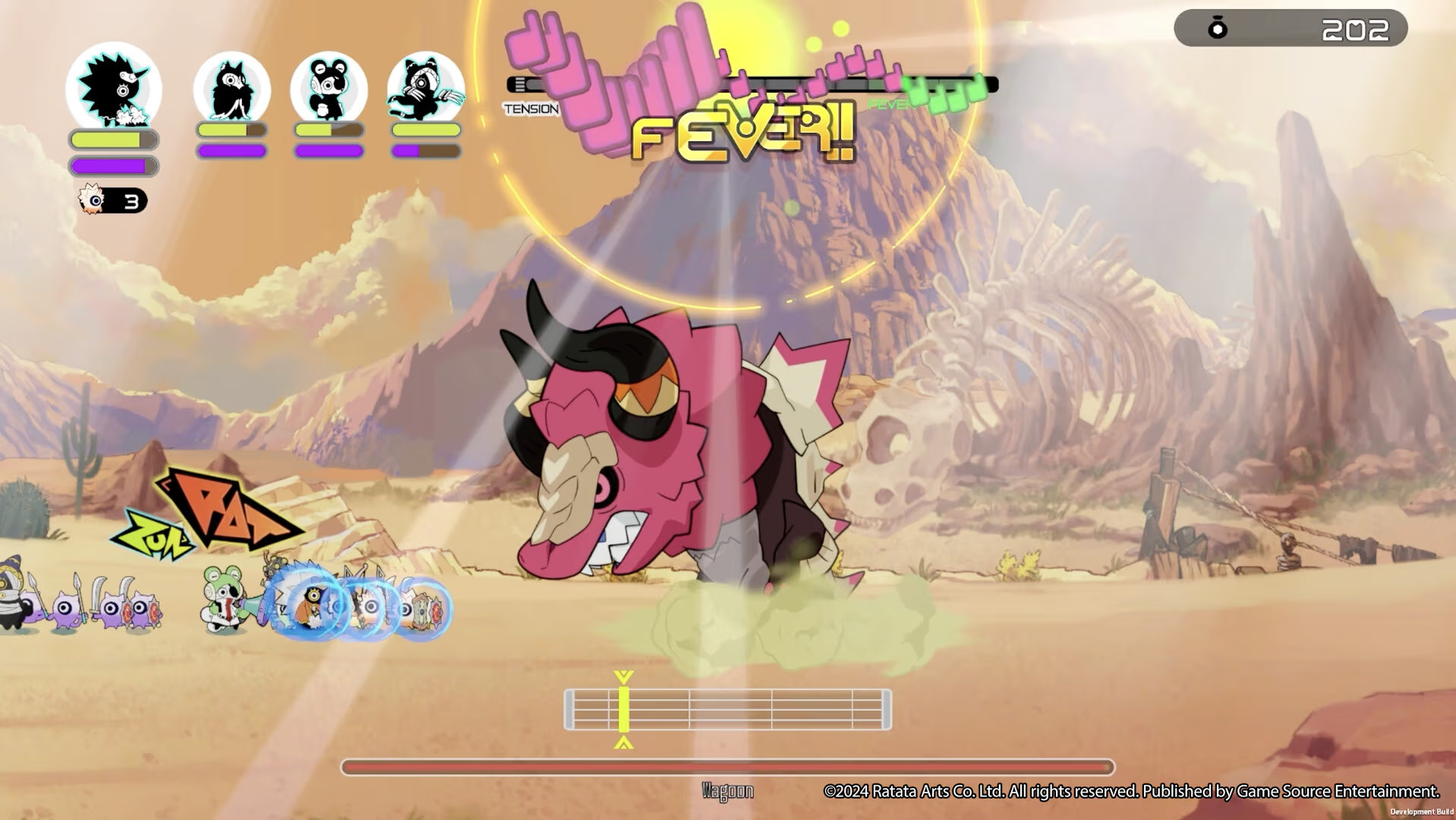
It’s an idea that works and makes battles decidedly more dynamic. Personally, I find this especially interesting — this attempt to transform what seems like a simple system into something more challenging. You no longer just need to remember a sequence of commands: you must learn to manage multiple situations simultaneously. The risk, though, is that so much activity ends up overlapping, turning some fights more confusing than stimulating.
One mission after another
The most important new feature is the roguelike structure. Each match becomes an expedition through multiple worlds, with paths and upgrades that change from one run to the next. Between battles, players choose the Ratakaruta, cards that modify attacks and abilities, while collected resources unlock permanent upgrades, weapons, and improvements for the Cobun. The choice of Ratatan also affects strategy, thanks to different abilities and unit combinations. It is also possible to tackle expeditions in online co-op for up to four players.
It is here, in my view, that the game reveals its most obvious limitation. The roguelike element adds variety and a decent amount of replayability, but it doesn’t always manage to make each expedition truly different from the last. Some upgrades seem to affect numerical values more than strategic possibilities, while progression risks becoming repetitive after several hours. It’s a structure that works, but one that could have offered something more daring.
So much colour, a bit too much confusion
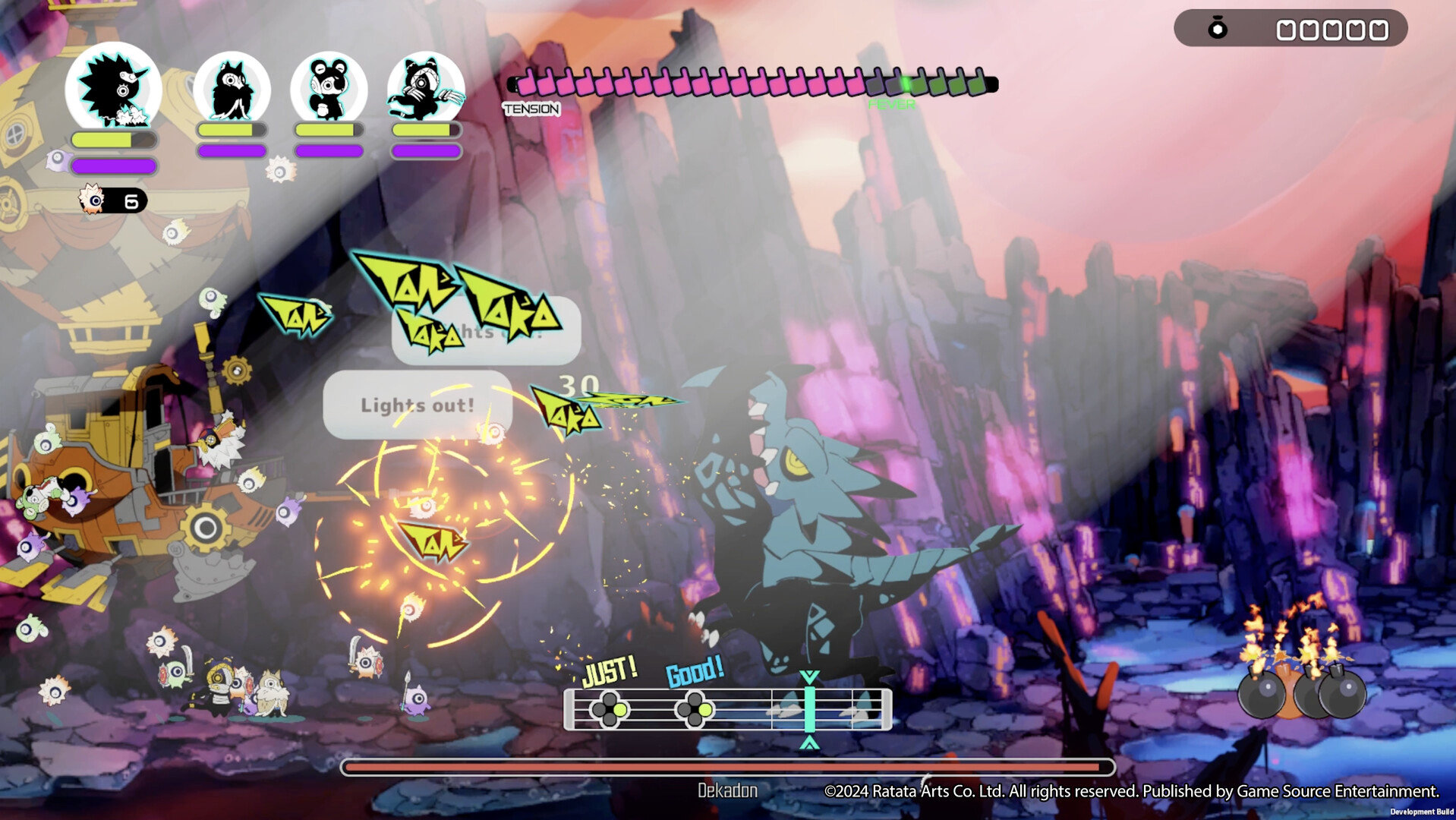
The audiovisual personality is probably the aspect that convinced me most. The two-dimensional style, expressive animations, and character design evoke an instantly recognizable universe. The characters appear to have emerged from a psychedelic cartoon, with a visual aesthetic that manages to be funny, surreal, and incredibly vibrant without ever feeling anonymous.
The soundtrack, composed by Kemmei Adachi e Sadaki Naoe, is also essential. The melodies don’t merely accompany the action; they become an integral part of the game’s language. It’s hard to imagine Ratatan without its musical component, which represents one of the most successful links with its predecessor.

This visual abundance, however, presents a drawback during the most crowded combat scenes. Among Cobun, enemies, effects, and indicators, figuring out what’s happening can become complicated, especially when you need to follow the rhythm and dodge simultaneously. Technically, there are also some imperfections, with reports of fluidity and polish issues. Nothing that erases the value of the artistic direction, but enough to prevent the technical aspect from reaching the same quality.
A successful return, but not definitive
Ratatan is a love letter to Patapon, but it doesn’t live solely on nostalgia. The original intuition is still fresh, and the roguelike component adds progression and personalisation. The result is an energetic, recognisable game capable of standing out in a crowded indie landscape often filled with experiences struggling to find their own identity. Not everything, however, fits perfectly. Managing rhythm and movement simultaneously can become chaotic, while missions don’t always succeed in highlighting the strategic depth the system hints at. Nevertheless, it remains a project with a clear vision, demonstrating how a formula born nearly two decades ago can still have something to say. Perhaps Ratatan doesn’t achieve all the ambitions it set for itself, but its identity is strong enough to make it a return worth experiencing. And, above all, it reminds us how fun it can be to turn a video game into a matter of rhythm.
About the Author