Literature, cinema and video games have taught us that making a pact with a demon is rarely a financially advantageous venture, especially when the payment involves surrendering one’s soul, but this seems to have never deterred anyone. After all, humans possess an extraordinary ability to convince themselves that the worst consequences of their decisions will always affect someone else, preferably someone they don’t know.
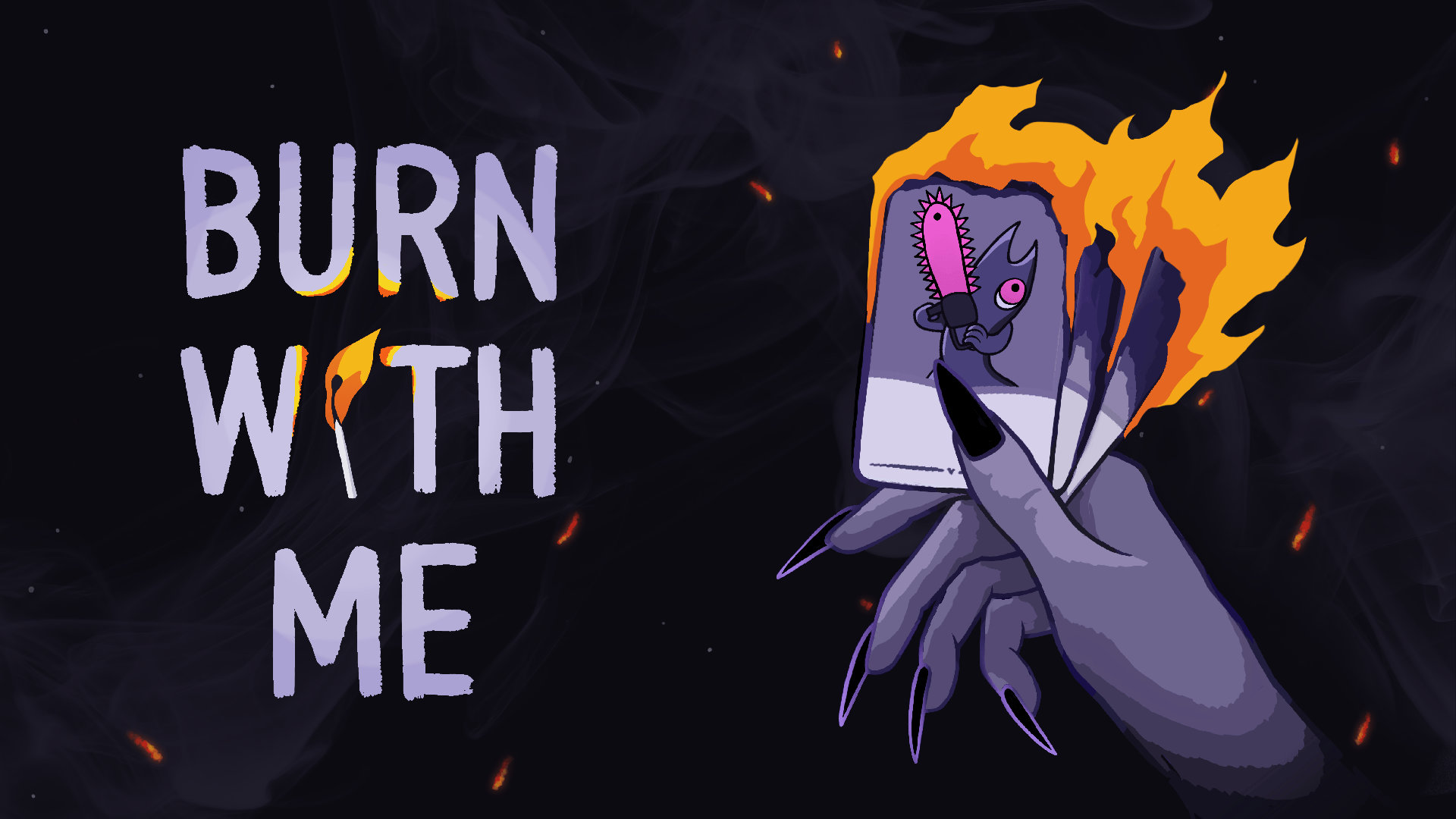
Burn With Me begins with this irrational faith in the occult, turning the desire to achieve something into a small experiment in strategy, sacrifice, and self-destruction. Developed by Nozomu Games and published by Inner Pocket, the title is a narrative deckbuilder in which we must summon demonic creatures through card-based rituals, seeking to build increasingly effective combinations as our deck is gradually consumed by flames. An idea that, on paper, might seem like a simple variant of the formulas popularised by Slay the Spire and Inscryption, but which conceals a personality decidedly more interesting than one might expect.
The peculiarity is that Burn With Me doesn’t just ask us to build a strong deck, but to understand how willing we are to destroy it to achieve what we desire. A seemingly subtle difference that ultimately radically alters our relationship with available resources and that seamlessly complements a story focused on obsessions, insecurities, and difficult-to-admit desires.
This content is provided by YouTube. To view it, you must allow external content. Activation may result in data being shared with the third party.
The occult is a subject of scrutiny
The adventure unfolds within a university where the study of occult arts represents a perfectly respectable academic discipline — at least until someone decides to move from theory to practice. An especially enthusiastic teacher introduces his students to the possibility of summoning a Personal Demon, an entity capable of responding to their deepest desires through rituals that, naturally, require a certain willingness to sacrifice. The group comprises profoundly different individuals, each grappling with a personal conflict that ultimately reflects upon their own aspirations. There’s someone seeking to escape a state of dissatisfaction, another hoping to recover something lost, and yet another who appears to have been consumed by an obsession that has grown increasingly more important than anything else.
What’s interesting is that Burn With Me doesn’t tell these difficulties through endless dialogue or long cinematic sequences, but instead relies on short episodes in which characterisation emerges both from conversations and the rules we must learn to use. The result is a surprisingly melancholic narrative, in which the apparently reassuring atmosphere of the university setting is constantly pierced by unsettling elements. The protagonists aren’t heroes trying to save the world from a supernatural threat, but people desperately seeking to solve very ordinary problems, even while choosing a tool that hardly seems particularly prudent.
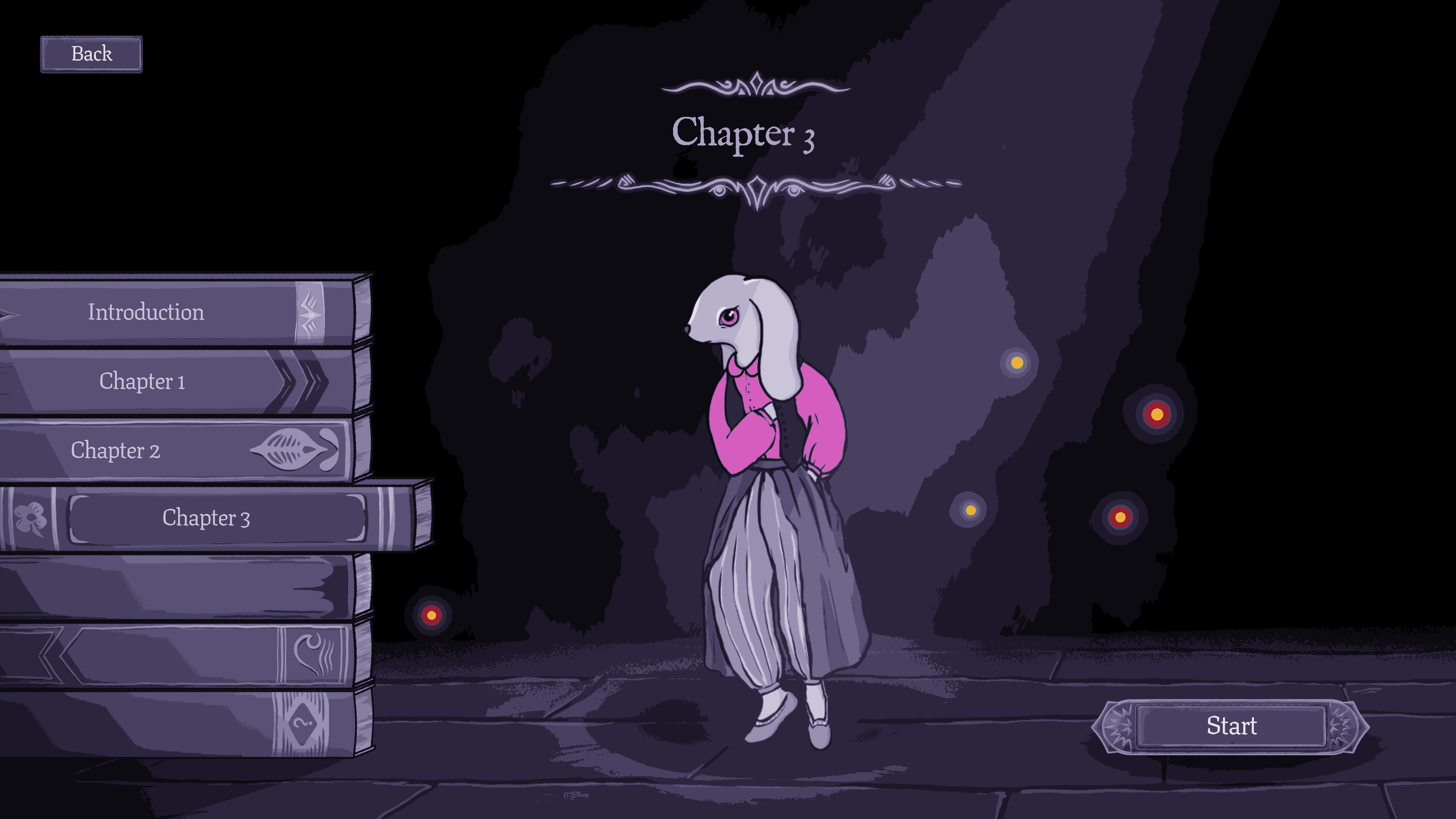
In this sense, the demons also serve as a rather effective metaphor for personal obsessions. The problem isn’t necessarily desiring something, but how willing we are to sacrifice in order to obtain it, especially when achieving an objective ends up becoming more important than the consequences of our actions. Fortunately, Nozomu Games manages to convey these themes without turning the experience into a particularly preachy moral lesson. The narrative maintains a light tone when needed, alternating moments of humour with more melancholic situations, and lets the mechanics themselves reinforce the meaning of the events.
Five cards and a pentagram
The gameplay revolves around a pentagram composed of five positions, on which we must place matching cards to complete the rituals. Each card has a base value and a set of characteristics that can modify its effectiveness depending on the position it occupies, the adjacent cards, and the order in which it is played. The objective is to reach a specific point threshold, which increases progressively throughout the different phases of the ritual, until we can summon the desired creature.
The structure may appear rather simple, but the positioning of the cards quickly assumes greater importance than their individual value. It is not necessarily advantageous to use the most powerful tools immediately, because a seemingly modest card might generate vastly superior results if placed alongside another with which it possesses a particular synergy. Some creatures strengthen those nearby, others modify scores based on specific conditions, and others still can directly alter the ritual’s functioning. It therefore becomes necessary to consider the entire pentagram layout, seeking combinations capable of multiplying the effectiveness of individual cards. It’s a system that resembles a mathematical puzzle more than a traditional card game, especially since victory does not depend on directly eliminating an opponent, but on the ability to organize available resources effectively.
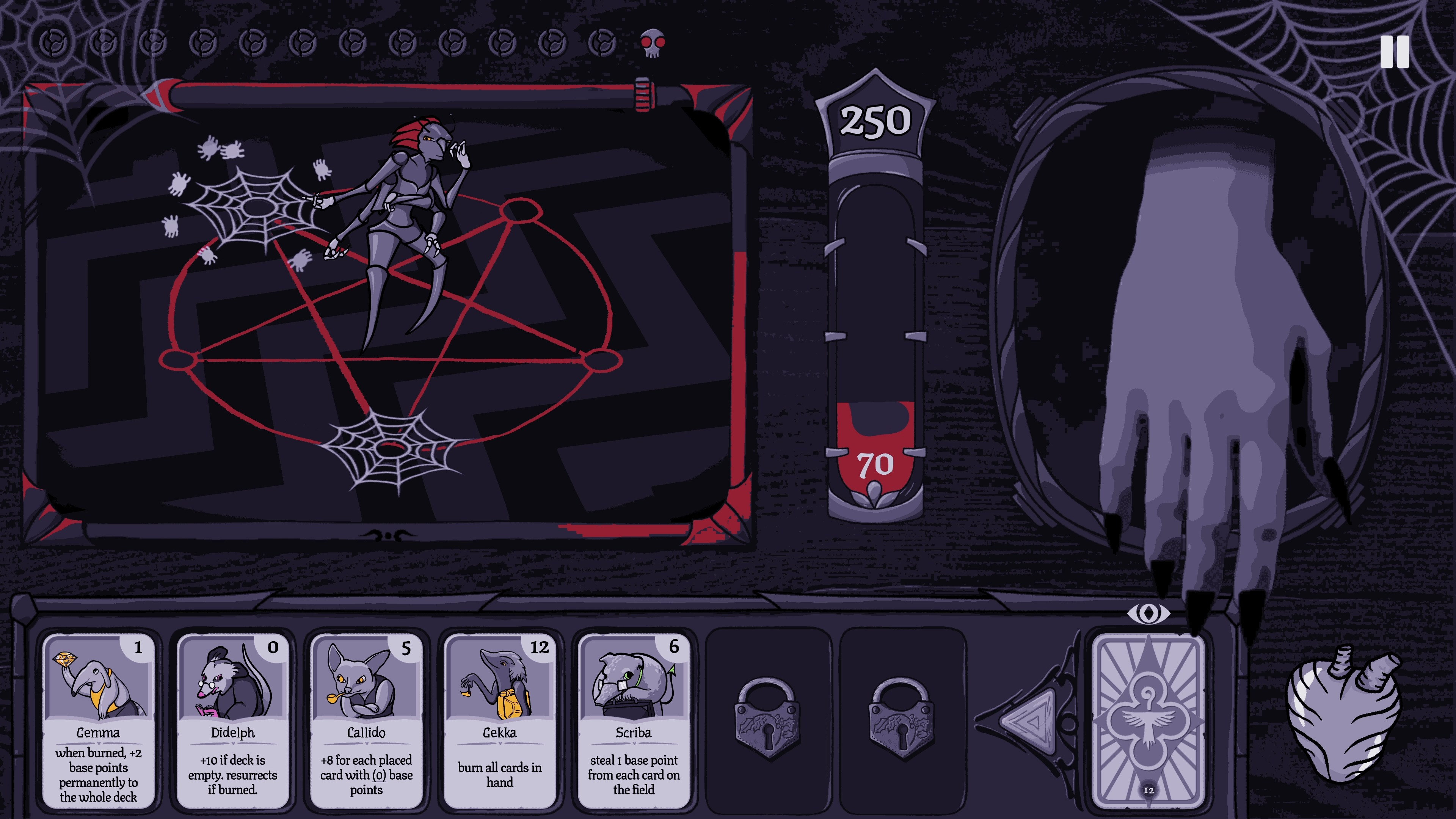
The core mechanic of Burn With Me revolves around the ability — and often the necessity — to permanently burn cards from your deck during a match. If the hand available doesn’t contain what we need, we can search for new combinations, but certain actions entail the permanent destruction of one of the available cards. Once consumed by flames, that resource won’t return during the same match. It flips the traditional deckbuilding dynamic. Normally, we strive to build a deck that becomes increasingly efficient, removing potentially useless elements and carefully preserving cards capable of supporting the best strategies. Here, however, even a particularly valuable card can become the price to pay to overcome a ritual.
Burnishing a resource grants immediate advantages, corrects a disadvantageous situation, or unlocks new possibilities, but every sacrifice progressively reduces the options available to face future challenges. We can choose to protect our hand, attempting to reach objectives with the cards already in our hand, or risk destroying something important in the hope of obtaining a better combination. The problem is that an apparently advantageous choice might prove disastrous later, during some ritual, when we realise we’ve eliminated precisely the element needed to complete a specific synergy. Every decision thus becomes a small compromise between immediate advantage and the possibility of surviving future challenges, turning a relatively simple mechanic into a constant source of tension.
To make things even more interesting, the option to progressively expand the deck is introduced, allowing new creatures to be chosen after completing rituals. Each acquisition brings additional strategic opportunities, but can also complicate the management of combinations, especially when we end up with cards that work well individually but offer few synergies with the rest of the equipment.
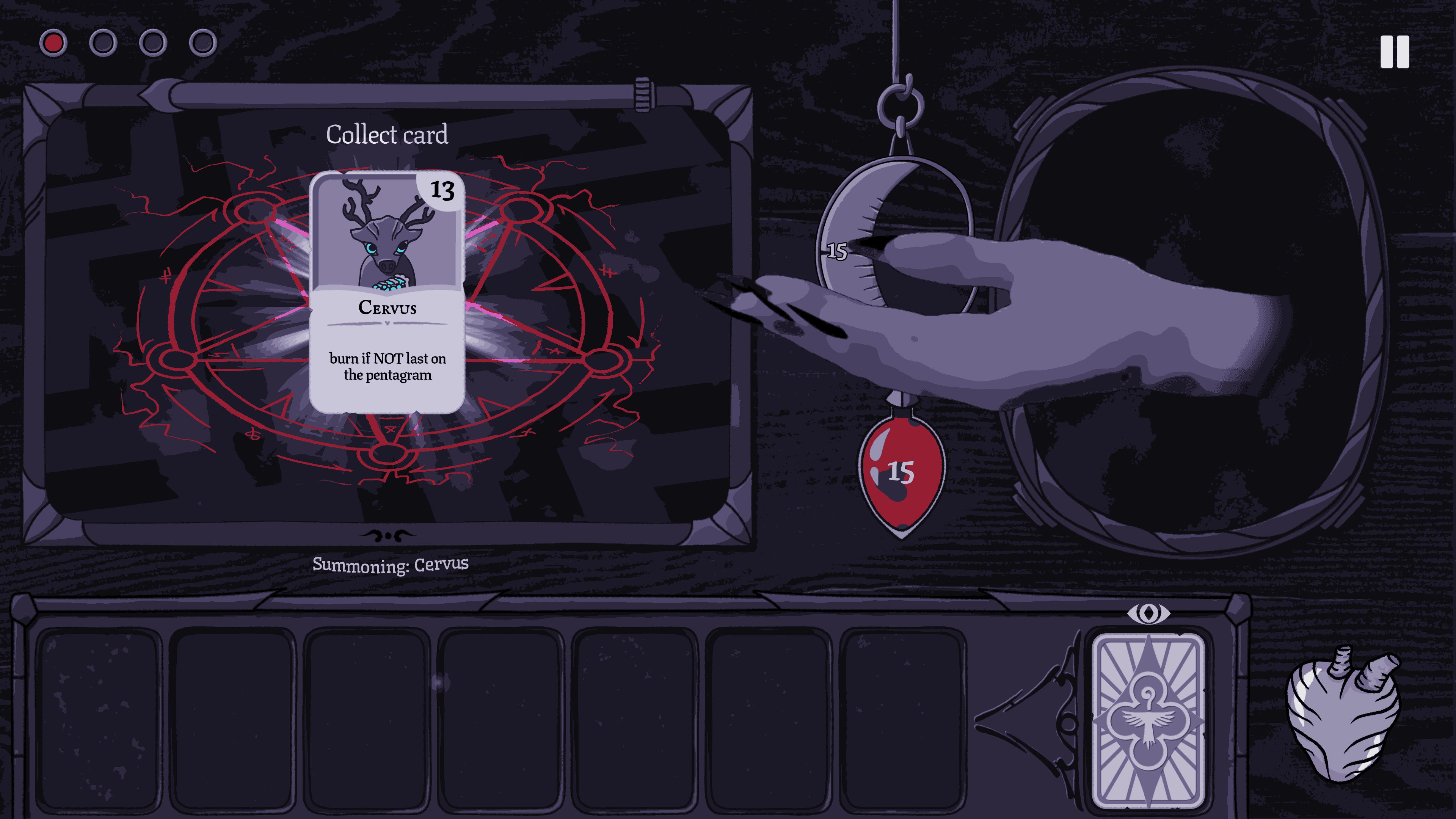
The system also includes a point reserve, represented by the Sanity Vessel, which allows you to store excess energy and use it to offset potential shortages in subsequent rituals. It’s particularly useful because it provides a safety margin during the most unpredictable situations, preventing a single unlucky hand from necessarily ruining the entire match. Naturally, relying too heavily on this reserve can become dangerous when demands begin to rise and the available cards are no longer sufficiently effective.
The result is a convincing balance between planning and spontaneity, though the latter occasionally assumes more weight than desirable, especially in more advanced challenges.
Everyone has their own demons
The true quality of the system emerges when the game begins to alter its rules. Burn With Me is divided into six chapters, each characterised by specific mechanics that reflect the fears, obsessions and desires of the involved characters. The overall structure remains recognisable, but every new storyline introduces variations that force a reevaluation of previously effective strategies.
Particularly successful is, for example, the chapter devoted to a character obsessed with gambling, in which a dice-rolling system comes into play. The cards can react to the results obtained, introducing a random component that perfectly mirrors the protagonist’s relationship with luck and the constant need to rely on something they cannot control.
Another chapter builds its challenges around the concept of balance, asking us to achieve extremely precise values without exceeding them. A request that fundamentally alters the approach to scoring, because what would normally be considered a particularly powerful combination can suddenly become counterproductive. We’re not simply facing six variants of the same game, but six different interpretations of a common system, each built around the personality and difficulty of its respective protagonist.
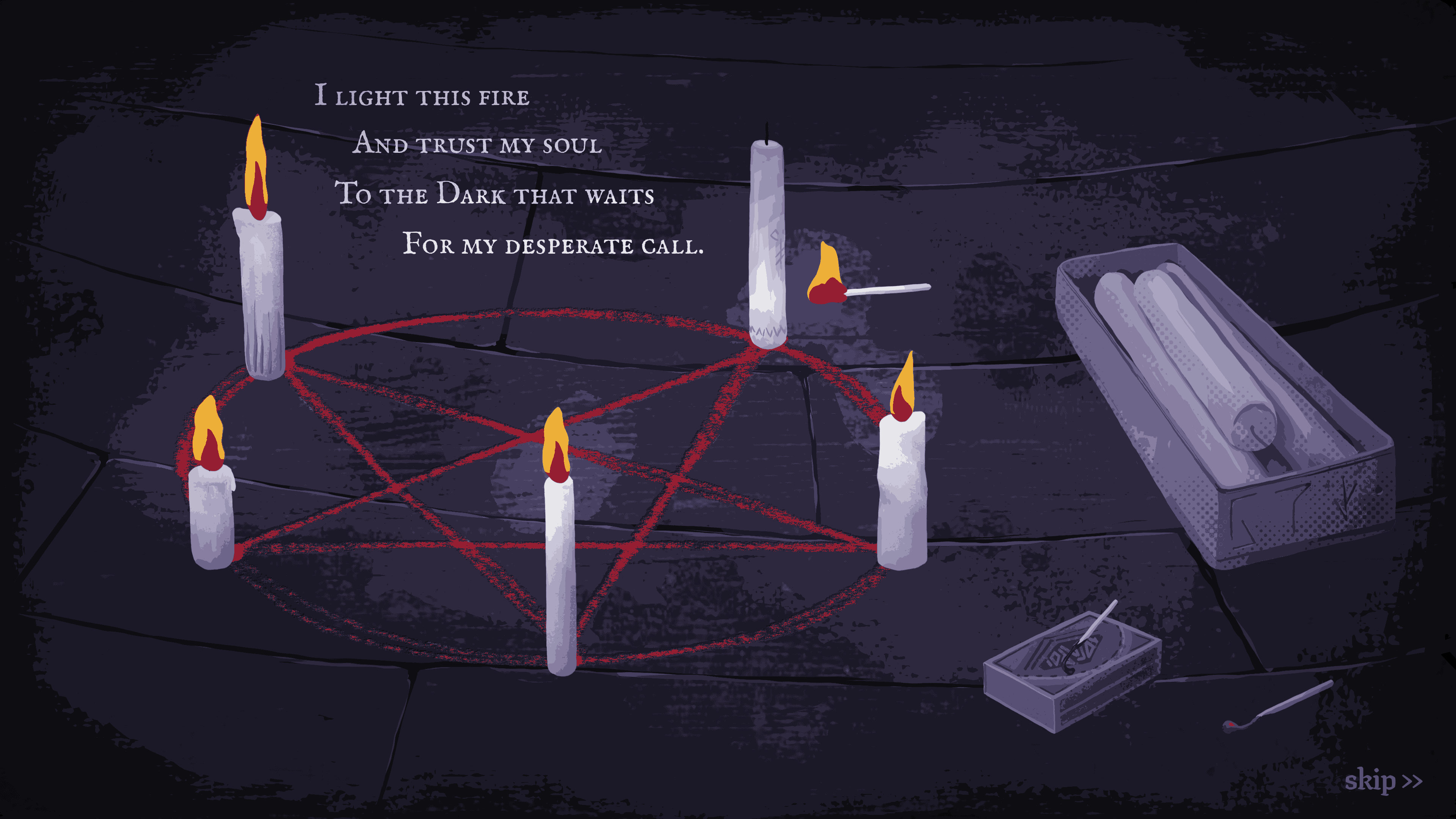
It’s a solution I find particularly effective from a narrative standpoint, because it allows us to understand the characters through the way we’re forced to play. The obsession with risk becomes a mechanic based on chance, the need for control translates into the search for perfect balance, and other emotional states take on different playful forms.
Particularly successful is also the concluding chapter, which recovers several ideas introduced in the earlier sections and combines them into a more complex challenge. It is probably the moment when the card system demonstrates more clearly its potential, hinting at possibilities that could have supported a significantly longer experience.
And it’s precisely here that one of the main limitations of the production becomes apparent. Burn With Me ends relatively soon, exactly when we’ve finally begun to fully grasp all the possibilities offered by its mechanics.
A brief flame, but hard to put out
The total duration varies significantly depending on familiarity with deckbuilding and the number of attempts needed to overcome challenges, but a first run may take roughly three to six hours, while those progressing quickly might complete the adventure in less time. It’s not necessarily a flaw. Indeed, I find particularly admirable Nozomu Games’ decision to craft an experience with a defined beginning, development, and conclusion, without attempting to turn it into yet another title designed to entertain players for hundreds of hours.
Not every deckbuilder necessarily needs to compete with Balatro or Slay the Spire in terms of longevity. Sometimes, a brief but coherent experience is preferable, in which every new mechanic has a clear reason for being introduced, rather than an potentially infinite system destined to repeat until the player’s patience is exhausted.
There remains the desire to experiment further with the available cards and combinations, especially considering how interesting some of the interactions introduced only in the final stages are. Fortunately, the hard mode allows you to revisit each chapter with more challenging objectives, offering an additional challenge for those who wish to delve deeper into the system. However, this is not a radical transformation of the experience: the core remains fundamentally the same, and part of the extra difficulty stems from increased score requirements, which can make obtaining the right combinations through card fishing more crucial. In certain circumstances, therefore, chance risks becoming more frustrating than expected, especially when a reasonable strategy is undermined by an especially unlucky sequence of draws.
The game allows you to restart from checkpoints without necessarily having to restart the entire chapter, while managing previously seen sequences helps avoid repeatedly hearing the same dialogue. The update released at the end of October also introduced new secret memories to unlock through the hard mode, expanding the narrative context and offering additional incentives to revisit already-completed chapters.
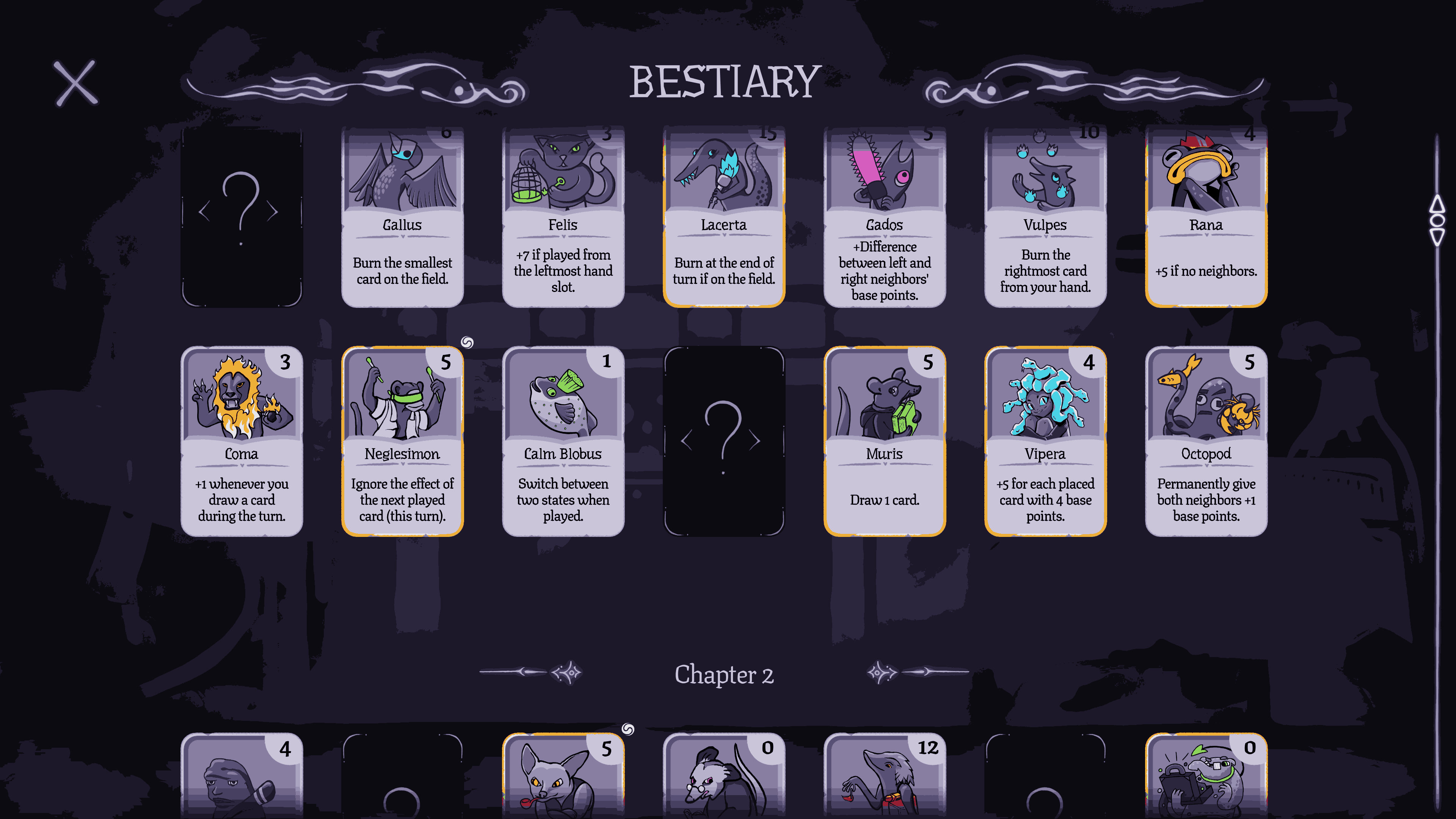
To complete the offering, we find a bestiary that collects the creatures encountered and allows you to discover alternative illustrations created by numerous guest artists. It’s a small addition that further enhances the visual aspect and encourages experimentation with cards we might otherwise overlook.
Things cute that shouldn’t be evoked
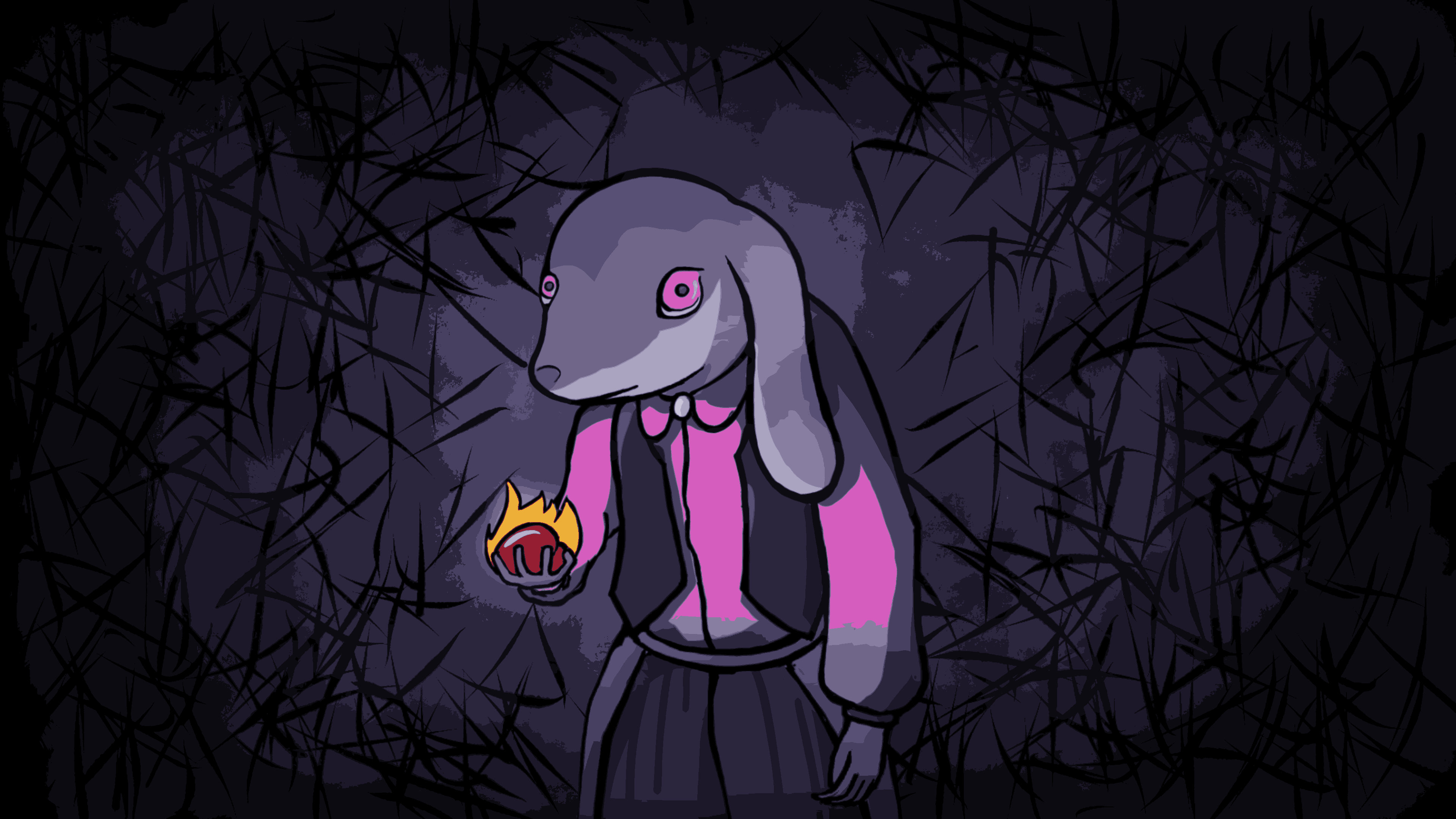
Burn With Me is one of those titles that proves how recognisable an independent production can be, even without relying on particularly ambitious technological feats. Hand-drawn illustrations constitute one of the most successful elements, with characters featuring soft shapes, creatures with improbable proportions, and a colour palette capable of maintaining a constant balance between tenderness and unease. At first glance, the game seems almost designed to reassure the player, presenting creatures with a cute appearance and settings reminiscent of children’s book illustrations. But only a few minutes are needed to realise that behind that apparent innocence lie decidedly less reassuring elements.
The card design is particularly creative, featuring creatures that appear to have been conceived during a conversation in which no participant bothered to check whether the proposed ideas made sense.
A armed fish with a chainsaw? Certainly. Why not?
What’s surprising is that these absurdities still manage to fit perfectly into the visual language of the production, helping to build a universe with its own internal coherence.
Among the most curious elements we also find a human hand created through live footage, subsequently integrated into the game’s aesthetic. Its presence during rituals creates a particularly unsettling contrast with the illustrations, almost suggesting that something from our world is attempting to intervene directly within the supernatural. It’s a simple, yet highly effective, solution that helps make the interface an integral part of the atmosphere.
The audio department isn’t to be underestimated. The soundtrack alternates between subtle melodies and more unsettling passages, building a tension that rarely becomes oppressive but manages to sustain the feeling of standing before something slightly off. It’s a form of horror almost comforting, in which the player is invited to relax while trying to understand which demonic entity is about to be summoned. Particularly successful also the English voice acting, which gives the characters an immediately recognisable personality and helps reinforce emotional engagement without turning every dialogue into an overly theatrical performance.
The actors manage to effectively convey the differences between the protagonists, highlighting a writing style that prefers to suggest rather than explain every detail. The narrative sequences also maintain a reasonable length and rarely disrupt the gameplay rhythm.
Technically speaking
From a technical standpoint, Burn With Me is developed using Godot Engine and features extremely low hardware requirements. The PC version requires just 4 GB of RAM and a graphics card with 2 GB of video memory, characteristics that make the title accessible even on non-recent hardware configurations.
The title is also classified as Playable on Steam Deck, a particularly interesting feature considering its ritual-based structure and the ability to tackle challenges through relatively short sessions. It is the primary platform on which I tested the title, and it delivered excellent results in both terms of playability and performance.
The interface is generally readable, and the control system works well with touch input, though some options could have benefited from more immediate explanations and greater personalisation. It should also be noted the absence of Italian localisation, a missing feature I find particularly disappointing but now understandable. These are not critical flaws that undermine the overall result, but remain details on which a studio so attentive to presentation could have acted with greater decisiveness.
In conclusion
Burn With Me demonstrates how effective a good idea can be when developed with consistency. Nozomu Games presents a short but original deckbuilder, in which the permanent sacrifice of cards and the specific mechanics of each chapter create an interesting link between strategy and narrative. The pentagram system offers surprising depth, while the art direction, sound design, and characterisation of the protagonists contribute to making the experience particularly enjoyable. However, some limitations do exist: the campaign ends precisely when the mechanics begin to express their full potential, the difficult mode offers few new elements, and randomness can prove frustrating. Nevertheless, Burn With Me does not aim to entertain for hundreds of hours, preferring instead to tell a tight and well-constructed story. Its greatest merit is transforming sacrifice into a strategic and narrative choice, reminding us that obtaining something often means giving up something else.
In the end, a pentagram, a few demons, and a sufficient quantity of matches to summon the fire brigade are enough to prove that, sometimes, even the simplest ideas can leave a mark.
About the Author