Italy is a country of small towns, and in these villages, residents possess the exceptional ability to know perfectly what everyone else is doing, possibly before the people directly involved even realise it. It doesn’t matter how hard you try to keep your private life secret, because somewhere there will always be a neighbour particularly attentive, a window strategically placed, or someone who, under the excuse of taking the dog out, has already reconstructed the last six months of our existence.
Tom the Postgirl takes this concept and decides to push it to its most extreme consequences, turning morbid curiosity into a full-blown philosophy of life. After all, why limit oneself to discreetly observing what happens in the neighborhood when one can exploit a postal job to slip into others’ daily routines and uncover all those secrets that, perhaps, would have been far better left untouched? Developed by our neighbors at the Swiss studio Oopsie Daisies in collaboration with ARTE France, Tom the Postgirl is a small narrative adventure that blends exploration, dark humor, and deliberately grotesque situations, all accompanied by an artistic direction that seems straight out of a children’s illustrated book.
A book written, however, by someone who probably shouldn’t be left alone for too long with children.
This content is provided by YouTube. To view it, you must allow external content. Activation may result in data being shared with the third party.
The postman always looks twice
The idea behind the game is as simple as it is effective: accompagnare una giovane postina nelle sue consegne quotidiane, esplorare un villaggio apparentemente tranquillo e scoprire cosa nascondano realmente i suoi abitanti. What begins as an ordinary enough job quickly degenerates into a series of absurd encounters, small cruelties and morally questionable behaviour, within a world in which the very concept of normalcy seems to have been abandoned long before our arrival. The result is one of those independent titles that manage to capture attention through a completely outlandish premise, only to prove they possess enough personality to avoid exhausting their charm after the first punchline.
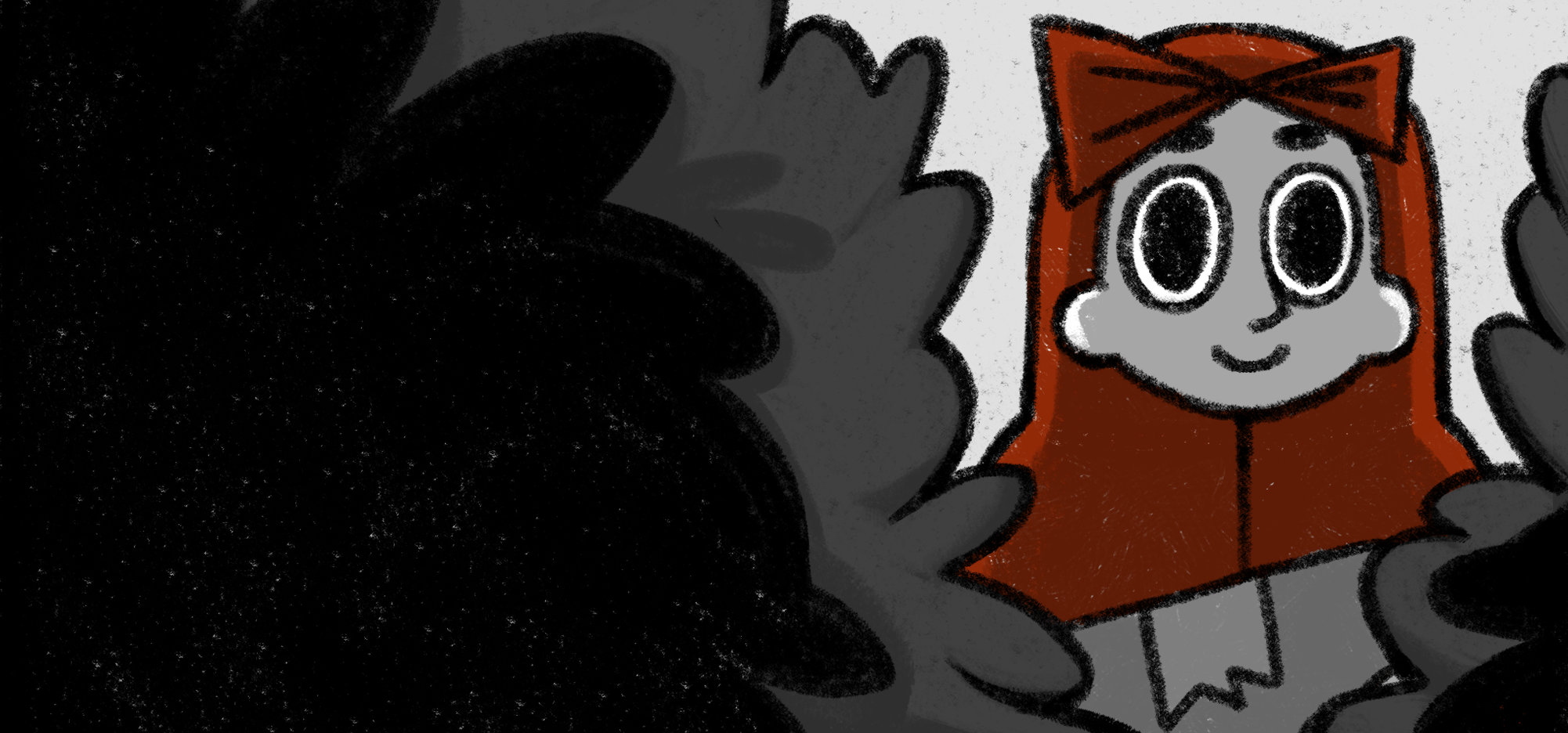
The protagonist of our adventure is Tom, a girl who appears innocuous on the surface and lands a job as a postwoman in a small rural community. Her job would be fairly straightforward: collect packages, identify recipients, and deliver mail without causing any particular trouble. Unfortunately for the villagers, Tom has an extremely personal interpretation of the concept of public service. Our protagonist is, in fact, a voyeur compulsive, unable to resist the temptation to peek through any window, slightly ajar door, or sufficiently wide crack that allows her to observe what happens inside homes. The delivery job thus becomes little more than a professional cover for a curiosity that, under normal circumstances, would likely require the intervention of law enforcement.
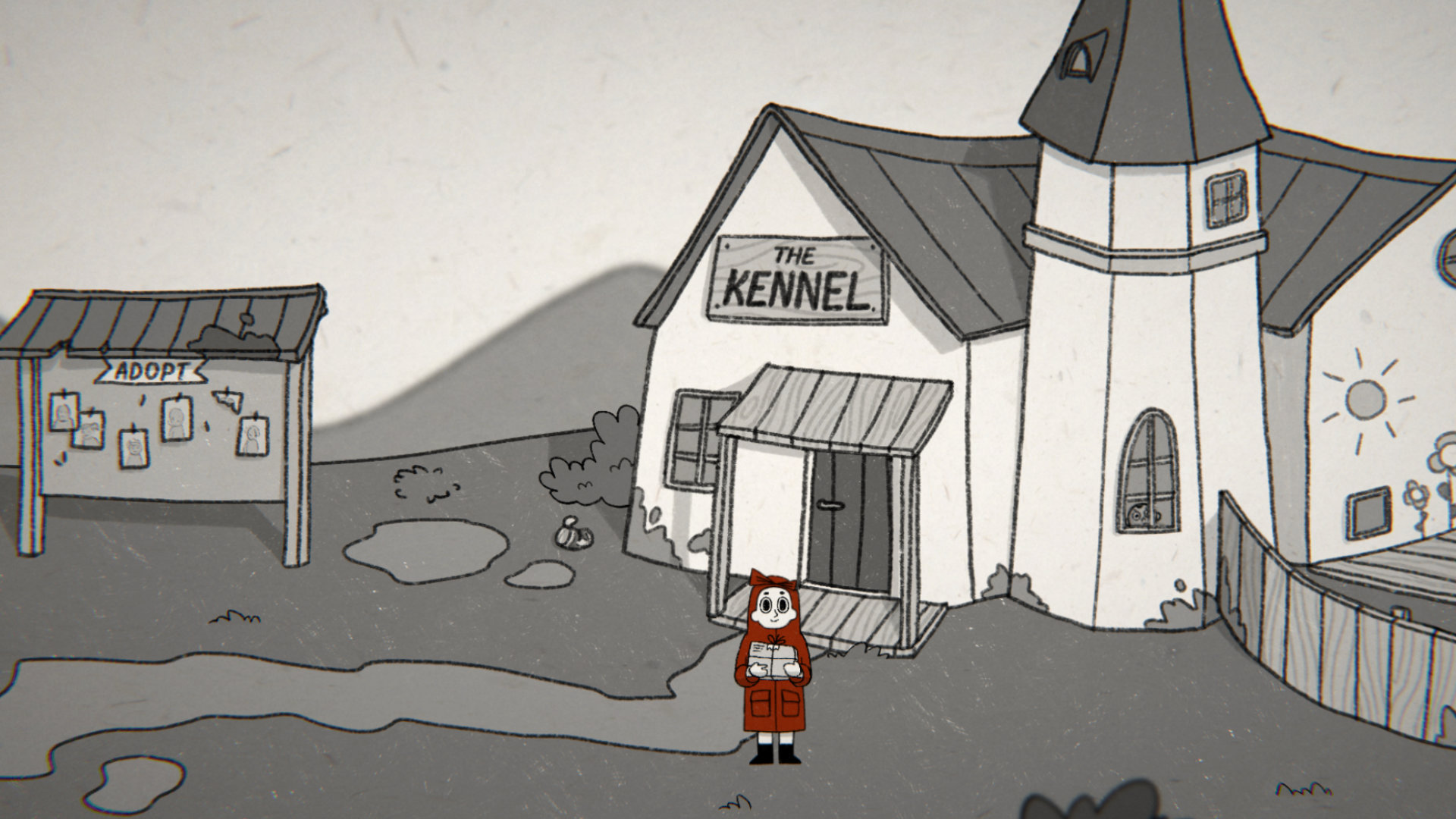
Tom isn’t particularly courageous, doesn’t have a major goal to achieve, and doesn’t appear to care about improving the lives of his neighbours. He simply wants to know what others do when they think they’re not being watched, possibly making things worse in a situation already sufficiently compromised. The village, on the other hand, seems to have organised itself specifically to reward this behaviour. Behind the colourful facades of the cottages and the apparently well-maintained gardens, we find a population that could be described as eccentric — a compliment far too generous. There’s an orphanage that seems to operate according to principles more akin to those of a dog kennel, a pair of priests with a particularly creative interpretation of ecclesiastical life, and even two hippies who seem to regard chainsaws as perfectly reasonable tools for resolving domestic disputes.
And these are only humans.
In the cemetery, we can encounter pigeons engaged in commercial activities far from legal, while elsewhere we meet a worm cowboy, a constantly irritable squirrel, and other creatures that appear to have been conceived during a particularly lively meeting of Adult Swim writers.
The most amusing thing is that the game treats much of this absurdity with a disarmingly natural approach, as if finding a group of pigeon smugglers represented a completely ordinary inconvenience in local fauna management.
Curiosity killed the cat
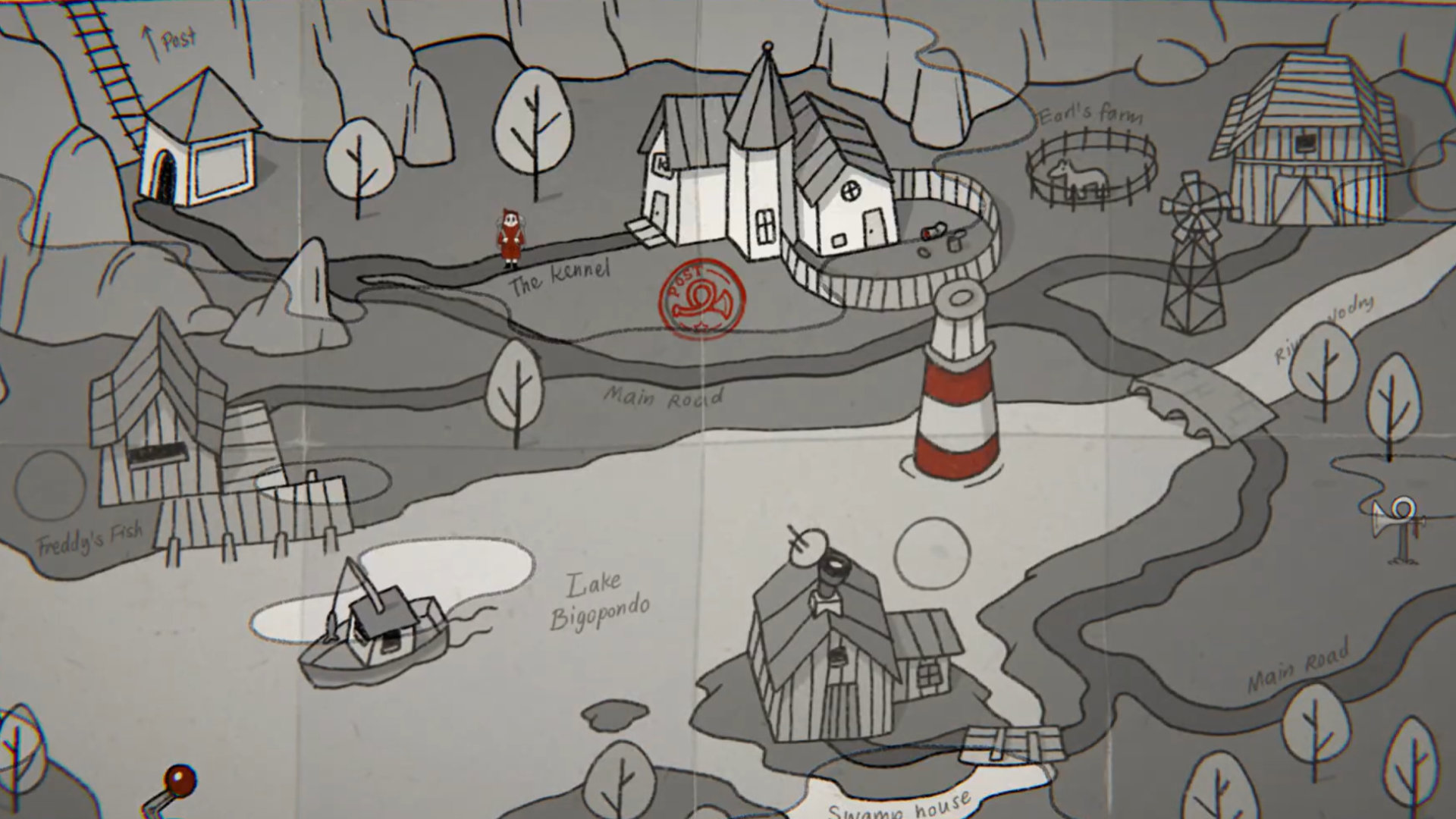
From a gameplay perspective, Tom the Postgirl presents itself as a narrative adventure centered on exploration and environmental interaction, with an extremely accessible design that leaves little room for particularly complex mechanics. We move through the various areas of the village, observe the scene’s elements, and interact with objects, characters, and points of interest. Deliveries serve as the primary progression tool, but the real goal is not so much completing one’s tasks as discovering everything the game hides beyond the mandatory activities.
Every dwelling can hide a small story, every window can offer a glimpse into the private lives of its occupants, and even the most insignificant elements of the setting can become opportunities to cause some disaster. The structure therefore encourages careful observation of the environment, seeking vantage points from which to spy and interactions that might initially go unnoticed. In some circumstances, we can choose to behave as a relatively diligent postman, limiting ourselves to delivering the mail, while in others we have the option of completely abandoning any remaining sense of civic duty.
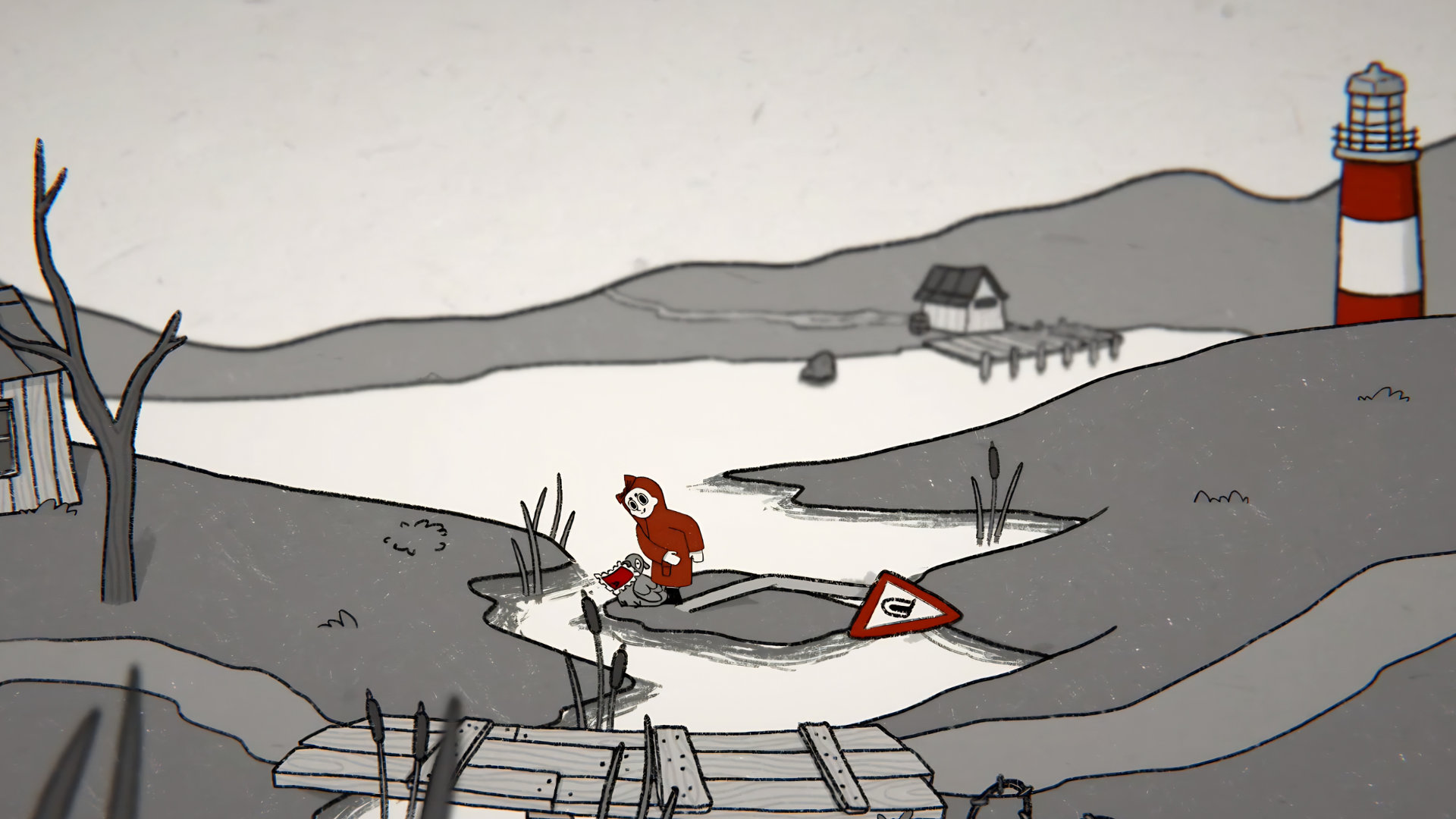
A perfectly tended garden? It would be a shame if someone decided to trample its flowers.
A precisely trimmed hedge? Probably deserves a few tweaks.
A decoration left unattended? Well, technically, we can’t know whether the owner would miss it without first trying to take it away.
Tom the Postgirl builds much of its own fun around these small transgressions, offering the player the chance to behave entirely irresponsibly within a world that, frankly, doesn’t seem to have a particularly developed sense of morality. Naturally, don’t expect the freedom of action of a true sandbox. Interaction possibilities are relatively limited, and the gameplay remains fundamentally that of a narrative adventure in which exploration and discovery constitute the main rewards. We don’t find complex systems to master, combat or particularly challenging puzzles. Most activities simply require identifying the right element, understanding what interactions are available and observing the consequences of our actions.
The main limitation is also one of the features that make the game so immediate: Tom the Postgirl is extremely easy to play, but precisely for this reason it risks offering very few satisfactions to those seeking more intricate mechanics. Fortunately, the variety of situations and the constant desire to discover what absurdity lies around the corner often compensate for this simplicity.
Peeping Tom
Tom the Postgirl doesn’t merely offer a succession of completely independent gags, but builds small narrative arcs that we can follow throughout the adventure, observing how certain situations gradually evolve across the different acts. What may initially appear to be an innocuous scene could take on a completely different meaning after a few deliveries, while a seemingly insignificant character might reveal increasingly questionable behaviour as we deepen our understanding of the village. It’s a very effective form of environmental storytelling, especially because it leaves the player the task of connecting the events and reconstructing the overall picture without turning every discovery into a lengthy explanation.
The game rewards those who observe, backtrack, and try to pay attention to details, allowing players to follow stories that range from simple absurdist comedy to decidedly more unsettling scenarios. Not all of these stories necessarily end with a punchline, and it is precisely this unpredictability that makes the exploration compelling. One moment we might smile at the latest oddity of a resident, while the next we find ourselves observing a situation that seems to have sprung from a particularly disturbing horror tale.
Oopsie Daisies constantly plays with this ambiguity, making it difficult to discern whether what we’re observing should be interpreted as a gag, a social critique, or simply a manifestation of the absurdity that dominates the entire village. It’s an approach that, at least in certain respects, recalls Thank Goodness You're Here!, another independent production capable of turning a small community into a concentrated display of surreal behaviour and grotesque situations. The difference is that Tom the Postgirl has a decidedly more risqué component, because it doesn’t merely drag us into absurd events, but continually invites us to seek them out through behaviour we know to be wrong.
The game manages to make us complicit in Tom’s curiosity, exploiting the same instinct that drives us to observe something we know we shouldn’t look at. The chance to uncover a secret often becomes more important than the awareness that we’re invading someone’s privacy, especially when the game has already conditioned us to expect a surprise behind every window. In the end, Tom isn’t the only villager with personal boundaries issues.
A children's fairytale you shouldn't show to children
If the gameplay may appear relatively modest, the art direction instead represents one of the aspects in which Tom the Postgirl demonstrates a truly notable personality. Oopsie Daisies chose to build the entire experience through hand-drawn illustrations and frame-by-frame animations, achieving a result that immediately recalls old cartoons and illustrated books for young children. The lines are deliberately irregular, the characters possess caricature proportions, and the environments seem to have been drawn with that particular naivety we associate with childhood illustrations. The use of a limited colour palette, in which black and white are interrupted by unmistakably red accents, further contributes to giving the entire production an immediate visual identity.
Tom, in his signature red outfit, becomes a constant reference point within scenes that seem to belong to a fairy tale. The problem is that the fairy tale seems to have been written after a night spent watching Adult Swim and a particularly disturbing episode of Twin Peaks. The strength of the style emerges most clearly when what is depicted contrasts with the apparent innocence of the imagery. Adorable-looking characters can be involved in extremely unpleasant situations, while small graphical details turn an apparently calm scene into something decidedly less reassuring.
The animations deserve a special mention.
Despite the contained scale of the production, each character possesses a recognisable physique, with expressions, movements and small details capable of communicating a great deal without requiring an excessive amount of dialogue. It’s clear how much work went into the individual scenes, especially considering that many interactions last only a few seconds and could easily go unnoticed during a distracted gameplay session. This makes exploration particularly enjoyable, because observing the world doesn’t merely mean searching for an object to interact with, but also discovering small animation fragments that contribute to telling the personalities of its inhabitants.
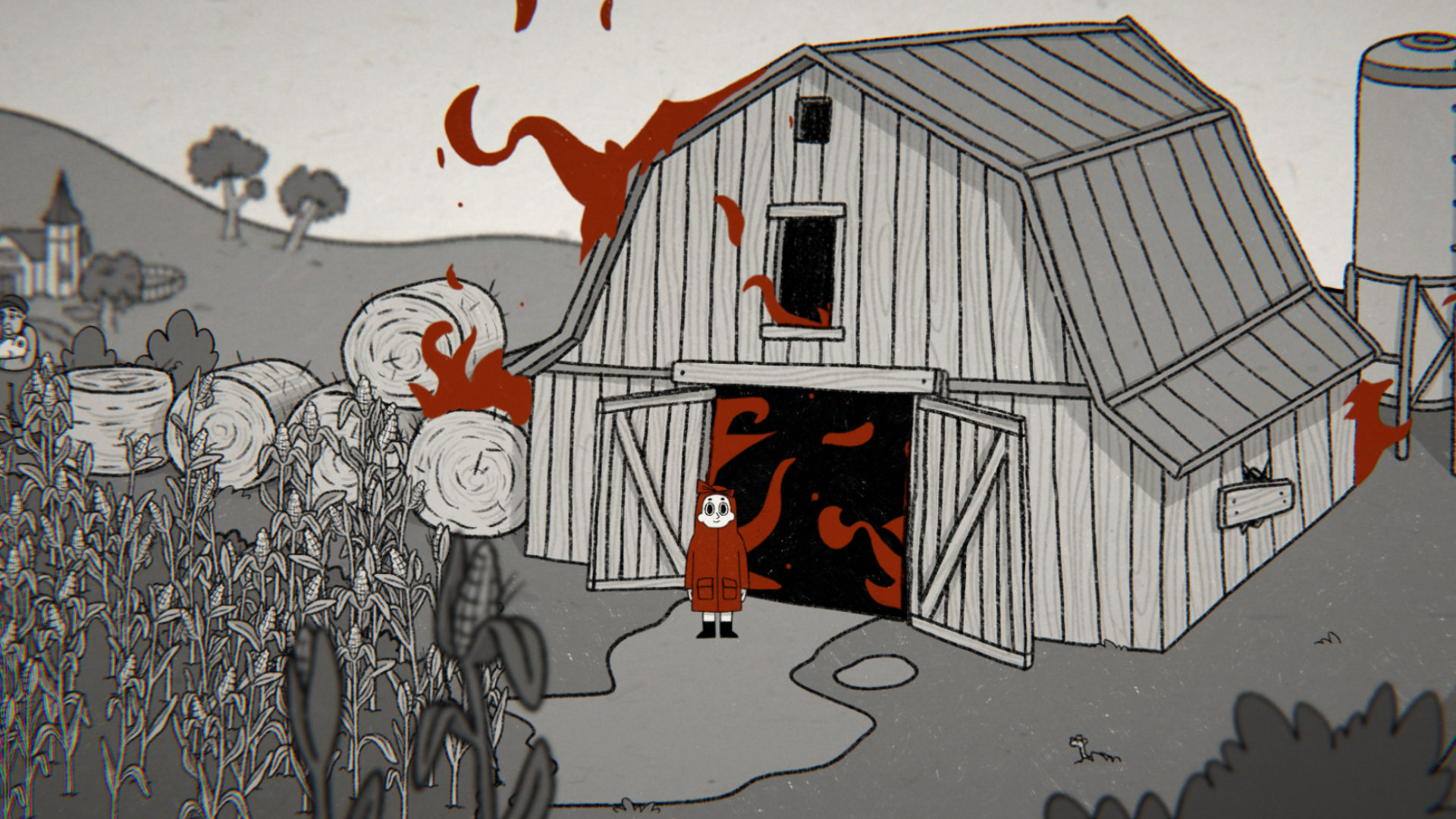
The sound department complements this setting well, favouring cartoonish effects, exaggerated vocalisations and deliberately over-the-top sounds rather than a narrative built around long, dubbed dialogues. The music maintains a tone consistent with the fairy-tale and unsettling atmosphere, further enhancing the surreal nature of some of the situations we encounter.
The result is a production that, despite its simple foundations, has a much more distinctive visual and audio direction than that of many significantly more expensive titles.
Two hours of terrible choices
But we arrive at what could represent the main obstacle for part of the audience: the length. Tom the Postgirl takes approximately two hours to complete a first playthrough, with variations largely tied to the time spent exploring and seeking secondary interactions. It’s not much, especially considering how quickly one can become familiar with the few available mechanics. The structure, however, is designed to encourage multiple playthroughs, thanks to the presence of different endings and small stories that can evolve differently depending on our actions.
We can choose to behave relatively respectfully, sticking to necessary activities, or fully embrace the protagonist’s more irresponsible side, seeking every available opportunity to disturb the inhabitants. Attention to exploration can also alter the amount of content discovered. Some situations require observing certain locations at different times, while others can easily be missed if we stick exclusively to the main path. The presence of objectives and unlockable profiles also offers some additional incentive for those who wish to discover every detail of the adventure.
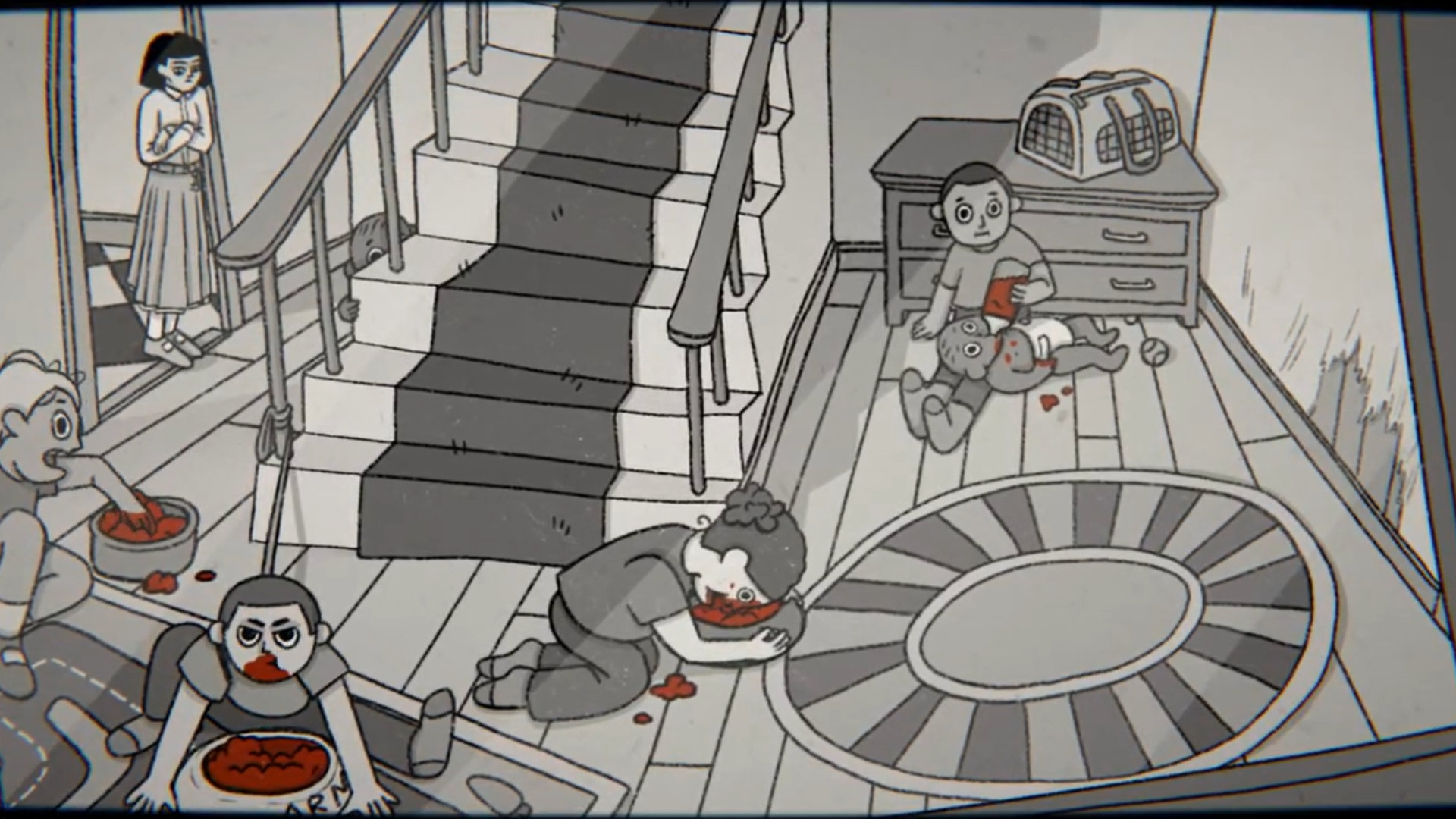
We are not, however, talking about a replayability capable of indefinitely multiplying longevity. The settings remain the same, much of the core interaction is inevitably repeated, and the pleasure of discovery loses a considerable portion of its effectiveness when we already know what lies behind a particular window.
It’s therefore important to approach Tom the Postgirl with the right expectations. It’s not an adventure designed to accompany us for dozens of hours, but a short interactive story that defines itself in a handful of sessions, letting the situations, characters and art direction justify its existence.
Fortunately, the listed price of 9,99 euro makes the offer relatively accessible, especially for those who appreciate independent productions that prefer to experiment with different languages and themes rather than necessarily chasing unbounded longevity. However, it remains the fact that, aside from the alternative endings, someone might find the experience too brief and wish for a deeper exploration of some of the stories introduced.
Technically speaking
From a technical standpoint, Tom the Postgirl is a relatively minimalist production, relying heavily on illustrations and traditional animation for its visual impact rather than particularly complex graphical effects.
Our reference PC configuration consists of NVIDIA GeForce RTX 5080, AMD Ryzen 7 9800X3D and 32 GB of DDR5 RAM, hardware significantly more powerful than what is required for a production of this kind. It would therefore make little sense to evaluate the game through complex benchmarks, especially considering that its success primarily depends on the quality of animations, the readability of scenes, and the smoothness of interactions.
The interface is intentionally minimal, and the control system does not require any particular familiarity with graphical adventures. Interactions remain simple and immediate, making the title accessible even to those who do not regularly engage with this type of production.
The Steam version also offers controller support, cloud saves, and Italian text, while the simultaneous launch on Nintendo Switch represents a particularly sensible choice for an adventure that, in duration and structure, seems naturally suited for portable play.
The real element to evaluate remains the artistic quality, and in this regard the work done by Oopsie Daisies is genuinely convincing.
The decision to prioritise hand-drawn illustrations and traditional animation allows the game to build a visual identity that is unlikely to age quickly, while the particular blend of grotesque humour and fairy-tale atmospheres helps it stand out within an increasingly crowded independent gaming landscape.
In conclusion
Tom the Postgirl is one of those small independent productions that reminds us how little, at least in terms of mechanical complexity, is needed to build an experience with a truly distinctive personality. Oopsie Daisies takes an apparently innocent premise, transforms it into a celebration of the absurd, voyeurism, and the most unapologetic humour, and builds around its protagonist a village in which every inhabitant seems to have something profoundly wrong to hide. The result is an adventure capable of continually surprising, especially thanks to the quality of the animations, the variety of small stories, and an artistic direction that deliberately contrasts the aesthetic of a children’s book with situations often entirely unsuitable for a child audience. The real strength isn’t what we do, but what we discover by doing something we probably shouldn’t do. Every window becomes an invitation to curiosity, every dwelling can conceal a new absurdity, and even seemingly insignificant interactions contribute to building that particular sense of unpredictability that accompanies the entire experience.
Naturally, not everything works the same way.
The gameplay remains extremely simple; some situations lean more towards surprise than genuine narrative depth, and the total playtime of just two or three hours might leave unsatisfied those seeking a more structured adventure. Even the presence of different endings fails to completely erase the feeling that, after uncovering much of the village’s secrets, there remain relatively few reasons to restart from the beginning. These are clear limits, but personally, I find them quite understandable given the nature of the project. Tom the Postgirl does not aim to be a particularly complex graphic adventure or a narrative experience capable of revolutionising the medium. Instead, it focuses on a simple idea, develops it through an extremely personal visual language, and accompanies it with enough dark humour to seriously question the moral sense of whoever conceived some of its scenes.
And it’s precisely this lack of creative modesty that makes it so pleasant.
About the Author