Emotions are part of our daily lives, yet it’s not always easy to understand, accept, or find the right way to deal with them. Sometimes we need to pause, look at things from a different perspective, and give ourselves the time needed to understand what we feel. Other times, it’s precisely an unexpected encounter that reminds us how important it is to surround ourselves with the right people and feel understood.
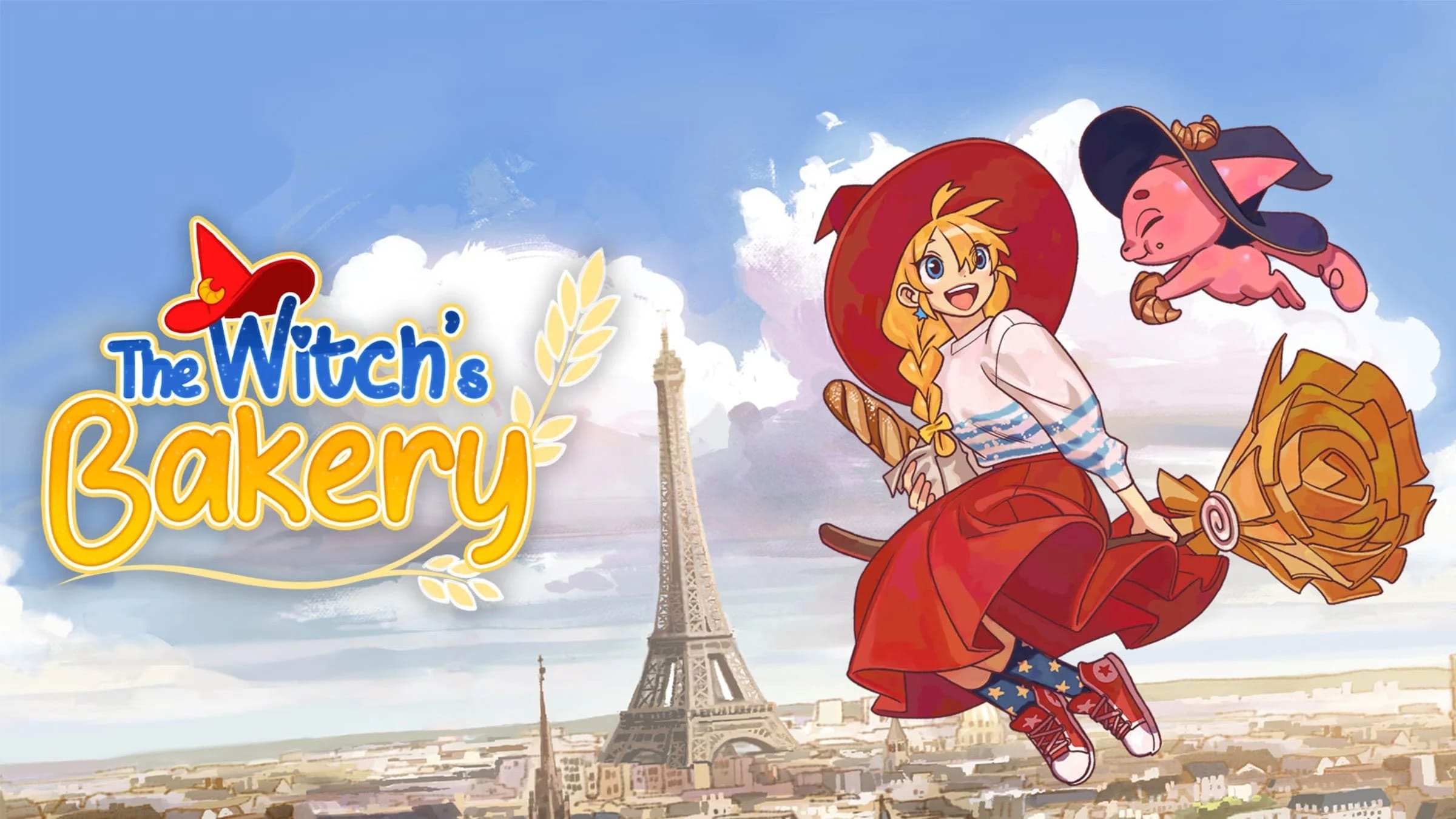
It is precisely on this sensibility that The Witch’s Bakery comes to life, the first work from the French independent studio Sunny Lab and published by the publisher Silver Lining Interactive.
The Witch’s Bakery is not just a video game, but also a story that explores the complexity of human emotions, the small and big difficulties of everyday life and those moments of happiness that warm our hearts.
This content is provided by YouTube. To view it, you must allow external content. Activation may result in data being shared with the third party.
The beginning of Lunne's journey
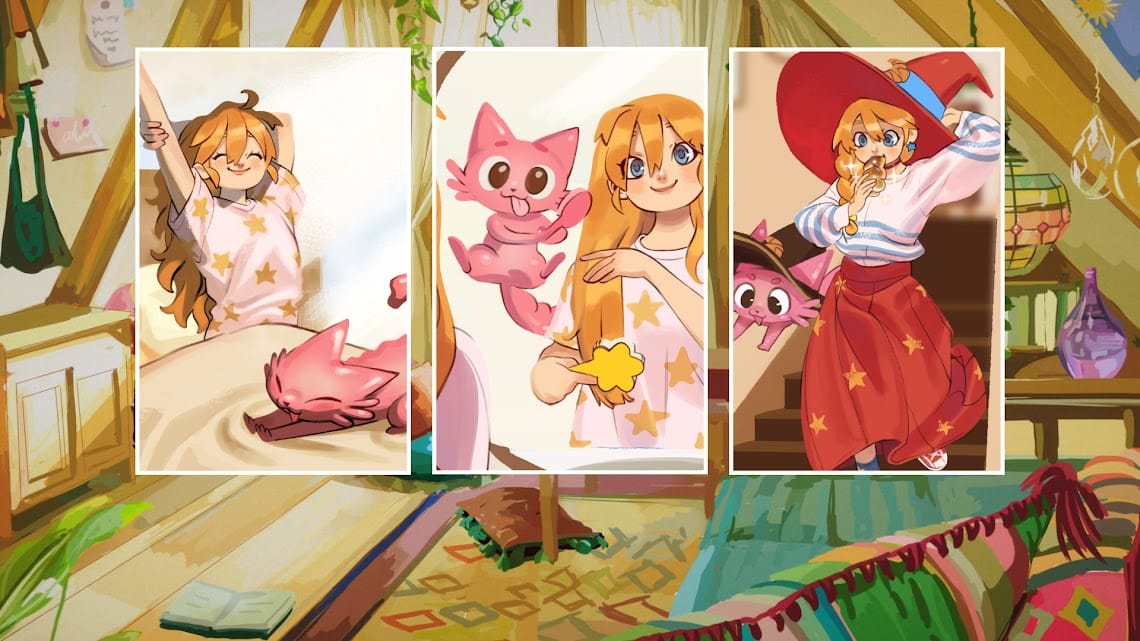
The protagonist of this incredible adventure is Lunne, a young witch who decides to leave behind the tranquillity of the countryside to pursue her dream, namely opening her own bakery in Paris. Alongside her mutant friend Orio, who in the game takes the form of a funny pink cat, the young woman moves to the French capital, settling into a charming apartment directly above her new shop.
And it’s precisely here that Lunne’s new adventure begins, made of freshly baked pastries, special encounters, and, above all, a touch of magic. Because you must know that Le Croissant de Lunne, that’s the name of the bakery, turns out to be much more than just a simple commercial venture. As you’ve already guessed — long before I mentioned it myself — Lunne is a witch (the enormous hat she constantly wears in her head didn’t already make you suspicious?), but not just any witch. The young woman is, in fact, a Heart Witch, capable of connecting with people’s emotions and helping them face what lies hidden deep within their souls.
At this point, I imagine someone among you is already asking the perfectly legitimate question: how exactly does all this translate into practice?
First of all, I want to stress that Sunny Lab has successfully woven together Lunne’s story and the emotional component with the gameplay in great harmony. All these elements intertwine fluidly and coherently, the game flows naturally and delivers an experience that avoids excessive forced elements. Certainly, many situations are surreal (after all, we’re talking about a witch who practices magic!), but it’s precisely here that the game surprises and works, because, despite the fantastical elements, what it tells us is incredibly authentic and it approaches the player with a truly unique delicacy.
Simple but functional gameplay
The daily life of Lunne is divided between running her bakery, exploring Paris and meeting her residents, turning her days into a sequence of varied activities that intertwine the routine of the young entrepreneur with her magical nature.
In the morning, the alarm rings early and Lunne, together with her faithful friend Orio, prepares to open the bakery. The goal is clear from the start: serve as many customers as possible and set aside a nice sum of money by the end of the day.
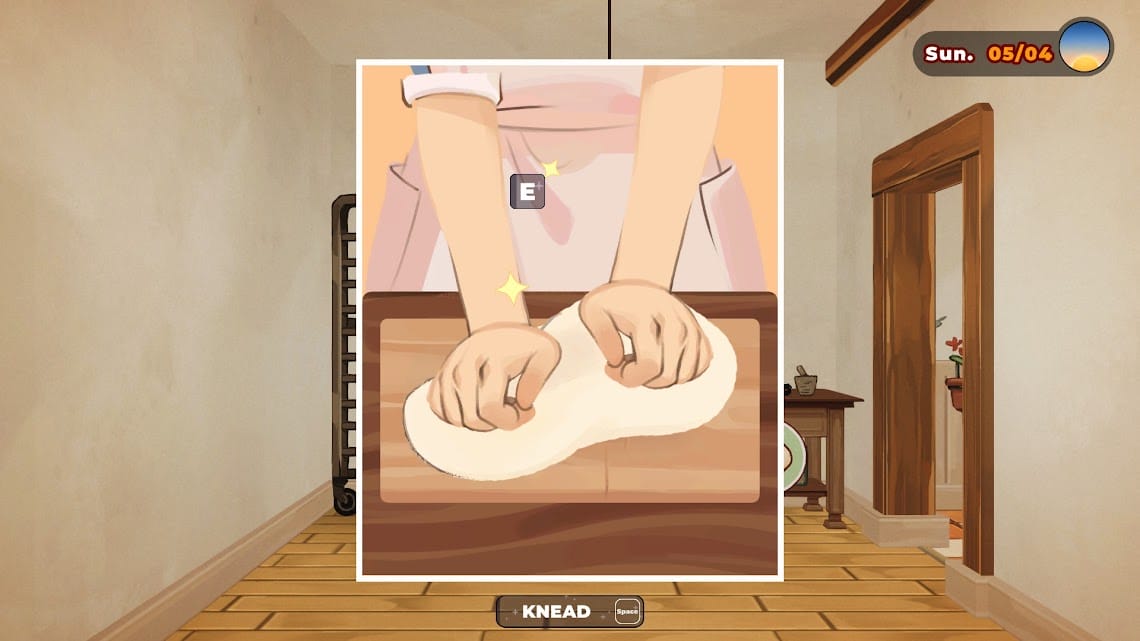
In the role of Lunne, we must first take care of the preparation of dough. In the early morning, as soon as the bakery opens, we already have some ready, but we must prepare more as supplies run out, so that Orio can continue baking bread and pastries. Our friend, the shape-shifter, works independently and is therefore not directly controlled by the player, but still needs our support to carry out his work without interruption. For example, if the counter becomes covered in too much flour, Orio is forced to stop, temporarily halting production. It is therefore up to us, playing as Lunne, to keep the situation under control and ensure everything proceeds smoothly.
And now the highlight: managing the clientele!
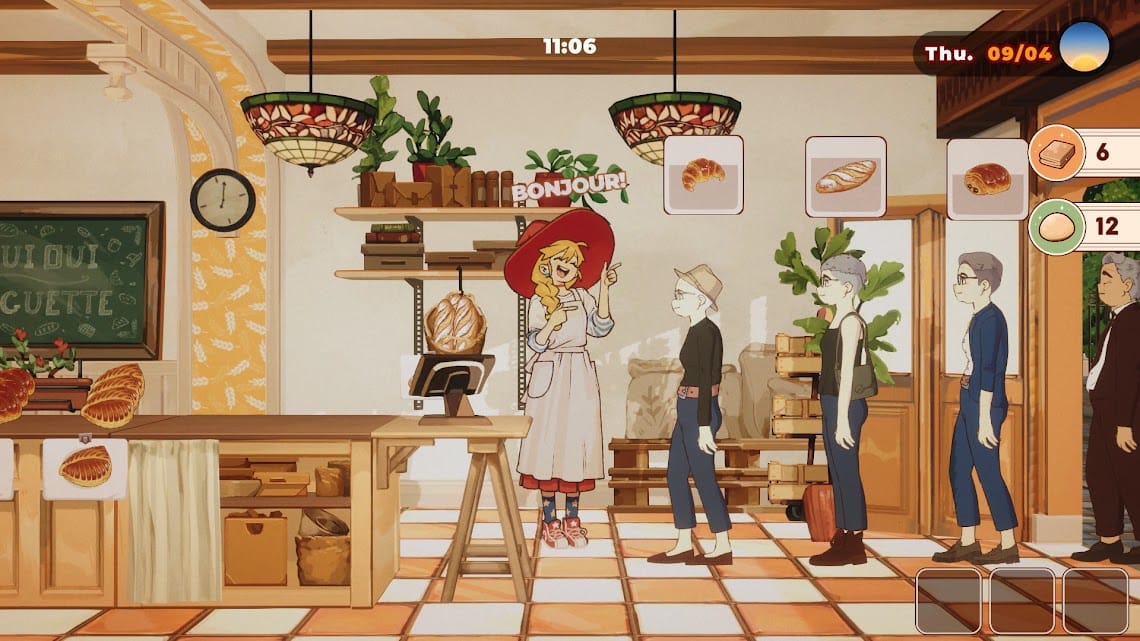
Every person entering the bakery is accompanied by a comic strip showing the desired baked product, along with a bar indicating the time available to complete the service. Not everyone, however, is willing to wait in the same way; in fact, some customers are more impatient than others and will be identifiable thanks to a clock-shaped icon appearing above their head. In this case, as the game itself suggests, it’s appropriate to give them priority to avoid making them wait too long.
When emotions take shape
Among hungry, enthusiastic, and impatient players, there are also those who bring with them conflicting and hard-to-handle emotions, which we can recognise thanks to the presence of tiny creatures that accompany the characters and reflect what they are feeling, such as Sadness, Regret, and so on. At this point, after having given them the desired sweet, Lunne can enter their Heart Palace and help them accept their own emotions or, in some cases, let them go. This action is accompanied by a series of mini-games in which it is necessary to guide the corresponding emotion through a maze, overcoming the obstacles that prevent it from reaching the exit.
After the work: Paris and the friendships to nurture
At 6pm, Lunne and Orio’s workday comes to an end, and after giving a summary of the day, the two friends can finally relax and pursue other activities. In the evening hours, we can explore Paris and eat out, see a film at the cinema, or visit various small shops to buy new items with which to personalize our bakery. However, this moment of the day is not solely dedicated to leisure; indeed, it is also possible to spend time with the other main characters, strengthen bonds with them, and learn more about their stories.
As mentioned earlier, Lunne has the ability to enter the Palazzi del Cuore, places where people’s deepest emotions are kept, and to achieve this, she must build a connection with them. And this is one of the aspects I appreciated most in The Witch’s Bakery: friendships, in fact, do not form immediately, but must be nurtured and require time and dedication, just like in real life. Nurturing these relationships is essential to allow Lunne to enter her friends’ Palazzi del Cuore and help them face difficult moments. The stories told are extremely realistic and reflect the fears and insecurities of all of us, a human element that makes the game even more engaging and allows genuine identification with the characters.
Some shadows among the Palazzi del Cuore
As we anticipated, once a bond is formed with a person, Lunne can enter their Heart Palace, where the deepest and most intimate emotions and memories are kept. Exploring this special place is not merely a narrative choice, but is directly woven into the gameplay and allows the player to interact actively through various minigames and short platform sections. The concept is original and the game is never punishing, but here’s where The Witch’s Bakery falters slightly: over time, these sections become repetitive, and some minigames, a bit clunky, might bore those seeking a more dynamic pace.
Artistic direction
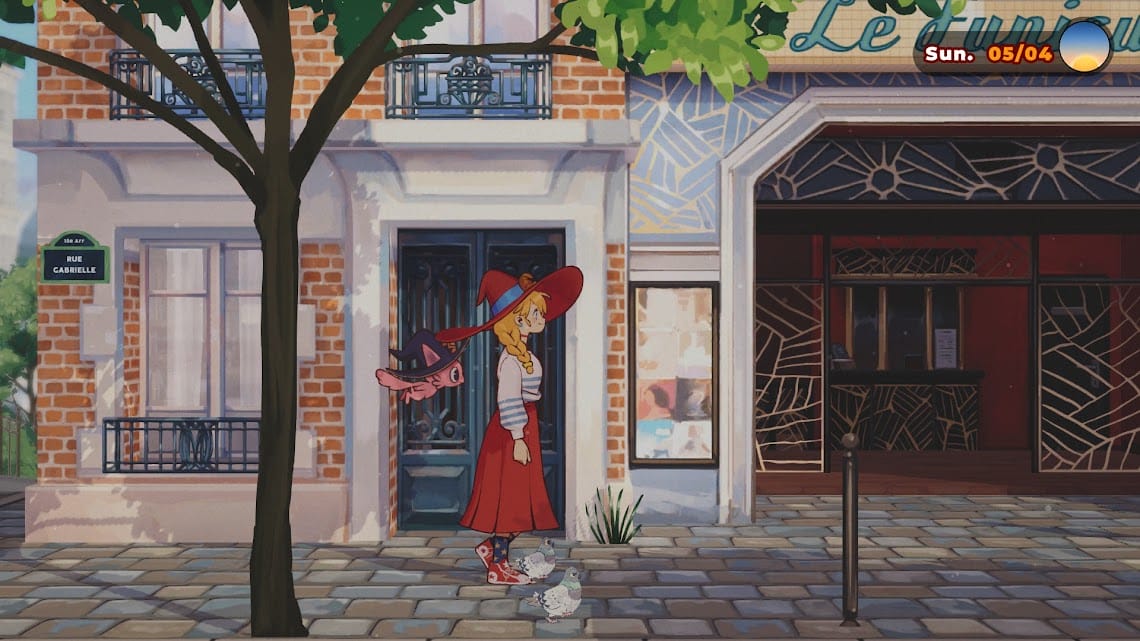
From an artistic standpoint, The Witch’s Bakery is a true visual delight, thanks to its vibrant and cheerful art style that explicitly evokes the aesthetic of Studio Ghibli’s works. The hand-drawn city of Paris, designed as more than just a backdrop for Lunne and Orio’s story, is instead a warm, welcoming place that conveys that sense of familiarity and security one feels only when at home, surrounded by the people we love most. The most successful choice, however, is the pairing of bold, saturated colors with delicate themes: the visual lightness does not trivialize them, on the contrary, making them easier to engage with and understand.
The Witch's Bakery, let’s sum up
In short, The Witch’s Bakery is a delicate and emotionally rich adventure, capable of reaching the heart and reminding us how important it is to learn how to listen to our emotions. The game is solid technically too, with a smooth, seamless performance on PlayStation 5, and, despite a few repetitive moments in the Heart Palaces, it manages to tackle deep themes through a context I felt profoundly welcoming and safe, offering players an experience that goes well beyond simply running a bakery.
About the Author