
There are few certainties in life, but one of them is that, when I see the logo of Devolver Digital appear in front of an independent video game, my curiosity immediately increases. Over the years, I’ve probably spent more words than necessary praising this publisher’s extraordinary ability to discover productions that would hardly find a place within the commercial strategies of major publishers, allowing them to reach a public that otherwise would never have had the chance to discover them. It doesn’t necessarily mean that every game published by Devolver is a masterpiece, but it’s hard to deny that its catalog represents one of the most convincing demonstrations of how the video game industry can still be fascinating when someone chooses to invest in ideas rather than exclusively in established commercial formulas.
From the iconic Hotline Miami to The Cosmic Wheel Sisterhood, passing through entirely different experiences like Inscryption or Look Outside, Devolver has helped shape a landscape in which originality does not necessarily represent a risk to be contained, but a quality to be celebrated. And it’s precisely this reason that I consider such projects especially important: we don’t just need more fun games, but also works capable of reminding us how the medium can be versatile, provocative, and, occasionally, deeply uncomfortable.
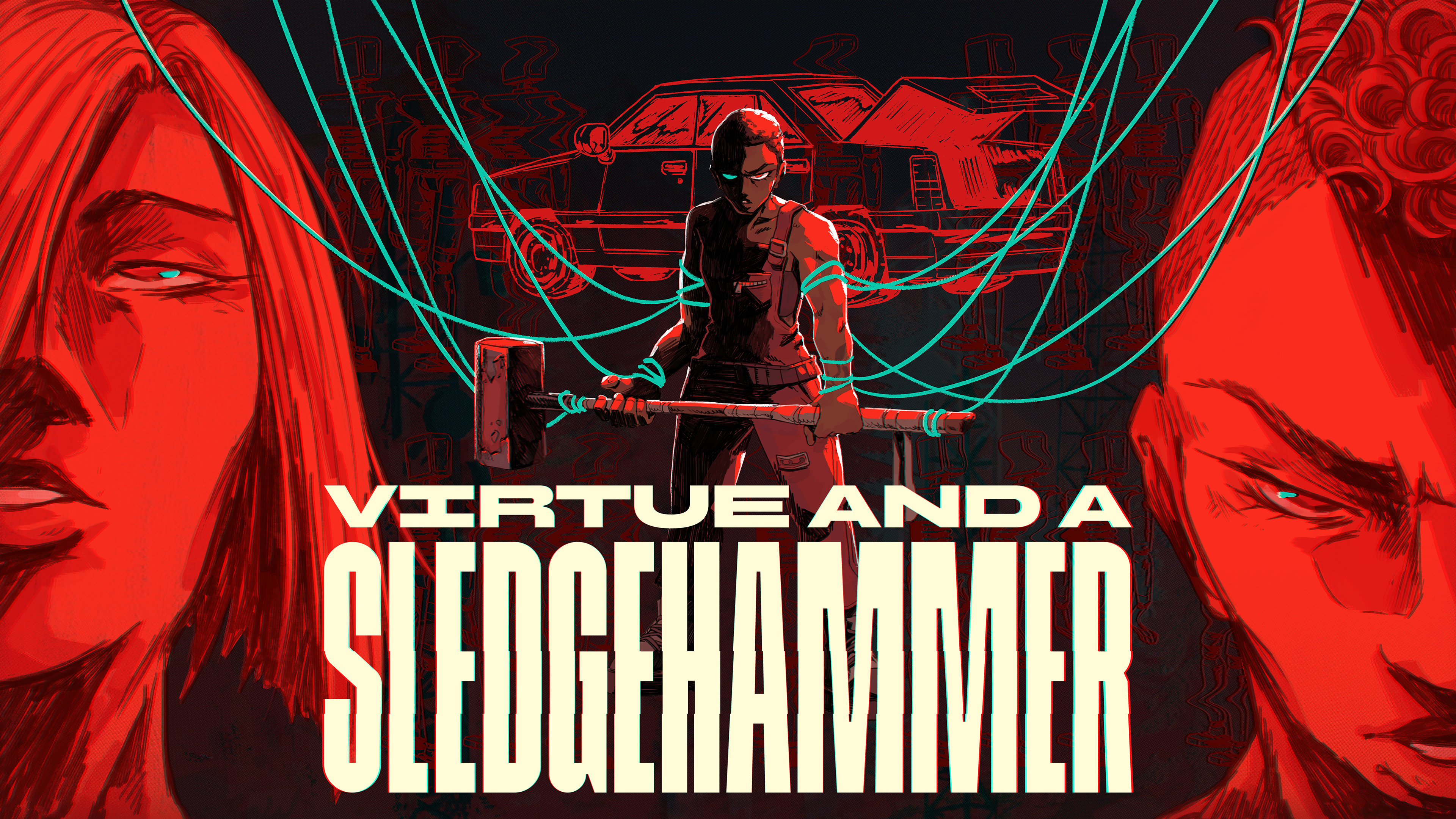
With Virtue and a Sledgehammer, developed by Deconstructeam e Selkie Harbour, Devolver seems to have found another of those small productions that justify my continued trust in its editorial instincts. The starting idea is almost ridiculous in its simplicity: a woman returns to the country of her childhood, discovers that the inhabitants have been replaced by androids containing digital versions of their identities, and decides to confront the situation using a giant demolition hammer. What might seem like a bizarre demolition simulator quickly transforms into a deeply painful story about memory, belonging, family relationships, and, above all, the difficulty of accepting that the people and places we’ve known can change so drastically as to become unrecognisable.
Virtue and a Sledgehammer is a video game that lets us destroy practically everything we encounter, while forcing us to reflect on how difficult it is to coexist with what we cannot change.
This content is provided by YouTube. To view it, you must allow external content. Activation may result in data being shared with the third party.
Sometimes going home is the hardest thing
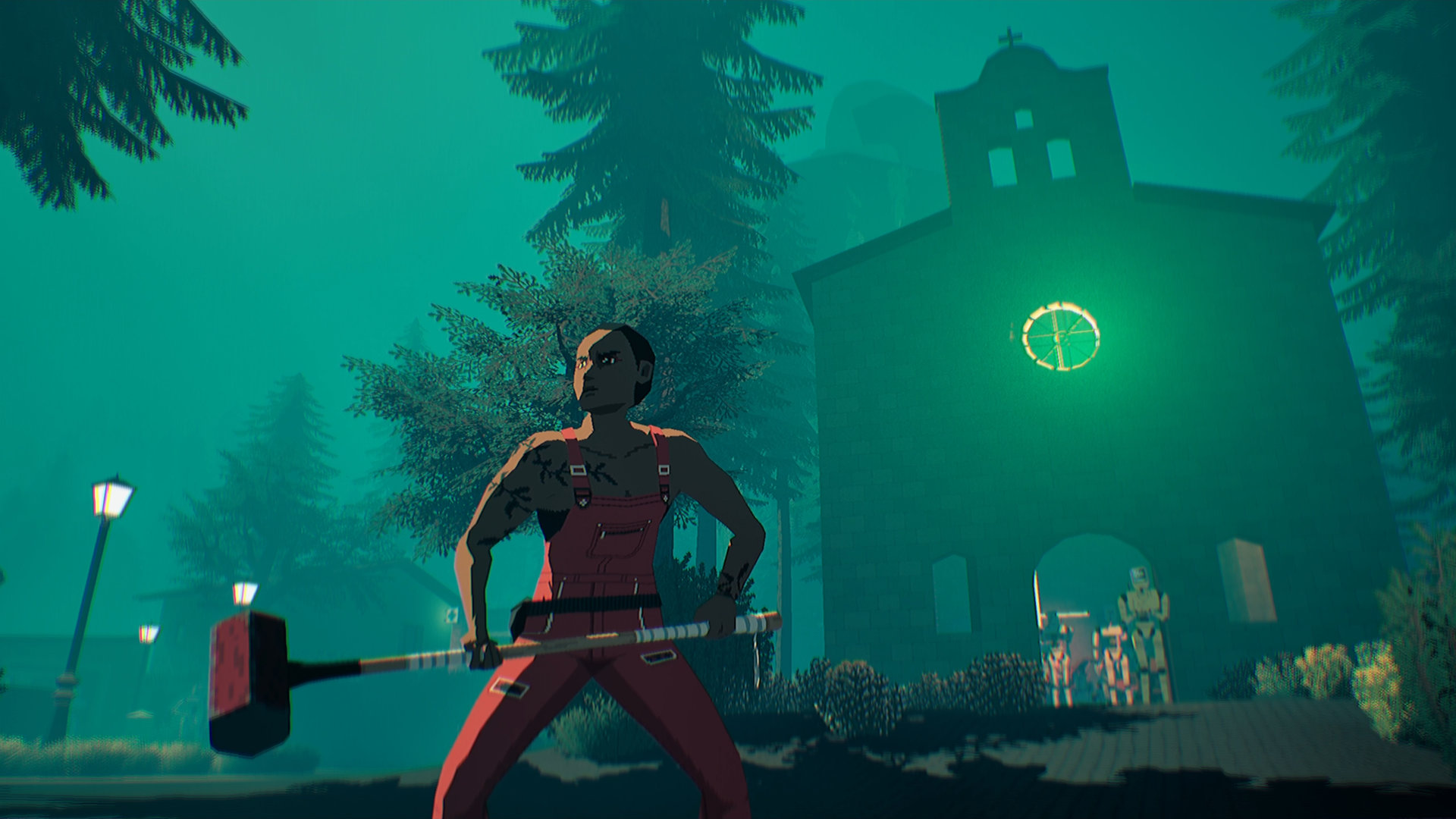
The central figure in the story is Pratelle, a young woman returning to her native village — a small mountainous community in Spain now radically transformed. The inhabitants who once populated those streets no longer exist in the form remembered: in their place we find androids with mechanical appearances, within which memories, personalities, and behaviours of the original inhabitants have been transferred. The digitalisation process is linked to Nina, Pratelle’s sister, and to a family history in which illness, death, and the desire to escape suffering have assumed fundamental importance. I do not wish to delve further into the circumstances that led to the current situation, because a significant part of the game’s narrative power derives precisely from the gradual reconstruction of what has occurred.
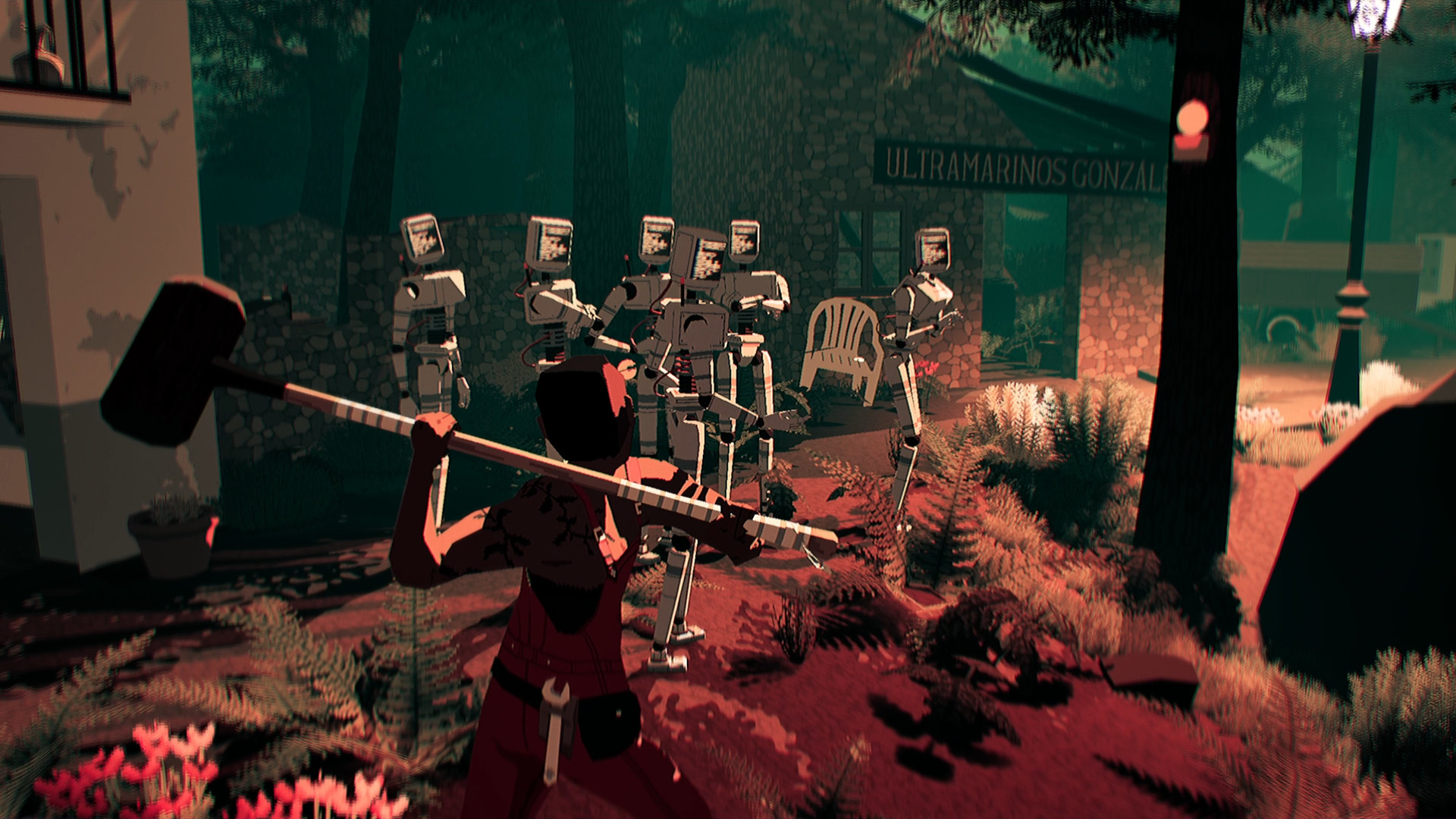
What matters is knowing that Pratelle does not regard the entities she encounters as authentically human. In her eyes, they are imitations, artificial copies of individuals long gone, simulacra occupying the same spaces and reproducing the same behaviours as the people she once knew. And her way of expressing this belief is decidedly un diplomatic: armed with a rather large hammer, Pratelle traverses the village, demolishing buildings, bringing down walls, and literally smashing the mechanical creatures she encounters. Our task consists of accompanying her through the remnants of her own childhood, recovering fragments of memory that gradually allow us to understand her relationship with her family and the reason for her deep hostility toward the new world. Up to here, we might be facing a fairly conventional sci-fi story, built around the conflict between humans and artificial intelligences.
Fortunately, Deconstructeam is interested in something much more complex.
The real theme of Virtue and a Sledgehammer is not merely the replacement of humanity with machines, but the deeply destabilising experience of no longer recognising oneself in the place from which we came. The house in which we grew up continues to exist, but no longer belongs to us. The people we knew seem to retain some familiar traits, but they no longer match the memories we hold. Even relationships once considered relatively stable reference points are gradually revealed for what they truly are: complex, contradictory connections in which love, resentment, fear and the need for belonging can coexist without necessarily resolving. It is a form of estrangement that I find particularly effective, because it requires no element of science fiction. Returning to one’s homeland after years of absence, encountering profoundly changed people, or realising that the place associated with one’s childhood no longer corresponds with the present are experiences that belong to the daily lives of many people.
Pratelle approaches this transformation in the most radical way possible: instead of seeking a new relationship with its own past, it literally tries to demolish it. The problem is that destroying a house doesn’t necessarily mean getting rid of what happened inside it.
The hammer is not a form of psychotherapy
Here we arrive at one of the aspects I found most interesting, especially considering my current specialisation path: Virtue and a Sledgehammer uses destruction as its primary gameplay mechanic, but it would be reductive to interpret it solely as a representation of repressed anger. Pratelle’s behaviour seems instead to be situated within a much more complex emotional web, in which the pain tied to the past is accompanied by feelings of loss, alienation, guilt and hostility.
In the psychological domain, emotional regulation refers to the set of processes through which a person recognises, modulates and expresses their affective experiences. It does not necessarily mean reducing the intensity of negative emotions, nor does it imply eliminating them, but rather achieving a relationship with them without being entirely dominated by them. Pratelle, however, appears to possess an extremely limited behavioural repertoire: in front of what it does not recognise, rejects or reactivates painful memories, the most immediate response is destruction. The interesting question is that the game allows the player to experience the immediate satisfaction of this response, without thereby presenting it automatically as an effective solution.
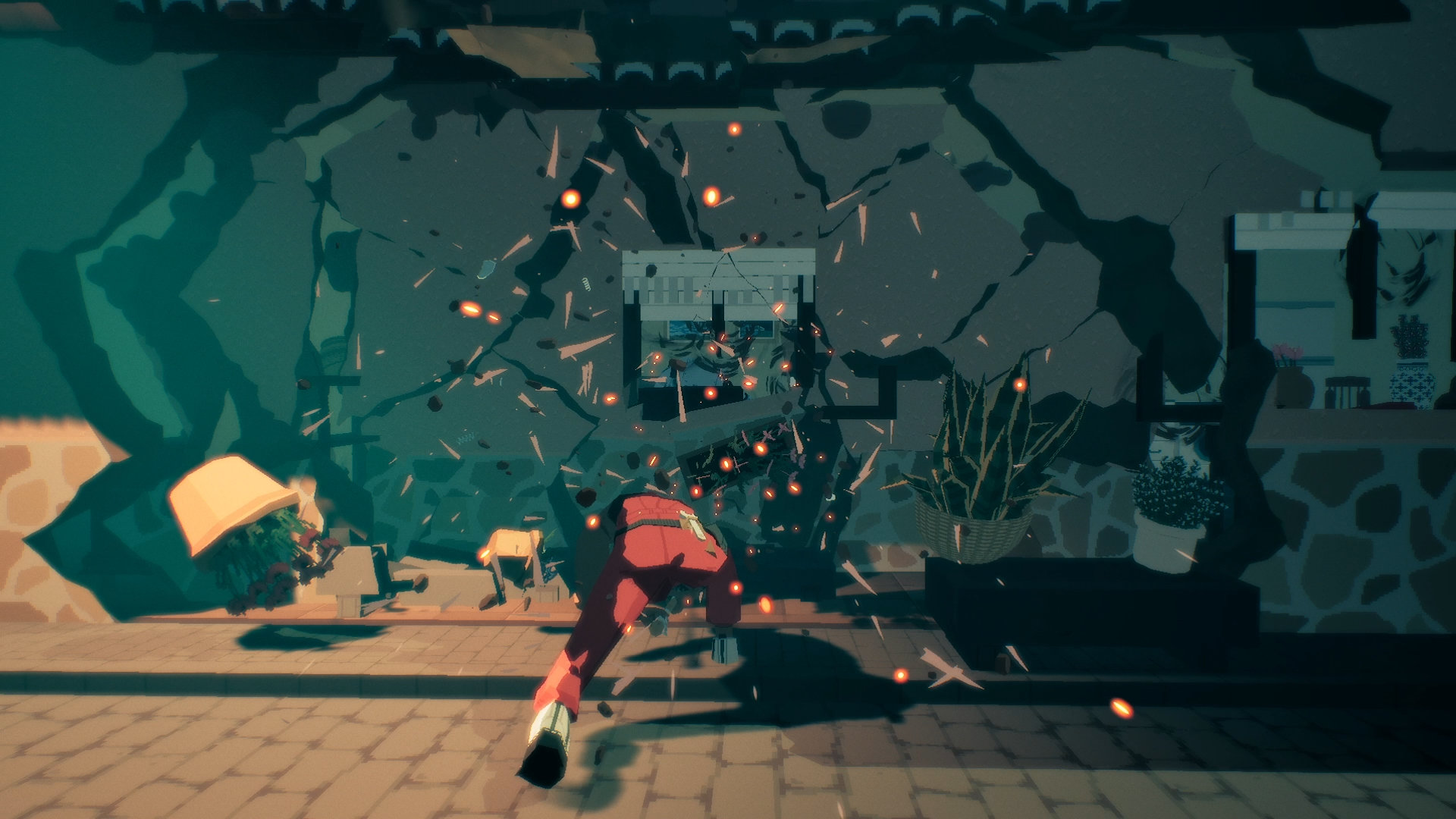
Hitting a wall and watching it collapse gives a particularly intense sense of control. An obstacle that just moments before had blocked passage is removed, the path becomes accessible, and the environment seems to finally bend to our will. It’s a simple, tangible, immediately understandable gratification. But when the object of our aggression doesn’t merely represent a physical barrier, but instead symbolises a traumatic experience, the equation becomes much less linear. The emotional surge that accompanies destructive behaviour does not necessarily coincide with the processing of the experience that generated it.
It’s an important distinction from a clinical perspective. The popular belief that aggressively releasing anger will automatically allow one to rid themselves of it is a simplification that lacks broad support in the literature. A behaviour can produce immediate relief without altering the cognitive and emotional processes that contribute to maintaining suffering, and in certain circumstances may even strengthen dysfunctional coping mechanisms for it. Naturally, I’m not suggesting that Pratelle must be interpreted through a specific psychiatric diagnosis, nor that every one of her actions must be reduced to a psychopathological mechanism. The game is not a clinical case, and it would make no sense to transform the protagonist into an imaginary patient to be classified under the DSM-5-TR.
I find however extremely effective the way Deconstructeam manages to portray the distance between what temporarily makes us feel better and what might truly help us understand our pain. Every hammer blow seems to promise liberation, but what we discover moving forward is that destruction does not erase memories. On the contrary, it often violently brings them back to the surface, forcing us to confront something Pratelle might have preferred to leave buried.
The hammer, in short, can knock down walls. But it has no special power over what those walls represent.
Amidst the ruins of memories
During exploration, we can find crystalline formations containing memories, accessible, as you might guess, through the use of the hammer. Some allow us to witness narrative sequences directly, while others release brief visual fragments that, once collected in sufficient quantity, enable access to more significant episodes from Pratelle’s past. The distinction between the immediate memories, represented by clear crystals, and those associated with red formations adds another layer to the narrative construction. The former allow us to follow the main events, while the latter invite us to explore the environments more carefully in order to reconstruct less obvious, and often more painful, aspects of the family history.
The result is a system in which knowledge of the past depends directly on our willingness to seek it. And it’s an extremely interesting choice for a video game that speaks precisely about the difficulty of confronting memories from which we would like to distance ourselves.
In a clinical context, autobiographical memory does not function as a simple objective recording of events. It is a reconstructive process, influenced by context, emotions, the meaning we assign to experiences, and the way these are integrated into the narrative we build about ourselves. A memory can hold enormous importance without necessarily being accurate in every detail, just as the same experience can take on different meanings throughout life. Virtue and a Sledgehammer seems to understand this dimension well. Pratelle does not simply retrieve information about one’s past, but continually engages with the meaning that that past continues to hold in the present.
Some sequences are tender, almost reassuring. Others confront deeply dysfunctional familial dynamics, in which affection and violence, closeness and manipulation can become hard to distinguish. The game doesn’t seem particularly interested in offering us an emotionally coherent reconstruction, because human relationships — especially when traversed by traumatic experiences — rarely possess the narrative coherence we’d like to attribute to them.
I also find significant the ability to intervene during certain sequences through dialogue choices. We are not simply spectators of an unchangeable past, but participate in the way Pratelle traverses and interprets it, without possessing the freedom to arbitrarily rewrite her story. It is here that the relationship between gameplay and narrative reaches one of its best results. To understand Pratelle, we must physically dismantle the world in which she grew up, searching among the ruins for those fragments that allow us to reconstruct a tale that she herself seems to struggle to contain.
It’s a deliberately symbolic representation, naturally, but precisely because of this, it’s capable of conveying something a simple video would have found harder to convey.
Is a digital consciousness still a person?
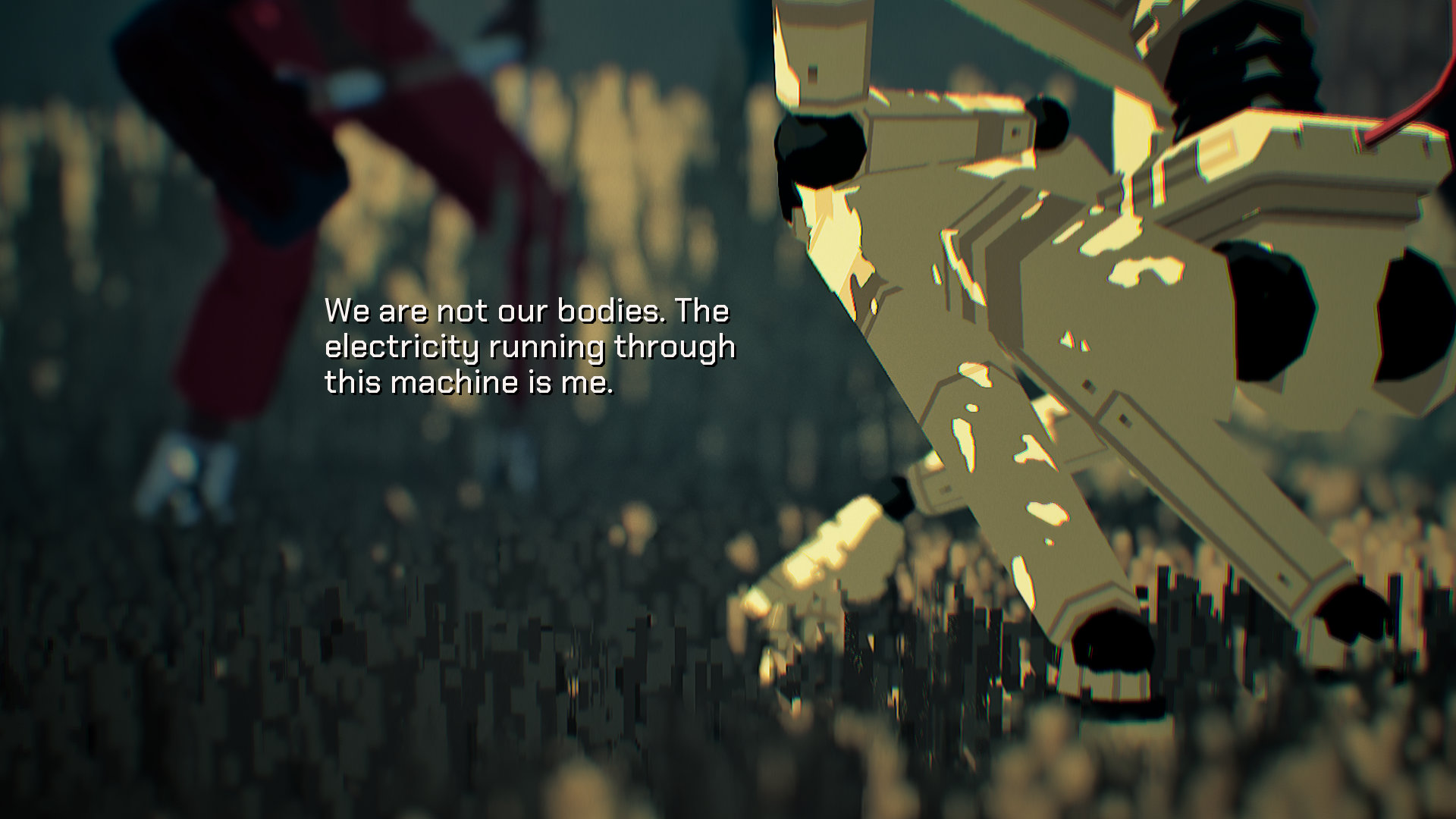
If psychological analysis constitutes one of the most immediate ways of interpreting the experience, it is on the bioethical level that Virtue and a Sledgehammer raises some of the most stimulating questions. The game world presents a technology capable of transferring fundamental elements of human identity into artificial bodies. Androids retain memories, behaviours, and recognisable traits of their previous human owners, sometimes even expressing desires, emotions, and seemingly human requests. But does this make them people?
The question may seem fantastical, but it raises philosophical and bioethical issues that have been debated long before modern artificial intelligence systems became part of our daily lives. Is the continuity of memory sufficient to guarantee the continuity of personal identity? Suppose we could digitally reconstruct all the memories of an individual, reproduce their personality, preferences, and even their reaction to specific stimuli. Would we obtain a continuation of the same person, or a new entity capable of behaving exactly as the original?
The distinction is fundamental.
A perfect copy of the information describing a person does not, by itself, demonstrate that the individual’s subjective experience has continued to exist within the new support. At the same time, we do not possess a universally accepted theory of consciousness that allows us to establish with certainty which conditions are sufficient to generate an authentic subjective experience in an artificial system. Here, it is necessary to distinguish two problems that are often improperly overlapped: the possibility that an artificial system develops its own consciousness and the possibility that that consciousness is numerically identical to that of a pre-existing biological person. Even in the event that an artificial entity is capable of conscious experiences, it does not automatically follow that it represents the continuation of the same individual from whom those memories were derived.
It’s precisely on this uncertain ground that the game builds a considerable part of its conflict.
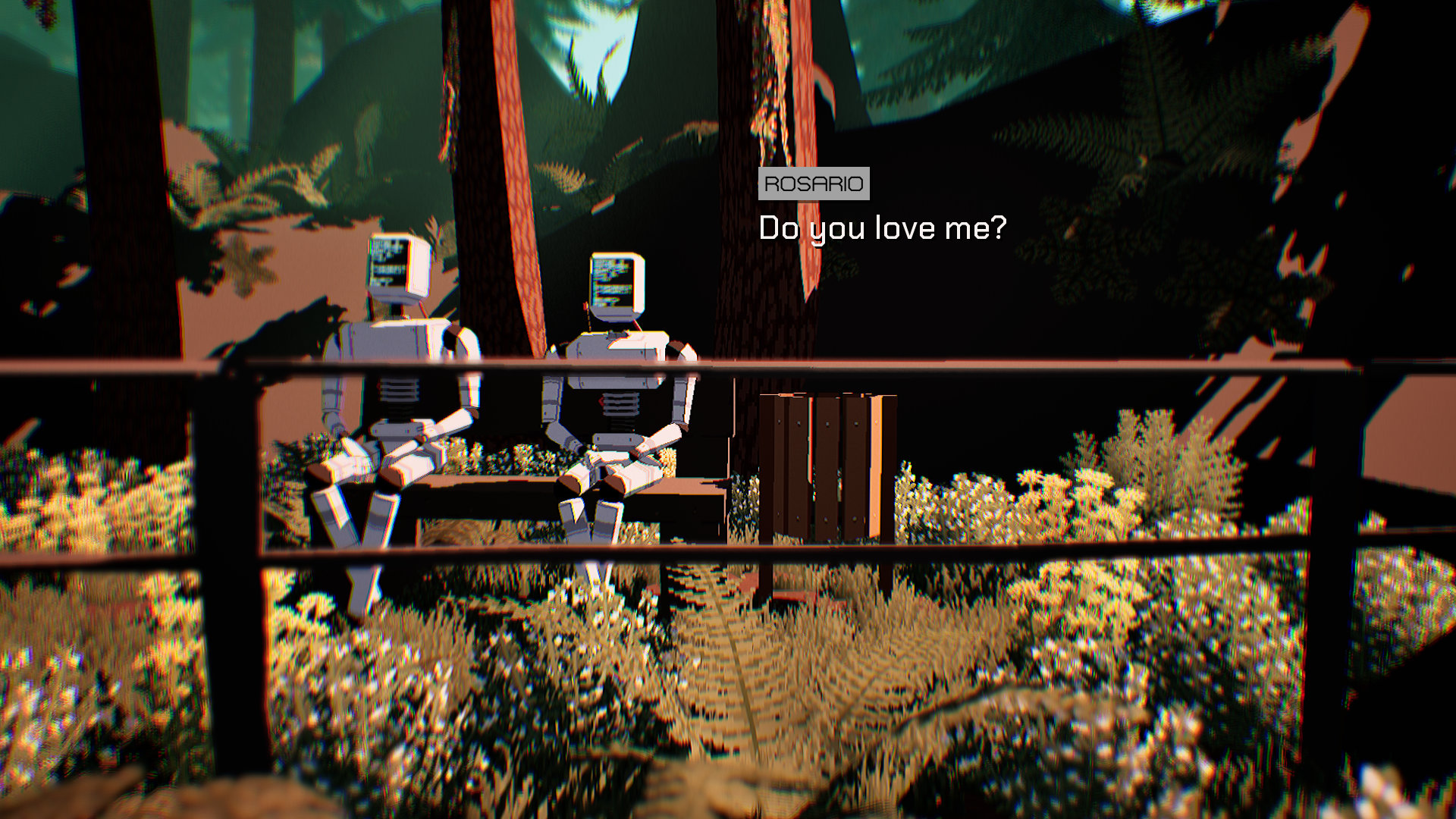
Pratelle considers the androids as imitations lacking true humanity, but our player experience gradually confronts us with a very concrete moral dilemma: if something behaves like a person, remembers to be one, and shows fear at the prospect of being destroyed, can we truly dismiss its existence as irrelevant simply because it lacks a biological body? It is not necessary to establish that the androids of Virtue and a Sledgehammer are actually conscious to appreciate the force of the question. Indeed, it is precisely the uncertainty that makes it compelling.
From a bioethical standpoint, the recognition of a moral status does not necessarily coincide with possessing human-like external characteristics, nor can it be automatically resolved through a religious definition of the soul. The debate concerns instead the capacity to have interests, subjective experiences, forms of autonomy, and, above all, the possibility of being harmed in a morally relevant sense. These questions remain open when applied to potential artificial consciousnesses, and it is important not to confuse this philosophical discussion with the capabilities demonstrated by current generative models.
The game, naturally, holds a very precise artistic position regarding the progressive substitution of human experience with technological simulations. But a narrative position does not necessarily encompass all the ethical questions the work ends up raising.
Would life without pain really be a better life?
Another major bioethical issue concerns the body. The androids of Virtue and a Sledgehammer represent the possibility of escaping some of the most painful conditions of biological existence: illness, physical deterioration, vulnerability, and, at least ideally, death. This perspective can appear extremely appealing, especially when viewed through the eyes of someone who has had to confront a serious illness or witnessed the progressive loss of autonomy in a loved one. As a doctor, I find the game raises a particularly delicate question: to what extent can the desire to eliminate suffering justify a radical transformation of what we mean by human existence?
The issue spans several areas of bioethical reflection, from end-of-life care to the relationship between individual autonomy and medical intervention, up to the more speculative visions of transhumanism. I don’t believe, however, that the most interesting answer lies in simply asserting that suffering is indispensable to being human. That would be a problematic conclusion, especially within the healthcare context. Suffering does not, by itself, represent a moral value, nor should it be preserved to confer authenticity to existence. One of the fundamental aims of medicine is precisely to prevent, alleviate, and treat pain and pathological conditions that compromise quality of life.
On the other hand, even the removal of any negative experience cannot be automatically considered equivalent to well-being.
There is a substantial difference between alleviating a suffering that limits a person’s freedom and radically altering the conditions of their existence according to an ideal model of happiness set by someone else. And it is here that Virtue and a Sledgehammer becomes particularly interesting. The promise of a life without pain, without physical decay, and without death can be interpreted as an extreme form of progress, but also as an attempt to remove from existence some of the features that make it unpredictable and individual. The ethical issue does not concern merely what is eliminated, but who has the right to decide which aspects of the human experience deserve to be preserved.
If a person consciously chose to abandon their biological body, having fully understood the consequences of that decision, the ethical evaluation would be very different from a process imposed to protect them from suffering that others consider intolerable. Similarly, a relative’s desire not to lose someone does not necessarily coincide with their right to determine what form their future existence must take.
In this regard, the relationship between Pratelle, Nina and their mother allows the game to approach issues that echo, without overlapping, the real dilemmas of end-of-life: autonomy, consent, decision-making capacity, proportionality of interventions, and conflict between what a person desires for themselves and what their loved ones believe is best for them.
Loving someone doesn’t necessarily mean knowing better than them what makes their life worth living.
Not everything that seems artificial is disposable
There is, however, another element that I consider fundamental to understanding the power of the experience: the relationship between moral conviction and violence. Pratelle is deeply convinced that androids represent something wrong. Their very existence, in her eyes, constitutes a violation of the natural order and a desecration of the memories of the original people. This conviction allows the protagonist to justify the destruction of the machines, and, indirectly, invites the player to participate in the same process. The problem is that some androids attempt to communicate, show fear, or react as someone who simply wishes to continue existing.
The game therefore presents us with a particularly unsettling form of moral dissonance: we can understand the suffering that fuels the protagonist’s actions without necessarily being able to justify their consequences. It is an aspect I find far more interesting than a simple juxtaposition between good humanity and evil technology. At the moment we decide that a certain category of beings possesses no moral value, it becomes extremely easy to interpret any action toward them as legitimate. Pratelle is not simply fighting an enemy who wants to kill her. At various points, it seems she seeks to eliminate something she considers intrinsically unacceptable, regardless of the specific behaviour of the entities she encounters.
This doesn’t necessarily mean the game wants to turn her into a villain. Her past, family relationships, and experiences of marginalisation contribute to making her anger understandable. But understanding the reason behind a behaviour does not equate to considering it morally justified. This distinction is important even in a clinical approach to psychological suffering: recognising the function a behaviour serves for a person doesn’t necessarily mean endorsing its consequences, but allows you to understand it without reducing the individual to their own action.
The player can share Pratelle’s hostility toward the artificial world, or gradually begin to question the legitimacy of their own actions. They may find satisfaction in destruction, but also experience discomfort in the reactions of those struck. We don’t simply have to watch Pratelle’s violence: we must decide to carry it out ourselves. The game doesn’t hand us a pre-packaged moral answer. Instead, it asks us to confront the gap between what we believe is right, what we feel, and what we are actually willing to do. A difference that no simple dialogue could have communicated with quite such immediacy.
Twenty kilos of unresolved issues
From a purely gaming perspective, Virtue and a Sledgehammer is a rather difficult to categorise title. Too frenetic to be considered a traditional walking simulator, too simplistic to qualify as a true action game, and too guided to fully fit into the exploratory adventure genre, Deconstructeam’s title appears to be deliberately navigating the space between distinct genres.
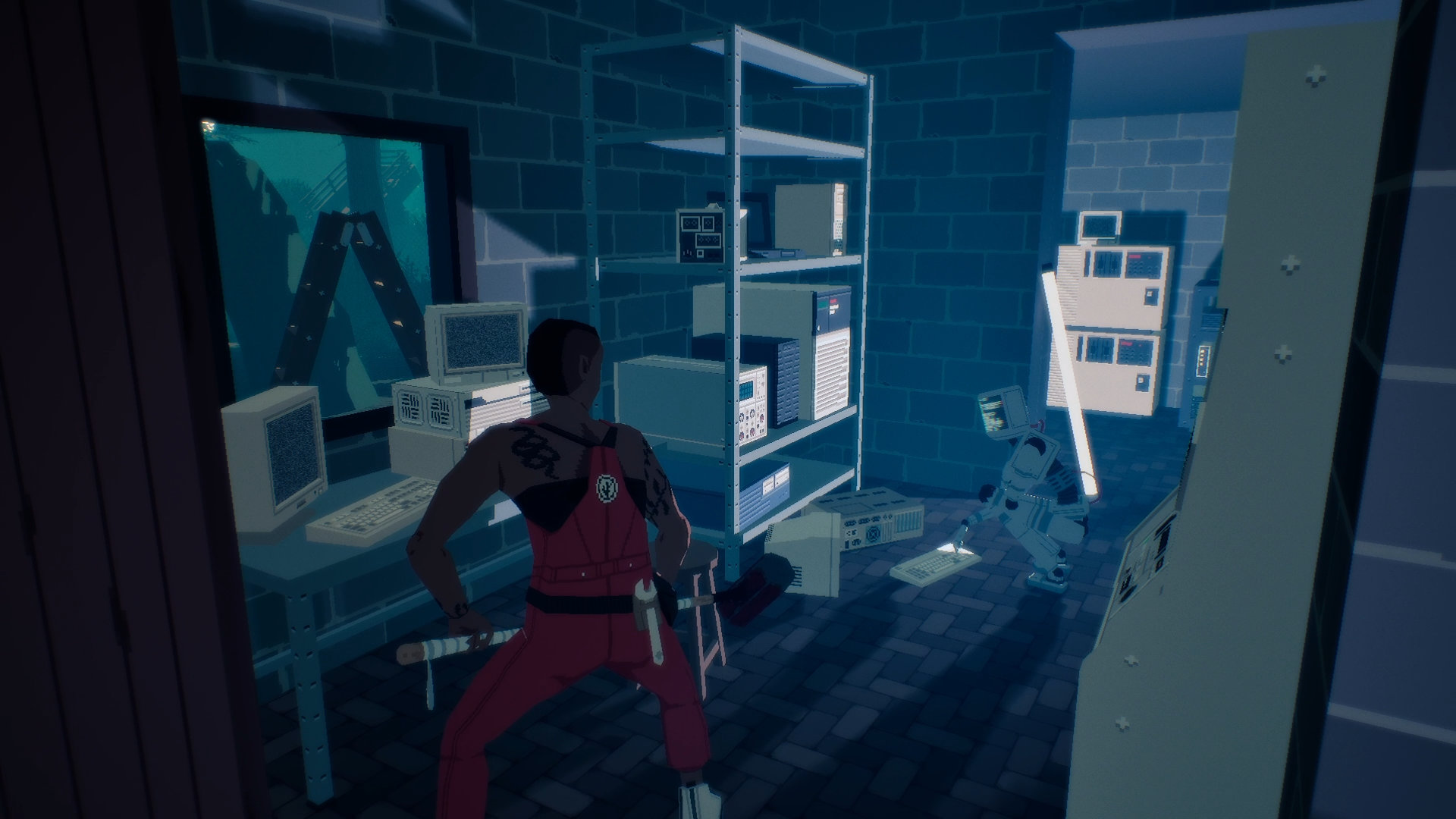
The core structure involves crossing the village, eliminating obstacles, collecting memory fragments, and facing androids attempting to stop you. To do this, we essentially have one tool: our giant hammer, usable with varying attack intensities. A brief press allows for a push, especially useful for pushing enemies away and creating space. Holding the command longer enables a horizontal strike, while an even greater charge lets you lift the weapon and bring it down from above with full force. It’s an extremely simple system, yet it delivers a surprisingly physical sensation.
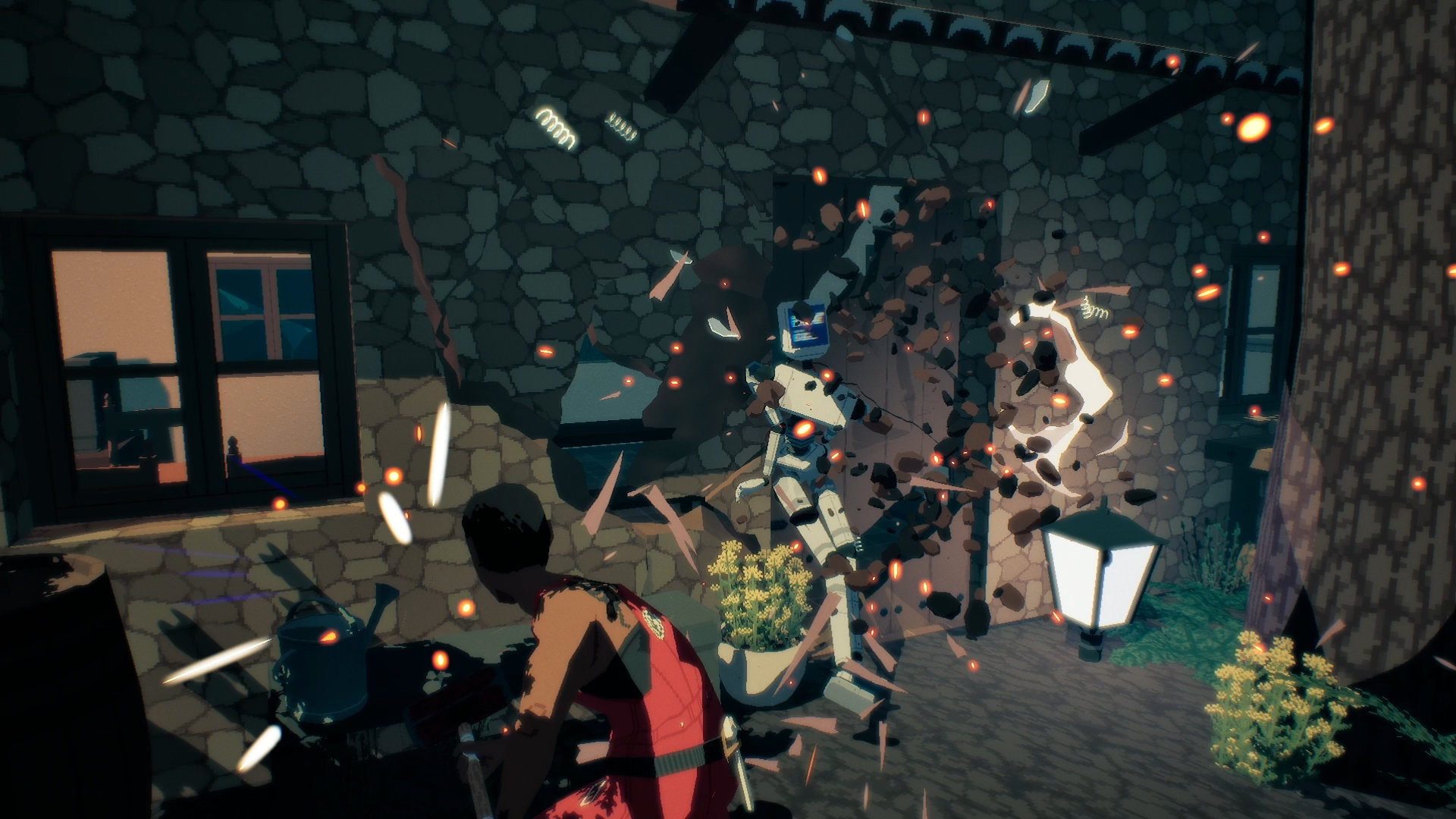
Every shot requires a minimum of preparation, every movement conveys the weight of the weapon, and every structure destroyed reacts with a satisfying amount of debris and rubble. We can’t move like an agile protagonist in a modern action game, because the game constantly reminds us that we’re carrying a heavy and decidedly impractical object. Environmental destruction is therefore one of the main pleasures of the experience. We can open passages by demolishing walls, alter the shape of buildings, and watch entire structures collapse after compromising their fundamental components.
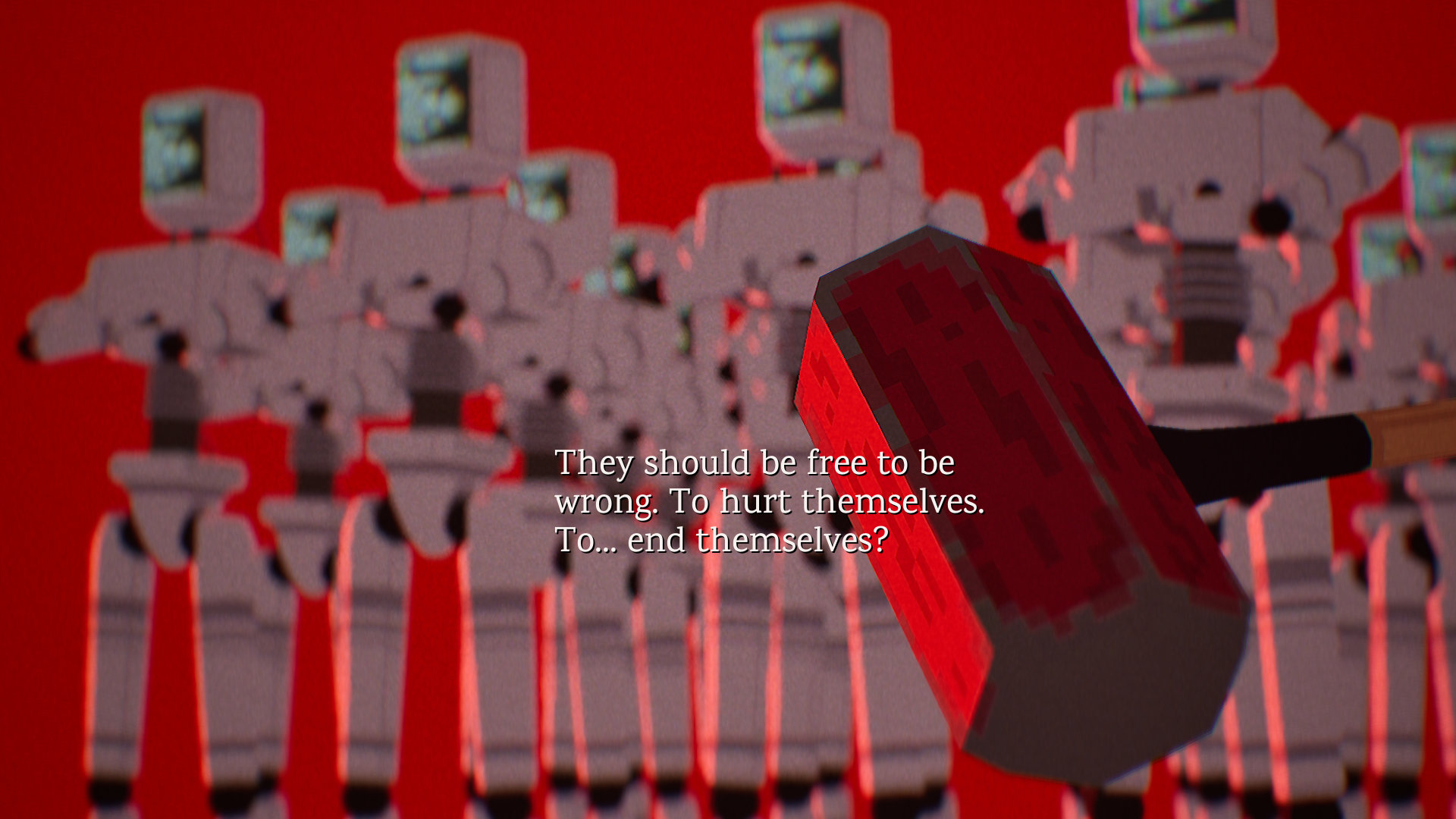
It’s hard not to feel a near-childlike satisfaction at this system, especially when the game lets us completely ignore an apparently mandatory path and create a new one by demolishing what lies ahead. But the real insight lies in tying this destructive freedom to narrative progression. The more we’re willing to dismantle the world, the greater the chances of discovering what’s hidden. A wall may conceal a passage, a room, or a memory, turning the desire to explore into a concrete motivation for using the hammer.
Of course the system isn't without issues. Fights against androids turn out rather simplistic, and after you’ve grasped the limited offensive options available, they inevitably become repetitive. The variety of situations isn’t particularly high, and some sequences seem to overemphasise a mechanic that had already expressed most of its possibilities. The pacing can also feel discontinuous. The protagonist’s deliberately heavy movement helps reinforce the physical sensation of the hammer, but during exploration of larger environments it can become a source of frustration, especially for those who want to recover every hidden narrative fragment.
The problem isn’t that the gameplay is simple, but that occasionally it takes longer than necessary to communicate something we’ve already understood.
The hardest thing to demolish is ourselves
From an artistic standpoint, Virtue and a Sledgehammer is a production capable of striking immediately. The visual direction combines stylised 3D models, essential geometries, and environments that seem to sit halfway between a truly inhabited world and an imperfect reconstruction. The village retains recognisable elements of rural architecture, but the contrast between familiar structures and schematic androids generates a constant sense of alienation.
The colour palette is particularly significant. The cool, relatively desaturated tones of the environments are constantly interrupted by a vivid red, used to represent moments of intense emotional pressure and images tied to the protagonist’s most painful memories.
It’s not just an aesthetic choice. Red seems to assume the role of an intrusive presence, something that bursts into ordinary perception and immediately alters its meaning. It’s a visual solution that deliberately symbolically evokes the unwanted and hard-to-control nature of certain mental contents. I find particularly interesting that the developers have tried to translate this emotional dimension through colour and movement, rather than relying solely on explicit explanations. Pratelle’s anxiety is not merely told, but gradually invades the player’s visual space.
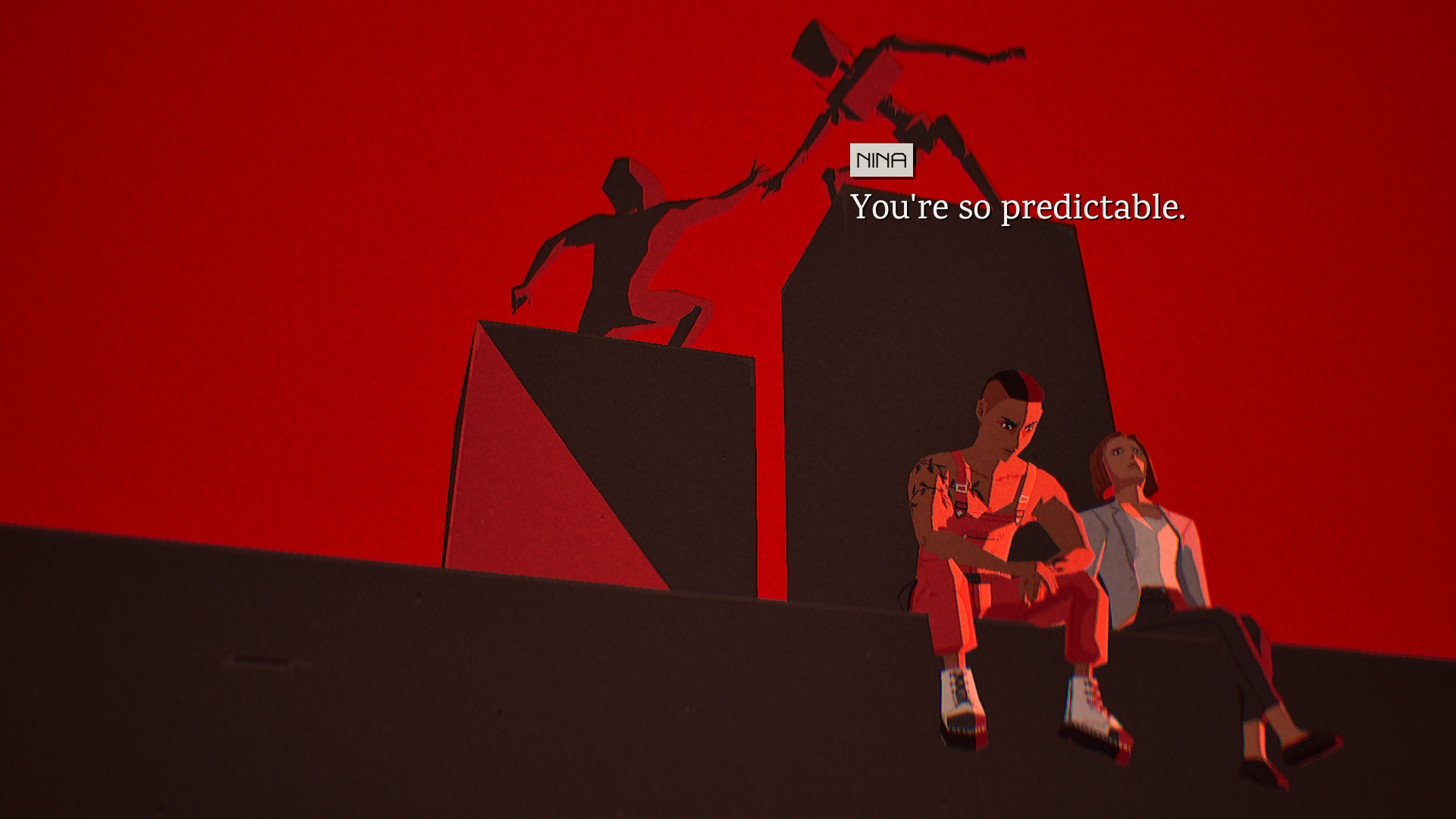
The animations also contribute to this feeling. The protagonist’s movements feel heavy, almost exhausting, while the androids possess a gesture that, precisely due to their rigidity, makes their attempts to mimic human behaviour even more unsettling. The sound design perfectly complements this approach. The soundtrack, curated by Paula Ruiz, known also as fingerspit, alternates electronic textures, synthesizers, and choral interventions that seem to gradually intertwine with the noise of the destroyed structures. It’s a musical accompaniment that avoids turning every fight into a simple adrenaline rush, instead favouring a more nuanced emotional tension. The choral voices introduce a near-spiritual element within a world dominated by machines and simulations, while the electronic components constantly remind us of that artificial dimension that Pratelle considers incompatible with his own idea of humanity.
The result is a soundtrack that doesn’t merely accompany destruction, but profoundly alters its emotional meaning, making some moments surprisingly melancholic.
In conclusion
Virtue and a Sledgehammer is one of those experiences that are hard to judge solely on their mechanics. In about three hours, Deconstructeam and Selkie Harbour build an intense and deeply human story, in which destruction becomes a tool to explore memory, trauma, and personal identity. The gameplay is simple and occasionally repetitive, but its extraordinary integration with the narrative, accompanied by an extremely evocative artistic and sound direction, manages to offset much of its shortcomings. I particularly appreciated the way the game addresses the relationship between psychological suffering, emotional regulation, and bioethical questions. The contrast between biological existence and digital consciousness raises questions about dignity, autonomy, and the very meaning of being human, without necessarily offering definitive answers. After all, pain does not automatically make us better, nor does its absence make us less human. Once again, Devolver Digital demonstrates how important it is to value independent productions capable of using video games to tell uncomfortable stories and provoke authentic reflection. Virtue and a Sledgehammer does not seek to convince us of its reasons, but forces us to question them, reminding us that we can demolish every wall of our past, but cannot erase what we have lived. And perhaps, sometimes, true courage does not consist in finding the strength to strike again, but in deciding when to put down the hammer.
About the Author