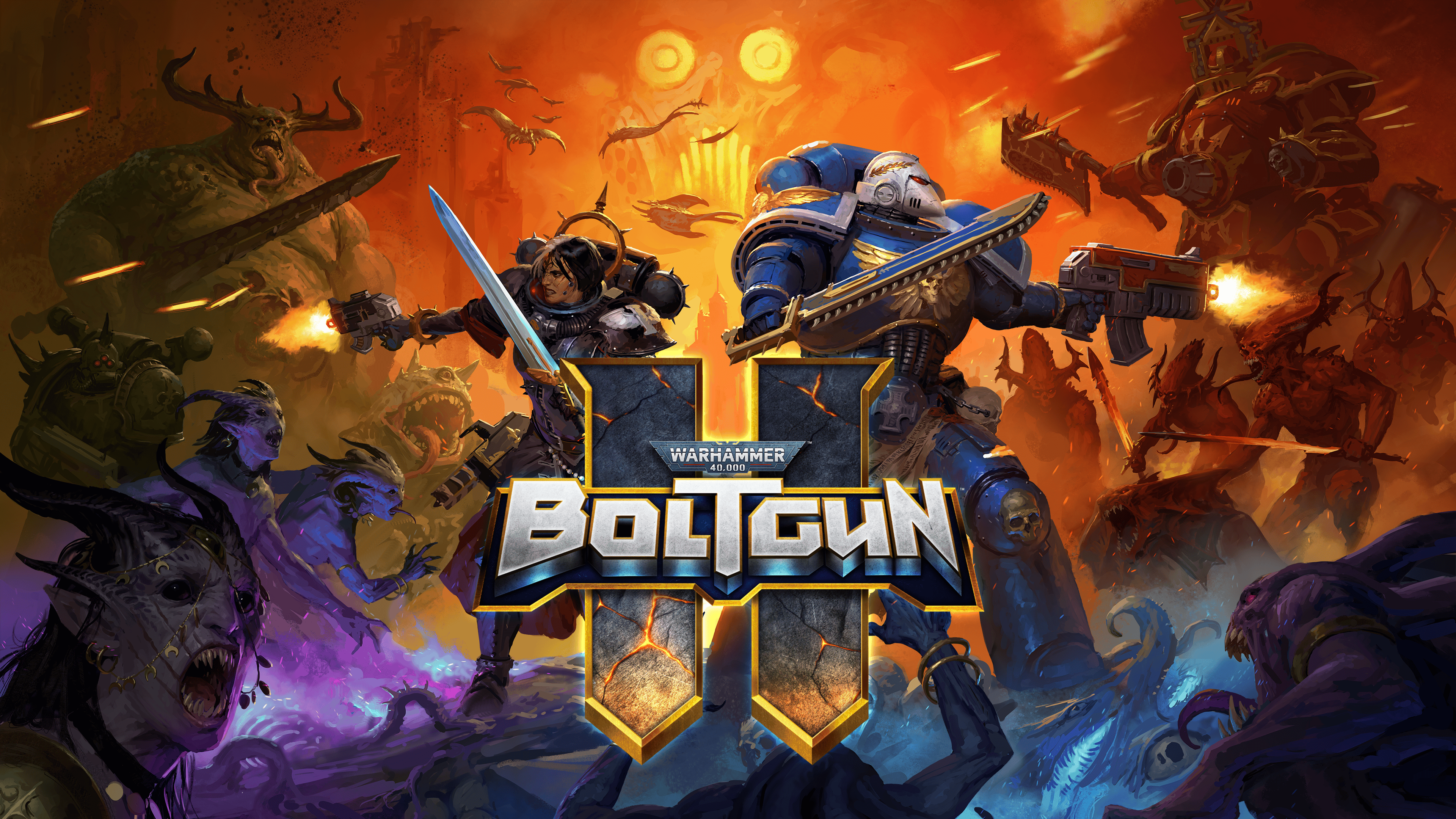
In the dark expanse of the forty-first millennium, there is no peace among the stars, only war, suffering, and a frankly irresponsible number of humans who continue to resolve any religious, political, or administrative problem through the use of oversized firearms. Moreover, when your entire government rests upon the veneration of a psychologically active corpse seated upon a colossal golden throne for roughly ten thousand years, diplomacy is likely not a priority. And precisely for this reason, Warhammer 40,000 and the boomers shooter seem to have been made for each other. Auroch Digital he had understood perfectly in 2023, when the first Warhammer 40,000: Boltgun had succeeded in transforming the grimdark imagination of Games Workshop a shoot 'em up in the old-school tradition, featuring 2D sprites, 3D arenas, demons, and a blood quantity sufficient to make Khorne extremely happy. The result was a title that perfectly captured the spirit of the early DOOM and Quake, despite showcasing a series of issues that became increasingly apparent as the adventure progressed: levels often unnecessarily labyrinthine, combat too repetitive, and enemies seemingly possessing health points directly proportional to the number of sins committed.
Warhammer 40,000: Boltgun 2 returns from those foundations, bringing back our beloved Ultramarine Malum Caedo and joining him with a new protagonist, the Sister Warrior Nyra Veyrath, for a campaign promising more enemies, more weapons, more variety — and naturally, many more opportunities to shout something extremely offensive at the Gods of Chaos. The good news is that Auroch Digital seems to have listened to much of the criticism directed at the predecessor. The less surprising news is that the game remains essentially a long, violent celebration of the Imperium and its questionable policies regarding heretical minorities.
And frankly, I couldn't have asked for much different.
This content is provided by YouTube. To view it, you must allow external content. Activation may result in data being shared with the third party.
The purification continues, brothers
The story picks up directly from the events of the first Boltgun, bringing us back into the shoes of Malum Caedo, a veteran of the Ultramarine’s Guardia Risoluta who was already responsible for turning a significant portion of the Chaos forces present on Graia into a collection of red stains on the floor. For those who don’t remember, Graia is also the forge-world where the events of the first Warhammer 40,000: Space Marine took place, starring Captain Demetrian Titus. The connection isn’t accidental and represents one of those small details that make the Warhammer video game universe particularly enjoyable when developers show they know and respect the original material.
This time, the threat assumes decidedly greater proportions. At the heart of the story we find indeed Vashtorr the Arkifane, a tremendously powerful demonic entity seeking to expand its influence across a series of worlds tainted by Chaos. Our mission is to identify and sever the corruption sources fueling its plans, traversing different planets and confronting the armies of the four major Warp powers.
Here, it’s worth taking a brief detour for fans of the lore.
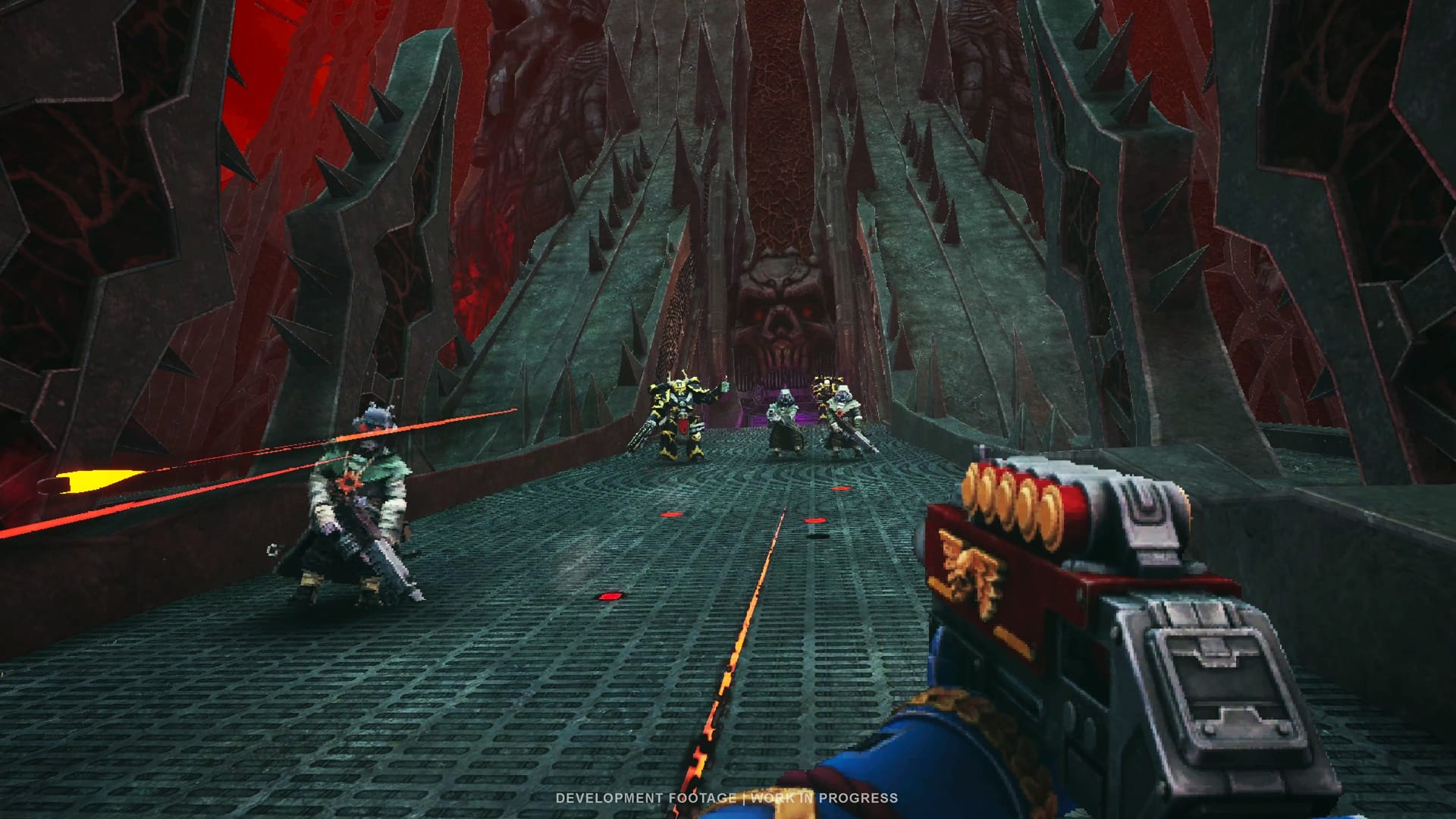
Vashtorr is not simply another Great Daemon of Nurgle or a particularly ambitious servant of Tzeentch. He is a Chaos demi-god independent of the Four Great Powers, known also as Soul Forge King and closely tied to the creation of demonic machines that plague the battlefields of the forty-sixth millennium. In the Warhammer 40,000 lore, Vashtorr embodies the darkest aspects of technological ingenuity and industrial ambition, controlling the infernal Forge of Souls and maintaining commercial relationships with various Chaos factions. His goal is to achieve a form of true divinity, which is why his relationship with the Four Great Powers is decidedly more complicated than mere subordination. Think of him as a sort of chief executive officer of the demonic war industry, only in place of unpaid extraordinary workers, he uses damned souls as industrial fuel.
A character who, by the way, had already played an important role in the Arks of Omen narrative campaign, forging a particular alliance with Abaddon the Devourer. His presence in Boltgun 2 therefore represents a very interesting addition for those familiar with the narrative universe, as it allows Auroch Digital to use enemies belonging to different factions without necessarily constructing a conflict limited to a single Chaos God. Naturally, don't expect an elaborate narrative in the Rogue Trader style. The story is told through brief interludes and essential dialogue, letting the environments, enemies, and references to lore provide the substance of the adventure. There is greater attention to context than in the first chapter, but the priority remains clear: the Emperor didn't send us here to attend a book club.
An Ultramarine and a Sister Warrior enter a bar
The biggest new feature of Boltgun 2 is probably the introduction of two playable characters, each with abilities, weapons and traits capable of significantly altering how we approach combat.
The first is naturally Malum Caedo, our beloved blue-armoured warrior returning with the same finesse of a Land Raider launched at full speed into a colony of Nurglings. Caedo continues to perfectly embody the power fantasy associated with the Adeptus Astartes: a genetically modified warrior, protected by enhanced armour and endowed with physical strength that makes any discussion about the proper use of diplomacy rather superfluous. His combat style prioritises aggression and resilience, featuring health recovery mechanics and particular effectiveness in close-quarters combat. The reliable Chainsword once again takes centre stage, and thanks to the ability to deliver particularly devastating rear attacks, it allows you to interrupt enemy offensives and chain blows capable of troubling even opponents far more resilient than typical cultists.
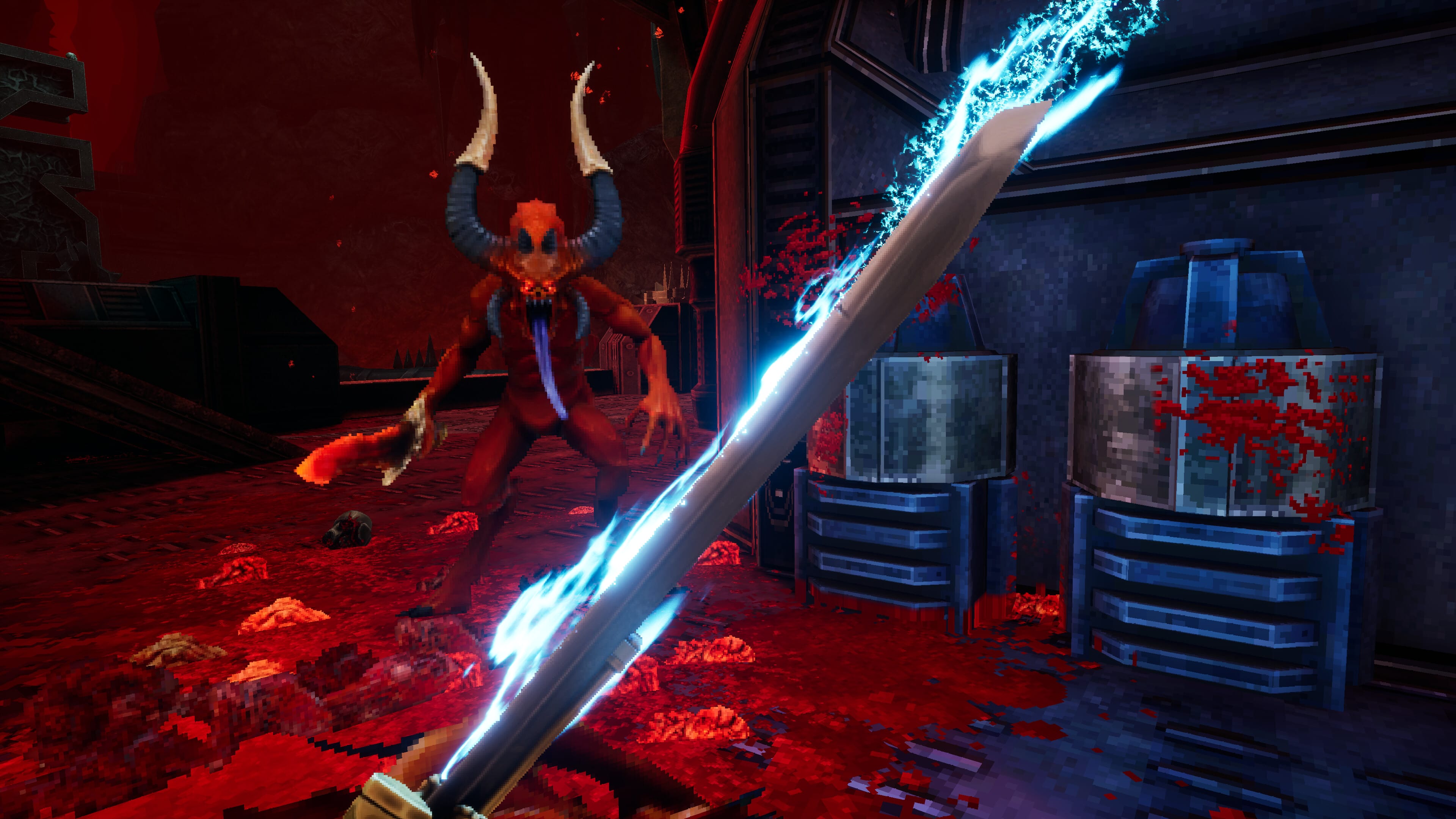
Nyra Veyrath, instead, takes a rather different approach. Belonging to the Adepta Sororitas, the famous Sister Warriors of the Imperial Ecclesiarchy, Nyra lacks the genetic modifications of the Space Marines, but compensates for this apparent disadvantage through mobility, agility, and a religious devotion that would make a particularly zealous preacher seem like a moderate supporter of religious freedom. Her offensive progression is largely centred around Faith, while her moveset prioritises rapid, continuous repositioning. The ability to slide through enemies and use speed to evade attacks gives her a noticeably different rhythm compared to Malum’s physicality.
And it’s here that one of the most fun aspects of the whole experience emerges. Nyra is a terrifying war machine. Perhaps even too much.
Despite the lore suggesting that Astartes possess physical advantages significantly superior to a common human, even when that human wears an advanced, finely crafted suit of armour, in Boltgun 2 our Sister Warrior often manages to overshadow the much more imposing Ultramarine. The credit goes mostly to her arsenal, within which stands out the Power Sword, a weapon capable of chaining extremely rapid strikes and repeatedly interrupting the animations of numerous enemies. When used correctly, it allows neutralising even particularly dangerous foes without giving them many chances to react. It’s hard not to smile imagining a genetically modified, colossal Space Marine watching a perfectly ordinary, let’s say, Imperial Sister demolish a Chaos Terminator in the time it takes to recite a prayer.
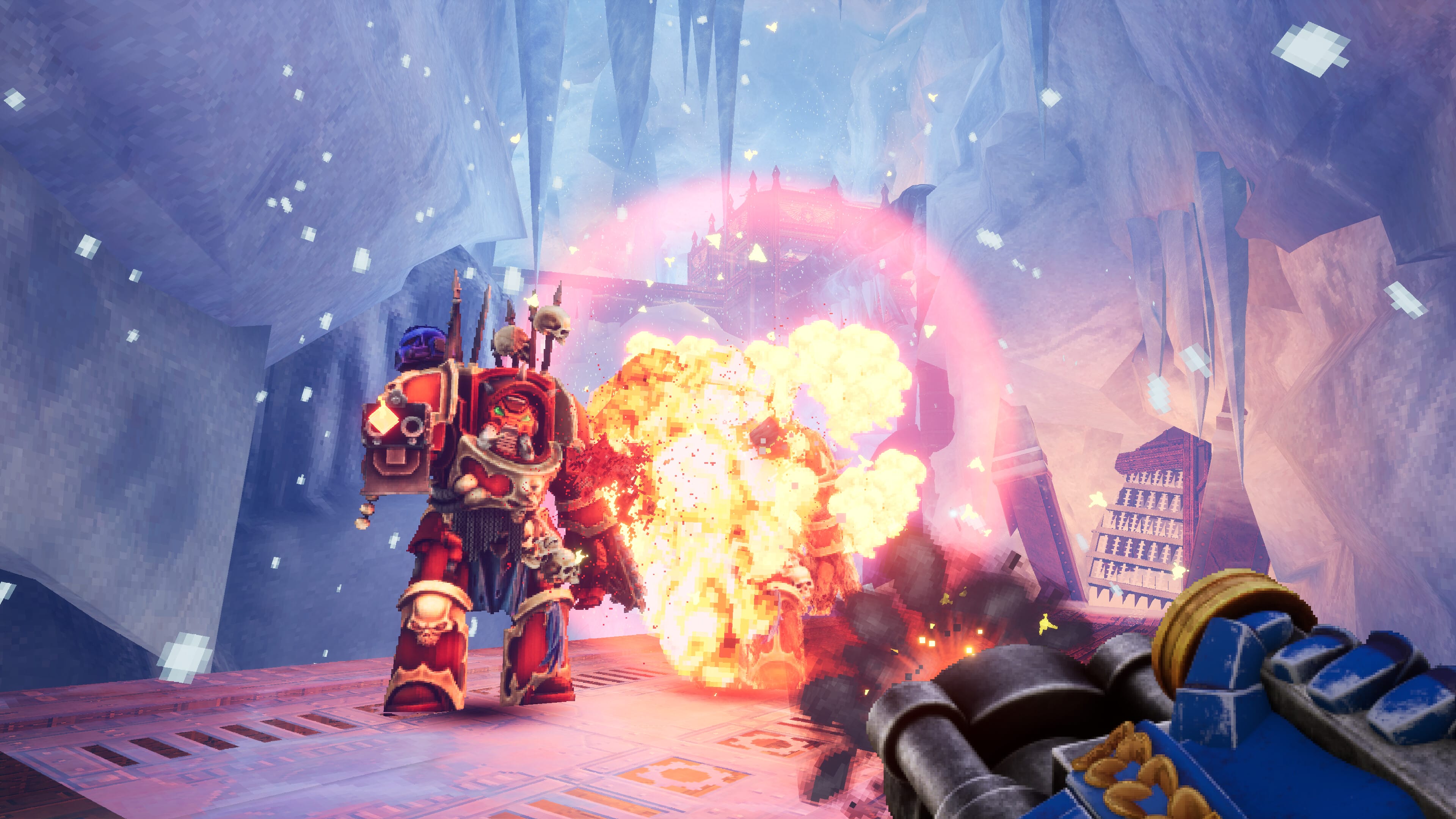
The balance between the two protagonists therefore deserved a bit more attention, especially in the higher difficulties, where Nyra's mobility and offensive potential can offer significantly superior advantages.
It remains undeniable that the decision to introduce a second protagonist works, because it’s not just a simple replacement of the 3D model. The differences in movement, equipment, and abilities genuinely make it interesting to tackle the campaign again with a different approach.
A small curiosity: Nyra is voiced by Alanah Pearce, actress and content creator who has publicly shared her passion for Warhammer,while Malum Caedo returns to be voiced by Rahul Kohli. The result is a perfectly coherent vocal performance matching the intentionally over-the-top tone of the experience..
Fewer labyrinths, more heretics to slaughter
If I had to pick the single most important improvement over the first chapter, I wouldn’t choose either Nyra or the new arsenal. I’d pick the level design. One of the most obvious problems with the original Boltgun was its level structure, which alternated long corridors and labyrinthine environments with arenas filled with large numbers of enemies. The result was often an experience that, while maintaining an extremely satisfying gunplay, lost its pace precisely when it should have accelerated.
Auroch Digital seems to have learned the lesson.
Boltgun 2 offers more readable environments, more characterised routes, and above all, a much more thoughtful distribution of encounters. The classic purification arenas haven’t disappeared, of course, but they now serve as a more balanced component of the experience rather than becoming the universal solution to any game design problem. Fights are interspersed with exploration sequences, platforming, and situations where the environment itself alters our approach.
The campaign takes us through different biomes, moving from the colossal structures of an hive-city to frozen worlds, tropical swamps, and industrial installations gradually corroded by the Warp's corruption. Particularly successful are the tropical world sections, where vegetation, mangroves, and abandoned imperial structures create an interesting contrast with the traditional gothic-industrial settings of the Warhammer universe. Some areas also introduce environmental hazards requiring greater attention to movement. Unstable surfaces, contaminated zones, and structures that can be used against enemies add a touch of unpredictability to otherwise quite conventional battles. We’re not talking about a genre revolution, but finally, the environments seem designed to host interesting battles rather than simply containing ever-increasing numbers of enemies.
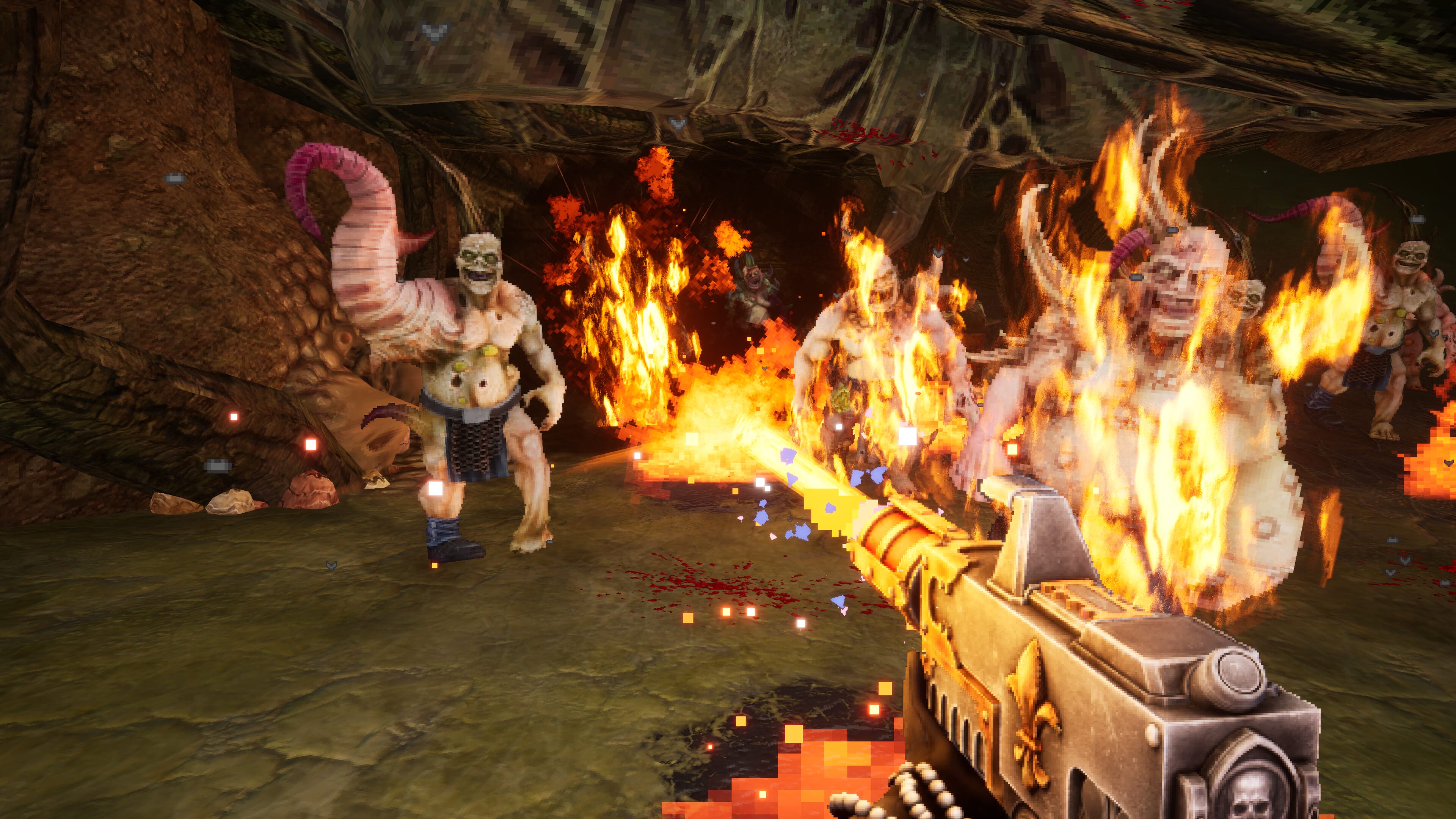
Navigation has also been improved, thanks to the presence of a map and an optional orientation system that allows you to quickly identify the path toward the next objective. A choice particularly welcome to those, like the author, who consider it absolutely legitimate to spend twenty minutes searching for a secret room, but far less enjoyable to spend the same time figuring out where the hell the door to continue is. Fortunately, there are still secrets and hidden items for those who want to explore every corner, preserving that old-school FPS element that continues to form an integral part of the series’ identity. For those who want to explore every corner, preserving that old-school FPS element that continues to form an integral part of the series’ identity.
Different paths
The campaign's structure also introduces a branching path system that allows you to choose different missions during the adventure. branching paths that lets you pick different missions during the adventure. Overall, there are 33 levels spread across different environments, but not all are necessarily tackled in a single playthrough. Certain choices can lead you to one area, temporarily excluding another, encouraging you to replay the adventure to discover the missed content. The idea fits well with the presence of the two protagonists. You can complete a first run using Malum Caedo, selecting certain paths, and then tackle a new campaign with Nyra exploring different missions. In this way, at least on paper, the second run doesn't simply rehash the exact same situations.
The problem is that the branching remains essentially a content choice, rather than a true narrative or gameplay evolution.. We’re not facing decisions capable of significantly altering the story, changing character development, or producing particularly important consequences. Choosing a path mainly means deciding which levels to play and which to postpone to a subsequent run. I don’t consider this solution necessarily wrong, especially in a title that heavily relies on replayability, but I’d have liked a slightly greater ambition. Fortunately, accessibility options allow all levels to be made available, avoiding the need to restart the entire campaign just to recover a mission excluded during the first playthrough. A feature I really appreciate, because no one should be forced to replay hours of already-known content merely to reach a level that could have been freely selectable..
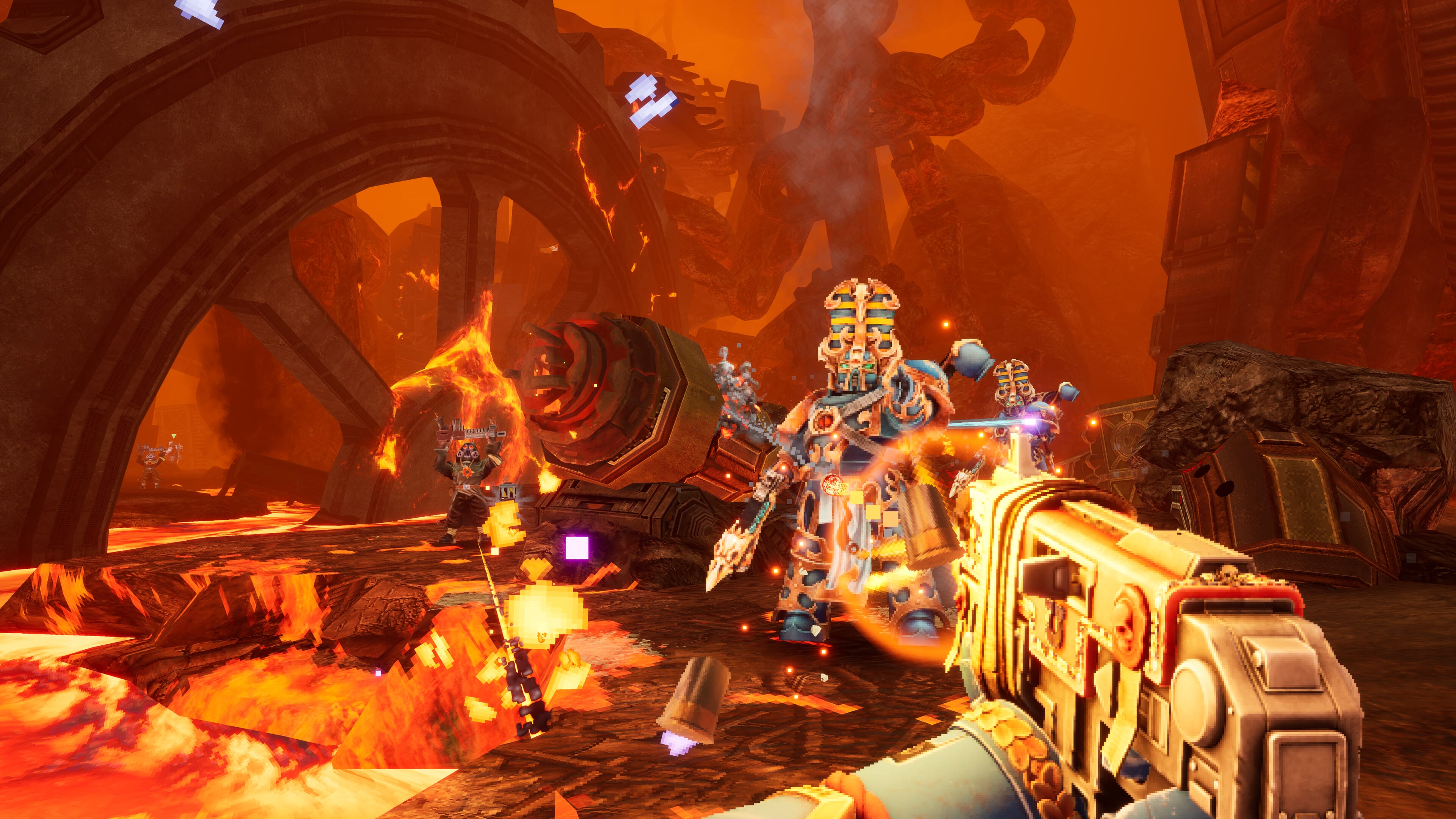
In terms of duration, a single campaign can be completed roughly in six to ten hours, depending on the selected difficulty and the time spent exploring. The presence of two characters and alternative paths can significantly extend the playtime, although some overlap between different runs remains inevitable. Boltgun 2 is a bigger and better-built sequel, but doesn't always manage to escape the feeling of being a particularly generous expansion of the original game.
On knees before the sacred Requiem
Of course, all of this would matter little if the combat system weren't up to scratch. But, praise the Emperor, the gunplay remains one of the game's most successful aspects, preserving that particular sense of power that made the first chapter instantly recognisable. Moving through the arenas, firing at anything that even remotely shows interest in the Gods of Chaos remains tremendously satisfying, especially thanks to the weapon feedback that perfectly captures the brutality of the imperial gear.
And here, let me offer another small clarification on the lore.
The famous Boltgun, or requiem rifle, is not simply a heavy machine gun. Its ammunition consists of high-calibre self-propelled projectiles designed to penetrate the target and detonate inside it. In other words, a weapon whose operating principle essentially involves convincing someone to explode from within. A completely reasonable technology for a religious institution that preaches purification.
The first Boltgun already managed to bring back some of this brutality, but in the sequel the balance of enemy resistance has been noticeably improved.Common enemies no longer require absurd quantities of ammunition to be eliminated, and often just one or two well-placed shots are enough to turn a cultist into an indistinct blob of biological material. It’s an important change because it allows weapons to retain their identity without constantly relying on sponge enemies to generate difficulty.
Auroch Digital has also abandoned the old resistance and vulnerability system which tended to make certain weapon and enemy combinations overly mechanical. The different firearms still have specific roles, but equipment selection is generally more intuitive and less reliant on calculations that risk breaking the flow.
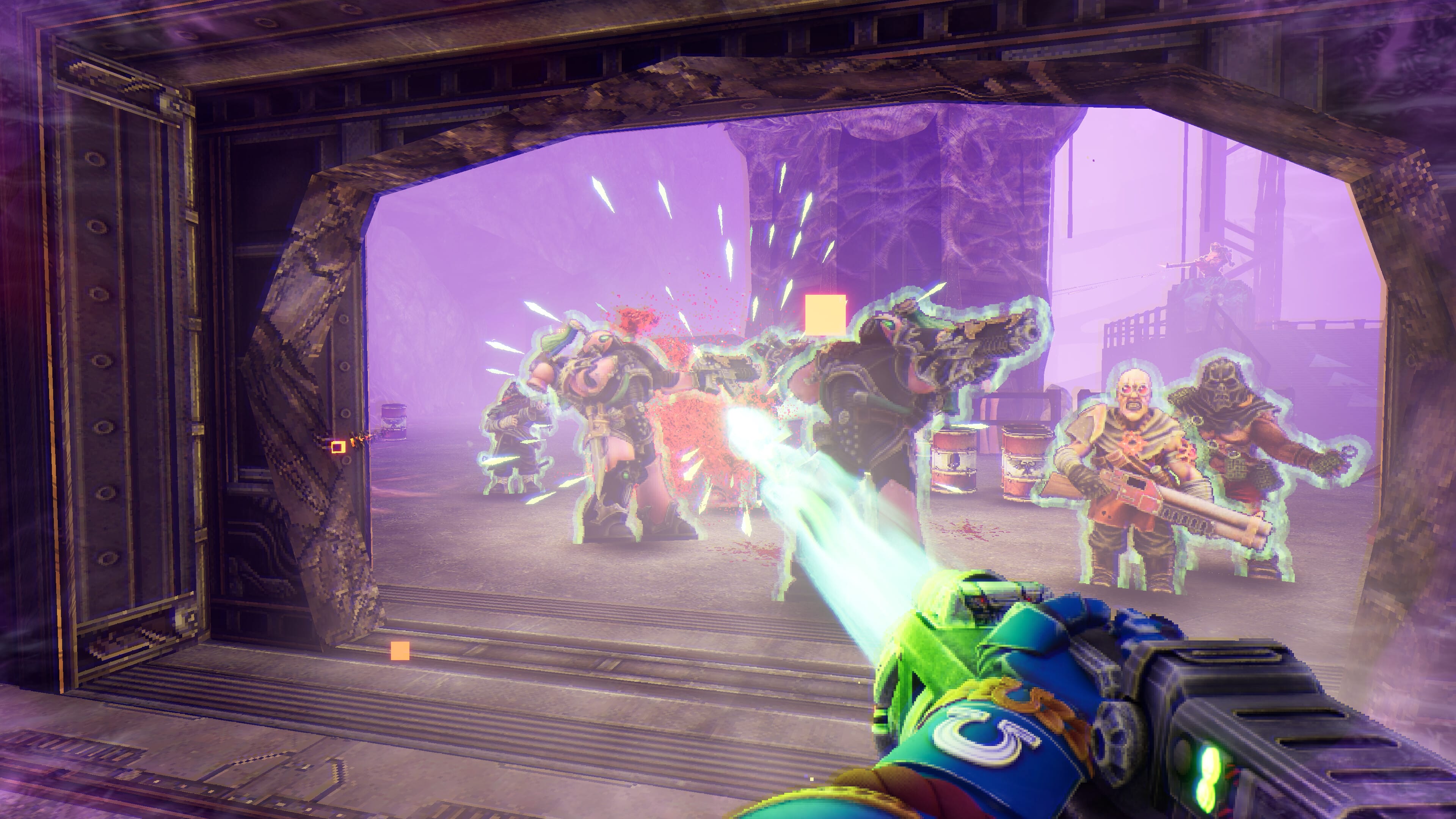
The total arsenal reaches eighteen weapons distributed between the two protagonists, including numerous icons of Imperial gear. Alongside the classic requiem we find shotguns, plasma weapons, flamethrowers and tools designed to turn large groups of enemies into quickly resolvable problems. Nyra can also make use of equipment particularly representative of the Adepta Sororitas, such as the Flamer and energy weapons, often prioritising the ability to control entire sections of the arena and interrupt enemy offensives. The result is a system in which each weapon has its own character and using the correct gear provides immediate satisfaction.
Also because, unlike what occasionally happened in the predecessor, initial weapons don't suddenly become useless after a few levels. The Requiem rifle remains perfectly capable of taking down many enemies even in later stages, while heavier weapons find their natural place against particularly resilient creatures. Some imbalance remains, especially regarding the effectiveness of Nyra's Power Sword, but overall the result is noticeably more enjoyable than before.
And frankly, seeing an enemy explode after being hit by a requiem still delivers satisfaction no other weapon will ever match.
Khorne wants blood, Nurgle wants an antibiotic
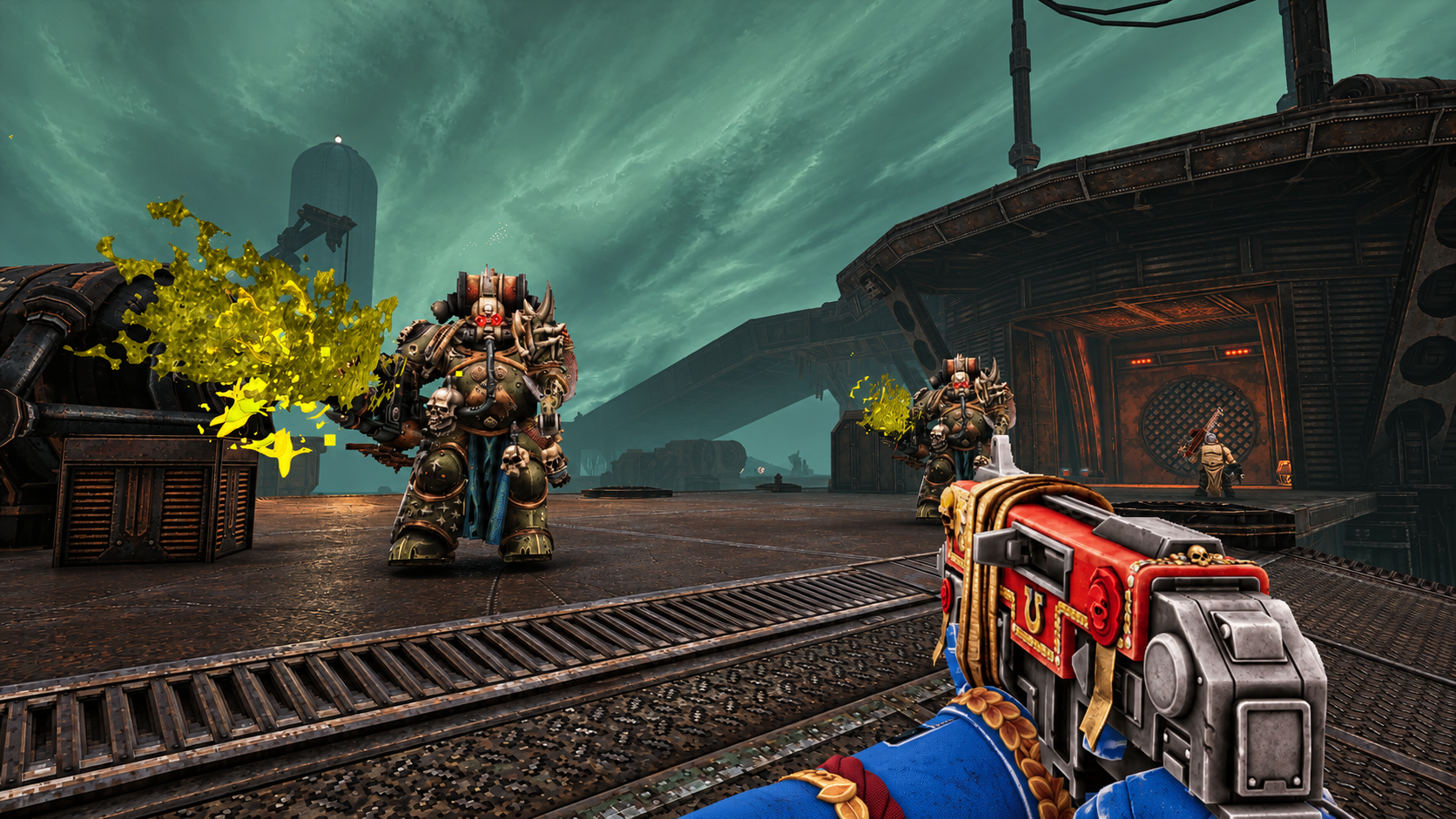
Another significant step forward concerns the variety of enemies, significantly expanded through the introduction of creatures and units belonging to the four main factions of Chaos. The first Boltgun had focused much of its attention on the forces of Nurgle and Tzeentch, while this time Auroch Digital broadens the repertoire, allowing us to face followers and demons of Khorne and Slaanesh. This choice represents an improvement not only aesthetically, but also gameplay-wise.
The different deities of the Warp embody very specific traits that naturally influence the behaviour of their respective servants. Khorne, the God of Blood, favours violence, fury and close-quarters combat. His Bloodletters charge the player with considerable aggression, while the terrifying demonic warhorses known as Juggernauts make certain situations particularly dangerous, especially when movement space begins to shrink. Anyway, one of his followers’ most famous mantras is "Blood for the God of Blood", and I’d confidently rule out any interest in a peaceful resolution to the conflict.
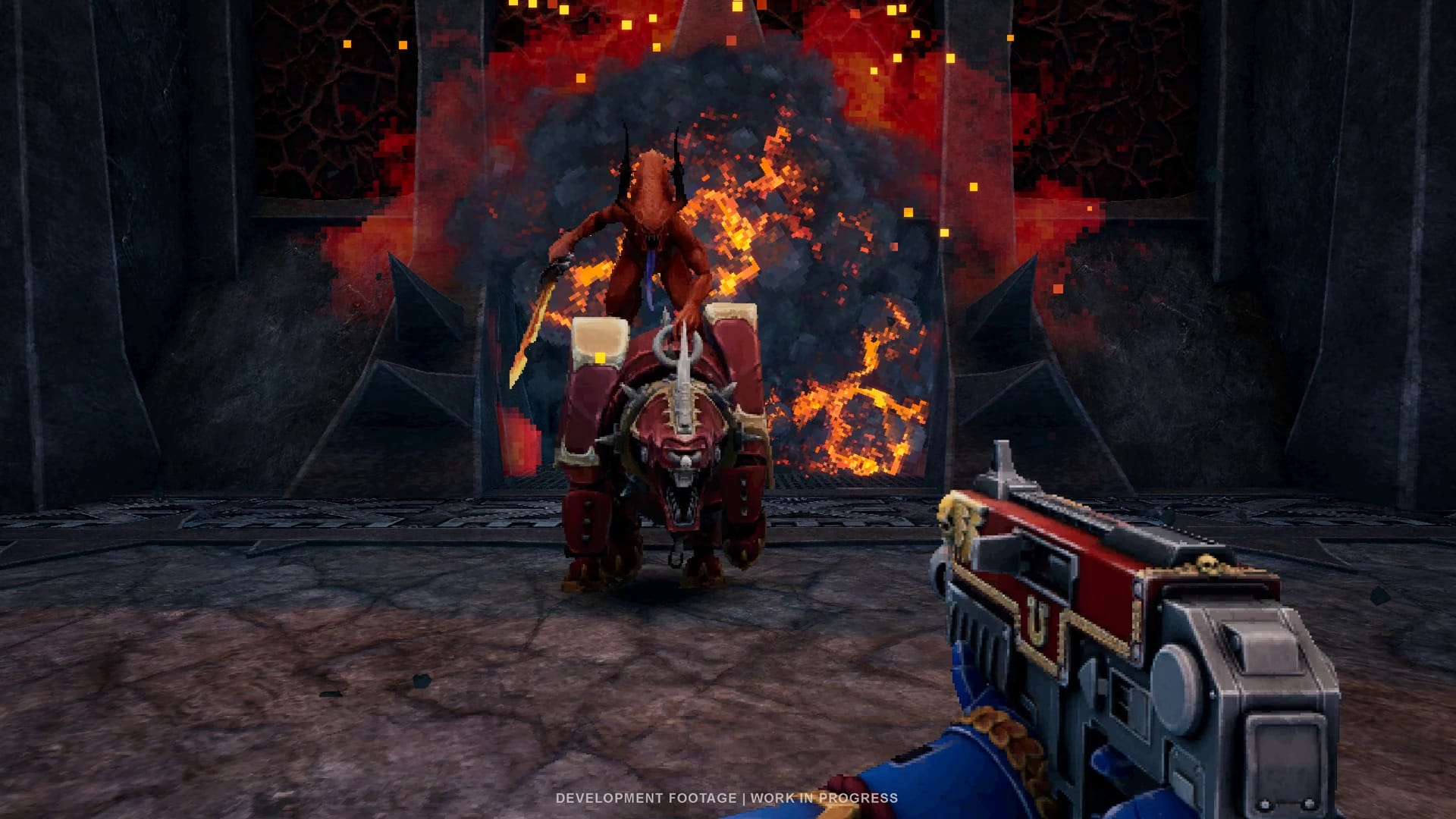
Nurgle, on the contrary, continues to embody decay, disease, and resilience. His creatures often prefer constant pressure, exploiting high survival capabilities and attacks capable of contaminating their surroundings. Naturally, the Nurglings return — adorable little demons that seem to have been designed by combining a particularly mischievous child with a disease best avoided during a hospital visit.
Tzeentch, the Grand Manipulator, brings unpredictability through sorcery and ranged attacks to the battlefield. His forces introduce threats that demand greater attention to positioning and projectile management, forcing us to quickly identify the most dangerous opponents.
Finally, we find Slaanesh, the Prince of Excess, whose servants prioritise agility, speed and attacks capable of catching the player off guard. The Daemonettes embody this philosophy perfectly, while the famous Noise Marines, allied with the Emperor's Children, use sonic weapons that turn the battlefield into something very much like a metal concert staged within a warzone.
The presence of all four Chaos powers therefore allows for more varied battles., alternating close-quarters assault specialists, tough units, long-range enemies, and fast-moving creatures across the arena.
There’s also a greater focus on representing the different traitor legions, with Chaos Space Marines, Terminators, demonic machines and particularly powerful creatures that help make each setting recognisable even through its inhabitants. Naturally, when all these elements are combined into a single fight, the result can become quite chaotic. Some encounters still rely more on the number of enemies than on the complexity of their interactions, and the AI doesn’t always shine for its sophistication. But the repetition problem has been noticeably reduced, especially thanks to a greater attention to the composition of the fights.
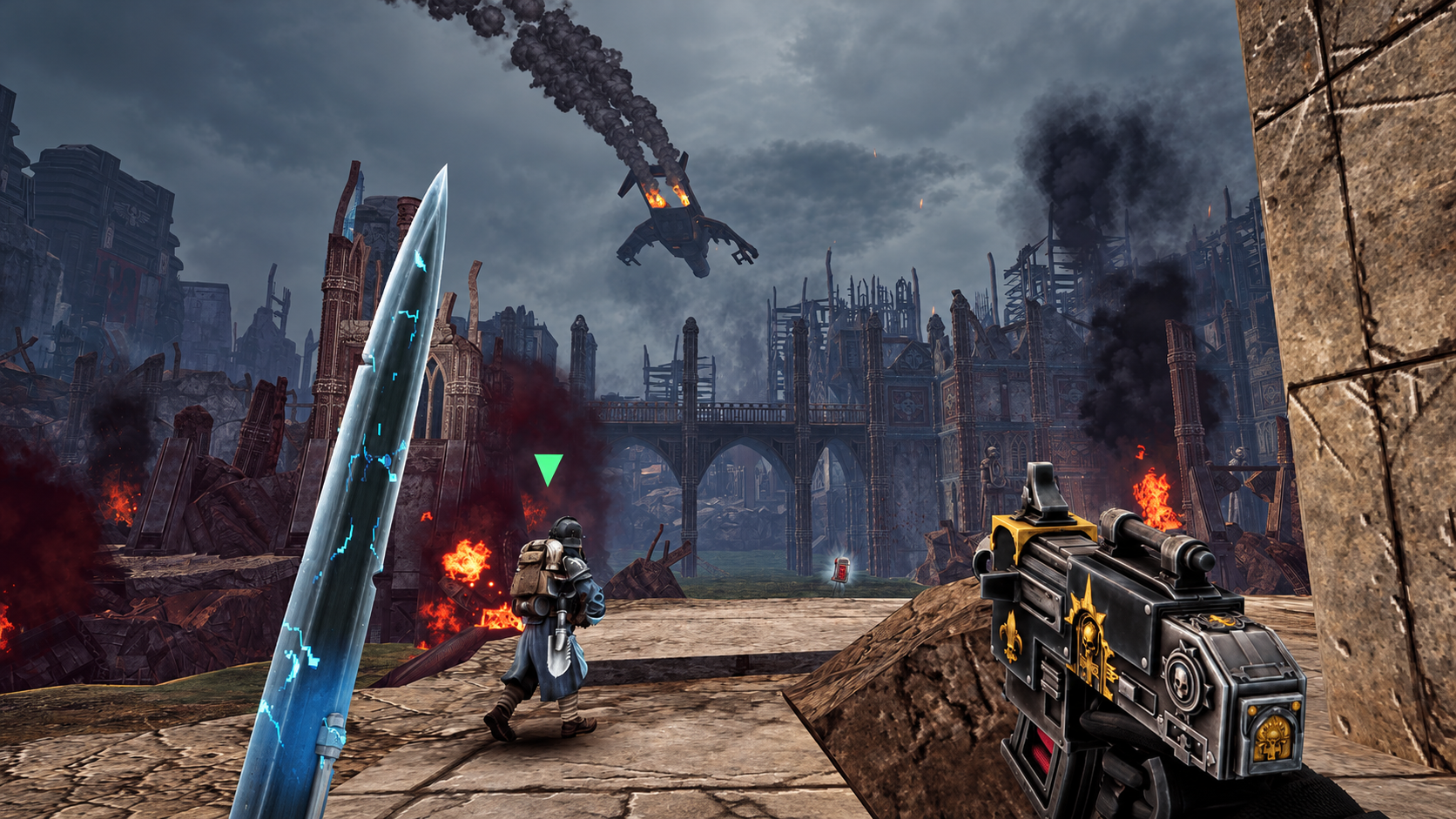
A welcome addition is also the presence of Imperial allied soldiers in some missions, including the famous Death Korps of Krieg. Death Korps of Krieg. For those unfamiliar with them (but I doubt it, if you’ve made it this far) they are regiments of the Astra Militarum from a world devastated by nuclear war, famed for their gas masks, trench warfare, and a personal sacrifice ethos that makes other Imperial regiments seem particularly focused on workplace health and safety. Seeing them fight alongside our protagonists adds a more battle-hardened dimension to the clashes, reminding us that the war against Chaos is not fought solely by lone Space Marines capable of wiping out entire armies with minimal assistance.
Certainly, given how lethal Malum and Nyra are, their contribution occasionally risks reducing to that of particularly brave cameos, but the visual impact remains successfully achieved.
Exterminatus: why suffering clearly never suffices
The rebalancing of combat has positive consequences for difficulty management too. Boltgun 2 offers four distinct levels, culminating naturally in Exterminatus, a term that fans of the lore will immediately associate with the most definitive imperial solution possible: the systematic destruction of a planet deemed irrecoverably lost. A perfectly reassuring lexical choice to denote the most difficult mode.
Compared to the predecessor, higher difficulties generally benefit from a more balanced distribution of enemies and less reliance on foes with excessive health points. This keeps battles dynamic and makes mastering movement, dodging, weapons, and specific character abilities more important.
Not everything is perfectly balanced, of course.
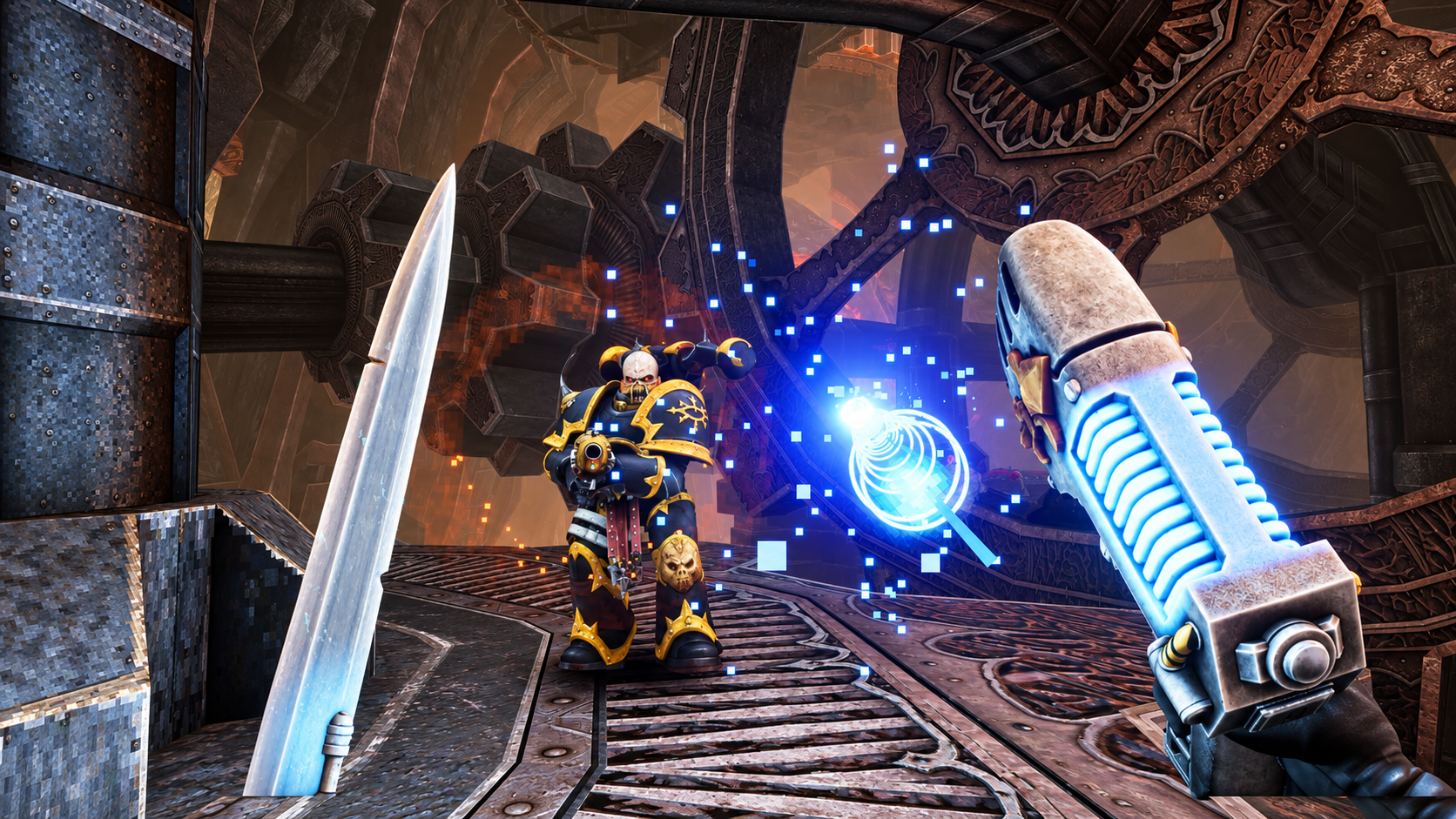
Some encounters can still turn into rather chaotic situations, and the effectiveness of certain Nyra weapons risks making some sections noticeably easier than when using Malum Caedo. Also, some particularly tough enemies occasionally slow the pace, while the AI occasionally displays unconvincing behaviour, especially in more open environments.Overall, however, Boltgun 2 succeeds much more often in building a challenge based on managing threats rather than simply needing to empty entire magazines at the same enemy.
A significant improvement for a shooter that relies on speed and aggression as its core traits.
Technically speaking
From an artistic standpoint, Warhammer 40,000: Boltgun 2 continues to represent one of the most successful interpretations of the grimdark aesthetic applied to retro-style video games. Auroch Digital preserves the distinctive blend of 3D environments and 2D sprites that defined the first chapter, enriching it with a greater variety of settings, animations, and visual situations. The result continues to immediately evoke the shooters of the 1990s, but without passively replicating their characteristics. Boltgun 2 uses the visual language of the past to represent an extremely complex universe, demonstrating how pixel art can perfectly convey the brutality of Warhammer 40,000 without necessarily requiring 3D models composed of millions of polygons.
The death animations deserve special mention, especially for the generous amount of blood and biological fragments scattered across the battlefield after every particularly powerful shot. Weapons offer excellent visual and audio feedback, while the variety of environments helps avoid that sense of uniformity which occasionally characterized the predecessor.
As for the version, PC, our reference setup remains composed of NVIDIA GeForce RTX 5080, AMD Ryzen 7 9800X3D and 32GB of DDR5 RAM, hardware far more than sufficient for the game’s requirements. It’s not a title aiming to break the most modern GPUs, but rather one designed to ensure smooth performance even when the screen is completely filled with bullets, explosions, and less-than-recommended creatures.
A mention also goes to Steam Deck, the platform for which the game has obtained Verified certification, with a generally 60 FPS experience, barring some dips in particularly demanding situations. Considering its level structure and immediate gameplay, Boltgun 2 seems particularly well-suited for portable play, albeit naturally requiring some compromise compared to a desktop setup.
The audio department is also excellent, particularly in terms of the weight conveyed by the different weapons. The Requiem produces a sufficiently substantial sound to make us feel the power of its ammunition, while Chainsword, plasma weapons and flamethrowers deliver convincing and consistent effects that match their function. The voice acting maintains that deliberately exaggerated tone that defines the Warhammer universe, with protagonists ready to dispense threats, prayers, and declarations of faith while turning entire armies into problems for industrial cleaning crews.
In conclusion
Warhammer 40,000: Boltgun 2 is one of those sequels that demonstrate how important it is to listen to criticisms aimed at the predecessor without abandoning what made it successful. Auroch Digital took a already extremely fun boomers shooter, identified much of its flaws, and worked to fix them through a significantly improved level design, more balanced encounters, greater variety of enemies and a weapon arsenal that more effectively recovers the brutality of the Imperial weapons.. The introduction of Nyra Veyrath represents another of the most interesting additions, as it allows you to reinterpret the campaign through a style more focused on mobility and attack speed, distinguishing itself from Malum Caedo’s power and resilience. The problem is that Boltgun 2 doesn’t always manage to turn these innovations into a true evolution of the formula..
The branched campaign boosts replayability, but its consequences remain rather superficial. The two protagonists offer different experiences, but their balance isn't always flawless, especially considering how devastating Nyra can be in the hands of an experienced player. Some encounters still rely too heavily on the number of enemies on screen, while the narrative remains little more than a pretext to take us from massacre to massacre. It thus remains that feeling that, in several respects, we’re facing an ambitiously expanded first Boltgun rather than a radically different sequel. an ambitiously expanded first Boltgun rather than a radically different sequel.
But is it really a problem?
Personally, I don't believe so.
Not every sequel needs to reinvent its genre, especially when the foundations are already solid and the audience has proven to appreciate them. Sometimes, it’s enough to understand what worked, remove most of the obstacles that prevented full enjoyment, and introduce enough new elements to make the experience feel fresh again. Boltgun 2 is faster, more varied, better balanced, and above all, much more aware of its own identity than its predecessor. The gunplay remains incredibly satisfying, the Warhammer universe’s presentation shows a keen attention to lore that will delight fans, and the presence of two protagonists allows players to approach the campaign with sufficiently different strategies to justify at least a second playthrough. Of course, it would have been interesting to see greater progression in abilities, some additional system for permanently customising gear, and a campaign branching point that could influence the adventure more concretely. But when you find yourself facing a group of Chaos Terminators, armed with a Requiem rifle in one hand, a Chainsword in the other, and the spiritual encouragement of a God-Emperor who rarely responds to our prayers, all these considerations inevitably lose part of their significance.
Nevertheless, in the 40th millennium there is no peace among the stars, while in the 21st there are still excellent boomers shooters.