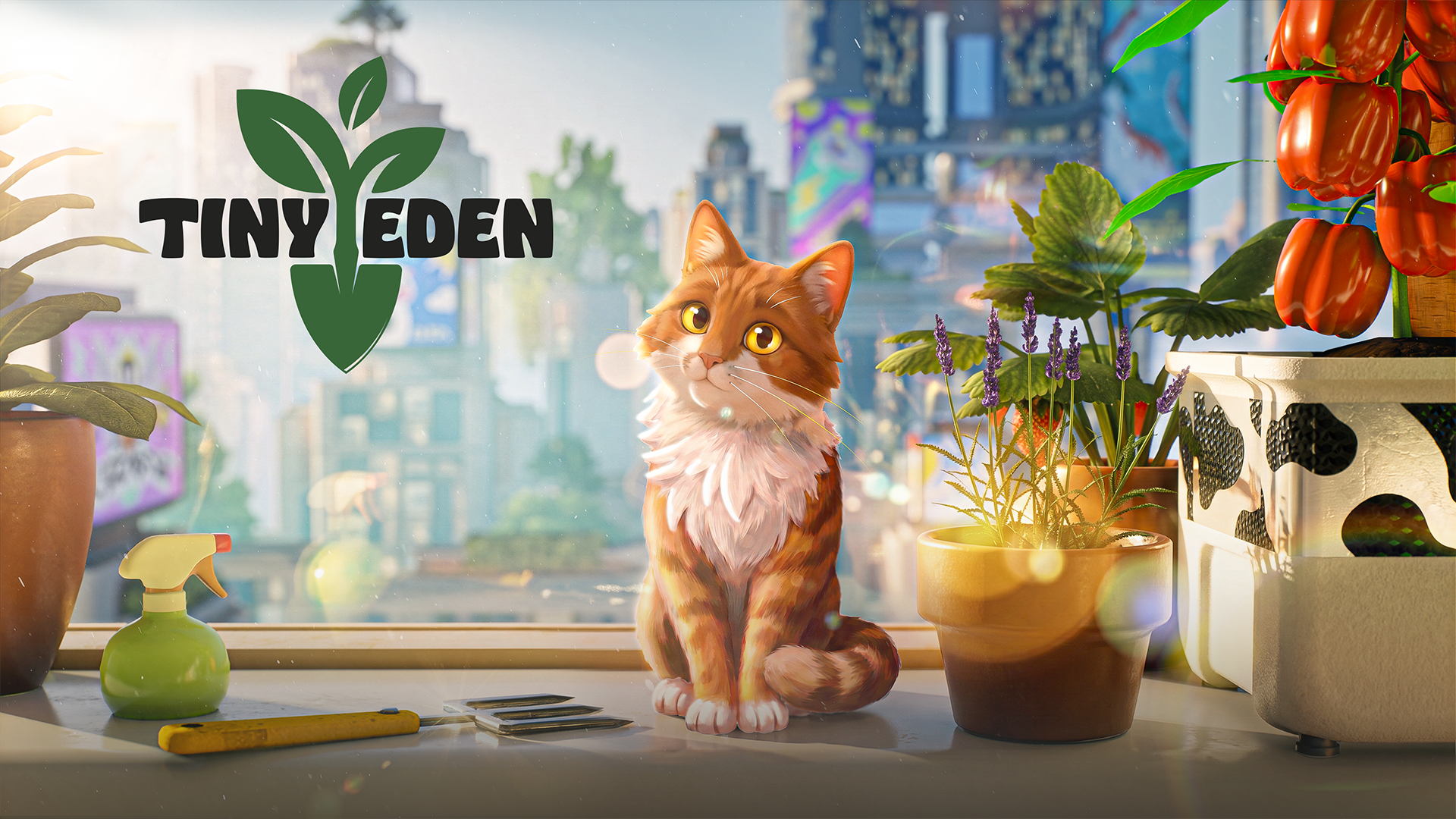
The genre of the cozy game and of farming sim is now packed with titles that focus on relaxing atmospheres, farming, and decoration. Tiny Eden tries however to shift perspective: instead of handing the player a classic farm nestled in the countryside, often attached to a small village, it offers a simple apartment at the heart of a futuristic city. Developed by Bajka Games and published by Digital Vortex Entertainment, the game builds its identity around plant cultivation, cooking, and the progressive expansion of your own apartment.
This content is provided by YouTube. To view it, you must allow external content. Activation may result in data being shared with the third party.
Grow, cook and make your apartment grow
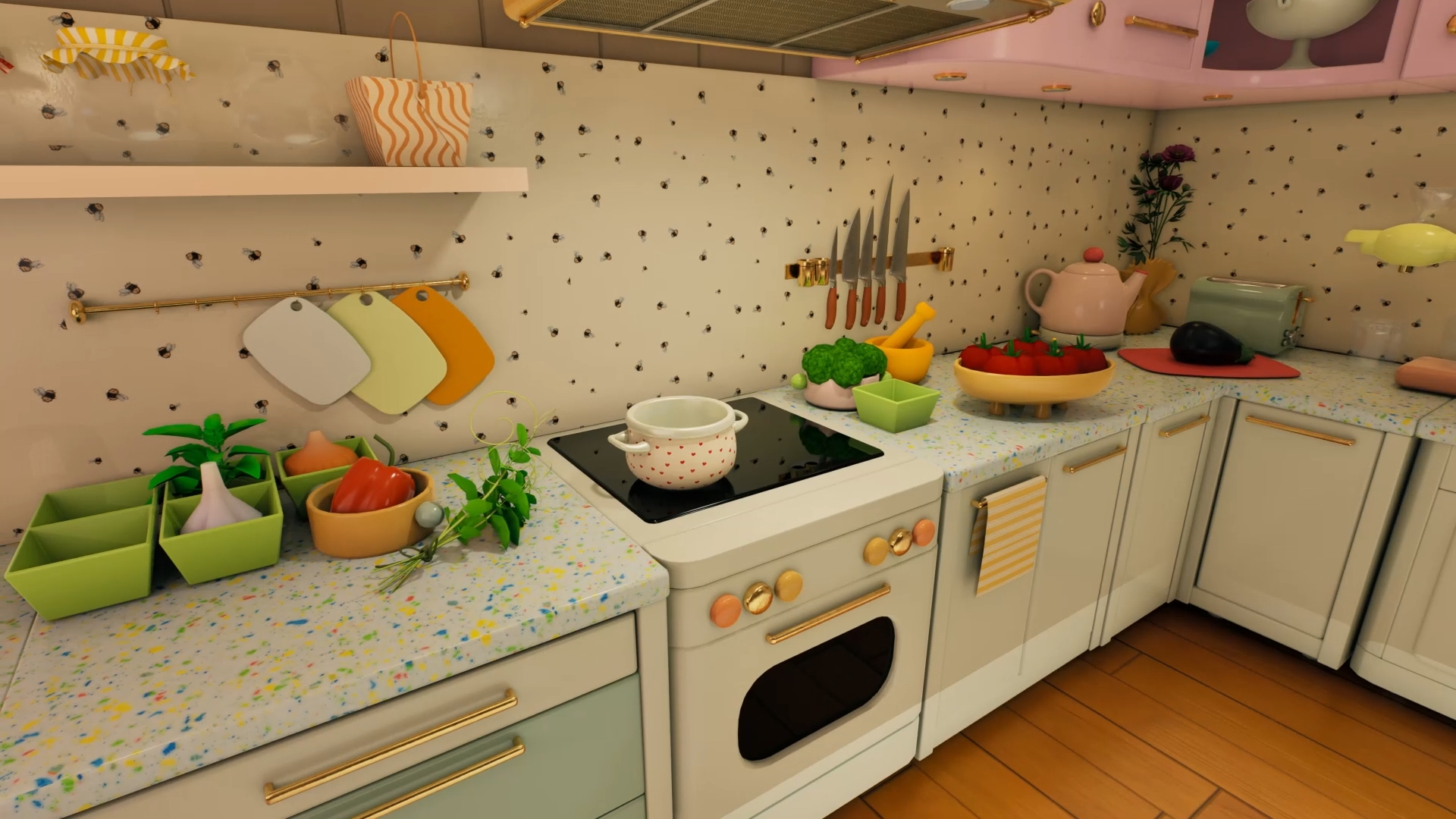
The gameplay of Tiny Eden revolves around an extremely simple cycle: grow, harvest, cook, and sell. Plants, however, require a certain attention. You must choose the pot, the type of soil, the appropriate amount of light and temperature for each cultivation. Once you’ve harvested the fruits of your efforts, you can take them to the kitchen and use them as ingredients in real meals.
And it’s precisely the cooking that represents, at least in the early hours, the game’s most successful mechanic. Turning what we’ve cultivated into a dish to sell finally gives cultivation a concrete purpose: we’re not simply harvesting products because the game asks us to, but because we need them to complete recipes and orders, and to earn the money necessary to progress. The loop therefore proves reasonably simple to grasp, yet surprisingly satisfying.
A progression that encourages you to keep going
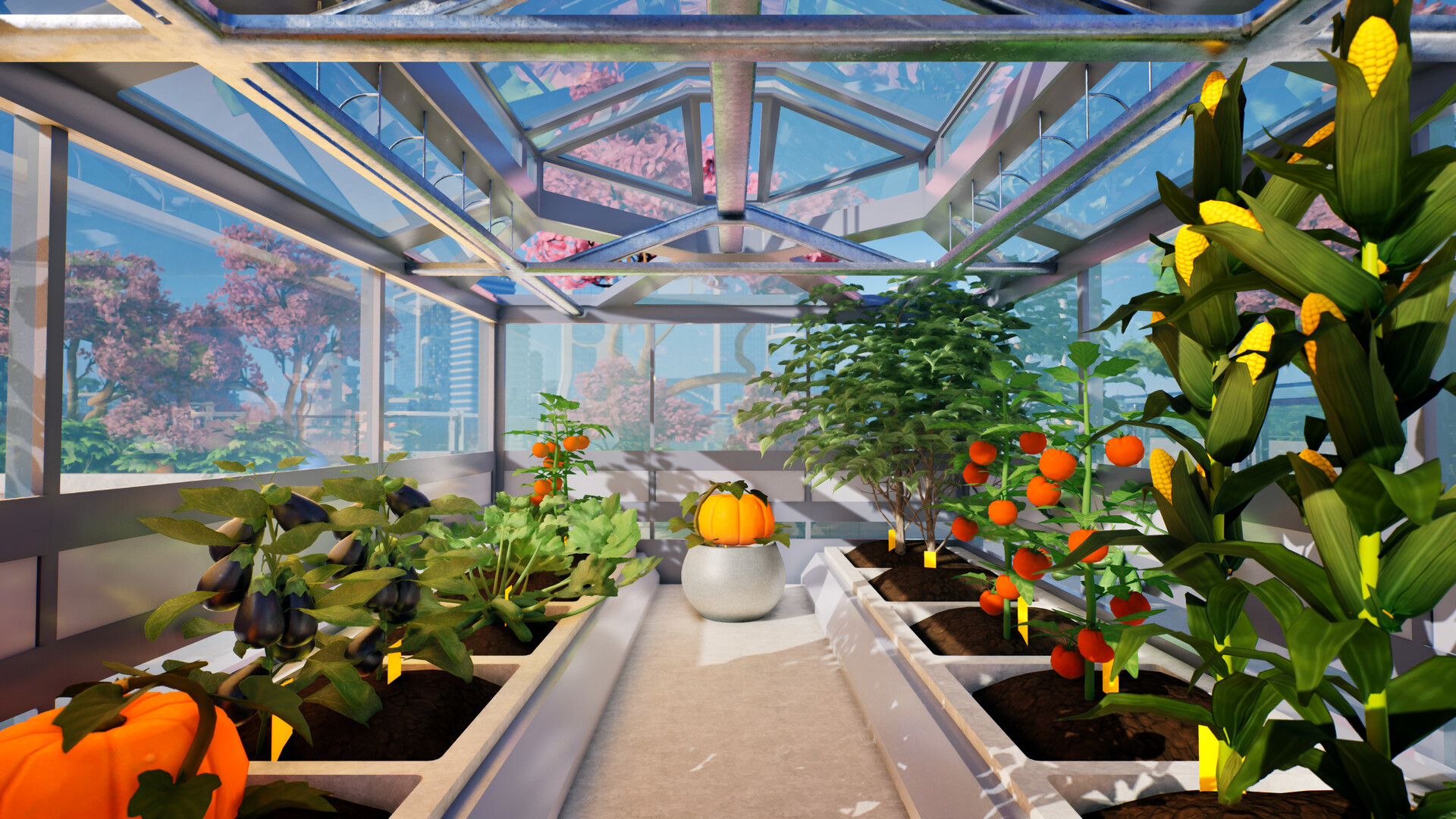
Progression in Tiny Eden unfolds mainly through money, reputation, new recipes, and new plants. Completing orders from the characters living in our building unlocks rewards that enable further cultivation possibilities and, above all, new apartment areas. It’s the house expansion that creates that classic “anticipation” feeling typical of the best cozy games. At the start, we’re limited to just a few pots and a small balcony, but as we proceed, we can unlock new rooms, more space for cultivation, and eventually even a roof greenhouse.
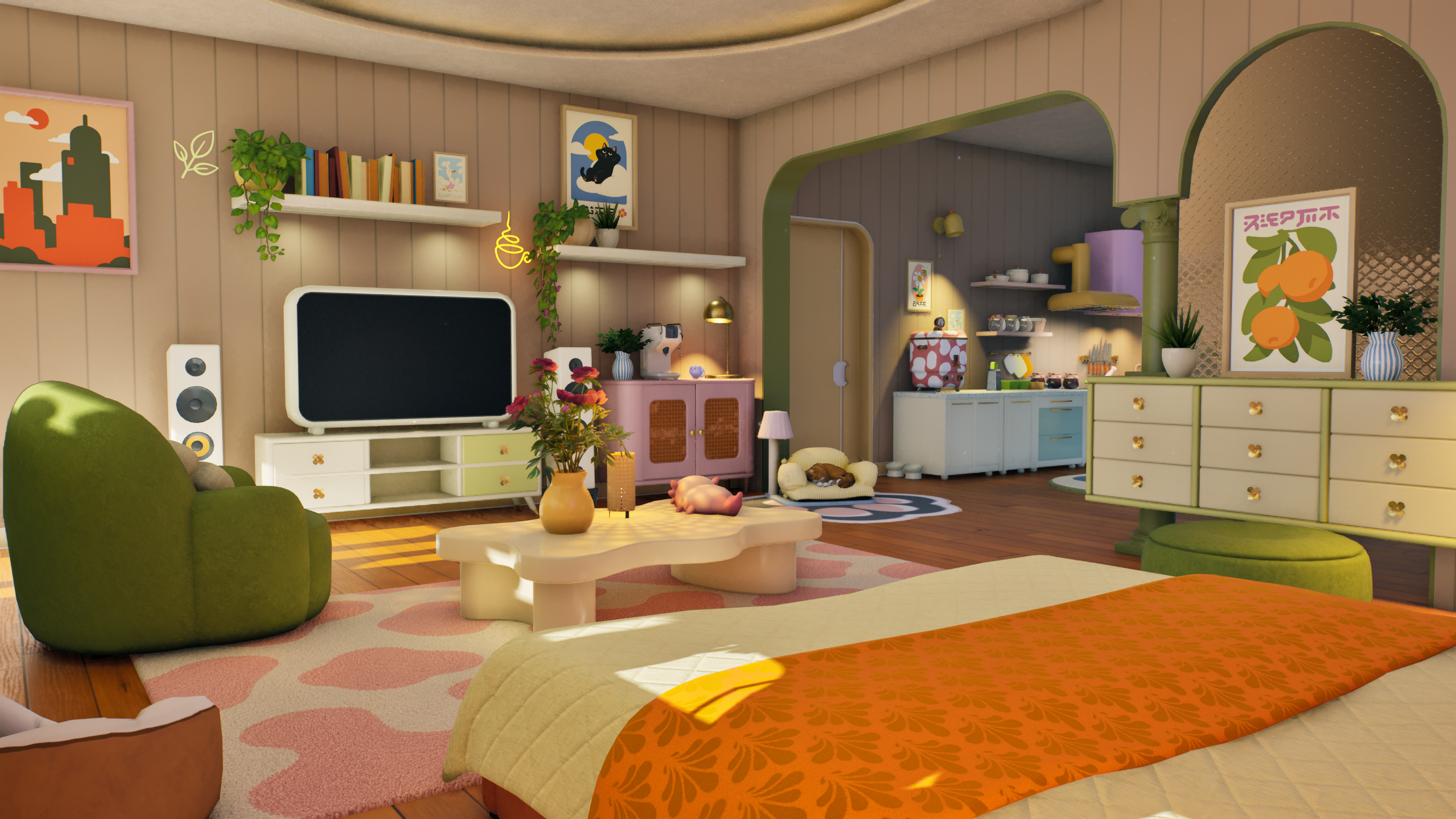
The decoration of the apartment also contributes to progression, allowing the player to gradually transform the initial small cubicle into a more personal home. The tutorial also does a good job introducing the various mechanics without overwhelming the player with information from the very first minutes.
The main problem with Tiny Eden is precisely the system that should drive progression: the economy. The money earned from selling products and dishes often seems too meagre in comparison to the cost of unlocking new content. The result is that some stages can turn into a minor grind, slightly undermining the relaxing feeling created by other aspects of the game. The issue is particularly evident because the rest of the progression system is well-structured. The desire to unlock a new room or a new recipe exists, but the pace at which money accumulates doesn’t always keep up. It’s not a flaw that ruins the experience, but it’s definitely the aspect that most needs to be addressed.
A truly particular atmosphere
From an artistic standpoint, Tiny Eden truly stands out from the crowd. The setting in a futureist apartment within a large city offers an interesting variation compared to the classic countryside farms and, above all, it doesn’t seem to be merely an aesthetic change: the entire progression is built around the expansion of our small apartment.
The art direction is vibrant and pleasant, while the music accompanies the experience without feeling intrusive. The sound design also contributes to the relaxed atmosphere, with clearly identifiable effects for actions like watering and cooking. The animations, however, are quite simple but appropriate for the production scale. At times, they might appear a bit mechanical or incomplete, a clear example being some interactions with our cat, but without causing significant gameplay issues. An element less successful concerns the character models: all visitors to the apartment share the same face, a choice that slightly clashes with the care taken in the rest of the environment.
Final thoughts
Tiny Eden is a cozy farming sim that stands out thanks to its original setting and a gameplay system deeper than one might expect from first impressions. The cycle cultivation, cooking, selling, expansion works particularly well, with cooking likely being the most satisfying mechanic of the whole experience. Also, the ability to unlock progressively new rooms and a greenhouse on the roof offers a good incentive to keep going.
The main obstacle is represented by the economy, which in the early hours feels a bit too slow and risks turning a relaxing experience into unnecessary grinding. Added to this are some less refined details, such as character models and a few poorly executed animations. The price of €15,49 remains adequate for what the game offers. For those seeking a relaxing experience but wanting something different from the classic countryside farm, Tiny Eden is certainly a title worth considering.
About the Author