Echoes of Mora is an exploratory narrative adventure developed and published by the studio Selkies Interactive. The story transports us into the evocative ruins of a village completely submerged underwater, placing us in the midst of the mysterious disappearance of a boy, an event introduced from the very beginning of the adventure. We will be able to move between the depths of the present and the memories of the past, with the task of guiding Mora, the missing boy’s sister, in an attempt to uncover what happened.
The structure of the experience therefore focuses primarily on the environmental storytelling and the gradual discovery of events. We are not facing an adventure built around combat or particularly complex systems, but a title that aims to accompany the player through a short, collected story, using the environment as the main tool for telling it.
The submerged village represents far more than just a simple setting. Its residences, the items left by the inhabitants, and traces of the past gradually help reconstruct what happened before the adventure began. The player is thus encouraged to observe their surroundings and connect the elements discovered during exploration, while the story of Mora unfolds slowly.
This content is provided by YouTube. To view it, you must allow external content. Activation may result in data being shared with the third party.
Between two temporal dimensions
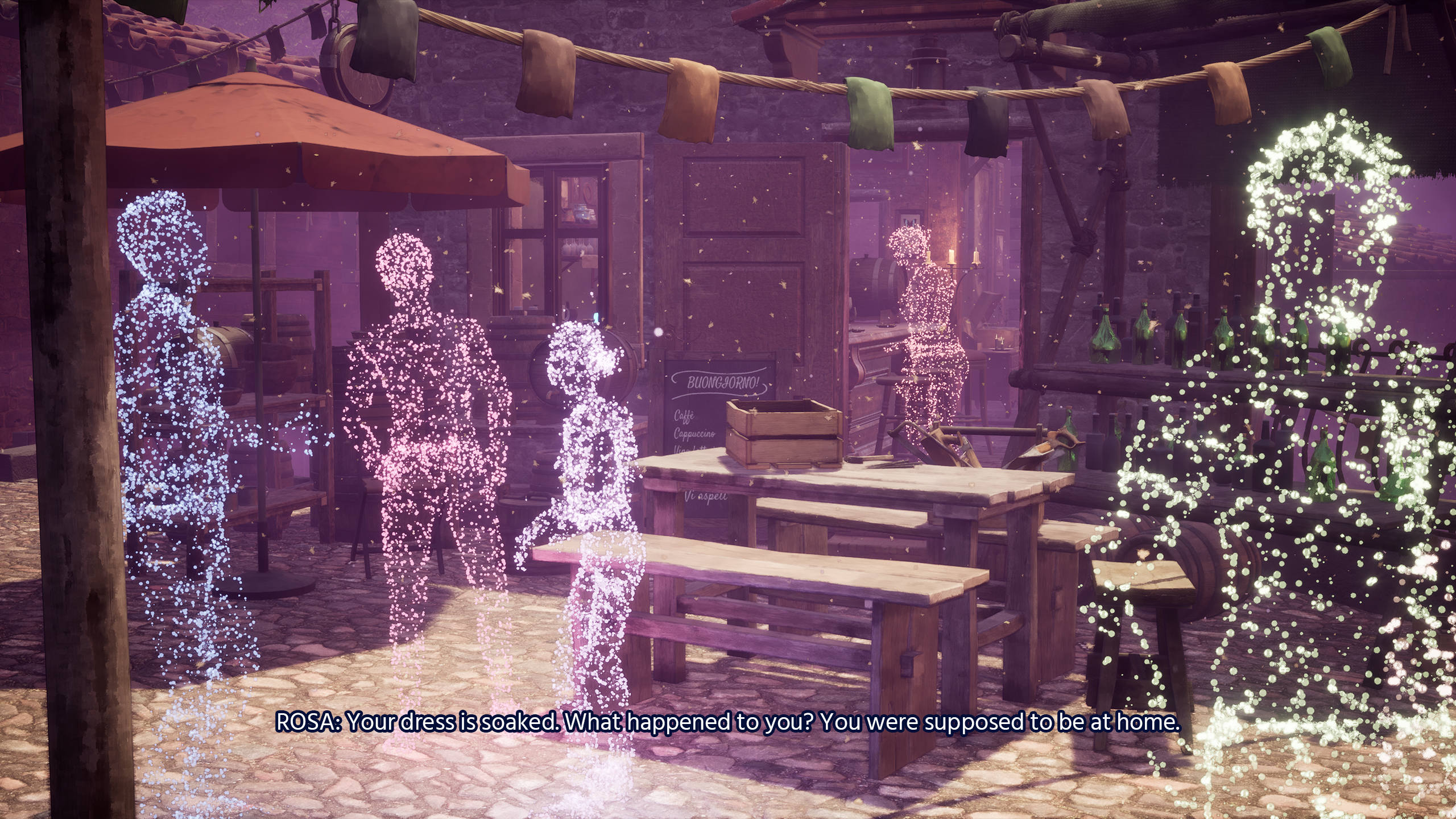
The entire gaming experience is structured between the present, characterised by a completely flooded village, and the past, which manifests as flashback and Echoes, i.e. temporal portals that not only allow you to reconstruct the events surrounding the boy’s disappearance but also reveal interesting behind-the-scenes details about the lives of the other villagers. The transition between these two temporal dimensions represents one of the adventure’s most compelling elements. The present shows us a place now abandoned and profoundly altered by water, while the past lets you observe the same environment when it was still inhabited and full of life. This contrast adds greater value to exploration, as some locations take on a different meaning once you discover what happened inside them.
The Echoes thus become a sort of window into the past. By traversing them, one can witness moments that help better understand not only the disappearance of the boy, but also the relationships between the people who lived in the village. The narrative is therefore not told exclusively through dialogue or cinematic sequences, but is distributed within the environment and across different eras. This approach works especially when the player takes the time necessary to observe what surrounds them. Some information may initially seem secondary, only to assume greater significance once the events shown across different temporal moments are connected.

Exploration, items and narrative choices
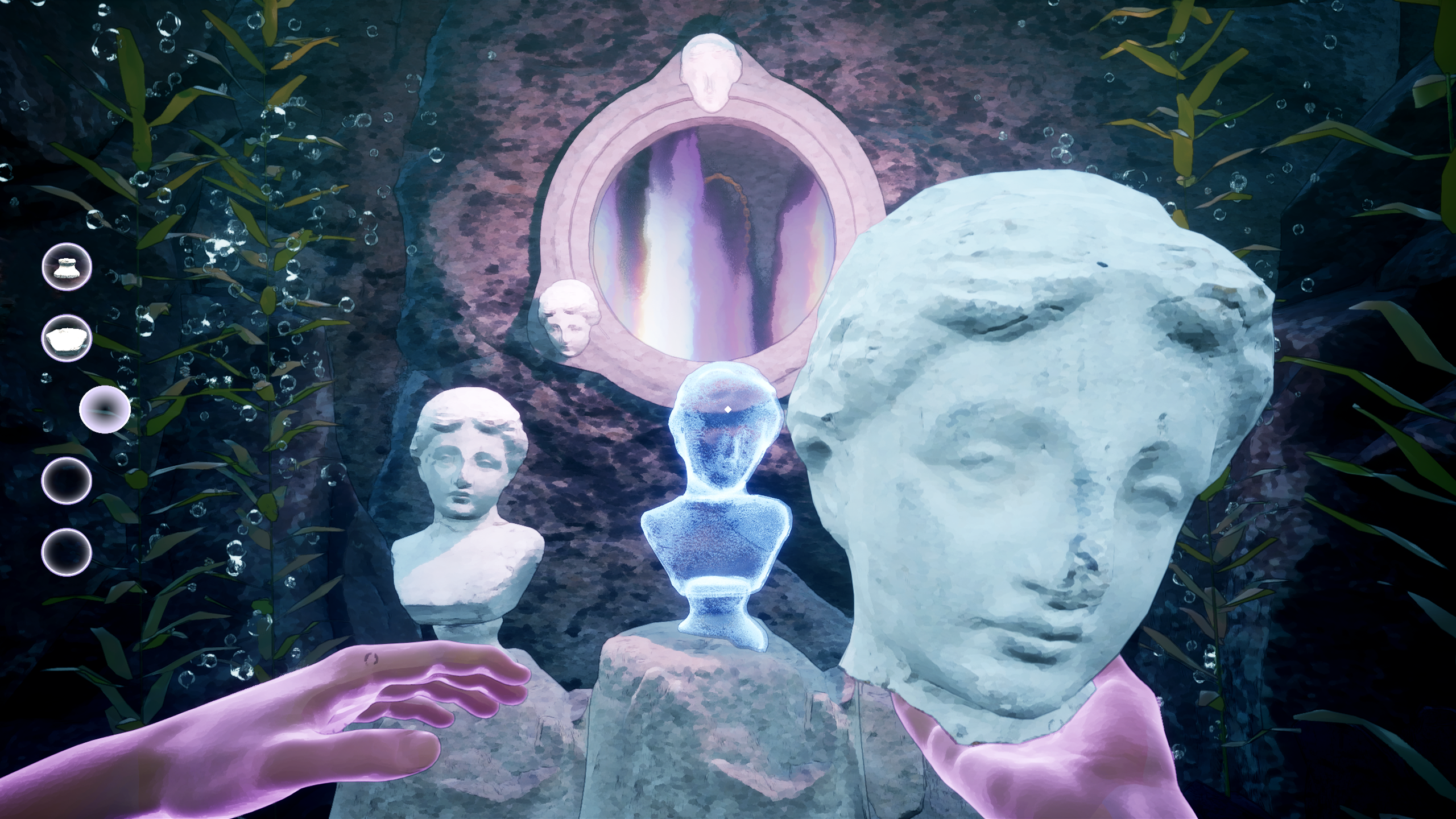
The core of the interaction lies in the environmental exploration. To progress, you must find specific objects scattered throughout the village, necessary to activate portals and access sequences from the past. Some objects are tied to short puzzles, which are nevertheless very simple and immediate to solve. Searching for these objects thus serves as the main incentive to move around the game area. Although the map can be freely explored, the title still maintains a rather guided progression, indicating to the player which areas deserve the most attention. This helps avoid an overly scattered experience, especially considering the compact size of the adventure.
The puzzles follow the same philosophy. They are not designed to genuinely test the player, but rather to interrupt simple exploration and provide a minimal degree of interaction during the search-related phases. Solving them generally requires intuitive effort and does not demand particular attempts, making the overall pace reasonably smooth. During the flashbacks, it is possible to interact directly with Mora. Depending on the responses given, the protagonist will continue searching for her brother. The game offers two endings and allows the player to fully determine which epilogue they reach.
The narrative choices therefore represent an important element in the story’s conclusion, even though they do not radically alter the entire experience. Their primary goal is to allow the player to guide the protagonist toward one of two possible endings. This system integrates well with the narrative nature of the project, especially considering its relatively short duration.
Game pace and longevity
The map offers free exploration, though the explorable buildings and points of interest are concentrated primarily where the story leads, leaving the rest of the environment largely empty. This choice makes exploration enjoyable in the early stages, especially when discovering the submerged village for the first time. At the same time, however, the presence of large areas devoid of interactive elements highlights how the game world is built primarily around the story. It is therefore not an environment designed to be explored in every corner in search of numerous side contents.
The pace remains fairly consistent. Echoes of Mora doesn’t attempt to artificially extend its duration with repetitive activities or insignificant side objectives. Progress is focused on uncovering the story, allowing players to reach the conclusion without significant delays. The total story length hovers around 2 hours, rising to 3 hours if all objectives are completed and both endings are unlocked. It’s therefore a short experience, but fitting for the type of adventure offered.
The longevity remains probably one of the most subjective aspects of the title. Those seeking a compact narrative experience may find the duration a strength, while those preferring longer games packed with activities might perceive the conclusion as rather quick. The presence of the two endings still offers a small incentive to return to the game to discover the other ending.
Artistic direction and submerged atmosphere
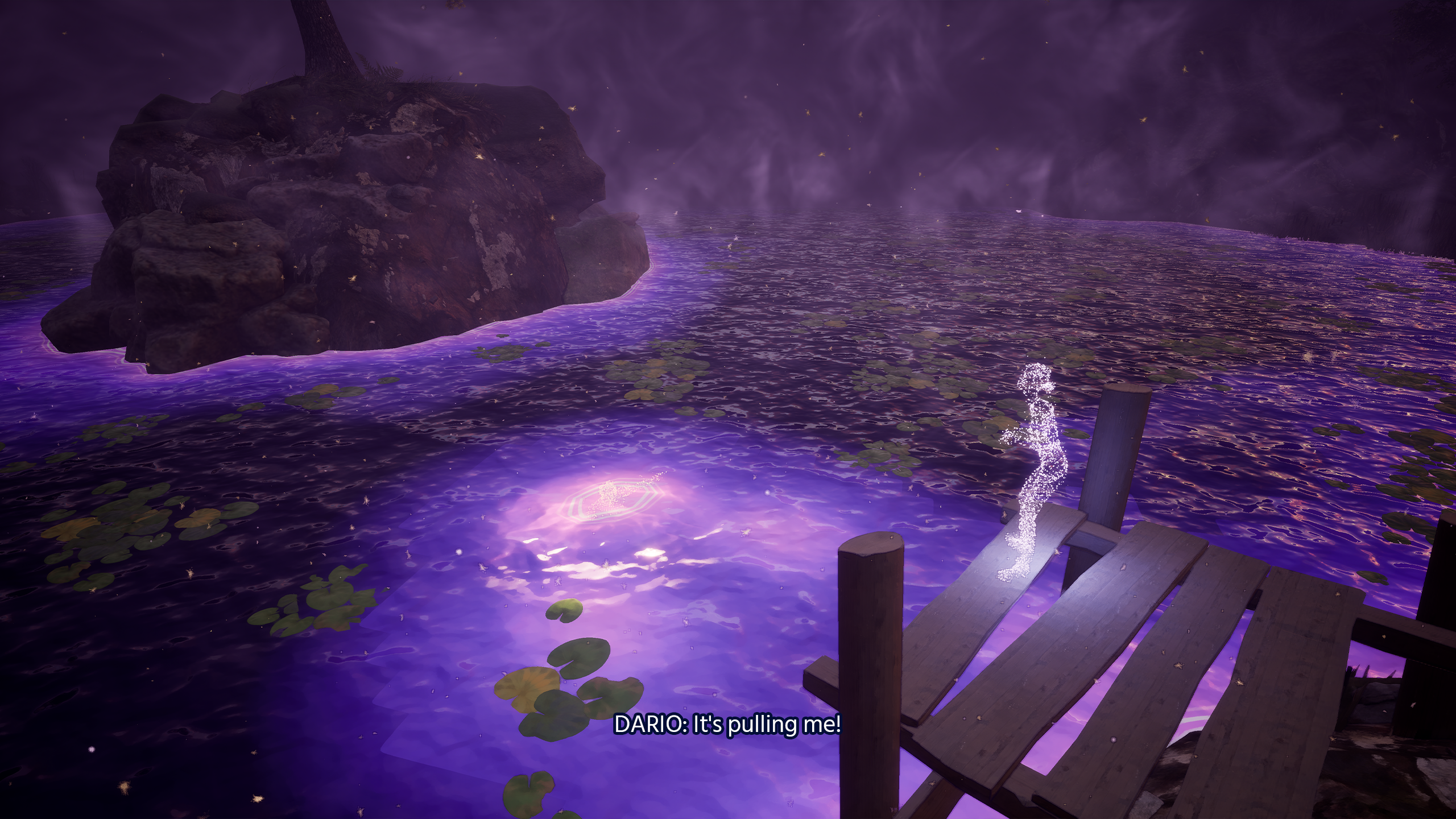
The setting proves extremely evocative. Moving through this submerged landscape offers a feeling of peace, especially when one takes time to observe the surrounding nature’s details. The rendering of the submerged village helps establish an atmosphere that perfectly mirrors the melancholic tone of the narrative. The water becomes a fundamental component of the artistic direction. The presence of vegetation, abandoned structures, and natural elements that have gradually replaced the inhabitants allows the game world to convey a sense of isolation. The result is an environment that, despite being marked by a dramatic storyline, often manages to evoke tranquility.
The contrast between what we see in the present and what we discover through the memories further contributes to the atmosphere. The same settings can take on a completely different meaning when viewed through the events of the past, making the village’s transformation even more evident.
It is precisely this contrast between beauty and melancholy that represents one of the most successful elements of the experience. Water is not used merely as an aesthetic feature, but becomes an integral part of how the game tells its story.
The exploration pace also contributes to this result. Without combat or particularly frenetic situations, the player can focus on the environment and the small details present in the setting. The title therefore invites the player to proceed calmly, observing what remains of the village and trying to understand the story through what is left behind.
Overall stability and minor flaws
The title turns out pleasant to play and free of uncertainty regarding the stability. The only flaw encountered relates to the handling of subtitles, which, fortunately in rare cases, do not appear during certain dialogues. For the rest, the experience flows in a smooth and glitch-free manner. During the hours required to reach the conclusion, I encountered no issues capable of compromising the progression or making exploration less enjoyable. Even when moving between the different areas of the village, the game maintains good continuity, without noticeable slowdowns or inconveniences. The subtitle issue remains therefore one of the few noteworthy imperfections. It is a limited flaw, especially since it appears only in rare occasions, but in an adventure that relies heavily on the narration, it can still be annoying to miss part of a dialogue.
Overall, however, Echoes of Mora presents as an experience technically stable and consistent with its ambitions. The title does not aim to propose complex systems or an extremely elaborate technical component, but focuses its resources on the construction of atmosphere, the exploration and the narrative.
Conclusions
Echoes of Mora is a short narrative adventure that finds its strengths chiefly in its atmosphere, artistic direction, and its unique structure based on the relationship between present and past. The idea of exploring a submerged village and reconstructing what happened through the Echoes works and succeeds in giving meaning to most of the activities proposed. Exploration remains simple, as do the puzzles, but this choice allows the experience to maintain a calm pace and never stray too far from its primary objective: telling the story of Mora and the search for her brother. The contained duration and some underexploited areas of the setting may represent limitations for those expecting a more elaborate adventure, but the title does not seem to aim to build its experience around the quantity of content. Echoes of Mora instead focuses on the ability to create a precise atmosphere and to guide the player through a story that can be completed in a few hours. The possibility of obtaining two endings adds a small incentive to replayability, allowing players to revisit their steps and discover a different epilogue. Overall, Echoes of Mora thus succeeds in offering a simple yet enjoyable adventure, distinguished chiefly by its submerged setting and the way it uses the past to add greater depth to the present. It is not a particularly long or complex experience, but it manages to maintain its own identity and to tell its story without unnecessary prolongation.
About the Author