
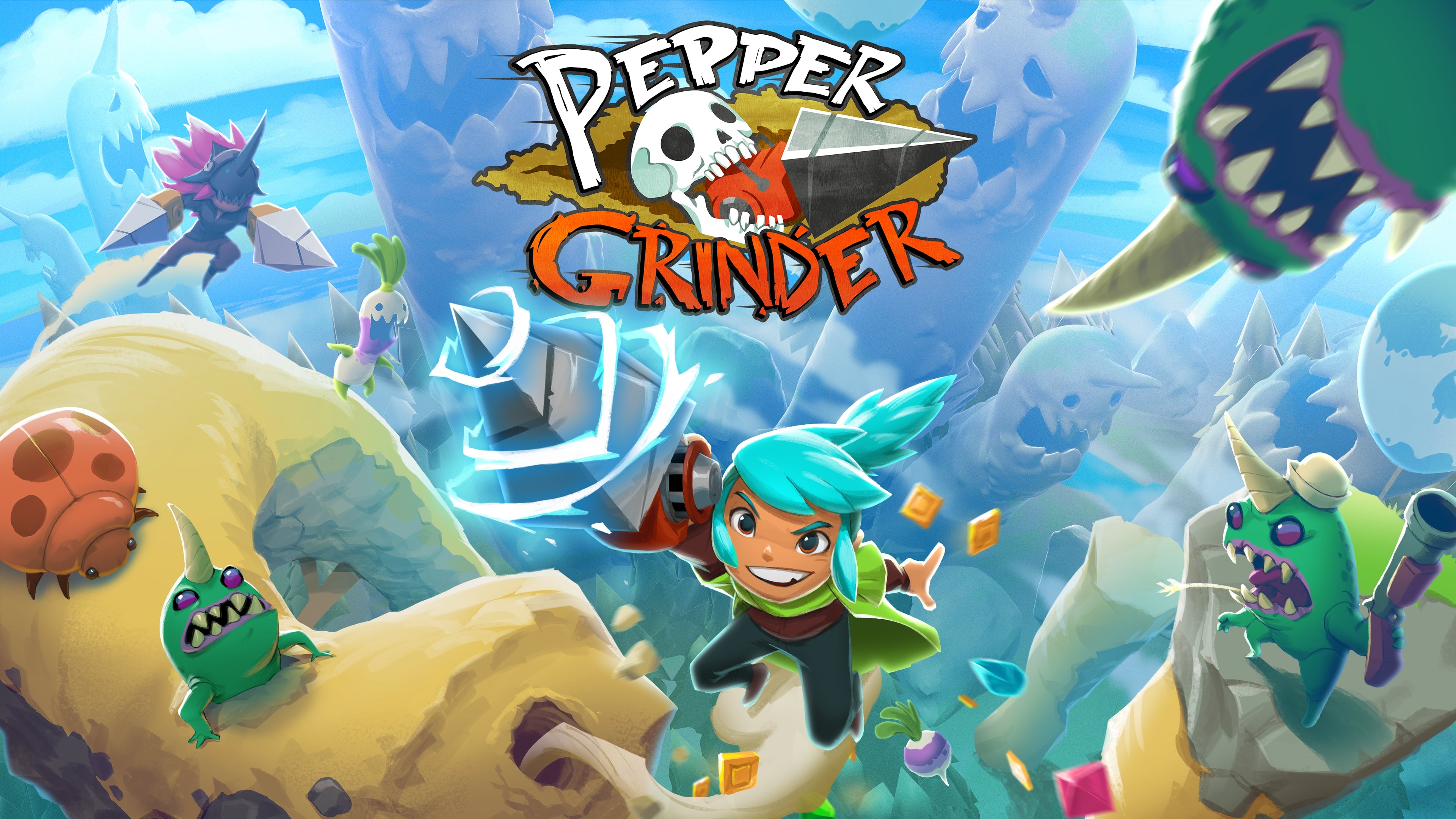
Gentlemen, unfortunately there is inevitably a moment in the life of an individual in which certainty collapses. I have never hidden my appreciation for Devolver Digital, considering it one of my favorite publishers, for his ability to promote always innovative, original, and memorable titles. However, after playing Pepper Grinder, developed by Ahr Ech, I must confess that I did not find the same qualities I expected from this platformer. While offering interesting ideas and having fun at times, I can't say I'm completely satisfied with it.
This content is provided by YouTube. To view it, you must allow external content. Activation may result in data being shared with the third party.
Yet another pirate story...with a twist
After a strange storm destroyed Pepper's ship, the treasure hunter, as well as the protagonist, finds himself beached on the dangerous coasts of a mysterious island. Here, he discovers that a group of creatures similar to narvals known as the Narling, and a mysterious figure to command them, are plundering his precious treasure. He can do nothing but go to pursuit to recover what is his "right" and, to help her in her mission, a precious ally: Grinder, a valuable drill that can be used to dig and immerse yourself in a multitude of different soils, overcome obstacles and face the subdole enemies.
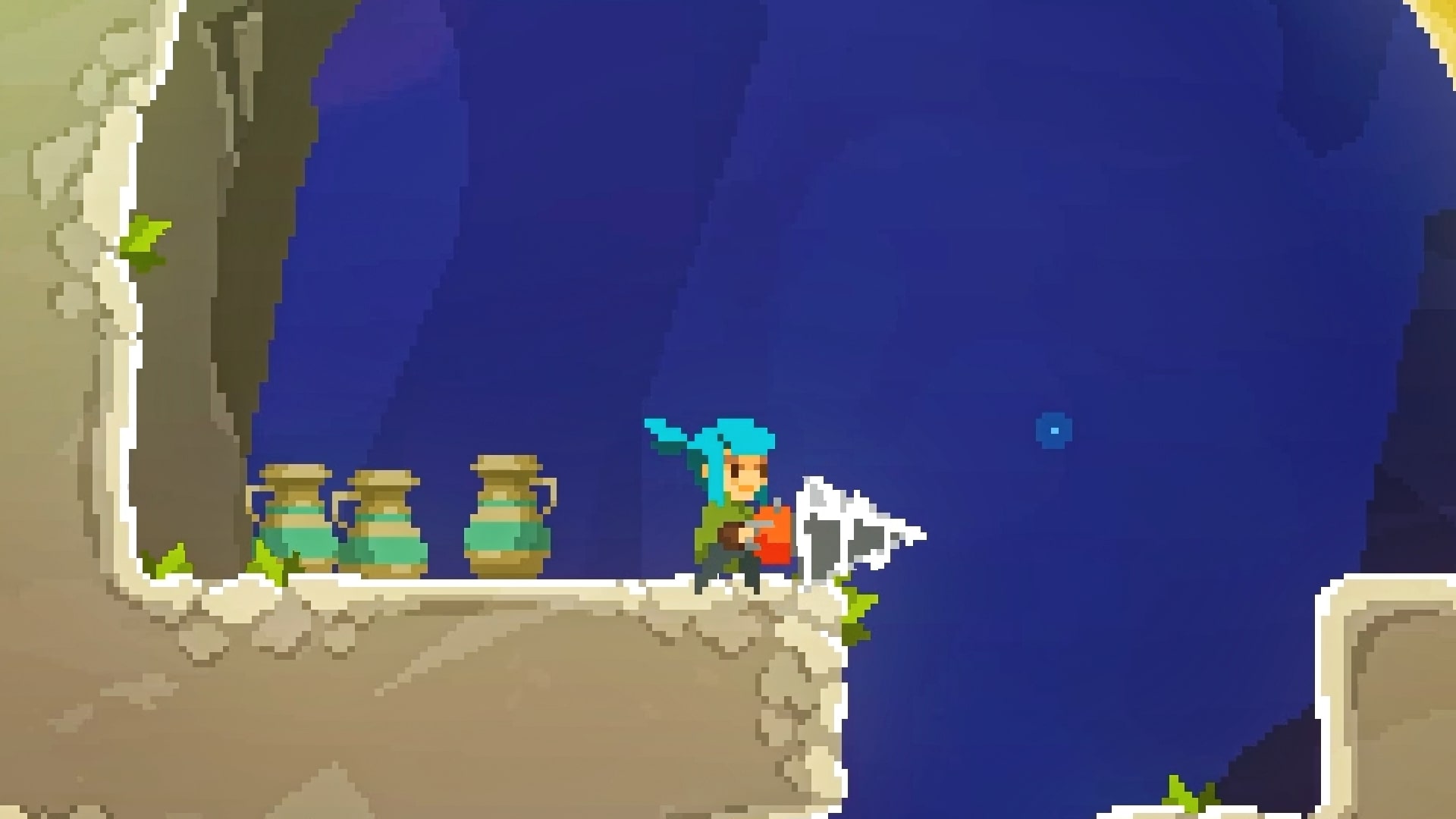
As you progress in the game you trace a path through the map, which reveals increasingly exotic and dangerous places on the island, as well as some unlockable hidden secrets thanks to Skull Coins, evaluates wisely hidden in every level. Completing one, you unlock a new knot on the map, allowing you to proceed further. The various worlds of play, as well as the characters that populate them, will also be beautiful at first sight, thanks to the wise use of pixel art, but at the long time they manifest themselves for what they are: quite anonymous and derivative.
Momentum and rapidity, perhaps too much
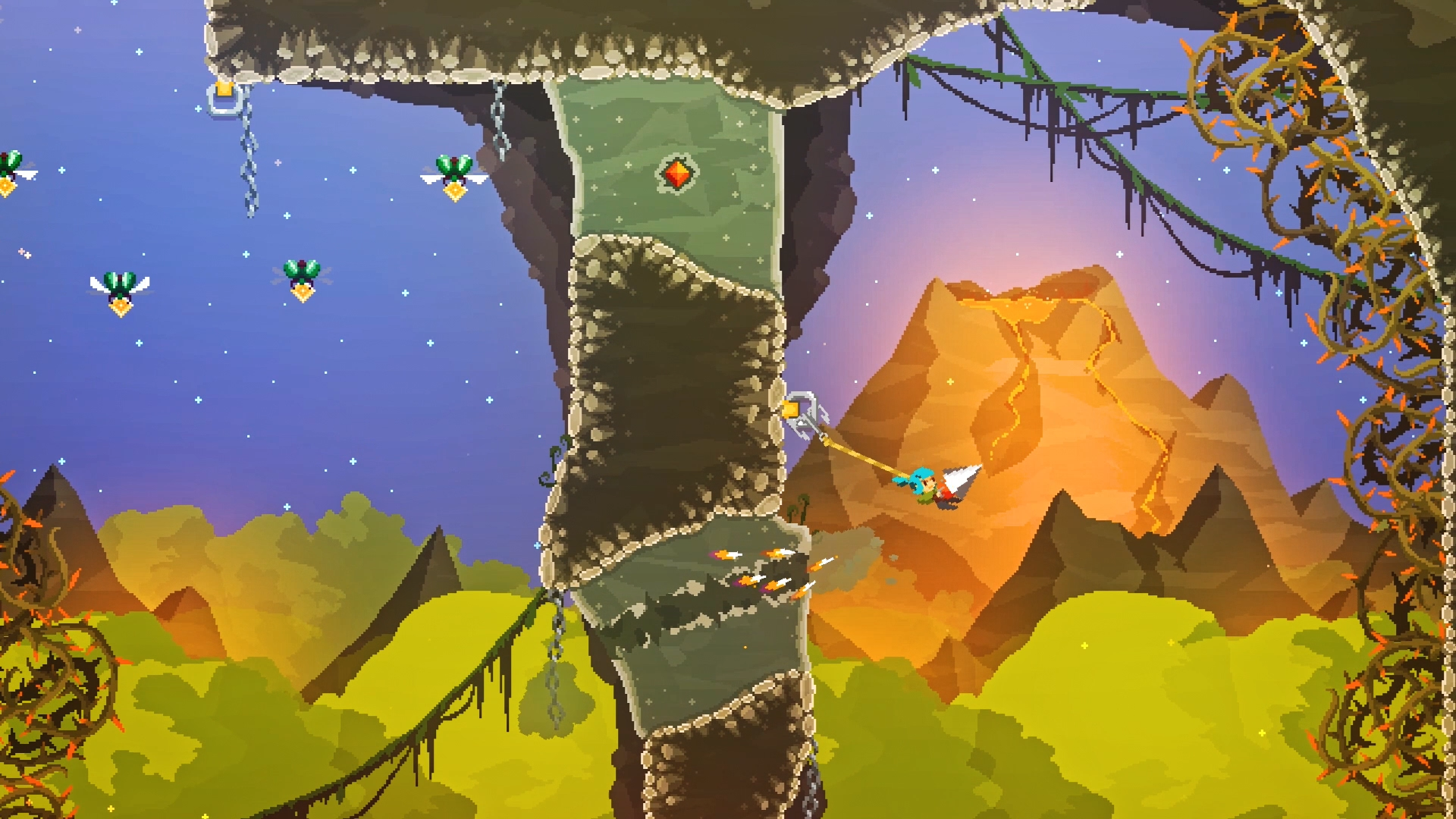
Although there are several game mechanics that enrich the experience, Pepper Grinder's heart lies in facing each level with extreme speed, piercing rock, sand, water and even solidified lava. The path to follow is indicated by the presence of gems and coins to collect along the way. During the hectic action of crossing the levels at full speed, it can be difficult to realize, but during breaks between one picture and the other, it is inevitable to note that the world of play is little incisive, almost a secondary thought, as if one expected the gameplay alone to carry out the entire experience.
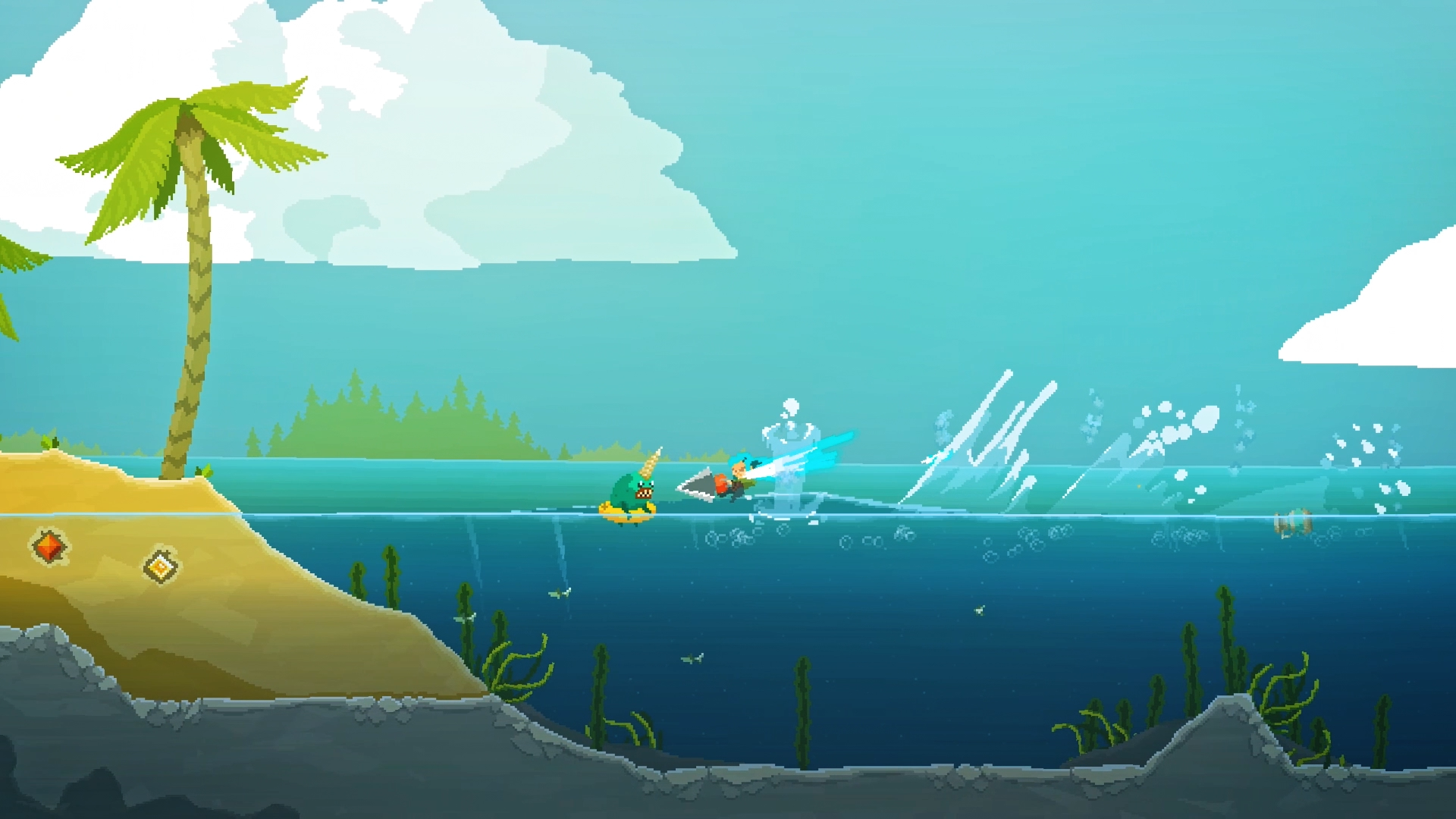
The levels of Pepper Grinder are more like paths full of obstacles than as worlds to explore and live fully, and the speed with which it is projected within them would also prevent them from enjoying a minimum. Often the game struggles to be fun because the constant perforation forces Pepper to move unstoppable, creating difficulties especially when faced for the first time many of the obstacles present.
Although some sections allow a certain preliminary exploration, it is often impossible to have a clear idea of what awaits us until you find yourself directly in front of the obstacles themselves. This eliminates the possibility to plan the most complex sections in advance, pushing to a trial and error-based approach that may not be liked by all players.
Boss fights, was there any need?
Pepper Grinder's bosses represent the last obstacle before facing the next bioma on the island. While most levels promote mobility and dynamism, boss fights instead block Pepper in a narrow space, so the only thing we have to do is attack with its Grinder more and more times through the same paths, which becomes quickly repetitive. The level of difficulty varies rapidly, with some bosses capable almost to predict the player's movements and others instead to represent a risk that can be found.

In all this do not help controls on Nintendo Switch; they represent almost another boss in the game. They are rather uncomfortable, little reactive and, all in all, unsatisfactory for a title like this in which reflections and precision are essential. It is not uncommon that the controls themselves cause our defeat.
Technically speaking
Given the brevity of its levels, as well as its overall shortness (4-5 hours), Pepper Grinder lends itself well to the portability game on Switch, especially on the OLED model that highlights the sharp contrasts of the colorful levels. If pixel art reaches good levels, although quite anonymous, the audio compartment is sincerely forgotten.
In conclusion
Ultimately, Pepper Grinder, while presenting some interesting ideas, cannot shine as you might expect from a title associated with Devolver Digital. While pixel art and some game mechanics offer visually appealing and fun moments, the game lacks depth and originality in its worlds and characters.
Its game structure, based on paths studded with obstacles and extreme speed, can make it difficult to fully enjoy the experience. In addition, unreactive controls on Nintendo Switch add additional frustrations to the gameplay. Despite its brevity and adaptability to the portability on Switch, Pepper Grinder is ultimately a disappointing proposal for those seeking a more fulfilling and engaging gaming experience.
About the Author