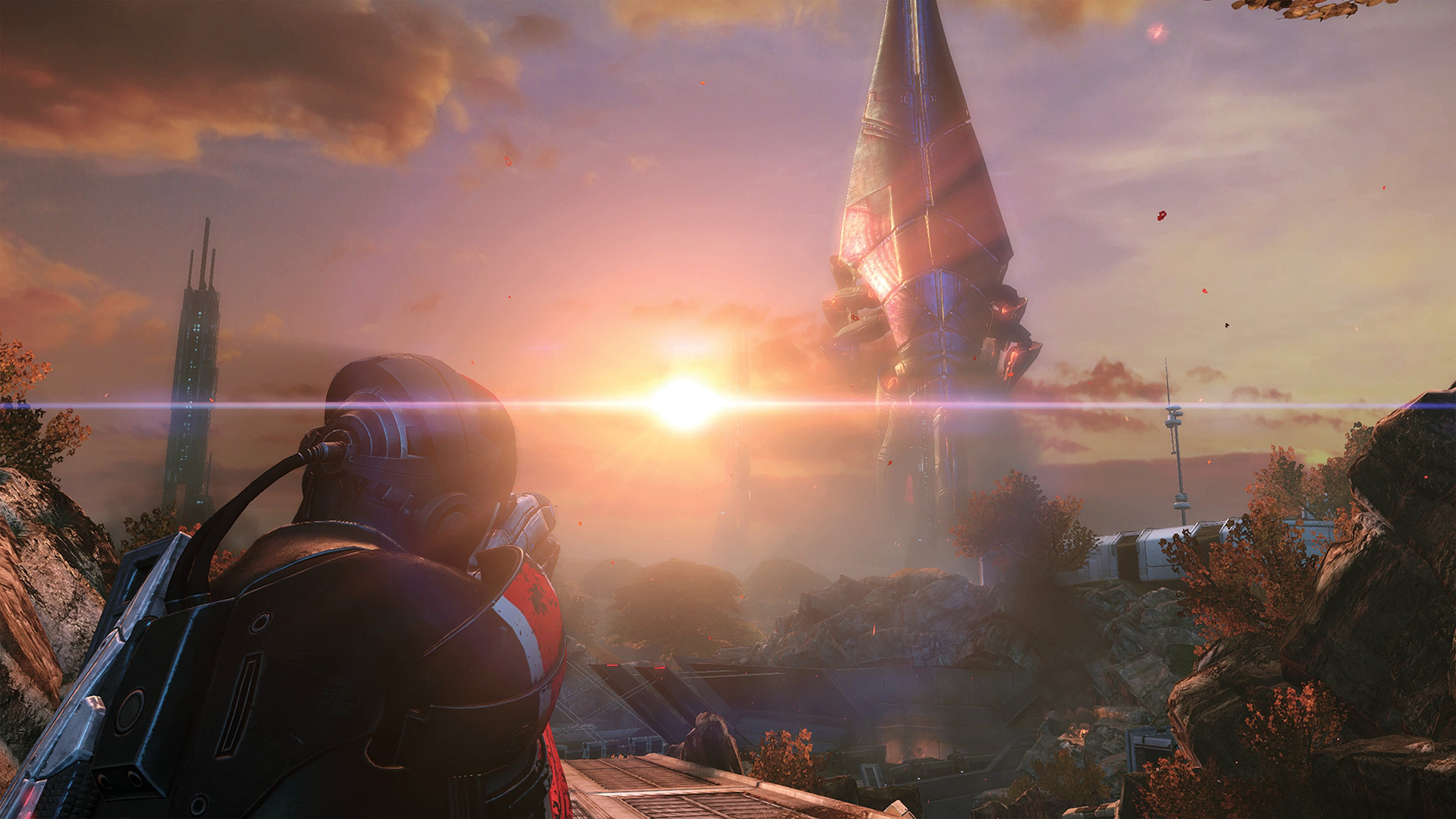
BioWare shuts down and the next Mass Effect has been cancelled: Electronic Arts’ decision, announced on 21 October 2026, marks the end of one of the most important role-playing game studios in history. The news sparked a strong reaction among fans, while an international petition to save the saga surpassed 300,000 signatures. Adding to the uniqueness of this moment is the release of Massive Effect: The BioWare Story, a documentary that will recount over thirty years of the Canadian studio’s history, including the final days before its closure.
The story intertwines with the eve of the N7 Day of 7 November, the traditional event dedicated to the Mass Effect universe. In these days, the promotion of new official products through the BioWare Gear Store has fueled further debates among fans, who are challenging EA over its decision to continue commercially promoting the brand after halting development of the next chapter.
BioWare is closing: EA cancels the next Mass Effect
On 21 October 2026, Electronic Arts announced a decision destined to leave a deep mark on the video game industry: BioWare shuts down and initial development of the next Mass Effect is halted. The news was confirmed by the studio itself through a message posted on its official blog, which recalls the creative journey spanning over thirty years and the contributions of generations of developers.
The decision concerns the studio in Edmonton, Canada, and comes within the broader review of Electronic Arts’ activities. In the internal communication made public by EA, the company explains it intends to focus resources, personnel, and investments on a smaller number of projects deemed priority.
The heaviest consequence for fans is the cancellation of the new chapter of Mass Effect, which was still in the early stages of development. The project had been announced in 2020, and in November 2025, BioWare had publicly reaffirmed that the game was still in development and that EA continued to support the series.
That reassurance was, however, overshadowed by the events of October 2026. EA confirmed it did not wish to continue with the project and intended to close the studio and its Edmonton office.
It’s important to distinguish two aspects: the next video game project has been cancelled and BioWare’s closure has been announced, but no transfer of Mass Effect rights to another publisher or developer has been communicated. The future of the brand remains in the hands of Electronic Arts, and, at the moment, there is no official announcement regarding a potential new chapter assigned to another team.
Why has Electronic Arts decided to close BioWare?
In its communication regarding the corporate reorganisation, Electronic Arts has explained its intention to focus investment on franchises and projects with greater growth potential. The company has spoken of a review of its product portfolio and the need to reduce the number of major productions developed simultaneously.
The decision comes at a complex time for the video game industry, marked by restructuring, cost-cutting, and numerous layoffs. According to reports published by Bloomberg and Reuters, EA’s plan would involve approximately 400 employees across the company, with around fifty positions affected within BioWare.
In recent years, the studio had navigated various commercial difficulties. Mass Effect: Andromeda received a mixed reception, while Anthem, the multiplayer project with which BioWare had attempted to explore a different model from its traditional narrative role-playing games, failed to build a stable community. Even Dragon Age: The Veilguard did not meet the commercial expectations reported by specialist press.
These factors help explain the context in which the decision was made, but it is appropriate not to present them as an official and detailed justification for the closure. EA has indicated a strategic portfolio and resource allocation decision, without publicly attributing the decision to a single game or a specific economic cause.
The reorganisation does not concern only BioWare. In its own plan, EA has confirmed it intends to continue investing in Battlefield, Apex Legends, Marvel's Iron Man and the upcoming Star Wars Jedi. For the first-person shooter segment, the company has also announced a future collaboration between DICE and Respawn, without identifying the project as a new Star Wars Battlefront.
Massive Effect: The BioWare Story, the documentary about the final days of the studio
Just as BioWare was facing its closure, a film project already in development has taken on a completely different meaning. It is titled Massive Effect: The BioWare Story and will be a documentary devoted to the history of the Canadian studio, from its founding in 1995 until its conclusion.
The project is directed by Akash Sherman and produced by Shane Fennessey and Adam Scorgie, through Fennessey Films and Score G Productions, with the involvement of the Canadian broadcaster Super Channel.
Shooting had begun about two years before Electronic Arts announced it, with the aim of producing a retrospective documentary on BioWare’s history and creative legacy. The studio’s closure, which occurred during production, inevitably altered the film’s perspective: the cameras captured not only the final chapter of its activity but also the consequences of the decision on its employees.
Among the personalities featured in the documentary are some names central to the history of the studio and the video game industry:
- Ray Muzyka and Greg Zeschuk: the co-founders of BioWare, protagonists of the studio's birth and growth.
- Casey Hudson: key figure in the development of the original Mass Effect trilogy.
- Jennifer Hale: actress and voice actress who portrayed the female version of Commander Shepard.
- Douglas Reilly: executive at Lucasfilm Games.
- Geoff Keighley: journalist and presenter, known especially for creating The Game Awards.
- Victor Lucas: Canadian journalist and presenter.
The documentary will also feature numerous developers who have worked for BioWare over the years. The aim is to reconstruct not only the studio's commercial and creative successes, but also the relationship between the people who contributed to the creation of some of the most important role-playing games of the last decade.
Massive Effect: The BioWare Story has not yet been released. The project should be presented at film festivals, with a world premiere scheduled for 2027. No definitive release date has been announced.
The leaked trailer for Mass Effect: Universe: here’s what we know
The cancellation of the new game was accompanied by a clip that further fueled community discontent. On 22 October 2026, just one day after the announcement of BioWare’s closure, an online video related to the cancelled project appeared, identified with the title Mass Effect: Universe.
Initially regarded as a possible fake, the trailer was later confirmed authentic by Bloomberg journalist Jason Schreier, while IGN also verified the material’s legitimacy.
The video contains an important clarification: these are images created using the game engine and based on pre-production materials. It therefore does not represent a final trailer, nor does it demonstrate that the game was nearing completion.
The sequences show a new human protagonist, apparently a former soldier, involved in a situation that evokes the atmospheres of a sci-fi thriller. Among the images also appears Liara T'Soni, one of the most recognizable characters from the original trilogy.
The material has allowed fans to glimpse some of the narrative and stylistic directions BioWare was exploring for the future of the series. However, as it is a project still in its early development stages, the scenes shown cannot be considered a complete representation of the features the game would have been released with.
The title Mass Effect: Universe appears in the leaked video, but Electronic Arts has not officially announced it as the definitive name. The project, nonetheless, will not continue in the form developed by BioWare prior to its closure.
#SaveMassEffect surpasses 300,000 signatures: fans ask EA to save the saga
The community’s reaction didn’t take long to arrive. Hours after the announcement of the studio’s closure and the cancellation of the new game, the international petition #SaveMassEffect was launched, aiming to ask Electronic Arts not to abandon the franchise.
The campaign presents two possible paths: funding the development of a new chapter by handing it over to another studio, or licensing or transferring the intellectual property rights to a party interested in continuing the series.
The mobilisation has reached considerable scale. According to an update published by Insider Gaming on 6 November 2026, the petition has surpassed 300,000 signatures, becoming one of the main organised fan protests following BioWare’s closure.
The campaign also received the support of figures tied to the saga. Among these Jennifer Hale e Mark Meer, the actors who respectively portrayed the female and male versions of Commander Shepard in the original trilogy, who have publicly expressed support for the mobilisation.
Of course, the number of signatures does not compel Electronic Arts to change its strategy and does not guarantee the resumption of development. However, it does represent a clear signal of the value the series retains for its audience and the desire of a significant portion of the community to see the narrative universe of Mass Effect continue.

Warren Spector criticates EA: the problem of executives’ accountability
The closure of BioWare has provoked reactions even among top industry figures. Among the most critical voices is that of Warren Spector, renowned designer of Deus Ex and a key figure in video game development.
Spector has challenged EA’s decision, shifting focus to a broader issue: the responsibility of corporate executives when strategic choices produce heavy consequences for studios and the people who work there.
In his speech, he criticised the fact that, while developers and employees face layoffs and closures, the executives who make strategic decisions rarely seem to face consequences comparable. His statements have reignited the debate on how video game giants manage their businesses and the relationship between financial results, creativity, and worker protection.
The BioWare story now becomes part of a broader debate spanning the industry: how sustainable can large-scale productions be when economic pressure leads to continuously shrinking teams and halting projects developed over years?
N7 Day 2026: the Mass Effect merchandise fuels the controversies
The story has taken on an additional twist in light of the N7 Day on November 7, 2026, the annual event dedicated to the Mass Effect universe. The name evokes the military designation N7 associated with Commander Shepard and featured on their iconic armor.
On 5 November, through its social media channels, the BioWare Gear Store promoted new products and articles dedicated to the saga with the message Celebrate the Legacy. The commercial initiative immediately drew criticism from fans, especially due to its timing coinciding with the cancellation of the next chapter and the closure of the studio that created the franchise.
Many users have criticised the promotion as inappropriate, interpreting it as an attempt to continue monetising the brand precisely when the community is trying to respond to its disruption. Others have stated they do not intend to purchase merchandise until Electronic Arts offers greater assurances about the series’ future.
It’s important to clarify that the official merchandise has not been cancelled alongside the video game project: the BioWare Gear Store continues to offer products dedicated to Mass Effect. The controversy centres on the communication choice and the timing of the campaign’s launch, rather than the legitimacy of selling the products.
The contradiction perceived by fans is evident: on one hand, EA is halting the development of the next game and closing BioWare, on the other hand it continues to commercially exploit a narrative universe that still enjoys a very loyal fanbase.
What future for Mass Effect after BioWare’s closure?
The cancellation of the project developed by BioWare represents a significant setback for the future of Mass Effect. At the moment, Electronic Arts has not announced a new team tasked with continuing development, nor has it communicated its intention to grant the franchise's rights to another publisher.
This does not necessarily mean that the entire Mass Effect universe is destined to disappear. The intellectual property remains tied to Electronic Arts and the future of the brand will depend on the decisions the company makes in the coming years. The #SaveMassEffect petition shows that there exists a community ready to support the continuation of the saga, but it does not guarantee a comeback.
It should also be noted that, before the closure of the studio, BioWare had confirmed its collaboration with Amazon for a live-action television series set in the Mass Effect universe. The television project was described as a new story, placed after the original trilogy, and not as a simple retelling of Shepard’s events. Therefore, the cancellation of the video game should not be confused with the automatic cancellation of every project linked to the franchise.
For fans, the moment remains particularly bitter. The end of BioWare represents not only the loss of a historic name, but also the dispersal of a legacy of skills, experiences, and narrative sensibilities that helped define modern role-playing games.
The comment from KotaWorld: when the value of a saga exceeds corporate logic
The BioWare story demonstrates how fragile the relationship is between the creative scope of a video game and the strategies of large companies that control its development. For over thirty years, the Canadian studio has built worlds, characters, and stories capable of leaving a deep mark on players’ imaginations. The Mass Effect trilogy, in particular, has represented one of the most important moments in the evolution of narrative role-playing games.
It’s understandable that a publisher must assess economic viability, commercial results, and growth prospects. However, it would be reductive to view a series like Mass Effect solely through the lens of a single project’s performance or the projected return on an investment.
The value of an intellectual property is also measured by its ability to generate communities, shared memories, and interest that transcends generations. The over 300,000 signatures collected by #SaveMassEffect are a sign of this legacy, even if they alone cannot change EA’s decisions.
The documentary Massive Effect: The BioWare Story could become a particularly important testimony for this reason: it tells not only the birth and successes of a studio, but also the people and circumstances that led to its end.
For now, fans have only to wait for 2027 and the documentary’s premiere, while the future of the Mass Effect video game remains in the hands of Electronic Arts. One thing, however, is already clear: BioWare can close, but the connection between its creative legacy and the Mass Effect community does not end with a corporate decision.
Frequently asked questions about BioWare and Mass Effect
Has BioWare finally shut down?
Yes. On 21 October 2026, BioWare officially announced the closure of the studio and its Edmonton, Canada, location as part of Electronic Arts' reorganisation.
Is the next Mass Effect being cancelled?
Yes. Electronic Arts has decided to halt the initial development of the next Mass Effect project. The game was still in early development stages and had no official release date.
What is Massive Effect: The BioWare Story?
It’s a documentary about the history of BioWare, from its founding in 1995 to its closure in 2026. It’s directed by Akash Sherman and produced by Shane Fennessey and Adam Scorgie. The global premiere is scheduled for 2027.
What is Mass Effect: Universe?
It’s the title that appears in an online leaked trailer from October 2026, relating to the cancelled Mass Effect project. The authenticity of the video was confirmed by journalist Jason Schreier. This is pre-production material, not a final trailer published by EA.
How many signatures has the #SaveMassEffect petition gathered?
According to an update published by Insider Gaming on 6 November 2026, the petition has surpassed 300,000 signatures. The campaign asks EA to resume the development of the saga or to grant its rights to another studio.
When is N7 Day celebrated?
The N7 Day is celebrated every year on November 7. It is a day dedicated to the Mass Effect universe and recalls the military designation N7 associated with Commander Shepard.
Will Mass Effect continue in the future?
No new game has been announced following the cancellation of the project developed by BioWare. The rights to the franchise remain tied to Electronic Arts, which has not communicated any potential transfers or new agreements with other developers.
About the Author