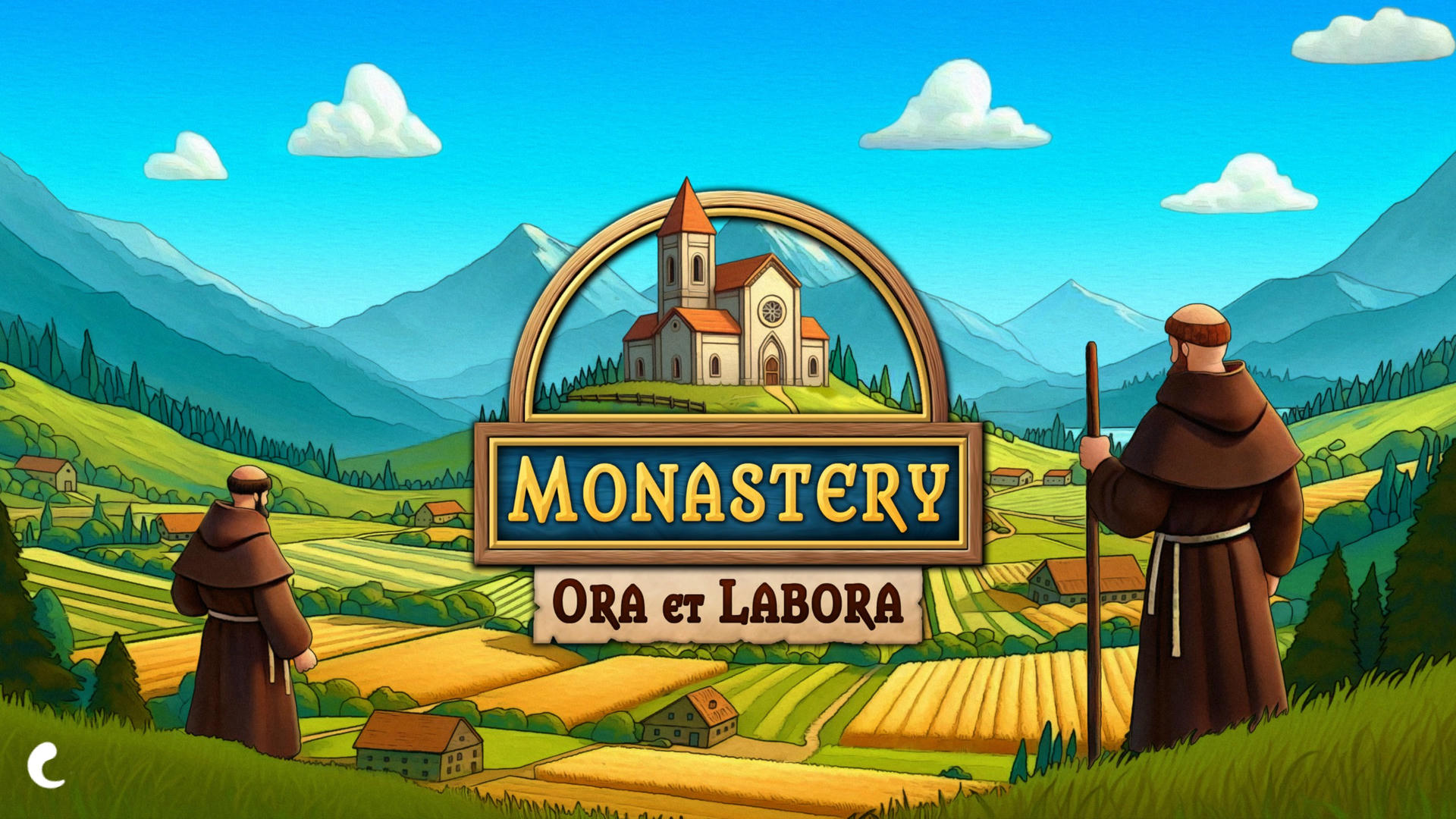
There are video games that manage to surprise you exactly when you least expect it. Monastery: Ora et Labora is certainly one of these. A management game that takes us away from the usual industrial, urban or agricultural settings, placing us in charge of a medieval monastic community, where each day is marked by a balance between work, prayer and communal life.
Developed by Dragonkin Studios, an independent software house based in Siracusa, the game arrived on Steam via Early Access on 24 September 2026, after a journey I had the pleasure of following personally from the very earliest stages. And perhaps it is precisely this aspect that makes this review particularly interesting: it is not the first time I have approached the project, but rather the outcome of a curiosity sparked more than a year ago and nurtured alongside the developers’ work.
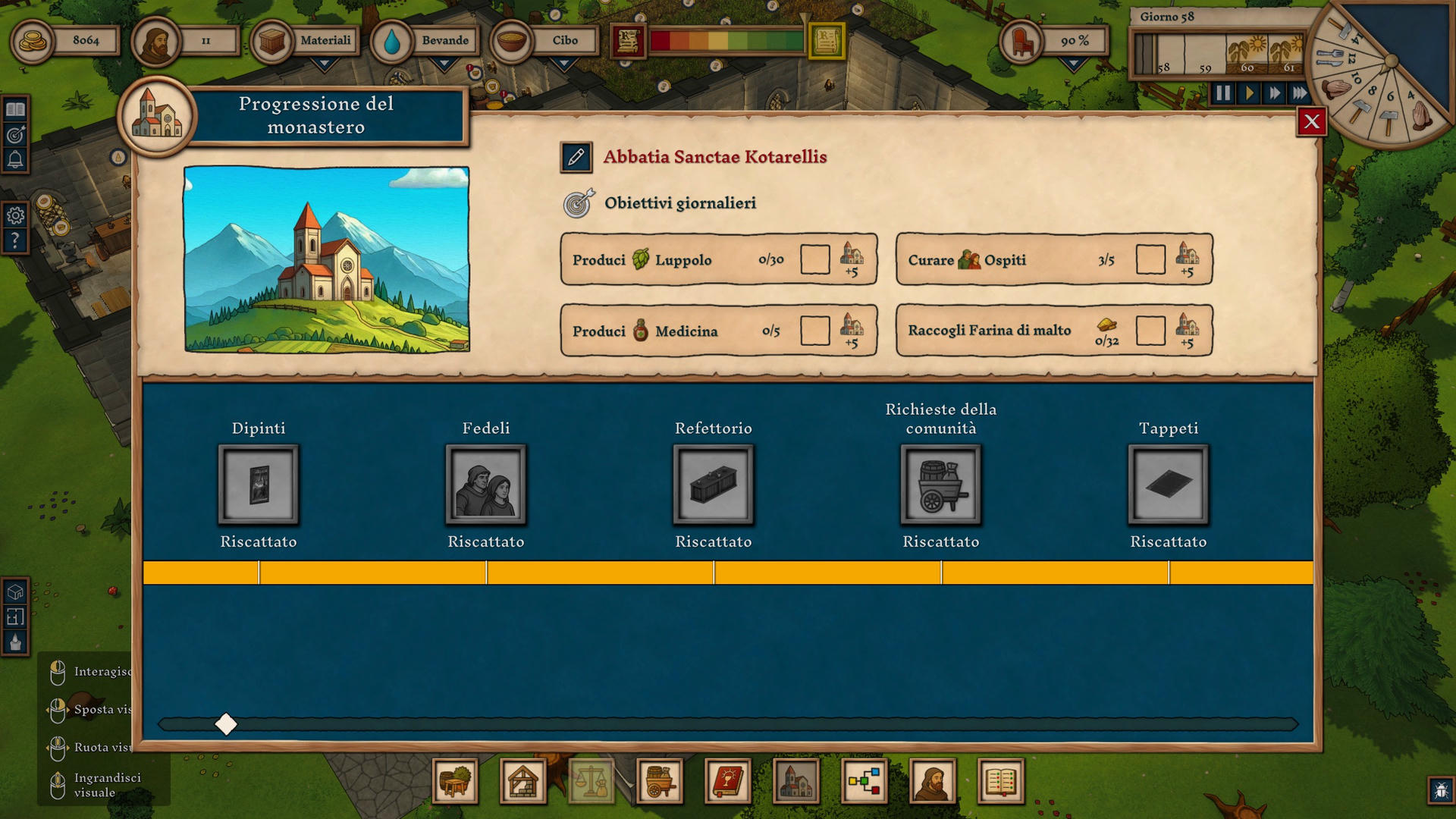
After spending several hours inside the monastery, I can tell you that I found myself facing a product far more interesting than I had imagined. There are still aspects to explore and mechanics that deserve some attention, but the foundation laid by Dragonkin Studios is truly solid.
But let’s dive into the details of a review that, at times, takes on the air of a story telling.
A project I’ve been following for over a year
Before diving into the gameplay, I want to take a moment to reflect on my relationship with the developers and the story that led me to try this title.
The first meeting with Dragonkin Studios dates back to the beginning of July 2025, during the Ortigia Comics & Games preview event. At that time, the team had presented a playable first demo of Monastery: Ora et Labora, allowing me to get involved with the project when it was still in a phase decidedly different from the current one.
I remember well the curiosity sparked by that first demo. The idea of managing a medieval monastery, organising the lives of monks and building an entire community around the Benedictine principle of Ora et Labora struck me immediately. It was clear there was a project with its own identity and, above all, interesting growth potential.
On 25 October 2026 I had the opportunity to meet the team again, this time at the first official edition of Ortigia Comics & Games. In the meantime, the project has taken an important step, finally arriving on Early Access on Steam.
We had the chance to exchange a few more words about the game, comparing our progress and looking ahead. A chat that took on even greater value precisely because of my direct experience inside the game, delving into the mechanics and trying to understand how mature the project had truly become compared to the first demo.
Among the topics covered, a particularly curious aspect emerged. The developers told me they had received various feedback from a community that initially did not expect to encounter, that Christian. A segment of players who welcomed the project with words of praise and encouragement, recognising the value of an experience that approaches monastic life with respect and attention.
It’s a detail that pleased me particularly.
Gaming has now become part of everyone’s daily life and continues to demonstrate that it is much more than just a form of entertainment — it is a place of connection, sharing, and mutual respect, capable of bringing together people with very different experiences, sensitivities, and interests.
Now et Labora: build a community, not merely a monastery
Entering Monastery: Ora et Labora, we find ourselves in the role of a monk abbot tasked with guiding and thriving a medieval monastic community. The core principle underpinning the entire experience is encapsulated right in the title: pray and work.
Two seemingly simple activities, but which become the core of a management system in which you must keep control of resources, production, individual needs and environment development.
The first thing I appreciated was the management of individual monks. We aren’t facing simple units to assign to a task, but characters with different traits and abilities that influence how they carry out their activities.
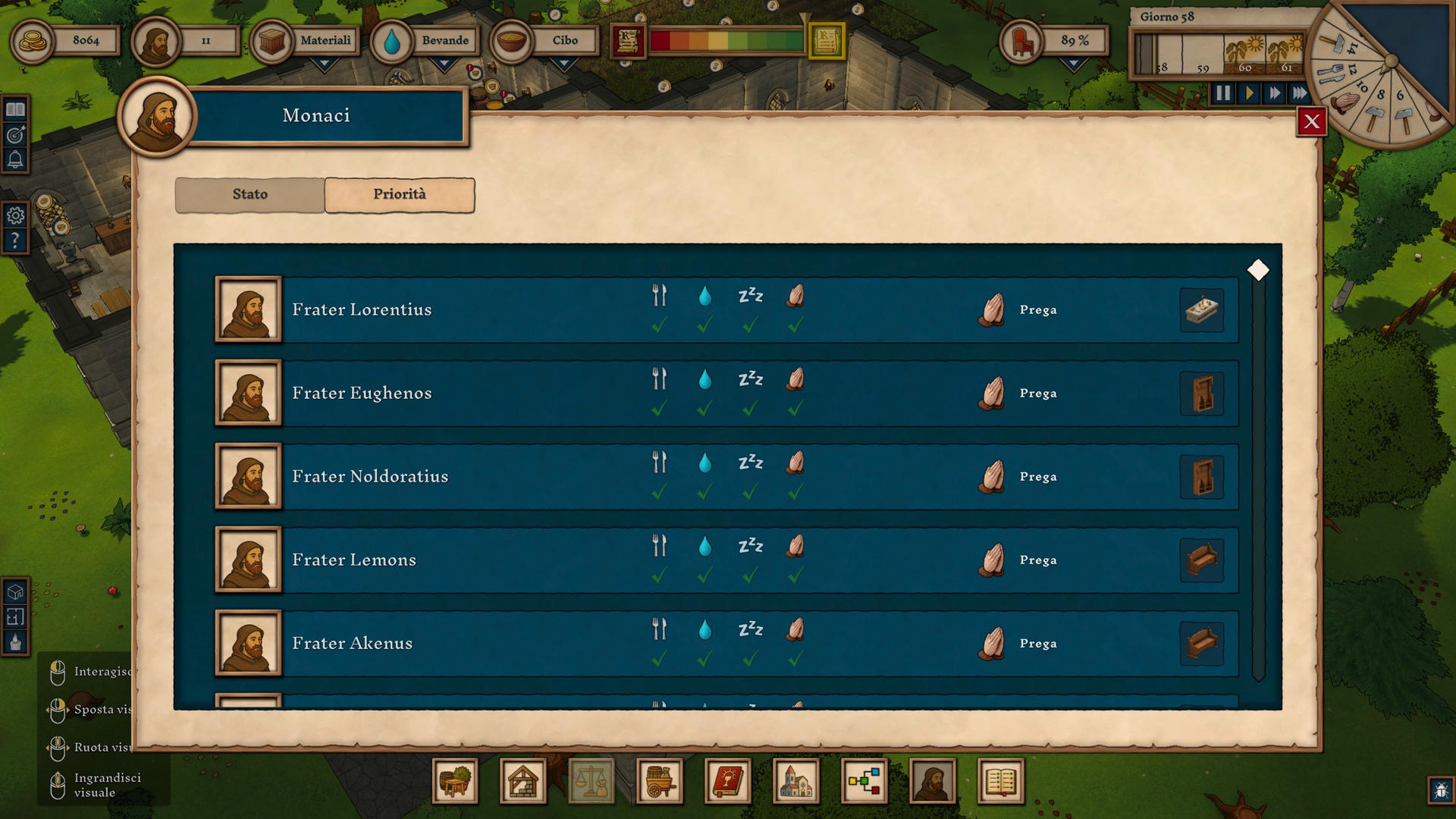
Every monk has their own skills and it’s up to the player to learn how to make the most of them, assigning each one the most suitable task. On top of this comes the ability to adjust activity priorities, a system that allows concrete intervention in daily organisation and optimises the functioning of the entire community.
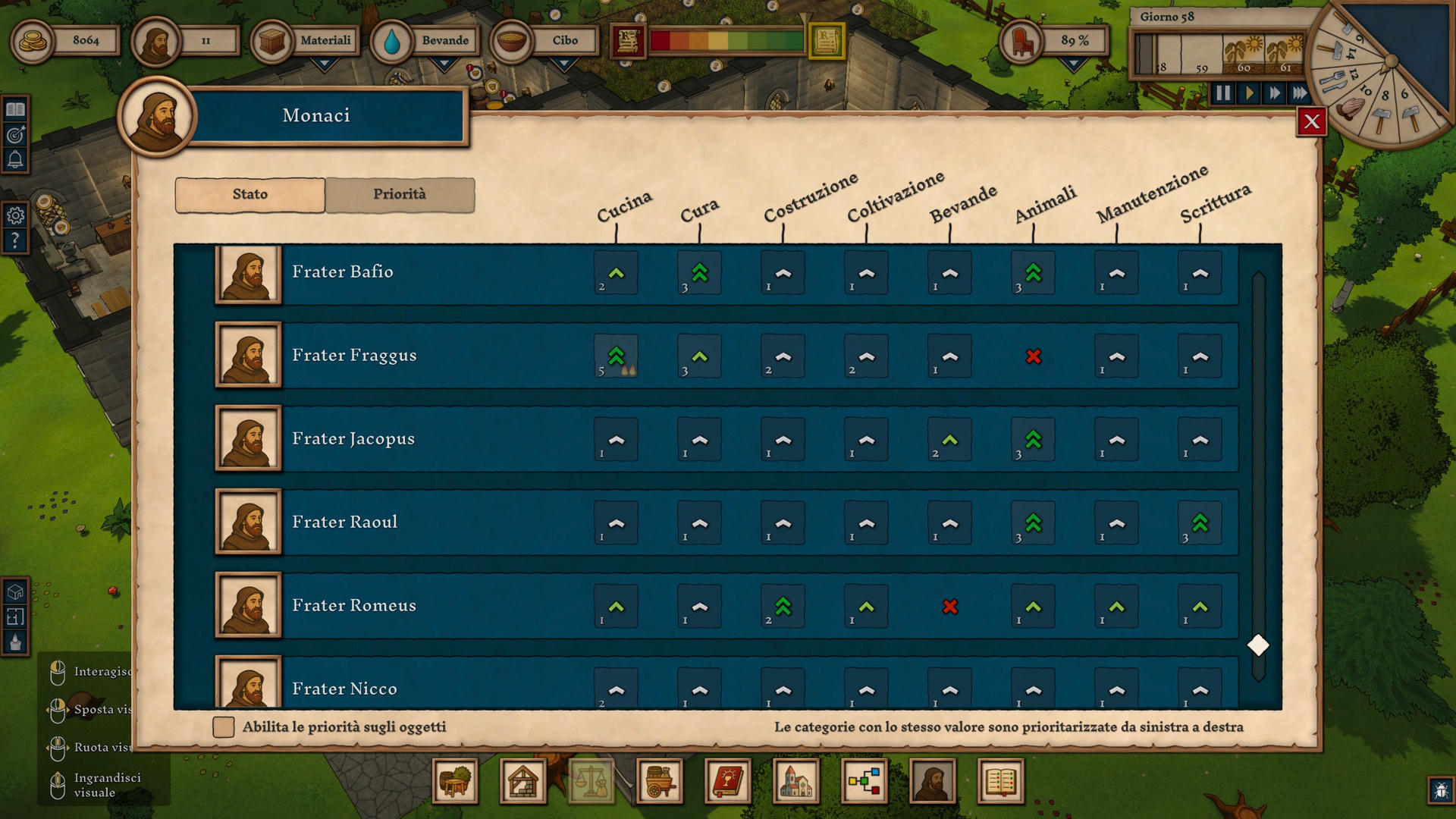
It’s a mechanic I found particularly successful because it gives the player a sense of control without overly burdening management. Learning to understand your monks, figuring out who is best suited for a specific role, and reorganising work according to current needs becomes an integral part of the experience.
Even the supply chains, after overcoming the initial unavoidable learning phases, turn out to be quite linear. I didn’t encounter any particular difficulties in supporting production or understanding the various steps required to obtain the resources and goods needed. A choice that makes the game accessible even to those who don’t have extensive experience with more complex management systems.
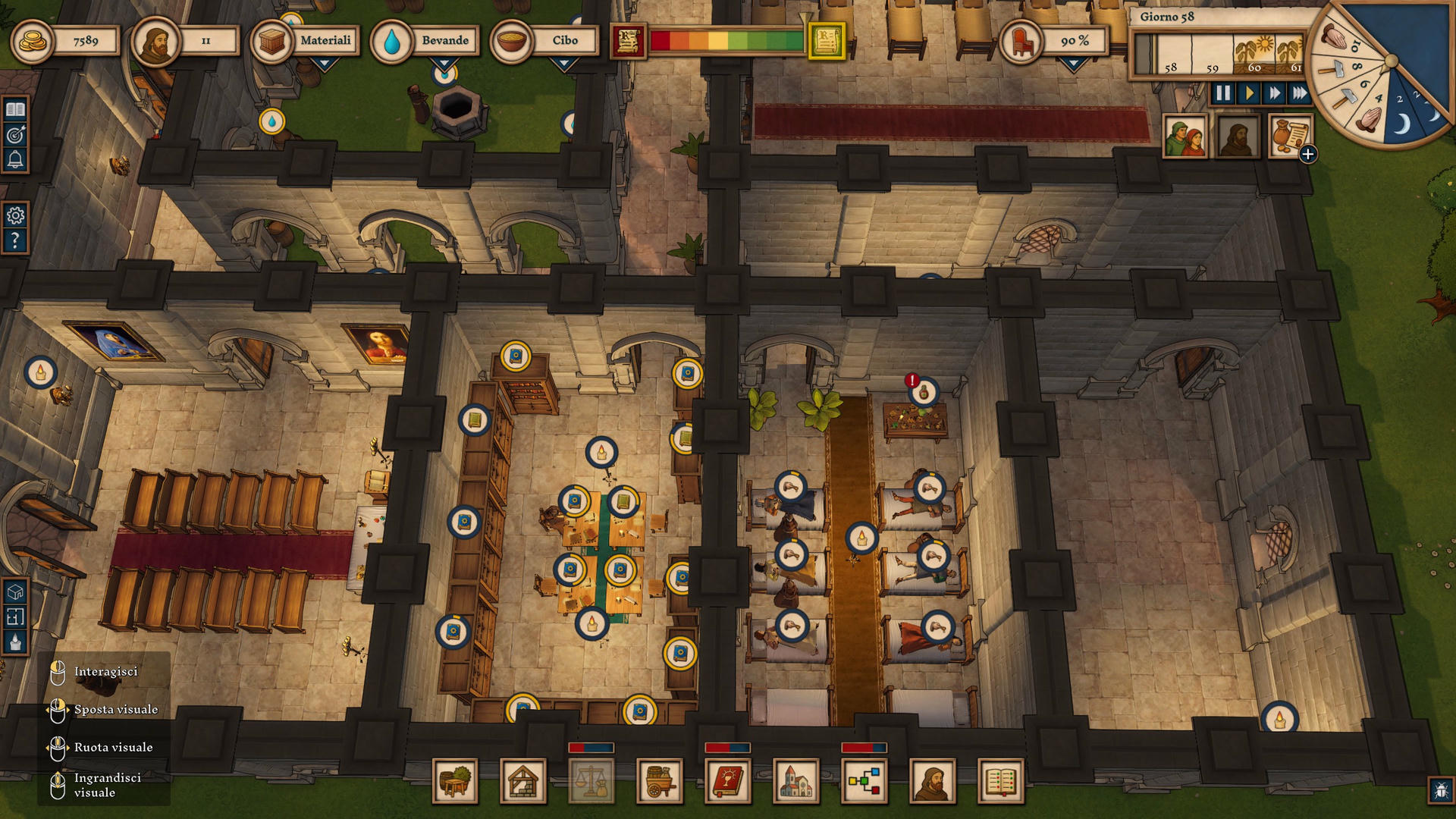
Interesting too is the monastery building and customisation system. It’s not simply about expanding spaces to host new activities, but about creating a functional and pleasant environment where each room has its own purpose.
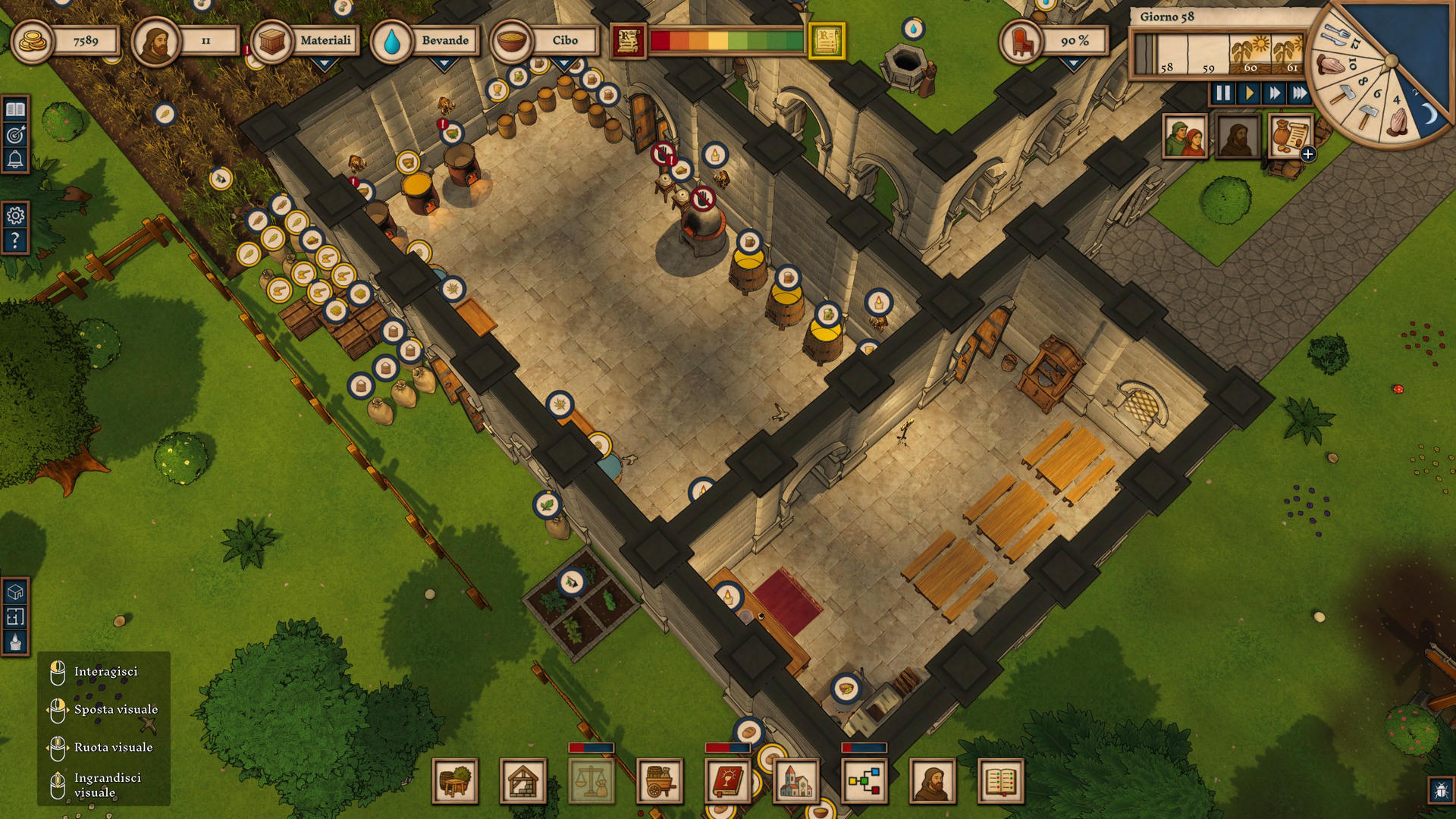
One of the ideas I appreciated most concerns the categorisation of environments: objects must be placed in the appropriate rooms, helping to maintain order and coherence within the structure. A detail that, beyond having its own managerial logic, provides a decidedly pleasant visual sensation, even to those who have never had the opportunity to closely experience the organisation of a real monastery.
Very nice too is the attention paid to the decorations. Aesthetic elements are not simply an addition for their own sake, but contribute positively to the well-being of the monks. Customising the environments therefore means also intervening on the quality of life of the community, giving further meaning to the care of the spaces.
The time, prayer, and the delicate balance of monastic life
One of the elements that most characterises Monastery: Ora et Labora is certainly the time management system.
The Monks’ Day is structured around the principle of the Ora et Labora, with moments dedicated to work, prayer, meals, and rest. I find this choice particularly interesting because it doesn’t merely serve as a side activity to managerial tasks, but becomes a true gameplay mechanic.
Time therefore assumes a central role in planning. Every activity must find its place within the day, and community organisation becomes a matter of balance.
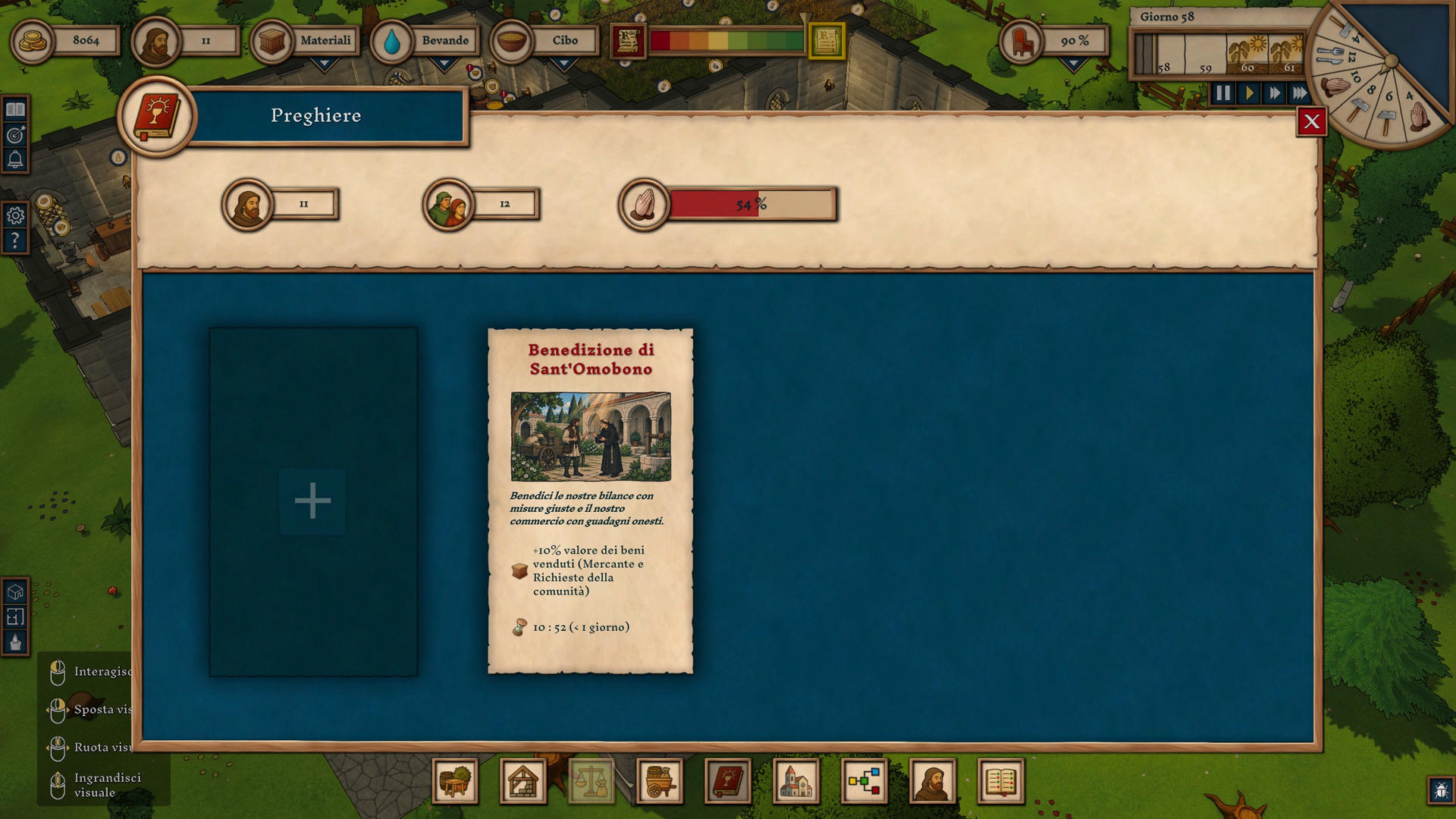
On this point, however, I believe there is still room for improvement. I would like to have greater flexibility in scheduling, allowing direct intervention in the allocation of time for work and prayer.
{segments: [{"id":0,"text":"This last one, in particular, is probably the component that, at the moment, I find least explored. The system proceeds in a rather automatic way and leaves little room for direct player management. Considering how important the concept of prayer is within the title's identity, I believe introducing additional mechanics and opportunities for player intervention could make it much more interesting."}]}
It’s not necessarily about overhauling the current system, but about giving the player some additional tools to truly feel responsible for the spiritual life of their community.
A graphics that surprise and conquer
If there’s one aspect that struck me more than any other—probably even more than I expected before I began—it’s the graphical component.
I must admit I didn’t expect to be so pleasantly surprised by the art direction of a management sim set in a medieval monastery. Yet Dragonkin Studios has managed to create a visually convincing "world".
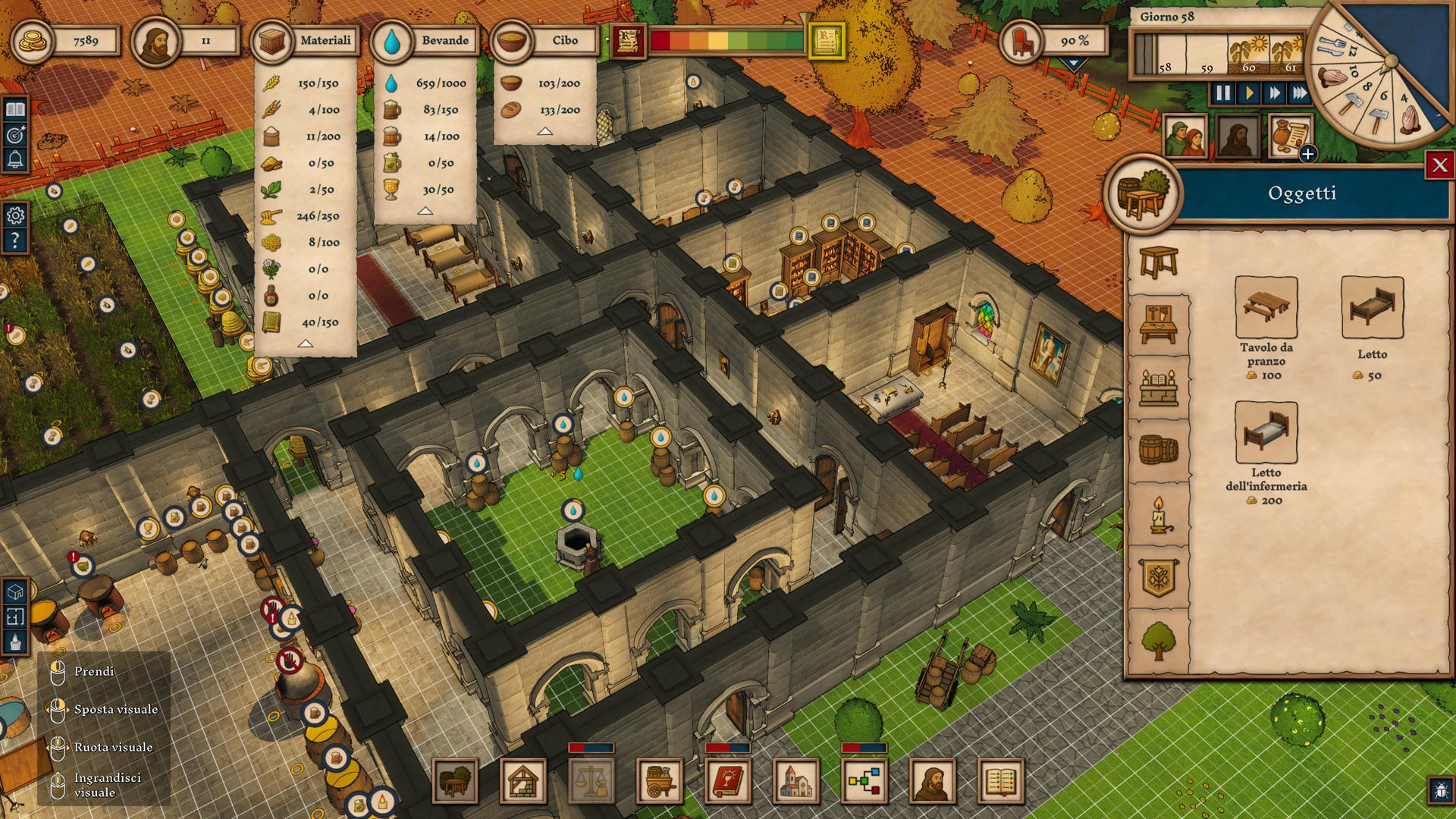
The visual style, the attention to environmental detail and the overall atmosphere contribute to making every corner of the monastery pleasant to observe. It’s not merely a matter of three-dimensional models or texture quality, but of how all elements manage to coexist, delivering a coherent and recognizable environment.
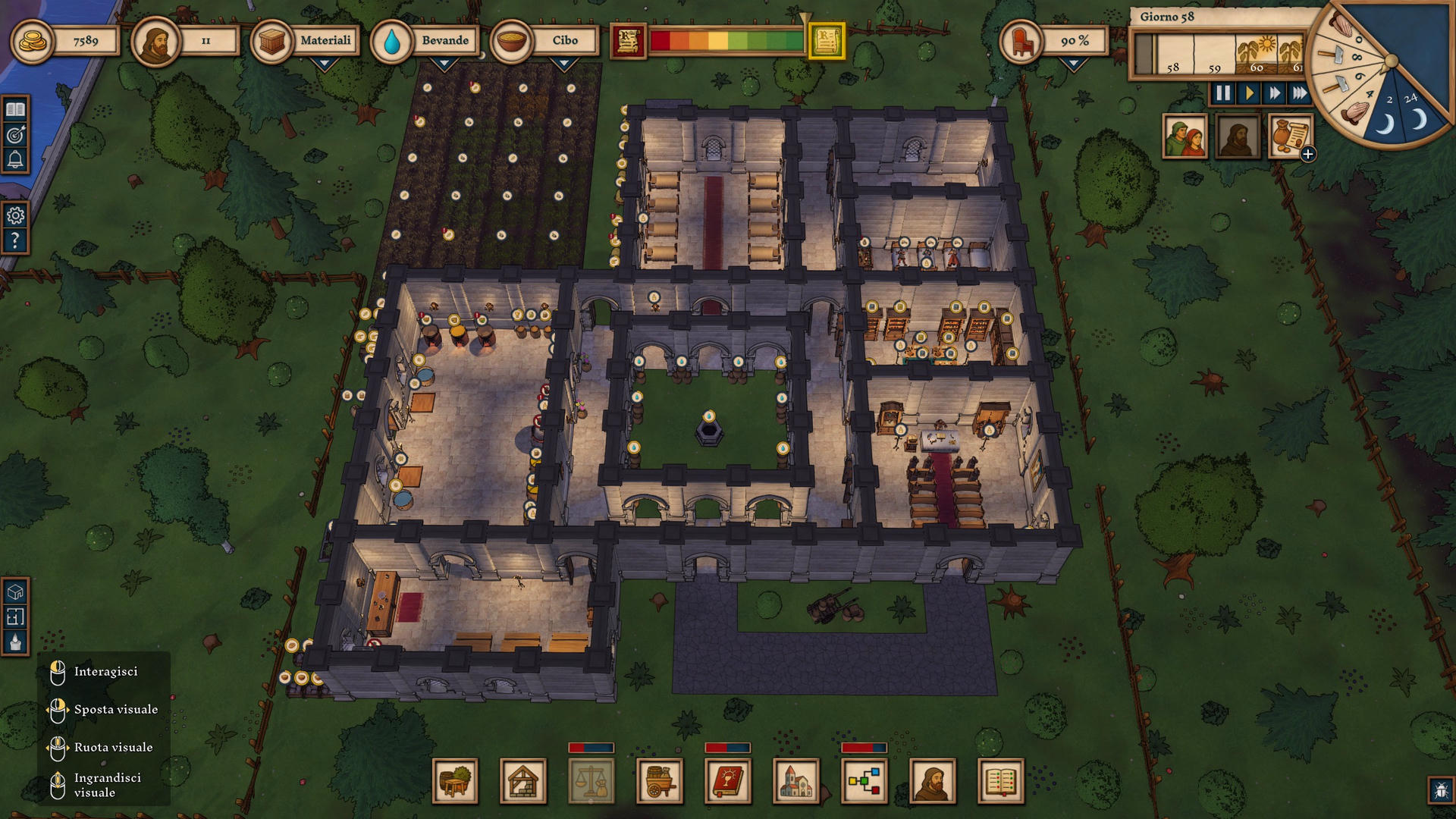
Building new buildings, expanding rooms, adding decorations, and watching your community move around within the created spaces becomes almost a pleasure in itself.
It’s one of those moments when you find yourself lingering a little longer on the view of your monastery, simply to appreciate the result of the work done.
Personally, I consider this aspect one of the product’s greatest strengths. The graphics are not merely an accompaniment to the management mechanics, but play a decisive role in creating that atmosphere that makes Monastery: Ora et Labora such an enjoyable experience.
Events and requests: there’s still work to be done
Not everything, naturally, is perfect.
One of the components on which I believe intervention is necessary concerns random events and requests from external community sources.
During my sessions I’ve found a certain repetitiveness in the events, which tend to recycle similar situations without always managing to surprise the player. Community requests, on various occasions, turn out to be quite easy to satisfy and don’t require a level of commitment that genuinely tests the monastery’s organisation.
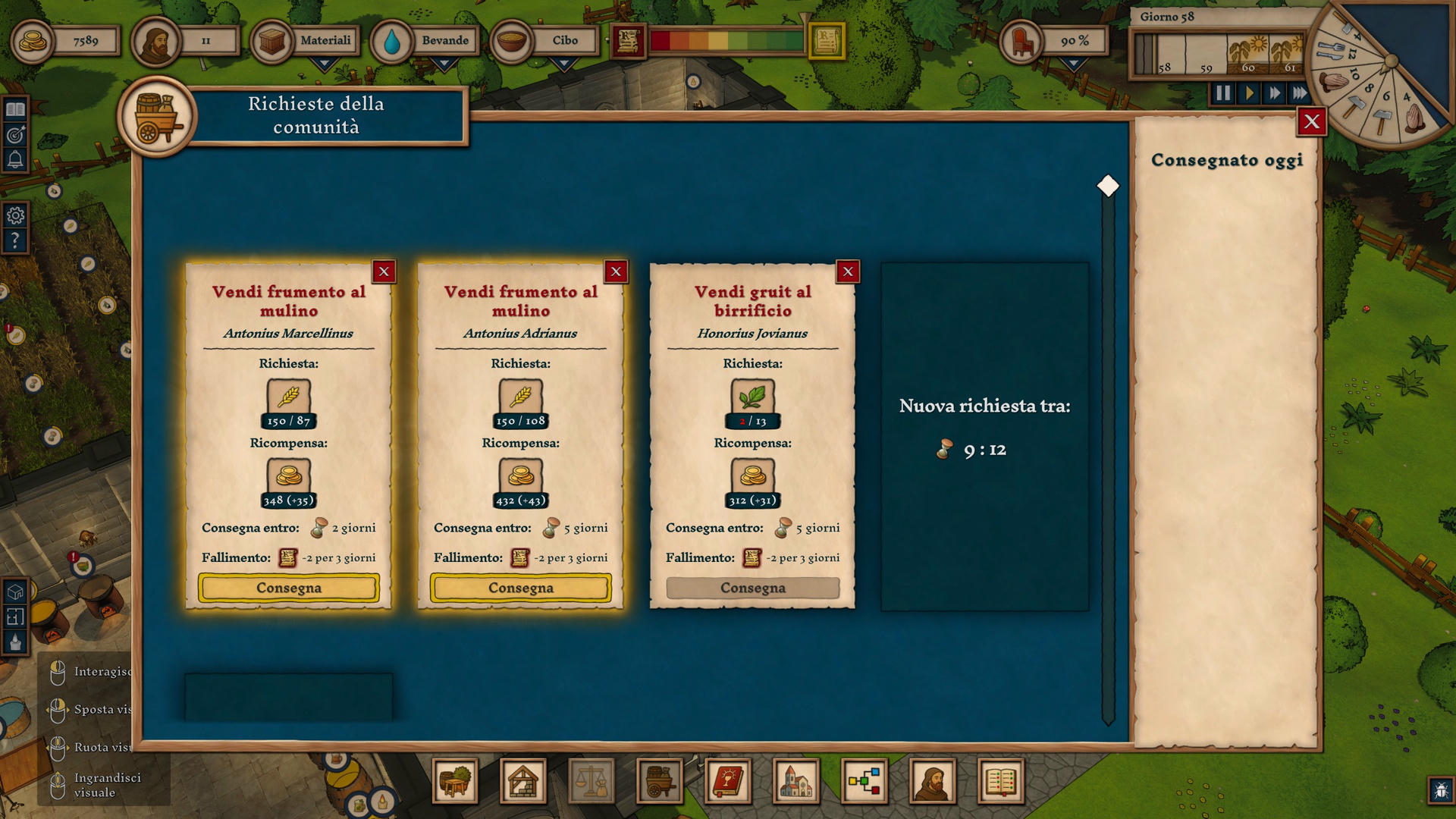
I’d like to see a greater variety of situations, but above all a more nuanced difficulty level. More challenging requests, events with different consequences, and scenarios capable of forcing the player to reconsider their plans could add much more depth to the experience.
A manager, especially when built on the growth of a community, needs to constantly test the decisions made. Having sufficient resources and well-organized production should be a satisfaction, but it shouldn’t necessarily turn every request into an easily achievable goal.
It’s precisely here that I see one of the most interesting areas for improvement for the future.
Optimisation: an Early Access already surprisingly stable
Another aspect that deserves a positive mention is certainly the technical one.
During my gameplay hours I encountered no bugs, loading issues, crashes, or particular optimisation-related difficulties.
The experience was smooth and stable, without those annoyances that often accompany productions still in early access.
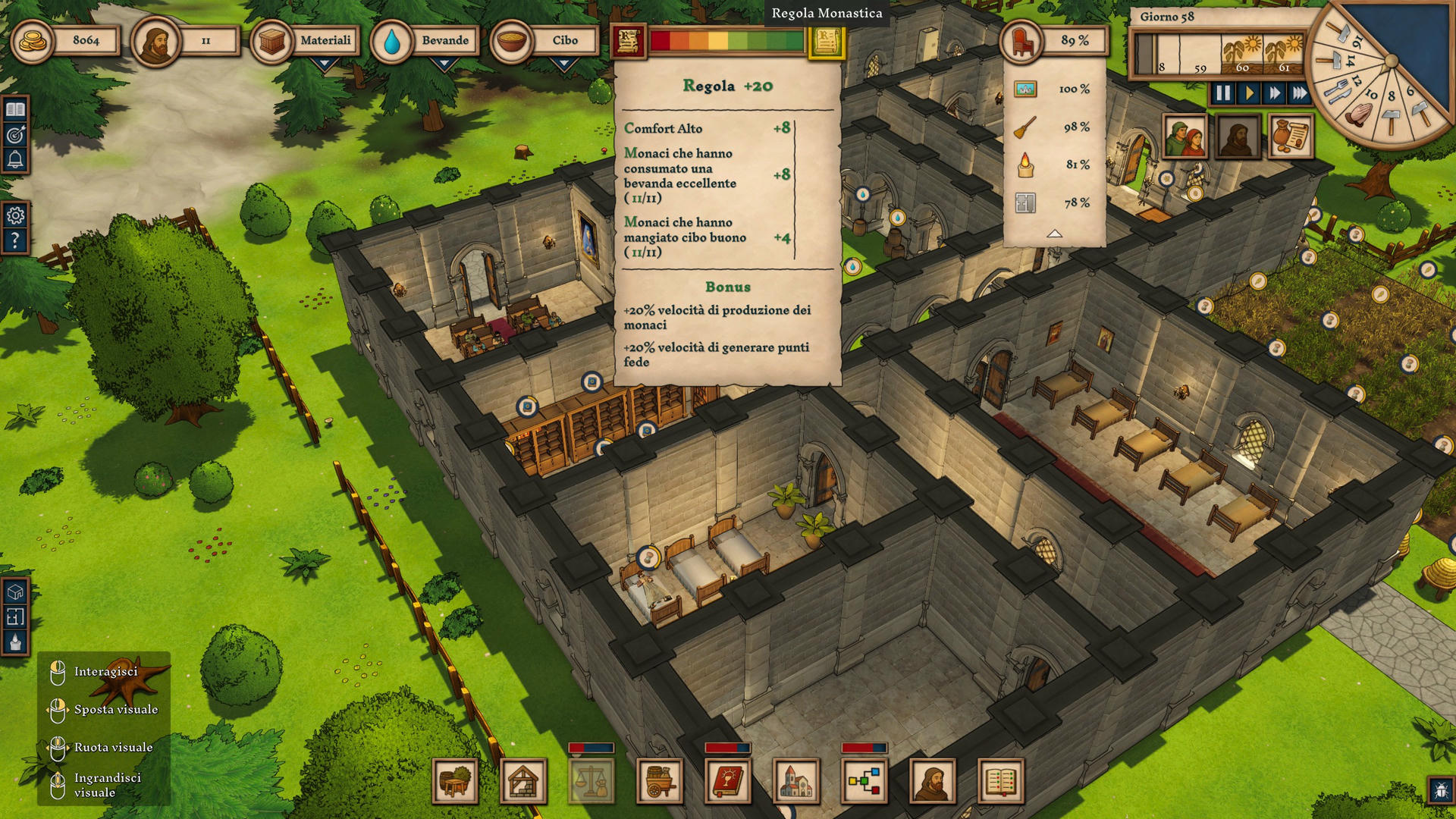
It’s a result that shouldn’t be taken for granted, especially considering we’re facing a project in constant evolution. Having such a solid technical foundation allows you to focus on enjoyment and management, without being forced to constantly interrupt the experience due to technical issues.
Of course, this is the result of my personal test and doesn't mean that every hardware configuration will necessarily deliver the same experience. That said, it remains an element that, in my case, significantly contributed to my overall assessment.
The future of the monastery: a roadmap brimming with possibilities
We’re likely heading towards the aspect that most intrigues me in the long term: the future of Monastery: Ora et Labora.
As an Early Access, the game offers already a decidedly interesting and complete foundation in its core mechanics. However, after spending twenty hours inside the monastery, split into two sessions of about ten hours each, I realised how important it is to introduce new content to increase variety and, above all, replayability.
The good news is that the developers seem to have fairly clear ideas.
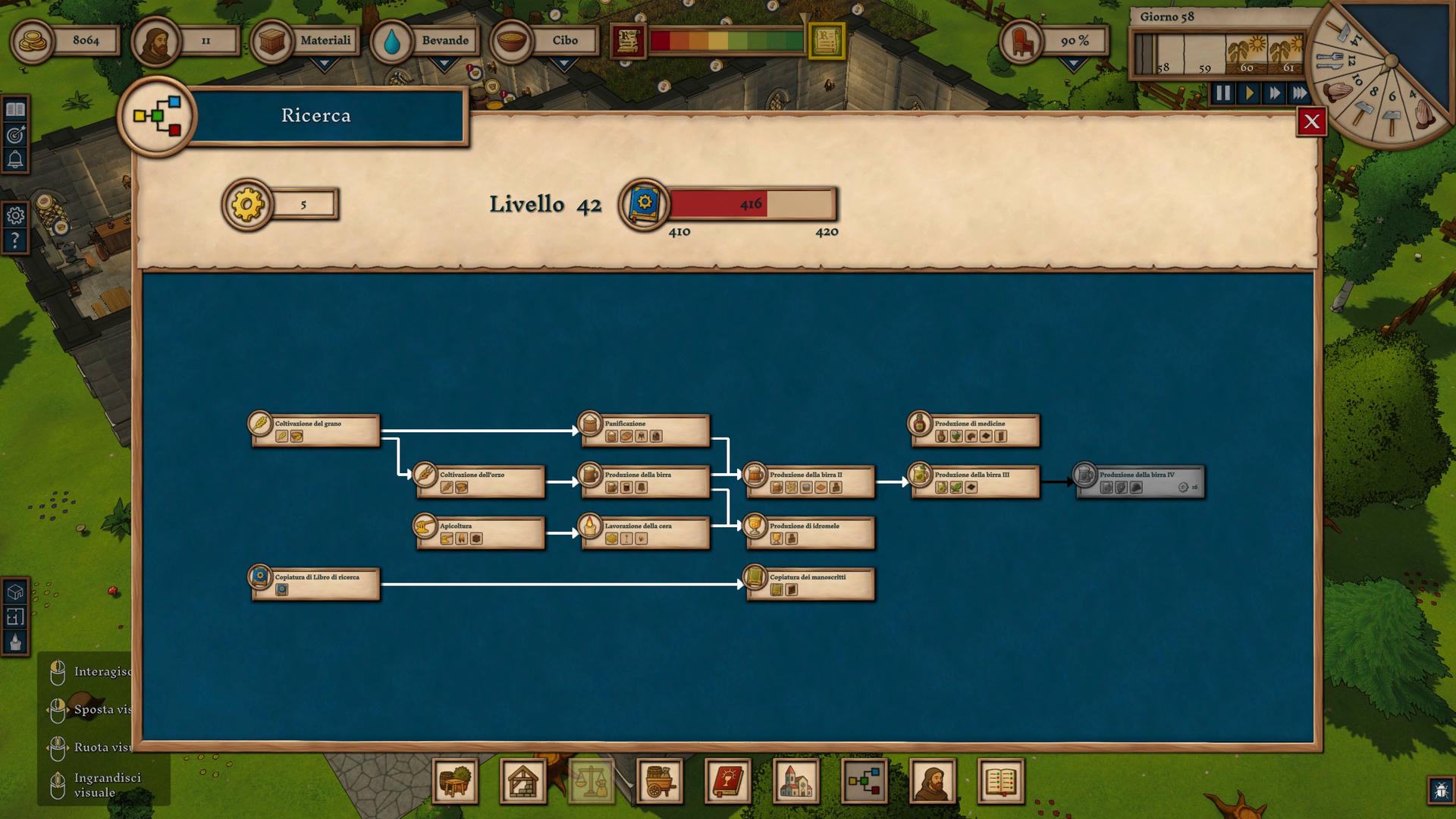
The roadmap published by Dragonkin Studios on its official website, together with the information shared through the project’s channels, outlines a development direction that leaves much hope. Among the indicated prospects are new buildings and production chains, additional decorations, events, and interactions with the outside world, as well as deeper mechanics dedicated to monastic life, spirituality, trade, and community relations.
There are also particularly interesting elements such as new monastic orders, religious events, relics, further animal-related productions, and visits by important characters within the monastery.
These are additions that, if developed with the right attention, could significantly expand the possibilities offered by the game.
During my meeting with the team, I also had the opportunity to personally share some ideas and suggestions about content that I believe could be interesting and more or less feasible. I don’t go into the details of the proposals, but I’m particularly curious to see which, if any, will be integrated into the project.
What convinces me most is that the current structure seems well-suited to a gradual expansion. The core mechanics are already in place, the production system works, and managing the monks provides a solid foundation upon which to build new possibilities.
So, the potential is there and it’s by no means lacking.
A collaboration we particularly enjoy: Monastic Life Bundle
Before reaching conclusions, there's one final curiosity I want to share.
On Steam is available the Monastic Life Bundle, a pack that combines Monastery: Ora et Labora and Ale Abbey - Monastery Brewery Tycoon, developed by Hammer & Ravens.
A collaboration that I welcomed with particular pleasure.
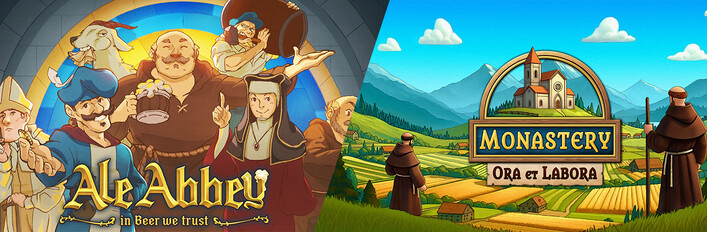
Those who follow us know that Ale Abbey is another project we’ve had the chance to cover over time, through reviews and direct interviews with the developers. It’s two productions that, although approached differently, share a setting and theme centered on monastic life and beer production.
Seeing them today as protagonists of the same marketing project is a nice satisfaction, especially considering that they are two realities we’ve followed with interest since their respective development phases.
The bundle also presents an interesting opportunity for those who wish to delve deeper into both titles, with a formula that allows purchasing the missing game at a dedicated price even for those who already own one of the two.
Conclusion: a monastery that will stay on my PC
By the end of this review, I believe it’s clear how Monastery: Ora et Labora has convinced me.
We are not facing a perfect product, and some mechanics, such as the prayer system, the variety of events, and the difficulty of requests, still need to be refined. But it would be ungenerous not to consider the context: we are talking about an Early Access that has already reached a genuinely interesting level of maturity.
Monk management, environment customisation, production chains and above all an artistic direction that I personally found spectacular are elements that work and succeed in building a pleasant and engaging experience.
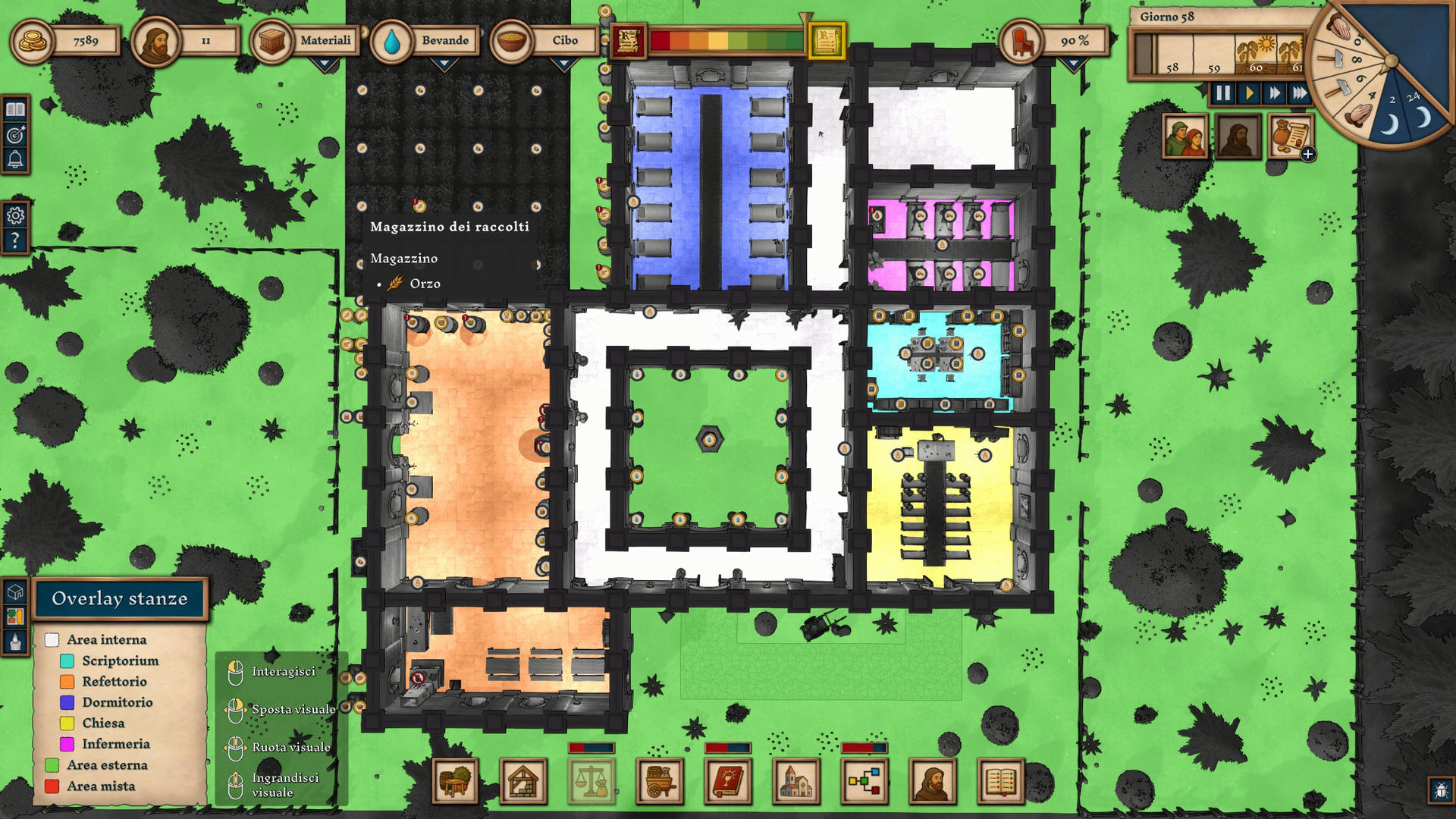
My two sessions of about ten hours each were also a way to test the replayability, trying to see whether, past the excitement of the first experience, there was still a desire to return to managing the monastery. The answer is decidedly yes.
And if I have to find a concluding phrase to describe what this game left me, I’d say Monastery: Ora et Labora is one of those rare titles reviewed that will remain installed on my PC.
For me, it’s an important sign of appreciation, but also a concrete indication for those still undecided about the purchase.
I want to conclude with an earnest wish to the entire team of Dragonkin Studios. It’s nice to see a local entity pursuing a project with this identity and these ambitions. I hope the journey of Monastery continues to be long and rich with satisfaction, and that this is merely one of many interesting projects we’ll have the chance to tell about in the future.
On my part, I will continue to follow your work with great interest, whether on this monastery or on any other adventure you decide to undertake.
They’re good, I’m convinced, the game is nice... in short, you’re missing out, you’re the one reading this!
Monastery: Ora et Labora deserves to be played, especially for those like me who are passionate about management sims.
Not convinced yet? Just know you can give the monks the names of your friends, obviously strictly in Latin... or almost!
About the Author