
PEPPERED is one of those titles you don’t realise you’re waiting for until it crashes over you with the force of an uncomfortable truth in a pixelated and deeply absurd world. Released at the heart of a video game season packed with indie studio Mostly Games, this existential platformer stands out as a bold narrative experiment — one that takes the rules of the medium and crushes them with a unsettling smile. It oozes originality from every pore, capable of shifting from deranged to disturbing in the space of a handful of pixels. PEPPERED has won us over with what truly matters: brilliant writing, meaningful choices and the persistent feeling of living a shared hallucination.
This content is provided by YouTube. To view it, you must allow external content. Activation may result in data being shared with the third party.
Nonsense and nihilism
The opening is simple, but extraordinarily effective: humanity is on the brink of collapse and no one seems to care.
Except you (cit. Fabri Fibra 2010).
You’re just another intern, stuck in a grey cubicle, but something inside you clicks and you decide to do the unthinkable: save the world. The result? You end up labelled as a terrorist, hunted by police, armed civilians, and journalists chasing sensationalism.
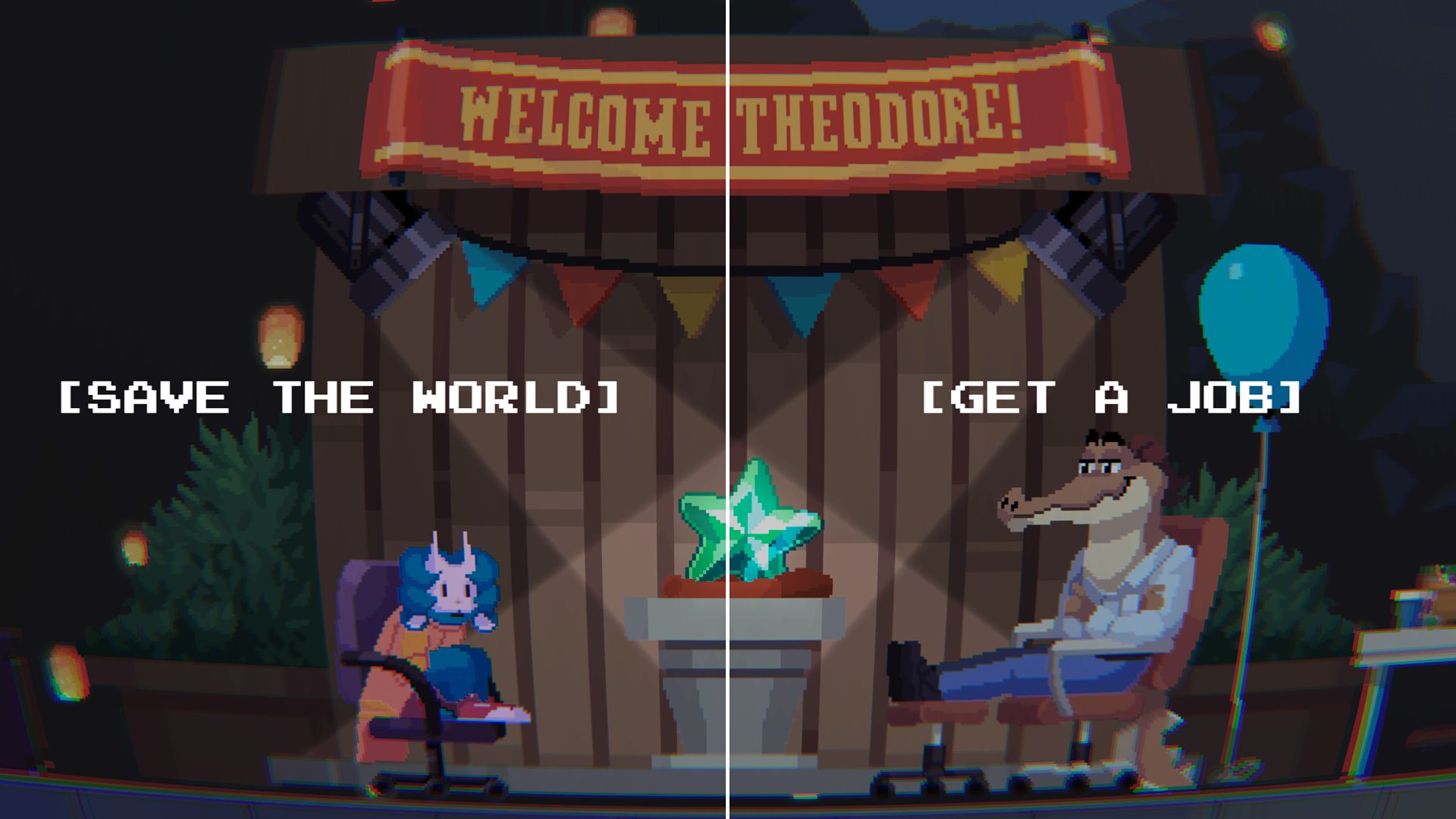
PEPPERED però is not just a simple dystopian tale. It’s a narrative labyrinth that changes shape at every junction, and every failure or success opens new doors, leading to new scenes, characters, settings — or even gameplay mechanics. From fleeing on a shopping cart to a dialectical duel with a street madman, from total secrecy to uncontrolled chaos, every run becomes a different story. Each player will end up in a different place, not only within the game world, but inside themselves.
Failure here is never punitive: it’s the other side of progress. Making a mistake means witnessing a new piece of the puzzle, to avoid missing the chance to see the full picture.
Run. Jump. Die. Scream. Repeat.
Mechanically, PEPPERED is as ruthless as it is inconsistent. The platforming is the most controversial part of the experience: the controls are stiff, sometimes imprecise, and the game’s physics seem to respond to its own internal logic. The control system can become frustrating, especially during high-stress moments where timing is everything, and a misjudged jump can mean far more than just a simple fall.
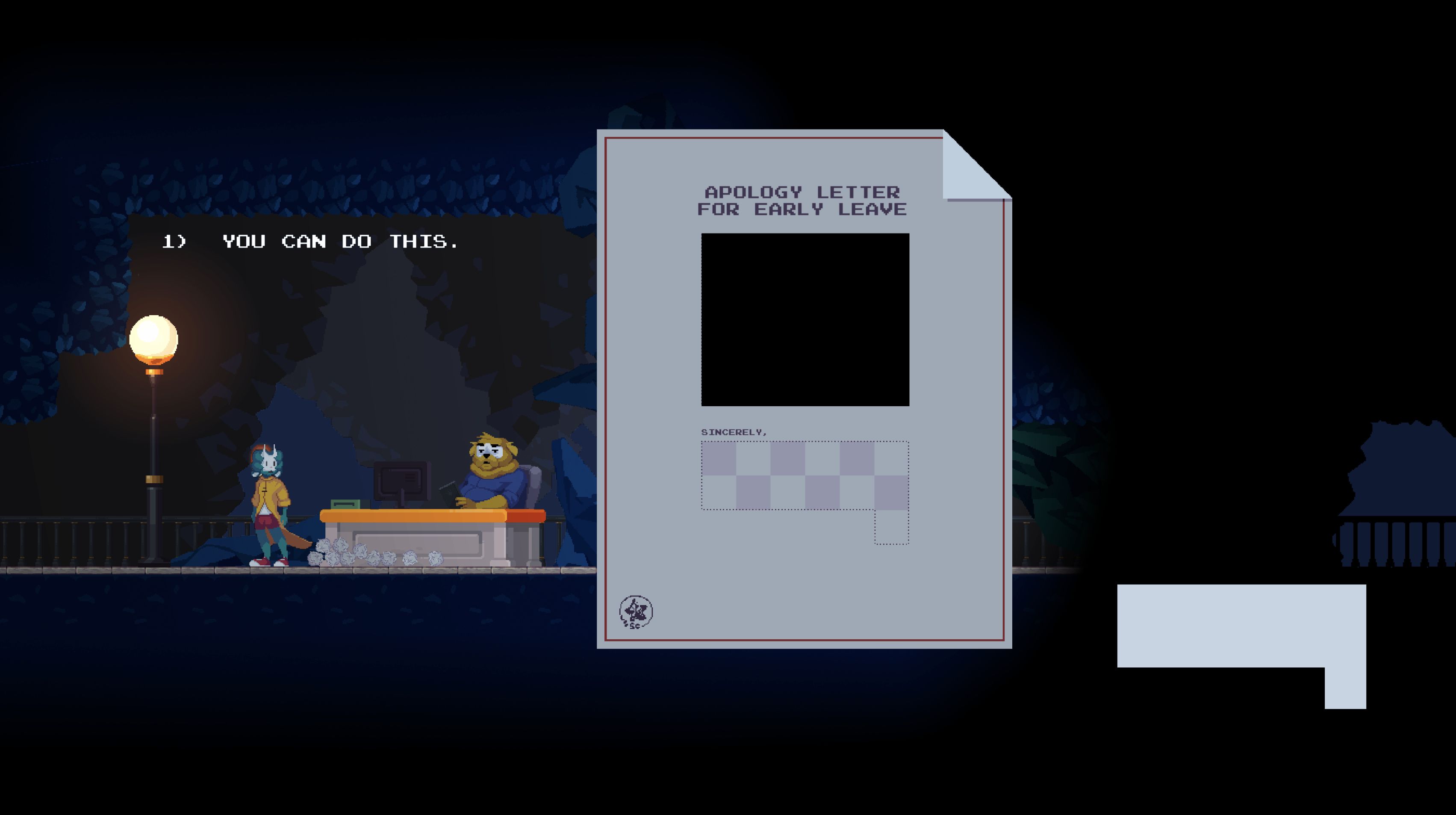
Stealth sections offer alternatives: you can go unnoticed, unleash hell, or find absurd solutions, sometimes purely comedic, other times surprisingly ingenious. The point is that any approach leaves a trace in the world. There’s no reset. No “retry”. There’s only the consequence.
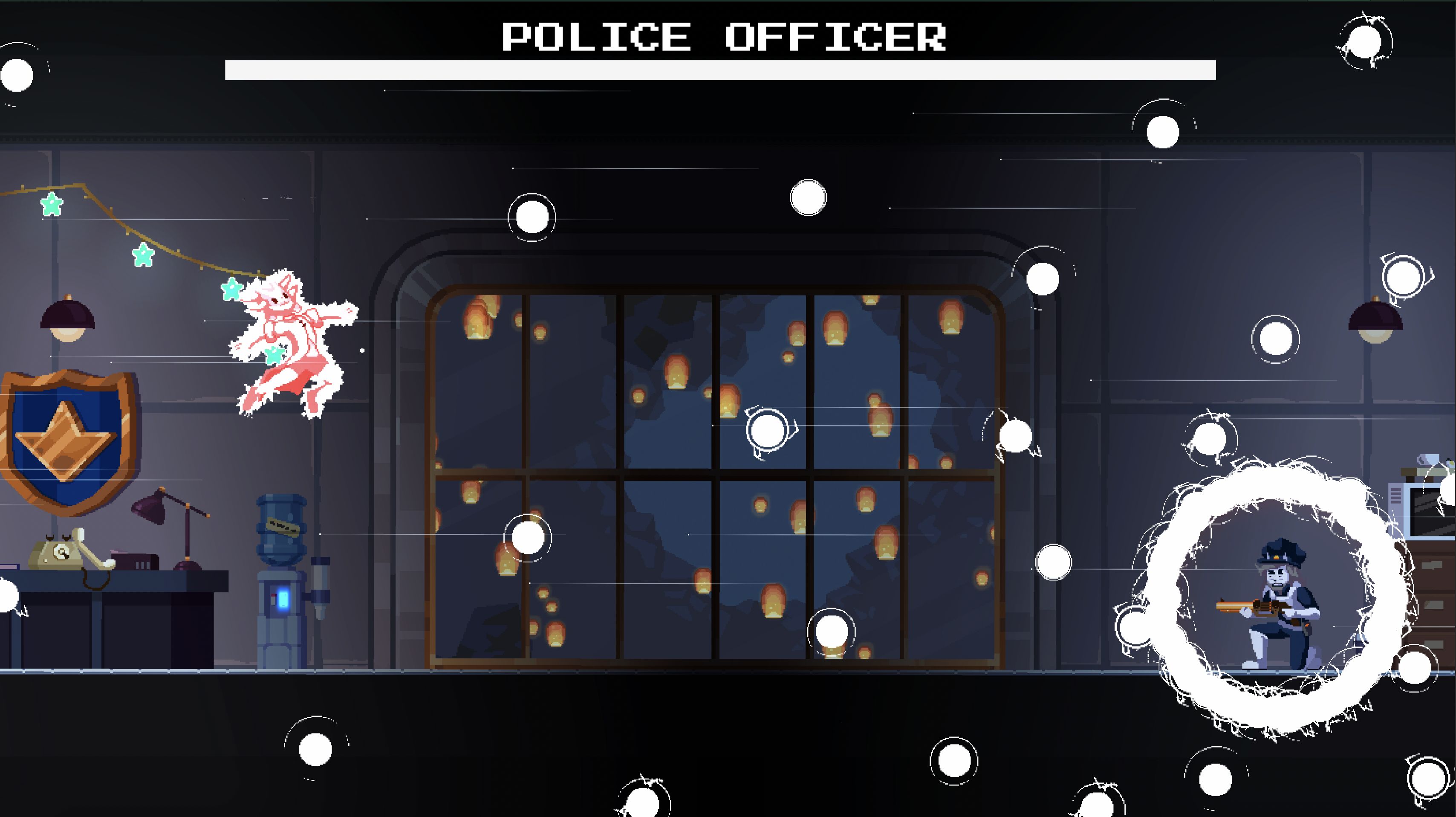
The boss fights, in particular, are one of the most brilliant and cruel ideas: if you lose, you’ve lost. The game doesn’t give you a second chance. But instead of stopping you, the world accepts your defeat and carries on, changing — and perhaps even worsening — precisely because of you. It’s a rare philosophy in contemporary video games, which instead tends to pamper the player.
PEPPERED looks you in the eye and says: “You’ve failed. And now?”
Desperate humour and wisdom from the pavement
If the gameplay can divide, the writing is what unites. PEPPERED boasts one of the sharpest pens in the recent indie scene. The dialogue is sharp, self-deprecating, yet capable of touching genuine emotional chords. One moment you’re laughing at a reference to a classic indie from 2010 (fans will catch the wink), and the next you’re facing a disarmingly reflective meditation on loneliness or the search for meaning in a world that has stopped looking for it.
The secondary characters, grotesque and memorable, seem to have all come from a theatre of the absurd. None are truly normal, yet each, in their own way, appears to convey something profoundly real. There’s a nihilistic vein beneath the humour, a melancholic echo behind every gag. It’s a difficult balance to strike, and the game manages it surprisingly well.
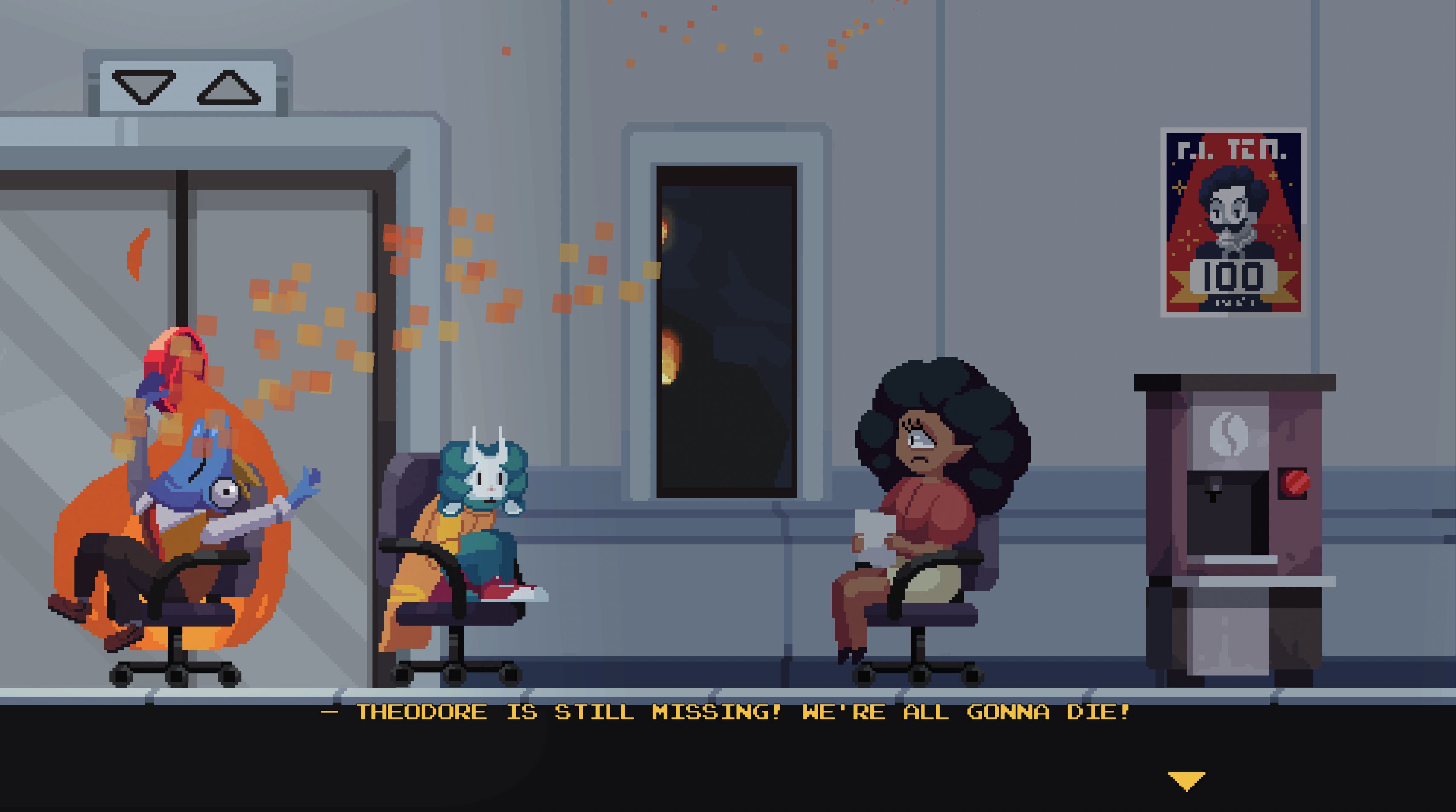
Of course, some jokes are overused, like the now-famous “INTENSIFIES”, which after the third time becomes less effective... but it’s a small price to pay for an work that, overall, manages to say something new with its own voice.
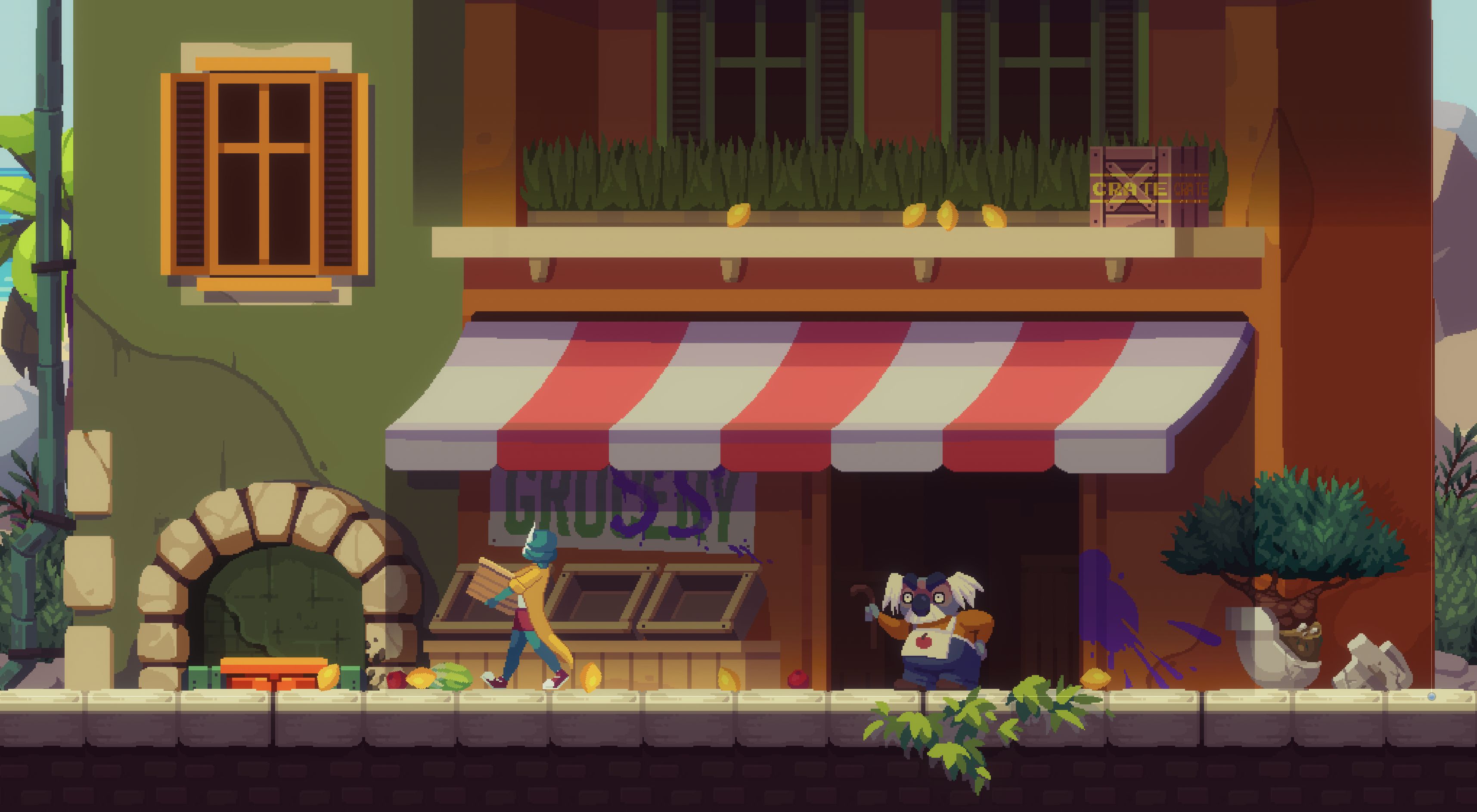
Away from the polished, triple-A slickness, PEPPERED chooses an artistic direction that embraces chaos. The visual style is lo-fi, deliberately imperfect, yet also rich in personality. Every environment seems drawn by a mind overloaded with ideas and sarcasm: one moves from oppressive offices to psychedelic forests, from industrial subterranean tunnels to cities in revolt.
In conclusion
PEPPERED is not a game to recommend lightly. It isn’t because it doesn’t make you feel powerful, nor does it offer the comfort of “try again”. It hits you with punches and then watches you decide whether to stand up or stay on the ground. For some, it will be a revelation. For others, a frustrating nightmare. But for those who can accept its rules and embrace its anarchic spirit, PEPPERED can be a cathartic experience. It’s an interactive story about defeat, chaos, and the accidental beauty that can emerge even when things go wrong.
Ah, and yes, there’s also an office chair you can spin forever. And in that pointless, repetitive gesture, perhaps, lies the entire point of the game.
About the Author