A couple of days ago, I spoke to you about Aka, a charming life-sim for Switch where, in the role of a gentle red panda, we’re called upon to rediscover our inner peace after the suffering inflicted by a life as a soldier in war. A title with an interesting concept that nevertheless falls short due to evident technical issues, compounded by the fact that it was the product of a single developer’s efforts.
Harvestella is in some way similar to Aka, as it represents an experiment, an alchemical blend between life-sim and JRPG. And if it’s true that behind the title there is a respected publisher like Square Enix, it’s immediately clear that Harvestella does not represent one of the publisher’s flagship IPs, but rather a so-called “double-A”; yet perhaps it’s precisely the experimental soul of these titles, free from the burden of having to become, like their bigger AAA siblings, commercial successes, that allows them to represent, in recent years, the most curious, original and fun gaming experiences.
Harvestella has been out for well over two months on Nintendo Switch e PC but, "I won't lie", it has taken so much of my time that I ended up investing a number of hours exceeding three digits at the time of review. In short, before discussing it, I really wanted to fully experience it to discover everything it had to offer, and, small spoiler, there’s genuinely a lot on the table.
This content is provided by YouTube. To view it, you must allow external content. Activation may result in data being shared with the third party.
Amnesia, amnesia rubbish
The narrative opening of Harvestella, as one might expect, doesn’t stray far from a classic trope found in many JRPG scripts (and not just those): as a character we’ve created, via a politically correct editor (one can be non-binary) but decidedly poor, we awaken with no memories in a foreign world shrouded in a mysterious, unsettling fog. Between dreamlike visions and fleeting moments of clarity, we learn that this malevolent mist is known to the people of Lethe (the village where we discover we’ve found ourselves) "Quietus", and appears for only one day with the changing of the seasons.
The Quietus is lethal to every living being but, let’s not pretend, we are miraculously immune: this means that on that fateful day, while every other inhabitant barricades themselves indoors to escape certain death, we can roam freely without suffering any consequences. In the meantime, we meet some key characters from Lethe, such as the elderly mayor and Cres, the village doctor, who will gradually introduce us to the story and the game mechanics.
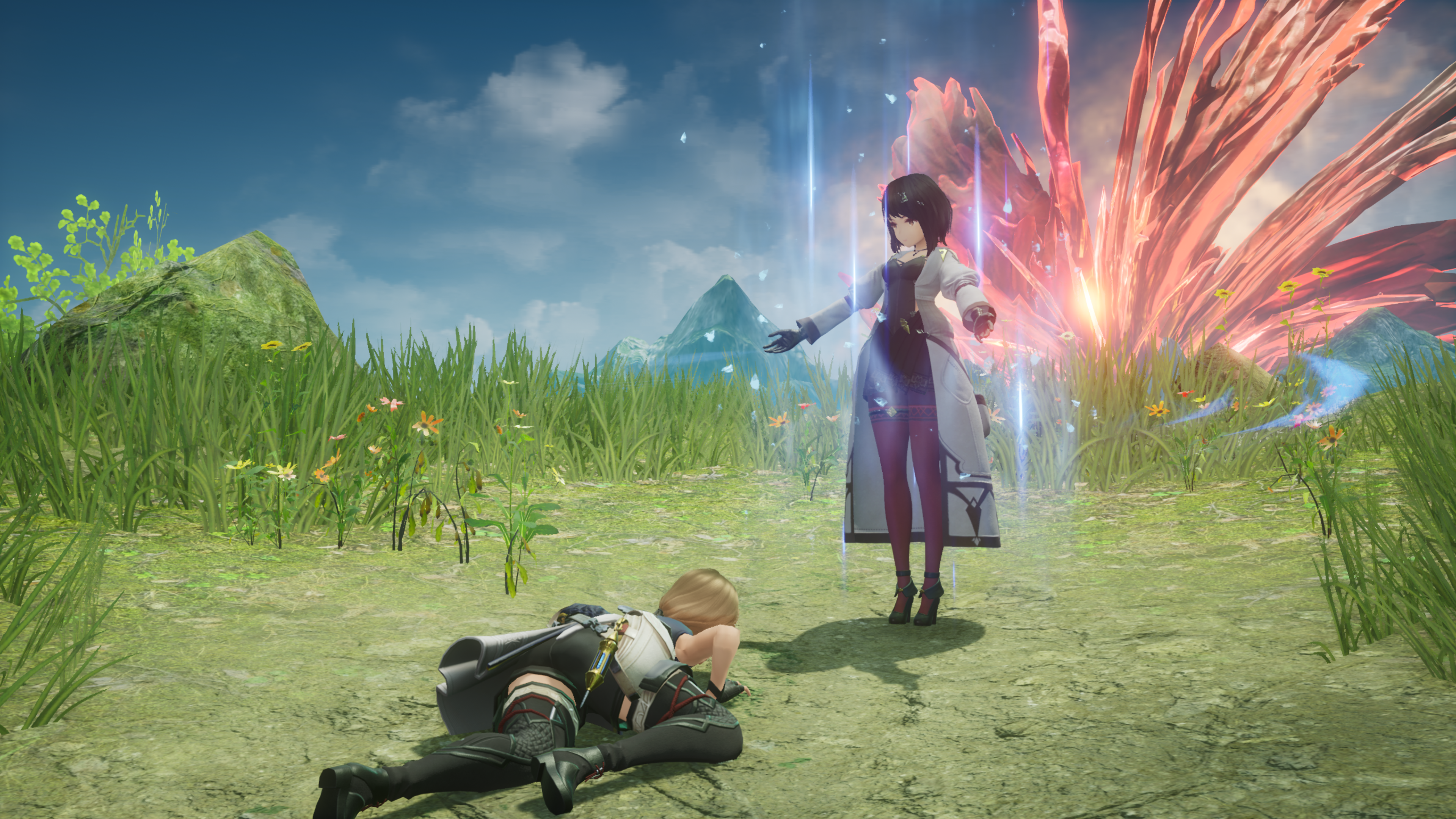
Before even settling in, a meteorite crashes down just outside the village. Inside, we’ll discover hiding a terrifying member of the Omen, beings completely encased in shimmering futuristic armour, according to the villagers, the villains responsible for the Quietus, which has recently become more unstable and dangerous. Unsurprisingly, however, inside the armour we find a young red-haired girl, Aria, who claims to come from the future but remembers absolutely nothing of her past.
We will therefore become roommates with Aria, sharing not only a room in a farm just outside Lethe (which will, in effect, become our home), but also the misfortune of amnesic disturbances. A cliché, perhaps a bit overused by the writers, but one that serves as the premise for the unfolding of the main story, focused on discovering the meaning of the Seaslight — colossal crystals that pierce the main cities of this world — and on how these may help us and Aria uncover our identities and return to our respective realities.
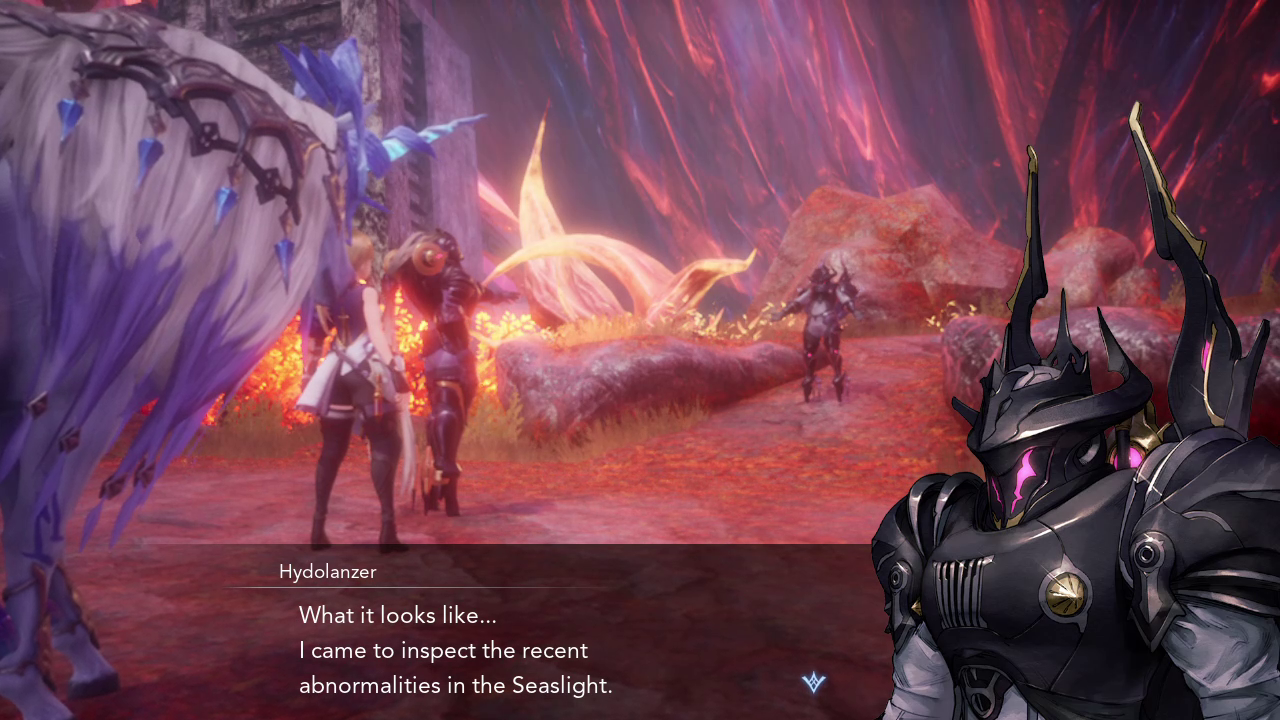
Well, the story of Harvestella takes a few hours to get going and I can’t deny that it started to genuinely engage me only after about ten hours, having completed the first dungeon and its boss fight. Unlike other JRPGs I’ve played, however, this title has its own excellent variety and depth of side quests (which don’t merely consist of tedious and repetitive fetch quests), sometimes even intricately woven together, and a friendship development system with the various members who will enrich our party and grant us truly interesting backstories about the characters who will help us in battle.
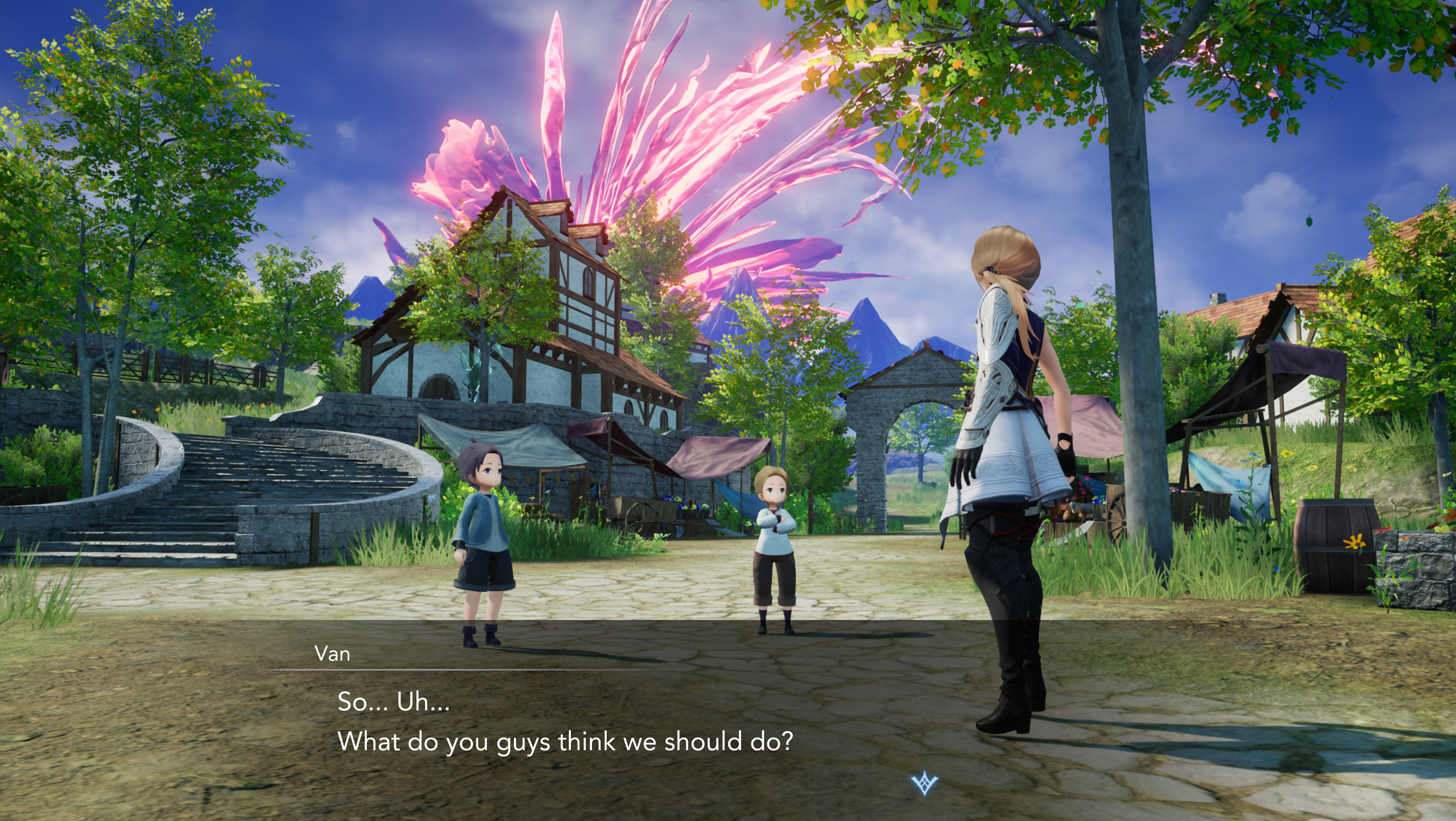
Apart from helping us earn important rewards, side-quests and rapport-quests help us dive deeper into what might seem to a casual player as yet another stereotypical JRPG, but which instead hides small gems of writing and scripting. Unfortunately, we can’t skip cut-scenes and dialogue, a feature that would certainly have saved us precious time had the plot of a particular quest turned out to be of no particular interest to us. During the dialogues we can choose what our alter-ego says, but, in essence, these choices have no impact on the course of the conversation.
At the old farm...
Imagine if Stardew Valley and Final Fantasy or Bravely Default conceived a child. You’ve just gotten the gameplay of Harvestella, which is fundamentally split into two interconnected parts: one a life-sim, where we must focus on developing our farm, cultivating the fruits of the land according to the seasons, raising animals, dedicating ourselves to cooking, crafting, and fishing; and the other a more purely JRPG, consisting not only of completing various quests, main or side, but also of more action-oriented dungeon exploration and boss-fights.
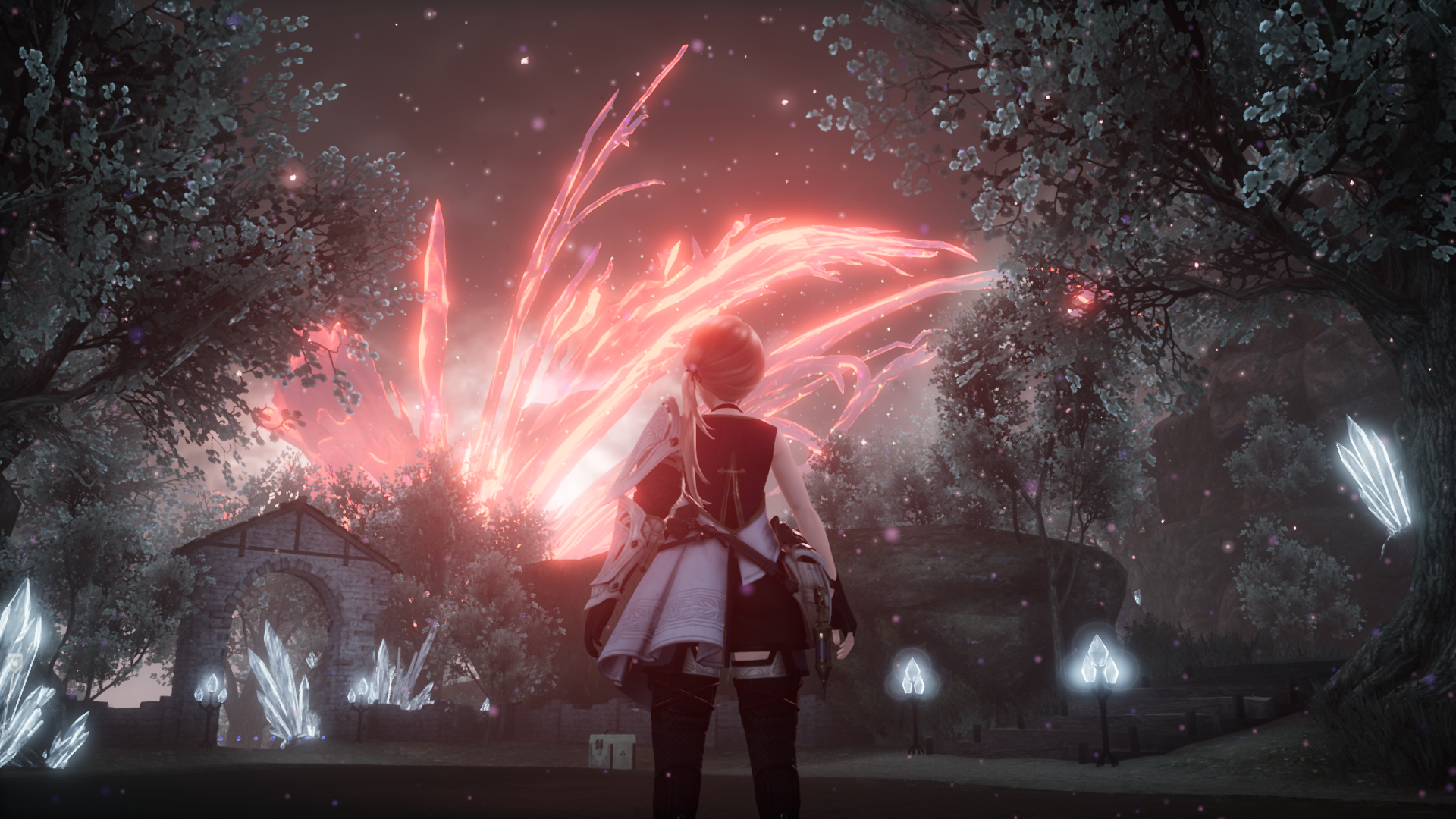
Each of the two gameplay components serves the other, and it is for this reason that the experiment with Harvestella can be said to have succeeded: on one hand, dedicating ourselves to planting and harvesting fruits and vegetables, eggs and milk and their refinement, as well as fishing and cooking, will allow us to earn valuable money to invest in improving our equipment (and that of our ragtag companions); on the other hand, venturing into the various dungeons scattered across the game map will allow us to loot resources that, in turn, will be useful for crafting, or even to find seeds that we can plant on our patch of land, saving us the trouble of purchasing them from the vendors of the various towns, with a corresponding saving of Grilla, the in-game currency which, at least initially, will be quite scarce.
Clear, you never end up stuck in a deadlock, the game is quite forgiving with the player and their economic management (we’re not playing a pure accounting simulation, after all), but if you commit to a certain strategy in rural life, you’ll be able to accumulate a decent fortune more efficiently, allowing you to invest in expanding and developing your land.
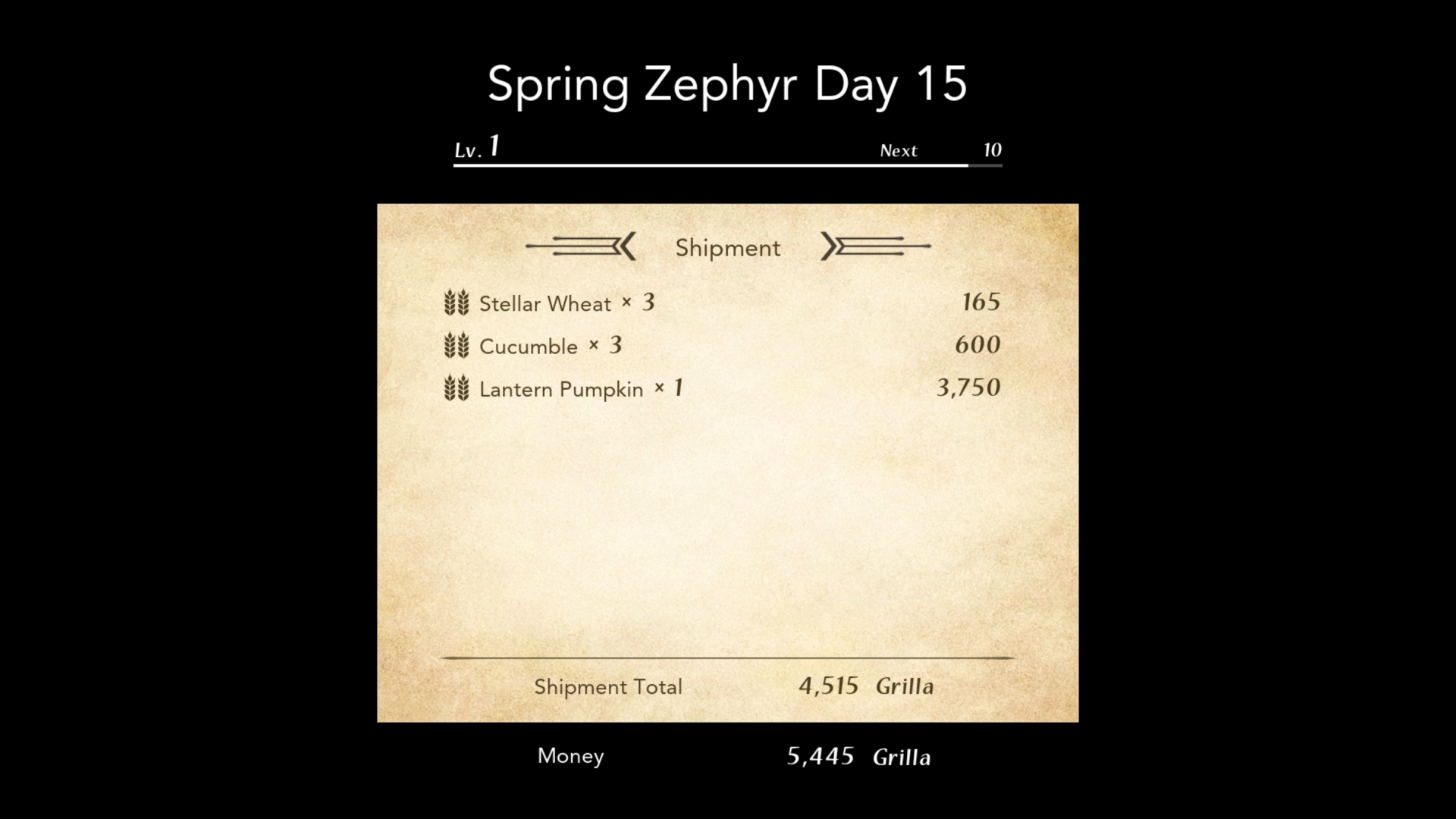
There are two main elements that define our activities in Harvestella: stamina and time . These turn out to be two “currencies” perhaps even more important than the Grilla , since every action we take will consume both. Plowing the land, planting seeds, watering plants, fishing, fighting, crafting: each of these actions will lower our stamina bar and consume time. Each day begins at 6 a.m. and ends at late night, but from 9 p.m. onwards, our character starts to feel drowsy and suffers from particularly dangerous debuffs, especially in combat.
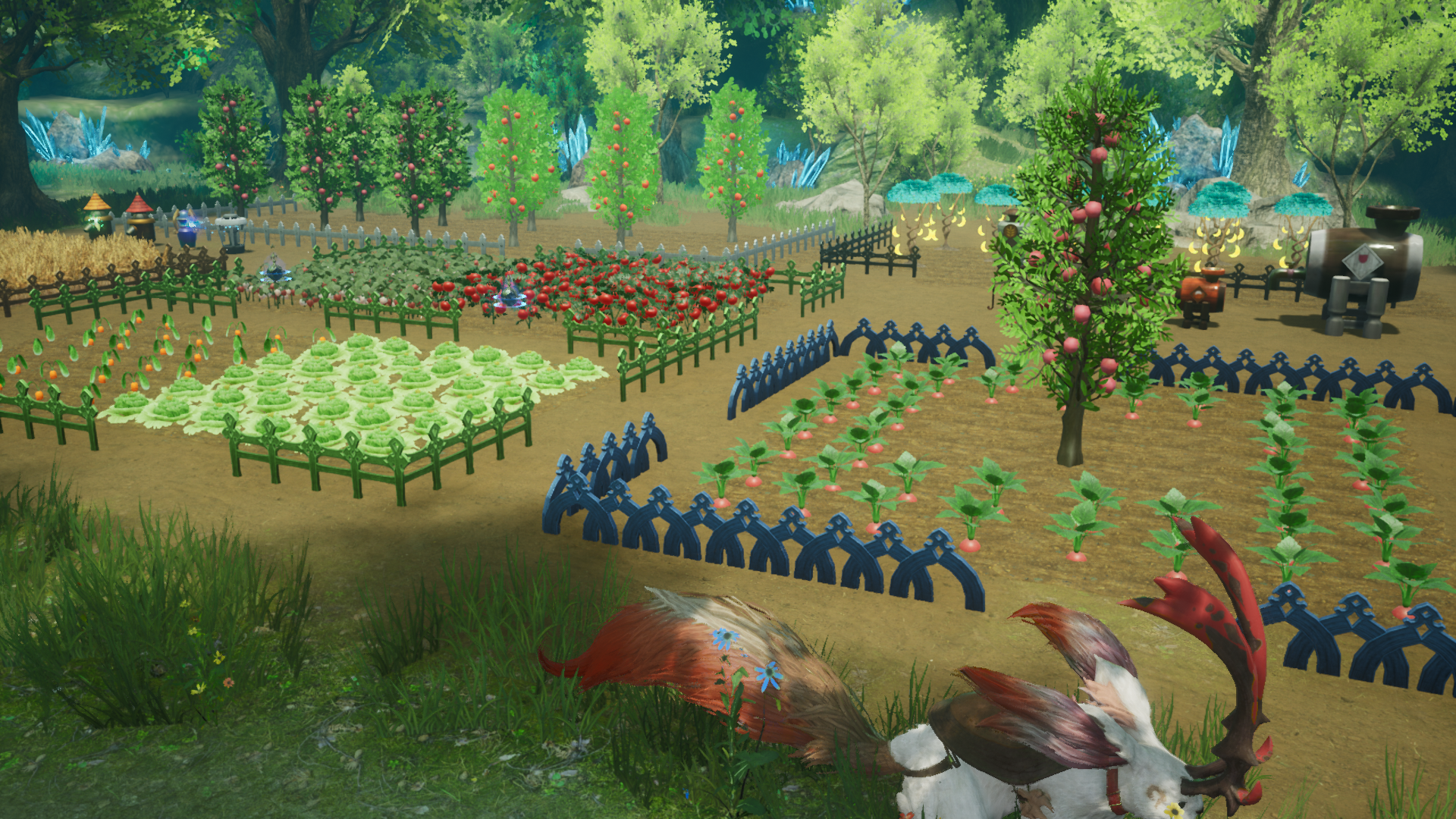
Good time management will therefore be essential, but so too will stamina management: as we expand our farm, agricultural work will become increasingly difficult and will take up more of our daily schedule, forcing us to sometimes abandon certain activities due to lack of time or stamina. Fortunately, the kitchen comes to our aid, allowing us to prepare delicious dishes capable of restoring our HP and stamina bars.
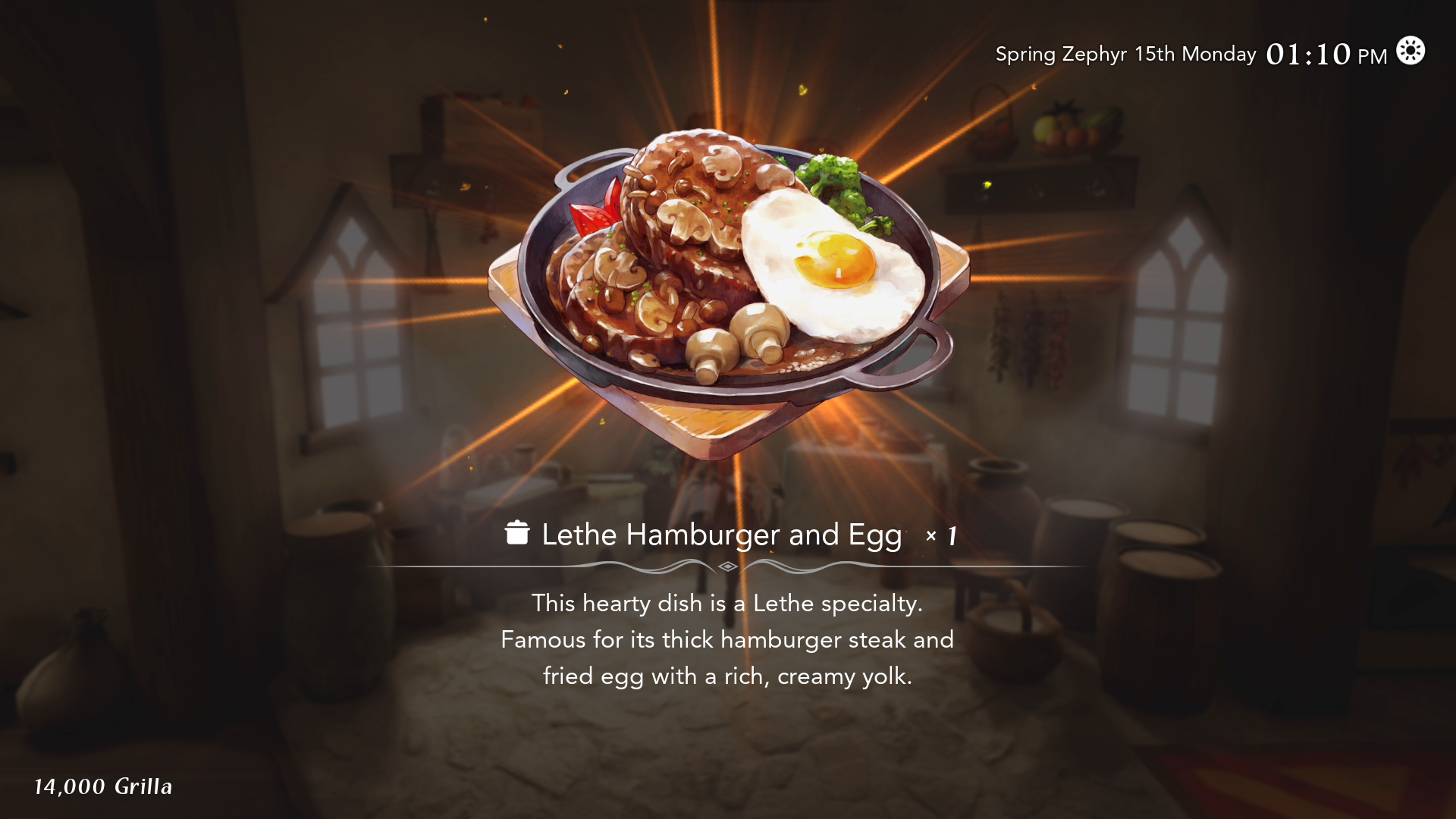
Continuing with the adventure, we will also meet four eccentric fairies (one for each natural element) who will provide us with essential assistance in managing our farm, but not for free. We will instead be given a hefty book containing the necessary tasks to win the favour of these fairies (such as collecting a certain amount of a specific fruit), which, as reward, will grant us key skills to optimise our work in the fields. For example, the water fairy will allow us to increase the reach of our watering can, enabling us to water up to three plants simultaneously, while the earth fairy will allow us to plough up to nine soil slots in a single go.
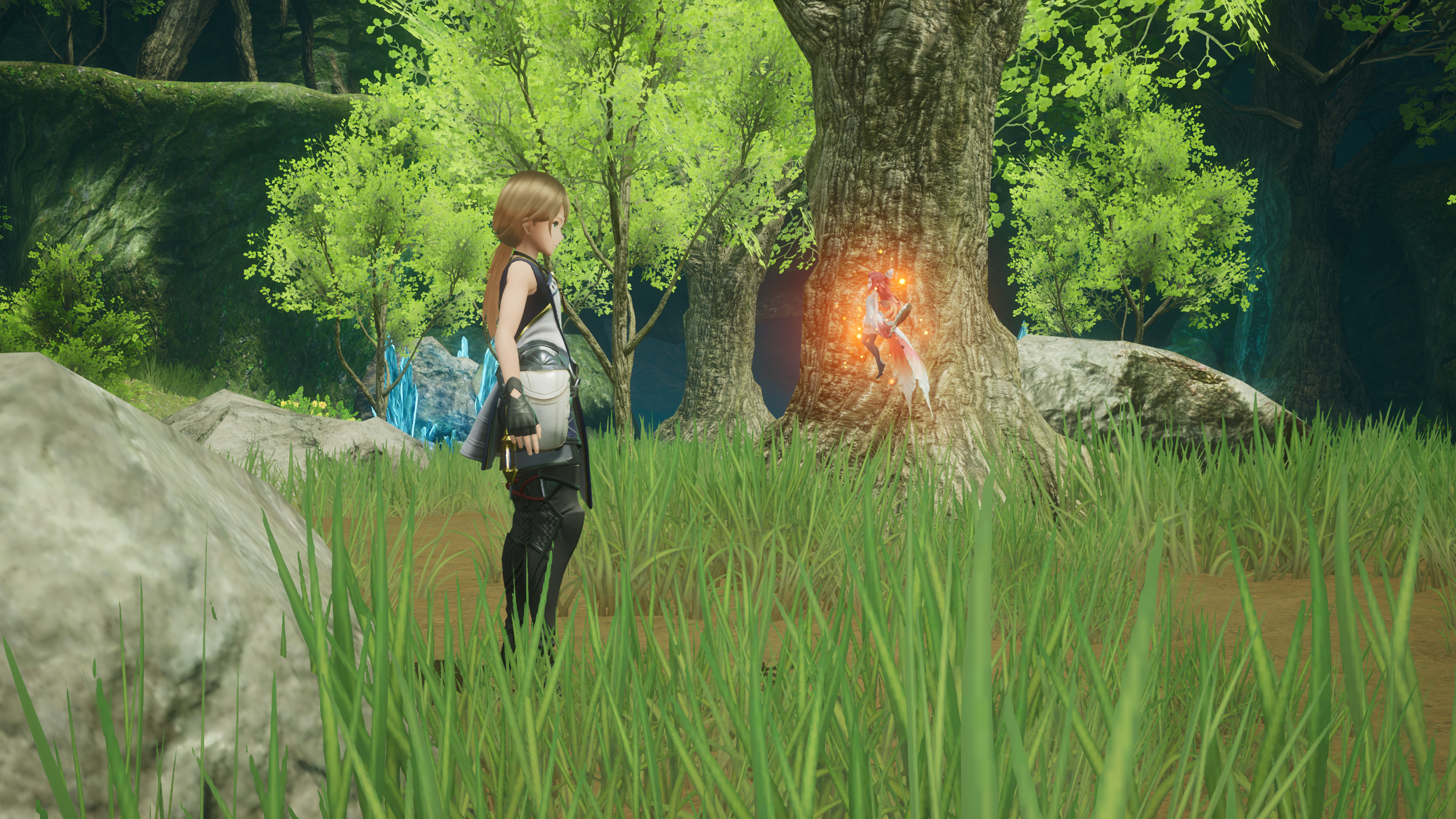
Thanks to crafting, we will also be able to create tools that will further assist our activities, such as automatic irrigation systems, or tools essential for refining the raw materials we collect (for example, we could turn eggs into delicious mayonnaise or milk into cheese).
According to my experience, much of the morning will be spent working in the fields, but theoretically, this can also be completely ignored in favour of continuing the main quest, as one can equally well dedicate themselves entirely to farming without progressing through the story. However, every 30 days (plus one from Quietus) you’ll advance to the next season, and if you’ve fallen behind on the story and haven’t therefore unlocked the seeds appropriate to the season you’re in, you could genuinely struggle to accumulate money, forcing yourself to spend hours and hours farming monsters for a few coins.
As I’ll explain shortly, combat isn’t definitely the most interesting or fun part of Harvestella, so it’s highly advisable to spend some time each day (of gameplay) getting your hands dirty with dirt, to minimise resource farming through battles. And then, admit it, how satisfying is it to see your plants grow day by day thanks to our care and attention?
Fighting system? What is it, is it edible?
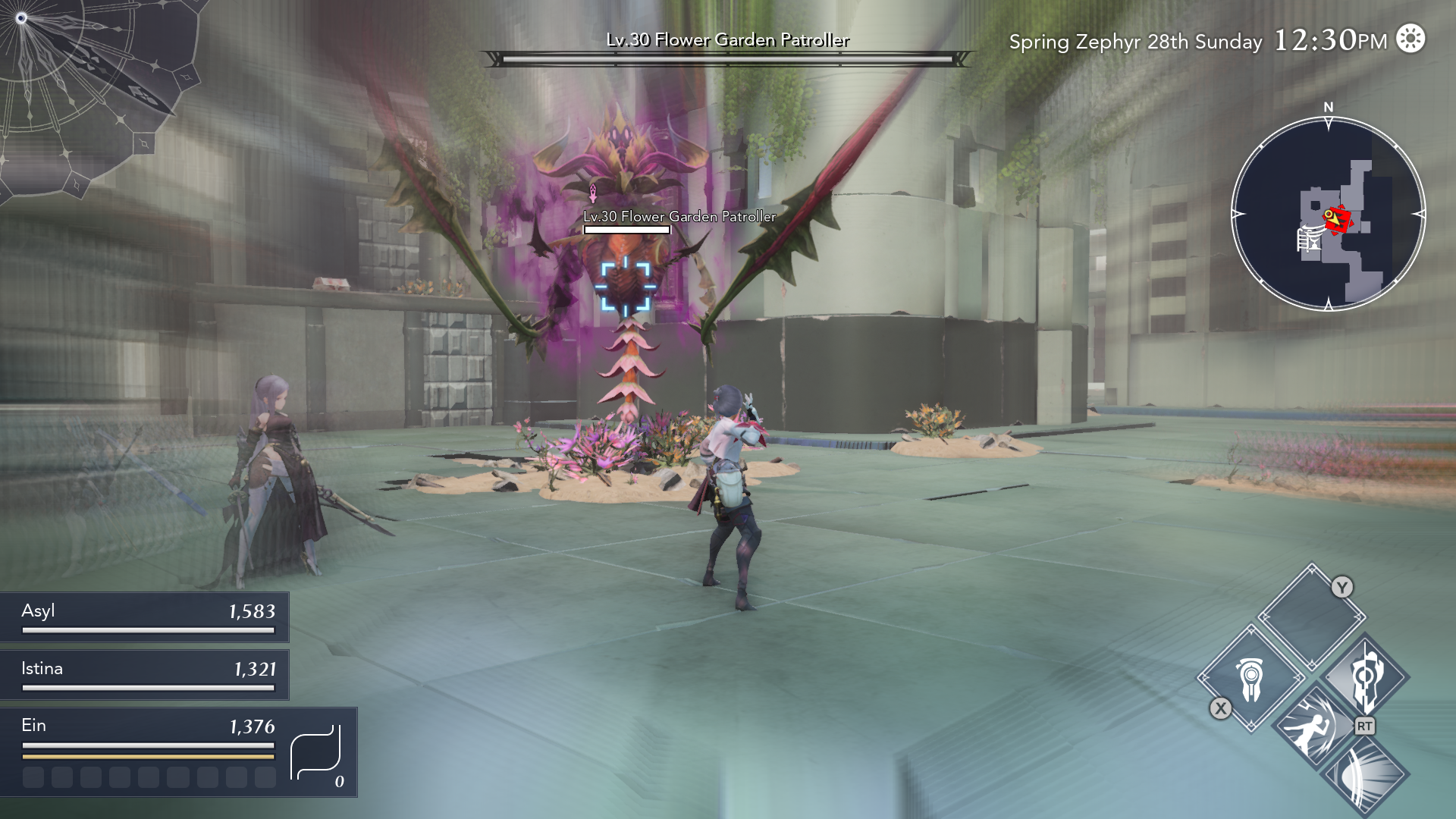
If the farming-sim component, though not particularly complex or deep, feels at least satisfying and progressively rewarding, the same cannot be said for combat management. Here too we find a certain superficiality: our character will be joined by two party members controlled by AI and can switch between three unlockable jobs (classes) progressively with their respective skills, guess what, unlockable progressively.
Within the dungeons, vast but mostly empty and decidedly stereotyped, we’ll find a good variety of “base” enemies, as well as some more terrifying foes called FEAR: these are nothing more than mid-bosses with a menacing air that we must avoid unless we’re decisively overlevelled, or else suffer a painful and costly débâcle. Yes, because being defeated will automatically send us back to the bed of our farm, with the village doctor giving us a scolding about how difficult it was to treat our wounds and how that affected our final score. We’re talking about one thousand Grilla per death, which, at least initially, represents a significant sum.
Fortunately, as we mentioned, the game is quite "noob-friendly" even in this area, to the extent that my first death occurred well past the halfway point and was a true case of hubris on my part.
Essential will be equipping yourself before entering any dungeon with a good supply of food and drinks to restore stamina and, above all, health, both for yourself and your party members, since most of the attacks we will take will not be avoidable in any way, an element that has made us a little roll our eyes, but which in fact does not significantly detract from a gameplay that remains quite basic.

At the end of each day, we will earn experience points based on the number of battles fought, which will increase our character’s overall level and boost generic stats such as HP, Defence and Attack. Similarly, we will also receive JP, or Job Points, spendable to acquire new skills or improve existing ones within various skill trees, which, let’s admit, are also somewhat underdeveloped. The feeling is that the developers have aimed to simplify the JRPG component as much as possible to attract fans of life-sim games, while this latter component has been simplified to attract the most dedicated JRPG players seeking a fresh breeze.
Can one blame Square Enix for a genre choice? I don’t think so.
Technically speaking
We played Harvestella on the following setup, thanks to a key kindly provided by the publisher:
AMD Ryzen 7 3700x @ 3.60 GHz
Gigabyte RTX AORUS Master 3080 Ti 12Gb
Corsair Vengeance RGB RT 32GB DDR4 3600MHz
LG 34GN850 Monitor at 3440x1440 (21:9)
For the umpteenth time, my heart as a ultrawide monitor owner shatters at the start of the game, when I discover that Harvestella supports the 21:9 aspect ratio, but offers me a 2560x1440 stretched resolution. Fair enough, we get used to it, but it remains a blot on what is, otherwise, a decidedly faultless technical department. True, as you’ll have noticed from the images, it’s a fairly retro-style graphics engine and not particularly demanding, but the overall cleanliness, the frame rate locked at 120fps, and the seductive colour palette used by the developers do their dirty work, even taking into account that Harvestella must run on Nintendo Switch.
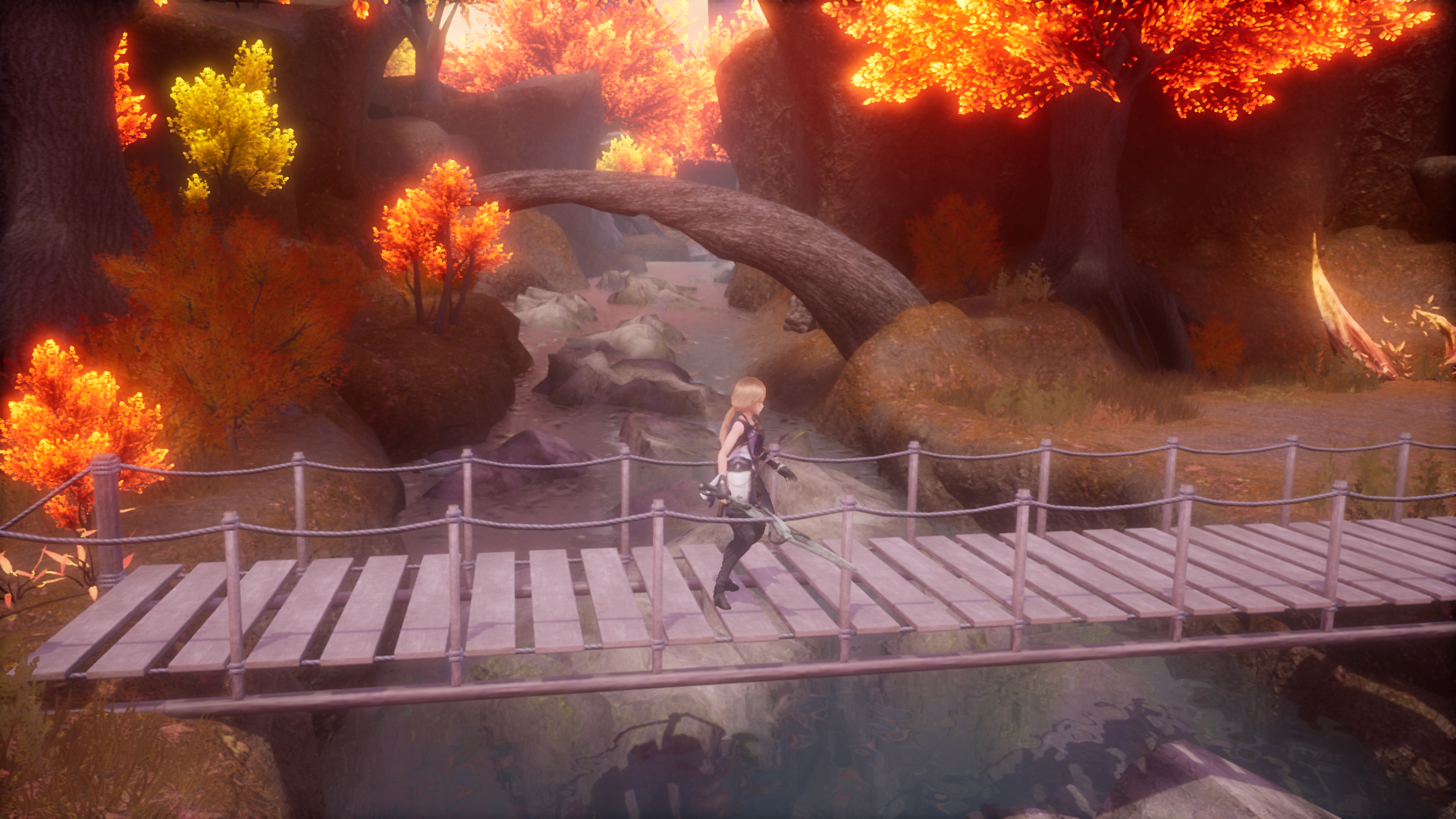
If the performance is practically flawless, the same can be said of the soundtrack, masterfully composed by Go Shiina, the stage name of Masaru Shiina, who has also composed tracks for other famous Japanese franchises such as God Eater, Tekken and Tales Of. A real shame that, in the West, the OST is hardly available in any digital store, not even on YouTube.
Always within the audio realm, the title is dubbed only during dungeon phases and you can choose between Japanese or English dubbing. The title, unfortunately, is not localised in Italian and given its importance and the abundance of dialogue present, we cannot recommend it to anyone who doesn’t have a certain fluency in English.
In Conclusion
Harvestella is one of those titles that quietly but inevitably made its way into my heart, reaching a point where I spent well over 100 hours in its magical world. Thanks to a simple yet well-structured gameplay, capable of creating a satisfying and familiar loop, a story that grows increasingly mysterious and intriguing, branching out through equally interesting side-quests and rapport-quests, and finally a technical component that’s neither lauded nor condemned. Probably my rating goes beyond the game’s objective value, given the 59,99€ price tag, which is quite high for a non-AAA title.
The experiment by Square Enix can therefore be defined, in my view, as successful.
About the Author