
That Microsoft isn’t particularly fortunate with its exclusives isn’t something we discover today. With Gears seemingly out of the games and Master Chief increasingly close to retirement, the only Forza brand can’t shoulder alone the burden of the absence of exclusives Xbox. And if the Xbox Game Pass represents today’s state-of-the-art in subscription gaming services, the creation of the Xbox Games Studios was meant to bring together top-tier developers such as Bethesda, Obsidian, Arkane and many others to pull out some excellent titles from the cylinder to convince people to buy an Xbox console. There have certainly been some excellent titles, without a doubt, I immediately think of Sea of Thieves, Pentiment or the most recent Hi-Fi Rush, but they are not titles capable of genuinely competing with the blockbuster IPs of the Japanese Sony e Nintendo.
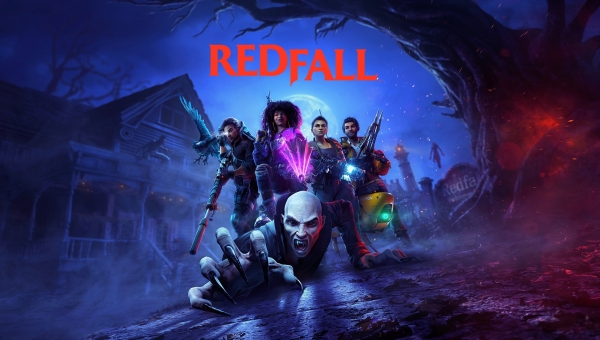
At Bethesda’s E3 2021, Phil Spencer chose to play it safe and leaned on Arkane Austin to develop Redfall, a FPS set in an open-world infested by vampires playable both solo and co-op with two other players. The experience of the team behind unforgettable titles like Dishonored and Prey couldn’t have translated into a similarly beautiful and engaging game, capable of launching a prolific season of exclusive content for the Redmond-based studio — and... oh boy, if we were wrong.
This content is provided by YouTube. To view it, you must allow external content. Activation may result in data being shared with the third party.
A deserted island
Redfall is a fictional island that juts out along the Massachusetts coastline and is now separated from the mainland by a biblical and impenetrable wall of water. As one might easily imagine, it was not Moses — the one everyone knows — who built it, but rather a congregation of vampires that mysteriously took control of the island itself, subjugating its inhabitants and preventing their escape. In an atmosphere far from welcoming, we will therefore have to survive not only the superhuman strength of the vampires, but also the hysteria that has infected numerous residents gathered under a sect that operates according to the will of the vampires themselves.
All of this is presented through an introductory video, or more accurately, a slideshow of concept art (directly from pre-production) of game with some animation and a voiceover beneath. And it’s not the only time this happens. Throughout the entire game, there is not a single animated cut-scene — it’s either semi-animated concept art sequences (notably, there’s also a mission where we must activate a cinema projector just to watch the same horrible slideshow); or we’ll have cut-scenes with various static-engine images, always arranged in simple sequence. In 2023, this cannot in any way be considered a stylistic choice. Perhaps for an indie studio, not for a project that claims to be AAA and dares to ask 69,99€ for its base version and well 99,99€ for the special edition.
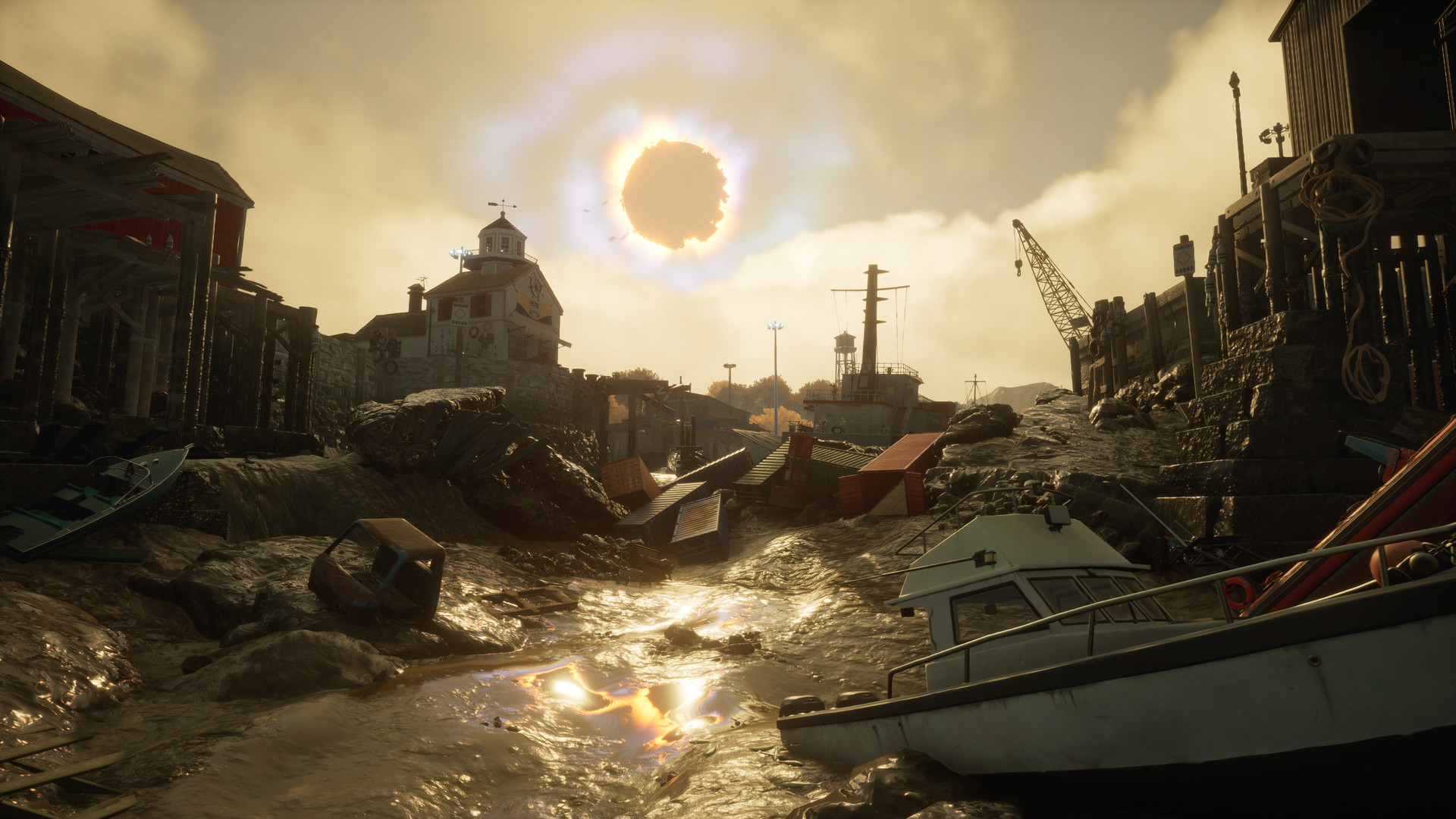
The around twenty missions that will bring us to conclude the main storyline will, frankly, serve to discover what led to the appearance of vampires precisely in Redfall. Coincidence has it that the island is operated by the Aevum, a pharmaceutical company that conducts human experiments aimed at enhancing capabilities and longevity. A human error, however, has transformed the entire staff stationed at Redfall into vampires. We will therefore, in an extremely linear and tedious manner, recount the events that led to the fall of this small and insignificant American island, in a vortex of banality and inconsistency that makes it genuinely difficult to consider the time spent well spent. We shall not mention the side missions, whose purpose should be to occasionally break the rhythm, when instead they only further shatter the player’s spirit: for instance, facing the imminent danger of death, some NPCs will dare to expose us to the peril of leaving the main shelter (a fire station) to place a ring on a family grave or retrieve the materials necessary to repair the popcorn machine present in the fire station. When it comes to priorities.
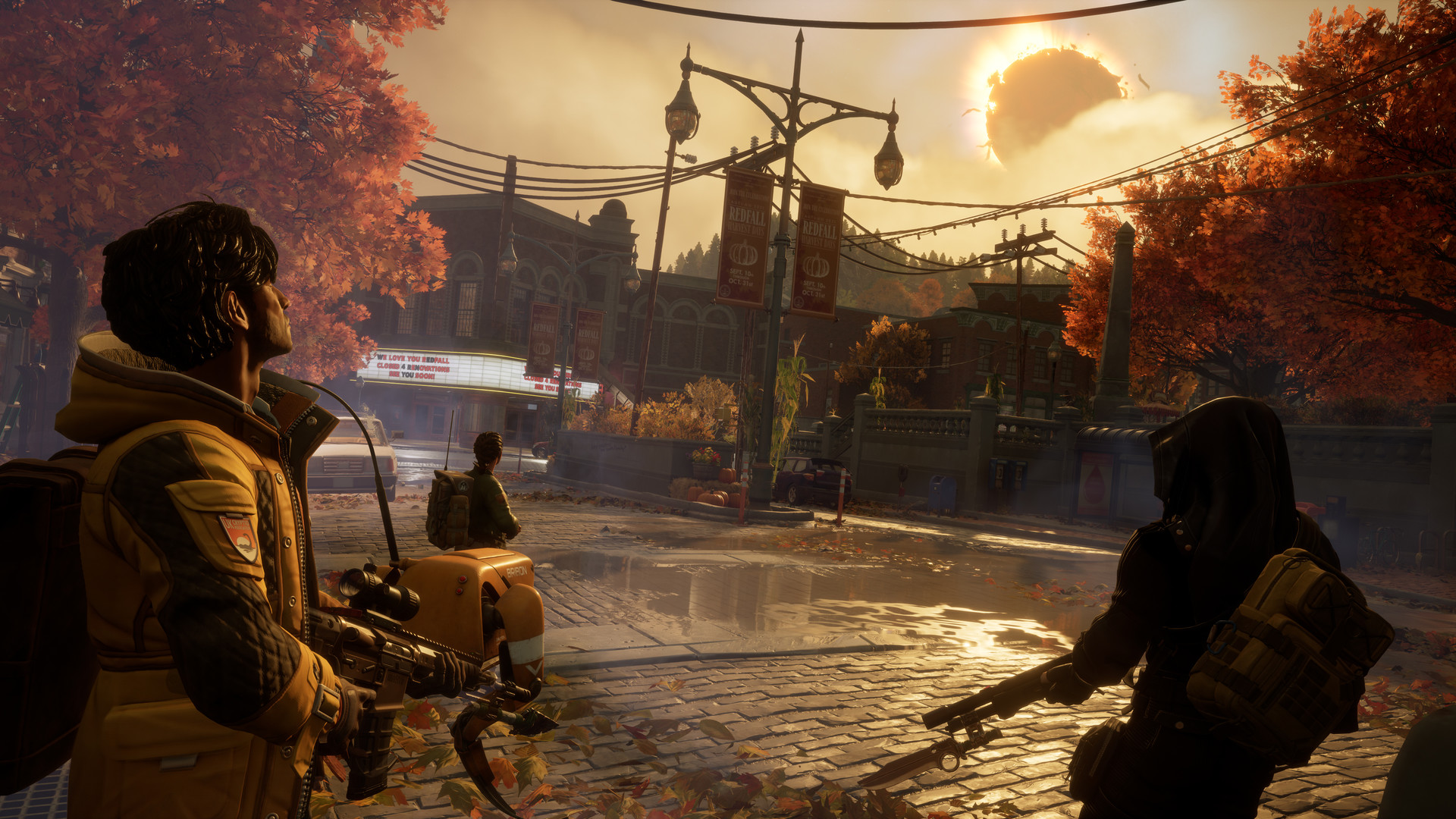
During the outings that will take us to explore the two maps of Redfall (yes, going forward you’ll discover a second one), you’ll realise how far we are from the richness of details and level design of Dunwall or Talos-1: the open-world plague, which I discussed in my recent review of Dead Island 2, still strikes, completely diluting the gaming experience and plunging us into a world stripped of soul, monotonous and barren. Entire minutes can pass before you encounter an interaction or a firefight with enemies, and even if you simply wish to explore, there’s nothing valuable that rewards the time spent doing so.
Beyond the main and side missions, Redfall offers two additional activities: the liberation of safehouses and the infamous Vampire Nests. Regarding the first, you can comfortably think of the safehouses from Dying Light: you go to the area, clear it of human or vampire enemies, and secure it. Do this for a sufficient number of safehouses and you’ll be able to kill the “neighborhood boss” vampire. Eliminating him will free up a Redfall neighborhood. An activity, overall, useful because safehouses can serve as teleportation or respawn points in case of early departure. Do you know the only problem with this charming mechanic? That it hinders the main story’s progression. You don’t care at all about liberating neighborhoods and just want to finish the plot?
Imagine the game design lead at Arkane looking at you with a mischievous grin and shaking your head with a "no no no"
To proceed with the main missions, you’ll occasionally encounter a kind of “check”, in which you’ll be asked to complete the killing of a certain number of vampire bosses and the liberation of their respective districts as a prerequisite. And don’t expect much from the boss fights—they’re almost all the same and almost always end with the brutal, boring one-shot of the current boss.
The Vampire Nests are instead a decidedly more attractive and fun activity.
I was joking.
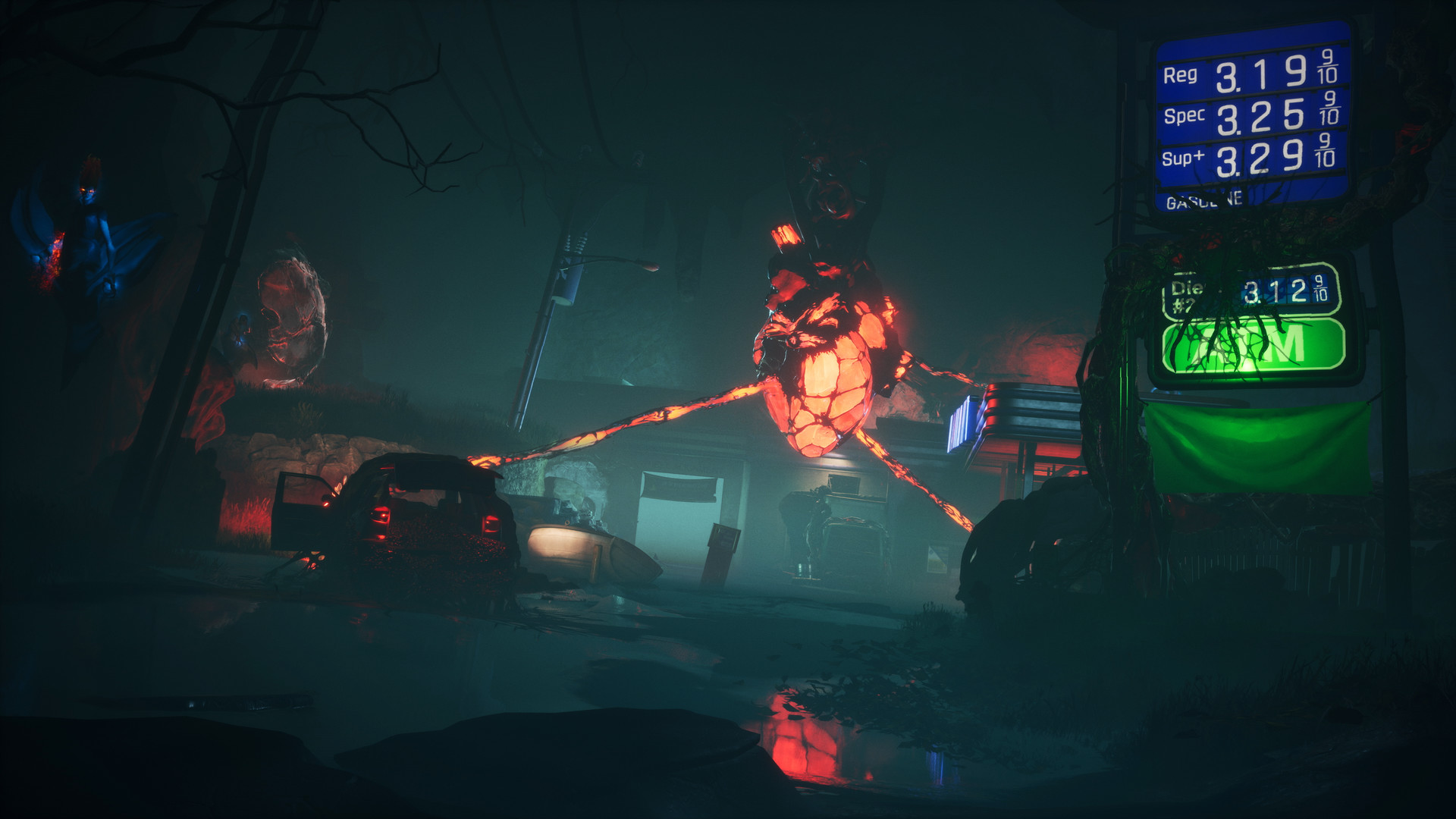
In practice, it’s a dungeon similar to the Notturni’s lairs from Dying Light, where you must free yourselves of all the Vampires resting there and then destroy the nest’s heart. This will trigger a timer that will make it impossible for you to recover the precious resources dropped by the game as a reward for your courage. You must escape or die, losing everything! No, that’s not true — the timer is absolutely useless, and dying won’t cause you to lose any progress. Game design, this unknown.
Redfail
Even if, from the standpoint of story and atmosphere, Arkane has managed to barely capture our interest — despite all the “ifs” and “buts” — it’s with the gameplay that the Austin-based studio truly stumbles. The freedom of movement and the reward for the player’s cleverness as the assassin Corvo are merely a distant and painful memory, even though the developers appear to be oblivious and welcome us during the tutorial with lengthy lines of text advising us to exploit the surrounding environment to our advantage, to approach each mission in our own way, and not to forget to use STEALTH!
And so what do you do? When you encounter the first enemy, you approach with extreme caution, studying their movement patterns, the areas they cover visually... you know Arkane, you know how punitive their AI can be. You decide it’s time to move; you launch yourself toward the next cover... but oh no! An enemy you hadn’t noticed appears in front of you and starts... starts... doing nothing. It’s just staring at you... with a question mark on its head, clearly confused... but you resolve the awkward moment with a punch to the nose that knocks it out. Well, now it’s time to think about the others. You already spot the next victim, you creep up slowly from behind, savoring the stealthy landing animation... and... BAM.
A shove. A shove to the buttocks. This is the stealth elimination animation in Redfall.
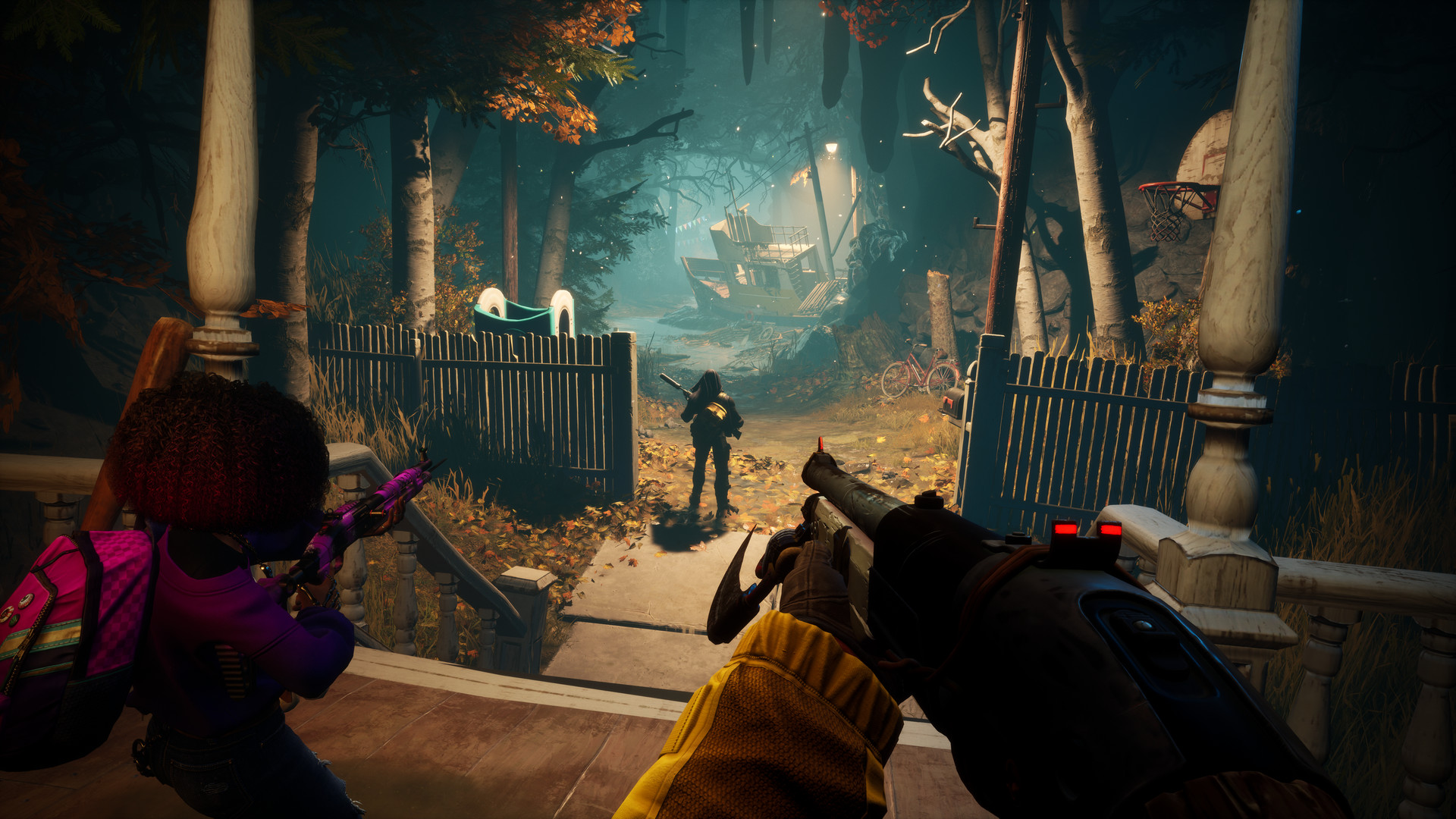
Abandon stealth and start shooting as hard as you can, but you feel almost guilty for how easy it is to dispatch these poveri cristi dotati dell'intelligenza artificiale di un cucchiaino. Those with a pump-action rifle fire from afar as if they were snipers, while others flee and collide with each other instead of returning fire; some remain frozen in place, unclear whether it’s due to a bug or a PTSD attack. In short, exploring Redfall offers no satisfaction, fighting makes it at least embarrassing. It doesn’t fare much better for the more intelligent vampires, who, while boasting greater resistance, superhuman speed, and an overall appealing design, are trivially rendered harmless by placing any in-game object between us and them, exposing them to the hail of bullets we’ll unleash before finishing them off with a stake through the heart. The variety of weapons is plentiful, ranging from pistols to sniper rifles, passing through assault rifles and pump-action rifles. The feel of the weapons is nevertheless all a bit too similar and you don’t even feel the need to use a larger-calibre rifle when a couple of well-placed pistol shots often do the job against humans (who, as we remind you, have a fatal weakness: the groin kick).
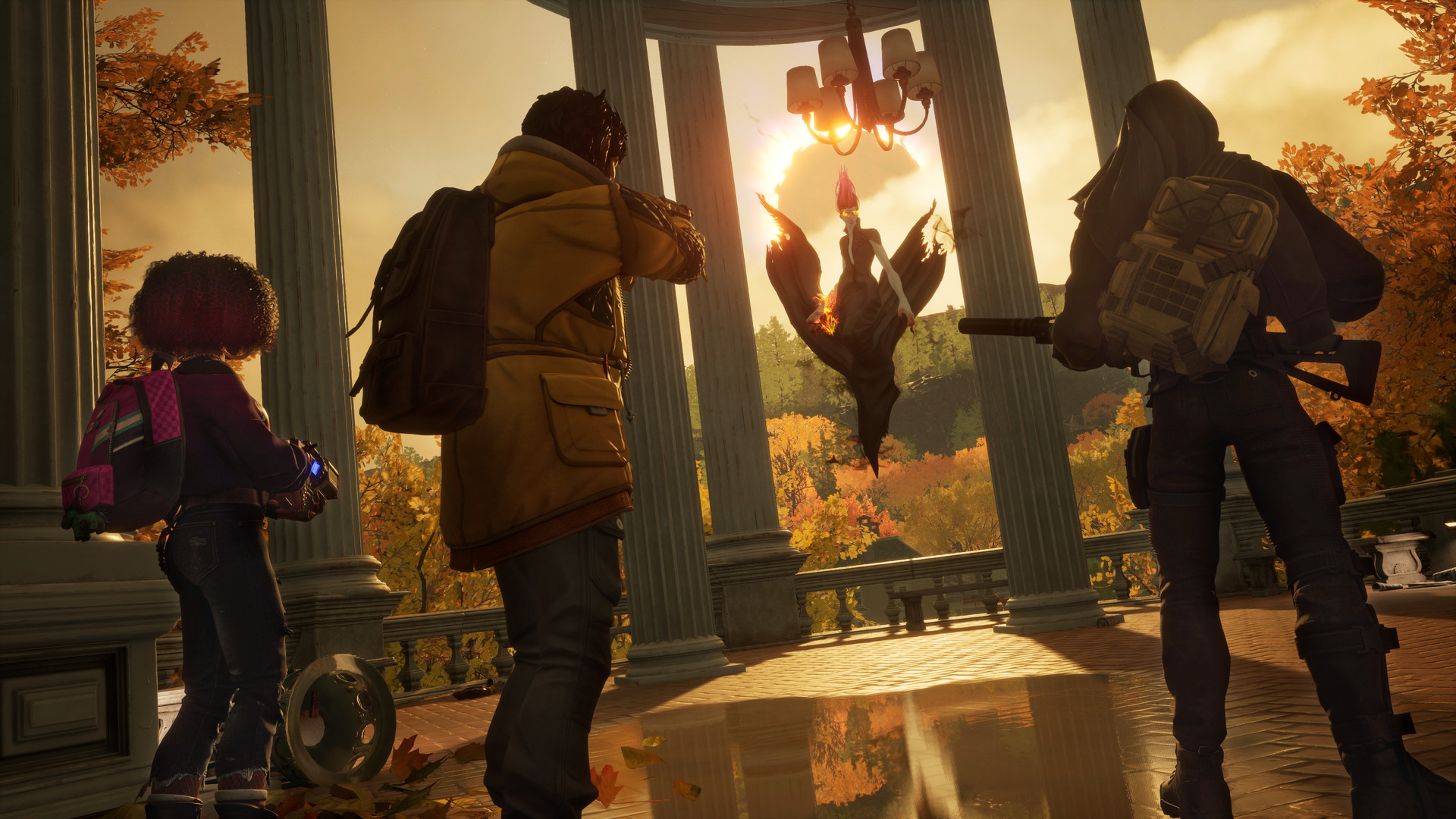
There is also no crafting or gear-enhancement mechanics present, which is a bit disappointing in a game where the survival component could have had ample room.
The Cetra Quartet
Currently in Redfall there are four playable characters, with two more coming soon, according to the Bite Back Edition description (we doubt the game will survive this long): Jacob, the classic sniper accompanied by a hawk with spotter functionality, whose gameplay style is based on stealth (if that stuff in Redfall can be called stealth); Remi, a mechanical engineer accompanied by a cute but silly robot; Devinder, a professional influencer, and we’ve said it all; and finally Layla, for some reason endowed with telekinetic powers.
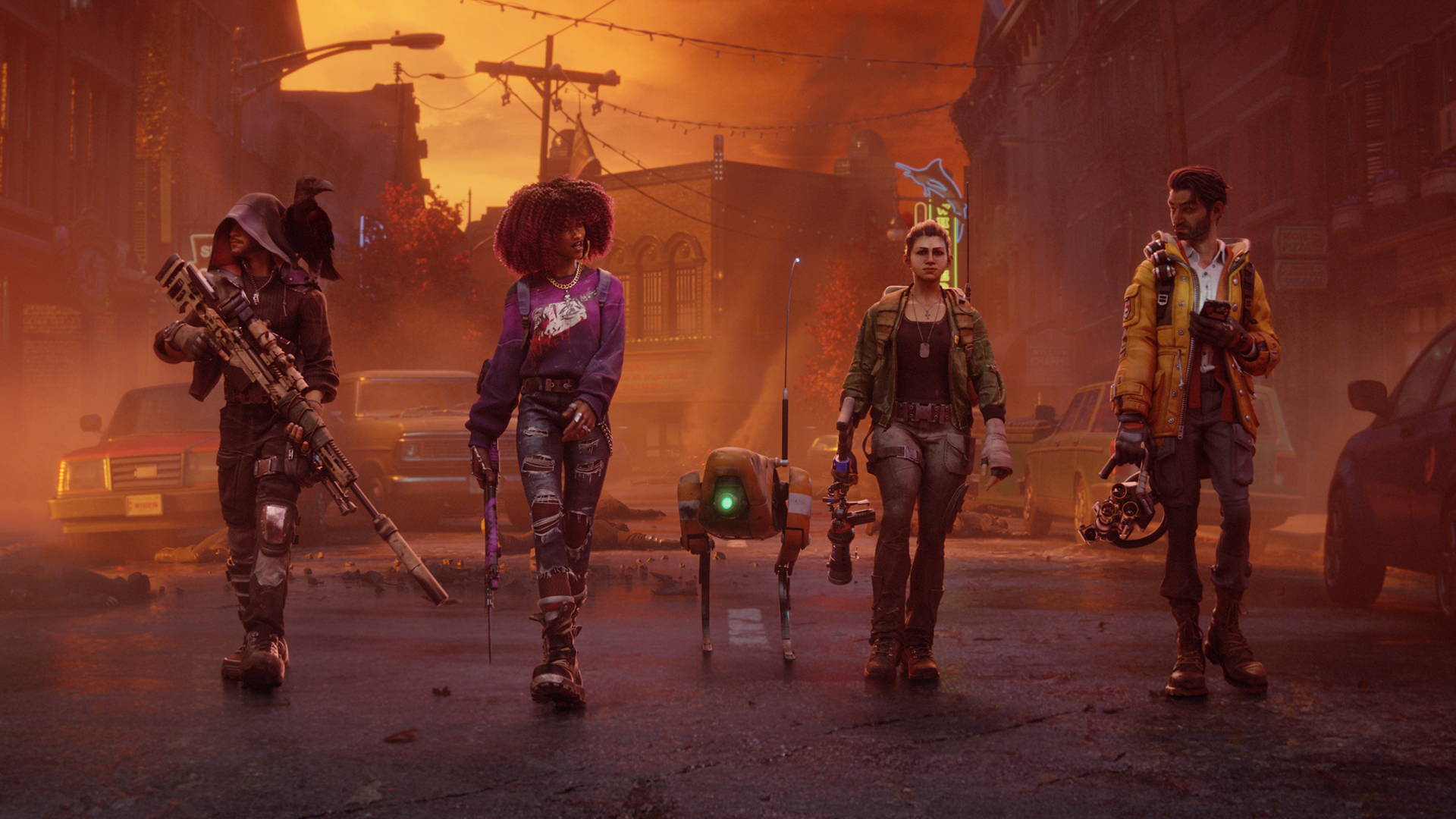
During my first playthrough, I chose Remi, believing that having a robot by my side might help me play solo on a title designed to be played cooperatively. I lasted barely 20 minutes. The robot kept getting stuck in objects, getting stuck, teleporting suddenly next to me or in front of me with heart attack pop-ups. Which, upon post-mortem reasoning, can only be expected, since he’s controlled by the same AI from ten years ago that controls the rest of the virtual inhabitants of Redfall. I therefore switched to Jacob, and the experience was smoother. At least until I took a closer look at his skill tree: each character, in fact, can unlock abilities as they level up, making them increasingly dangerous and invulnerable. Or at least that’s what it should be: in reality, the idea is that, ignoring the fact that half the abilities relate to coop gameplay and therefore are useless for the single-player player, the unlockable abilities are quite weak and unimpressive... or even, in my case, counterproductive.
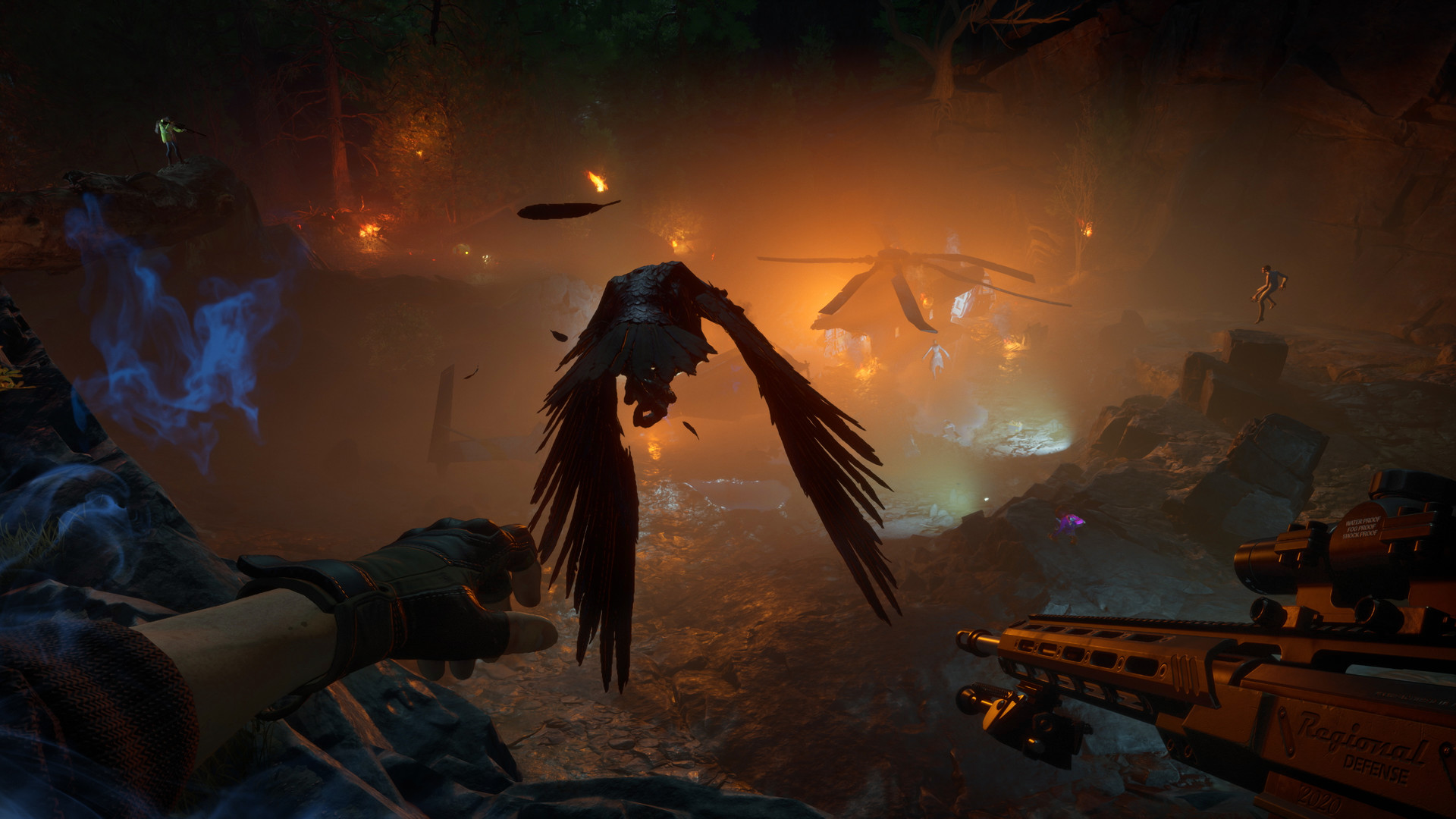
Follow the reasoning: Jacob can send a raven ahead to locate and signal enemies encountered along his path. This therefore gives us a non-trivial advantage over approaching enemies, allowing us to eliminate them from a distance using the sniper or by employing STEALTH. However, as you level up, an ability enables the raven to deal damage in the area it traverses. This means enemies are not only spooked but also damaged, immediately entering a state of alert and thus goodbye to the STEALTH approach. I haven’t delved into the skill trees of the other characters, but I wouldn’t be surprised to find similar inconsistencies, miles away from the mastery and balance of skills that could have made the Raven a terrifying and unstoppable war machine for the Dunwall guards.
The multiplayer component lifts the title, when it works, partially, as everyone knows, witnessing absurd AI behaviour or paradoxical bugs in company always elicits a laugh (rather than a tear for having pre-ordered the next incomplete title).
Technically speaking
We tested Redfall on the following setup:
AMD Ryzen 7 3700x @ 3.60 GHz
Gigabyte RTX AORUS Master 3080 Ti 12Gb
Corsair Vengeance RGB RT 32GB DDR4 3600MHz
LG 34GN850 Monitor at 3440x1440 (21:9)
The announcement just before the launch that the Xbox Series X version would be locked to 30fps had worried us, but... we were absolutely unprepared for this. Redfall is a technical disaster across all fronts: graphically outdated, utterly unoptimised given the 45fps average achieved in the open world, plagued by every kind of bug and crash. The game had already been delayed by a few months, but it would need at least another six to be released in a state that even vaguely resembled a finished and complete game.
The audio side doesn’t improve either, with tracks absolutely forgettable and an Italian voice acting that... we’ll leave aside.
In conclusion
It would be too easy to blame the Red Cross for beating up Microsoft, Xbox and Arkane Austin further. This isn’t their failure, or rather, it’s also their failure, but it’s primarily the emblem of an entire industry’s failure — the video game industry. An industry that, having reached unprecedented levels of popularity and profit, puts CEO and shareholder profits first, neglecting the quality of life for developers forced to work under inhumane conditions with unattainable deadlines, and above all, ignoring the expectations of players — aka paying customers — who see their favourite hobby’s cost rise while receiving increasingly frequent and generous scraps in return. Redfall is technically outdated, poorly conceived and worse executed. But it’s merely the latest in a string of titles highlighting how this industry must change to be sustainable in the future and to regain the trust of gamers.
About the Author