

With Verdun, Tannenberg and especially Isonzo, BlackMill Games has built a very specific niche within the multiplayer shooter landscape over the years. Its WW1 Game Series has never tried to compete directly with the giants of the genre, preferring a more methodical, punitive and attentive formula to historical reconstruction. Gallipoli continues along this path, but it would be reductive to consider it simply a new chapter set on a different front. The passage from the Italian Alps to the beaches of the Gallipoli peninsula and the deserts of the Middle East brings with it rather profound changes, both in the rhythm of the clashes and in the structure of the games themselves.
The result is probably the slowest and most reasoned title made so far by BlackMill Games, but also one of the most immersive. A direction that will not necessarily appeal to everyone, especially to those looking for immediacy and exasperated mobility, but which returns with great effectiveness that feeling of precariousness that should accompany a battle of the First World War.
This content is provided by YouTube. To view it, you must allow external content. Activation may result in data being shared with the third party.
For king and country!
The main novelty is certainly Expedition, the main mode in which two teams alternate between attack and defense along a succession of sectors. The base is inevitably reminiscent of what was seen in Isonzo, but BlackMill has worked to reduce several dynamics that can be easily exploited by more experienced players. The main novelty is represented by the Beacons, advanced respawn points that attackers can build while gaining ground or managing to infiltrate behind enemy lines. Each team can only keep one active and building a new one automatically eliminates the previous one, making their placement a tactical decision that is anything but secondary. Some Beacons can also provide ammunition or other advantages related to the section to which they belong, turning them into real tools to support the advance.
The objective system has also been made more linear and less predictable. The main objective is selected from two possible positions and, before you can place explosives or complete certain actions, you must physically conquer the affected area. The result limits those solitary raids that in the Isonzo allowed veterans to cross the front and complete objectives before the opposing team could even react. Along the same lines is the new functioning of the Foothold, more linked to the numerical ratio between attackers and defenders and therefore less inclined to turn the final stages of the game into a long hunt for the last hidden soldier.
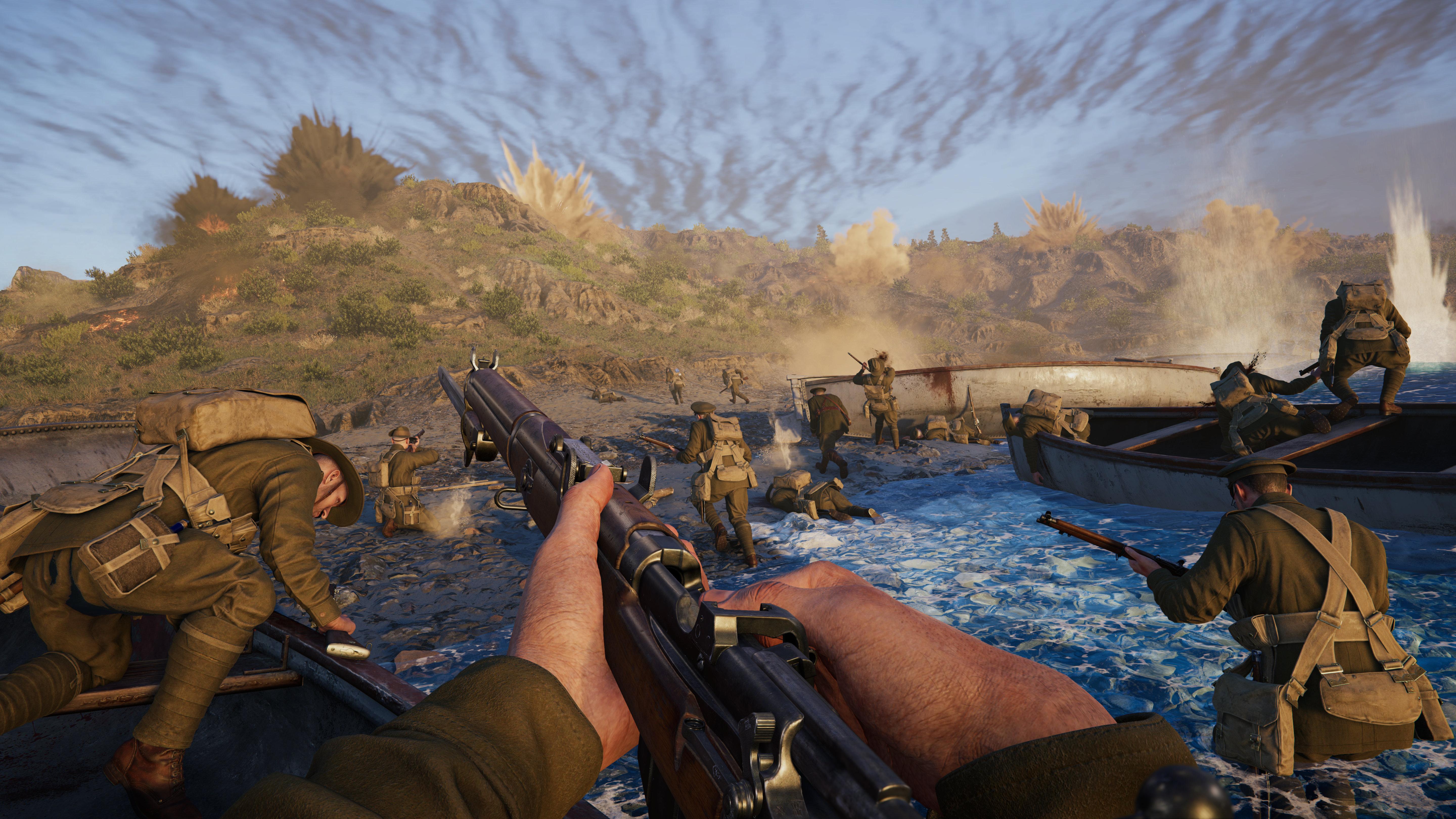
BlackMill has also intervened on some of the most established habits of the community, such as the so-called wire jumping, which allowed you to overcome certain fences using speed and jumping. In Gallipoli , barbed wire returns to be a real obstacle, forcing players to look for gaps and alternative routes. Overall, these are changes that make the battlefield more readable for newcomers and reduce the weight of exploits and almost esoteric knowledge of the maps.
The reduction from 64 to 50 players , on the other hand, leaves more mixed feelings. In some situations, the choice is understandable: certain defensive positions are already extremely difficult to overcome and a greater number of soldiers would risk generating long stalls. Not all maps, however, manage to mask the lower density in the same way. Suez and Kut have very large spaces, with long desert stretches that can appear too empty when both teams end up concentrating in the same sector.
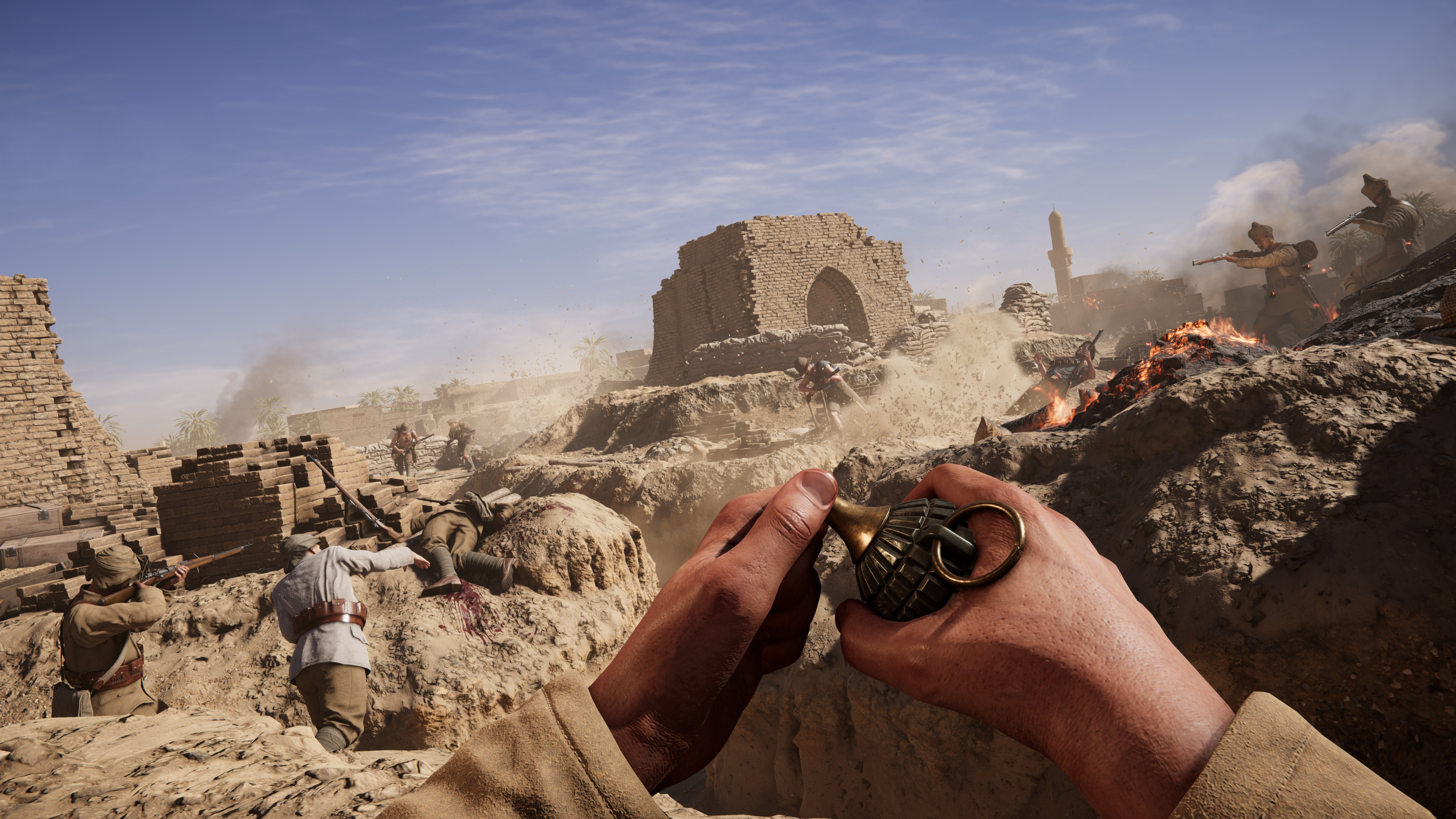
When level design finds the right balance, however, Gallipoli can be spectacular. ANZAC Cove represents one of the best scenarios created by the studio, taking advantage of beaches, heights and trenches to create extremely intense assaults, while Suez still manages to stand out for its atmosphere and visual identity. Also contributing is a significantly improved technical sector compared to Isonzo: lighting, vegetation, models and textures return richer environments, while abandoned equipment, destroyed houses, fortifications and small environmental details make the battlefields appear much more believable.
All men dream, but not equally
The most obvious change in Gallipoli, however, concerns the behavior of the soldier and weapons. The gunplay is significantly heavier than in previous episodes and everything, from the speed of movement to the swing of the rifle, seems designed to constantly remind the player that he is not in an arcade shooter.
Stamina is used for numerous actions and running before facing an enemy has concrete consequences on accuracy. After a prolonged sprint, the crosshair oscillates significantly and opening fire immediately can mean missing even relatively close targets. You have to slow down, catch your breath and choose more carefully when to expose yourself. In some situations the system can even seem excessive, especially when an opponent a few tens of meters away is missed despite the sight seeming correctly positioned. To further complicate things, there are some hit registration problems found in the launch version, capable of making certain clashes more frustrating than they should.
The weapons, however, give excellent sensations. Recoil, animations and sound give the shots a remarkable physicality and, considering the high general lethality of the arsenal, a single bullet is often enough to close a fight. Ballistics have also been modified to reduce the effectiveness of fire at extreme distances: within 100-150 meters the behavior remains relatively intuitive, while hitting very distant targets requires more attention, preventing rifles and machine guns from turning too easily into lasers capable of controlling half the map.
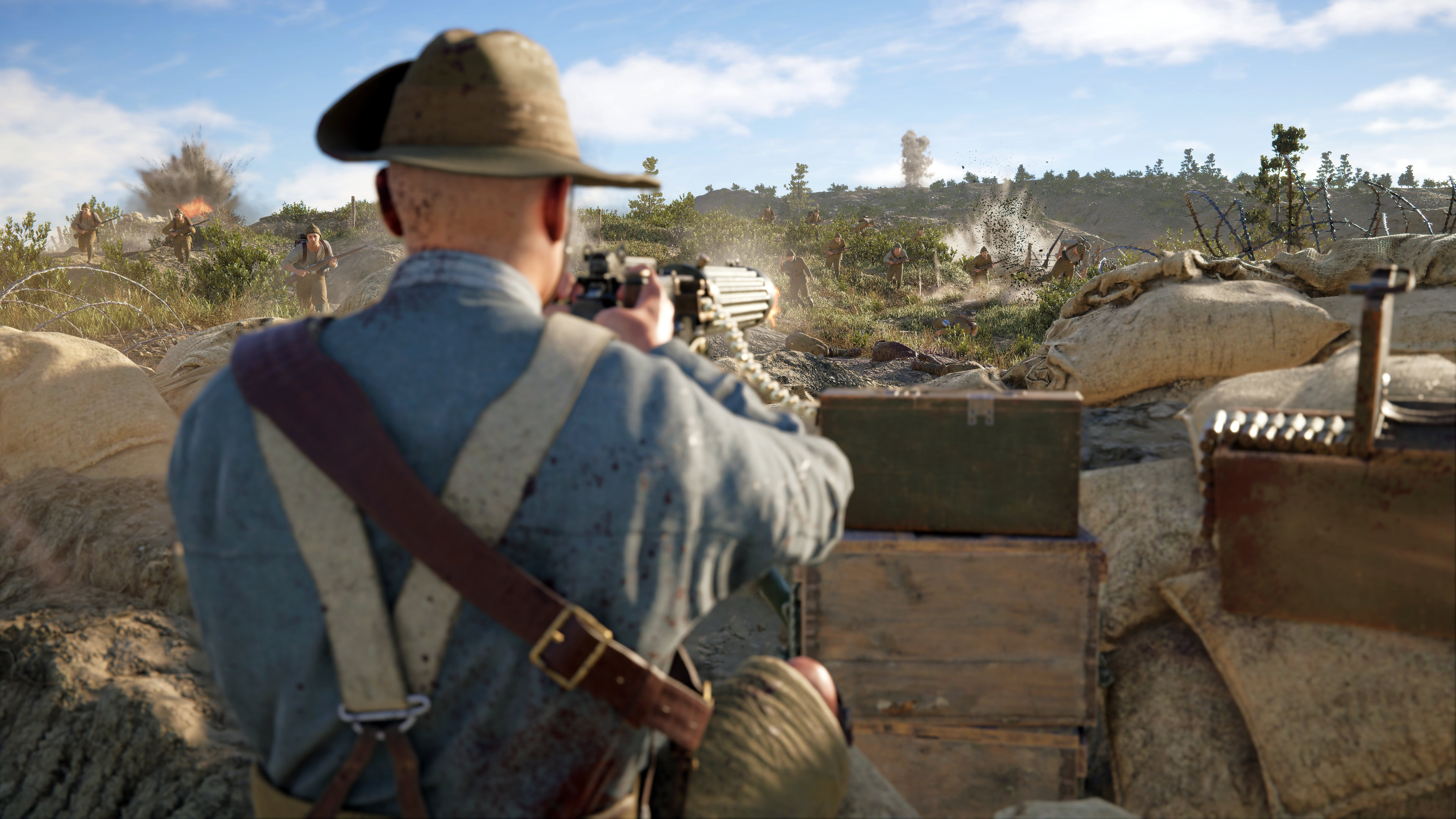
Even more important is the work done on suppression. Being targeted by a heavy machine gun no longer simply means witnessing some screen shake: accuracy is heavily compromised and continuing to lean out of cover becomes an almost suicidal choice. The result finally gives HMGs a truly intimidating role and often forces attackers to change path, use grenades or rely on artillery to remove a well-defended position. Support weapons have also been given more freedom. Heavy machine guns can be placed directly by players and mortars can be replenished more continuously. The latter aspect, however, seems perhaps too permissive: with a class dedicated to refueling it is possible to keep artillery and heavy positions running for extremely long periods, creating situations in which constant bombardment takes over the rest of the fight.
In general, BlackMill seems to have consciously agreed to sacrifice some of the traditional balancing on the altar of immersion. A hill can be extremely difficult to conquer, a trench can become a death trap under artillery fire, and a well-placed machine gun can block an entire advance for several minutes. The maps try to replicate the layout of real locations rather than offering perfectly symmetrical arenas, and this means that both teams don't always have the same opportunities.
It's a philosophy that inevitably divides. Gallipoli can be deeply frustrating: you die from a grenade dropped in a trench without hearing it, from a shell fired from an almost invisible position, or from an artillery shell while you thought you were safe. At the same time, this unpredictability contributes enormously to the identity of the game. BlackMill does not want to simulate a perfectly balanced competitive match, but a battle in which the player feels constantly vulnerable.

I order you to die
The new five-player section system fits in quite well with this philosophy. When a premade team communicates and uses Beacons, supplies, and cover correctly, Gallipoli can offer some of the best moments in the entire series. The problem emerges especially when trying to play with friends. In fact, it is not possible to freely create your own team before the match and being able to enter the same section can turn into a small race against other players at the beginning of the match. If the slots are occupied, there are few alternatives left. A system to request a position swap, similar to what we have already seen in Verdun and Tannenberg, would be a simple solution to a limitation that is difficult to justify in a shooter so dependent on coordination.
The same goes for communication. When players use voice chat, report enemy positions and organize assaults, the game system comes to life. On the other hand, when everyone proceeds independently towards the objective, many of the most interesting mechanics inevitably lose meaning. The absence of a real proximity voice chat weighs heavily: being next to a soldier belonging to another section without being able to communicate directly with him breaks the immersion and unnecessarily limits the possibilities of coordination. Added to this is an extremely heterogeneous European community from a linguistic point of view. In a game in which communication and organization are so important, being in a team made up of groups that only use different languages can significantly compromise the effectiveness of the assaults. Of course, this is not a limitation directly attributable to the developers, but the lack of more effective tools for coordination makes the problem more evident.
On the content front, Gallipoli debuts with five maps and an apparently smaller arsenal than the one reached by Isonzo after several years of updates. The comparison, however, would be unfair: the previous chapter had also been published with a relatively small amount of scenarios, expanding progressively over time. The roadmap promises at least four more maps, new factions including French and Russians and over seventeen additional weapons. A particularly appreciable choice concerns access to the arsenal: weapons are available from the beginning and it is not necessary to complete long sequences of tasks just to hold your favorite rifle. However, the progression remains present through modifications and upgrades, some of which still need some balancing. Upgrades such as the mad minute of the SMLE Mk III, for example, can make certain weapons extremely effective once they reach the most advanced levels.
The launch version also brings with it several youth problems. In addition to the aforementioned not always flawless shot registration, we encountered anomalies related to the officers' artillery and several minor bugs. Nothing that really compromises the entire experience, but enough to occasionally generate some irritation.
In Conclusion
Despite some flaws, Gallipoli probably represents one of the most interesting steps taken by the WW1 Game Series. It is slower, heavier and less forgiving than Isonzo, but at the same time it manages to be surprisingly accessible for those who do not yet know the saga, precisely because many of the old shortcuts have been eliminated and the objectives are more immediate to understand. Those who enjoyed Verdun, Tannenberg and Isonzo will find a lot to love in this new chapter. The same goes for those looking for a historical shooter far from the dynamics of modern blockbusters, where being under machine gun fire is really a problem and crossing a hundred meters of uncovered terrain can become a challenge. BlackMill still has to fix several bugs, perfect the balance of support weapons and above all make it less cumbersome to play with your group of friends. The base, however, is extremely solid. Between assaults on the beaches, trenches hammered by artillery and long advances through the desert, Gallipoli manages to offer something that few multiplayer FPS still try to propose: the feeling that the battlefield is bigger, more dangerous and above all more important than the individual player.
About the Author