
In the world of video games, cats leave their mark
In recent gaming history, cats have often been the protagonists of short and concise experiences, capable of getting to the point immediately and, in some cases, enhanced by original and strongly characterized settings. Just think of Stray, a candidate for GOTY 2022 and turned out to be much more than just an indie bet. In that case we played the role of a cat grappling with a cyberpunk universe with a strong dystopian imprint. In the same vein is Cat Quest, an action RPG saga with a 2.5D isometric view, focused on sword fights and spell fights, against the backdrop of a medieval universe.
Princess of the Water Lilies fits into this vein: Whyknot Studio has chosen the 2D platformer formula, enriched by a strong puzzle component, to give life to an indie adventure with fairytale hues.
Born in 2016, the studio initially produces mathematical indie games such as ITENO until it developed for VR and on behalf of third parties, in co-development projects. It is on the title in question, however, that they pour more creativity (the protagonist is in fact inspired by the real cat of Zoe, creative director of the studio) and investment (the complete orchestral soundtrack was entirely recorded live by the Budapest Scoring Orchestra, in order to recreate a real "living fairy tale"). The developers themselves then declared that they took clear inspiration from titles such as Ori, as well as animation classics such as Red & Toby and In Search of the Enchanted Valley.
Behind the appearance of a simple narrative cozy game, a solid puzzle component emerges from the very beginning, made up of environmental puzzles and pitfalls that require you to carefully observe both the behavior of the enemies and the surrounding space.
A fairy tale built on settings and metaphors
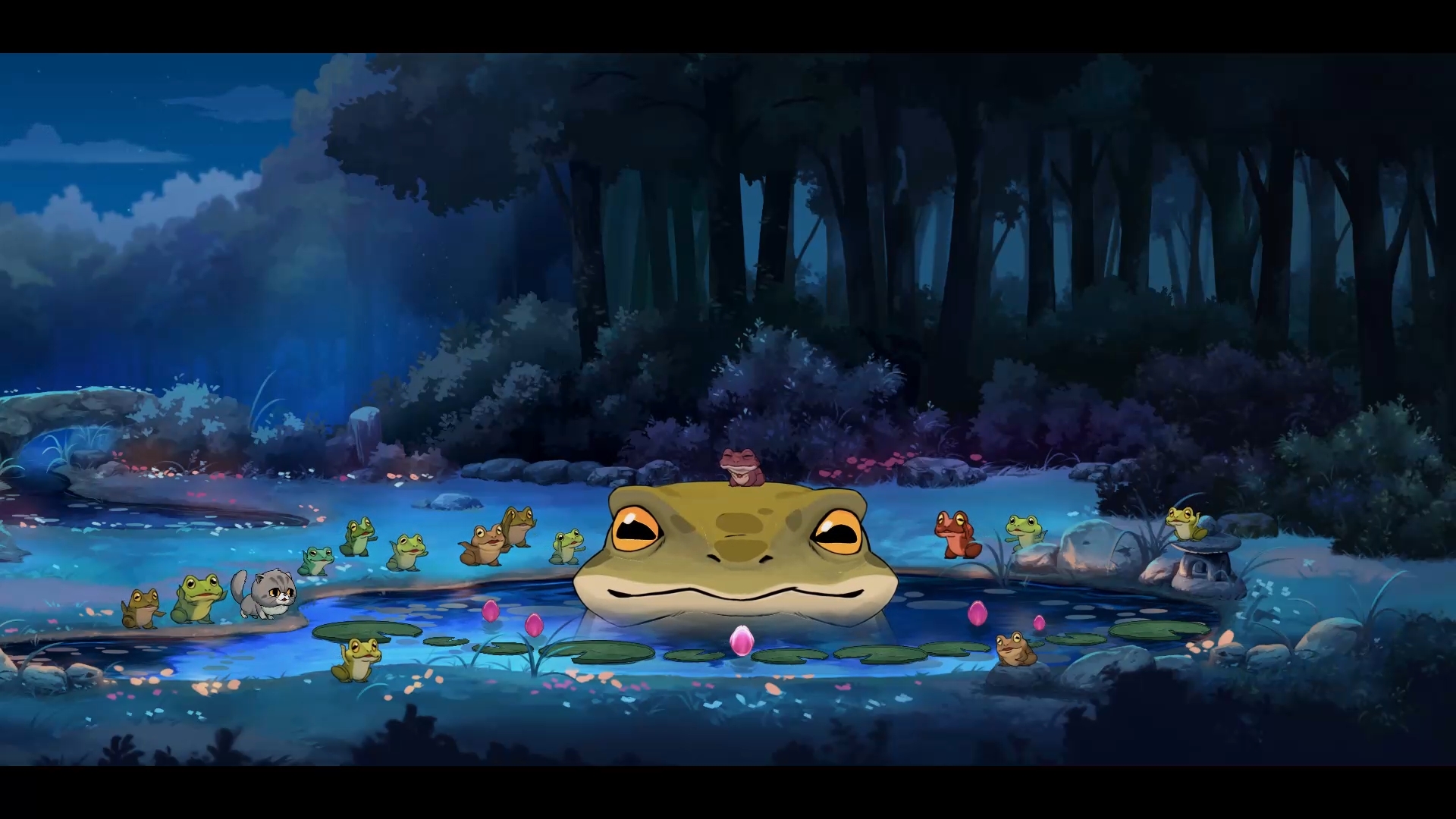
The player controls Princess, a kitten catapulted into a world divided into five different biomes : from the initial forest to watery caves, up to hills and mountains where the wind can be used to one's advantage. However, this dreamlike scenario is contrasted with a strong artificial component, from which clear contrasts arise between technology and nature and, in watery caves, between contamination and integrity of the environment.
The message is simple and immediate, of a clear ecological matrix, and fits perfectly into our present, in which similar contrasts are now, unfortunately, the order of the day.
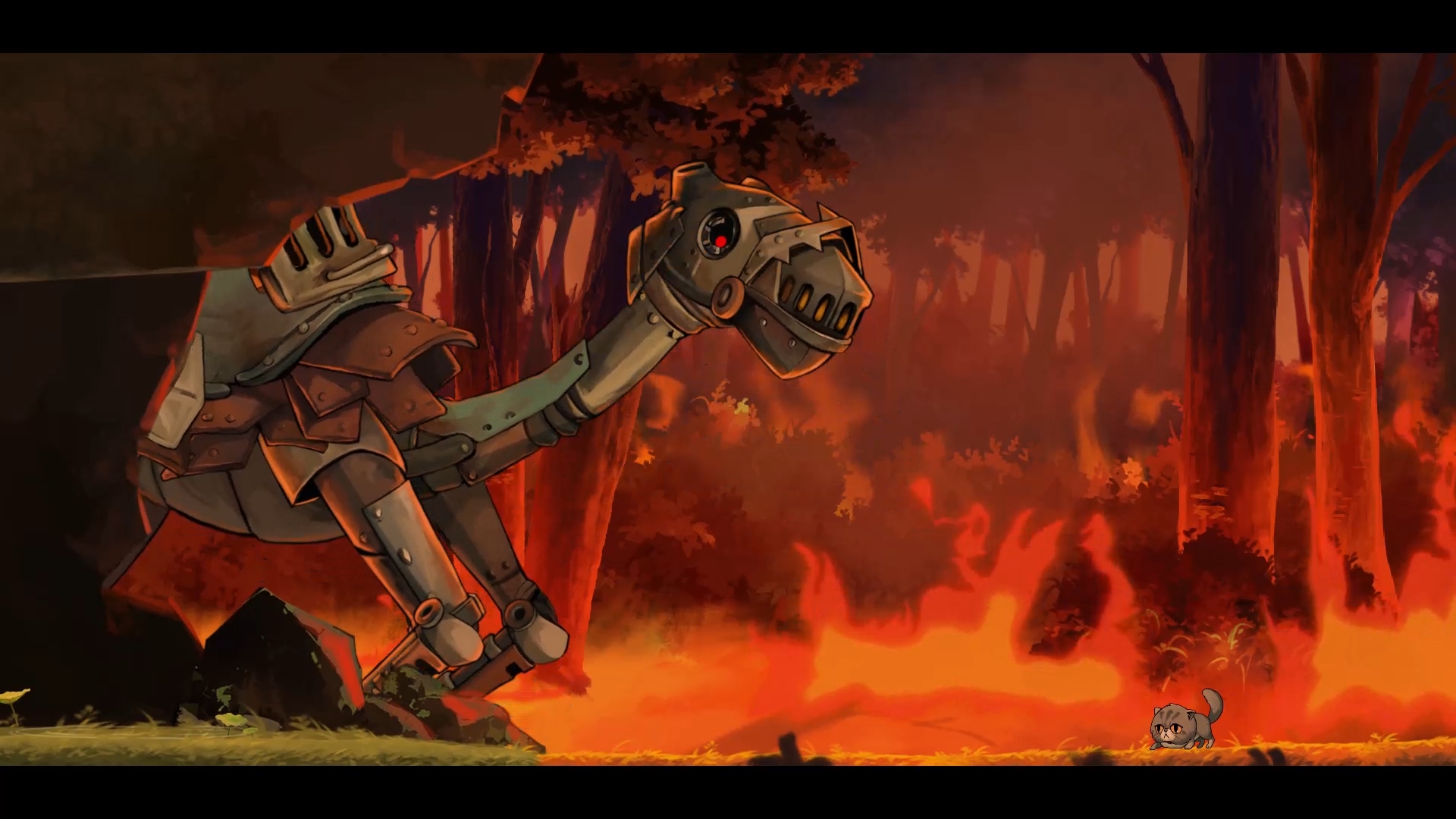
The result is the perception of a constant threat, embodied as much by technological control (the main bosses are represented by animals mutated into machines, according to an idea that vaguely recalls Horizon Zero Dawn and Forbidden West) and by the smog that contaminates the depths of the sea.
Accessible but never trivial puzzles, dynamic boss fights
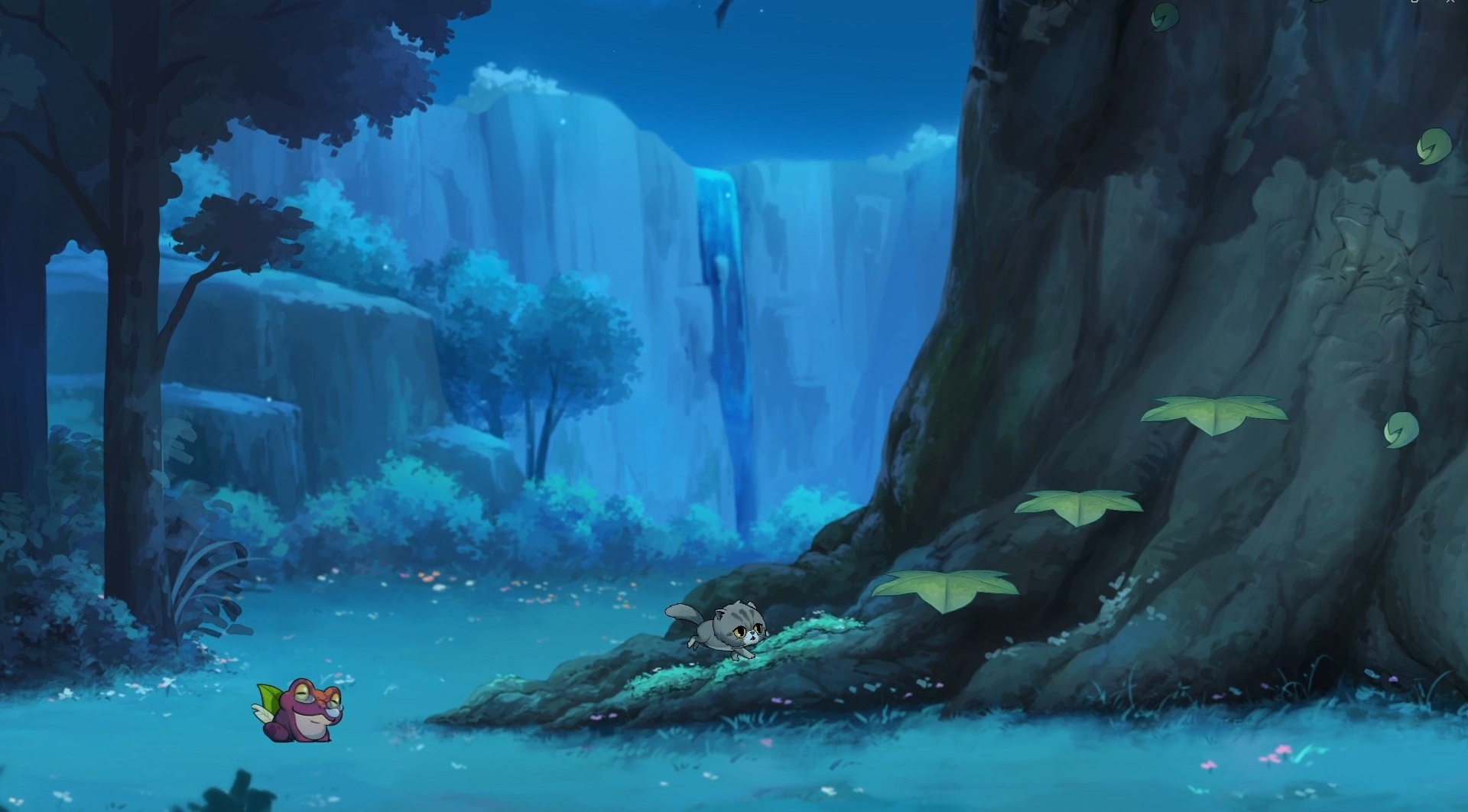
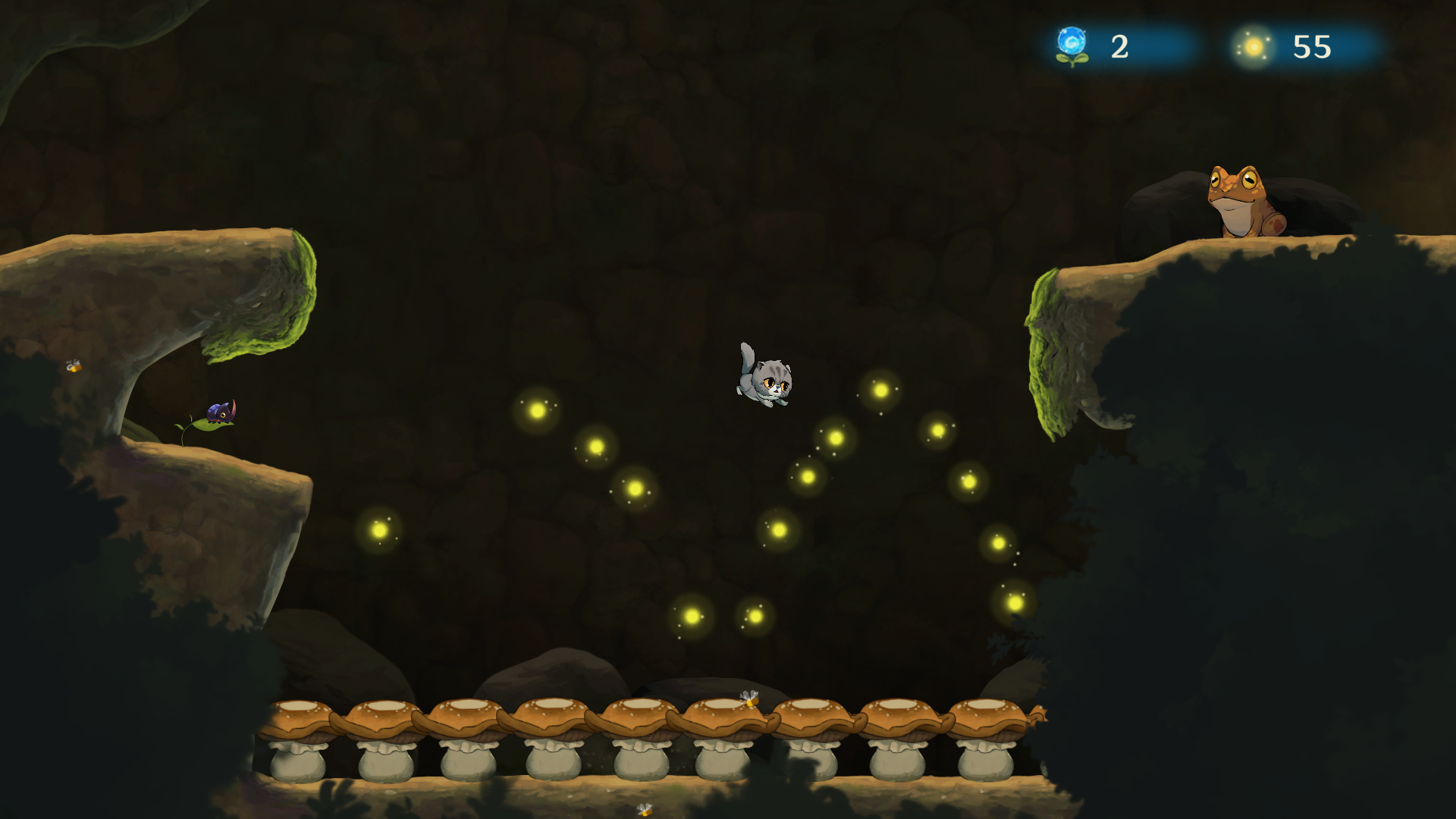
On the gameplay level, the title alternates between platforming sections and environmental puzzles . The purr of the protagonist is the main resource for solving puzzles: they allow you to move bouncing mushrooms sideways, open buds connected to each other to re-emerge in another point of the area or cling to the dandelions and reach elevated and strategic positions. It is also possible to jump and operate buttons that open some doors by closing others, or capable of activating moving platforms on which to advance.
The combination of these actions, often managed by a single logical solution, allows you to access the next scenario. The puzzles are varied, never repetitive and with a fairly quiet learning curve at least up to 3/4 of the story, and then rise in the final phase while remaining manageable. Each biome finally culminates in a clash with the final boss , always well characterized and perfectly consistent with the setting that hosts it.
A critical note concerns the difficulty of the game, which increases significantly in the final stages, especially during the confrontation with the final boss of the story. The latter requires the player considerable skill and, in some moments, almost perfect timing, with the risk that frustration ends up prevailing. In fact, no mistakes are allowed, although the game allows you to restart from the last phase of the boss unlocked. Sometimes the perception is that the game over is generated by some controls that are not perfectly precise, nothing that precludes the completion of the title but which unfortunately worsens its overall rating.
A journey through watercolors and paintings
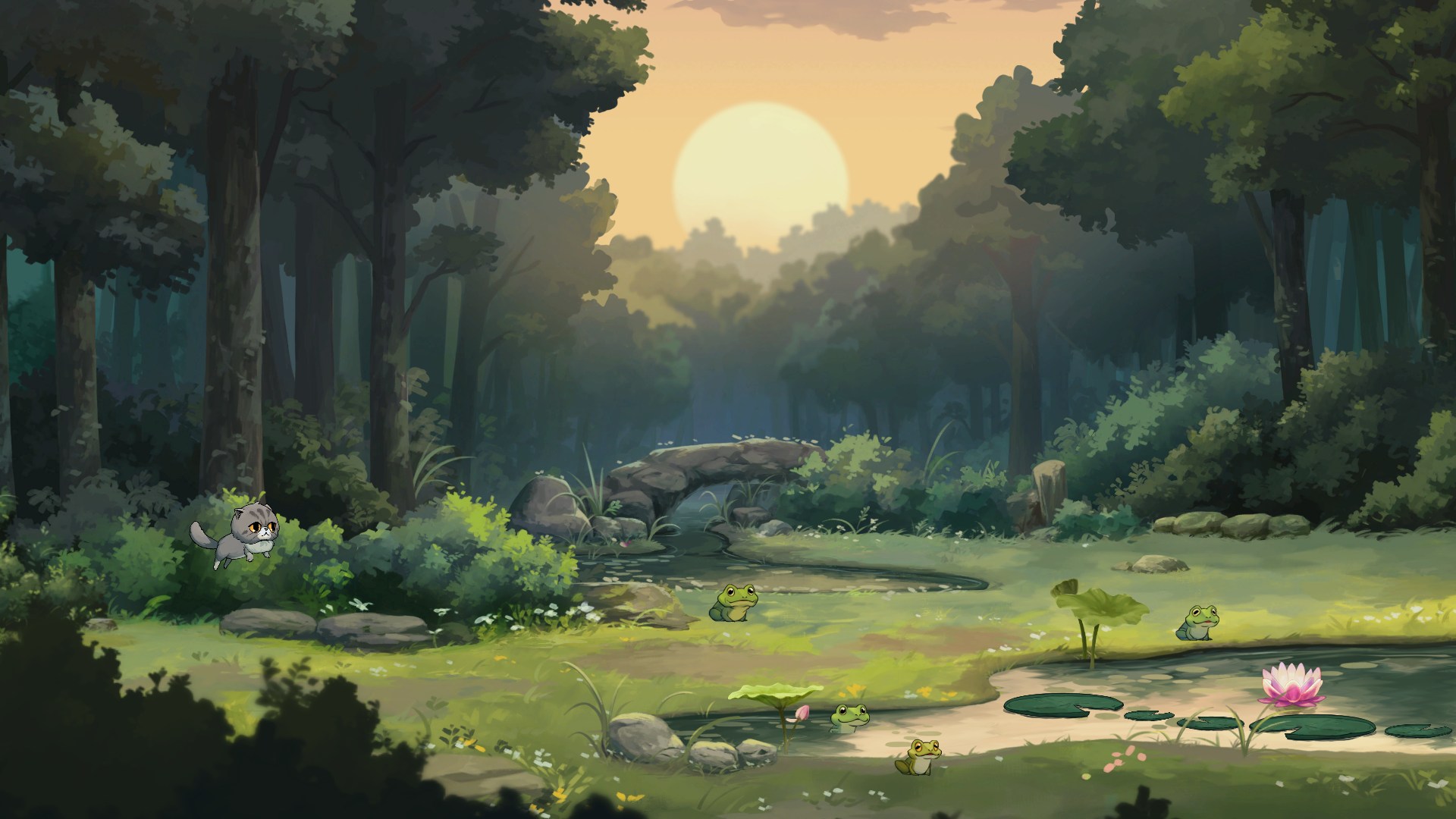
On the graphic side, the Malaysian studio has created an authentic moving painting. The scenarios follow a coherent and recognizable artistic direction, based on a delicate watercolor stroke that accompanies the entire adventure. The result is a continuous transition from one painting to another; this visual elegance enhances the environmental metaphor of the game, clearly tracing the boundary between nature and smog. The title is entirely hand-drawn and the characters emerge from the background thanks to more marked contours, in contrast with the soft shades of the surrounding environments.
Two words: musical elegance
Some video game genres acquire a particular strength when played with headphones: this is the case of survival horror or the most adrenaline-pumping science fiction productions. Then there are titles such as Princess of the Water Lilies, in which although the genre often does not appear to be characterized by strong audio components, it is able to create a deep harmony between what you see and what you hear.
The refined sound design constantly accompanies the journey, establishing a harmonious dialogue with the scenarios: from the natural calls of the forest to the muffled sounds of diving, from the most delicate tinkling to the rustle of the wind in high-altitude areas. Boss fights are often managed by a respectable soundtrack, capable of elevating and contextualizing them to the moment of play.
An experience destined to leave its mark
Ultimately, Princess of the Water Lilies fully hits the goal it sets itself. It pleasantly evokes the melancholy of Fumito Ueda's works, albeit with a limited duration (about three hours, all in all adequate for the category to which the title belongs) and with some technical limitations attributable to the independent nature of the studio that developed it. It deals with a theme now known and widely explored by the various media, but embellishes it with a small final surprise, capable of averting a banal and predictable epilogue. Without aspiring to the masterpiece, it remains an experience capable of imprinting itself in the imagination of the player, supported by the strength of its themes and an artistic direction of considerable elegance.
However, some technical uncertainties remain: during a boss fight, in the transition from one phase to another, the character reappeared exactly on top of an enemy, causing an immediate game over; in the middle of the final fight, however, the image froze, forcing you to restart the fight. As also indicated above, the problems related to the precision of the jumps are evident as well as some particularly severe hitboxes in the boss fight. These are problems that can be contained by becoming familiar with the game after the early stages and that do not undermine the success of the fight or the puzzle, but which certainly clash with the airiness and elegance of the artistic direction. The Definitive Edition has mitigated these critical issues at least in part and introduced a gallery of splendid artwork, unlockable during the adventure and available from the menu. Boss battles have also been revised, thanks to a more accurate balance and greater precision of the damage areas. The picture is completed by the improvement of the music and the possibility of adjusting the level of difficulty.
In a historical period during which we are now used to video games that exceed three digits of total duration, with endless missions and infinite content, Princess of the Water Lilies has pleasantly given me back that feeling of lightness, creativity and elegance that I was looking for. The backgrounds, music and environmental puzzles create a combination that hardly leaves the player aseptic and, at least in my case, they allowed me to rediscover that particular flavor given by a studio that does not want to elbow between competitors, but rather aims to convey its message, without overdoing it.

About the Author