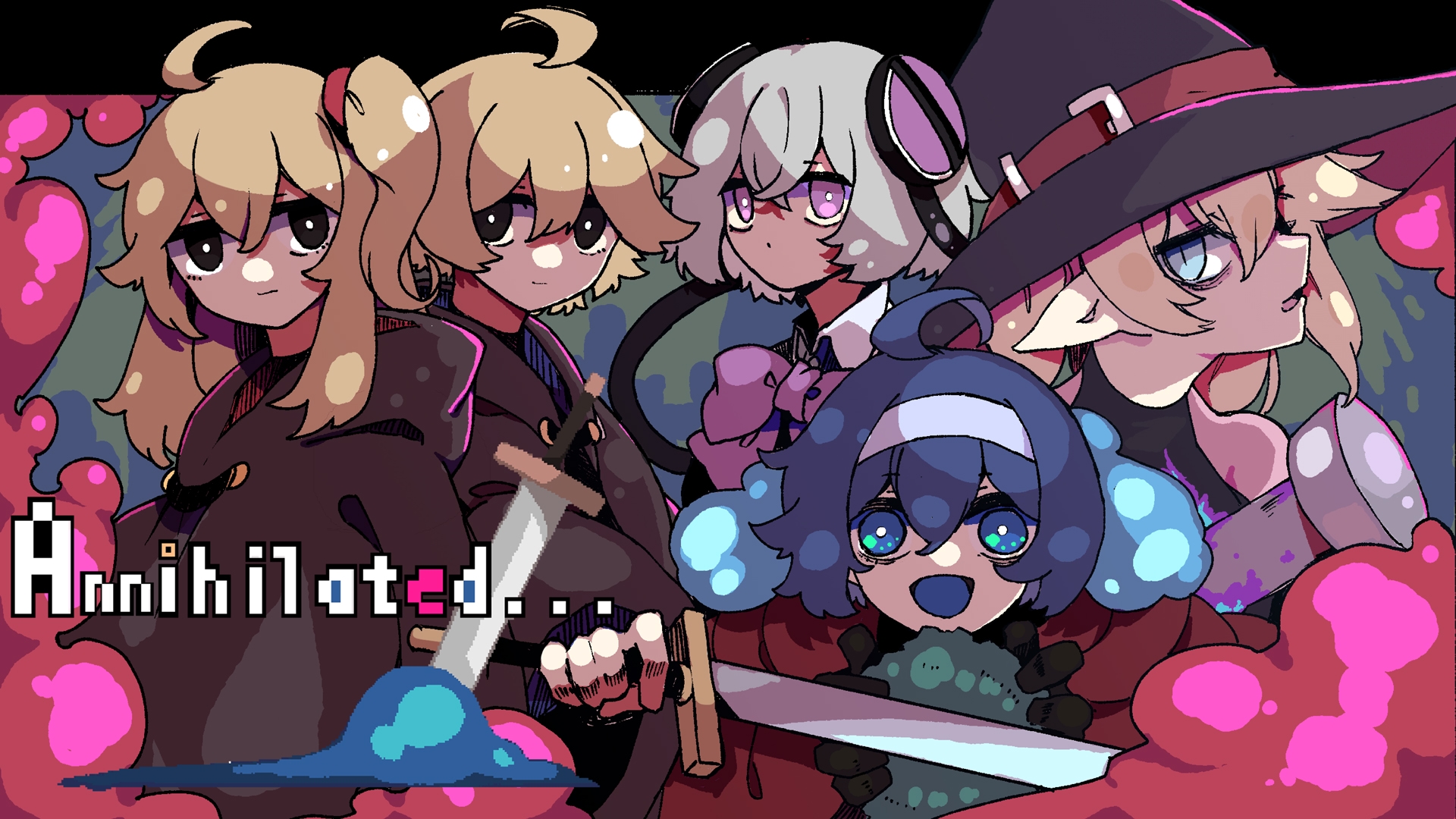
Hell has magenta blood
Who said that true horror must consist only of rusted hooks, exposed viscera, and monsters covered in latex and pins? I tell you: sometimes the real nightmare is what slithers under your skin, torments your conscience, forces you to reckon with the consequences of your choices… And it slaps you right in the left eye, offering you a blood censorship that turns magenta *sigh*.
…But when all this is packaged into an RPG roguelite with the grim soul of a Monday morning in Milan without coffee, the matter starts to become interesting.
Today we’re talking about “Annihilated”, the dark indie indie developed by the Japanese team Death Kumiai and published by Flashlight Games. A title that, after a troubled development and a delay that had its supporters’ livers rattling, finally arrives on PC on November 10, 2026 at the announced European price of €17.25, with a 10% launch discount.
Take your dose of patience, prepare to make… controversial choices, and set aside any illusion of heroism: we’re about to dive into the depths of a game where saving someone inevitably means abandoning another.
Kawaii outside, rotten inside
Let’s see how much this ticket to hell costs and whether our gaming cart is ready to take on the journey. On the hardware front, the information published on Steam is decidedly essential:
- Operating system: Windows 10/11
- Space required: 1 GB available
No detailed requirements for processor, RAM, or graphics card are specified, but one wouldn’t expect anyone to be sent off to buy a new GPU for no reason, especially considering that the graphics don’t excel in detail.
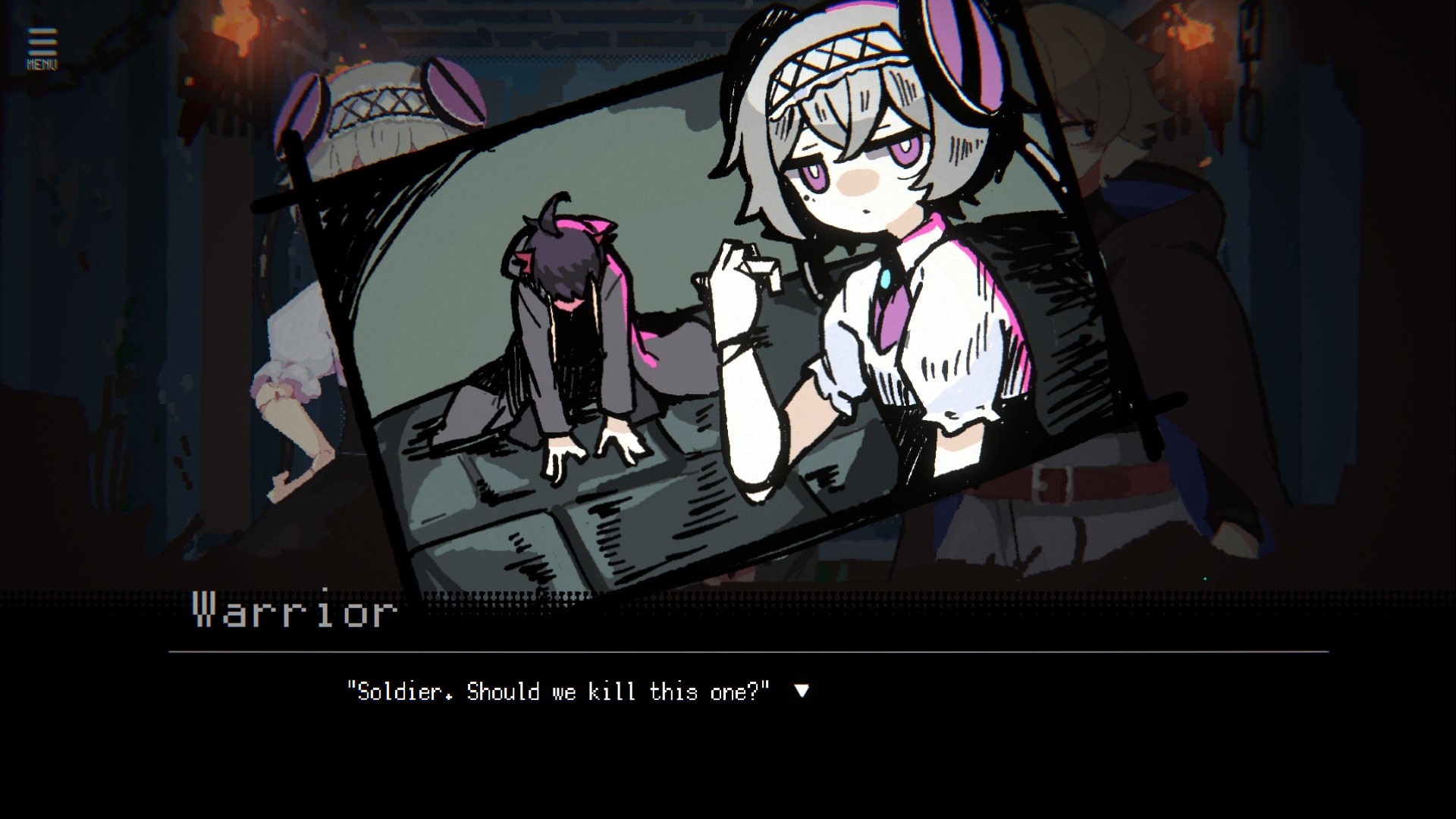
Visually, Annihilated takes a decidedly unique path: the art direction blends retro suggestions, anime-style illustrations, and an apparently kawaii aesthetic, which constantly contrasts with the brutality of the narrative events.
It’s precisely this contrast that represents one of the most recognisable aspects of the work. On one side, we have characters with almost endearing appearances, caricatured expressions, and a visual style reminiscent of some Japanese productions from the past. On the other, we have death, curses, mutilated and torn bodies, and individuals psychologically reduced worse than my bank account after Steam sales (indeed, if you’d like to donate a couple of euros, please let me know in the comments section — which, by the way, doesn’t exist). The result is a blend of cuteness and unease that seems determined to take every expectation for a good old-fashioned slap.

The visual aspect includes over 400 hand-drawn illustrations, a significant artistic investment for an indie project. The visual identity thus appears to focus more on characterisation and the strength of the imagery than on technical spectacle for its own sake — and this is a perfectly coherent choice with the title’s narrative approach… Although my tastes align only partially with this, as I believe that on pixel art, the palette of colours (please bear with me, I know blood must be censored in Japan, but that magenta is truly ‘na cosa tremenda!) and generally on other aspects of design beyond the main characters, something could be done better.
There’s also a sad note worth highlighting: the absence of the Italian language. In fact, the absence of languages altogether. Aside from English, Japanese and simplified Chinese, the others seem to have… been wiped out! …And considering the weight of the narrative, this omission could pose a significant barrier for those who don’t speak English well (or Japanese. I won’t comment on Chinese, as we all know it’s now widely spoken… What? Who said Jensen Huang?) And believe me: tackling a hellish dungeon is already complicated enough without having to fight against the dictionary too.
Given that this time we’ve gone digging through the package (what nostalgia when Bonolis mocked the participants of “Affari Tuoi”) for the visuals, we’re also adding a few notes on the audio and music (notes on the music… pun = mission complete!) because the musical accompaniment plays an important role in presenting Annihilated. In an experience so closely tied to reading, dialogue, and atmosphere, the audio department has the delicate task of supporting tension without becoming intrusive, and the contrast between narrative moments, exploration, and combat offers fertile ground for a musical accompaniment capable of shifting register and adapting to different situations. Naturally, it remains to be evaluated how effectively this variety is exploited throughout the entire adventure, but the attention paid to the sonic component is already evident from the presence of a complete soundtrack. This masterpiece is indeed credited to NINOMIYA Yuji (a relatively well-known composer in the video game and storytelling Japanese scene) and includes 27 tracks, available as a bonus (paid) through a separate Steam release.
Four misfortunes.
Looking beyond its own palm of the nose, Annihilated is an independent production that focuses on a rather unique combination: dungeon exploration with roguelike progression, strategic combat, and a narrative structure that nods to visual novels.
In Annihilated you will not portray the usual clean, fearless hero, ready to save princesses and entire worlds from the grasp of a dark lord with evident self-esteem issues. No, my lords. Here things are considerably more twisted: you will take on the role of the last survivor of a rescue team sent deep into a dungeon cursed to retrieve a group of legendary adventurers who have vanished. Unfortunately, once you reach the location, the situation is far from reassuring: The “Hero” has almost completely lost the ability to speak. The “Mage” can no longer use her magic. The “Warrior” has lost his powerful body and finds himself trapped inside a doll. And the “Priest”... well, let’s just say his mental health has taken a path from which he will hardly return. In short, a cheerful group like a residential meeting.
But the narrative twist comes immediately after: you can save only one of them. This decision shapes the entire narrative structure of the game, divided into four distinct paths, each dedicated to one of the characters. Each companion carries their own personal story, traumas, secrets, and worldview that will influence your journey. The relationship between the protagonist and the chosen character becomes one of the central elements of the experience. Here, in toto the psychological aspect of Annihilated comes into play. It’s not simply about reaching the exit of the dungeon, collecting some loot, and returning home to tell how brave we were.
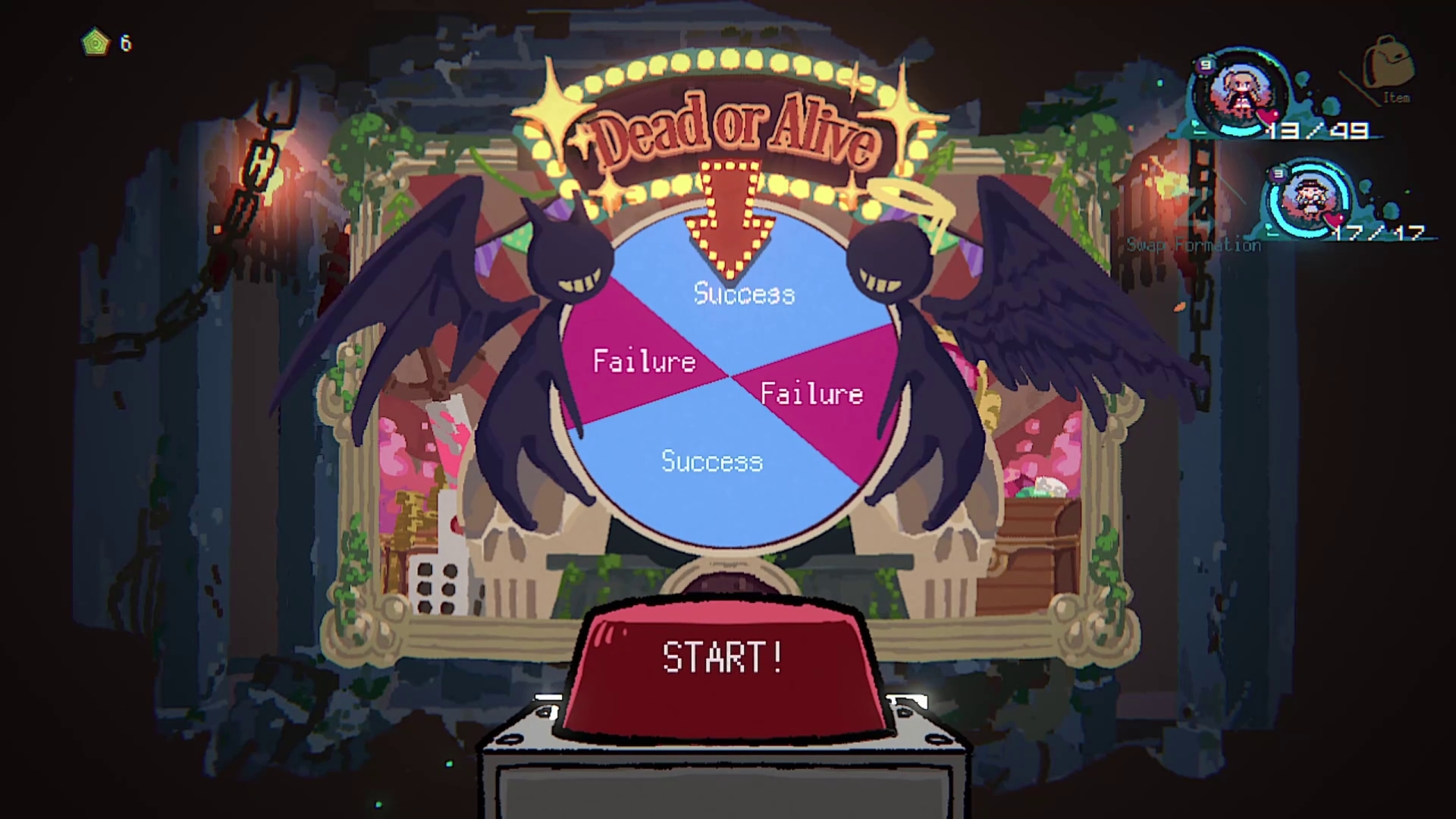
The real challenge lies in discovering what happened to the original group and understanding the physical and mental wounds each member carries. The narrative promises to dig into the characters’ contradictions, alternating grotesque situations, melancholic dialogues, and moments of dark humour.
With over 200,000 words of branching story, four main paths and multiple endings, the game presents a substantial amount of narrative content. An ambitious structure, especially for an independent production of this scale.
Break the weapons... and the keyboards.
But let’s get to the point: how do you play Annihilated? One dies. A lot.
The gameplay combines dungeon exploration, resource management, and turn-based card combat. But beware: we’re not talking about the usual system where you simply build a deck and hope luck is on your side. Here, every item in your inventory becomes a usable card during battles, with a limited number of uses. In other words, every weapon is a resource destined to be consumed sooner or later — and precisely when it’s about to break down, it becomes more dangerous.
The combat system revolves around a concept that is both simple and surprisingly interesting: weapons reach their maximum potential precisely at the moment of breakage.
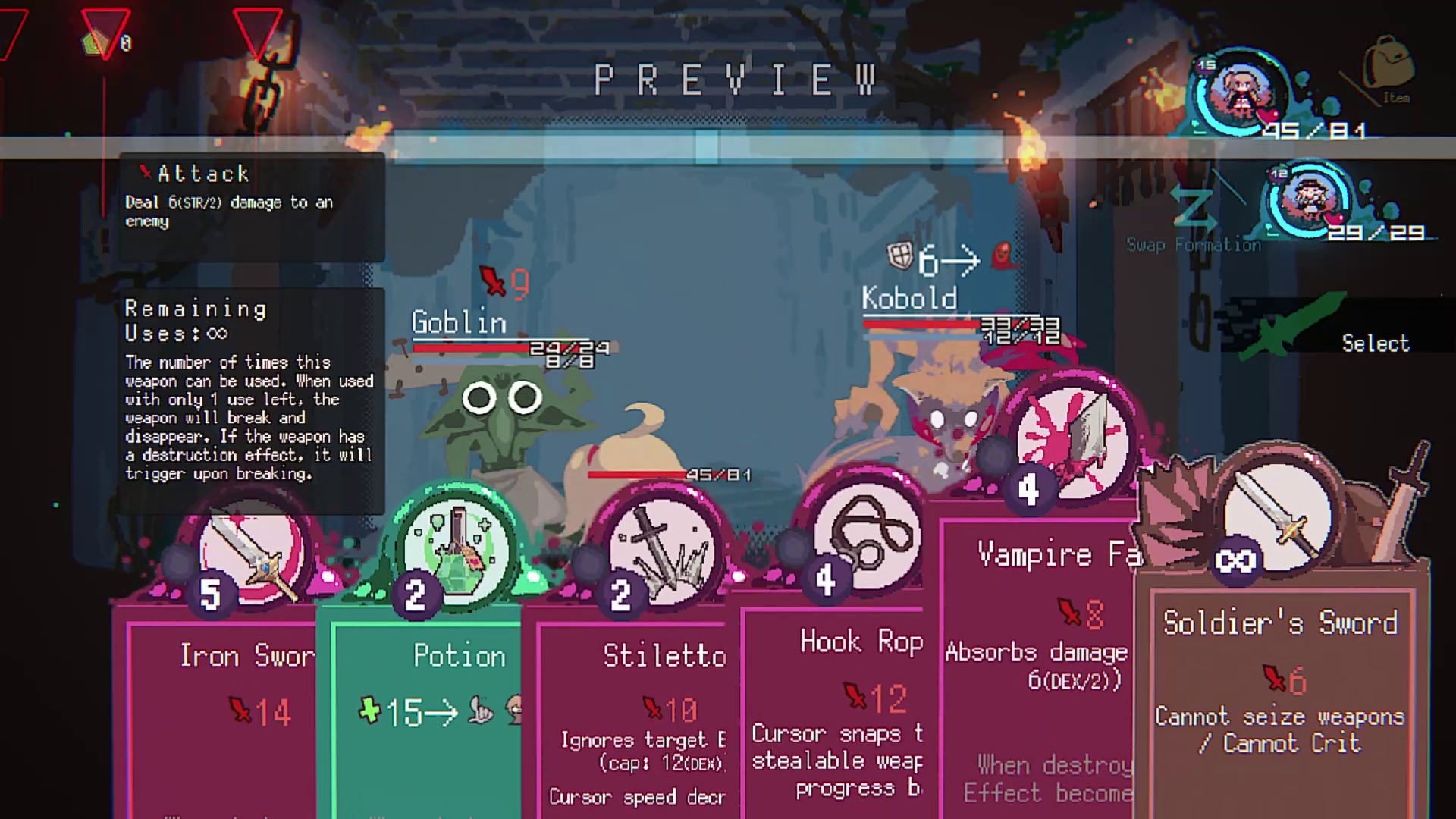
Every item has a limited number of uses. Deciding when to keep it and when to sacrifice it becomes essential. Additionally, bringing an enemy into a vulnerable state and using the final shot of a weapon allows you to execute a lethal attack that also enables you to take the enemy’s gear.
The thing even more charming is that the game allows you to face battles using a timing-based system (card effects are tied to a bar that must be stopped at the right moment) or one more probability-driven. This latter choice is particularly interesting because it offers two different approaches to the same strategic structure. All of this without abandoning the element of risk that defines the experience.
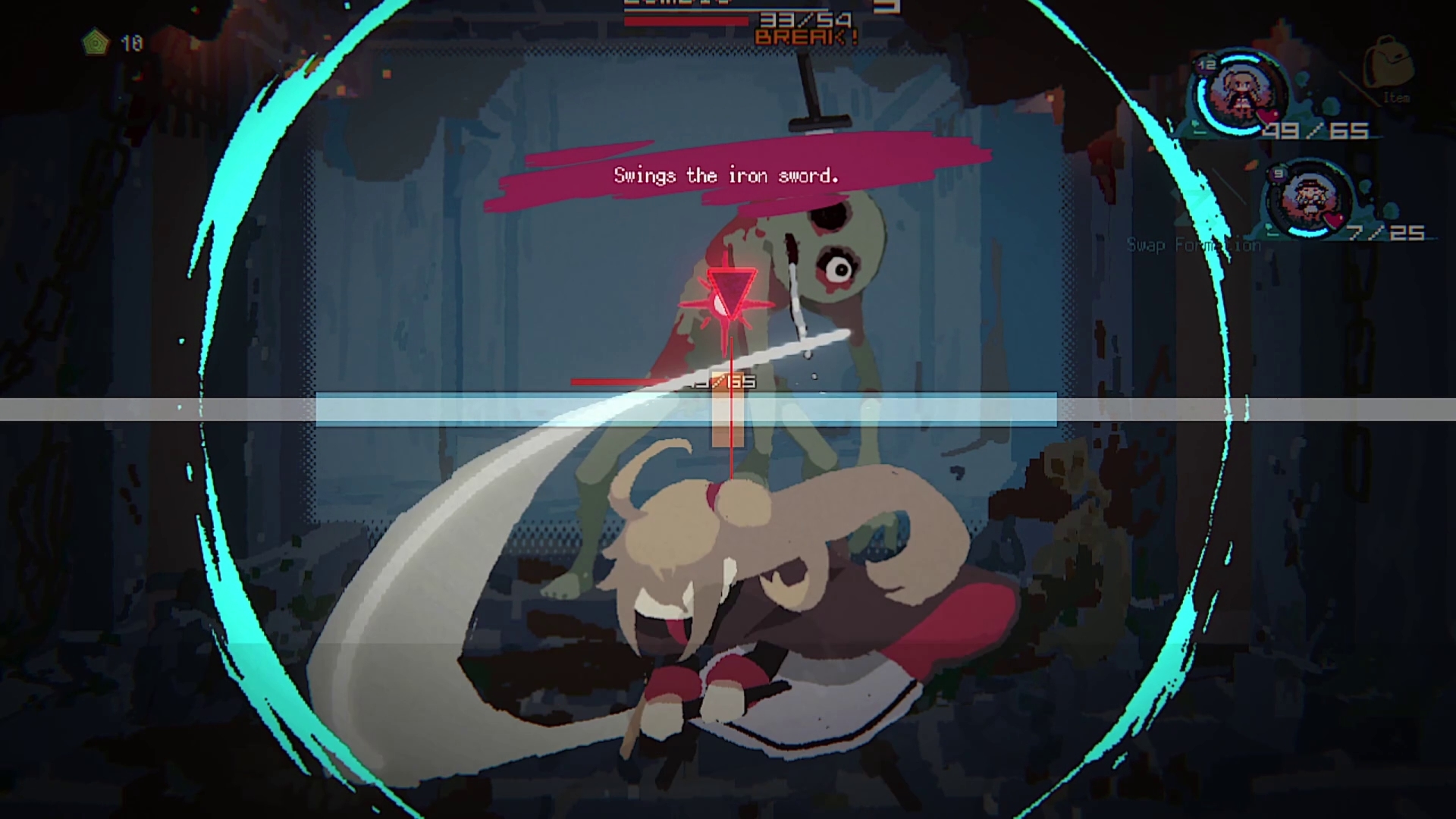
And let me say this: the idea of having to deliberately destroy a weapon precisely when we might need it most has a sinister potential, nothing bad
Another central element is represented by the “Curse”, the “curse points” obtained through destroying items and integrated into the progression system. These resources can be used to challenge fate, correcting particularly unfavorable outcomes, or can be converted into items and experience. Death, therefore, does not necessarily mean losing everything and starting over from scratch. The system allows players to resume from the dungeon floor where they fell, leveraging accumulated resources to face obstacles again with greater chances of success. It’s a philosophy we’re familiar with: fall, learn, improve, and get back up — only here, everything is seasoned with an equipment management system that promises to turn every fight into a miniature chess match against a sadistic opponent.
And since the developers promise more than a hundred different weapons and items, strategic possibilities shouldn’t be lacking.
Of course, an interesting mechanic on paper must prove it works over the long term. Managing durability, especially during the toughest moments, could be the game’s main strength—or a potential source of frustration. The line between a well-balanced challenge and a curse hurled at the monitor by slamming the keyboard on the desk, after all, is always extremely thin.
Destroy your own finances: yes or no?
By now, the question arises: does Annihilated justify its price, or is it another reheated dish in the giant pot of indie roguelites? Let’s be clear: Annihilated doesn’t seem to be a game designed for everyone (much less for those who speak only the language of Dante).
Those seeking frantic combat, immediate action, and an experience to tackle after eight hours of work might find themselves facing something very different from their expectations. The narrative component occupies a huge space: here, you must read, reason, manage resources, and accept that every decision can have important consequences. And the absence of Italian certainly doesn’t help those struggling to follow long English dialogues.
However, for fans of narrative RPGs and dungeon crawler, Death Kumiai’s offering has several interesting cards to play (cards to play… does the joke come through?).
We are not facing a simple attempt to mimic the genre’s big names. At least in its intentions, Annihilated seeks its own path, blending roguelike mechanics and psychological writing with a visual style hovering between tender and disturbing.
The announced price, moreover, falls within an accessible range, especially considering the amount of content planned, even if, in my view, it slightly overestimates the budget of the average video game buyer who purchases roguelite games. The potential is there, certainly, but it remains to be seen how effectively all these ideas manage to coexist with the player’s enthusiasm once the full adventure has been tackled.
For those who enjoy troubled stories, moral choices, and combat systems that reward planning, Annihilated definitely deserves your attention — and if you find satisfaction in being slapped by a video game, you’ve likely just found another candidate for your nights of digital masochism.
About the Author