What nostalgia pixel art evokes, doesn’t it also do for you? Perhaps because we grew up associating it with afternoons spent in front of a cathode-ray tube television, when monsters were just piles of coloured squares and the most terrifying thing that could happen was discovering you’d forgotten to save after three hours of gameplay. A familiarity that, paradoxically, some developers have learned to exploit precisely to build experiences capable of unsettling us far more than technically sophisticated productions can.
In other words, many titles have shown that a few pixels, intelligent use of sound, and a good dose of imagination are enough to create a horror that manages to seep beneath the player’s skin. And when it’s precisely New Blood Interactive that publishes a new survival horror with a deliberately retro aesthetic, it becomes hard not to pay attention.
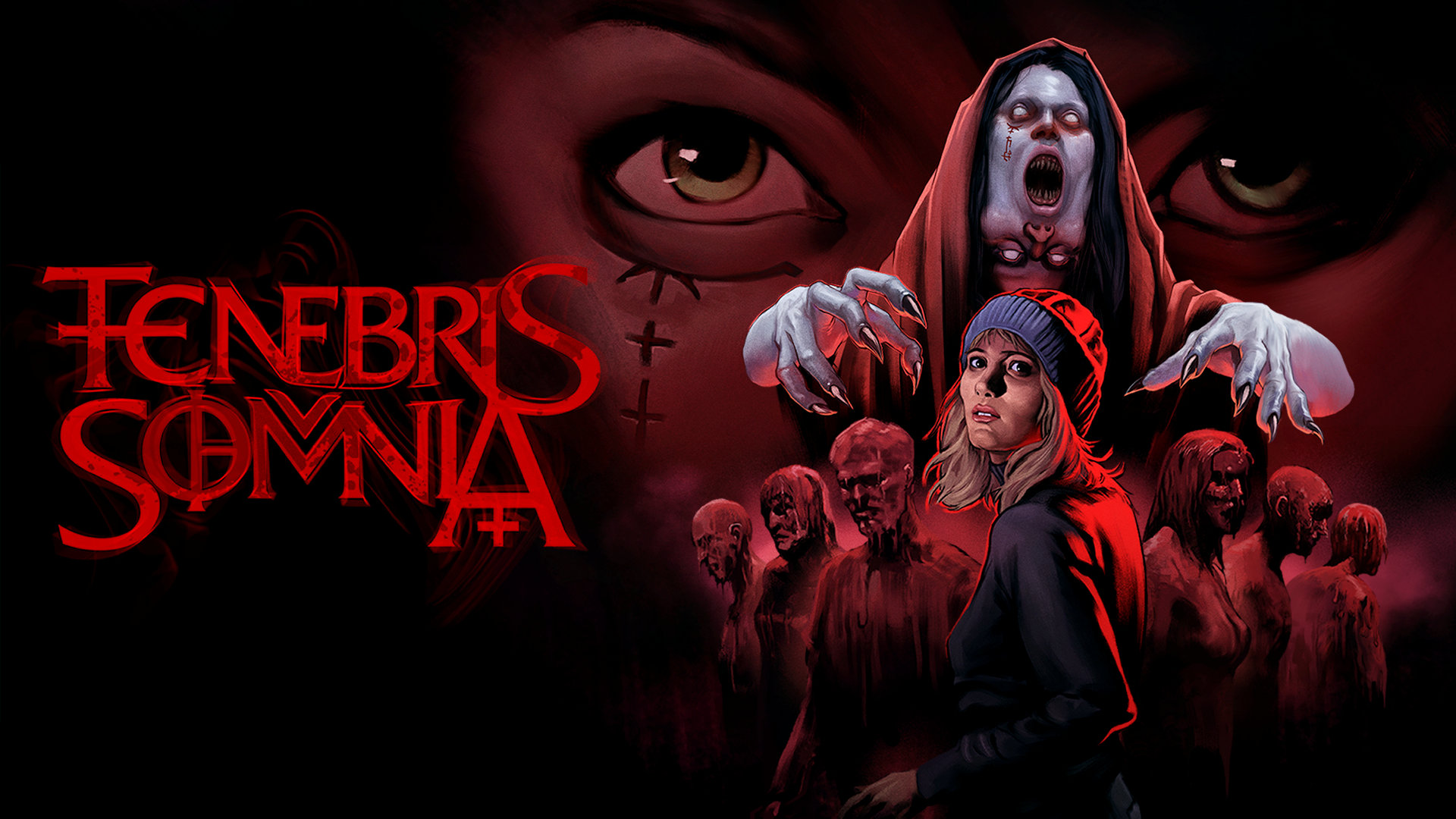
Tenebris Somnia, developed by Andrés Borghi e Saibot Studios, begins with this premise to offer something decidedly unusual: a 2D adventure that recovers the mechanics of classic Resident Evil and Silent Hill, but abruptly breaks away from its pixel art presentation to show us live-action cinematic sequences, featuring real actors, physical sets and traditional special effects. An idea that, at first glance, might seem no more than a promotional gimmick. After all, the relationship between video games and live-action films has a history dotted with experiments, mostly successful or not, many of which are remembered chiefly for their unintentionally ridiculous nature.
Yet Tenebris Somnia does not use cinema to hide its videogame limitations, but to amplify what the game already manages to communicate through interaction. The result is a surprisingly coherent experience, capable of harmonising two visually apparent incompatible languages and building around them a mystery that sustains curiosity until the final credits.
This content is provided by YouTube. To view it, you must allow external content. Activation may result in data being shared with the third party.
Some exes would be better left in their nightmares
The protagonist of the story is Julia, a young woman haunted by recurring nightmares in which she witnesses the violent death of her ex-partner, Iván, attacked by monstrous creatures. The problem is that those images keep reappearing with an insistence difficult to ignore, and, unable to contact him, Julia decides to reach the apartment where he lived. A completely understandable choice, at least until we consider that, within the survival horror universe, entering the home of someone who has disappeared after repeatedly seeing them die in one’s dreams typically marks the first step toward a considerable amount of problems.
Once she arrives, Julia quickly realises something is off. Iván seems to have vanished, and the environment retains traces of activity and interests that take on increasingly unsettling meaning. The discovery of a mysterious volume eventually draws the protagonist into a reality that appears to defy the usual laws of space and time. From this moment, Tenebris Somnia gradually abandons the coordinates of a conventional supernatural story to build a mystery in which dreams, memory and obsession begin to overlap.
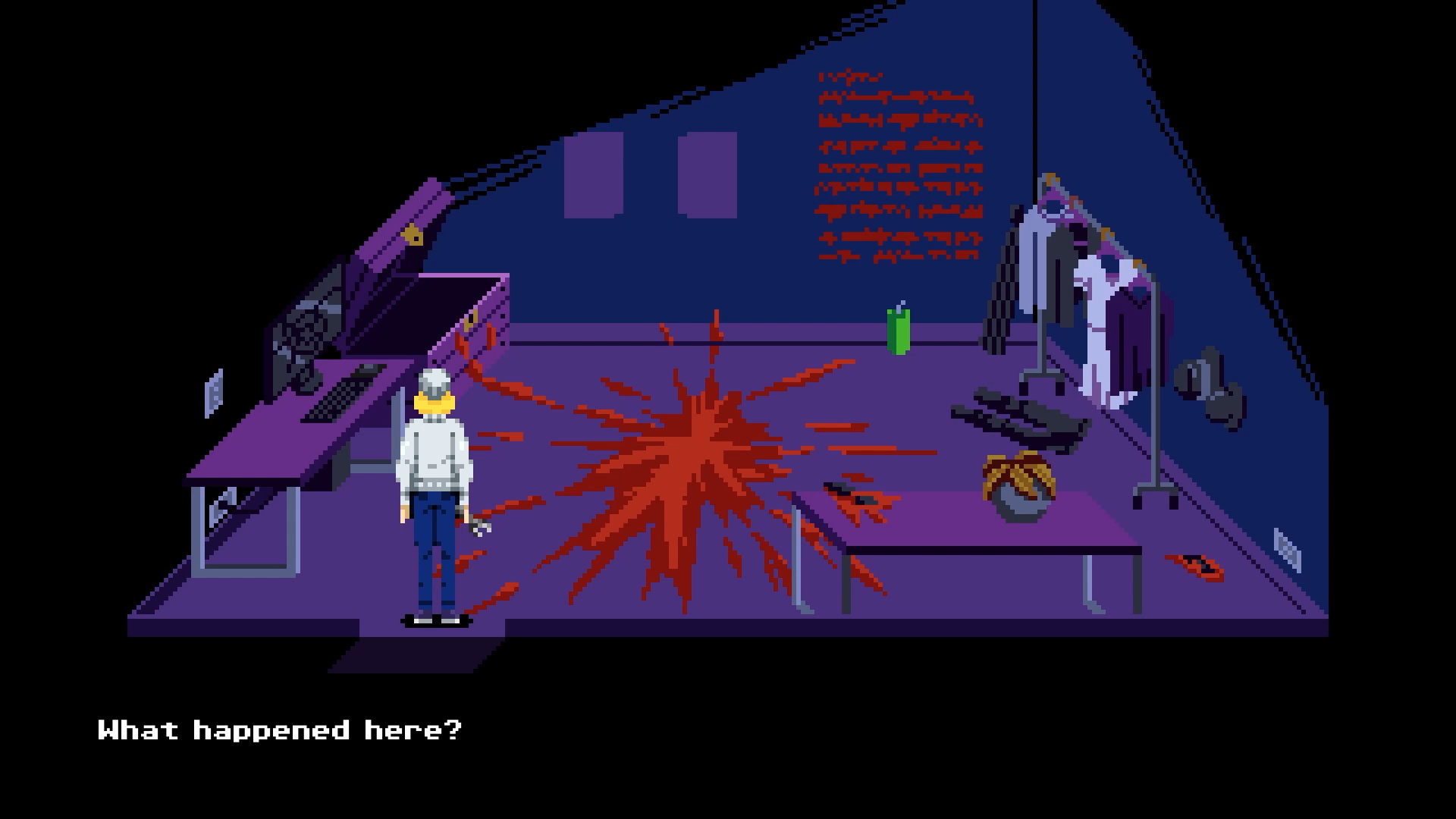
I prefer not to delve further into the plot, as much of the experience’s success stems precisely from the gradual discovery of character relationships and the need to reconsider what we initially took for granted. I can, however, hint that the writing demonstrates a strong ability to handle information, allowing the context to emerge through small environmental details, documents, and narrative sequences that rarely appear merely to artificially extend the adventure.
The reference to Silent Hill is evident, especially in the way horror is used to represent emotional conflicts and deteriorated personal relationships, but it would be reductive to consider Tenebris Somnia a mere imitation of the Konami franchise. The game has a much closer relationship with cinematic language and uses this trait to develop its own identity. The result is a story that demands attention, capable of introducing seemingly secondary elements and retrieving them hours later, once we finally begin to grasp the broader context. And precisely when we think we’ve grasped where it’s heading, Tenebris Somnia often adds a few new details that make the situation decidedly less straightforward than anticipated.
What pixels cannot tell
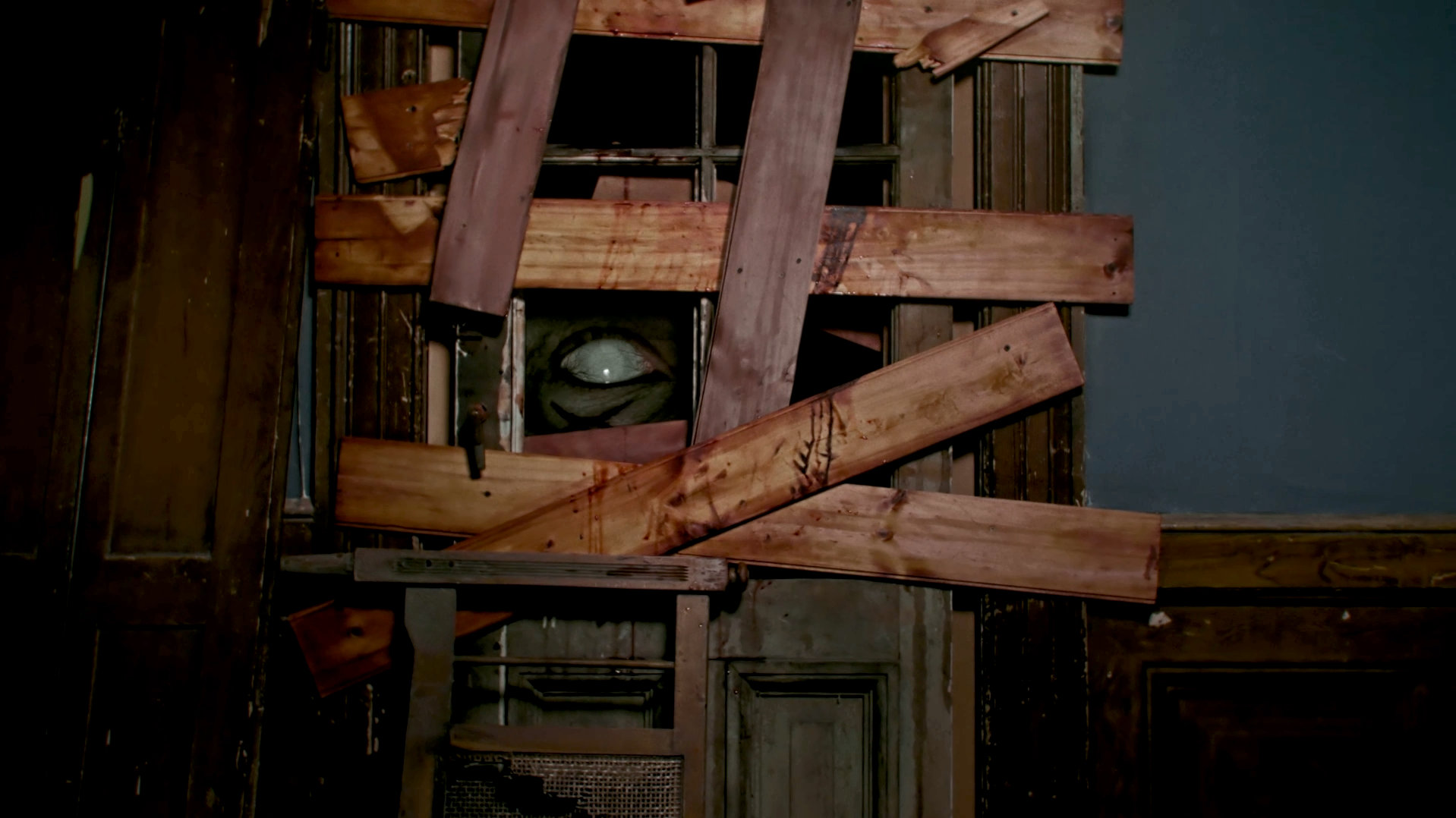
Naturally, the element that most distinguishes Tenebris Somnia from the competition is represented by the live-action sequences. At certain points in the story, the two-dimensional world is suddenly replaced by cinematic shots in which we can observe characters and creatures through real actors. Julia, who until a few seconds ago was composed of a handful of pixels, now takes on the face of the Argentine actress Clara Kovacic, while environments and horror manifestations are represented through set design, prosthetic makeup, and practical effects. The interesting thing is that these clips don’t seem to belong to a separate production, but rather represent a natural extension of what we’ve just experienced.
An environment explored through pixel art can suddenly be shown in its realistic version, allowing us to recognise details we had only observed in stylised form. A creature that appeared during gameplay as a disturbing collection of sprites acquires a completely different physicality when represented through a mask, a costume or a prosthesis. The transition between the two languages produces a particularly effective effect because it exploits precisely the gap between what we imagine and what is shown to us. Pixel art inevitably leaves empty spaces that our brain fills with imagination; cinematic sequences then intervene suddenly to give concrete form to those same nightmares
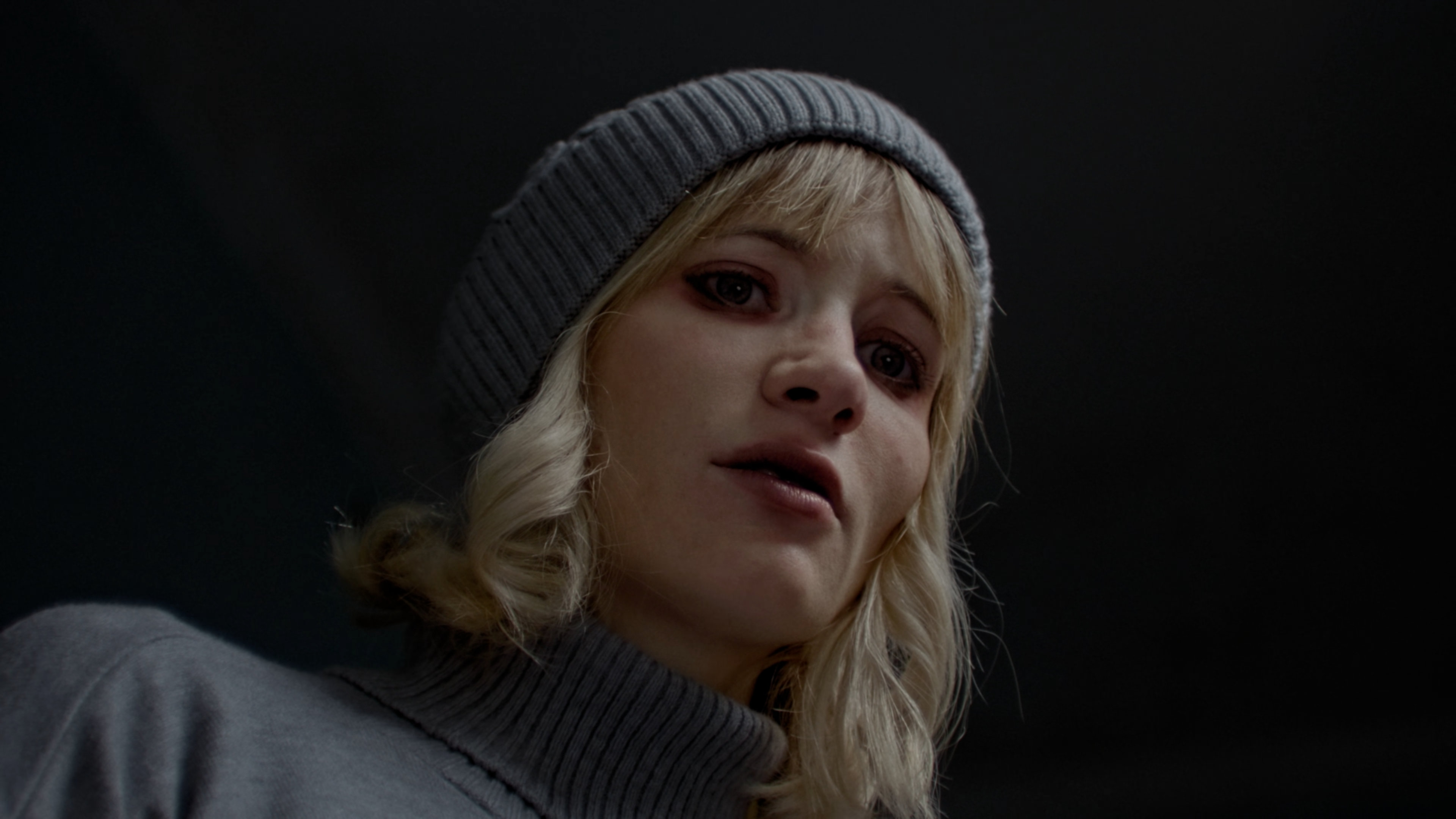
A significant part of the credit naturally goes to the Argentine crew involved in the project. The filming was carried out with a level of care that we rarely expect from an independent production of this scale, leveraging lighting, editing, and set design to achieve a result close to that of a genuine horror film. Particularly noteworthy is the work on practical effects, supervised by Marcos Berta, a professional also involved in the production of When Evil Lurks, one of Argentina’s most interesting horror films of recent years.
The creatures possess a convincing physical presence, with intelligent use of materials, masks, and makeup that makes certain sequences particularly unsettling. The decision to prioritise physically realised effects, supplemented only when necessary with digital interventions, also allows for a visual continuity that would have been difficult to achieve through more invasive CGI. All of this gains even greater value when considering that the sequences are essentially devoid of spoken dialogue, relying instead largely on performance, editing, and context for communication. It’s a solution that demands precise staging, but one that also helps make the imagery comprehensible regardless of the player’s language.
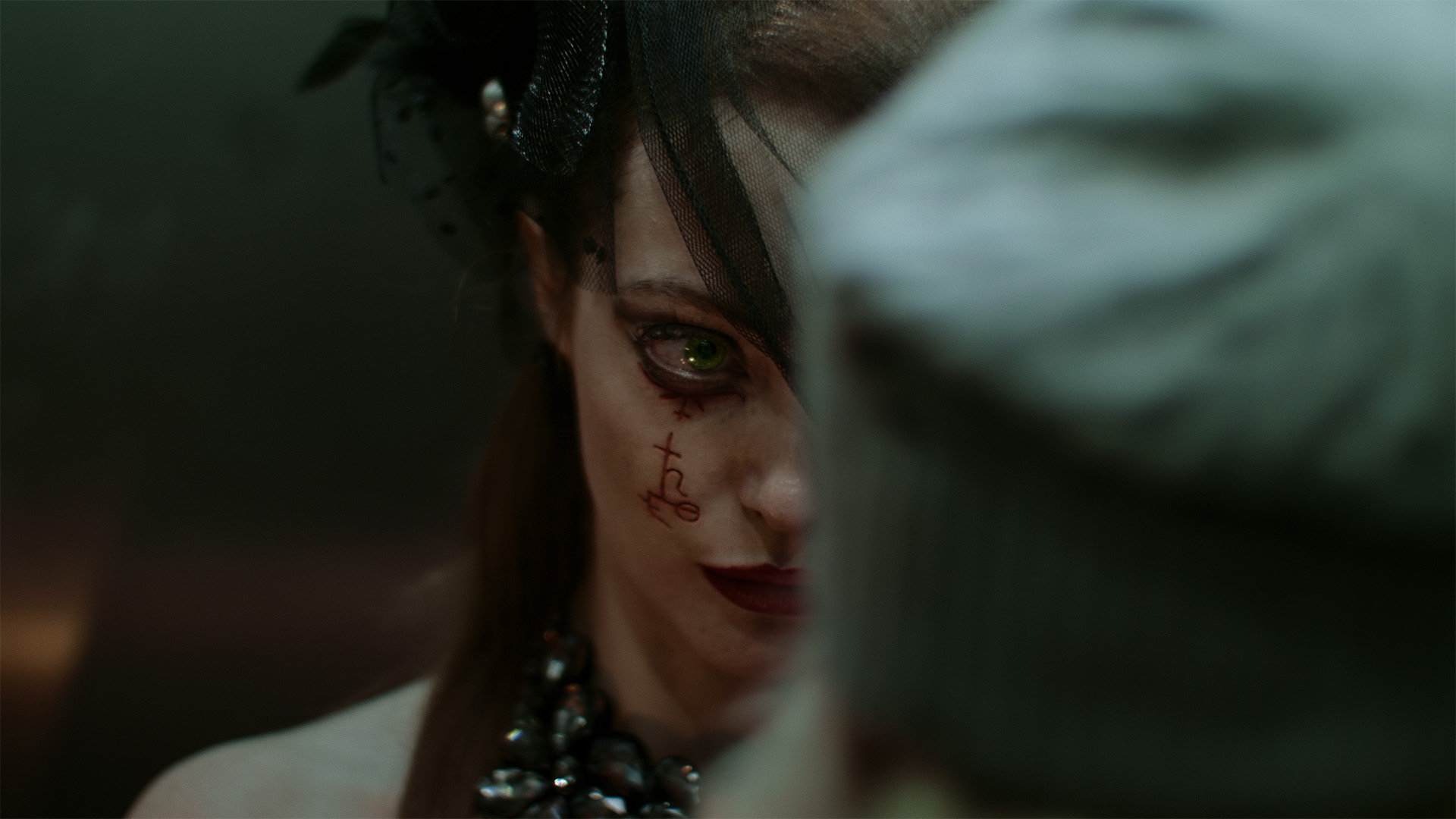
We’re not, however, talking about simple cinematic interludes designed to reward the completion of a chapter. The videos contain information that may be indispensable for interpreting events and solving certain puzzles, forcing us to observe carefully what happens instead of passively waiting for the return to gameplay.
Solve and combine
When we return to check on Julia, Tenebris Somnia reveals a decidedly more traditional gameplay structure, built around exploration, inventory management, environmental puzzles, and relatively simple combat. The 2D perspective immediately recalls the adventures of the 1980s and 1990s, but the core gameplay foundations clearly belong to the classic survival horror tradition. We move through interconnected environments, collect objects necessary to proceed, and must understand how to use them to overcome obstacles or access new areas. Doors remain closed, documents appear incomprehensible, and situations arise where returning to a previously visited location becomes necessary to use an object collected later. The backtracking is therefore a fundamental component of the experience.
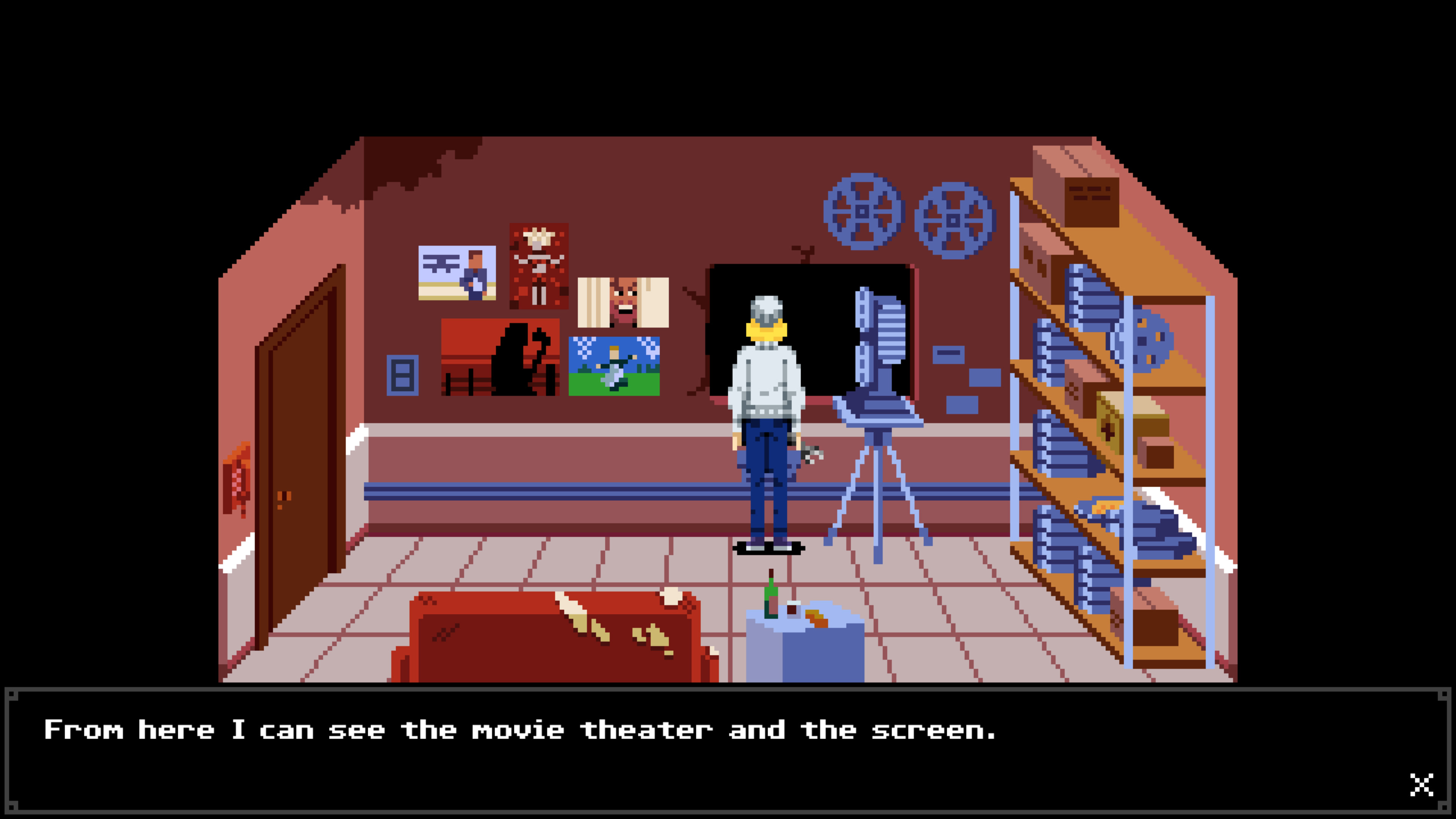
Fortunately, in most cases, going back on your own steps restores the feeling of gradually understanding the game’s world structure, rather than merely repeatedly traversing the same corridors to artificially extend playtime. The environments are sufficiently detailed to encourage exploration, while the gradual unlocking of new areas introduces a light metroidvania element, without turning the experience into something overly分散.
The interface deliberately evokes those of the old survival horror games from the East, including some sound effects and aesthetic choices that help reinforce the production’s retro identity. The control system is overall intuitive and supports both mouse and keyboard as well as controller, allowing players to move, run, examine objects, and use weapons without significant complications.
Of course, there are some rigidity: Julia’s movement can occasionally feel imprecise, especially when we need to navigate tight passages or interact with environmental elements placed in particular positions. In certain circumstances, the protagonist can also become temporarily stuck against small obstacles, a problem that becomes much less tolerable when pursued by something that doesn’t appear particularly inclined to give us time to adjust our trajectory.
A good puzzle is worth more than ten jumpscare
Among the most successful aspects of the experience, we certainly find the puzzle design. Tenebris Somnia demonstrates, in fact, a good understanding of one of the fundamental characteristics of survival horror: the fear does not necessarily have to come from the presence of an enemy, but can emerge from the simple uncertainty about what we must do.
The puzzles require you to carefully observe the environment, interpret documents, and connect information that may initially appear unrelated. Some solutions become clear only after exploring a subsequent area, while others exploit narrative details we had already encountered during the cutscenes. The game thus manages to build a progression in which every new discovery seems to have a precise meaning, simultaneously aiding puzzle resolution and advancing story comprehension.
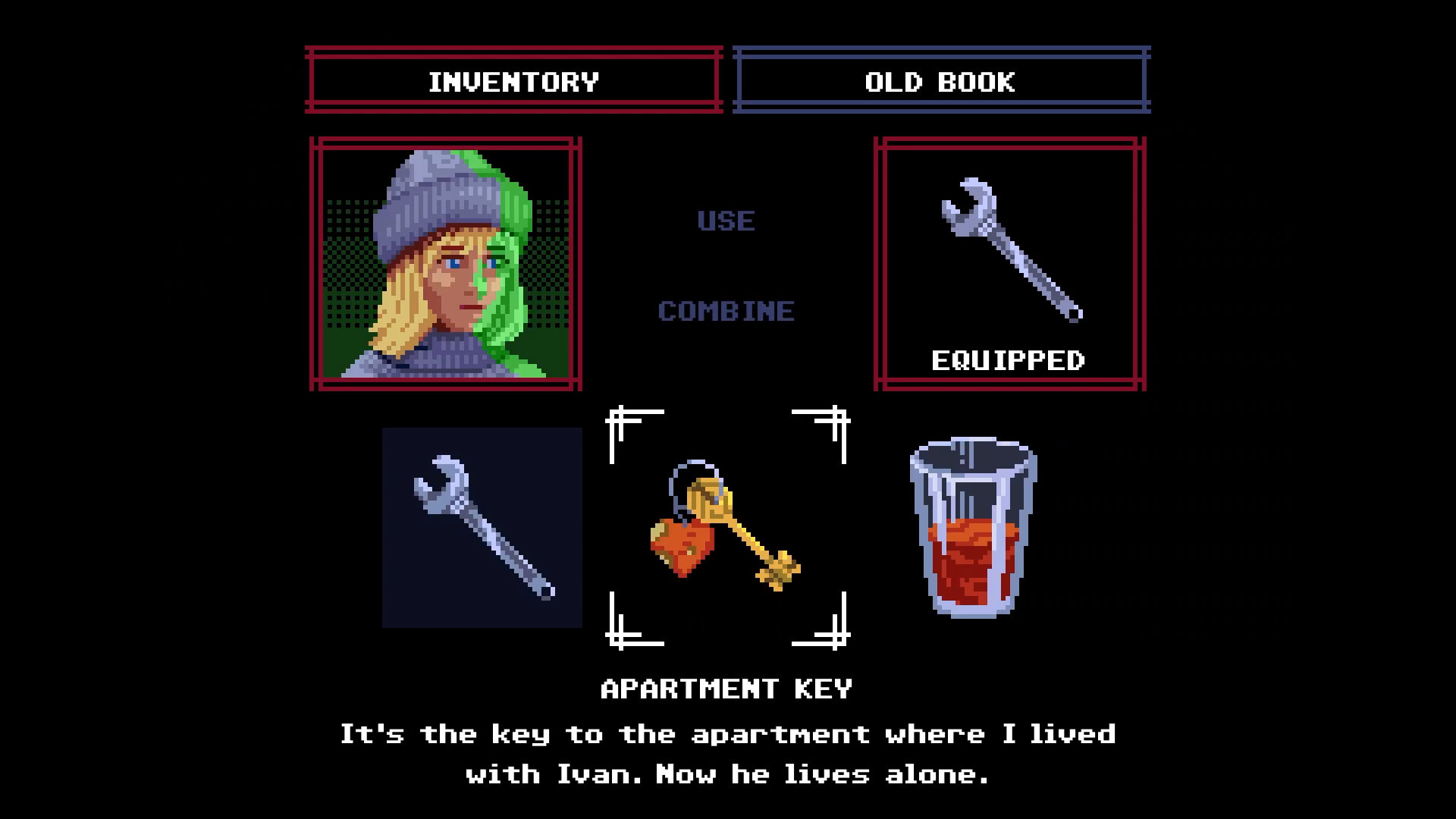
Particularly successful are the moments when the mechanics themselves are altered to reflect the anomalies of the world traversed by Julia. Certain situations can change how environments are perceived, require observing something from a different perspective, or make use of tools capable of revealing elements normally invisible. These insights allow the game to go beyond the traditional search for keys and numerical codes, occasionally introducing more creative and perfectly coherent solutions with the atmosphere. Some may appear quite cryptic, and certain information is not communicated with sufficient clarity, forcing players to occasionally repeat interactions or re-explore already traversed areas in the hope of having overlooked something. There is also a question related to accessibility: some puzzles rely on distinguishing between colors or interpreting audio signals, without always offering equally immediate alternatives for those with visual or auditory difficulties.
Remains nonetheless a design puzzle overall convincingly compelling, especially because the game manages to link the resolution of the puzzles to the progressive discovery of the story. We are not facing obstacles introduced solely to slow the player down, but rather situations that contribute concretely to the construction of the mystery. And it is precisely this reason why, even when we are temporarily stuck, the curiosity to find out what lies ahead often outweighs the frustration.
The monsters are terrifying, the controls sometimes a bit more difficult
During the adventure, we must face numerous hostile creatures, using a combat system that draws on some traditional survival horror conventions and adapts them to a two-dimensional perspective. Julia can equip different weapons and confront enemies through direct attacks, paying attention to distance and the optimal moment to strike. The game also makes use of a certain level of environmental depth, allowing attacks to be directed along different angles rather than being limited to purely horizontal movements.
The result is an essential combat system but generally functional, in which resource management and the ability to anticipate enemy behaviour assume greater importance than pure execution speed. We are not facing a particularly elaborate action game, nor do I believe the developers intended to build one. Weapons possess decent effectiveness, and fights require sufficient attention to prevent us from traversing every environment by indiscriminately eliminating any creature. The relative scarcity of resources also encourages evaluating whether it’s worth fighting or whether it’s preferable to avoid a confrontation, preserving that survival element which I consider fundamental to the genre.
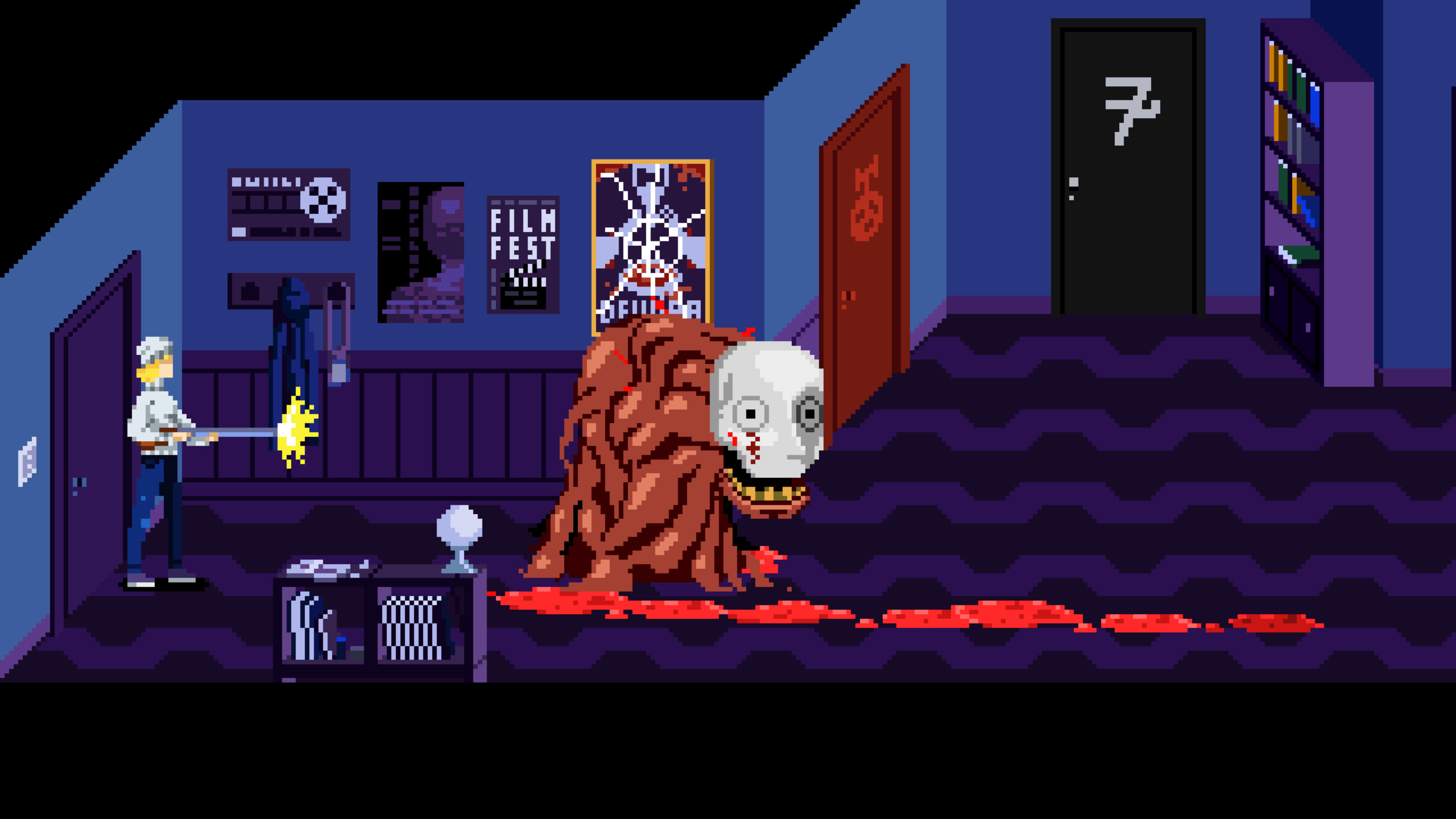
The issue becomes most apparent in the most tense situations. Some enemies possess attacks whose area of effect is not immediately discernible, while the rigidity of certain animations can make it difficult to react promptly to a threat. The feeling of having full control over Julia is occasionally undermined by imprecise collisions and movement management that, during chase sequences, can become particularly frustrating. Some bosses also present a difficulty that depends more on the need to understand the nature of the encounter than on the actual complexity of the mechanics.
It is probably this aspect in which Tenebris Somnia most clearly reveals its limitations, because the decision to revive the rigidity of classic survival horror games is not always accompanied by the precision essential to make a modern combat system convincing. Fortunately, combat does not represent the main component of the experience, and the game generally manages to maintain a good balance between exploration, combat, and narrative progression.
You don’t need to see the monster to be afraid of it
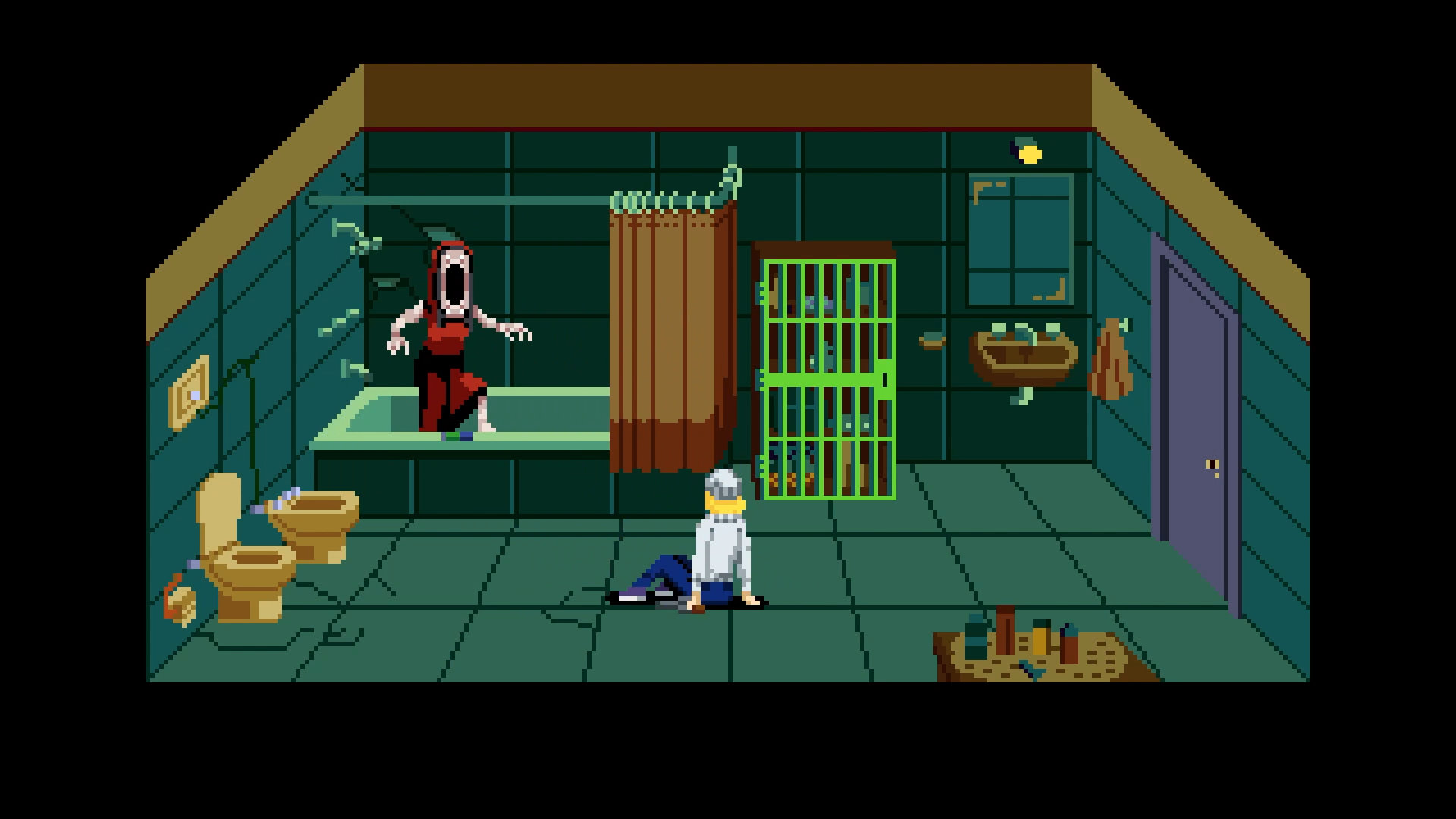
If the combat system shows any uncertainty, the artistic aspect instead manages to convince almost entirely. The pixel art of Tenebris Somnia uses a deliberately essential representation, evoking the limitations of old 8 and 16-bit productions without sacrificing notable attention to detail. Environments alternate between seemingly ordinary locations and increasingly disturbing scenarios, where the presence of the supernatural is communicated through architectural distortions, organic elements, and creatures with decidedly grotesque designs.
What’s surprising is how the game manages to feel unsettling even when only a few animated sprites appear on screen
Much of the credit goes to the handling of atmosphere, which intelligently exploits the contrast between familiar environments and seemingly misplaced details. An empty room can become unsettling through an abrupt sound, an environmental element we didn’t remember seeing, or a minor change suggesting something is present beyond our field of vision. The artistic direction doesn’t constantly attempt to impress us with particularly elaborate imagery, but prefers to build a sense of escalating discomfort, leveraging our natural tendency to interpret what we can’t clearly see.
It’s an approach that recalls some of the best insights of psychological horror cinema, in which the fear often arises from the awareness that something might lie just beyond the limits of our perception.
Particularly interesting is the relationship between audio and live-action sequences, which possess a sound design capable of further amplifying the contrast with two-dimensional environments. Tenebris Somnia demonstrates that horror does not necessarily depend on the visual complexity of the representation, but on the ability to use all available tools effectively. And, in this case, Andrés Borghi and Saibot Studios appear to have fully grasped the lesson.
Four finals and a few too many questions
The main story takes approximately between six and nine hours to complete, a duration I consider particularly suitable for a survival horror built around a narrative mystery. The pacing is generally well-balanced, and the game manages to introduce new elements at a frequency sufficient to keep curiosity alive. Some sections inevitably slow down, especially when forced to revisit already-explored environments repeatedly, but overall, the progression rarely loses its momentum entirely.
Particularly noteworthy is the presence of four different endings, which allow players to witness some of the consequences of their choices and encourage them to revisit the adventure to discover further interpretations of the story. Naturally, not all endings are emotionally equivalent, but the possibility of reaching different conclusions contributes to reinforcing one of the game’s central themes: the relationship between what we remember, what we choose, and the meaning we assign to our experiences.
It’s also interesting to observe how the narrative manages to play with the audience’s expectations. Some elements may seem easily interpretable during the first few hours, but the story retains enough information to gradually challenge our assumptions. Not all revelations are necessarily surprising, but the overall picture gains a depth that rarely emerges from merely observing the initial premise.
The game tackles themes related to emotional relationships, memory, and the difficulty of recognising what remains of a relationship after its end. I found this dimension particularly effective, because it allows the supernatural horror to take on an emotional meaning without constantly turning every creature into a metaphor that must necessarily be explained. Not all questions receive definitive answers, and some interpretations remain up to the player, but the narrative possesses a sufficiently solid structure to avoid the feeling of facing a mystery constructed solely to appear incomprehensible.
Technically speaking
From a technical standpoint, Tenebris Somnia is a rather unusual production, as it combines two fundamentally different production approaches. On one hand, we have a 2D video game built using pixel art, relatively simple animations, and an interaction system that evokes productions from the past. On the other hand, we find a cinematic component created with actors, set design, and practical special effects, which inevitably requires different resources and skills than those typically associated with developing a small independent title. The result is a production visually much more ambitious than the hardware requirements might initially suggest.
Particularly welcome is the Steam Deck Verified certification, which makes the game an interesting candidate even for those who prefer to tackle horror adventures on the go. Full controller support also represents an advantage for a title that deliberately recovers the conventions of console productions from the past. Overall, the options management is functional, though some accessibility aspects deserve greater attention, especially in puzzles that require distinguishing colours or interpreting specific audio signals.
It should also be noted the absence of Italian localisation, a particularly disappointing omission for an adventure in which correctly understanding documents, clues and narrative information is a fundamental component of the experience. Fortunately, the cinematic sequences, essentially devoid of dialogue, manage to convey a considerable amount of information simply through performance, once again demonstrating how the project has invested in building a visual language capable of overcoming at least part of the linguistic barriers.
Overall, the technical result is positive.
In conclusion
Tenebris Somnia is one of those independent productions that manages to remind us how survival horror can still be interesting when someone decides to experiment without merely mechanically rehashing past formulas. Andrés Borghi and Saibot Studios build a journey capable of fusing two seemingly incompatible languages, using pixel art to recreate the atmosphere of classics and live-action sequences to give concrete form to the nightmares that permeate Julia’s story. The result is surprisingly coherent and works especially because the cinematic component is not treated as a mere visual gimmick, but instead represents an integral part of the narrative and, in certain circumstances, the solution to puzzles. The story manages to keep curiosity alive, the settings possess considerable personality, and the puzzle design offers enough interesting insights to make even the most thorough exploration enjoyable.
Of course, there are some flaws. The combat is rather basic, movement can feel imprecise and certain chase sequences end up becoming frustrating, especially when the game punishes you for collisions or poorly legible interactions. Some puzzles also turn out to be excessively cryptic, while the lack of Italian localisation presents a barrier for those who wish to follow all the narrative nuances. These are real limitations, but they rarely manage to undermine the overall value of the experience. Tenebris Somnia is above all an example of how powerful the intersection between cinema and video games can be when both are used with conscious intent, without one necessarily having to prevail over the other.
About the Author