Following the line of last time’s review, where I imagined myself as a video game sommelier in an opulent setting, this time I’ll be a neighbourhood charcuterie seller: "Signó, I’ve got a Winter Crew sausage that’s finely sliced, and if you put it inside CMD Studios it’s a fairytale. So what are you doing? Letting it go?" Dante would be turning in his grave, but… well, we’re not here to read hendecasyllables.
… and you there at the counter with an arched eyebrow, hoping the elegantly wrapped packet (hey, have you ever wondered what that paper is called, the kind that the sausage wrap uses to tie the sliced meats? Now you know. Incredible, really, what era we’re living in, eh?) doesn’t contain the latest, faded clone of “Hollow Knight” stuffed full of fog and cosmic depression. pincher wraps sliced meats in paper? Now you know. What an era we’re living in, eh?) doesn’t contain the latest faded clone of "Hollow Knight" stuffed with fog and cosmic depression.
Instead, when you get home and make yourself a sandwich, boom! Here comes the pleasant taste of a 2D platformer that smells of well-animated cartoons and has a texture of relaxed comfort that melts in your mouth, leaving room for a retro aftertaste of gradually increasing difficulty. clickAnd there it is – the pleasant taste of a 2D platformer that smells of well-cartooned animations and has a relaxing texture that melts in your mouth, leaving room for a growing retro bitterness. platform in two dimensions that smells of smoothly animated and with a texture of relaxation that melts in your mouth and gives way to a nostalgic aftertaste of gradually increasing difficulty.
We’re talking about ‘Fallen Tear: The Ascension’, a Metroidvania with ambitious aims that attempts to blend the dynamism of scrolling platformers with the structural complexity of classic 90s JRPGs. Metroidvania with ambitious aims that attempts to blend the dynamism of scrolling platformers with the structural complexity of classic JRPG 90s. But will all that shine be gold, or does the hand-painted wonder of the art hide the usual mess of poorly digested mechanics? …So open up a beer (which always pairs well with panini) and join me in this dissection of this new game.
Rao's Destiny
The narrative of Fallen Tear: The Ascension throws us into the role of Hira, a mysterious young man with peckish skin who wakes up in the fantasy world of Rao with not a scrap of memory (a genuinely fresh plot twist, let’s admit it, never seen in video games in the last forty years). Rao is a realm on the edge of abyss, shattered by corrupted ancient deities, a variety of beasts (from the classic bouncing pallettes you’ll dispatch with two shots to monstrous horrors that take up half the screen), and a balance that’s deteriorating rapidly and risk of reducing it to ash (this tale of balance is as fresh as the milk I’ve had in my fridge for three weeks. Cristina, if you’re reading this, yes, I’m pointing a finger at you). Hira soon discovers he’s not just any ordinary teenager: inside him lies the power of the Super Saiyan of Ascension, a latent force tied to the sacred cosmos (to add a Zodiark reference to the mix) that allows him to change his form and unleash a primal fury capable of plowing anything moving on screen. del super Saiyan dell'Ascensione, una forza latente legata al sacro cosmo (per buttare nel calderone anche un riferimento ai Cavalieri dello Zodiaco) che gli permette di mutare forma e scatenare un'ira primordiale capace di arare qualsiasi cosa si muova a schermo.
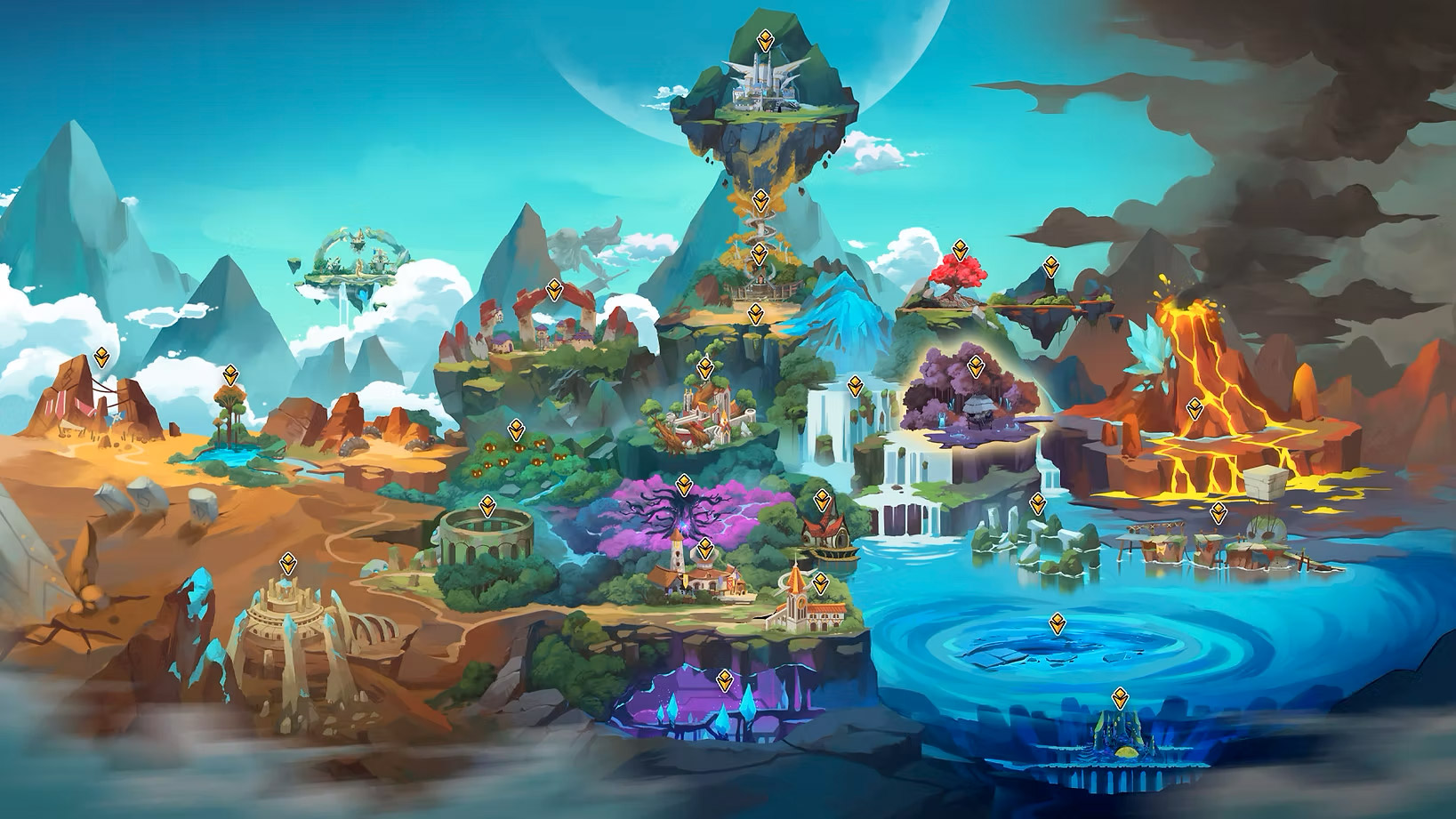
The narrative backbone develops around the classic hero’s journey, enriched by a relationship system called Fated Bonds (Fated Bonds). During the exploration of the various biomes (one for each element, with a whole series of intermediate scenarios leading up to them) in Rao, you won’t be limited to delivering left and right attacks, but you’ll meet over twenty recruitable characters (the "Fates" or FatesEach of these characters brings their own subplot, dedicated dialogue, and, above all, tactical utility in combat (ta-dah!).
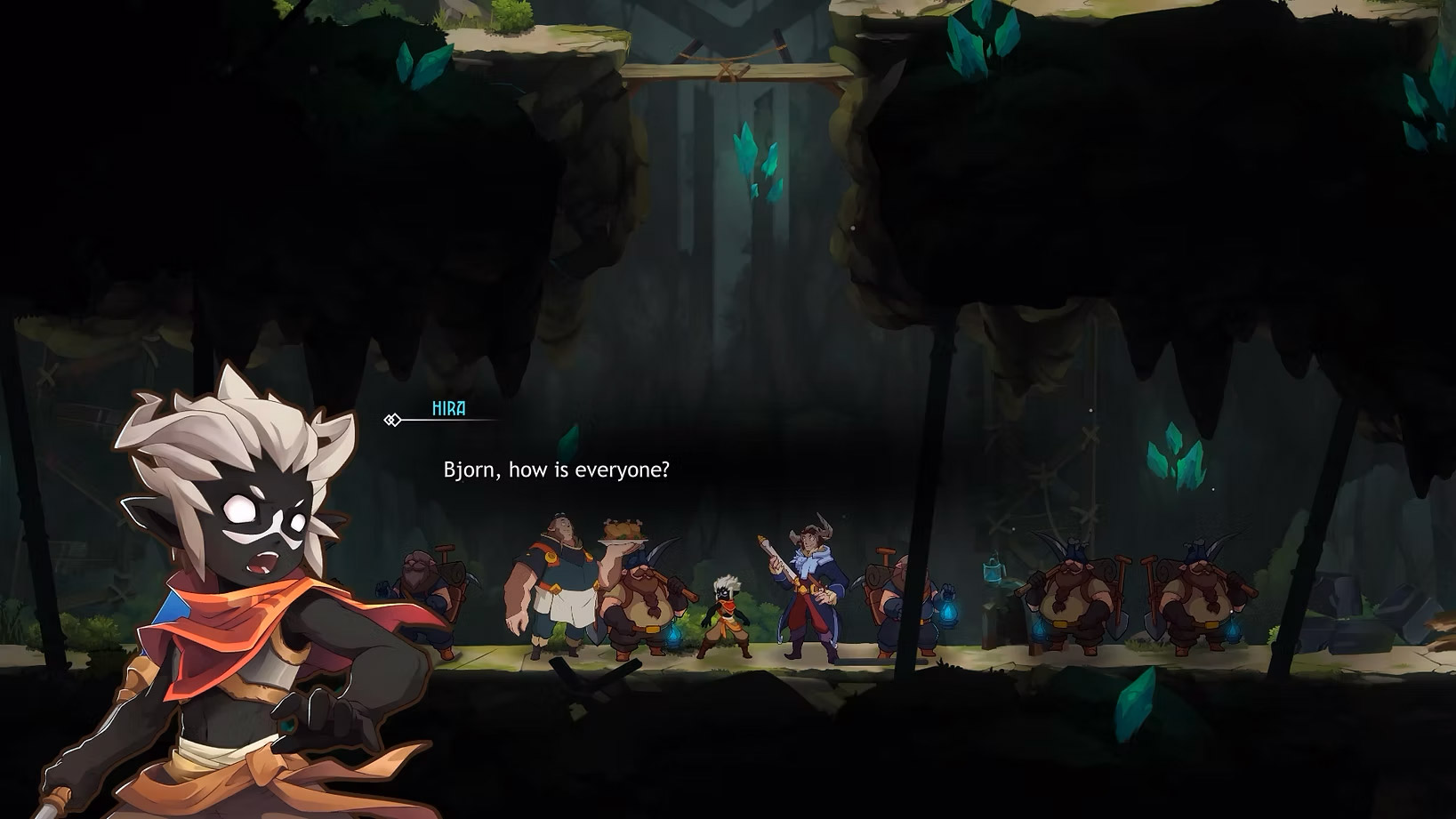
Don't expect the psychological depth of a "Chrono Cross" or the literary finesse of a vintage "Suikoden", make no mistake: several dialogues often slip into the clichés of midday anime with a bit of stale one-liners and emotional peaks treated with an excess of emphasis. Nevertheless, the presence of these allies succeeds in giving Rao's world a pleasing three-dimensionality, making you feel less alone as you wander through forgotten ruins.
But let's get to the point: how do you play? The combat system is the real highlight, cooked up in a hefty, stuffed sandwich-style manner by the Filipino team Winter Crew. Hira isn't your usual lumbering knight swinging blades at ‘Castlevania’: she's agile, quick, able to chain aerial combos, millimetric dodges, elemental attacks, and evasive moves. The action moves at a frenetic pace. You can launch enemies into the air, chase them with a diagonal dash, pummel them with blows, and then close the combo by summoning one of your Fate-equipped allies for a high-impact combo attack. You can launch enemies into the air, chase them with a diagonal dash, pummel them with blows, and then close the combo by summoning one of your Fate-equipped allies for a high-impact combo attack.
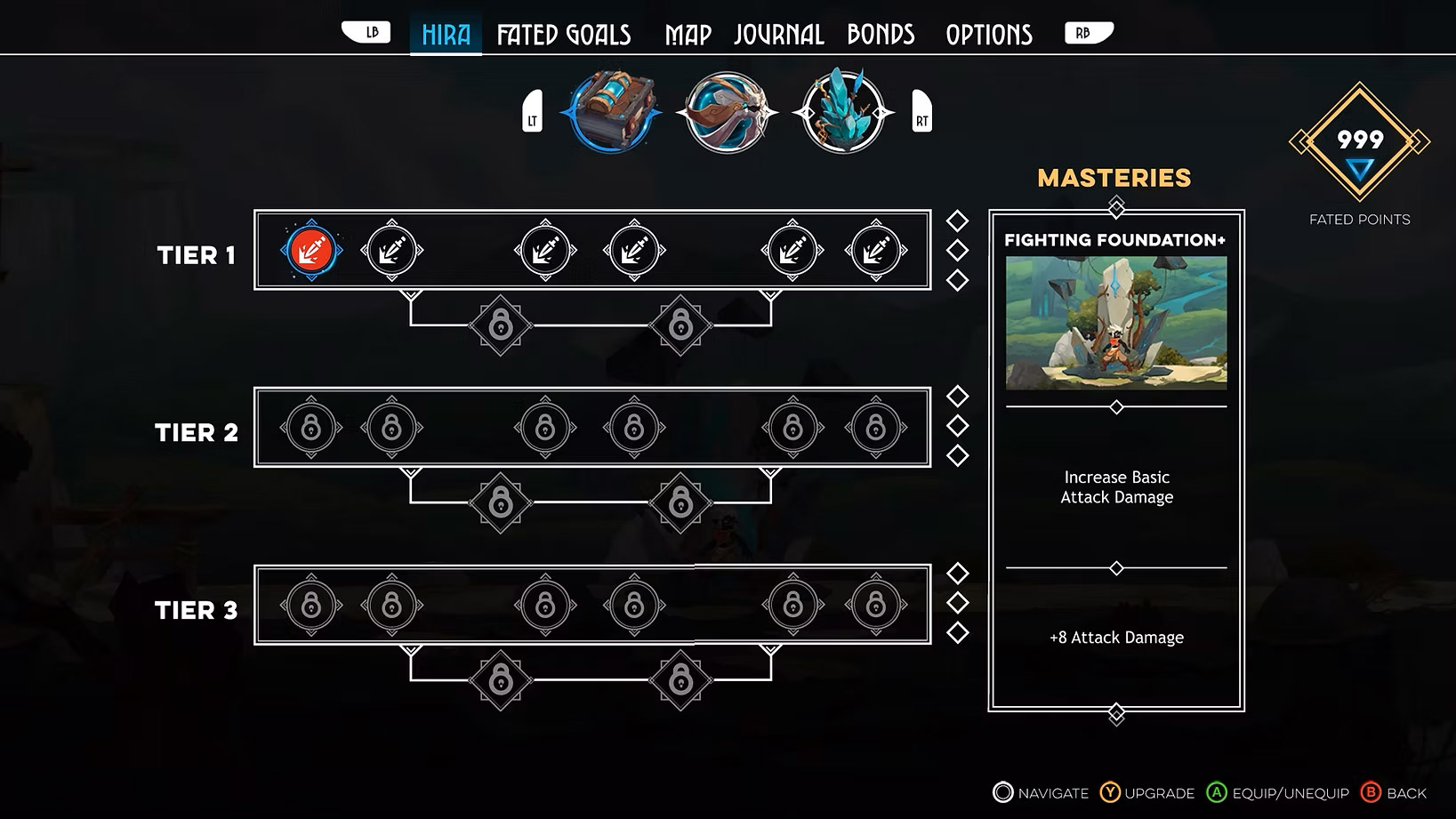
When the energy bar fills to maximum, the mechanic that gives the game its title comes into play: the “Ascension”.When the energy bar fills to maximum, the mechanic that gives the game its title comes into play: “Ascension”. Hira transforms into a kind of monstrous semi-divine being, equipped with dedicated moves, temporary invulnerability, and a devastating area of effect. It’s the classic “break everything and take the consequences” mode, perfect for escaping critical choke situations or draining the health bar of the most hostile bosses.Hira transforms into a monstrous semi-god wielding specialised moves, temporary invulnerability, and a devastating area of effect. It’s the classic “break everything and take the consequences” mode, perfect for escaping critical congestion or draining the health bars of the most difficult bosses.
The flip side? The controls’ response in pure platforming phases. While combat is almost always reactive and enjoyable, the physics of jumping and climbing suffer from a bit of uncertain hitbox calibration that makes precise passages nerve-wracking: hitbox that makes precise passages nerve-wracking: jumping between platforms while dodging projectiles sometimes requires faith in the holds.

Then there's the pure 'Metroidvania' issue: exploration. Rao is a sprawling, intricate map filled with secrets, illusionary walls, and locked doors requiring ability X or element Y to unlock. Metroidvania” pure: exploration. Rao is a sprawling, intricate map filled with secrets, illusionary walls, and locked doors requiring ability X or element Y to unlock. The backtracking is abundant, as is traditional for the genre. The problem arises when the journey's pace is disrupted by a somewhat stingy fast-travel system and a game map that doesn't always help clarify elevation changes or secondary passages. You'll find yourself walking kilometers through already-cleared biomes just to unlock a chest containing a crafting ingredient or a secondary-use amulet. crafting or a secondary-use amulet. Just walk! After the third time you traverse the same valley, the poetry of exploration gives way to a sigh of boredom.
Author's portrait... but abstract
If there’s one area the Asian winter team has pumped the accelerator with zero reverence, it’s the artistic side. Fallen Tear: The Ascension is a visual spectacle for anyone who loves traditional 2D animation.. Forget about lazy pixel art or stiff vector marionettes: pixel art or the stiff vector marionettes: every animation of Hira, enemies and bosses has been hand-drawn, frame by frame, with a level of detail that deserves only applause (if you don’t believe it, check out the trailer).
This content is provided by YouTube. To view it, you must allow external content. Activation may result in data being shared with the third party.
The backgrounds are like painted canvases: lush enchanted forests, submerged temples bathed in vivid colours, cavernous subterranean complexes and floating technological ruins. The integration of dynamic lighting effects onto 2D designs delivers cinematic still shots and gives Rao’s universe a strong visual identity. Hira's transformations and the Fates' evocations boast a fluidity of impact that places the title well above the average of independent productions.
However - and here your Noldor must remove the sausage-stained apron and put on the obsessive geometry glasses - the visual excess comes at a steep price in terms of action readability.During boss fights or in rooms crowded with five or six enemies simultaneously, the screen becomes a fireworks feast. Amidst trailing shots, elemental explosions, summoned allies’ flashes, and damage indicators, figuring out where your character is or guessing an enemy’s attack frame becomes an inferno of guesswork. More than once you’ll find yourself taking hits to the teeth not because you missed the dodge timing, but simply because the enemy’s attack was completely obscured by the special effect of their latest combo. A touch less visual excess would have made gameplay precision feel genuinely helpful.

On the audio front, the orchestral soundtrack accompanies the adventure with epic themes during key moments and more melancholic, calming tracks while exploring villages and wild areas. We’re not facing a new 'Hollow Knight', but the sound design work is truly of a high standard.The English voice acting varies: excellent for the boss and main supporting characters, a bit more wooden and cartoonish for the secondary figures.
Regarding PC performance PC, our test on a battle-optimized setup didn't reveal any dramatic issues. The game engine maintains 60 frames per second at 4K resolution even in the most congested situations, provided you have a recent mid-tier graphics card. Loading times between macro-areas are reduced to a minimum if you install the title on a high-performance SSD. The mouse and keyboard UI is usable but clearly awkward: this is a game that loudly demands a good controller to be enjoyed properly. Trying to chain aerial combos and Fates' summonings with the keyboard is a punishment for a 'savage crackjob who's decided to fumble through this mess with a pair of pliers and a decent soldering iron' (and if you didn't get the quote, you're not pulp) that I wouldn't even wish on my worst enemy.scagnozzo strafatto di crack per fare un lavoretto in questo cesso, con un paio di pinze e una buona saldatrice” (e se non hai colto la citazione, non sei pulp) che non auguro nemmeno al mio peggior nemico.
Before Opening the Wallet
Before you rush to Steam to virtually swipe your credit card Steam , let’s wrap up what works and what risks blowing your budget during your exploration of Rao.
Fallen Tear: The Ascension is an admirable feat of ambition. The Winter Crew team and CMD Studios editors have crafted a title that stands out among the crowded modern Metroidvania landscape, focusing entirely on a stunning visual presentation and a hybrid combat system that delivers huge satisfaction. It’s not perfect: it suffers from some youthful flaws related to action readability and exploration management that could have benefited from tighter timing. But if you’re a fan of 2D brawling, wild collectibility, and meticulously lovingly crafted traditional animations, Hira’s adventure absolutely deserves a spot in your PC library. PC.
Released on 16 September, on Steam is currently on launch sale (until the end of the first week of October) at just over €20… Personally, I wouldn’t pay that for it, but it’s not overpriced either. If you’re interested, it’s also available on PlayStation, Xbox and Nintendo. Playstation, Xbox e Nintendo.