

At first glance, Hellforged might appear to be another isometric dark fantasy action roguelike. Dungeon lit by flickering torches, hordes of skeletons, crates to destroy, showers of colourful loot, and a protagonist armed to the teeth: the imagination is one we’ve come to know well. But just a few minutes in the open playtest from MoonPyre Studio reveal that behind the “survivors-like” facade lies something more interesting.
Hellforged actually attempts to fuse three distinct souls: bullet-heaven, extraction game and action RPG loot-based, all within a surprisingly coherent structure. And the most promising aspect is that, at least in this first playtest available on Steam, the experiment seems to be working damn well.
This content is provided by YouTube. To view it, you must allow external content. Activation may result in data being shared with the third party.
Surviving is no longer enough
The heart of the game remains immediately legible: you enter a closed map, eliminate waves of increasingly aggressive enemies, collect experience crystals, and gradually build a war machine capable of filling the screen with effects, magic, and devastation. The difference is that Hellforged doesn’t stick to the classic “die, restart, retry” progression. Here, loot actually matters.
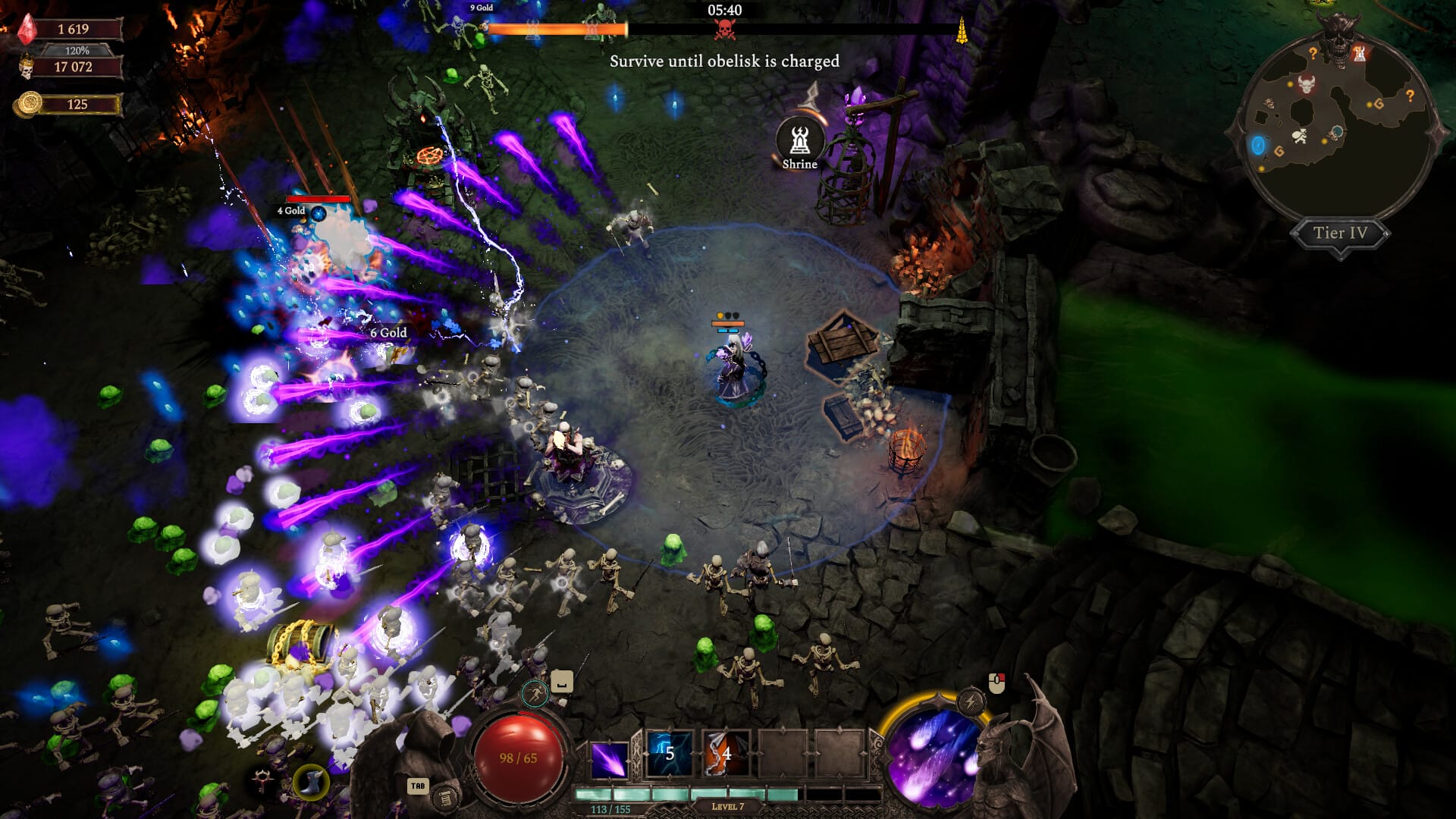
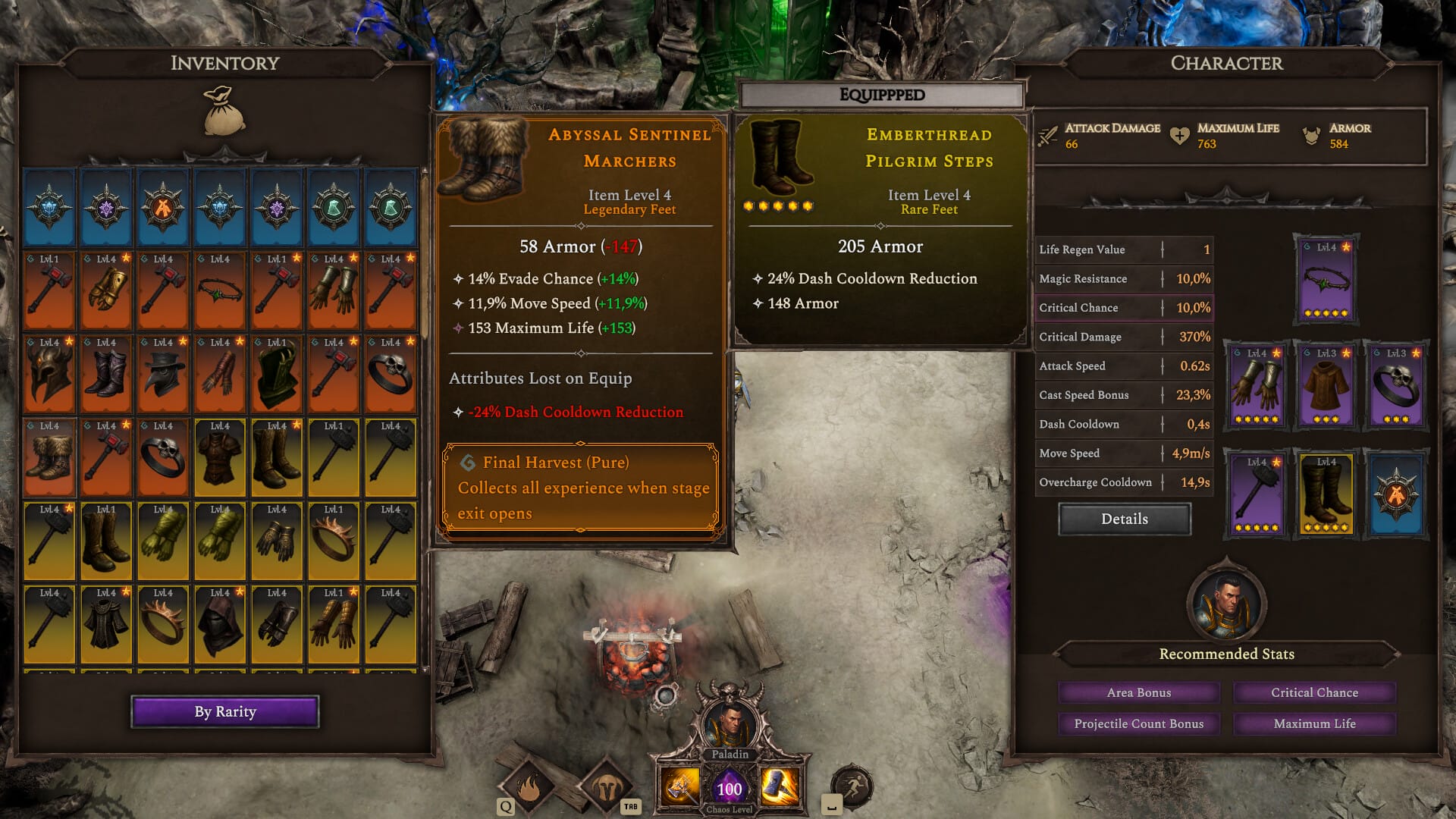
During each run, players can collect persistent equipment (weapons, armour and relics with different rarities and modifiers) and choose at any time to extract the loot via portals scattered across the map. Surviving to escape means consolidating progress, improving one’s arsenal and preparing better for the next run. Staying too long, however, exposes the player to the risk of losing everything.
And it’s precisely this mechanic that completely alters the psychological pace of the game.
While other bullet-heaven titles focus mainly on the intoxicating rush of exponential growth and the satisfaction of full-screen chaos, Hellforged introduces a constant tension. Every additional minute spent in the dungeon becomes a question: is it worth risking more to try for the big payoff, or is it time to secure what has already been earned?
A surprisingly readable chaos
From an action standpoint, Hellforged immediately impresses with fluidity and immediacy. The combat system is fast, clear, and built around a compulsive loop of dodging, managing waves, and continuously upgrading your build.
During the demo, we quickly found ourselves submerged in hundreds of creatures simultaneously: skeletons, ghosts, demonic beasts, and giant monsters, turning the battlefield into a constantly moving infernal tide. Yet the game manages to keep the situation clear most of the time, avoiding that visual confusion that often penalizes similar productions.
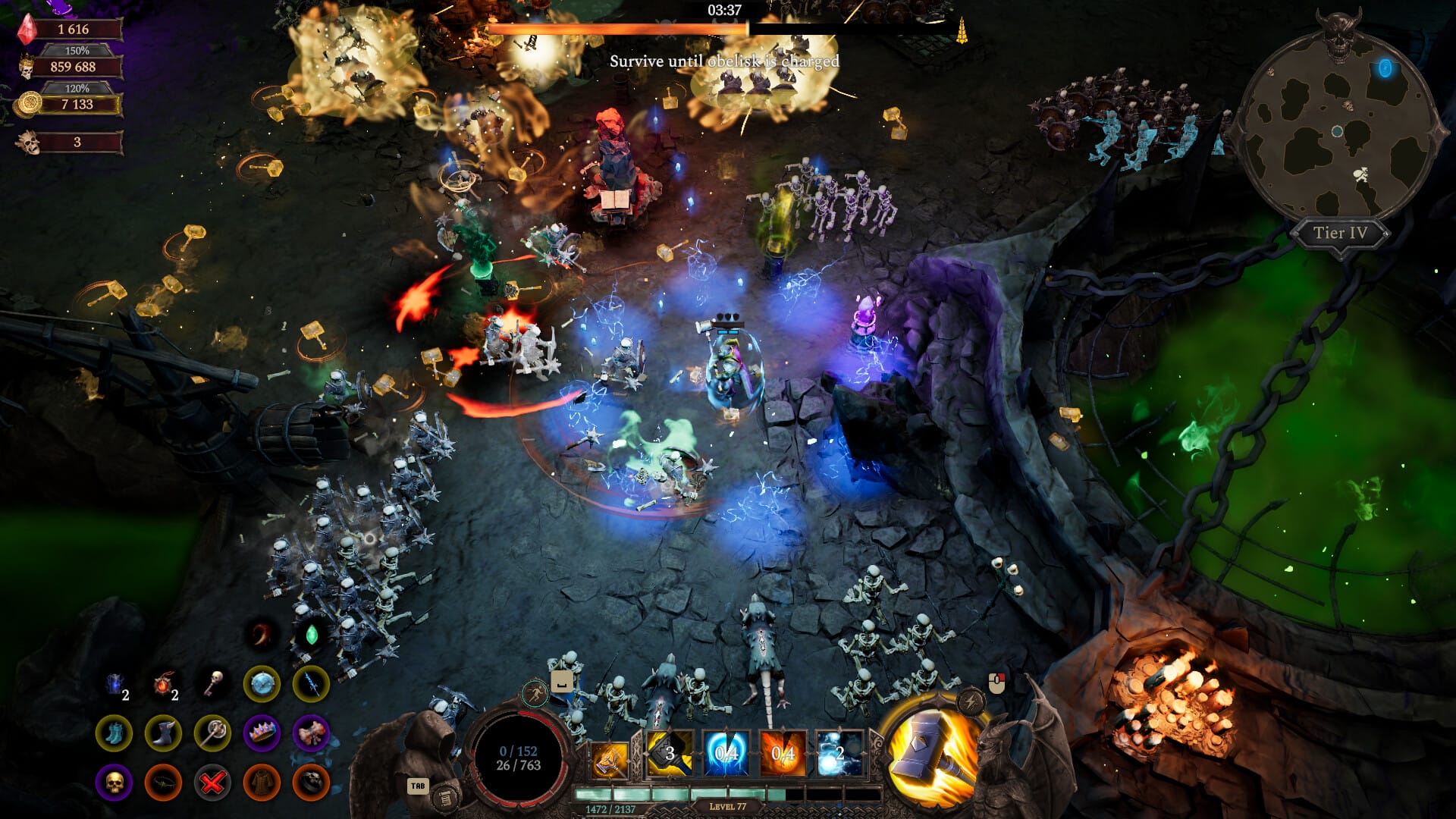
The temporary invulnerability dodge works very well and adds a more active component compared to other entries in the genre, while the speed at which levels and upgrades are obtained maintains a consistently high pace.
Every level-up offers new passive or offensive abilities, while scattered chests across the maps allow you to obtain relics capable of radically altering your build. Within minutes, you go from being a relatively fragile warrior to a mobile destruction machine capable of summoning walls of fire, orbiting lightning strikes, necrotic projectiles, and elemental storms.
The Diablo DNA beneath the skin
The element that truly sets Hellforged apart from the rest is its obvious love for action RPGs like Diablo.
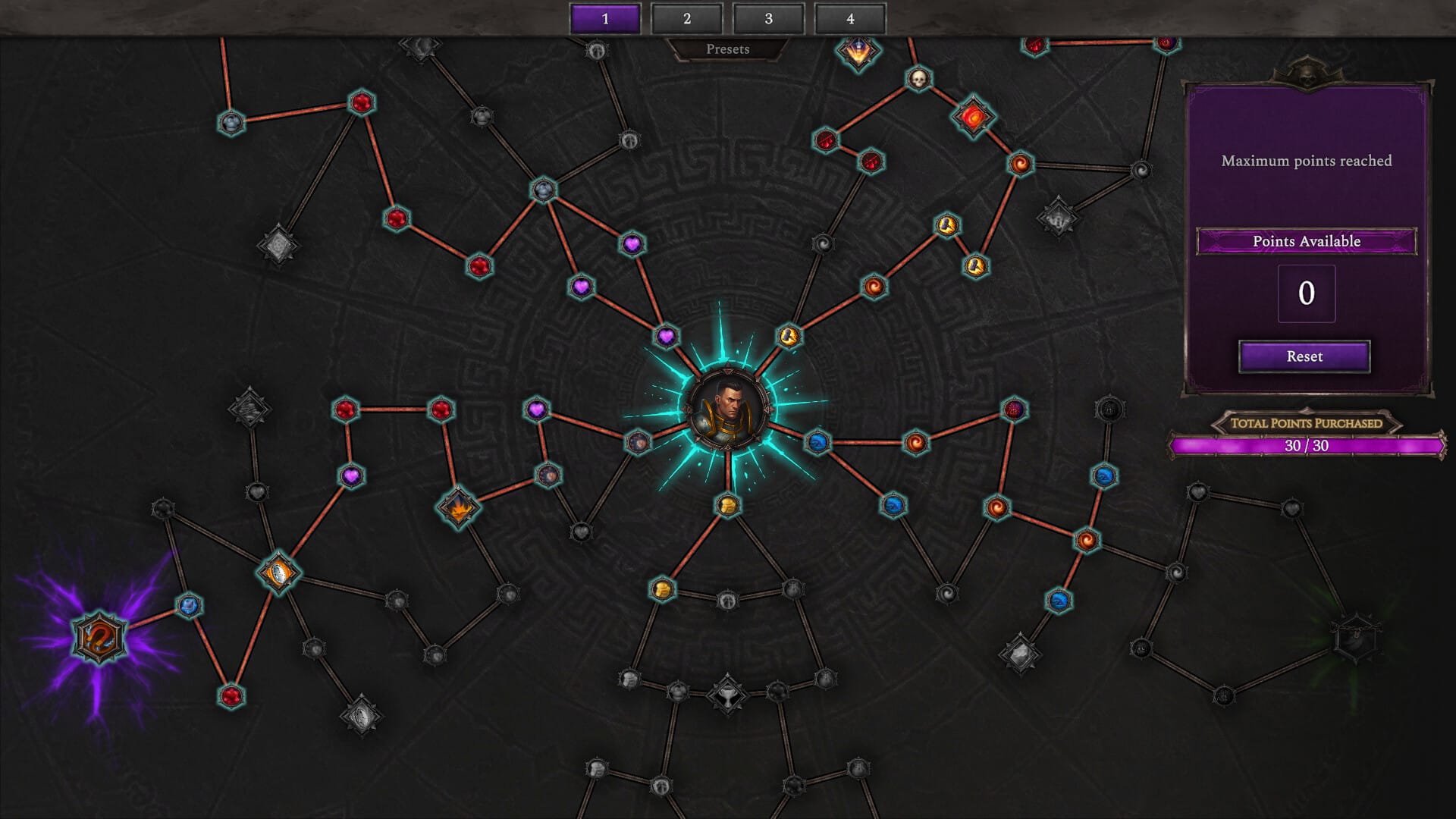
The gear collected isn’t just a temporary bonus: every weapon and piece of armor becomes part of a persistent system that continues even outside runs. Back at the camp, the blacksmith allows you to dismantle useless loot to upgrade better items, while a global progression tree unlocks permanent bonuses, new classes, difficulty levels, and advanced mechanics.
MoonPyre seems to have grasped well what makes loot-based games addictive: not merely obtaining rewards, but creating a continuous cycle of improvement, experimentation, and optimisation.
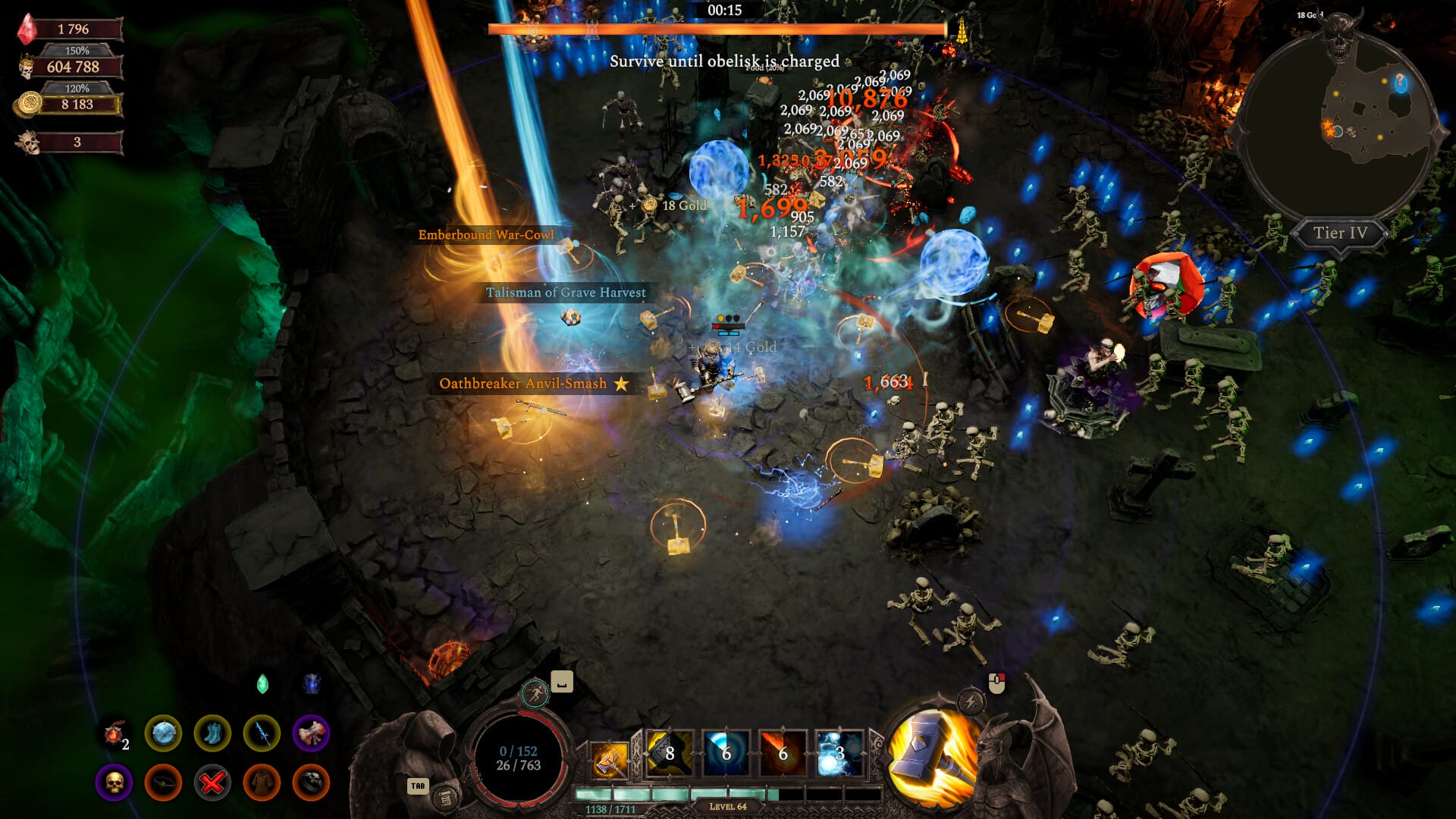
Among the best moments of the demo are certainly the boss fights obtainable through special sacrariums located within the map. Surviving long enough allows you to face enormous and particularly aggressive creatures, yet capable of rewarding the player with devastating elemental abilities. It is here that Hellforged reveals its most spectacular side: builds that chain into absurd effects, increasingly explosive synergies, and screens literally overwhelmed by projectiles, flames, and energy discharges.
But even in these moments, the game never loses its core focus: risk management. Hellforged turns greed into a true, playable mechanic.
First impressions very promising
As a public first playtest, Hellforged already looks surprisingly solid. Technically, the game runs well, ability feedback is satisfactory, and controller support, though not explicitly highlighted in the initial options, works without issues.
Absolutely worth highlighting is another aspect that emerged during the playtest: although not yet officially verified for Steam Deck, Hellforged runs surprisingly well on Valve’s portable platform. During our tests, we encountered no particularly significant issues either in terms of performance or interface readability, and controller support proved immediately intuitive and responsive.
Instead, by its own gameplay structure, Hellforged seems almost designed for a machine like Steam Deck. The “run-based” nature, the short but extremely addictive sessions and the continuous loop made of loot, progression, and increasingly ambitious attempts align perfectly with the portable format. It’s the classic “I’ll do another run and then stop” title that risks devouring entire evenings directly from the sofa or bed, and it’s easy to imagine it might find precisely Steam Deck among its ideal platforms.
The audiovisual sector also convinces: the dark fantasy atmosphere works well, visual effects manage to make the chaos legible, and the sound design supports the tension build-up in the more advanced runs.
Of course, it remains to be seen how much content the full version will offer and how deep the variety of builds will truly be in the long term. It’s the classic risk of productions heavily reliant on compulsive repetition of the gameplay loop. But the foundations are all there. MoonPyre Studio appears to have very clear ideas about what Hellforged wants to be: an action roguelike capable of taking the immediate gratification of bullet-heaven and blending it with the sense of loss, tension, and progression typical of extraction games and big looter RPGs.
And after a few hours spent risking everything for “one last run”, it’s hard not to want to jump back into that dungeon once again.
About the Author