

Six years after the final episode of the series, Halo returns with Halo Campaign Evolved, a complete reimagining of the chapter that launched the saga. More than a simple graphical restoration, it is a reinterpretation of the original work built entirely with Unreal Engine 5, designed to bring Master Chief to the centre of the story while also welcoming a new generation of players.
The goal of Halo Studios was not to faithfully recreate the 2001 title, but to imagine what it could have been if developed today. The campaign structure remains faithful to its roots, while the gameplay is enriched with mechanics, weapons, enemies, and content drawn from the later chapters of the series. The result is an experience that preserves the original’s identity, but offers much more variety than before.
The most obvious expansion concerns the arsenal. Beyond the classic weapons, nine new combat tools are introduced, many of which come directly from Halo 2. The Battle Rifle is likely the most significant addition, thanks to its precision and three-shot burst, which has always made it one of the series’ most beloved weapons. The M7 machine gun also noticeably alters the pace of close-quarters combat, offering a decidedly more effective solution than seen in the original title.

Among the most anticipated updates stands the ability to finally use the Spada Energetica. In Halo 2001, it appeared only in the hands of the Elite and during certain sequences, but this time it becomes a core part of Master Chief’s equipaggiamento di Master Chief, transforming the combattimento corpo a corpo into something estremamente spettacolare e letale. The new arsenal is completed by the Fucile Particellare, ideal for long-range engagements, the Fucile ad Aghi in the version introduced with Halo Reach, the Fucile al Plasma Brute, much more aggressive than the classic variant, the Raggio delle Sentinelle and the Cannone a Combustione, an weapon that in the original non poteva essere raccolta by the player and which now amplia ulteriormente le possibilità tattiche.
The expansion also includes the enemy roster. The presence of the Brute represents without a doubt the main novelty, since they were completely absent in the first Halo. Their behaviour makes combat more dynamic thanks to frontal assaults, a significant damage resistance and a more aggressive approach than the Elite.
Even the Flood benefit from an important evolution. Alongside the three forms present in the original game, a new variant is added years later in the series, capable of adapting its behaviour during combat and making encounters much less predictable. The Covenant forces also appear more varied. Some Jackal can equip the Particle Rifle and become extremely dangerous snipers, while several Elite wield the Energy Sword, significantly increasing pressure during close-quarters combat.
However, the updates don’t stop at simply increasing the number of enemies. Halo Studios has also worked on the artificial intelligence, improving the enemy unit coordination and making every battle more believable. The Hunter adopt much more aggressive tactics inspired by the modern episodes of the series, the Flood move with greater fluidity and attack following less predictable patterns, while the enemy wave composition has been revised in numerous sections of the campaign, reducing that sense of repetitiveness that occasionally emerged in the original edition.
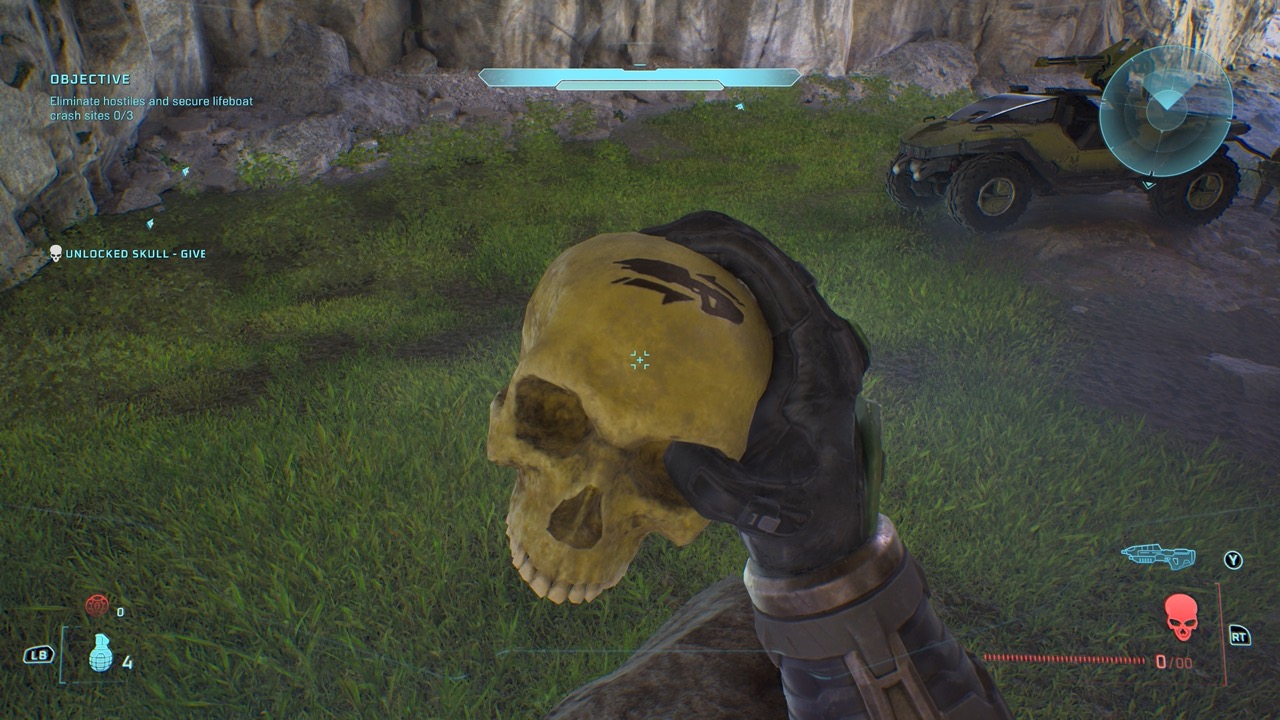
Among the most interesting additions we find the Skull System, completely absent in the first Halo. Exploring each level allows you to collect forty-two, some already known to fans of the saga and others specially created for this remake. The effects are very varied, ranging from the ability to tackle the entire campaign in third person to modifiers that radically alter gameplay, such as those that remove the jump or inflict continuous damage when in contact with the ground.
Collecting at least three unlocks the Remix Campaign mode, a variant that completely remixes the experience. The factions can be randomly swapped, the weapon positions change with every match, and Covenant and Flood stop fighting each other to focus every attack exclusively on the player. Some Skulls even intervene in the atmosphere, introducing a thick fog or a night vision device that radically alters environmental perception. It’s not a revolutionary addition, but it represents a great incentive to replay the campaign multiple times.

Less convincing, instead, the three new missions that serve as an introduction to the main events and see Master Chief fighting alongside the Sergeant Johnson. The idea of expanding the narrative is interesting, but their execution leaves some doubts. Much of the adventure takes place within rather linear and uninspired settings, which convey the feeling of being content that was left out of the original project. The best moments come in the outdoor sections and especially during the short space mission, where combat between Covenant fighters offers a pleasant variation on the traditional gameplay.
From a technical standpoint, the work done is evident, but Unreal Engine 5 also confirms some of the issues already seen in many PC productions. In various situations, imperfections in map streaming management and a noticeable visual noise level can be observed, particularly in areas rich in vegetation or light effects. This is compounded by an inconsistent use of DLSS. The more performance-oriented settings, especially Performance mode, produce an image noticeably too soft and blurry, sacrificing part of the visual clarity one would expect from a remake of this caliber.
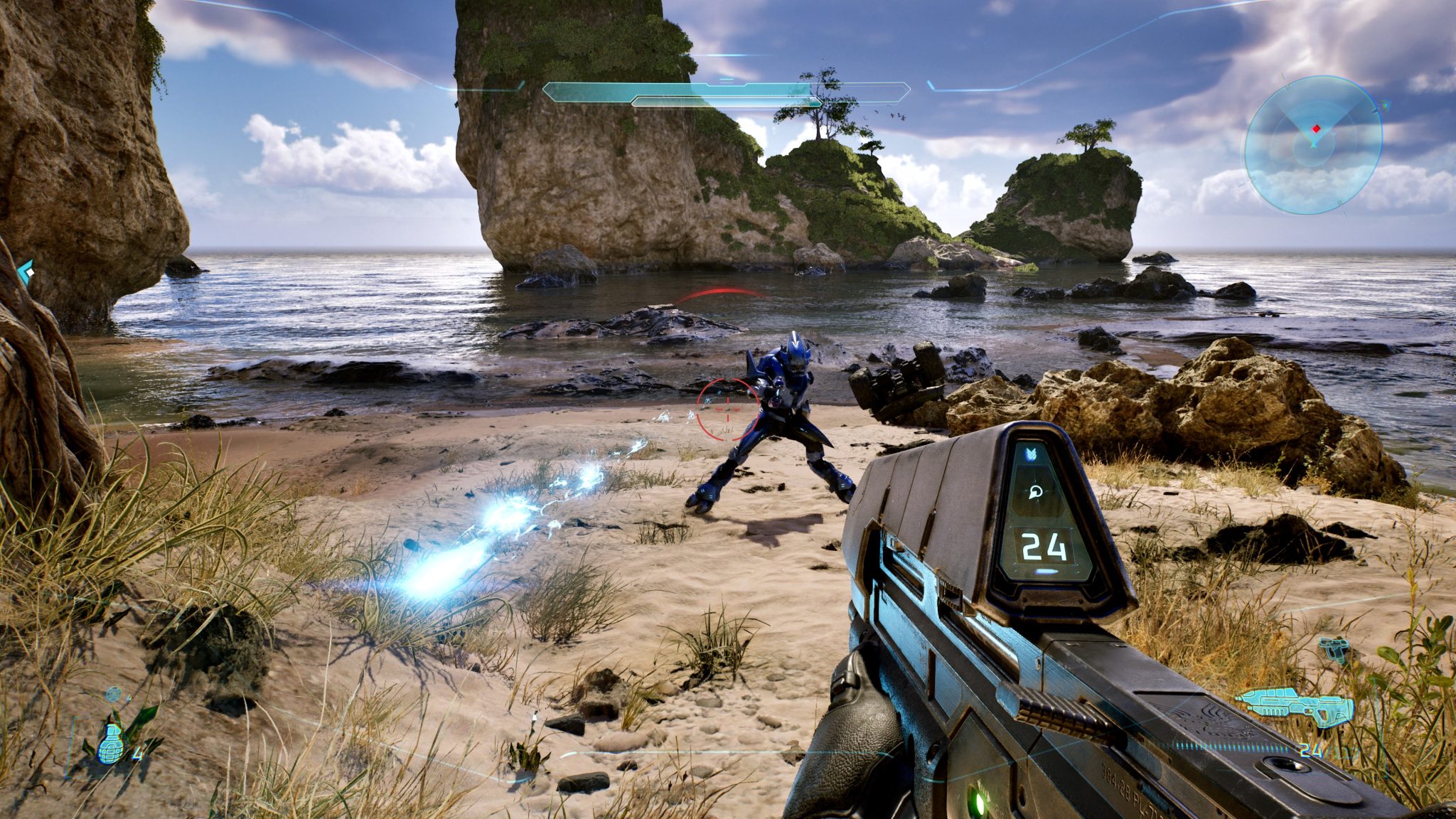
Despite some limitations, Halo Campaign Evolved still manages the difficult task of bringing back to life one of the most important first-person shooter games in history. Some features inevitably reflect the age of the original project, such as a level design rooted in the early 2000s and some missions that stretch beyond what’s necessary. Yet the combat system remains surprisingly modern, the gunplay continues to function perfectly, and large-scale encounters still retain an identity few other FPS can replicate. It’s a return that honours the past without abandoning modernising the experience, successfully achieving a convincing balance between nostalgia and innovation.