
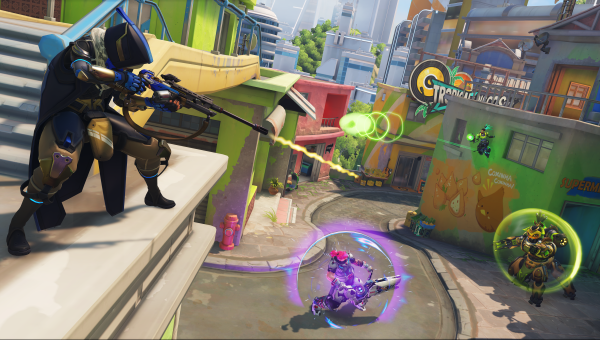
The competitive mode has been very important to the Overwatch community for all these years, and the developers of Blizzard have various long-term plans to push this mode into the future.
First, every season must be exciting and tell its own story. Each one should take players on a new journey with new heroes, maps, game modes, or balance changes. Then, the devs believe losing a match shouldn’t be a completely negative experience. Competitive players must feel a sense of progression after matches, so they want to provide them with the tools needed to improve and climb ranks. Finally, there’s the desire to offer an improved competitive experience for returning players, for their own benefit and that of their teammates.
Let’s dig deeper into what’s brewing to make Overwatch 2’s competitive experience balanced and fun to play.
UNLOCK COMPETITION
Overwatch 2 does not include portrait levels; the match experience points will instead advance your Battle Pass. New players who create an Overwatch 2 account on October 4 or later must complete the New Player Experience (EpNG). They must finish the New Player Experience and win 50 quick matches before unlocking competitive mode.
In this way, new players will be able to prepare themselves for the higher expectations that are part of the competitive world, while veterans won’t feel discouraged by teammates with less experience. We’ll use the competitive mode unlock process to assess new players’ skill levels, optimising match pairings to ensure a great experience for everyone. This will apply only to accounts created on 4 October or after that date: anyone who had already unlocked the competitive mode previously can access it immediately in Overwatch 2.
Ability Level Ranks
In Overwatch 2, l'IV will be replaced by ability rank divisions. This is meant to alleviate the feeling of being stuck at a certain rank. Seeing the IV rise or fall after a match seemed almost like taking an exam with a teacher who grades you based on individual questions rather than the entire exam. It caused a lot of pressure and did not accurately reflect players’ performance in competitive mode.
The tiers, however, still exist, from Bronze to Grandmaster. Each tier will include five divisions, numbered 5 (lowest) to 1 (highest). As you progress through each tier, the divisions will be counted backwards until you reach the next tier. The top 500 will not include tier divisions.
The tier divisions represent the same skill levels as IV, but offer players a broader view of where they stand in the competitive scene. Each division roughly corresponds to an IV range of 100. Players will receive a ranking update every seven wins or every 20 losses, rather than after each match.
Watching the last seven or 20 matches within a full context helps you understand how you're performing in competitive mode rather than stressing over each individual match. The goal is to make the player feel that they are improving and receiving the appropriate reward from the very first day spent in competitive mode in Overwatch 2.
INTERFACE DESIGNED FOR GAMES
The developers are also making changes to the competitive mode interface based on community feedback. The portrait borders that indicated the player's level will disappear from all Overwatch 2 modes, and the skill levels will no longer be displayed before every competitive match. Skill levels and divisions are not perfectly aligned with the matchmaking index used to determine matches. To this end, the screen has been redesigned to instead show cards and titles.
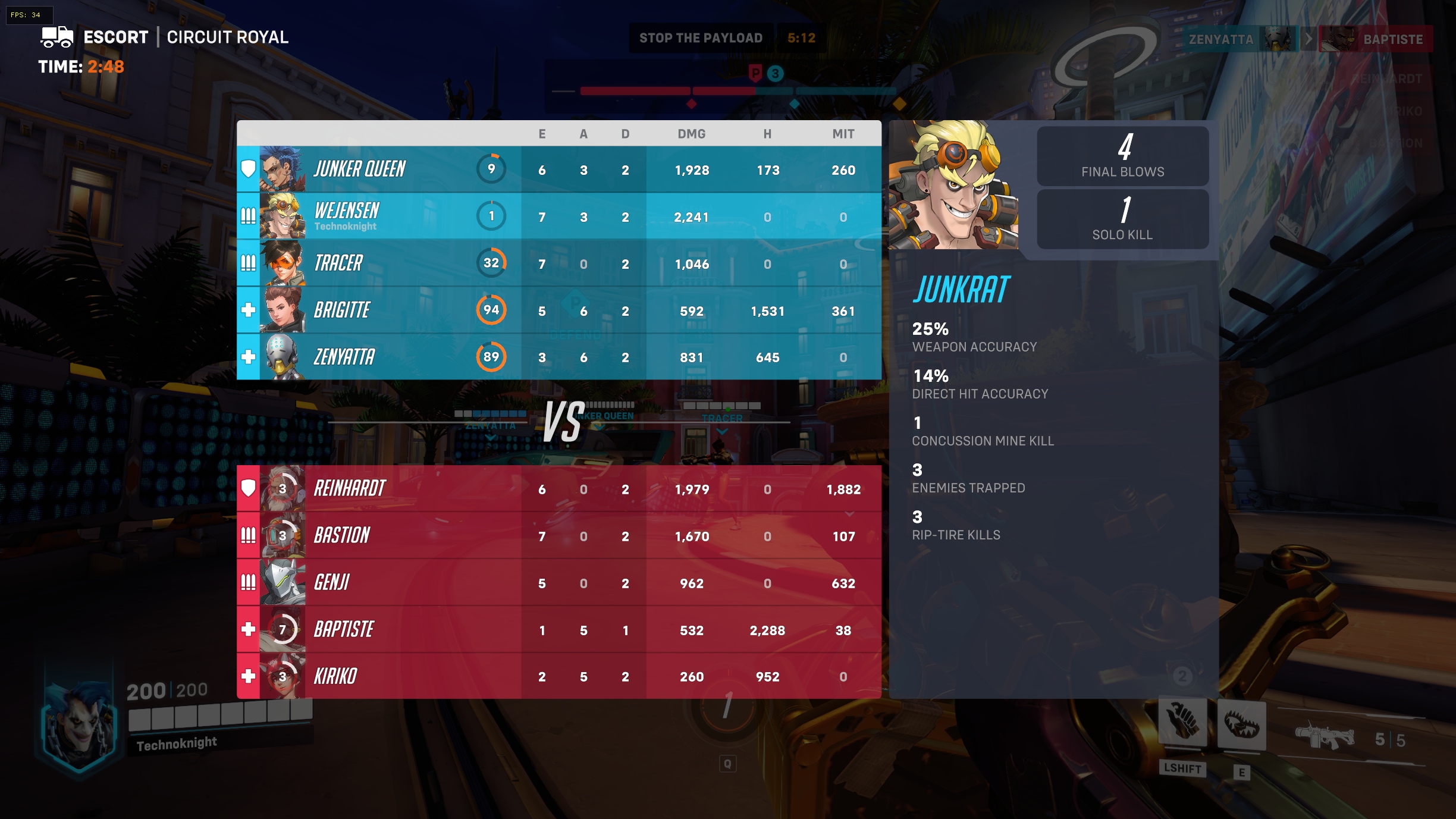
The introduction of a new leaderboard screen will help identify the team’s needs and allow for corresponding strategy adjustments. Medals will be removed from the leaderboard because they were too arbitrary to accurately reflect a player’s contribution to their team. The goal, in essence, is to provide greater transparency.
Finally, the new Ping system will offer a new tool for communicating with the team. It’s not new that more synergistic teams win more matches. We’ll be able to coordinate better with the team without having to speak; however, the system will also be an effective way to improve voice alerts with game instructions.
Placement Matches and Season 1
The ranking system from previous competitive seasons will be altered in Overwatch 2. Instead of playing five matches without a rank, we’ll be out of the rankings until the first leaderboard update after seven wins or 20 losses. After the placement matches, we’ll expect to start in the lowest ability tiers and climb through ranks throughout the season.
All players ranked in the competitive mode before Overwatch 2 will find their rank adjusted after the release. Overwatch 2 is a very different game, so a formula is applied that gives old players the opportunity to redefine their rank once they enter the updated competitive mode. Much of the player base, upon release, will discover that their rank is slightly lower, as they will need to learn new concepts and new meta. However, players who have better understood the game during the beta or who follow the Overwatch League may find themselves higher than they expect.
GAME REPORT
A new section will also be introduced in the Personal Profile, where we will find replays and highlights, allowing us to learn and grow more from your gaming experiences. Match Reports provide a detailed summary of all matches played during your current Overwatch session.
TOP 500 RANKING
The top 500 rankings will remain almost unchanged, separated by game environment. We will still need to complete 25 matches in any role in Coda Ruoli or 50 matches in Coda Aperta. The combined Coda Ruoli ranking requires completing at least 25 matches. The top 500 rankings unlock two weeks after the start of each new season; players can view rankings separated by game environment.
LOSS OF ABILITY IN COMPETITIVE PLAY
The team has been looking for a way to approach even players who haven’t played Overwatch recently. Those who haven’t played recently will likely demonstrate they’ve lost their in-game skill during the match. To address the issue and make matches more balanced, inactive players will see their matchmaking rating lowered to reassess and determine their current skill level. The internal matchmaking rating will also be adjusted more quickly, up or down, as they play matches after returning. Returning players can therefore quickly return to their own skill level and division by continuing to play.
COMPETITIVE REWARDS
The competitive season will follow the general seasonal schedule, including that of the Battle Pass. New limited competitive titles will be introduced for the card we can earn by climbing ranks. These titles will be a way to show off other players how far we’ve climbed. We can obtain these titles at the end of the current competitive season and can only use them during the next one.
Competitive points will remain the reward currency for competitive match victories, offering 10 points for wins and 3 for draws. Earning 3,000 points will unlock a golden weapon for any Overwatch hero, including the new heroes such as Sojourn, the Junker Queen, and Kiriko. However, a maximum cap on competitive bonus points earned at the end of each season will be applied based on the highest ability rank achieved in any role, including Open Queue.
About the Author