
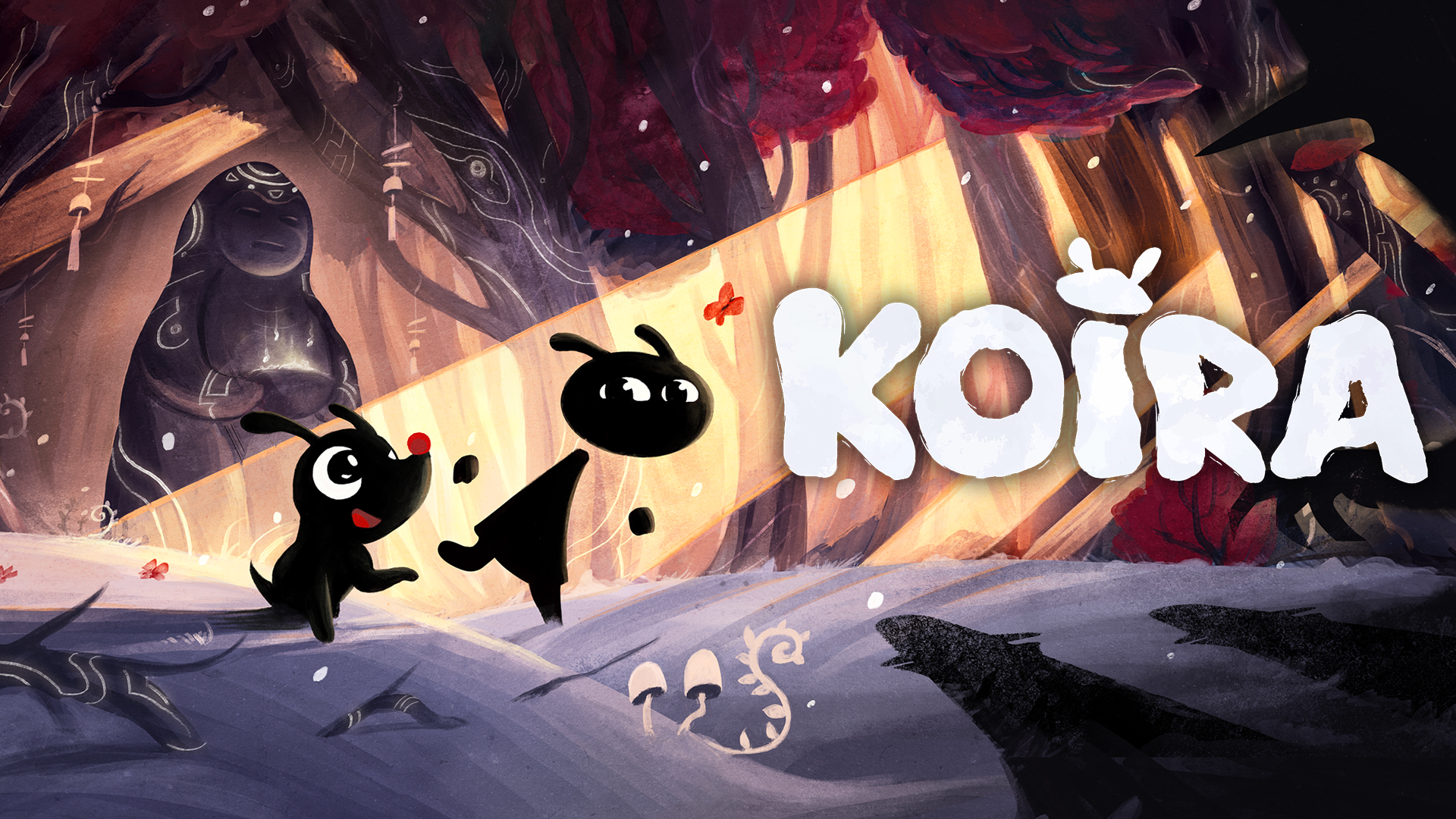
You wake up far from home, deep in a snow-covered forest. A distant howl breaks the cold silence of the trees: a puppy needs help. So begins Koira, a bittersweet adventure by Studio Tolima and Don't Nod, which immerses the player in an emotional journey through a world suspended between light and shadow, where friendship and courage become the key to getting home. From the very first moments, the game captures attention with an intimate and contemplative atmosphere, inviting you to explore slowly every corner of this enchanted realm.
This content is provided by YouTube. To view it, you must allow external content. Activation may result in data being shared with the third party.
Songs of friendship in a magical winter
Koira tells the story of a meeting with delicate care: that between the protagonist and a lost and frightened puppy. No words are needed to establish a deep bond; the relationship between the player and the dog develops slowly through small gestures and, above all, melodies: it is precisely the music that holds this adventure together, the only means of communication that allows the forest’s inhabitants to interact with one another. This emotional connection grows in intensity as they overcome obstacles and difficulties together, becoming ever more tangible and authentic. However, this friendship is not free from danger. From the very first moments, our puppy finds itself facing dramatic situations: traps, desperate escapes, and threatening encounters with the dark hunters make the narrative poignant, yet simultaneously compelling, stirring in the player an immediate and deep protective instinct.
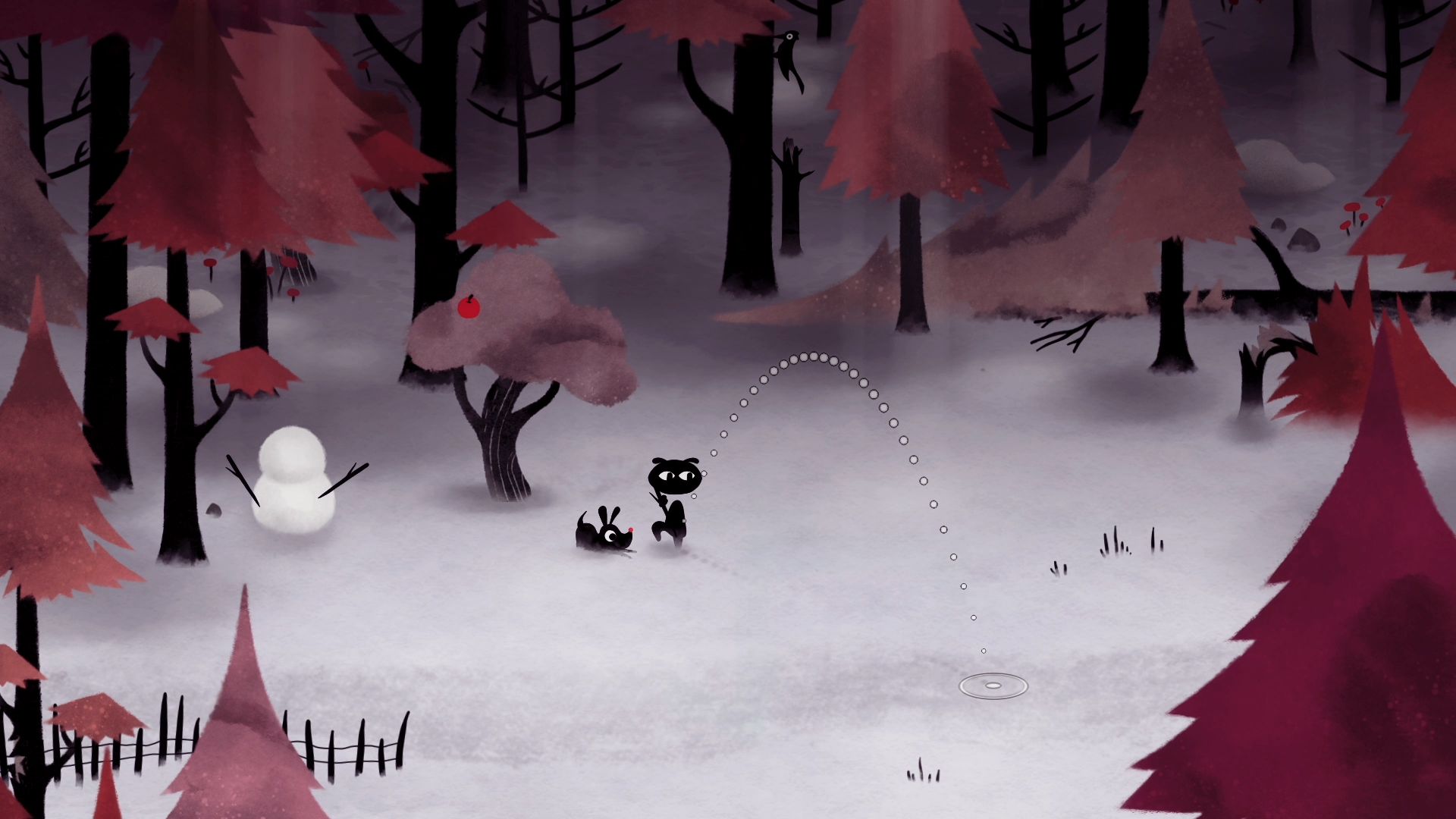
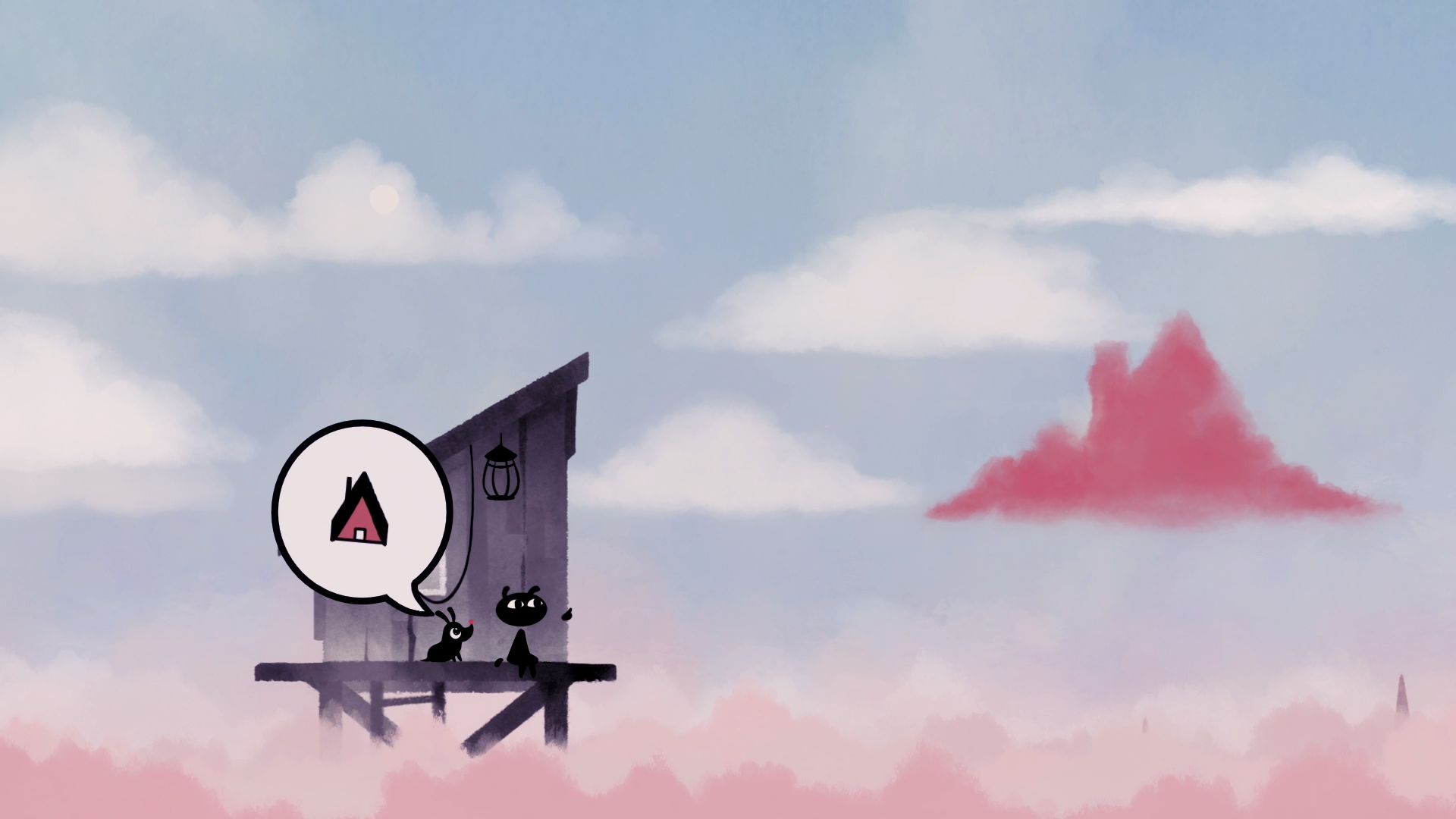
The gameplay, along with Koira’s narrative style, is deliberately simple, almost minimalist, focused on exploration, musical interaction, and building a bond with the puppy. Don’t expect complex mechanics or adrenaline-pumping challenges: the adventure unfolds slowly through mysterious forests and snowy landscapes, punctuated by small musical puzzles and moments where you must learn the melodies of nature to awaken ancient totems or revive dying trees. There will also be more playful moments, such as when we throw a stick for the puppy to fetch, or spend an entire day watching clouds, trying to spot familiar shapes.
As already hinted, music is the only common communicative language that allows forest creatures, puppies and even hunters to enter mutual resonance, suggesting a possible universal harmony that transcends conflict. Conflict is represented by the near-invasive presence of man: barbed wire, cages, traps, gunfire, the hunters, menacing and shadowy patrols roaming the fields alongside their loyal dogs, terrifying the innocent forest population. Escaping is our primary option, but, unfortunately, we’ll often find ourselves outnumbered and trapped. It turns out that the protagonist we control possesses the ability to channel his "anger" and unleash it to repel looming threats, yet simultaneously instills fear in the puppy, causing it to flee. We’ll then have to win back its trust while his musical notes remind us of who we truly are and help us calm down.
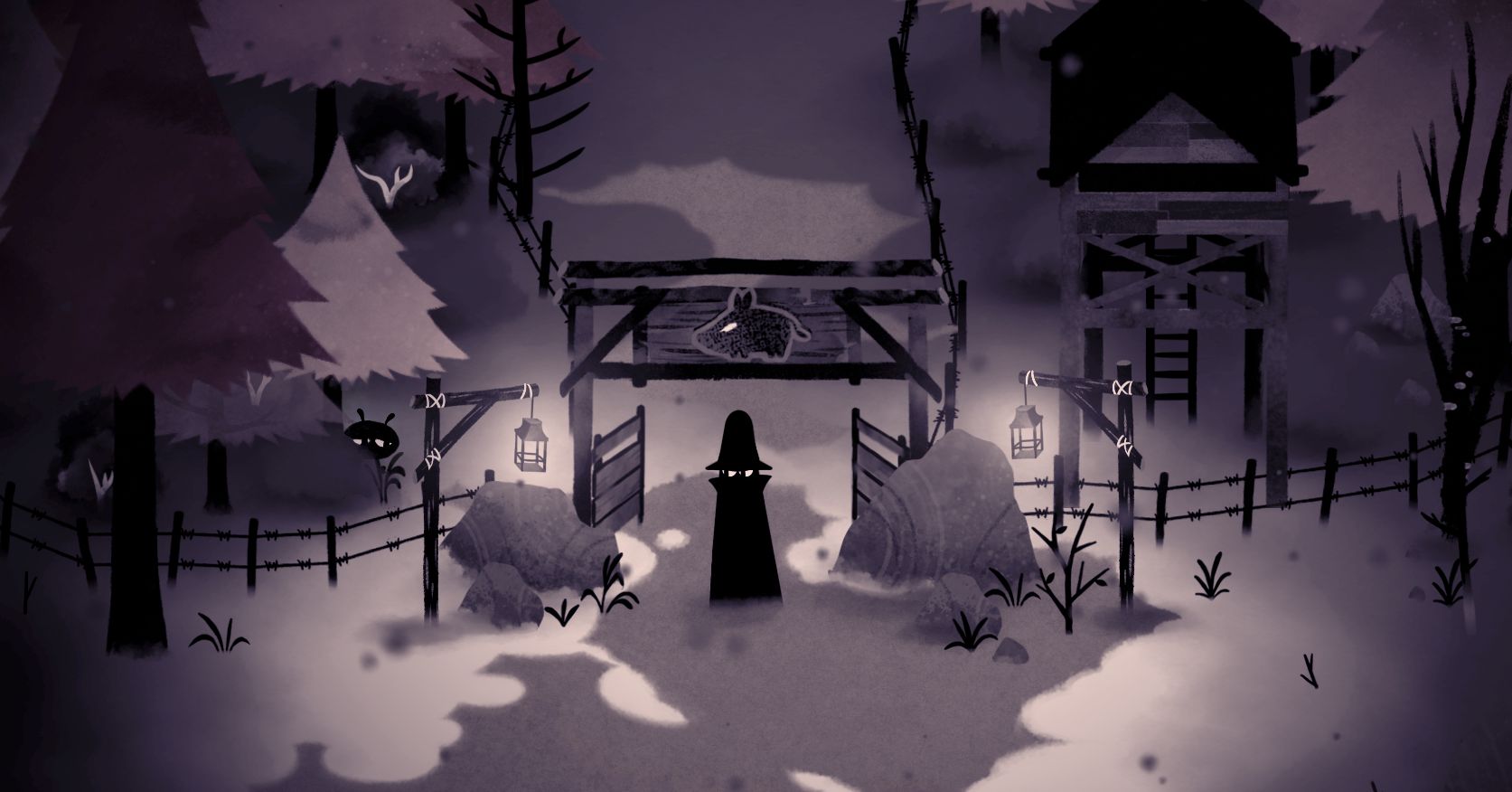
And so the question arises spontaneously: who are we really portraying? Who are we? Perhaps the spirit of the forest? The answer is not revealed to us, deliberately, because we decide, we are the ones who play.
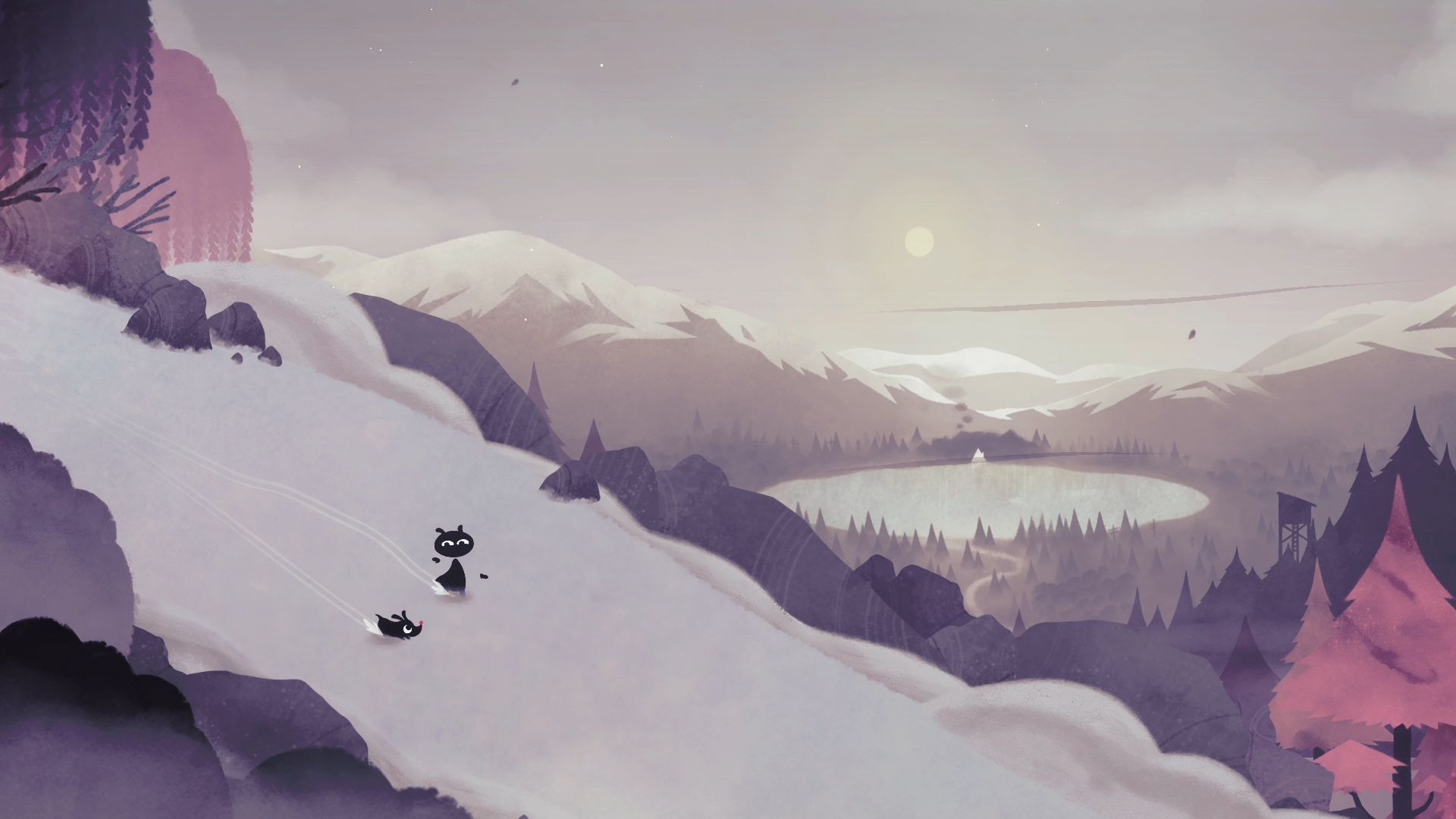
The hand-drawn hand-drawn art style features an essential aesthetic that skillfully alternates monochromatic tones with delicate touches of colour, such as vibrant reds and warm yellows, down to the deepest black. This minimalist stylistic choice reinforces the central themes of solitude, friendship, and the contrast between light and darkness, offering the player a sense of familiarity while simultaneously maintaining a constant feeling of unease. The dogs’ barks, the out-of-tune trumpets (i.e. the “voice” of the hunters), and gunfire form a background that occasionally asserts itself and emerges, overpowering the evocative and perfectly synced soundtrack. As hours of gameplay pass (in total, roughly three), an atmosphere becomes increasingly sparse and melancholic, gently accompanying every step of the journey, emphasizing the game’s visual and narrative poetry.
In conclusion
Koira is, in the end, a touching and immersive experience, which captivates for the delicacy with which it treats universal themes such as friendship, fear, and mutual trust, but also for the deeper reflection on the conflictual relationship between man, the aggressor of nature, and nature itself, fragile and attacked. The protagonist remains an intriguing enigma, perhaps the spirit of the forest itself, capable of moments of intense rage that serve to drive away threats, yet simultaneously frighten the puppy. It is precisely the puppy’s musical notes, delicate and calming, that remind us of who we truly are, bringing us back to calm and restoring that fragile balance that man constantly risks breaking. Studio Tolima and Don't Nod have crafted a small narrative and visual gem, ideal for those who wish to lose themselves in a world made of pure emotions, capable of leaving a deep mark even beyond the screen.
About the Author