
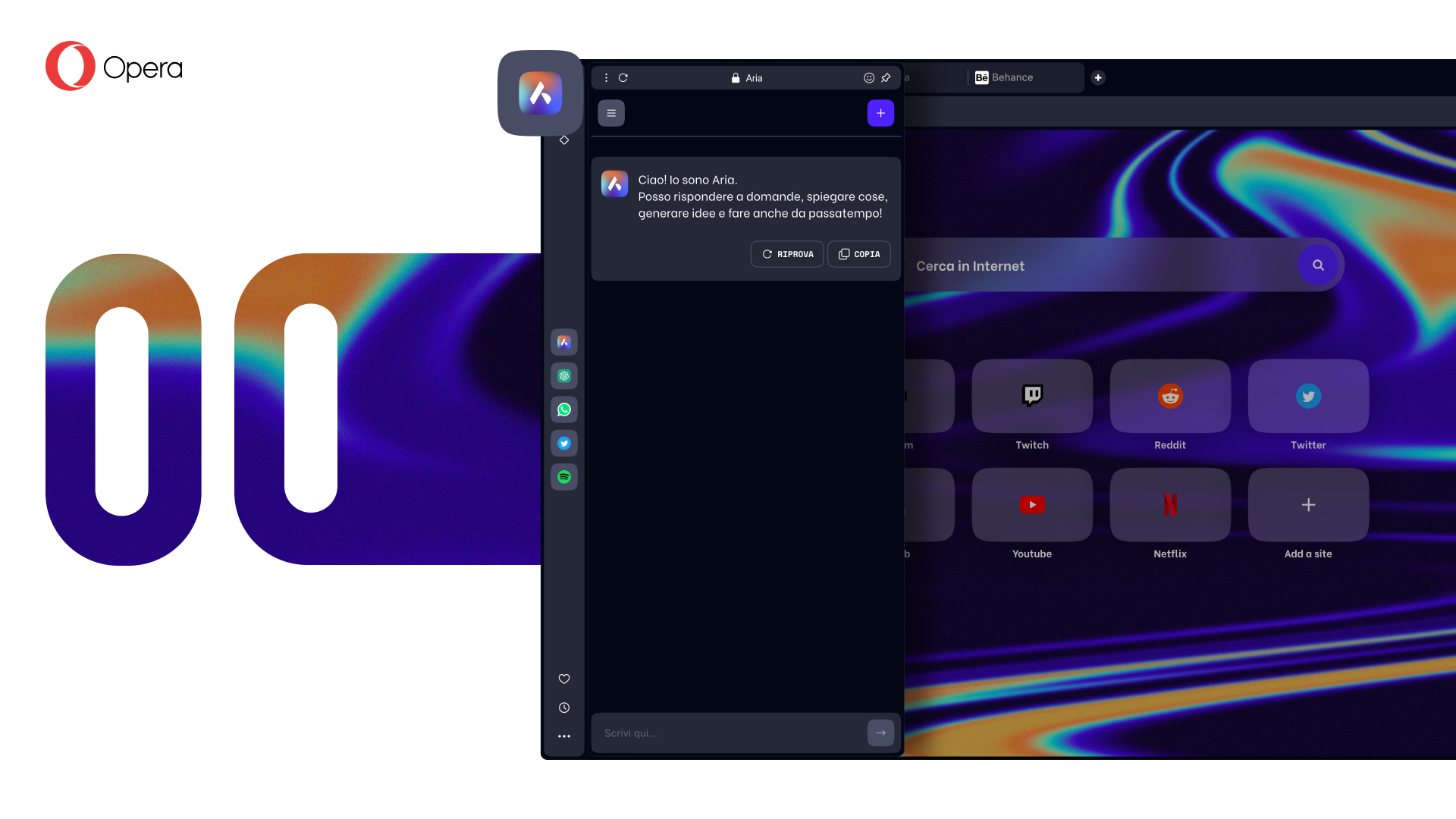
Opera One, the latest incarnation of the Opera browser, has left testing and is ready for the download. What was supposed to be Opera’s hundredth version now marks the start of a new evolutionary cycle for the company’s flagship browser product.
This content is provided by YouTube. To view it, you must allow external content. Activation may result in data being shared with the third party.
Redesigned from scratch to usher in a new era of navigation powered by artificial intelligence, Opera One is the first browser featuring integrated artificial intelligence, Aria. The browser’s artificial intelligence can be accessed via a new command bar, as well as through the browser’s side panel. It provides free access to a leading GPT-based solution and up-to-date web information.
Since the start of this year, Opera has moved boldly into the generative artificial intelligence space to offer its users a new browsing experience, capable of boosting their productivity and creativity through various ways of interacting with the browser’s artificial intelligence.
"As people deeply attentive to browser innovation, we felt it was appropriate to reconsider the role of our browser in light of recent developments in the AI field. Unlike other companies, Opera has not simply added artificial intelligence services to our browser. We’ve returned to the drawing board and redesigned our flagship browser. Opera One is built around Aria, our native AI, and represents the culmination of all our work to date", said Joanna Czajka, product director at Opera.
Aria, Opera’s new AI, is a key component of Opera One and Opera’s first feature. With Aria, Opera One users can access free a leading generative AI service. The service is the result of the collaboration between Opera and OpenAI, but with enhanced capabilities.
Based on Opera’s Composer AI engine, Aria connects to OpenAI’s GPT and is enhanced with additional features such as live web results. Aria is a web and browser expert that allows users to collaborate with artificial intelligence during web information searches, text or code generation, or answering product-related questions. Regarding customer support, Aria knows Opera’s entire support documentation database and uses current product knowledge to answer user questions.
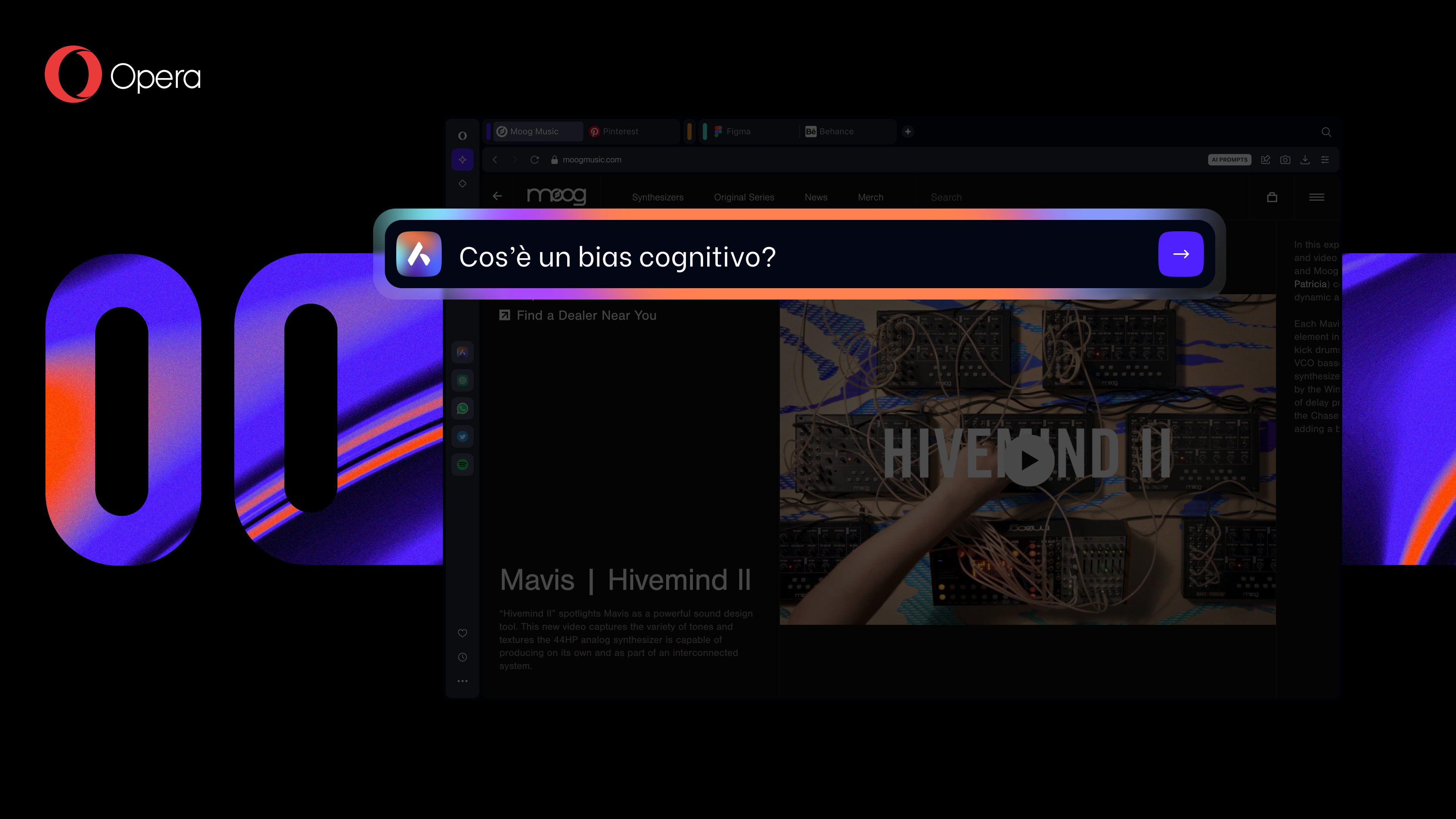
Opera One users also have access to a brand new command line that allows them to use the keyboard shortcut Ctrl+/ (Win) or Cmd+/ to display an overlay and interact with Aria. Whenever needed, users can use the command line to ask Aria a question and interact with the browser’s AI response directly in the sidebar or return to browsing.
Aria also makes use of the AI Prompts feature that Opera introduced at the start of the year in early access. Following user feedback and in-depth testing, the ability to obtain contextual suggestions by right-clicking or highlighting text in the browser is now integrated into Aria as well. Recognising the popularity of ChatGPT, Opera One gives users access to the popular service via the browser’s side panel.
Unlike other browser solutions, Opera’s artificial intelligence is a user-controlled experience, meaning users can choose to use the AI services or not use them at all. To use Aria, users must open the browser AI in the sidebar and log in or sign up for a free Opera account, if they don’t already have one.