
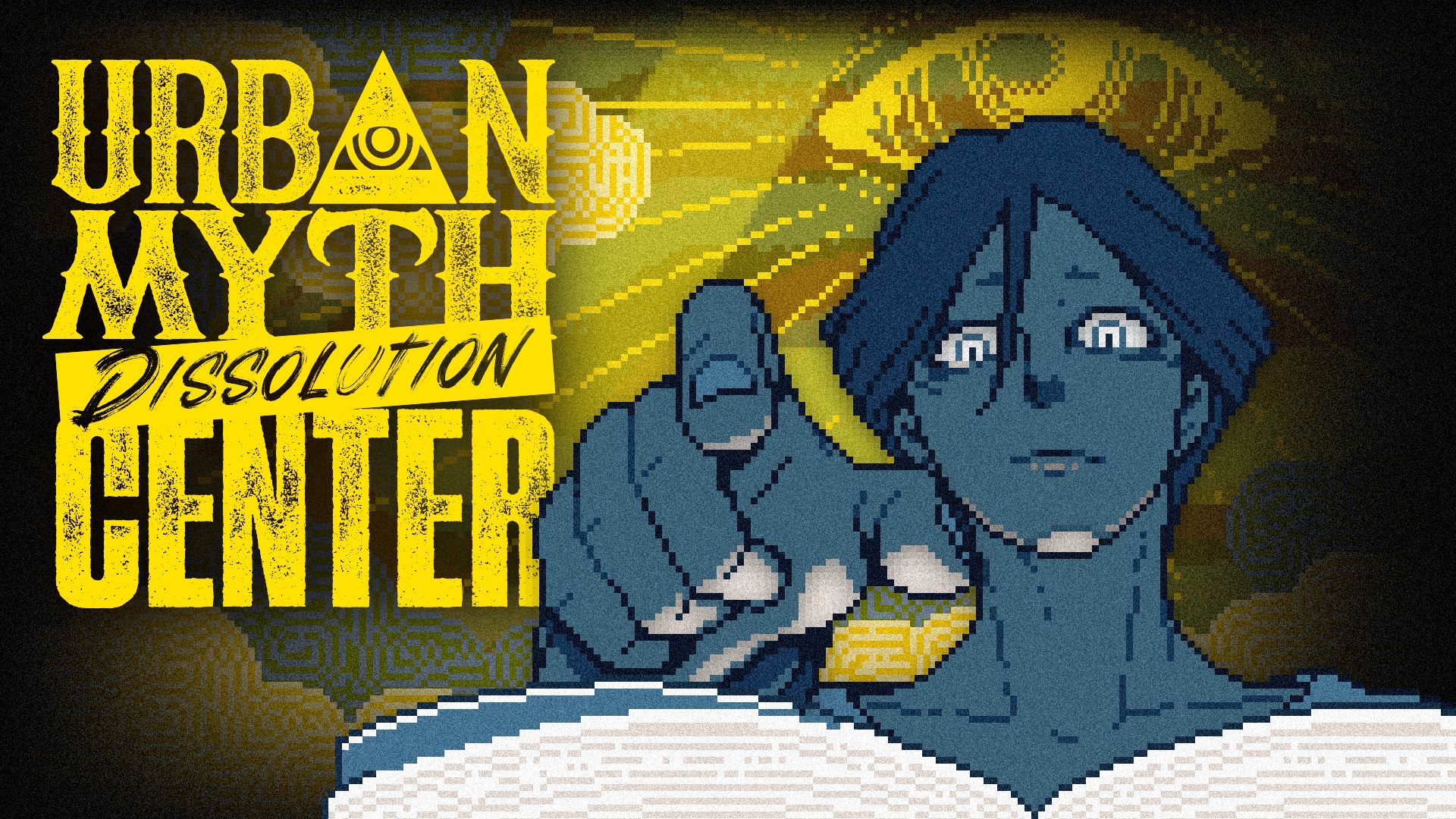
Shueisha Games and Hakababunko are bringing Steam and Nintendo Switch an investigative adventure with a supernatural soul: Urban Myth Dissolution Center. This single-player title, described as a “psycho-detective mystery adventure”, blends typical visual novel elements with the point-and-click gameplay of 90s classics, all wrapped in a suggestive and atmospheric pixel art.
From the very first moments, the game promises to drag the player into a world of urban legends, hidden mysteries, and inexplicable phenomena, where every detail could conceal a disturbing truth. The allure of the unknown and the sense of tension permeate the entire experience, but does the title truly manage to maintain high suspense and offer an engaging adventure? Let’s find out together.
This content is provided by YouTube. To view it, you must allow external content. Activation may result in data being shared with the third party.
Between lies and reality
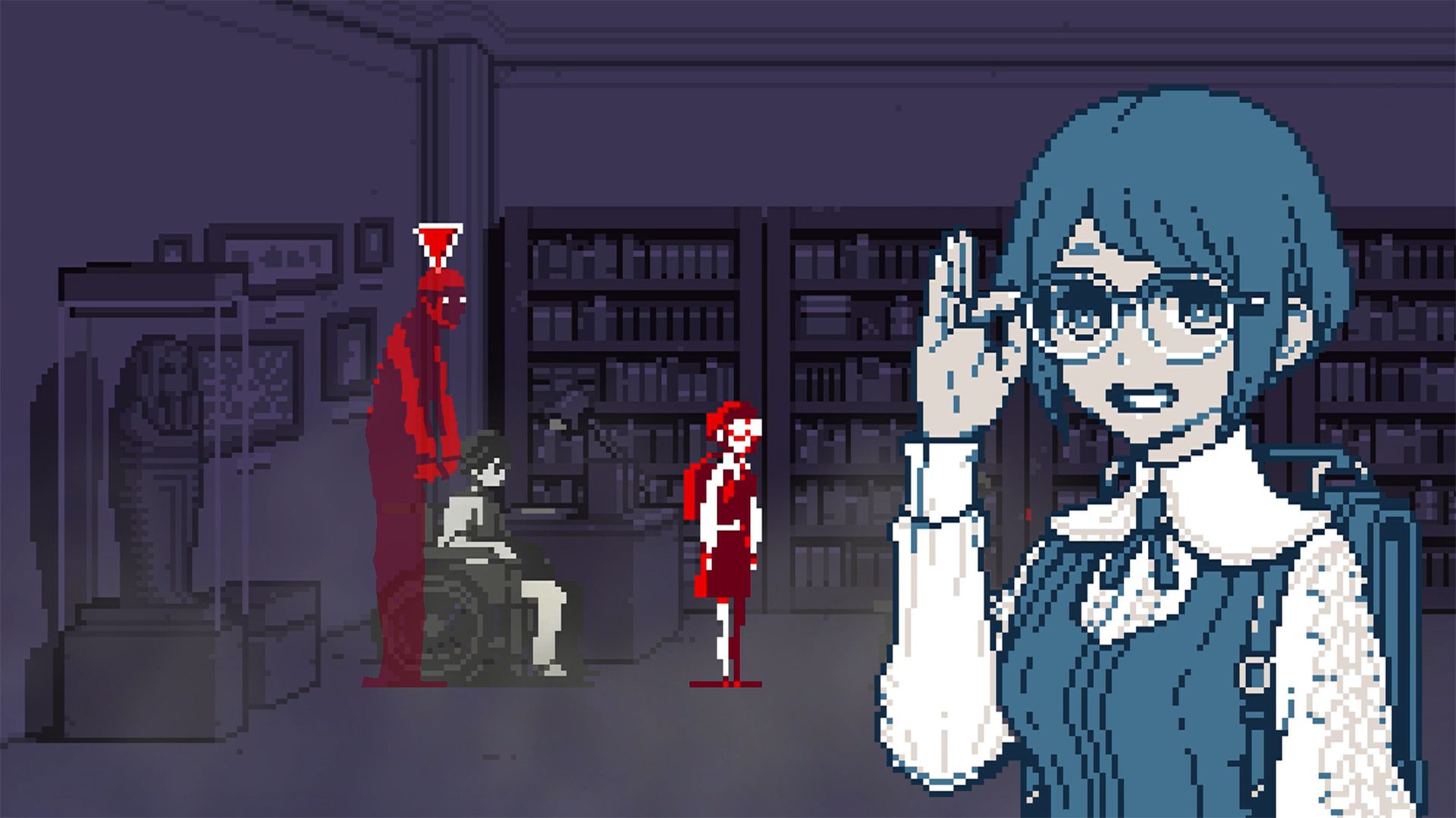
The player takes on the role of Azami Fukurai, a young detective with a unique ability: thanks to her glasses, she can see human thoughts and memories tied to places. At the heart of her investigations lies the Urban Myth Dissolution Center, an agency specialising in the study of paranormal phenomena. She is aided by her colleague Jasmine, a disillusioned but extremely capable partner, and the director Ayumu Meguriya, an enigmatic psychic confined to a wheelchair.
Azami’s missions drag her into an ever-more-complex web of mysteries, forcing her to investigate ancestral curses, dimensional anomalies, and extraterrestrial creatures that defy all logic. Each case presents itself as a mystery wrapped in a puzzle, blending reality with folklore, leaving the player teetering between rational explanations and inexplicable phenomena. Azami will have to decipher esoteric symbols, collect testimonies from eccentric characters, and confront situations in which the boundary between the real and the supernatural becomes increasingly blurred. To aid her will be a pair of mysterious glasses, capable of granting her psychometric powers when worn, allowing her to detect the latent shadows people leave as traces of their passage.

Azami must move fluidly between the physical and digital worlds: on one hand, she sifts through crime scenes searching for crucial clues, analysing seemingly insignificant details that might reveal surprising truths; on the other, she navigates social media and online forums, attempting to decipher the cryptic language of virtual communities, uncover hidden connections, and distinguish red herrings from genuinely useful information. The game does a good job showing how urban legends can spread in the digital age, fuelled by speculation, collective fear, and viral phenomena. The narrative, while drawing on a disturbing imagination, doesn’t confine itself to the supernatural: the game also tackles current and delicate issues, such as doxxing, stalking and cyberbullying.
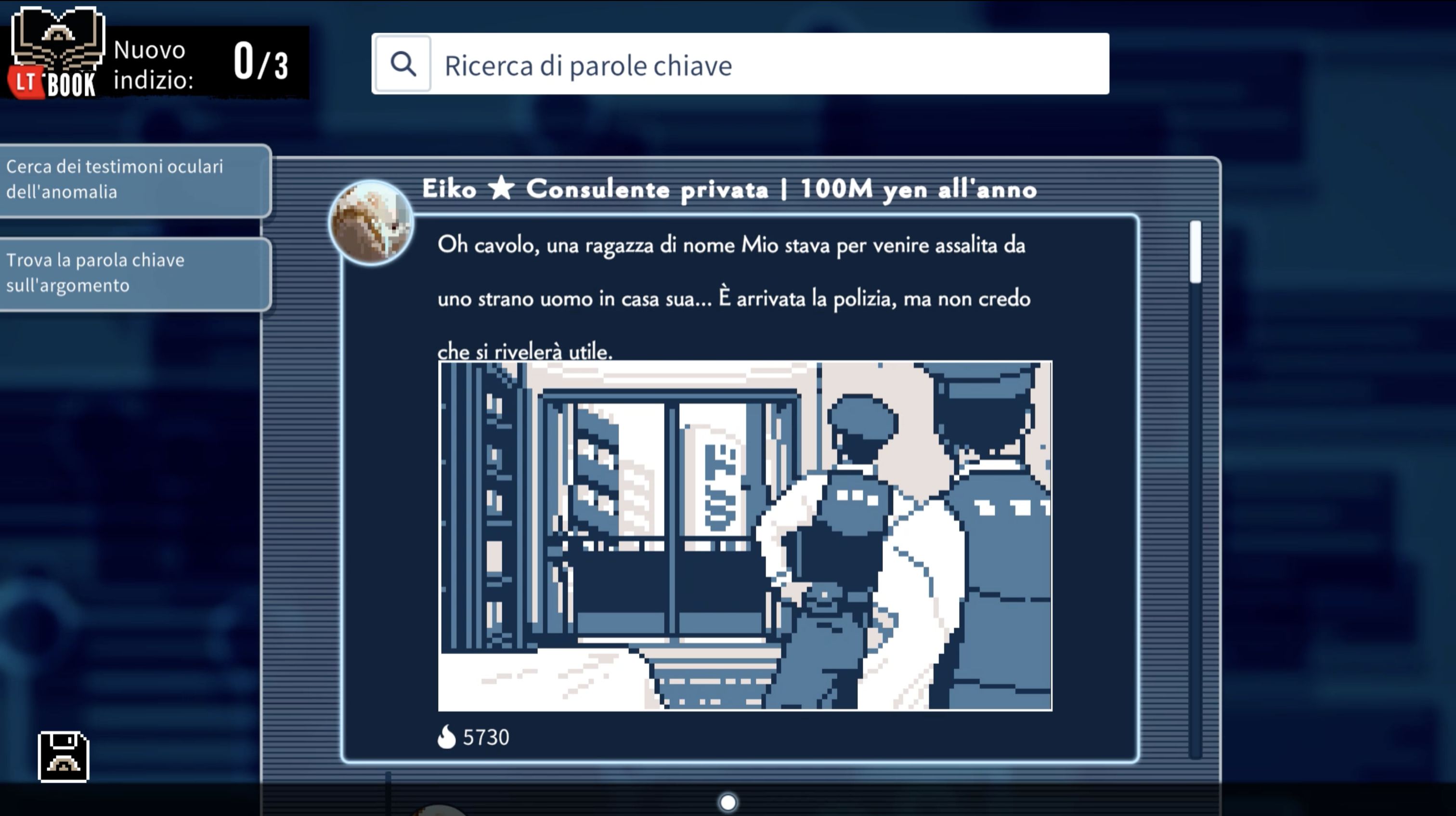
There is also a narrative framework involving an unsettling online terrorist network that calls for a “Grand Reset” and could be pulling the strings of many of the game’s cases. Although the story is ambitious and layered, its effectiveness is sometimes limited by writing that struggles to maintain a consistent and engaging pace, making some moments less impactful than they could be. The game’s translation is generally of good quality, with particular care taken in sections dedicated to social media, which succeed in capturing the authenticity of online language. However, some narrative nuances seem to have been lost during the transition to English and, consequently, to Italian. Despite this, the localization into our language is surprisingly present (no longer a given, unfortunately) and solid: aside from a few unavoidable imperfections, it is overall well-executed and faithful to the original game’s atmosphere.
I want to believe
The mechanics of Urban Myth Dissolution Center revolve around an immersive investigative experience, where each case requires a careful analysis of clues to uncover the mysteries hidden behind urban legends. The game offers a combination of on-site exploration and digital research, placing the player in the role of a true paranormal detective. Azami can consult the internet to gather information, use her psychometry to discover hidden details, and connect the clues to form hypotheses.
Despite these intriguing premises, the gameplay presents some shortcomings. The level of challenge is reduced to a minimum, with investigations following a highly structured, guided format. The absence of genuine puzzles to solve undermines engagement and limits the sense of discovery. Players rarely find themselves forced to solve complex puzzles or connect clues independently, which diminishes the feeling of being genuinely at the heart of an investigation. Often, solutions are suggested or even provided directly through dialogue, making the experience feel more like an interactive visual novel than a true investigative game.

Another aspect that affects engagement is the narrative pace, which at times feels weighed down by characters repeating information excessively. Moreover, the absence of true investigative freedom is noticeable: the player rarely has the opportunity to deviate from the pre-established path or experiment with their own deductions. This limits the challenge element and risks making certain sections repetitive, especially for those accustomed to deeper investigative titles. This slows down the progress of investigations and risks rendering some moments less impactful than they could be, breaking the tension that a title of this genre should maintain. Nevertheless, the game still manages to engage thanks to a strong attention to detail and a successfully constructed atmosphere.
The use of psychometry adds a layer of intrigue to the experience, allowing players to perceive hidden realities and deepen the narrative through a tool that makes exploration more compelling. If the gameplay had left more room for investigative freedom, with a greater chance of interpreting clues and forming one’s own deductions, the final result would have been far more engaging. In any case, even though the title doesn’t reach the heights of the greatest detective games, it still manages to create a captivating experience, especially for those who enjoy stories rich in mystery and the supernatural.
Atmosphere and style: FABULOUS
One of the most distinctive elements of Urban Myth Dissolution Center is undoubtedly its technical aspect, particularly the incredible pixel art, meticulously detailed, which not only enriches the visual experience but also contributes to immersing the player in a world of mystery and unease. The game adopts a limited intentional colour palette, with shades of blue that evoke a sense of unease, punctuated by occasional flashes of red to emphasize moments of tension. The choice to use angles inspired by horror and selective blurs further amplifies the sense of mystery, making the visual experience even more engaging and capable of generating discomfort during key moments. This artistic style, combined with the thoughtful use of shadows and light, helps create a constant tension that accompanies the player throughout the adventure. Even the character portraits, though stylised, manage to be extremely expressive and rich in detail, successfully conveying emotions with just a few well-calibrated strokes.

In conclusion
Urban Myth Dissolution Center is an intriguing experience for fans of visual novel and paranormal investigations, but less suited to those seeking a true investigative game with complex puzzles. Its strength lies in its setting and artistic style, which make it a captivating title capable of immersing the player in a unique atmosphere. However, its linearity and simplicity of gameplay might not satisfy those looking for a more stimulating challenge, as might be the case with fans of titles like Ace Attorney or Touch Detective. Despite a gameplay that may feel somewhat unengaging, it is compensated by an ambitious narrative capable of tackling important and extremely timely themes, albeit with occasional rhythm shifts.