
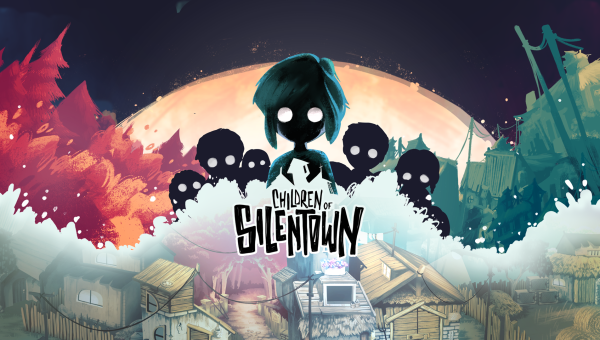
On a cold and rainy January weekend, I picked up my trusty Nintendo Switch and launched Children of Silentown, a title of which I honestly knew very little, except for its entirely Italian nature. In the handful of hours it took to complete all five chapters that make up this dark graphic adventure, I discovered a small gem belonging to this genre.
Clear, we’re not at the level of holy monsters from Monkey Island, but the work of Elf Games (a studio already known to gaming press for its fairy-tale Little Briar Rose) published by Daedalic Entertainment manages to strike the player thanks to the perfectly executed artwork by Francesca "Fraffrog" Presentini and the skill of the writers, who managed to tell children a story with rather adult themes, such as the fear of the unknown, the victim-blaming, and the courage needed to resist a suffocating and oppressive reality.
This content is provided by YouTube. To view it, you must allow external content. Activation may result in data being shared with the third party.
"Shh, children!"
Raise your hand if you’ve never been told this phrase at least once during your childhood years.
*cricketing*
Personally, I found this "order" absolutely impertinent and frustrating, but, being naturally quiet, it didn’t bother me much. Even the children of Silentown, against their will, have learned to coexist with this imposition: their village, a disordered cluster of a few wooden cabins, is indeed surrounded by a dense forest said to be inhabited by terrible monsters. To defend themselves from their terrifying "neighbours", the villagers have devised a series of rules designed to minimise the occurrences of missing persons, apparently, by the monsters: no screams or shouting, only the slightest whispers are permitted to communicate with others, and, for heaven’s sake, don’t wander the streets after sunset. The howls of the beasts from the forest can indeed be heard at dusk, something that would make you shiver.
In the inevitable quiet of Silentown, three generations of citizens coexist, more or less peacefully: the oldest, hardened by years of endurance and acceptance of the disappearance of friends and relatives; the adults, tasked with teaching the children the unyielding "code of conduct" of the village; and finally these last, the youngest, among whom stands out our protagonist, Lucy.
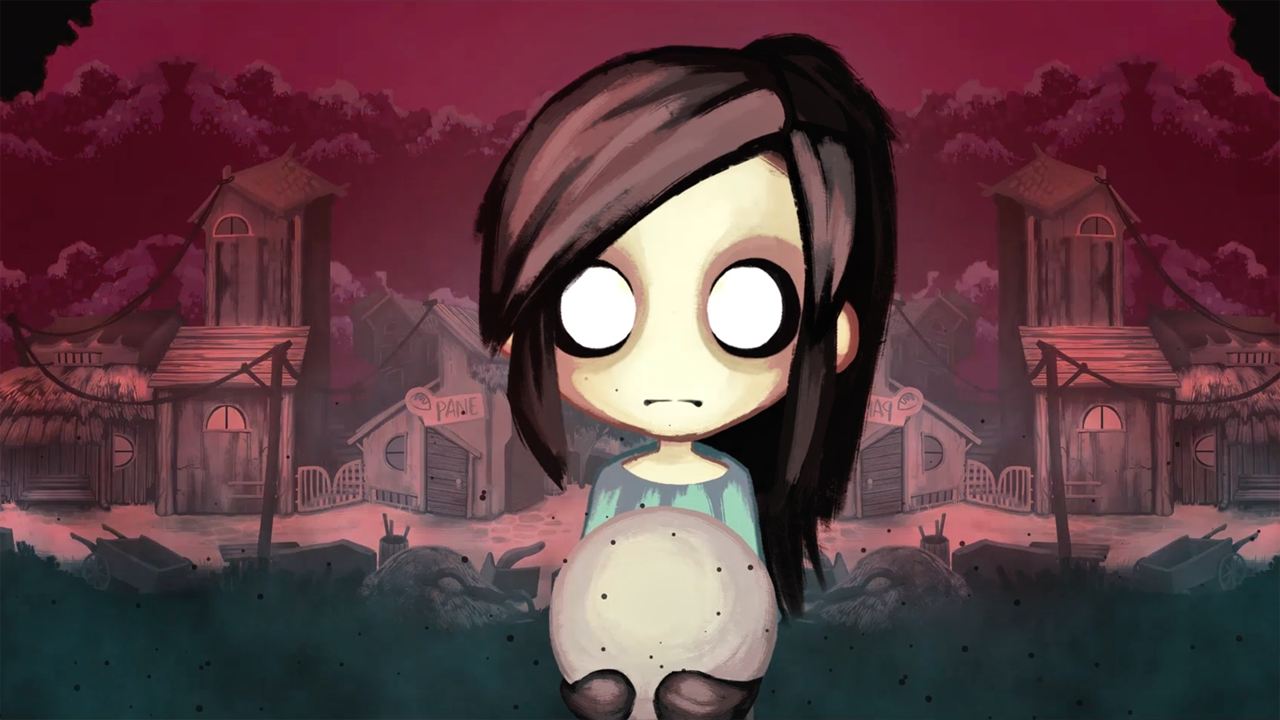
Lucy is 12 years old and leads an apparently normal life with her parents and a black cat. She plays with the other children in the village, always making sure to get home before sunset, then helping her mother prepare dinner. After eating, however, Lucy’s mother is accustomed to giving her voice lessons, an activity not particularly appreciated in the village due to its inherently noisy nature. Our protagonist, however, loves singing and it will be precisely singing one of the main mechanics that defines the gameplay of Children of Silentown — but we’ll see her in due course. The idyll, if one may call it that, ends abruptly one evening when Lucy’s mother, defying the rules, leaves the house at sunset to return a kitchen utensil to a friend.
It will never be seen again.
Nobody, however, is surprised any longer: Lucy’s mother, after all, invited this upon herself, dared to leave the house in the dark, and it was obvious she would be abducted by monsters. Nor do any of them attempt to search for her: the citizens of Silentown, especially the older ones, have long accepted passively the disappearance of their neighbours and know how futile and dangerous it is to venture deeper into the forest in search of someone missing. Lucy’s father knows this best, having lost his own sister in exactly this way as a child.
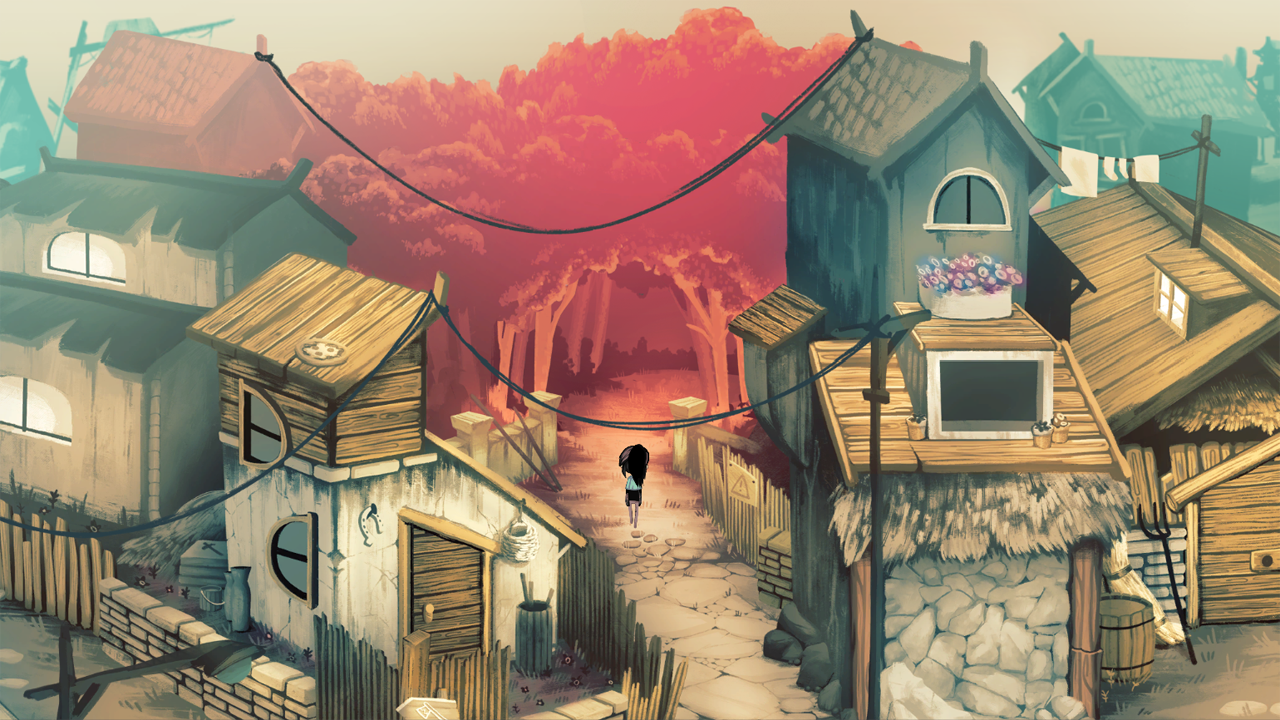
Lucy’s epic begins, in which her courage and determination (perhaps even a touch of the typical youthful recklessness) will be prominently displayed as she investigates and explores Silentown and the mysterious forest in depth, searching for her missing mother and, above all, answers.
Crush the brains
The gameplay of Children of Silentown turns out to be extremely canonical: we’ll need to explore the scenarios carefully, interact with various objects, occasionally combine them and use them to resolve environmental puzzles scattered throughout the city/forest in order to proceed with the story. The puzzles are generally quite easy and immediate, but there were no shortage of moments where I ended up spinning in circles aimlessly trying to figure out what I should do or which object I had failed to interact with. In the Switch version, you must physically approach an object to trigger the interaction icon, unlike the PC version, which features a cursor that can be moved around the scene to identify interactable objects without necessarily having to move the camera.
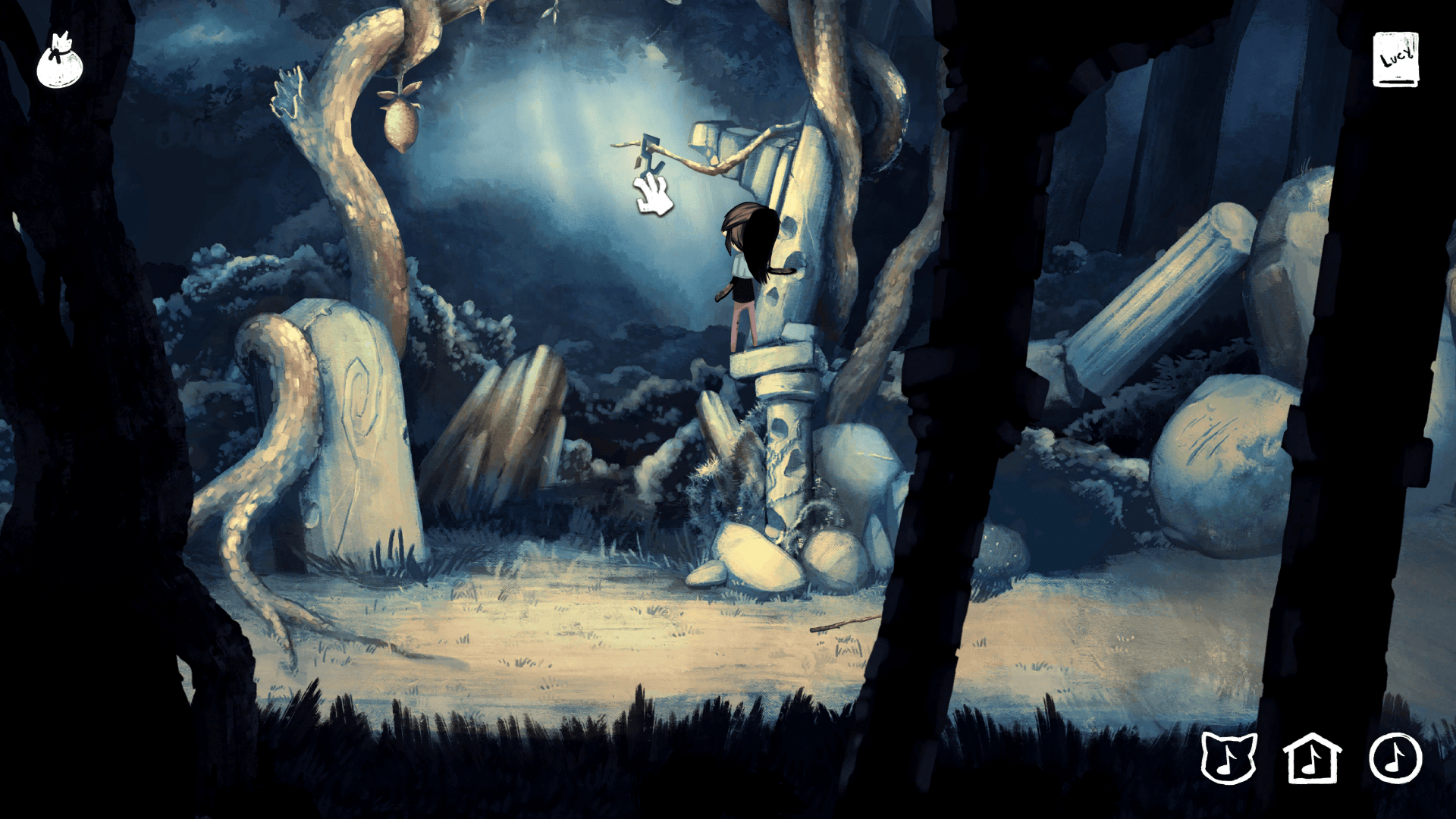
The distinctive mechanic of Elf Games’ title, as I mentioned earlier, is the song: during the story’s progression, Lucy will learn three songs that will allow her to trigger specific mini-games: we can literally stitch together the thoughts of the various inhabitants of Silentown, relive their memories, or make visible what is otherwise invisible. There is also a fourth secret song, which requires performing certain "extra" actions to unlock, and which will make available an additional possible ending for Lucy’s story (each song corresponds to a selectable possible ending).
Even the mini-games turn out to be quite manageable and don’t break the narrative pace too much, a good compromise the developers have made to make the game accessible even to those unfamiliar with puzzle games or primarily interested in the story rather than showcasing their intellectual abilities.
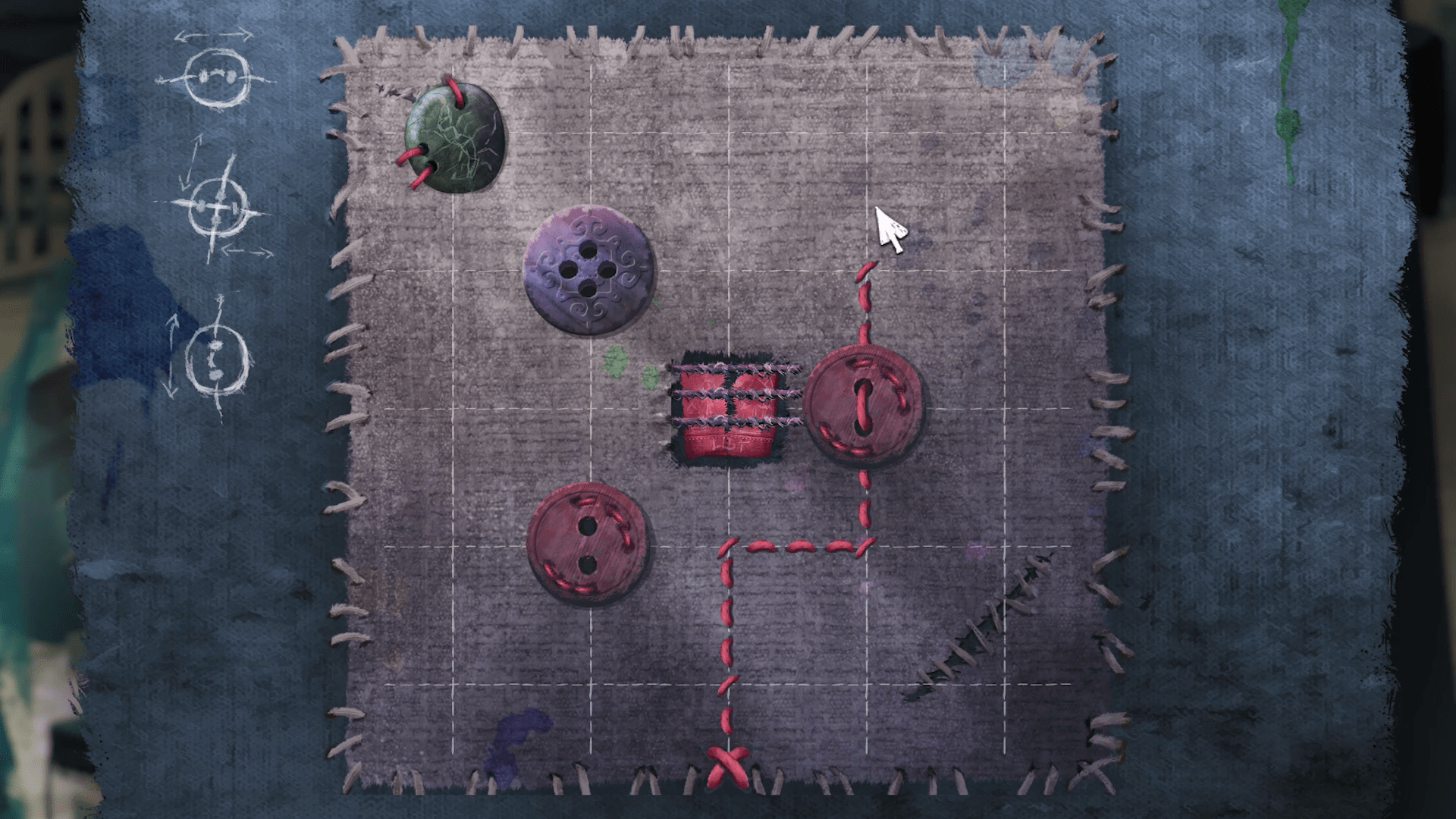
Burtonian aesthetics
What struck me most about Children of Silentown is its technical-artistic aspect. Our talented Fraffrog’s work is truly commendable, successfully adding depth and character to a story already inherently grim. A simple and tragically beautiful 2D art style, if you will. The characters’ large, empty eyes, the absence of mouths, the barely suggested limbs — all reinforce that the story we’re entering cannot and will not end happily. The backgrounds and environments are no less impressive, contributing to creating an atmosphere between fairy-tale and dreamlike.

Unfortunately, the same can’t be said for the audio department, with unimpressive sound effects and a narration voice (in the English version) that’s not sufficiently punchy and decidedly anonymous. Similarly, much of the soundtrack comes across as anonymous, except for the final track, which plays during the “credits” roll.
A brief mention of the Switch version’s decidedly satisfying performance, with the 60fps almost constant, barring a few sporadic dips. A title, this, that lends itself very well to portable play, but having devoured it over a couple of afternoons, we were unable to enjoy this experience
In conclusion
Despite being completed in a few hours and not particularly "rigiocabilità-friendly", Children of Silentown is an adventure that captivated and engaged me until the end. It’s pointless to hide the bitter aftertaste the arrival of a rather frettoloso finale — or rather, the endings — induced in me, which conclude a narrative that had been nearly perfect throughout the rest of the game.
I also don’t consider its ease a flaw — quite the opposite, I appreciate the developers’ willingness to focus on interesting stories and themes, rather than unnecessarily complex and frustrating puzzles. After Little Briar Rose, Elf Games demonstrates its maturity with a visually and technically flawless project, proving that even in the Bel Paese it’s possible to create high-quality video games.
About the Author