

I’m getting older, but having grown up mostly seeing Anglo-Saxon or Japanese names in game intros or outros, reading names like “Alessandro Bianchi” or “Michele Giannone” has a certain effect. It’s a mix of pride, for finally having teams in our country capable of producing titles with some resonance, and fear, born from the hope that the game turns out to be genuinely good and not just another project to be forgotten. These are, in short, the feelings I experience while guiding Dalila Reyes, the protagonist, through the long initial walk that opens the show for Daymare 1994 Sandcastle.
Then the game truly begins, and there’s no room left for these patriotic delusions.
This content is provided by YouTube. To view it, you must allow external content. Activation may result in data being shared with the third party.
H.A.D.E.S. review
As you can easily tell, Daymare 1994 is the sequel to the 2019 survival horror game Daymare 1998. Four years separate the events we’ll be forced to experience in this title from the events of Keen Sight, and the team at Invader Studios, who’ve also spent four years, have managed to create logical connections between the storylines of the two slender but coherent titles. In the role of the young Gulf War veteran Dalila Reyes, former marine and now member of the special H.A.D.E.S. units, we’ll take part in the recovery mission Sandcastle, which involves extracting sensitive data from secret laboratories in the middle of the Nevada desert, in the infamous Area 51.
Already on the scene is the cream of the presidentially selected troops, the Section-8, but upon arrival we’ll find almost all members of this elite group literally shattered. Alongside the bodies of the soldiers are those of the scientists who had been working in secret on the project, studying a particular metallic alloy, the RAM77, capable of teleporting matter. The mission is led by Commander Marc Foster, founder of H.A.D.E.S., and accompanying us is also the Major Ivan Radek, to whom we handed over the prototype of the D.I.D., the Data Interchange Device previously seen in Daymare 1998, which we created.
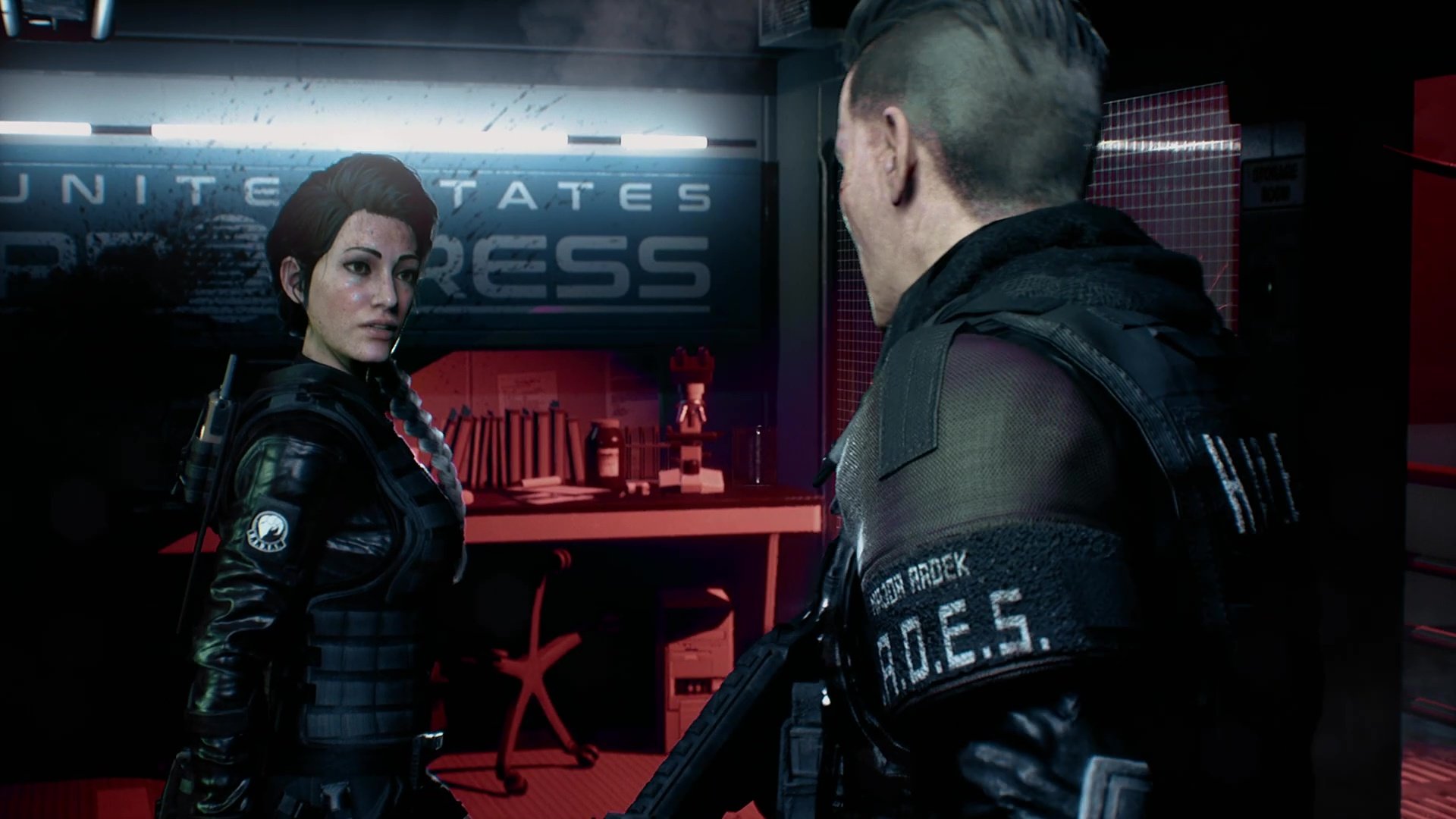
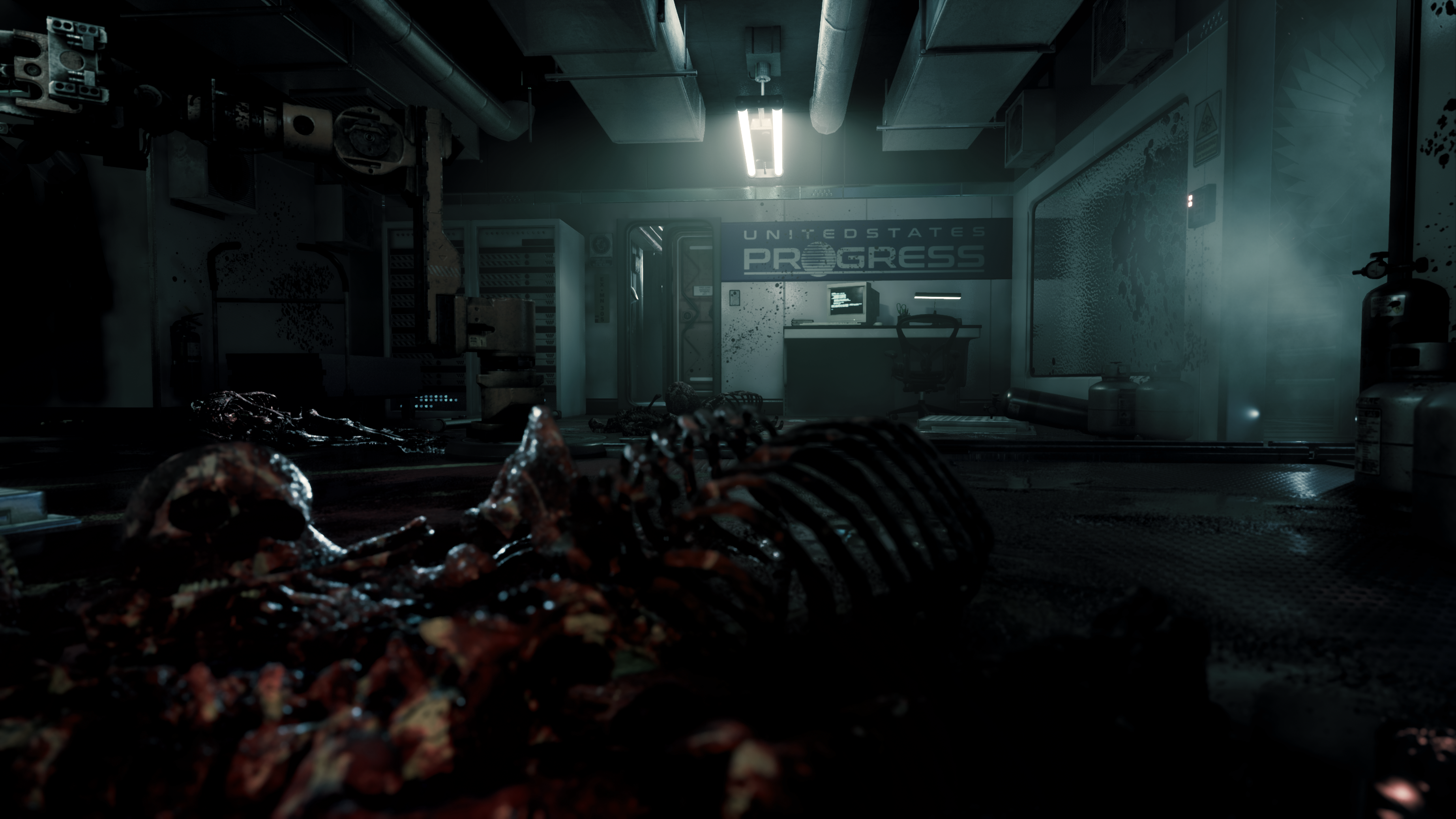
After being separated from Foster and Radek, as Reyes we must find a way to reconnect with the team by navigating the complex labyrinth of offices, labs, and long corridors that make up the facility — and above all, survive the corpses scattered throughout, which are mysteriously reanimated by an inexplicable omnipresent electromagnetic force.
A journey into the dark, arid heart of the desert, in search of an escape but above all answers, following a plot that is quite intricate and not always crystal clear, yet capable of keeping us on edge for the about 6 hours needed to see the closing titles. Reyes will become entangled in intrigues among various organizations, governmental or otherwise, involved in the horrific experiments that took place in Area 51, and must also reckon with the ghosts of a dysfunctional family, of a past that returns to haunt. Perhaps, even more than the bloodthirsty corpses that swarm the depths of Nevada.
Meeting in the Dark
In Daymare 1994, rather than losing years of life due to excessive fright, you lose significant vision. Despite our attempts to adjust in-game brightness settings, NVIDIA control panel options, and monitor OSD, the game environment is genuinely dark, far too dark. And even the reliable torch we can activate at will offers a dangerously limited field of vision. On one hand, this creates a truly oppressive and claustrophobic sense of darkness that perfectly complements the environments we’ll traverse; on the other, it makes fully appreciating the beauty of the levels—well-realised and rich in detail—extremely difficult, if not impossible, especially since the level design isn’t quite top-tier, often forcing us into long and tedious backtracking phases.
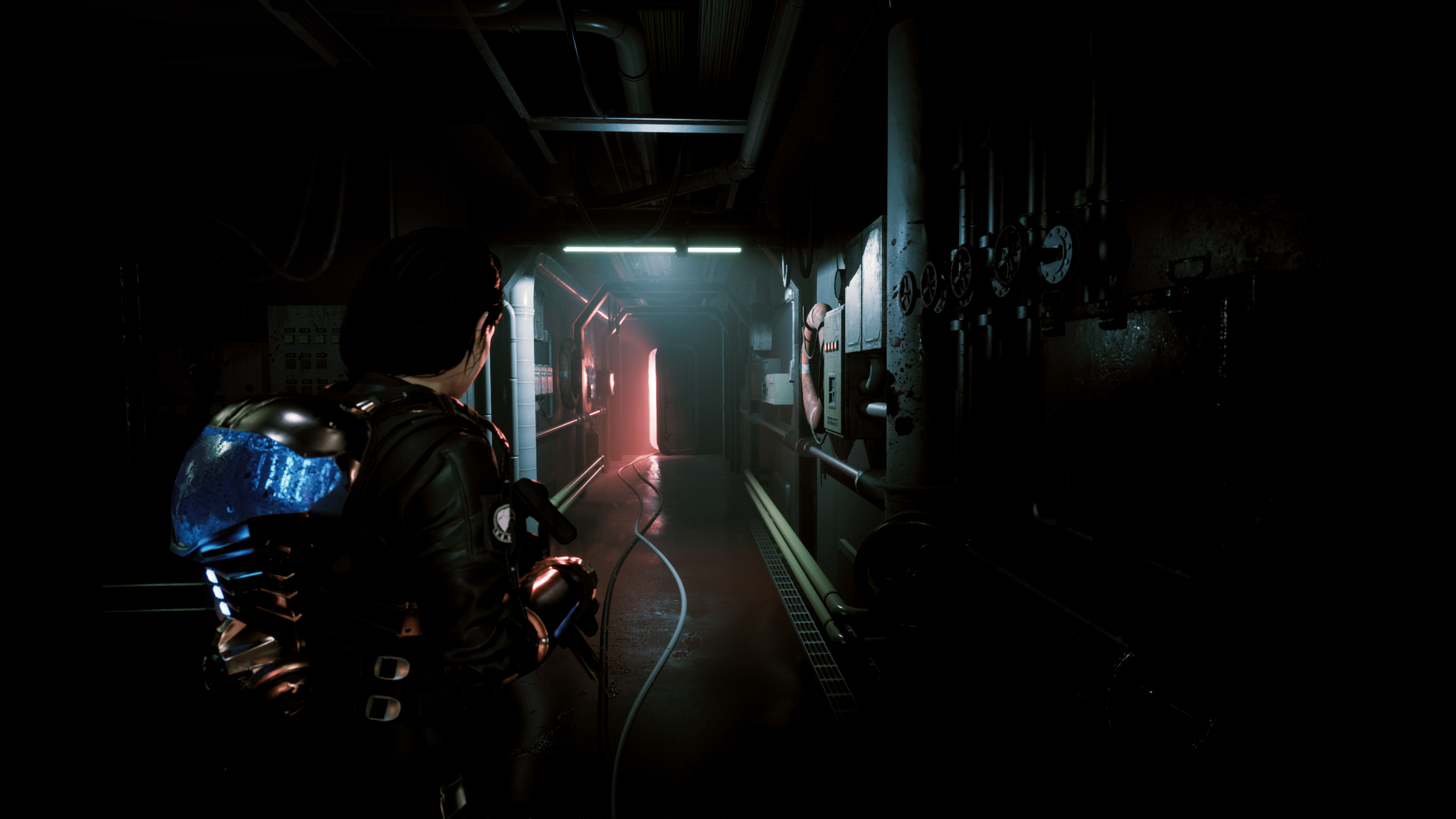
Game scenarios that, despite being well-realised, remain too uninteractive and offer little incentive for exploration, granting at most a few extra weapons, lore documents, or utterly forgettable collectibles. The fact that our Reyes is equipped with only two weapons throughout the entire game (a pump-action rifle and a machine gun) also removes any curiosity about acquiring new, more powerful ones capable of increasing our chances of survival, thereby flattening the sense of progression and growth for our protagonist. Of course, it’s possible to find some upgrades for those weapons, such as extended magazines or stability aids, but these remain a negligible amount that has hardly any noticeable impact on gameplay.
If the scarcity of obtainable items can be seen as a deliberate nod to the survival-horror style of the early days, it’s natural to wonder why, for much of the adventure, the inventory ends up filled (or better, clogged) with med-kits — typically a rare item in a survival game, since it often makes the difference between life and death.
It took a couple of fights for me to understand why...
Slow-mo action
In Daymare 1994 there are a relatively limited number of enemy types, essentially three: the Decoy, the Sparker, and another type that resembles the Decoy but with very obvious ascites. The Decoy and the ascitic Decoy (we’ll call them that) are themselves divided into two categories: the blue, weaker, and the red, invulnerable to projectiles. But as invulnerable to projectiles, how do we get rid of them? Let me introduce to you the Frost Grip, the major new gameplay feature of this prequel.
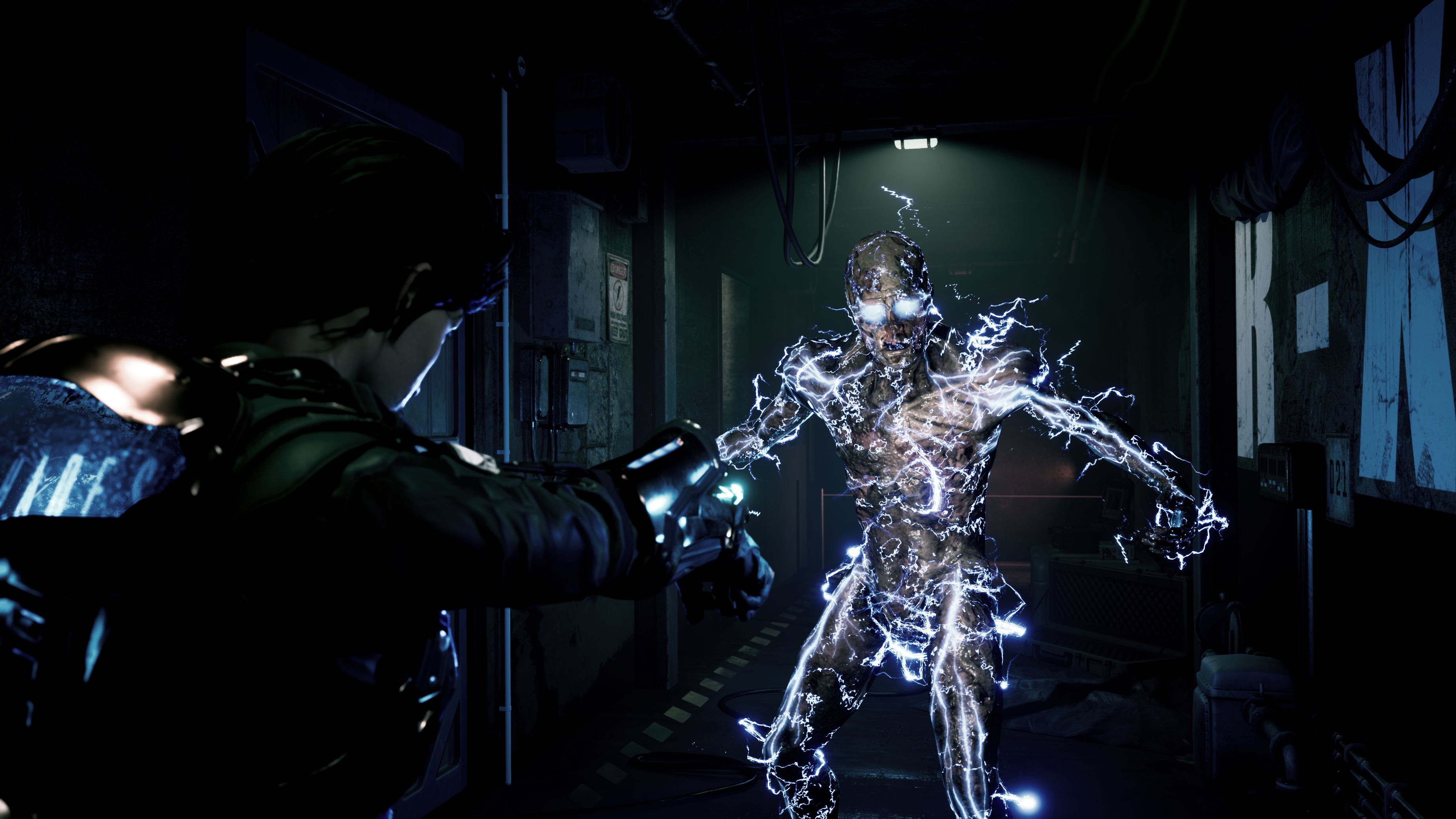
The Frost Grip is a portable device that resembles a flamethrower, with the only difference being it uses liquid nitrogen instead of fuel mixtures. Thanks to this valuable weapon, Delila can slow down or completely freeze her enemies, then shatter them with a punch or fill them with projectiles. Red, armored enemies can only be eliminated this way—by freezing them and finishing them off—while blue enemies can be killed simply by shooting them (better at the chest or head, as always). If you fail to neutralize them before they get too close (they run and are damn fast, forget the zombies from Resident Evil) they’ll attempt to subdue you in a grip that slowly drains your health. Thanks to a quick QTE, we can escape—but since there are often more than one enemy trying to kill us, we’ll often end up right in the arms of another monster, and absolutely not in a romantic sense.
The Deceptive, emaciated creatures, on the other hand, are more static, but given their evident gastrointestinal issues, they will use their electric vomit as a weapon, with an astonishing aim capable of striking us even at considerable distances — although we won’t suffer much damage, we will be fatally slowed down, which is not helpful, seeing that our Delila, despite her slim, athletic appearance, possesses the agility of a piece of wood. Both of these monster types, animated by a particular electromagnetic force, can release a sphere of this energy upon death, which will move in search of another corpse nearby to resurrect, or another monster to enhance. To prevent this epidemic of resurrections, we can fire a frozen projectile at the sphere to cause it to dissolve in the air. Simple, no?
No.
Meanwhile, we still need to talk about the Sparker, the most feared enemies of the game: not only can they revive corpses and enhance them at their own discretion, but they can also kill us in a single hit if they get too close. True, they’re slow and offer a generous hitbox, but, like the Decoy and the Ascetic Decoy, they benefit from a special property granted by the RAM77: they can teleport, extremely quickly. We’re thus in a combat situation where our Delila has been granted the mobility of a nimble ninetynine-year-old, while the enemies enjoy a speed far beyond the ordinary. Even the weapon that, in theory, should flip the balance, the Frost Grip, acts too slowly, often leaving us damaged by enemies only half-frozen.

Changing weapons is a slow operation, reloading (although the Daymare 1998 reload mechanic has been abandoned) is a slow operation, running is a slow operation (but don’t think you can escape fights like in Resident Evil — they’re almost all inevitable), waiting for the Frost Grip’s charge to recharge is a slow operation (even though it’s possible to speed it up with objects available, but in very limited quantities). It feels like fighting underwater, against creatures that are perfectly at ease in that environment and are numerically superior, often attacking from opposite directions. Not to mention the enemies hiding behind corners that leave us no time to react: we’ve criticised Hidetaka Miyazaki in the Souls series and now we’re criticising the Roman studio for this choice in Daymare 1994 — an absolutely too “cheap” way to scare the player, but above all to “punch” some vital points without giving them any chance to react. The situation improves a bit towards the end, with improvements for weapons and especially for the Frost Grip. The pump-action rifle remains, however, vastly superior to the machine gun, which requires too many shots to knock down an enemy and offers no stopping power, with monsters continuing to run happily even under a hail of headshots.
We mention only briefly the boss-fight, without wanting to spoil too much: disappointing, frustrating, annoying. That’s enough.
Technically speaking
We tested Daymare 1994 Sandcastle on the following setup:
AMD Ryzen 7 3700x @ 3.60 GHz
Gigabyte RTX AORUS Master 3080 Ti 12Gb
Corsair Vengeance RGB RT 32GB DDR4 3600MHz
LG 34GN850 Monitor at 3440x1440 (21:9)
From a technical standpoint, the title has satisfied us: high-quality scenarios rich in detail, character models that represent a clear step forward compared to the prequel, all enhanced by impressive optimisation that keeps 120fps (the title is locked at this frame rate) almost consistently. Of course, the fact that much of the screen is enveloped in darkness helps, but that doesn’t diminish the feeling of playing a brand-new entry in Capcom’s famous horror saga in many sections — and even during intermission scenes. A bit too derivative? Perhaps so, but the team seems aware, having included several Easter eggs in honour of Shinji Mikami’s series within the Area 51.
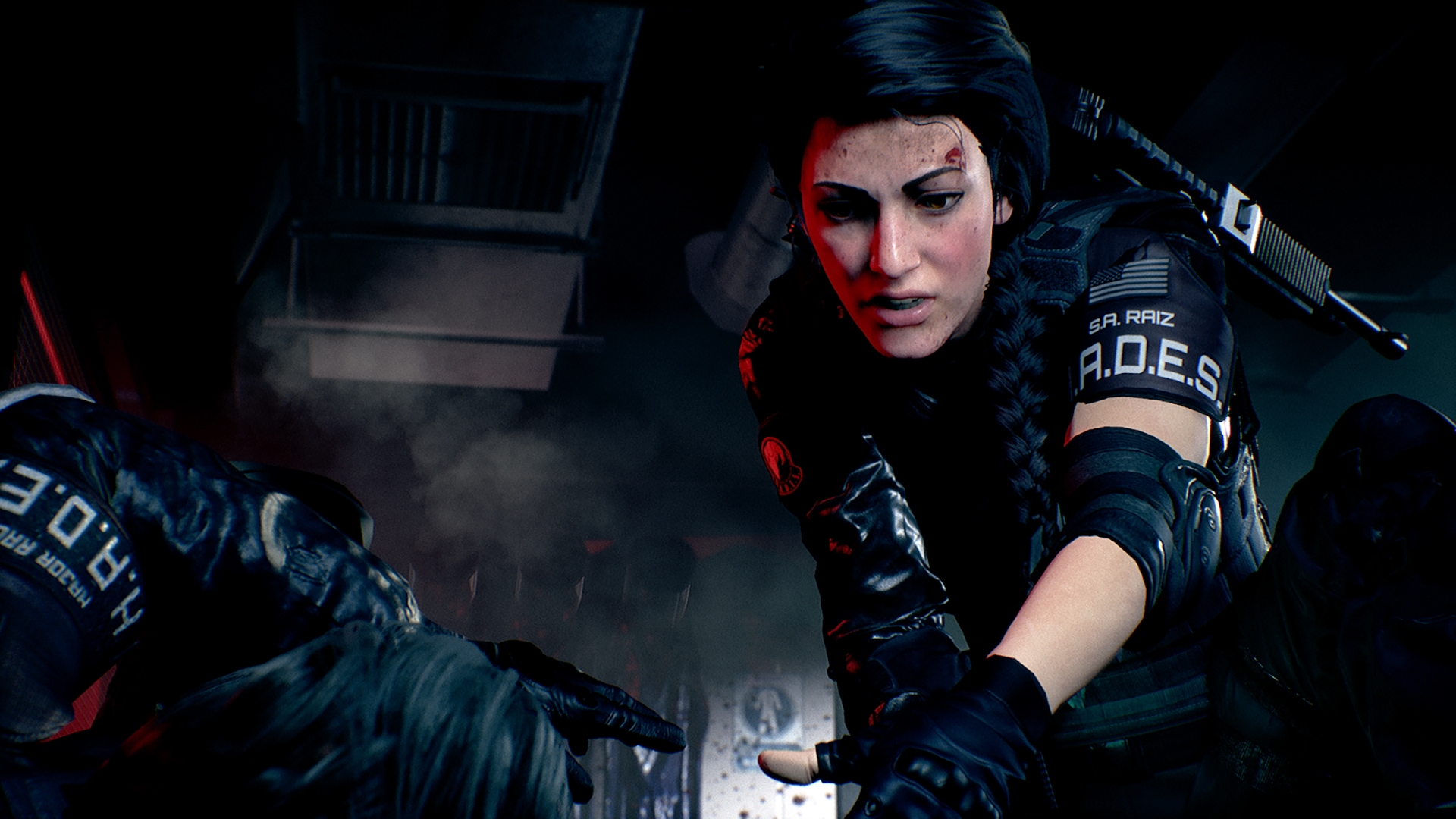
Sorry, but in the mid-game scenes, facial animations — and especially the lips — still make you wish for more, even though they feel quite outdated for a title aiming to revive the glory of 90s survival horror. The voice acting is also a letdown, with exclusively English lines that alternate between adequate performances and rather grotesque, half-hearted ones. Excellent, however, the audio: brutal, visceral, vibrant. He should be the star of many sections, and he should be. One note: jumping scares triggered by broken lightbulbs are fine, but a couple of times, no more, it’s still a fairly predictable method...
In conclusion
Daymare 1994 Sandcastle represents, in our view, a modest step forward compared to the previous chapter, which would chronologically be the sequel. If the qualitative leap doesn’t quite meet expectations, it’s by no means a failure to be dismissed: Invader Studios has crafted a decent story, consistent with the events of Keen Sight but also enjoyable for newcomers, albeit with a touch of naivety in some gameplay choices. Overall, a survival horror worth playing if you don’t have high expectations, and especially if you manage to avoid constantly comparing it to the most celebrated Resident Evil saga, to which the team has clearly drawn inspiration — sometimes even going a little beyond it. Building a saga too heavily on a famous rival’s shoulders could be a risky move, a double-edged sword, but we can only wait and see what the future holds for this IP.
About the Author