
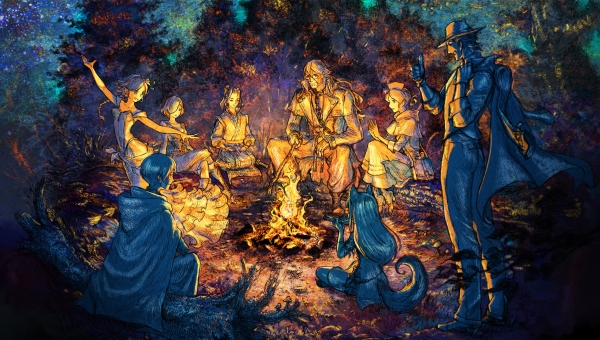
It was 2018, Minecraft was celebrating its tenth anniversary and pandemics were still just stuff for films and TV series. And during that spring, I started reading Facebook posts about a new game coming out: Octopath Traveller. Octopath Traveller. Quasi per caso, mi comparì nella homescreen della mia Nintendo Switch l’annuncio dell'imminente rilascio di tale gioco e, incuriosito, iniziai ad informarmi.
First reaction: shock!
“60€?! For a game that seems to be 16-bit and doesn’t even reach 5GB in size?! Square Enix is mad!”.
Almost as a challenge, or perhaps even more intrigued by what I’d mentally labelled a madness, I downloaded the demo, with the lowest expectations, as they say. After two hours of play, I was incredulous.
Long story short, by day one I literally threw my money at the screen because I wanted it so much, and I loved it from start to finish. This preamble is necessary to underline that the review you’re about to read was written by someone who loved the first chapter and therefore might be ‘a bit’ biased.
This content is provided by YouTube. To view it, you must allow external content. Activation may result in data being shared with the third party.
«The truth lies in the flame»
Having a high opinion of a game can also lead you to approach a potential sequel with high expectations. In my case, these expectations mainly concerned resolving those small 'gaps' that, in my view, troubled the previous chapter: the lack of character interaction and the dullness of some stories. the lack of character interaction and the dullness of some stories. Since I’m writing this review exactly as I’d want to read it if I were the player, I won’t discuss the stories and therefore avoid spoilers.
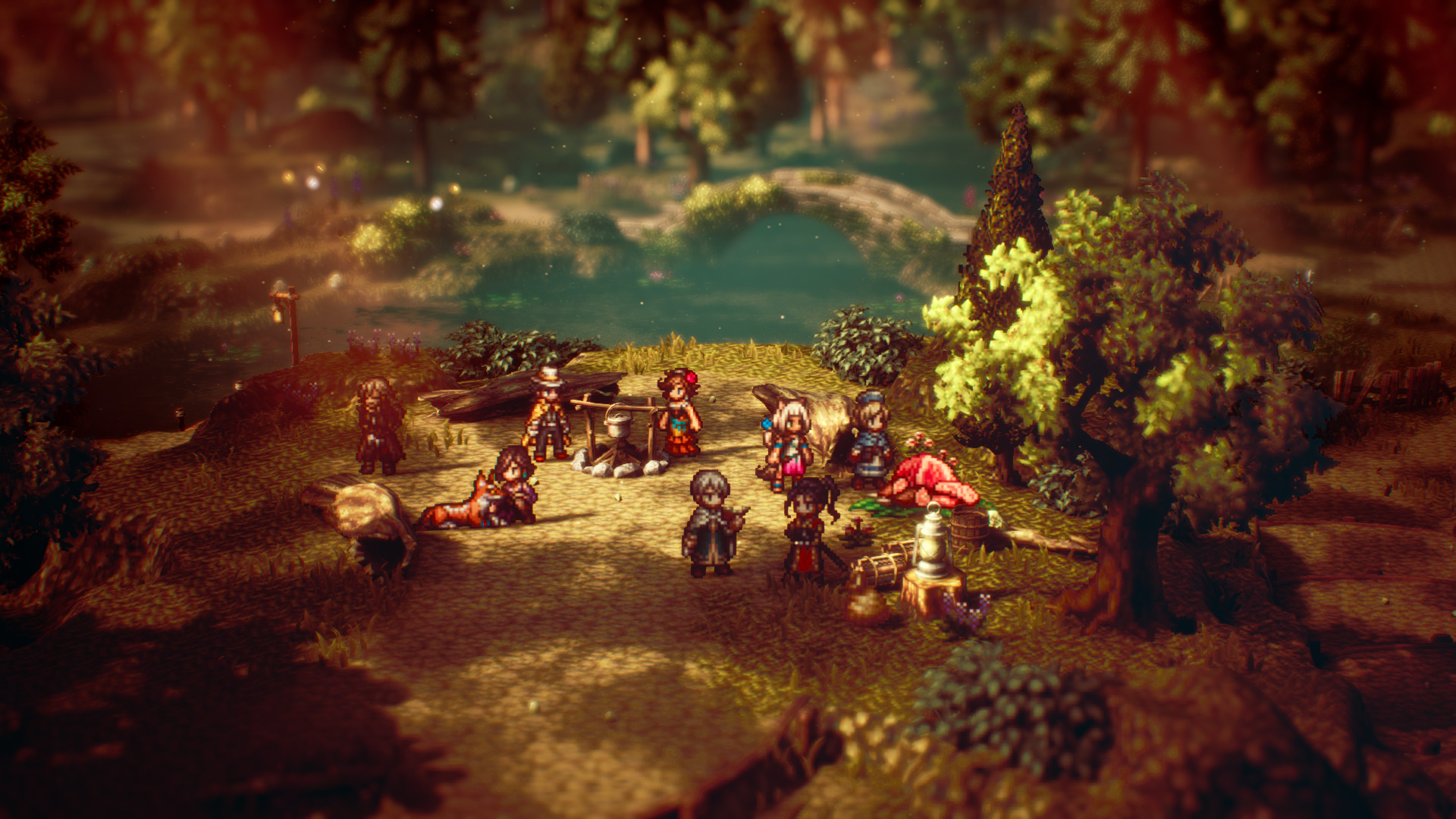
Octopath Traveler II is a role-playing game developed by Square Enix and Aquire and is the sequel to Octopath Traveler. The game is set in a fantasy world and follows the adventures of eight characters, each with their own story and unique abilities, who come together to achieve their own goals.
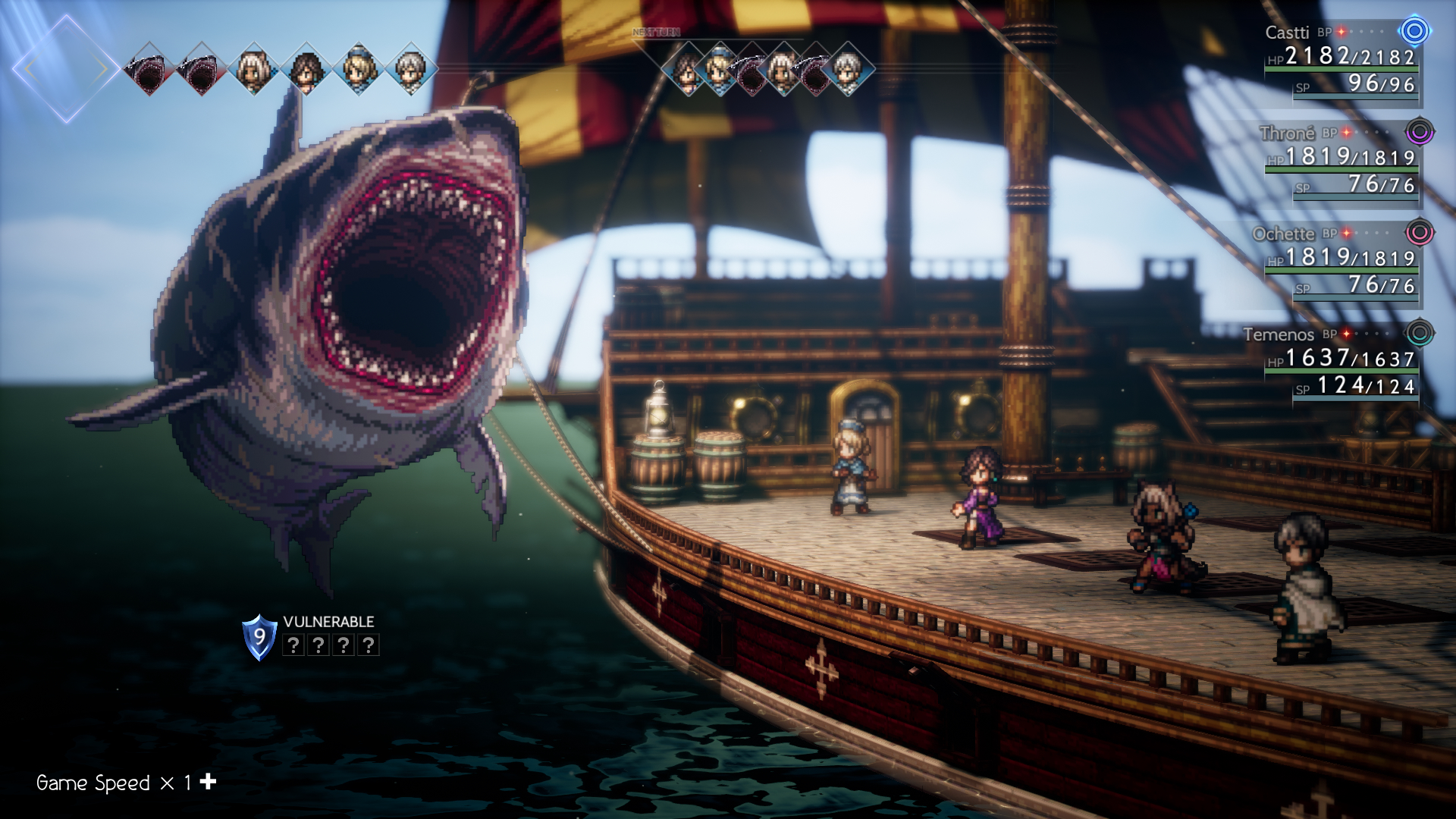
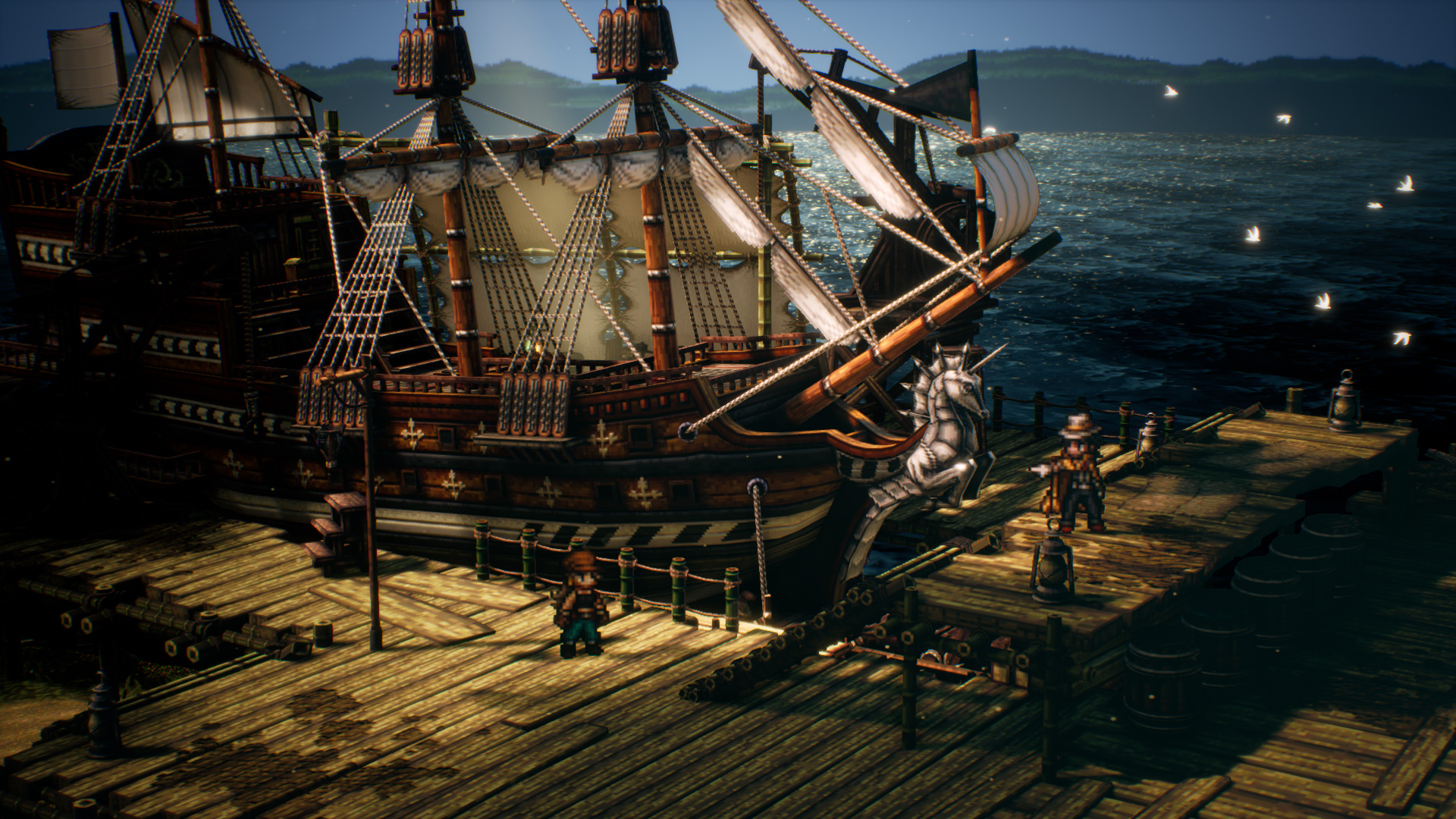
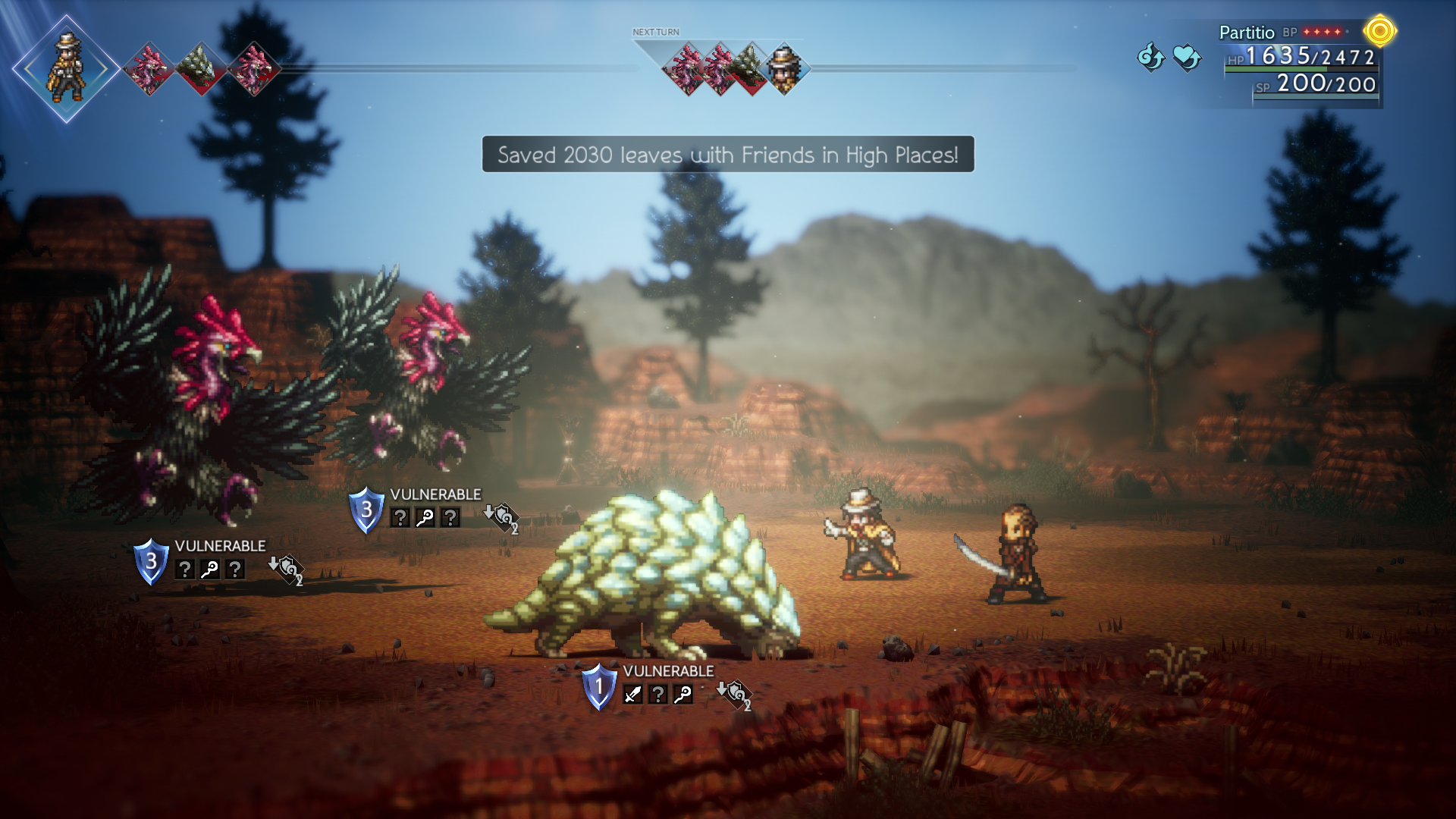
This series of games combines classic role-playing elements such as inventory management, character customization, turn-based combat, and the exploration of an open world. Graphically, it's an interesting blend of modern and classic elements. The game uses a graphical technique called "HD-2D" that combines pixel art from classic RPGs with high-definition 3D backgrounds and characters.
New mechanics
The day-night cycle also greatly influences the gameplay style, as we mentioned earlier, since each character’s unique abilities can vary depending on the time of day, but fortunately, this can be changed at will with a specific button. day-night cycle also affects the gameplay style, because, as we mentioned earlier, each character’s unique abilities can vary depending on the time of day, but fortunately, this can be changed at will with a specific button.
This mechanic clearly favours certain builds and, as a result, increases the strategic options available when building your team compared to the previous title. The time of day also affects the “travel actions” , which are actions that can be performed when not in combat. These too vary depending on whether the game world is bathed in sunlight or moonlight..
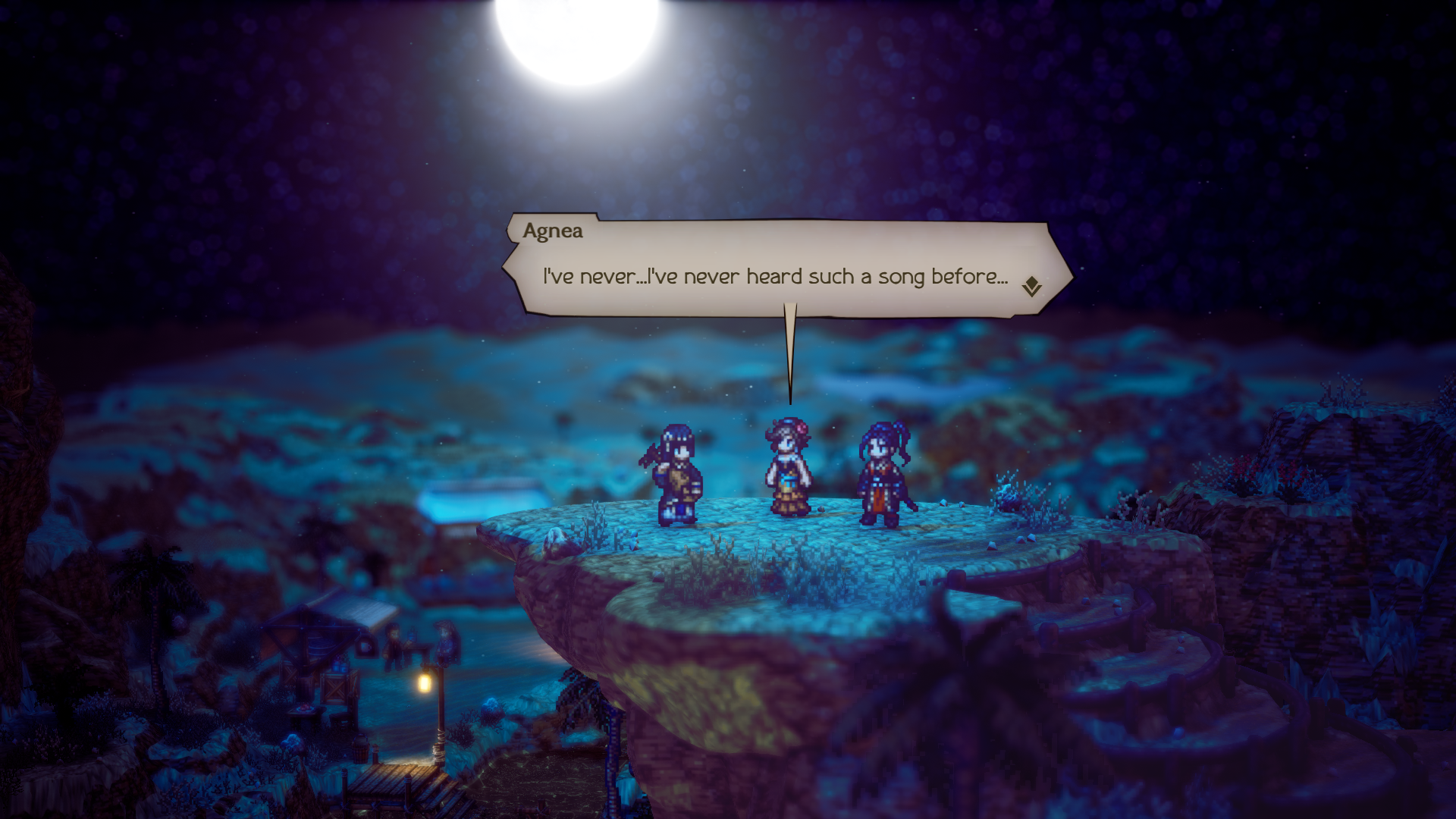
As you might easily guess, the party will feature eight different travel actions (two per character), though they often feel very similar to each other and this makes them less impactful. Soon, the game introduces another new mechanic, the “Potere Latente”, a kind of ability that varies per character, with a personal charge bar that fills up with both damage dealt and taken. At first glance, this ability may not seem particularly innovative, appearing like a classic 'Ultimate', but as the hours pass, you realise it (sometimes) is completely something else.
Let me explain: since each character’s latent power differs, it will take on a different role in the game’s strategy, and while it may be a very strong offensive move for some characters, it will be a strategic play to assist the team for others.
As in the previous chapter, secondary classes will be available secondary classes to be unlocked as you level up, though the way to obtain them is different, and additional abilities will also be available that I’ll refrain from mentioning to avoid spoiling.
The eight stories
The eight stories are all different from each other and unrelated to the previous game,allowing players to enjoy the full experience even if they have not played the first Octopath Traveller. The classes of the eight characters are the same as in the previous title, though their abilities differ, thanks to the various gameplay additions we discussed earlier. The story unfolds in chapters that each sub-plot has a different structure:for example, at the second chapter one character might face a boss while another does not.
However, as with its predecessor, the narrative system in Octopath Traveller II also shows its flaws. Players will be able to choose their starting character and then freely recruit subsequent characters from there, yet, while not actually forcing the player, the level-based system pushes players to complete chapters 'in batches' for each character (first all chapter 1s, then all chapter 2s, etc.) and this makes the stories extremely fragmented and discontinuous.
As for character interactions, the 'travel banter' remains, consisting of dialogue exchanges between party members tied to the story currently unfolding.
Moreover, this chapter includes the so-called “crosspaths”, namely specific chapters featuring a story detached from the main narrative threads, where two characters team up to complete a particular mission. However, their marginality is evident, and, unfortunately, once again the title lacks the cohesion hoped for. the title lacks that hoped-for cohesion.
Technical compartment
I played this title using my laptop (i7-8750H, 16GB of RAM, Nvidia GTX 1060 graphics card) thanks to a key kindly provided by the publisher. (Intel Though far from a high-performance laptop, it allowed me to play at maximum settings at 1080p resolution). It should be noted that initially I had set a frame rate cap, and the game gave me really annoying video sync issues, which I resolved by enabling V-Sync (without a frame rate cap). In this way, the game runs smoothly and without any graphical issues at60fps.
The art direction is, once again, one of the game’s strong points. The art direction is, once again, one of the game’s strong points.The use of a vibrant and contrasting colour palette contributes to creating a distinctive atmosphere for each game area, and the attention to detail in the design of characters and enemies is notable. Overall, Octopath Traveler II’s artistic and graphical style is unique and appealing, successfully capturing the player’s attention and drawing them into the narrative. the artistic style and graphics of Octopath Traveler II are unique and appealing, successfully capturing the player’s attention and drawing them into the story.
The soundtrack of Octopath Traveler II is a musical masterpiece that blends seamlessly with the game's setting. The music is by Yasunori Nishiki (also the composer of the first title) and features a wide range of genres, including jazz, rock, classical and folk. also the composer of the first title) and features a wide range of genres, including jazz, rock, classical and folk. Yasunori Nishiki (also the composer of the first title) and features a wide range of genres, including jazz, rock, classical and folk.
The musical tracks were composed specifically for the different regions of the game, creating a strong sense of immersion in the fantasy world. Furthermore, the audio quality is excellent, contributing to an engaging gaming experience.
In general, the soundtrack of Octopath Traveler II is one of its defining features and definitely warrants being listened to outside the game. well worth listening to outside the game.
Conclusions
If you’re looking for the feather in the egg, you can find it — perhaps some extra story interactions, perhaps less structured chapter developments — but the truth is we’re facing a masterpiece of the genre. The attention to detail in the environments, the artistic work visible everywhere, from map construction to the soundtrack, Octopath Traveller 2 fully meets expectations, entertains and engages the player for a solid number of hours, around 70. hours, around 70.
Citing a piece "If you like Octopath Traveller, you'll love Octopath Traveller 2"