
Reviewing Soulstice is, to be honest, a tough task: not so much because of the inherent complexity of Reply Game Studios’ work (it’s still an action hack ‘n’ slash game), but because we’re facing an entirely Italian creation. An event that, we must be honest, fortunately is becoming increasingly common thanks to the recent boom in the video game industry in our beloved country, but which inevitably still leaves a certain impression. It’s easy to get swept up in patriotic pride, which can compromise the impartiality of the evaluation. We therefore decided to wait a little before sharing our verdict, to process our experience and assess the title objectively. A title, published by Modus Games, that draws heavily from genre pillars such as Devil May Cry and Bayonetta, without forgetting Japanese literary works like Berserk and Claymore. The result achieved is overall satisfactory, without, however, reaching the peak quality of the works Soulstice draws inspiration from, perhaps due to the project’s non-triple-A nature.
This content is provided by YouTube. To view it, you must allow external content. Activation may result in data being shared with the third party.
Two is meglio than one
Just as the ice cream made famous by the slogan that titles this paragraph, the protagonist of Soulstice also has a dual nature: we will, in fact, embody a Chimera, a mystical creature created by the fusion of two people’s souls. In our case, it’s two sisters: the tough and unyielding Briar and the small and gentle Lute. The first has retained her physical body, while the smaller sister follows us as a spirit. The past of these two protagonists will be revealed gradually as the story unfolds, thanks also to flashbacks of Briar that we will experience while embodying Lute — or rather, her spirit — which will flutter through her sister’s mind, reliving mostly sad and painful memories, the origin of their subsequent transformation into Chimera.
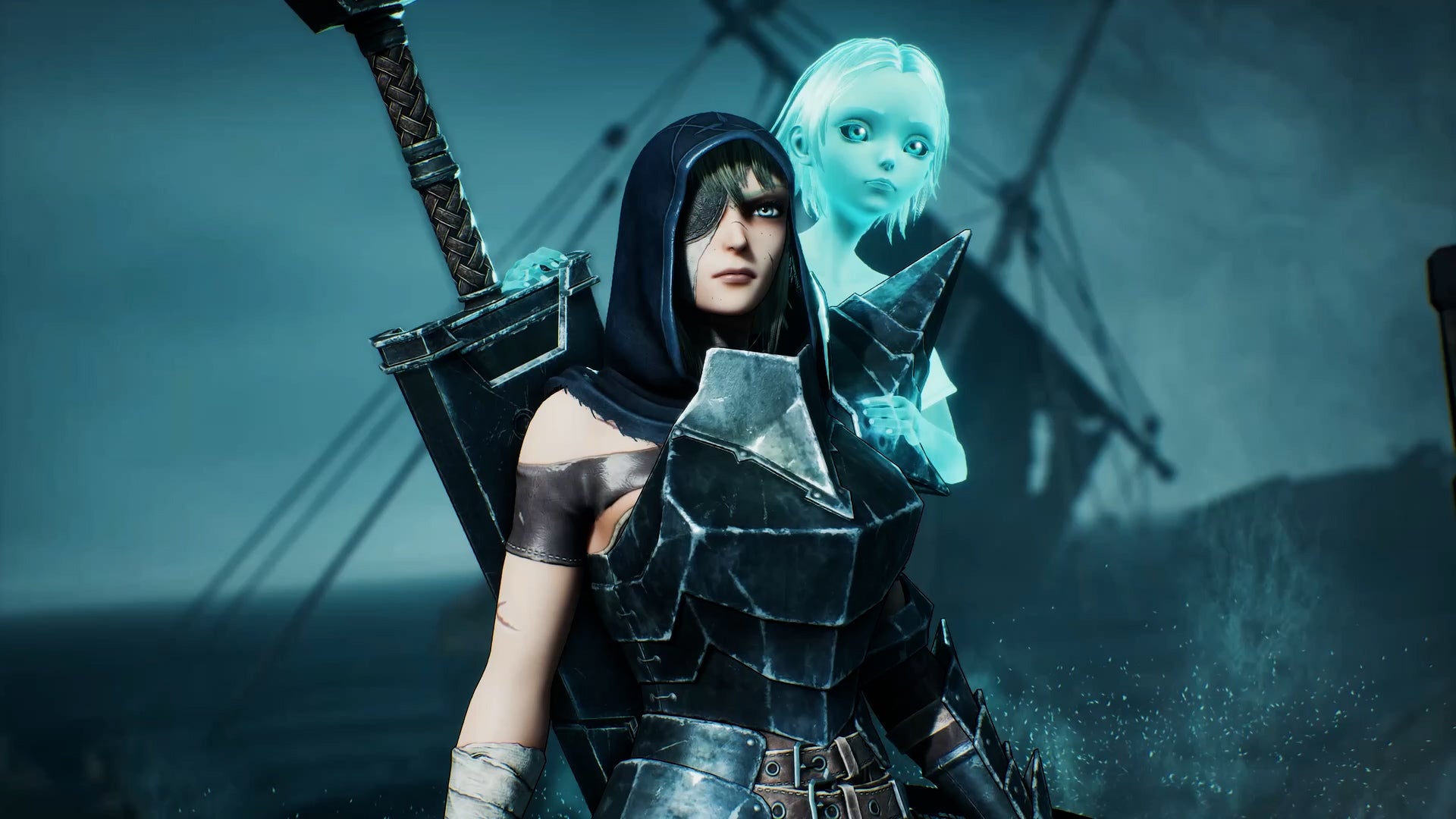
What we need to know for now is that we are part of the Order of the Grey Blade and have been sent to the sacred city of Ilden to investigate following the opening of a Crack, a rupture in the Veil that separates the physical plane from the spiritual, which has devastated the town, killing most of its inhabitants and turning the survivors into grotesque monsters. We will arrive in Ilden by sea and must clear our path from the port to the Crack, located at the highest point of the fortified city, liberating each district from the horrors that now infest it.
A mission that will prove to be a true growth journey for the two sisters, in their desperate need to accept their condition, to process the past, and to find the strength to face the future, without succumbing to the beastly rage that flows through the veins of a Chimera, which feeds perpetually on what was created to destroy. The story is thus entirely set in Ilden, starting from the outskirts all the way to the city center, obviously passing through the sewers and other districts.
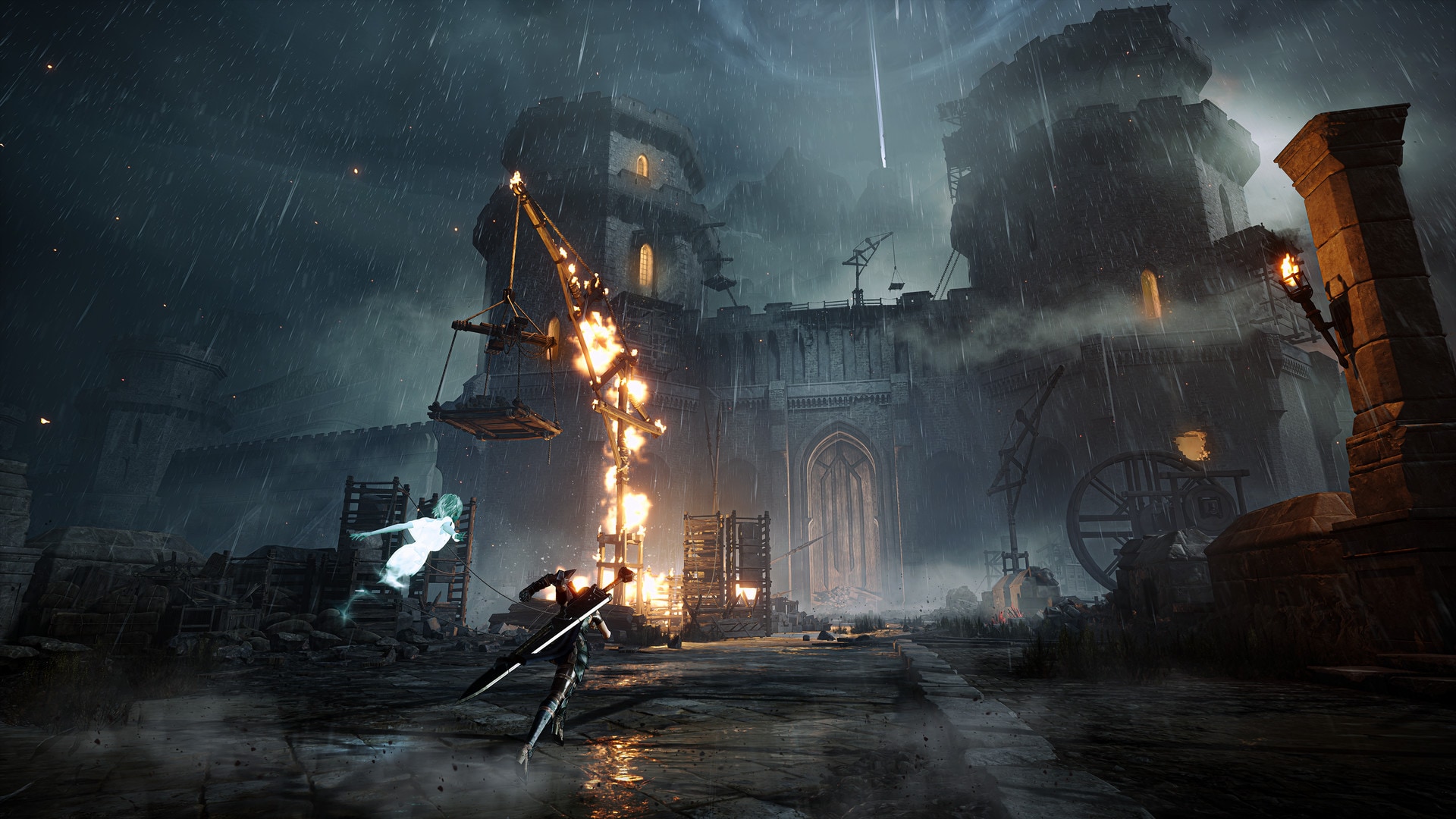
A series of separate sections across the various chapters that, honestly, risk tiring the player’s eyes over time, despite the story’s coherence. Repetitive sequences and environments too similar to each other are repeated throughout the roughly 15 hours of Soulstice, presenting a rather monotonous and repetitive colour palette. All of this at the expense of the sense of progress in our mission, otherwise well-supported by the unfolding narrative, which entertains without ever leaving the player gaping, and by the gradual encounter with increasingly powerful enemies and the consequent unlocking of more lethal abilities and weapons to face them.
Meanwhile, Briar and Lute are a Chimera duo barely out of their shells, nearly slaughtered by a threat completely beyond their reach. But it’s precisely their fraternal love and their cohesion that awaken their dormant, incredible powers, enabling them to prevail against any danger that may arise before them — even at the risk of the Transcendence, i.e. the transformation of the Chimeras into Spectres, the malevolent entities that have escaped from the Breach.
I WON'T ALLOW IT
Now, moving on to the pure gameplay component of Soulstice, we can conveniently divide it into two distinct phases: the exploratory-like segments, during which we’ll simply proceed through the level, at most accompanied by simple puzzles or platforming sections scattered here and there; and the significantly more meaty combat phase, which sets the pace for each chapter. During each battle, controlling Briar, we’ll primarily focus on the offensive component, delivering swift strikes with the wide arsenal at our disposal, consisting of six primary weapons, unlocked progressively, and a steel sword as the “secondary” weapon that doesn’t fall short of the dragon-slaying axe from Gatsu.
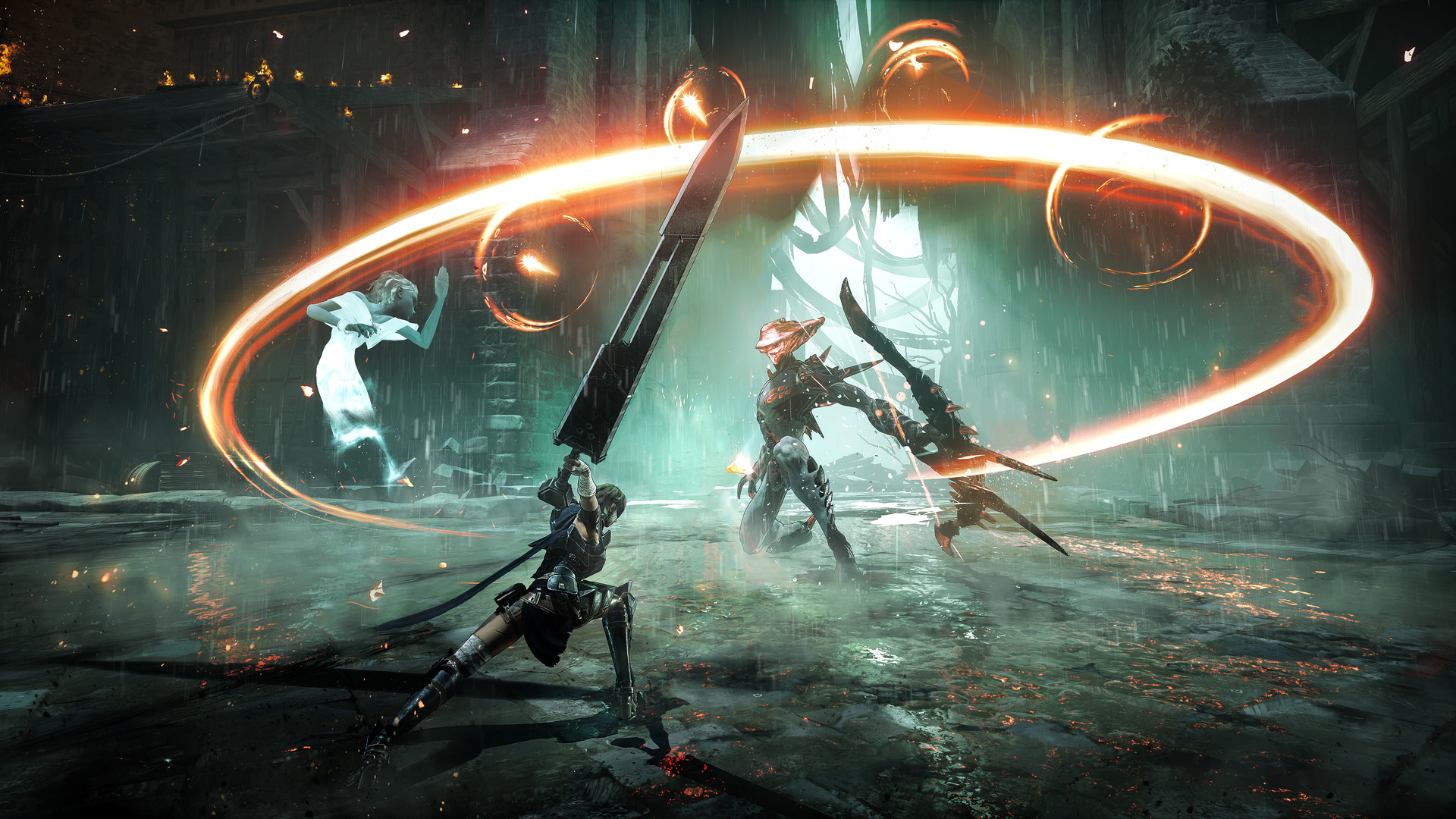
Lute, however, despite possessing some offensive abilities that she will use automatically without ever truly making a decisive impact, will be significantly more useful thanks to her defensive abilities: pressing B on our controller at the right moment will allow the small Lute to block the enemy’s attack, giving us enough time to dodge and reposition. On this point, one cannot help but notice that dodges often prove inconsistent in saving us or not from enemy slashes, making her a somewhat unpredictable ace in the sleeve and leaving us honestly with some confusion.
Continuing the adventure will also allow you to unlock new abilities and upgrades for both sisters: this translates into new combo moves for Briar and new powers for Lute, who will gain greater autonomy (for example, she will be able to use her parry abilities independently of your input) and different abilities depending on the alignment you choose for her (Chaos, Cunning or Mastery).
The depth of the combo system, to be honest, doesn’t reach the levels of a DMC or a Ninja Gaiden in that regard, but it remains fairly simple and intuitive: all the weapons at our disposal practically share the same key combinations for performing moves that are roughly similar. We’ll nonetheless be pushed to make full use of our entire arsenal depending on the resistance and vulnerabilities of the enemies we face: flying enemies will be especially vulnerable to the bolts of our bow, while armored foes will tremble in the face of our metallic gloves, capable of shattering their armor in an instant.
If this may seem excessively simplistic and banal to veteran players on one hand, it turns out a factor of interest not to be underestimated for less experienced players, who will be able to access a title of this kind with greater ease without feeling overwhelmed by the sheer volume of key sequences to memorise.
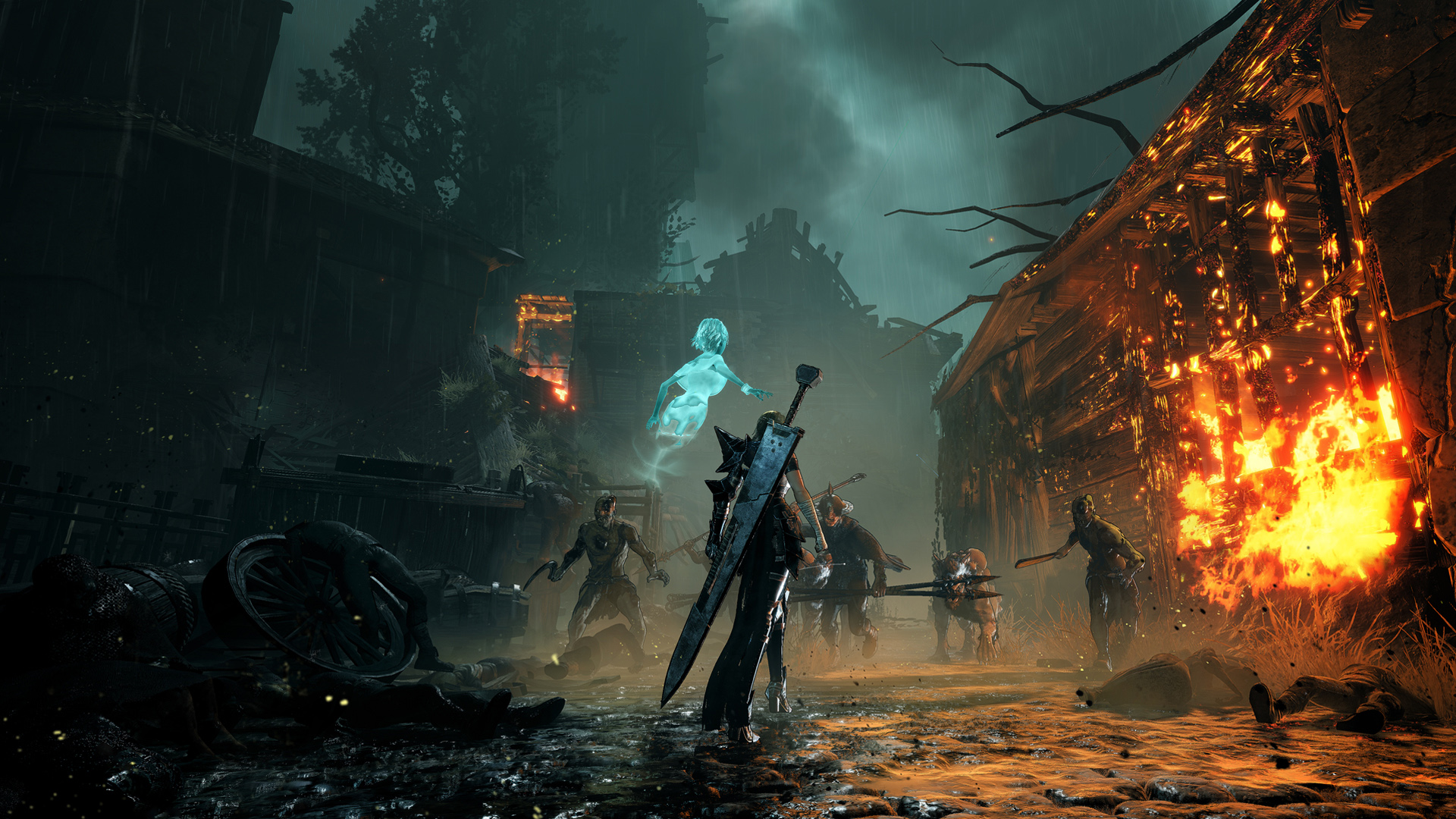
The heart of the combat lies less in Briar’s individual performance than in the synergy between her and her sister, highlighted by the on-screen Coesione indicator. This rises with every hit landed without taking damage but drops immediately to zero at the first wound. Maintaining a high Coesione level will be essential to boosting Lute’s combat power and unleashing the Furore di Briar, a berserk state that temporarily allows her to embrace her "evil" side and obliterate enemies with superhuman speed and aggression.
But as Freezer would say, "this isn't even my final stage!": the Furore state will indeed give way to the Fury state, which we can only reach when the HP bar is nearly empty. During the Fury state, Briar is closer than ever to Specter Transcendence, and while the CPU temporarily takes control of the older sister, immersed in an unmatched murderous rage, we will assume control of Lute — or rather, be tasked with short QTEs to maintain our sister’s mental health, calming her fury and bringing her back to herself.
Lute will also be essential for tackling two specific enemy types: the Spectres, blue, and the Possessed, red. Our little sister can generate two force fields, one red and one blue, which will make enemies of the corresponding colour vulnerable to Briar’s weapons. This force field is not infinite, and keeping it active will accumulate overload, causing Lute to temporarily disappear and losing her combat support.
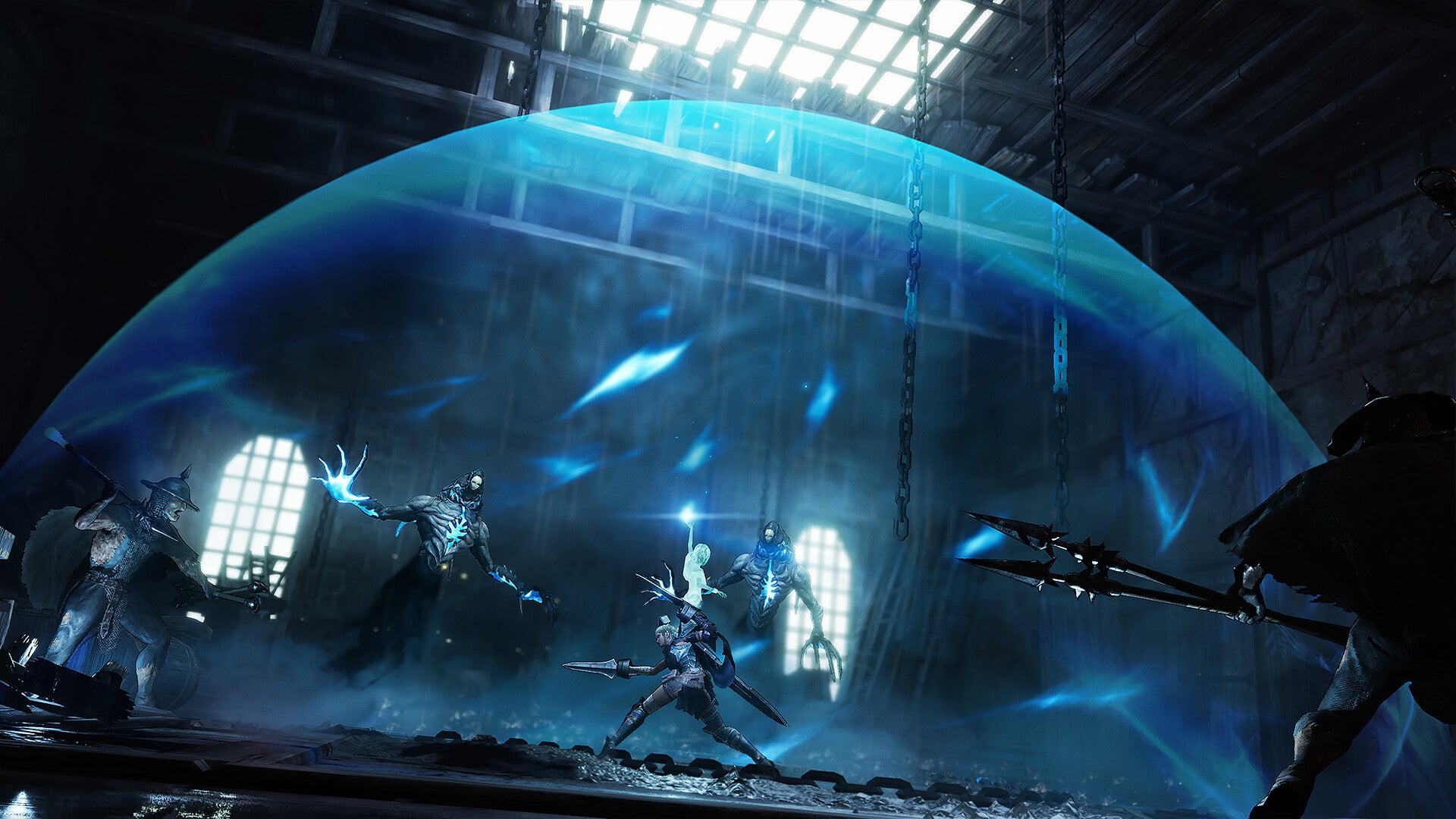
Well, if you think about it, there aren’t too many mechanics to keep an eye on, but they’re introduced in a smart, gradual way by the developers, allowing the player to absorb the new elements calmly. At the end of every fight and every chapter, the game will assign a rating, broken down into three categories based on score achieved (which will be higher depending on the variety of combos and weapons used), time taken, and damage taken. A feature that may not interest many, but which in reality can serve as a motivator for replayability as players strive to achieve better scores. Replayability is further encouraged by the presence of multiple difficulty levels; we played on normal difficulty and found the challenge level sufficiently demanding.
Technically speaking
We tested Soulstice on the following setup:
AMD Ryzen 7 3700x @ 3.60 GHz
Gigabyte RTX AORUS Master 3080 Ti 12Gb
Corsair Vengeance RGB RT 32GB DDR4 3600MHz
LG 34GN850 Monitor at 3440x1440 (21:9)
The gaming experience was, overall, smooth and satisfying, especially after forcing the game to use DX12 via Steam launch code, which delivered a significant boost in average FPS, both a substantial reduction in frame drops that had inexplicably plagued our gameplay up to that point. We particularly appreciated the cinematic direction of the cut-scenes, which heavily draw inspiration from the exaggerated and sinuous movements of the Japanese Bayonetta, and generally evoke the style of shonen combat.
The painful point, now tragically famous online, is the game camera, which during exploration phases remains fixed, sometimes using slightly unusual angles. The developers, for technical or artistic reasons, chose to employ this distinctly retro style — and, frankly, decidedly outdated by today’s standards. While for us older gamers who grew up with God of War or DMC, it may feel like a nostalgic trip back to the past that we can comfortably reacquaint ourselves with, we can’t fault younger players for their confusion (without necessarily sharing their often exaggerated tones). And if we consider that during combat the camera becomes fully controllable by the player (though not without flaws, especially when approaching walls), we genuinely wonder why this cumbersome approach was preferred.
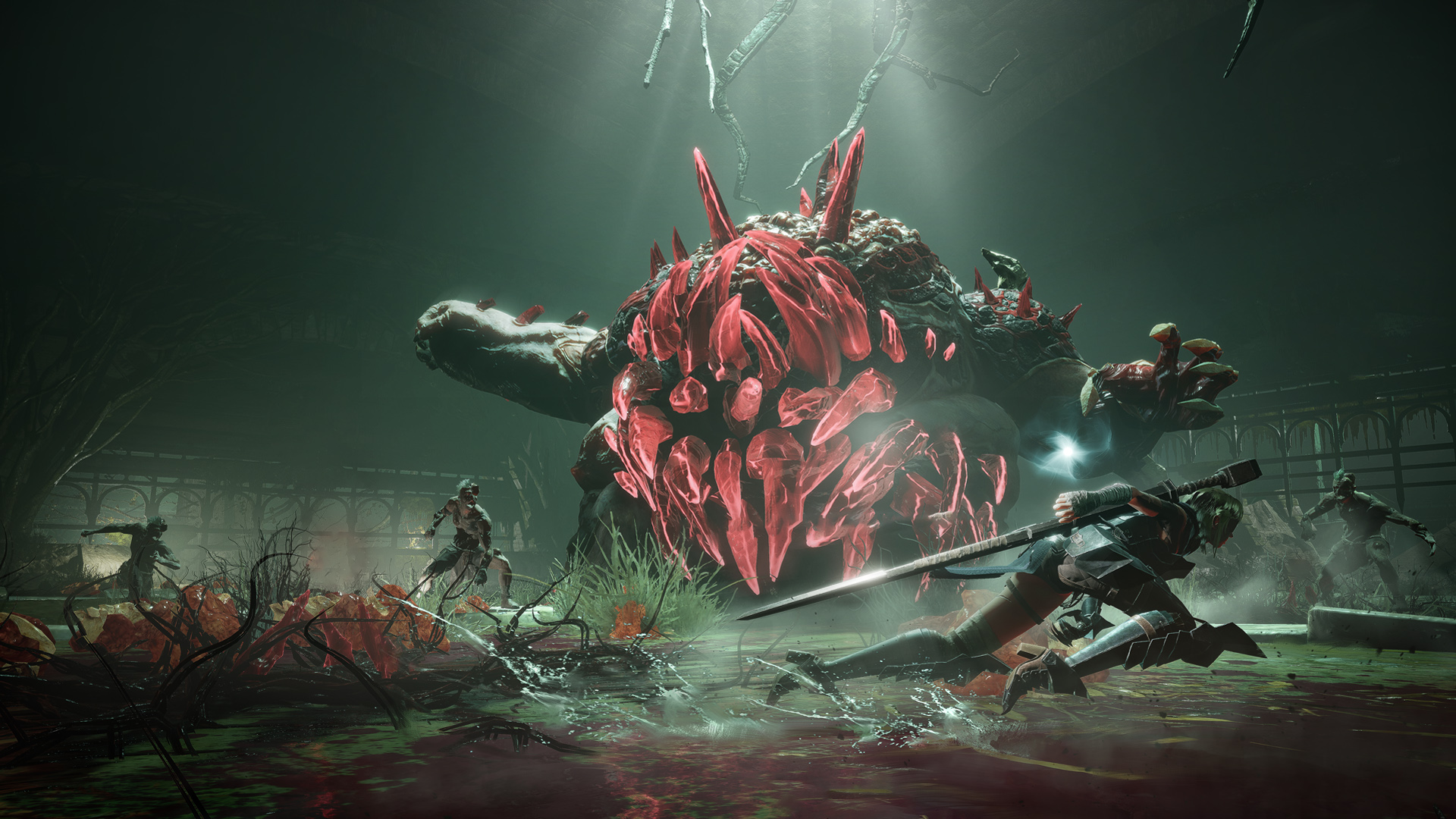
The design of the standard enemies is mostly uninspired, while the game is saved by the boss-fights, almost all thrilling and featuring worthy adversaries. Sonically, the voice acting by Stefanie Joosten (Quiet from MGS V), who voices both sisters, is decidedly below average compared to other voice actors (some secondary characters are at the brink of cringe). Excellent is the choice of soundtrack, which, though lacking memorable tracks, creates a superb synergy with the on-screen scenes, with a delightful contrast between modern audio and the dark fantasy medieval setting.
In conclusion
Soulstice is a title that, in the end, has amused us quite a bit. An old-school hack 'n' slash that retains the strengths and weaknesses of this genre, now almost niche after the rise of the Souls. The fact that a work like this has been created by an Italian team can only make us proud and hopeful that this industry continues to grow in our country, confident that Italy is rich in talent in this field. Although there are some stumbling blocks, especially in the narrative and technical aspects, and the title suffers from the inherent repetitiveness of its setting over time, the work of Reply Game Studios deserves to be played, and given the budget price it is offered at, we cannot do anything else but urge you to give it a chance.
About the Author