
"The Dursleys, of 4 Privet Drive, were proud to declare themselves perfectly normal, thank you very much. They were the last people in the world you’d expect to encounter anything strange or mysterious, because such nonsense was precisely the sort they disapproved of."
The opening of the book that gave rise to everything, Harry Potter e la Pietra Filosofale, the beginning of the Wizarding World and of the fame for the author J.K.Rowling, deserves to be placed on a silver platter as a starting point for a (hopefully) brief reflection that I am obliged to make before I begin, rightly, to speak of Hogwarts Legacy. Because the author, just like the Dursleys, does not approve of certain nonsense. The writer believes it is essential to separate the work from the artist, and the artist from the human being.
The unrest, the indignation, the threats of boycott, certain “reviews” surrounding the 10 febbraio, the release day of one of the year’s most anticipated and controversial games, have left me humanly desolate. First, for the people at Avalanche Studios, who, with dedication and years of commitment, worked on a project they believed in — and which was in no way directed by Rowling; second, for humanity itself, a victim of the poverty of certain arguments, the intellectual dishonesty of certain outlets, the putrid sludge of discontent and victimhood that has now become Twitter.
J.K. Rowling has controversial opinions, true. She has the right to express them, as others have the right, civilly, to challenge them. Yet, those who shouldn’t be put in the middle are the fans — those who love the brand regardless of the writer’s ethical or social stances, which they’ve been loyal fans of for decades. And, as already mentioned, third parties (in this case, the developers of Avalanche) are working on a project according to their own beliefs, completely independently of Rowling’s positions (repeatedly, criticisable). Perhaps, however, I’m getting carried away more than necessary, since Hogwarts Legacy has been the most profitable launch ever for a Warner Bros Games title, selling 12 million units in the first two weeks of launch.
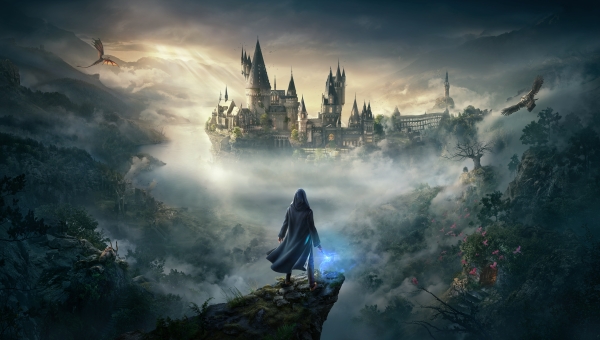
Well, once the pebble’s been removed from the shoe, we can finally don our uniform, draw our wand, and step into the magical world of Hogwarts Legacy.
This content is provided by YouTube. To view it, you must allow external content. Activation may result in data being shared with the third party.
Who starts well, ends up in their fifth year
The action RPG from Avalanche Studios is set at the end of the 19th century, in 1890, with the world of magic still grappling with the Goblins and their discontent: these creatures, already responsible for a rebellion that erupted about 200 years ago, are referred to as "wandless", meaning they do not have the right to possess or use a magic wand. Led by the evil Ranrok, the Goblins seek to seize control of a primordial yet immensely powerful form of magic, known as "ancient magic". Sharing the role of villain with Ranrok is also the dark mage Viktor Rookwood, head of the Ashwinders, a brotherhood of evil mages.
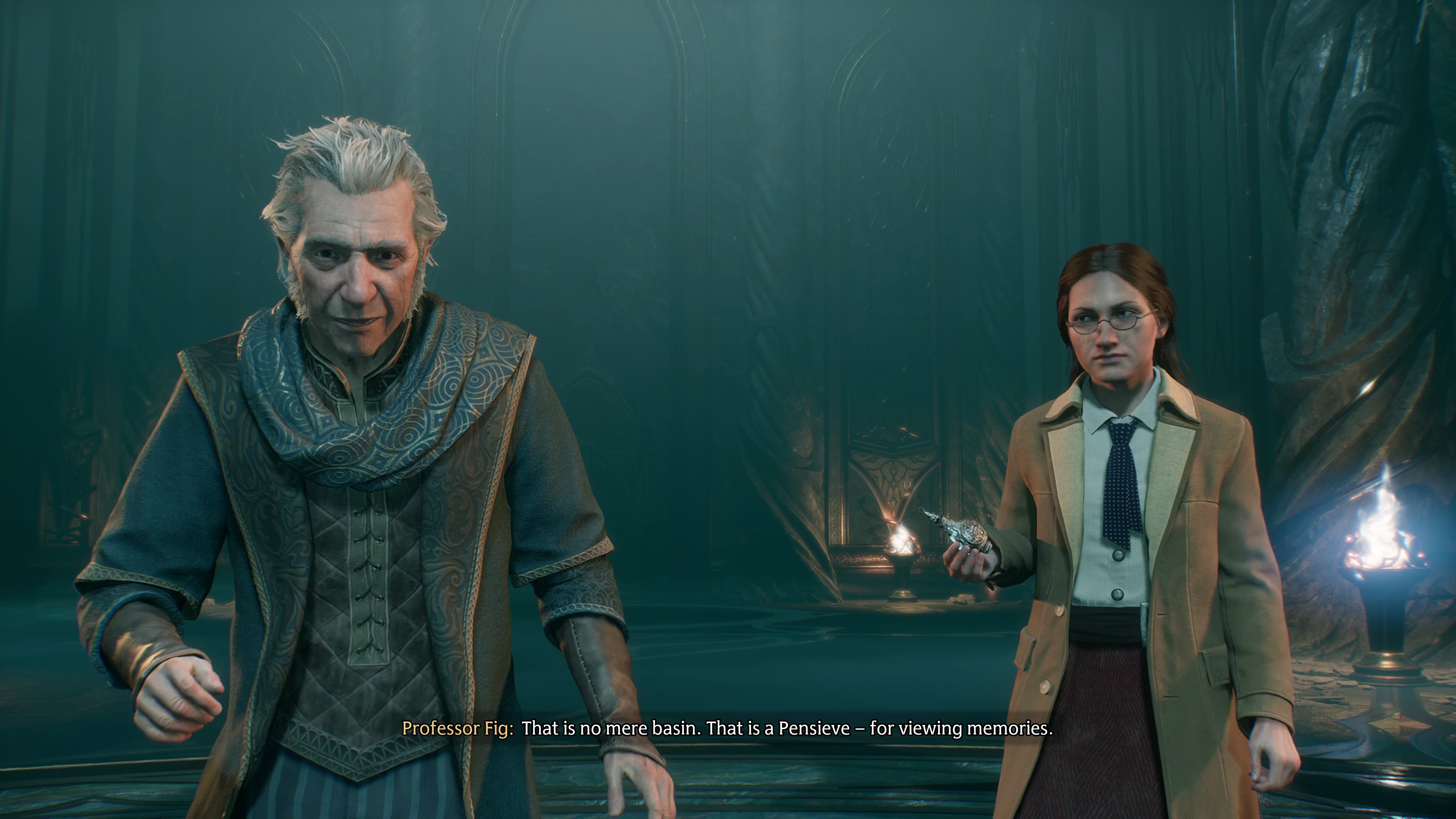
In this rather unideal atmosphere, our alter ego will be a wizard or witch whose appearance we can customise heading towards Hogwarts for the Sorting Ceremony into one of the four houses. With them is Professor Eleazar Fig, a Hogwarts teacher assigned by the Ministry of Magic as their mentor. Our witch (I chose a female character, so from now on I’ll refer to the protagonist using this gender) is no ordinary witch: just like the destined Harry Potter, the child who survived (or will survive, in this case), our witch possesses the ability to perceive traces of ancient magic. We’ll discover this in a rather chaotic manner, as during the flight towards the castle, a dragon attacks our flying caravan, effectively causing us to plummet into the void. The protagonist and Fig manage to touch a key, previously revealed thanks to our powers, discovering that it is nothing more than a passport to suggestive yet mysterious ruins perched on a cliffside.
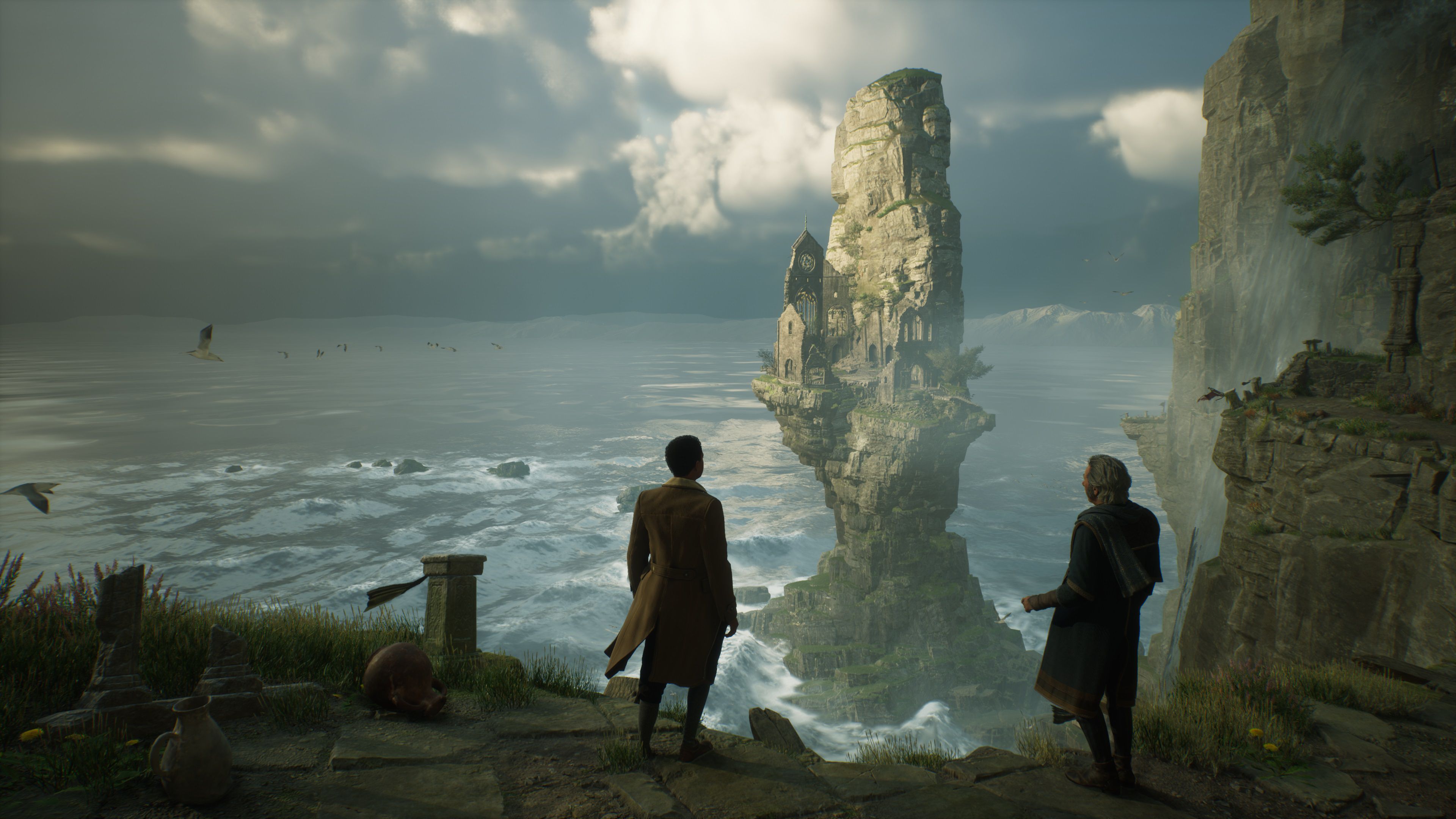
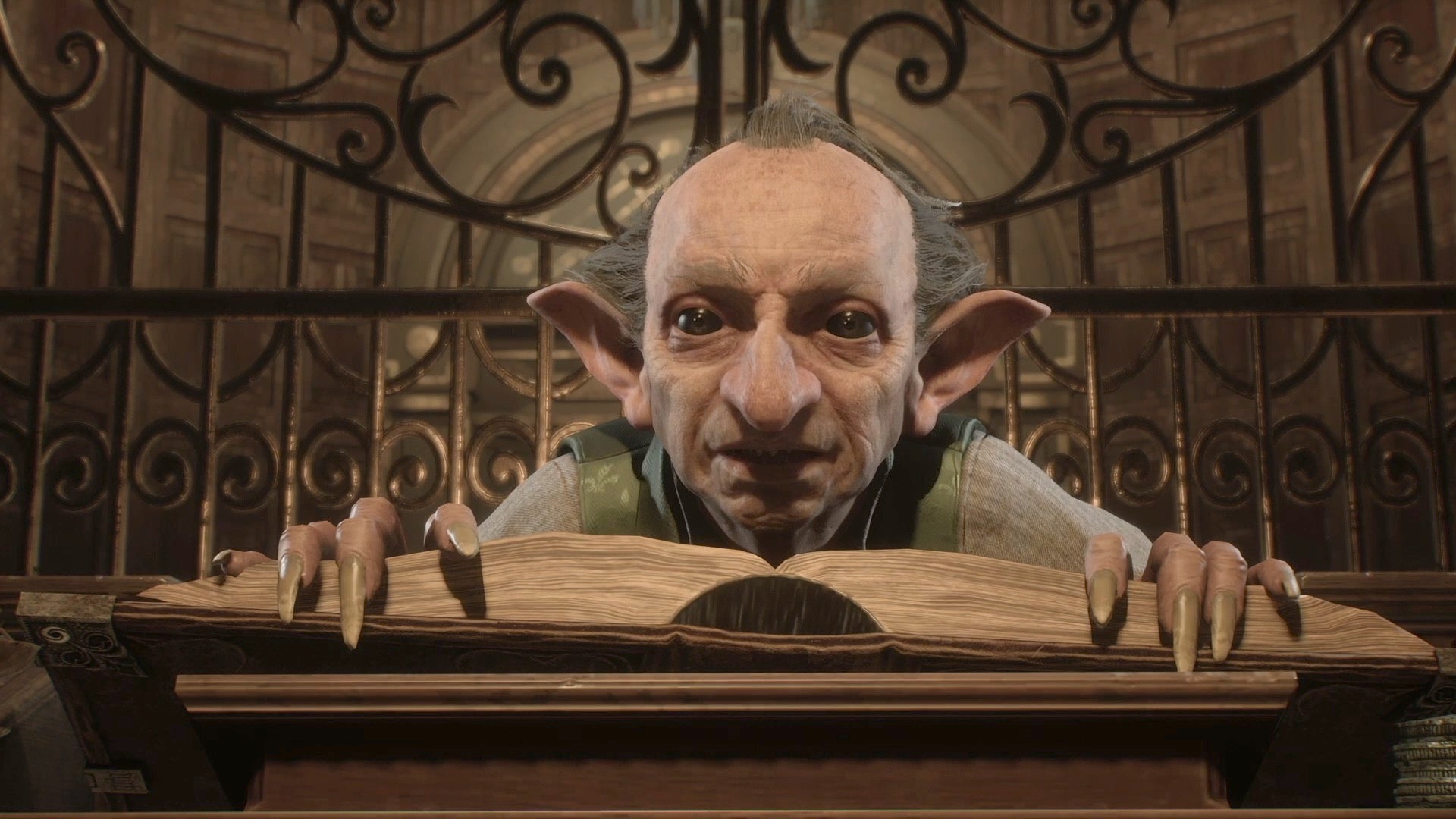
Exploring the ruins, thanks again to our vision powers, we manage to discover what turns out to be a secret entrance to Gringotts, the most famous bank in the Wizarding World. This opens a scene that closely resembles the first film: instead of Hagrid and Harry, we now have Fig and our alter-ego, racing headlong towards the depths of the bank, heading for Vault Number 12, one of the earliest ever opened. The exploration of the vaulted room is however interrupted by Ranrok himself, who immediately crosses wands with Fig. The goblin seems to have the upper hand but is then hindered by a soldier statue guarding the vault, giving us and Fig just enough time to pass through a magical portal that directly transports us to Hogwarts.
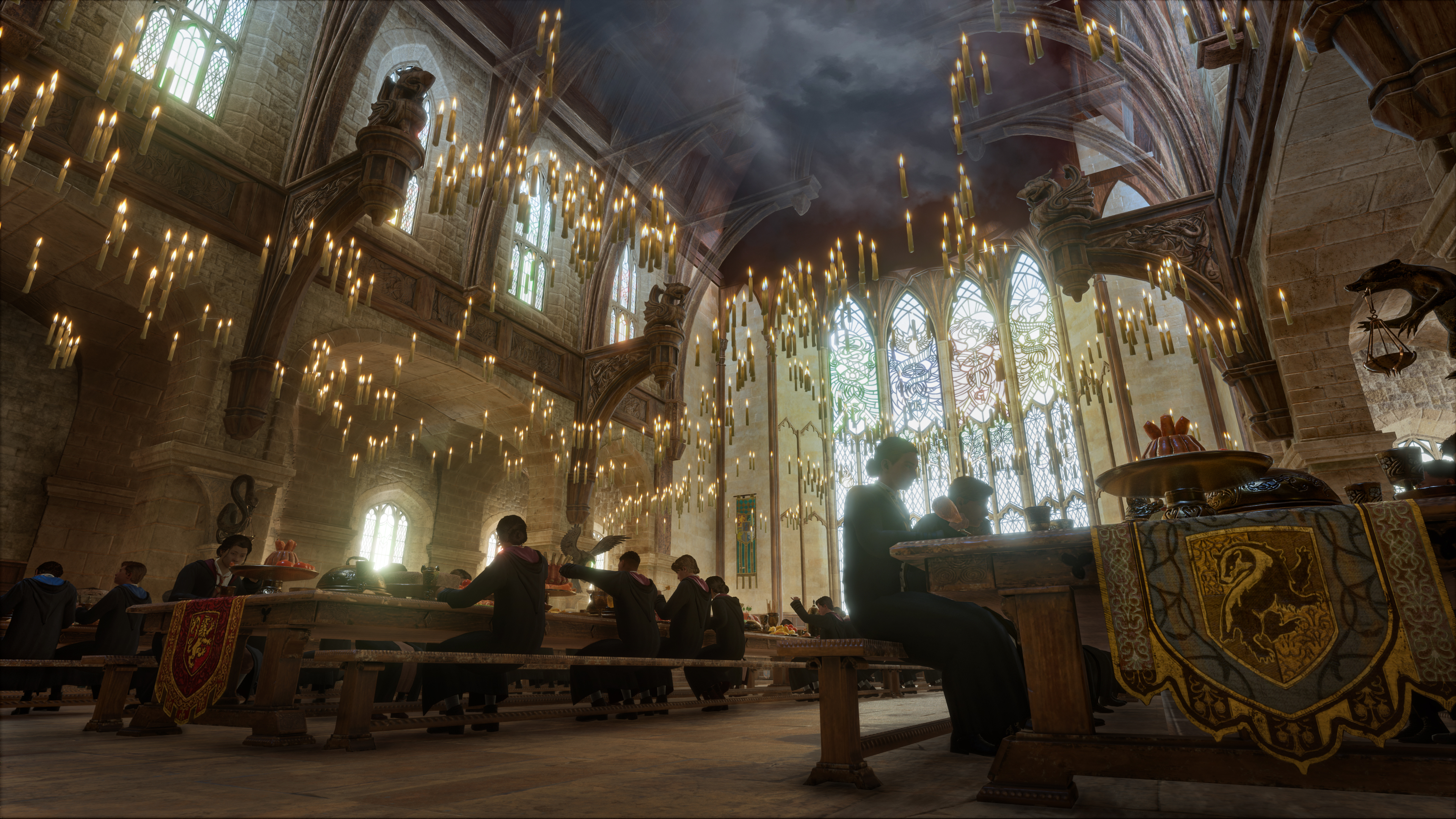
We’re significantly behind schedule for the ceremony, but despite the obvious dissent of Headmaster Phineas Nigellus Black, progenitor of the better-known Sirius, we’re granted permission to sit and wear the Hat of the Sorting Hat. A few simple questions and we’re sorted, Slytherin! (in my case). The game will still give you the option to choose which house you’d like to belong to. It doesn’t change much, apart from exclusive access to your respective common room, the crest on your robe, and a few specific interactions here and there during the game.
A double life
What I’ve just told you is the opening of the game; we won’t proceed further to avoid unpleasant spoilers, but one thing, not too damaging and almost obligatory to mention, I allow myself: the main storyline is weak and smells of having been seen before in many situations. If the developers were certainly skilled in highlighting and even setting the title within a historical event just hinted at in the books (the Ranrok Rebellion), they may have leaned a bit too heavily on the original work when outlining situations that will leave us with a definite sense of déjà vu: from the journey into the depths of Gringott to meet Olivander (also a progenitor) for the wand choice, the battle with a troll (which this time doesn’t occur in Hogwarts’ undergrounds but rather at Hogsmeade) to the unpleasant first encounter with a Mandrake.
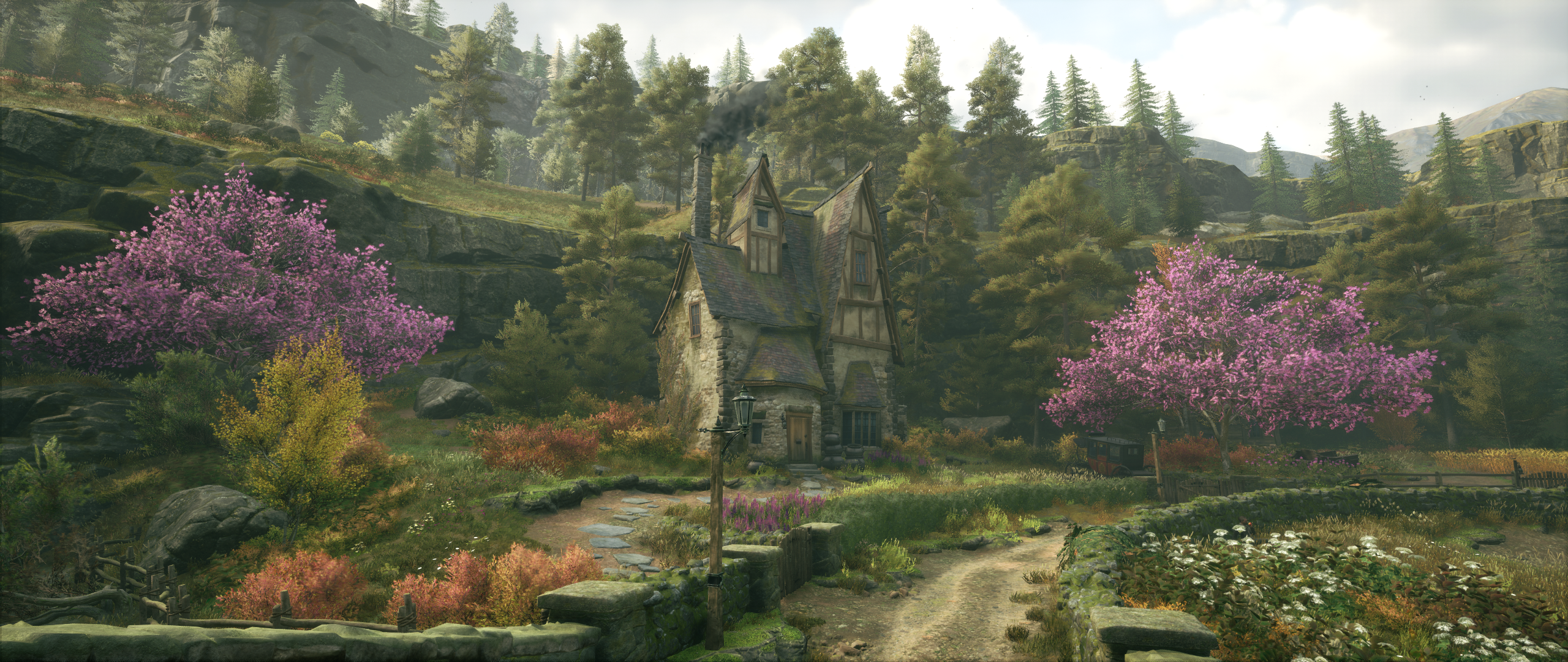
So if the story by itself doesn’t grab attention and push you to keep playing, suppliscono in questo lo spregiudicato fanservice (which I personally appreciated) e l'immane quantità di contenuti secondari that can be explored within the game map, which, though not vast, is packed with interesting locations to discover, in pieno stile RPG open-world. This would make Hogwarts Legacy nothing more than another open-world game with a strong collectathon component focused on completing side objectives rather than an action game with a linear plot; ciò che fa la differenza, e lo fa in modo sostanziale, è l'ambientazione, crafted with great care by Avalanche, both inside the castle and outside, in the Scottish Highlands.
As anticipated in the paragraph above, our protagonist shares much in common with the Muggle of Privet Drive, whose birth is still roughly a century in the future: as a destined individual, her life will not be solely devoted to attending lessons and studying to achieve her G.U.F.O.; instead, alongside Professor Fig, she must also solve the mystery looming at the game’s beginning and, in the meantime, evade the grasp of Ranrok and Rookwood.
The title indeed proposes main missions that will advance the main storyline, side-quest or rapport quest to assist other students or villagers scattered across the highlands, teacher assignments, essentially a kind of “homework” to catch up with our fifth-year peers, and finally an important sub-quest, perhaps the most captivating of all, which will determine our eventual transition into dark magic, with the consequent learning of the three unforgivable curses that add to the twenty other spells that can be acquired and used, both for combat and for interacting with the game’s environment.
The game promised a certain degree of freedom in choosing what kind of wizard or witch to become. In reality, apart from the aforementioned sub-quest to learn curses without forgiveness, in most of the dialogue there will be little opportunity to shape our character’s personality, at most we can choose between polite or passive-aggressive responses, for example, or we can demand rewards after helping companions... in short, forget about becoming the new (or old?) Draco Malfoy.
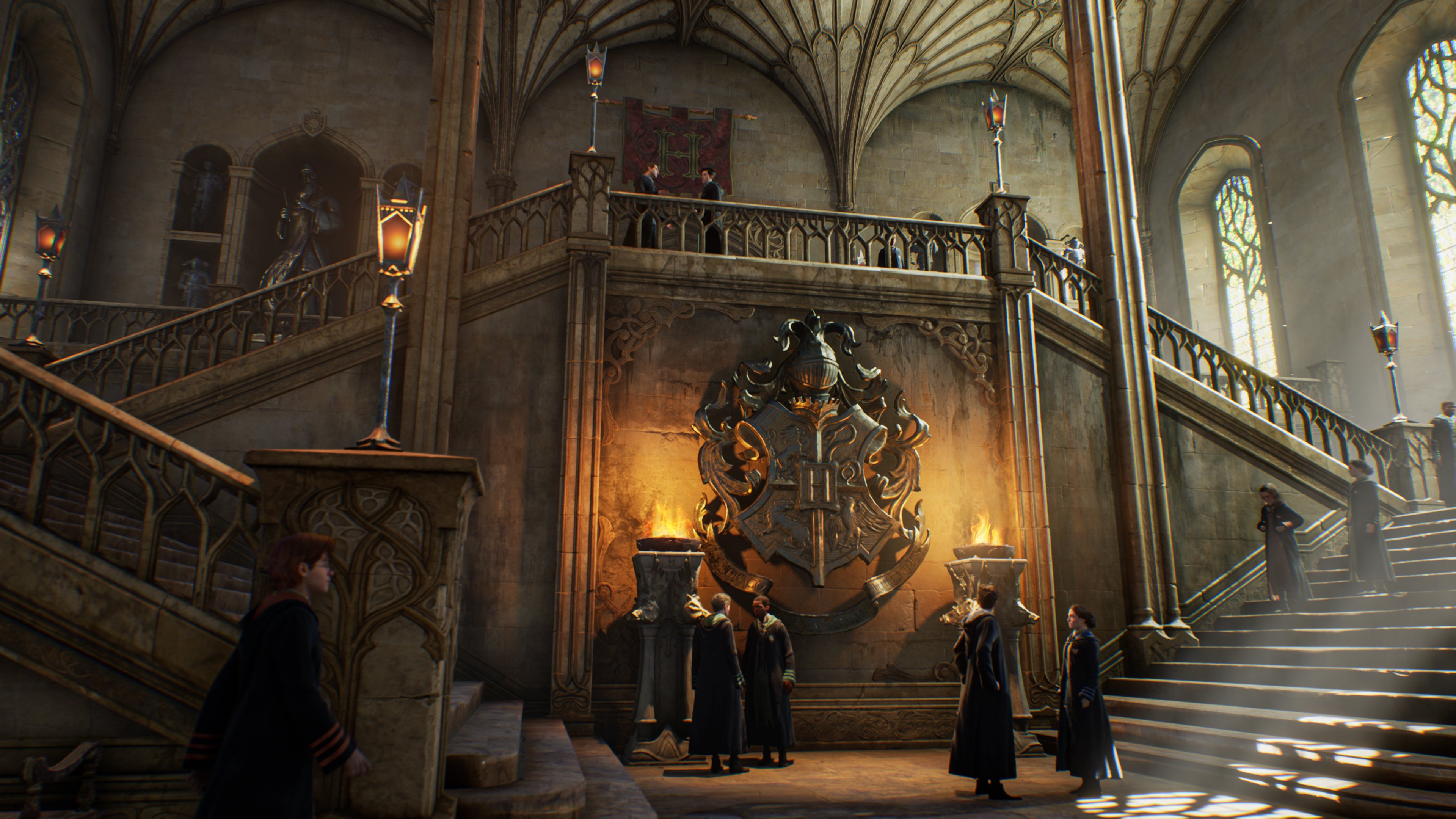
Completing the game by doing just enough requires about twenty hours, while we spent roughly double that. Why? Because exploring every nook of the castle, painstakingly reconstructed with obsessive attention to detail, is so damn fun (spam of "Revelio" included to discover every hidden object); jumping on the broom and flying across the game world, stopping at every enemy camp to clear, every cave to explore, every Merlin Trial to overcome, makes time feel irrelevant and above all completely distracts us from the missions we should actually be finishing. Plus, completing these challenges or secondary collections will unlock cosmetic items or upgrades (like inventory expansion) that will make our lives considerably easier and allow us to tackle the main missions even if we’re slightly over-leveled.
Yes, because even in Hogwarts Legacy — like every respectable RPG — there’s a level-based growth system where experience points can be earned from practically any action taken within the game world. As you level up, you’ll unlock a talent point to further enhance your magical abilities across various areas. Your overall level will also matter when it comes to equipping higher-tier gear, though this gear doesn’t always prove to offer a tangible advantage over your current equipment.
Flipping!
The oldest of the old, like myself, will remember the video game for Playstation 1 "Harry Potter e la Pietra Filosofale" in which, for most of the time, Harry repeated this spell to the limit of his endurance — a spell we were completely unfamiliar with. Twenty-two years later, things have fortunately changed, and Hogwarts Legacy offers us a magical arsenal of considerable quality. It’s unpleasant to do this deep in the review, but I must confess: I had high expectations — and high fears — for this title. I hoped it would succeed, but the constant delays and the usual poor ending that titles inspired by famous brands tend to bring made me fear the worst. Fortunately, however, most of my doubts have been dispelled, and only one remained as I watched the first lessons unfold through the corridors of Hogwarts: how can a magical combat at a distance be made entertaining? Won’t it become repetitive?
It took only a few wand clashes to dispel even this doubt: fighting in Hogwarts Legacy is definitely fun, even if perhaps a bit too easy. We’ll have access to 16 slots to insert spells to use, we can defend ourselves by casting "Protego", which can also serve as a parry by immediately following it with a "Stupeficium", and we can dodge incoming attacks by rolling or, later in the game, teleporting quickly out of the enemy’s line of sight. The spells available are truly numerous and can be combined into impressive combos: for example, disarm a goblin with "Expelliarmus" and strike it with its own weapon, set a spider on fire with "Incendio" and then strike it again to make it explode; levitate a wizard with "Levioso" and then slam him to the ground with "Discendo".
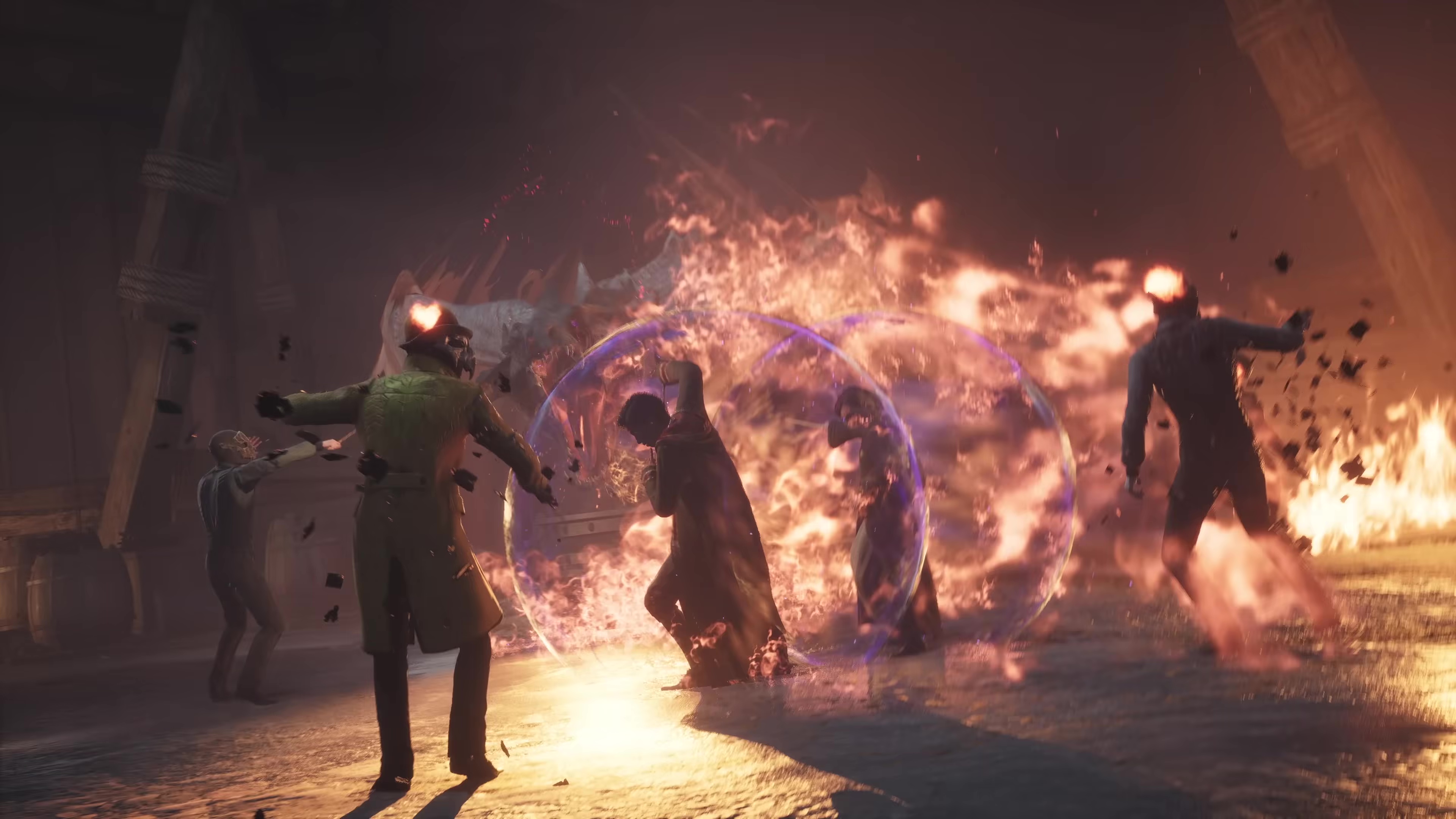
For those who prefer a more stealthy approach, it’s always possible to cast "Disillusionment" to make us nearly invisible, allowing us to flank enemies and disable them with a well-timed "Petrificus Totalus" (in memory of Neville Paciock). Ancient magic can also come to our aid: in addition to enabling us to hurl scenario objects at enemies, once the corresponding bar is charged, we could unleash the fury of ancient magic upon our unfortunate opponent, reducing, for example, a giant spider to a tiny creature and crushing it under our boot; or repeatedly slamming a helpless goblin to the ground; or, why not, transforming an Ashwinder into an harmless chicken.
It will also be possible to use certain potions, beyond those for restoring health, to gain an advantage in battle by, for example, summoning a lightning storm or hardening our bodies like stone; similarly, we can deploy plants, such as Carnivorous Cabbages or Mandrakes, which will primarily act as distractions against our enemies. Spoiler alert: non ho praticamente mai sentito il bisogno di utilizzare nè gli uni nè le altre.
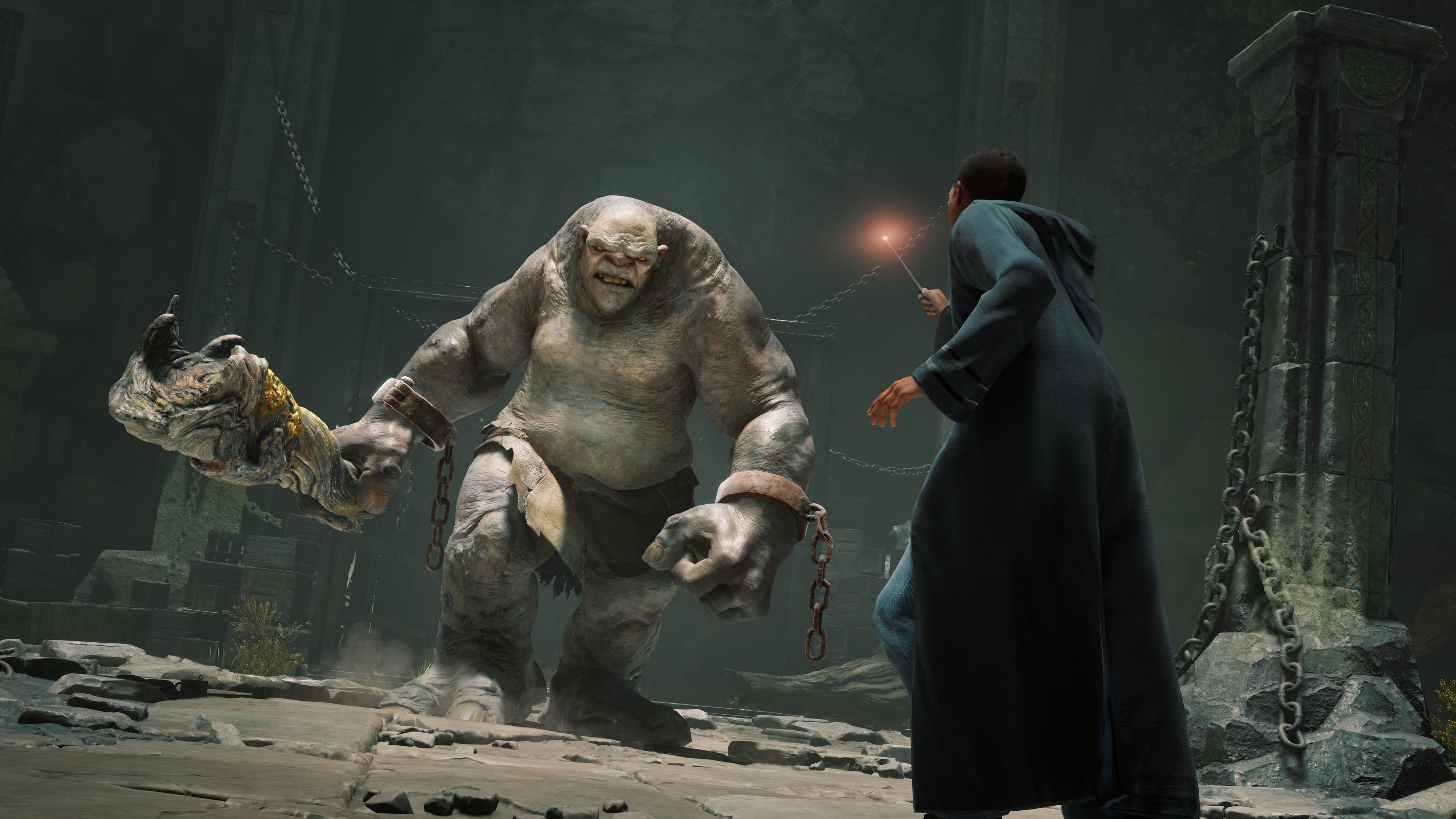
Far less fun the Boss Fight, which reduce to a repetitive casting of spells towards actual sponge-like health pools with boring, repetitive attack patterns. No, we’re definitely not here.
And if the magical arsenal doesn’t disappoint, it’s certainly the variety of possible enemies we’ll face that makes it so — there are only a handful of magical creatures and wizards we’ll encounter, and it seems a bit lazy to consider the vast array of magical creatures already existing in the Wizarding World.
P.S. Flipendo is also here, the feels guys, the feels...
A little bit of Life-Sim
I knew about its existence from the trailers released in the months leading up to its release, but the life-sim component of Hogwarts Legacy was the one that, honestly, excited me the least. I’m not a fan of this genre; I own a Nintendo Switch but have never played Animal Crossing, to make it clear, and the same thing happened with Avalanche’s title. Around the fifteen hours of gameplay, you’re introduced to The Necessities Room, a room in the castle that appears to those who desperately need something — precisely what they need. In practice, it becomes for us a kind of alternative to the dormitories of our own House, which, incidentally, are rather useless since in the game, you can’t sleep but can only “wait”, so often, if a mission is tied to the day-night cycle, we’ll end up lying on the floor like helpless, unproductive zombies, only to wake up as if nothing had happened, ready for a new day/night.
Inside the Chamber of Necessities, we can arrange furnishings and accessories as we please, but what will truly be useful will be the potions workbench, for distilling battle-ready concoctions (or at least having them readily available), and the herbalism workbench, for cultivating the plants necessary for those concoctions. Essential will be the Mallowsweet petals, required to activate Merlin’s Trials, so make sure you always have a handful in your inventory. Later, we’ll also discover the utility of a desk where “revealing” certain hidden drops, a mechanic common in many RPGs, and finally a magic frame, to enhance our clothing
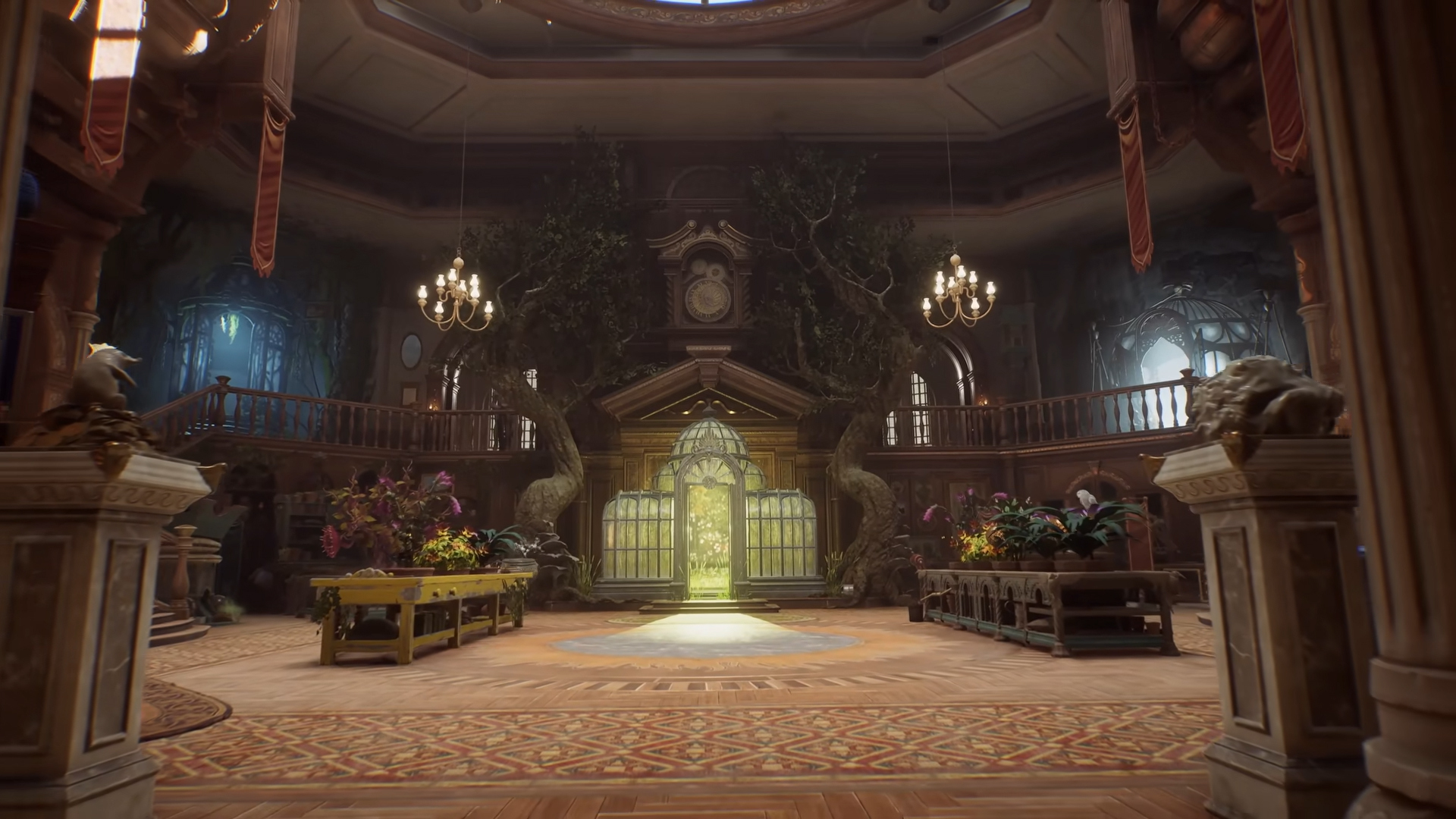
Later in the adventure, the Chamber expands further, revealing additional space and, above all, magical connections to pleasant places where we can peacefully house magical creatures we previously captured from nature. Now, here I face a moral dilemma: what is the benefit of capturing creatures that live peacefully in their habitat and transporting them to our Needs Chamber — where we will treat them well, grooming them and feeding them as needed — yet where they will still be confined and no longer free? And mostly exploited to obtain essential items to improve our gear? In the game, among various enemies, there are Poachers — hunters — and often within their territories we’ll find trapped animals that we can free with a touch of Alohomora. Why is what the poachers do ethically unacceptable, while what we do? It’s not that different...
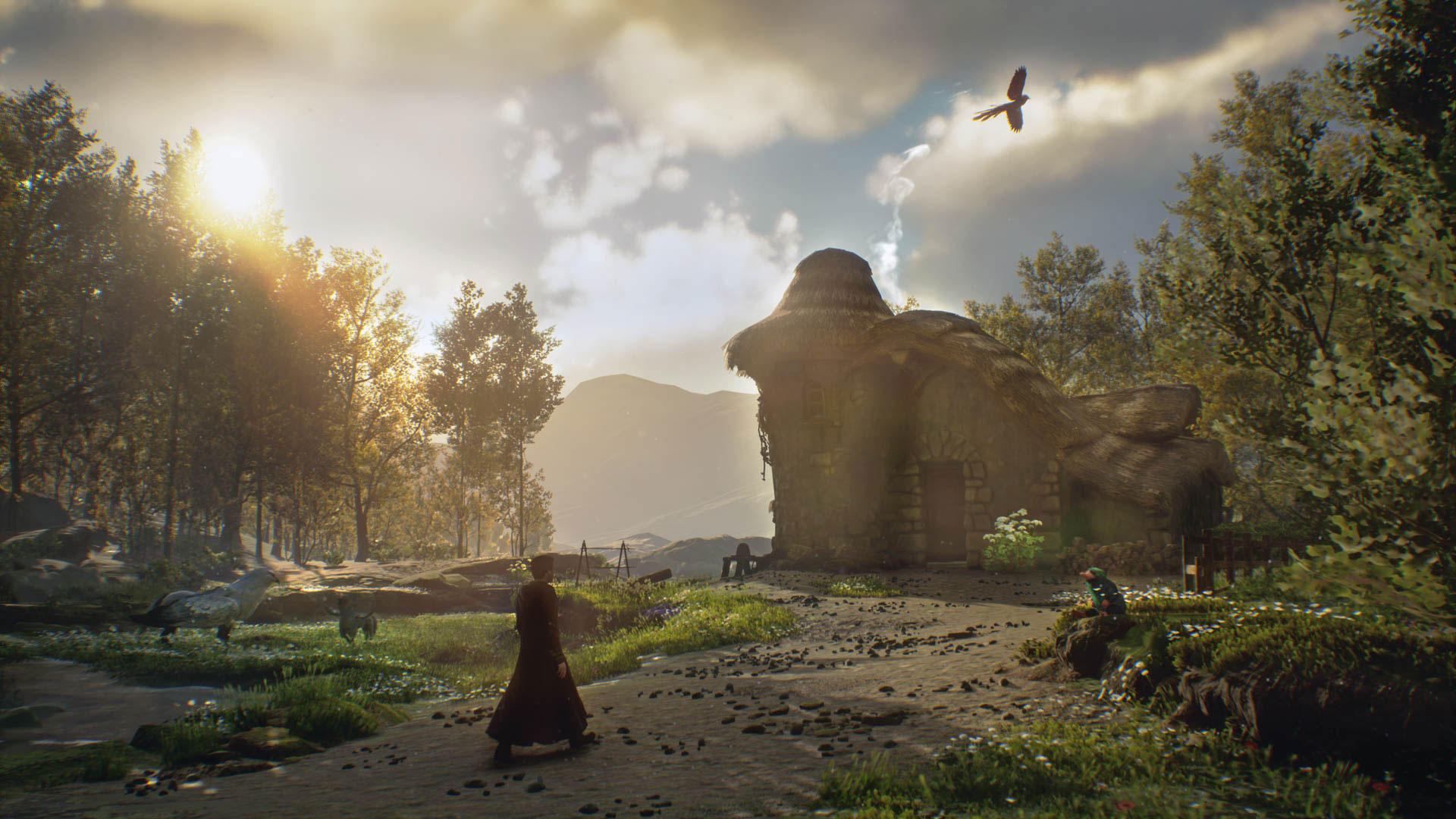
Apart from this is not the only inconsistency in the title. I agree that this is not meant to be, and never has been, a Hogwarts student Life-Sim, but our heroine abuses her destined status a bit: she goes out at night, even outside the castle, without any problem, she wanders through the Forbidden Forest as if it were just any bush, violates others’ private property and steals their belongings, uses her wand in school corridors and no one flinches... in short, you need a huge dose of suspension of disbelief to overlook the fact that our protagonist mocks a whole series of laws and rules that will apply, a century later, even to the famous Enrico Vasaio.
Technically speaking
We tested Hogwarts Legacy on the following setup with all settings at maximum, DLSS enabled on Auto:
AMD Ryzen 7 3700x @ 3.60 GHz
Gigabyte RTX AORUS Master 3080 Ti 12Gb
Corsair Vengeance RGB RT 32GB DDR4 3600MHz
LG 34GN850 Monitor at 3440x1440 (21:9)
Ahimè, one of the most significant flaws in the title lies precisely in the technical department. An extremely fluctuating frame rate, especially within the walls of Hogwarts, which occasionally dips into the dreaded 30fps territory, yet never consistently exceeds around 70fps. All this with GPU usage rarely surpassing 50% and CPU usage rarely exceeding 40%. Avalanche Studios has crafted an astonishingly beautiful world to live in and behold, but unfortunately still has much work to do to make it enjoyable to traverse. A trend, the poor optimization of AAA titles, which we hope will diminish rather than persist, since Hogwarts Legacy is certainly not the only recent release suffering from such issues. Nor are there lacking minor bugs such as random T-pose glitches or small glitches that nonetheless have no impact on the gameplay experience.
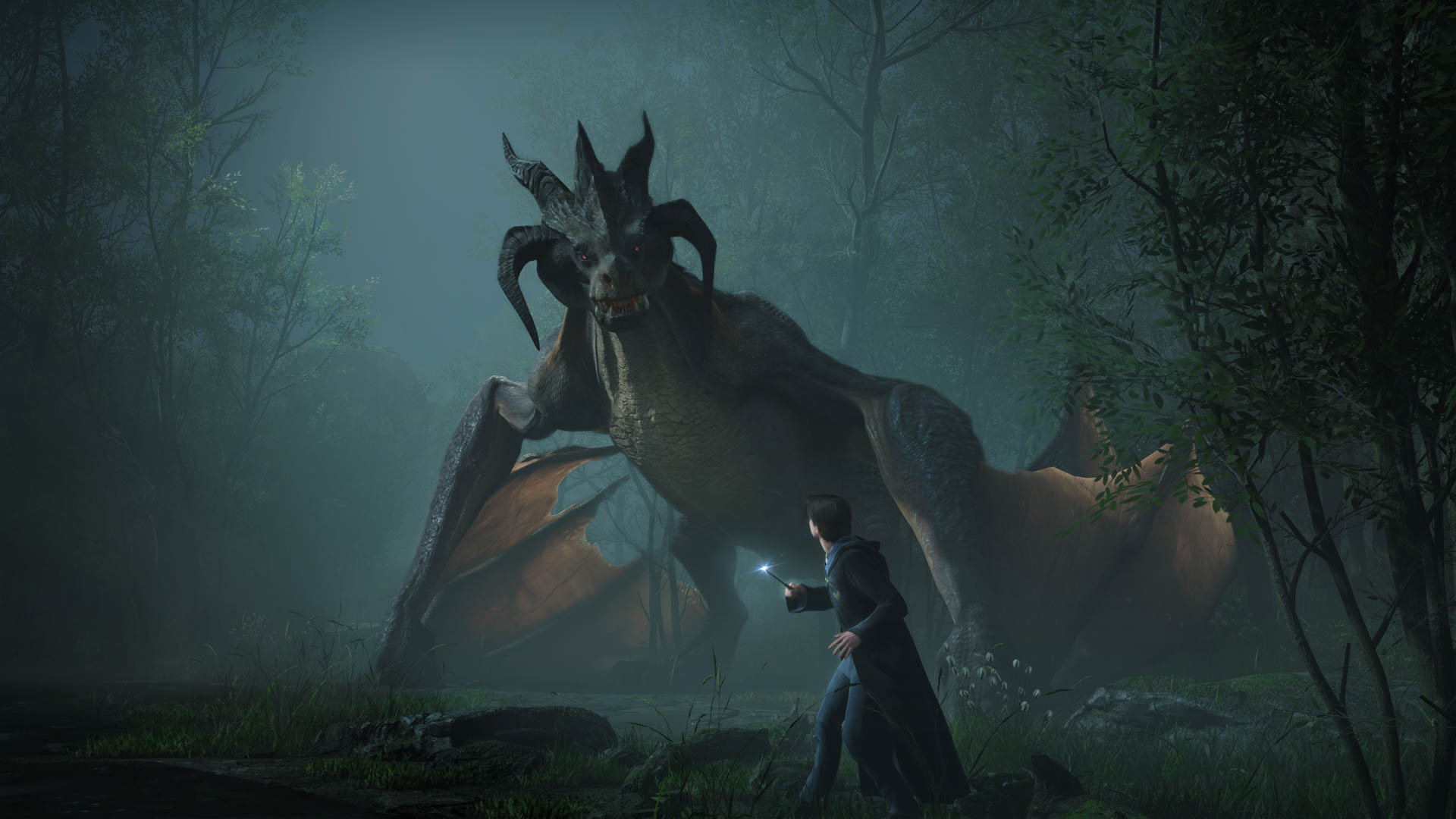
The art direction, on the other hand, is truly divine, you genuinely feel as though you’ve been catapulted into the Scottish Highlands at the end of the '80s, into that magical world we’ve always wanted to live in, videogame-wise, truly. Avalanche has managed to realize this dream for many fans, and, for this alone, we must give credit and praise to the young people who worked day and night on this title.
From an audio perspective, the soundtrack reuses the original music with a few thematic variations, but the magic woven into those notes remains and will always be immortal. I played the title with the original English voice acting and can say I’m mostly satisfied, with the exception of a few secondary characters whose performances are a bit less impressive.
In conclusion
Hogwarts Legacy is like the admission letter to Hogwarts that the author, like many other fans, had been waiting for over 25 years. The critic’s eyes see an Action-RPG like so many others, at times even a bit mediocre; but the fan’s eyes can only marvel at being able to fly over places that were once merely imagined, fight using magic like never before, attend lessons as a true student of Hogwarts School of Witchcraft and Wizardry. The Avalanche title suffers from a somewhat bland and cliché-laden main plot, and, just like the saga it draws inspiration from, also features a protagonist and villain who are not particularly charismatic. To compensate for this, there is an immense quantity of content that is gradually revealed during our adventure, making the game’s longevity, theoretically, far beyond the 20 hours needed to “rush” through the end credits.