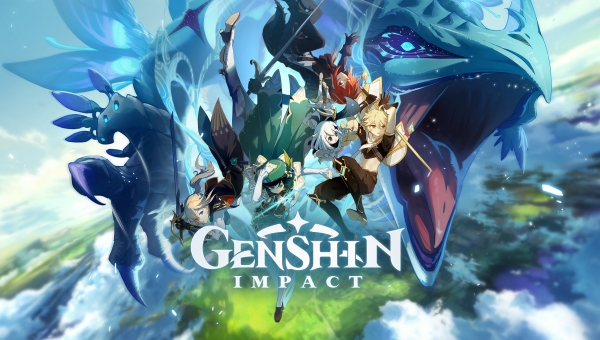
"Made in China". How many times have we seen this phrase on clothing, toys, shoes, and other items? A phrase often associated with counterfeit or low-quality products. Well, this was my thought, I admit it, the first time I saw a trailer for Genshin Impact. The visual style immediately seemed like a blatant copy of "The Legend of Zelda: Breath of The Wild" and, given that Chinese video games are not rare in blatantly plagiarising more popular titles, I fully categorised Genshin Impact in that group. I decided, however, that I would still try it when it came out, having no opportunity to experience Nintendo’s masterpiece at the time, lacking a Switch. The 28th of September last year, that moment arrived...
...and damn it if I’ve changed my mind.
This content is provided by YouTube. To view it, you must allow external content. Activation may result in data being shared with the third party.
Welcome to Teyvat
Genshin Impact is an action-RPG free-to-play developed by the Chinese studio miHoYo, already known for another very popular mobile game, Honkai Impact 3rd. The title falls into the category of gacha games, games featuring a "pull" mechanic for characters and equipment, very similar to the machines where we used to insert a few coins kindly provided by our parents to obtain a small toy or a game of any kind. For a more contemporary example, think of the "loot boxes" in various Overwatch or Apex Legends (just to name a few), with the only difference being that in gacha games you don’t gamble for purely cosmetic items, but for playable characters or weapons they can wield, thus elements that will significantly alter and expand your gaming experience.
Released for Windows PC, PS4 and Android and iOS devices (with a Nintendo Switch version coming soon), Genshin Impact supports cross-play and cross-save, allowing us to begin our adventure comfortably seated on the sofa at home, then resume it at any time from our mobile device — a great feature for those, like me, who are university students commuting regularly and often spend several hours daily on the train.
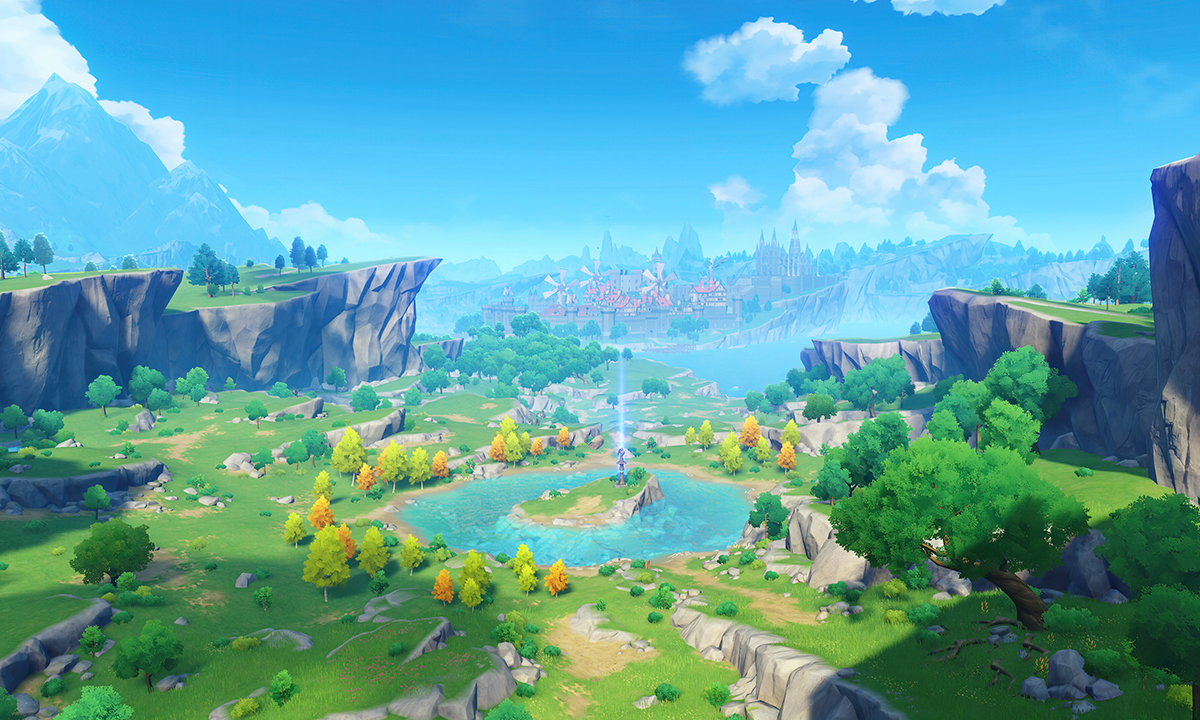
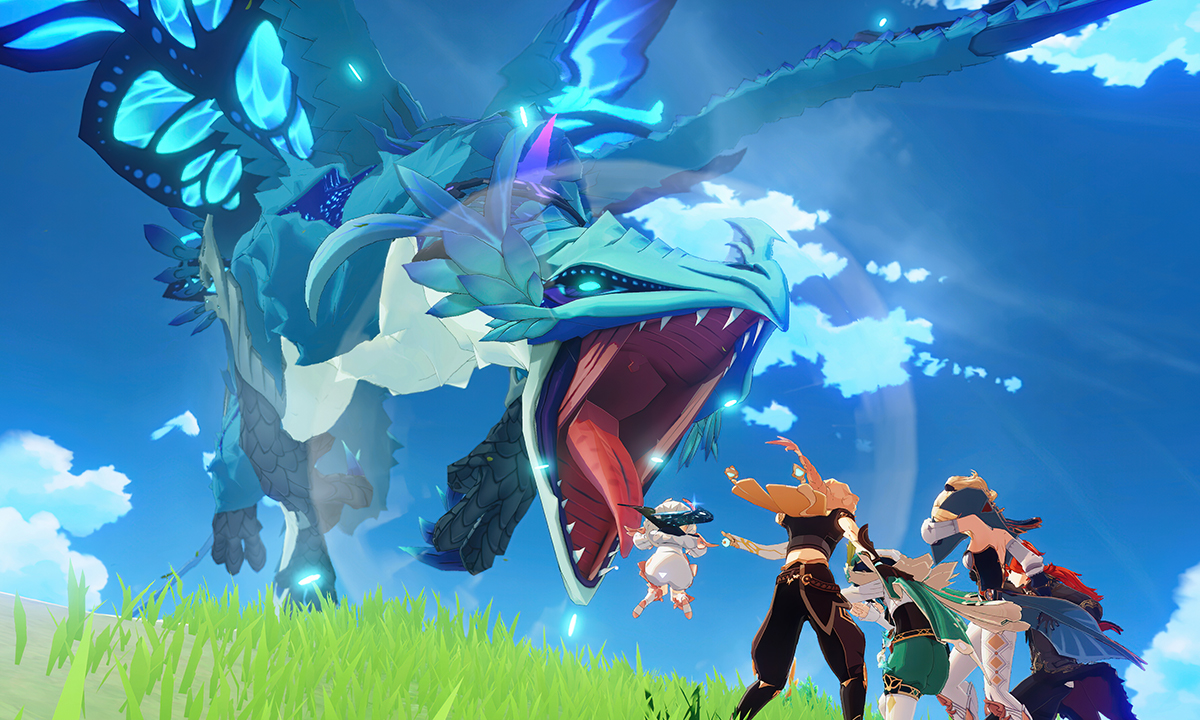
The title is set in Teyvat, a spectacular medieval-fantasy world in which some individuals, including the protagonist we’ll control, possess the Vision, namely the special ability granted by one of the seven deities to control one of the seven elements and exploit it to their advantage. The beauty of the setting, enhanced by the impeccably realized graphics—clearly inspired by the final chapter of the Zelda saga—leaves you speechless from the start. The thoughtful use of cell-shading, combined with delightful watercolor coloration, never tires the player’s eye, but instead encourages them to explore every corner of the game map, in search of breathtaking vistas to capture in screenshots. Exploration is indeed one of the core components of Genshin Impact, yet this aspect never grows stale or repetitive—it’s also highly rewarding: hidden chests, lootable items, or encounters with enemies are always just around the corner, and completing these seemingly secondary activities will allow us to raise our Adventure Rank.
The Adventure Rank will indeed be essential for unlocking quests that allow us to advance the story, as well as unlocking features that will gradually, without ever overwhelming us, introduce us to all the mechanics and activities the developers have planned. For example, the in-game shop is unlocked only at Adventure Rank 5, co-op combat with friends at level 16, the battle pass at level 20, and so on. The Adventure Rank is therefore essentially a running total of EXP accumulated from all activities we will undertake, whether tied to the main quest or not. In this way, regardless of our approach to the game — whether hardcore or casual — the sense of progression, at least in the early hours, will remain constant.
Strong Alone, Stronger Together
Although our adventure begins with a single character, the Traveler, one of the two main brothers between whom we will choose, soon our party will be joined by new entries. In Genshin Impact, we will control up to 4 characters, constantly interchangeable both in and out of combat. Each of them is equipped with a different Elemental Vision and combat style. Initially, we will have access to characters offered for free by the game, who will join our party as we progress through the Main Quest.
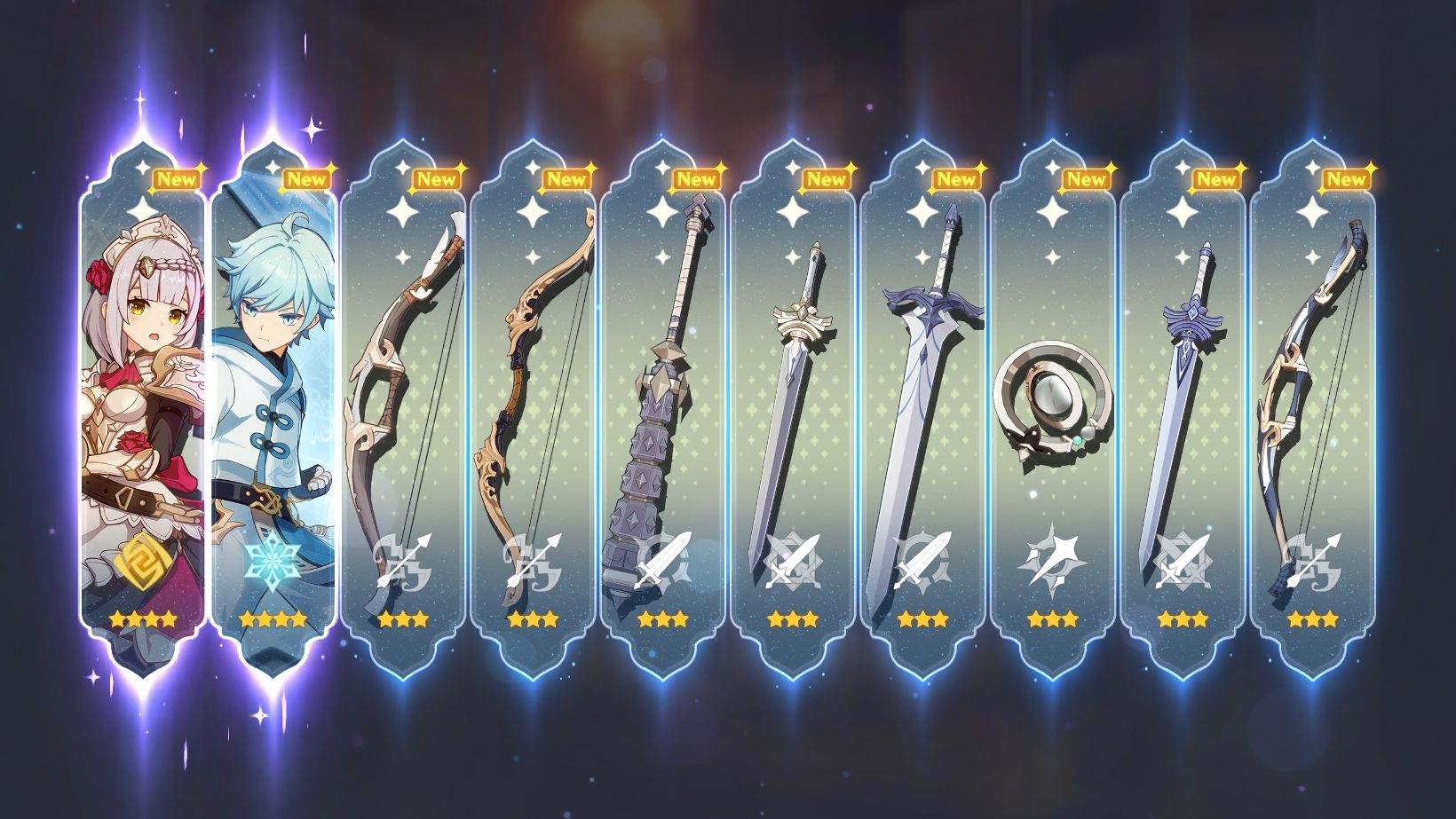
To expand our roster further, we’ll need to make “Wishes”, which are simply the typical pulls of the gacha system. By spending the various in-game currencies, we can attempt our luck in trying to acquire new and powerful characters who will fight for us. Although this may raise an eyebrow with some, it’s worth noting that, at least currently, progression isn’t strictly tied to obtaining characters of the highest tier; furthermore, something rarely seen in similar titles, in some quests we’ll be offered the chance to use the most powerful unlockable characters, allowing us to genuinely assess their abilities and playstyle. Of course, this is primarily designed to encourage players to make more pulls, perhaps even pulling out their credit card, but honestly, within our twenty hours of experience, the game is absolutely not a dry-waiting experience for the player, in fact, rewards are plentiful and allow for multiple pulls without spending a single cent.
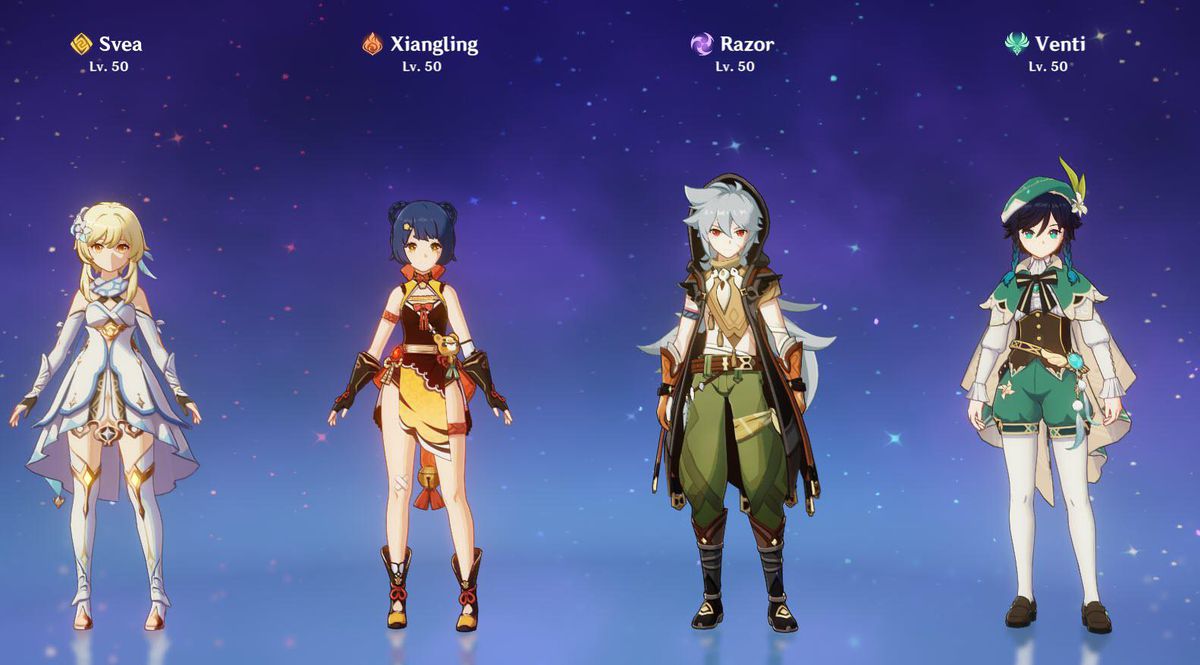
Each character can be equipped with a specific weapon, short swords, Claymores, bows, magical tomes... Additionally, there are 5 amulet slots that contribute to increasing our stats. Weapons, characters, and amulets can be leveled using scrap items or special items that grant experience exclusively. This will be the practically exclusive method for leveling our characters, since combat experience is virtually non-existent. The amount of items obtainable simply by playing is nevertheless more than sufficient to easily level at least a full party. Weapons and characters obviously have level caps that can be surpassed by reaching a specific Adventure Rank and gathering the necessary items for Ascension, i.e., surpassing the level cap to higher and higher power levels.
Master the Seven Elements
As we mentioned, we’ll be able to control up to four characters simultaneously, and it’ll be important to build the party carefully, ensuring we optimally combine the elemental abilities possessed by our allies. Although the combat may initially appear to be an overly simplistic and repetitive hack 'n' slash, with all characters possessing only one standard attack combo and two abilities — a normal one and an ultimate one — what truly adds depth to the combat system is precisely the opportunity, or rather the necessity, to exploit the elemental properties of our characters. We can use Pyro heroes to set enemies’ shields alight and destroy them, or ignite grass to create an area-of-effect fire damage for enemies camped nearby; alternatively, we can deploy Cryo heroes to reduce enemies’ Stamina regeneration.

Each element can also be combined with the others, creating even more powerful effects: fire and water trigger Vaporize, inflicting bonus damage; water and ice cause the enemy to freeze, giving us precious seconds to deal heavy damage to helpless foes; electricity and water will inflict electric damage to enemies as long as they remain wet. The combinations are truly endless, and it becomes increasingly important to constantly switch our heroes in battle, so that they can combine their elemental powers to deal as much damage as possible. In this intricate puzzle of possibilities, the environment enters the picture, with its climatic or morphological characteristics, which we must learn to exploit to our advantage: for example, to fight enemies in aquatic environments, it will be mandatory to use Cryo or Electro heroes, so as to inflict freezing and prolonged electric damage over time.
A story... disregarded
We may be approaching what I consider the game’s greatest weakness: the script. the biggest weakness of the title: the script. Counting that what’s currently playable is only the prelude, or barely more, of the story that will unfold in Genshin Impact, I haven’t found a clear reason to continue my adventure in Teyvat beyond the narrative’s progression. Although there are characters you can easily fall for (Paimon <3), most of them are nonetheless extremely stereotyped, and the game’s plot utterly lacks originality. The issue is that from a free-to-play gacha game, it’s normal to not expect much in terms of storytelling, but Genshin Impact has such a high overall quality that you almost forget you’re not playing a triple-A Action-RPG.Long, inconclusive dialogue, sometimes dull and poorly synced with the characters’ lip movements, and main quests heavily delayed by the need to advance the Adventure Rank before continuing, all contribute to making Genshin Impact’s story a secondary element — and for many, skippable.
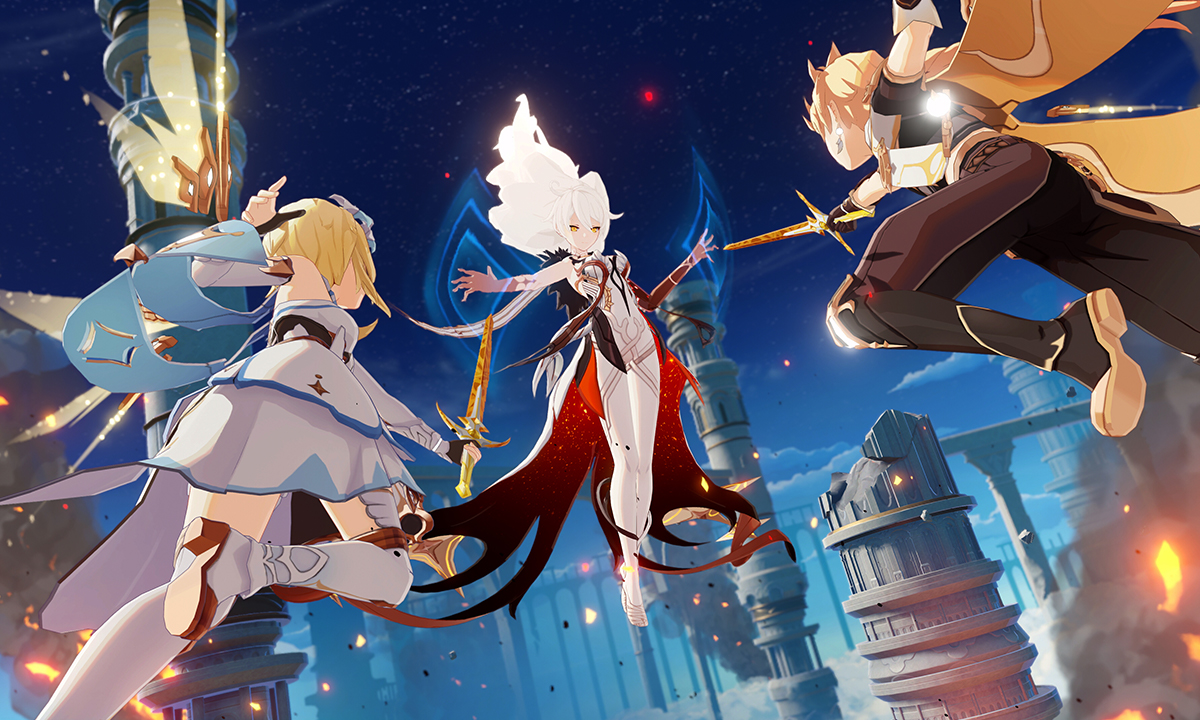
Genshin Impact is fully playable solo, to the point of seeming like a single-player game. The co-op component is present and unlockable later in the adventure, but, alas, it represents another wasted opportunity. Theoretically, you could team up with three other players to collaborate and tackle the most daunting foes. In practice, unless you’re helping a friend in trouble, the co-op is practically useless, as it comes with limitations, such as being unable to earn shared rewards or open chests during sessions — truly heavy and almost punitive, which has discouraged us from continuing the adventure with others.
Technically speaking
We played Genshin Impact almost exclusively on PC, via the dedicated launcher, at 3440x1440 (2K Ultrawide, fully supported), with a sturdy 60FPS frame-rate, even in the most intense situations. Unfortunately, the frame-rate is currently locked, to avoid creating an excessive discrepancy with the PS4 and mobile versions, likely.
In short, the visual experience is jaw-dropping: exploring the medieval fantasy world designed and built by miHoYo’s developers is a true delight, pushing the player to climb mountains, glide through valleys, and inspect every corner of a map that is truly massive and constantly expanding. Currently, players can visit the town of Mondstadt, with its surrounding fields, and the region of Liyue, clearly inspired by Chinese folklore. In the next major update, the region of Inazuma will also be unlocked for players, this time inspired by Japanese culture and landscape.
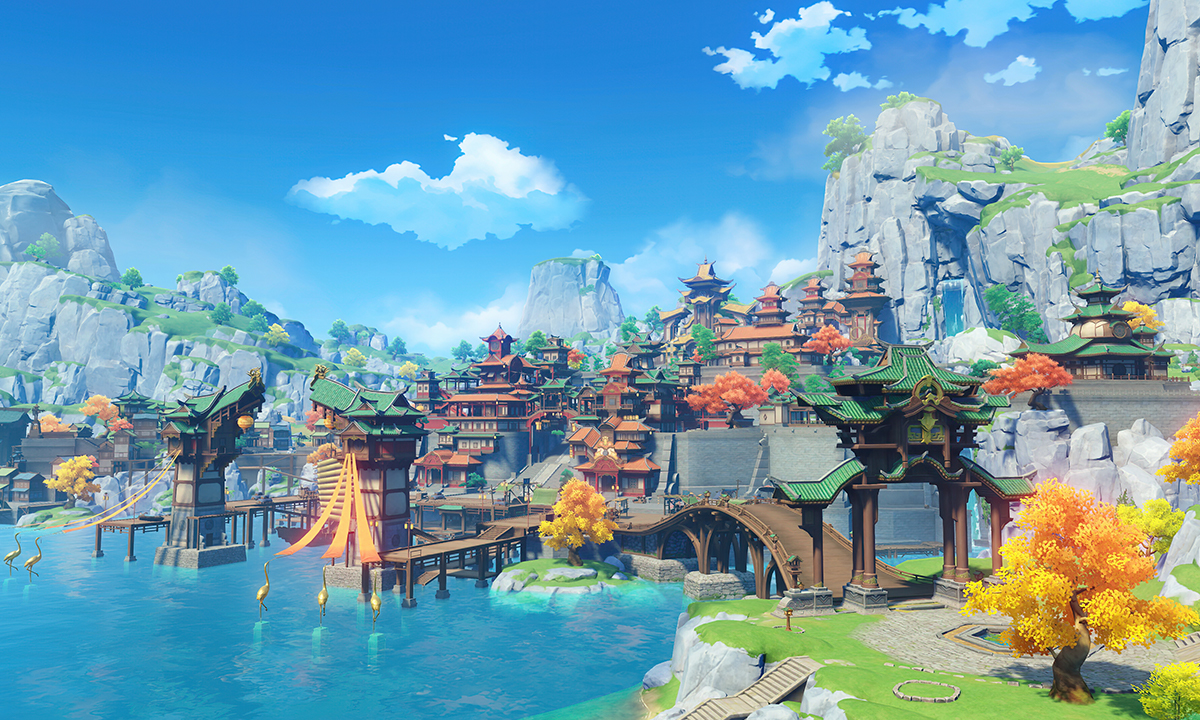
But it’s not just the eyes that enjoy the light effects and the thoughtfully crafted color combinations — the ears too, as they are accompanied throughout the adventure by a relaxing soundtrack that enables full immersion in the fantastical world imagined by the developers. The only note out of tune are the loading screens, blindingly bright with their intensely luminous white, which, especially during nighttime sessions, have certainly irritated our retinas.
To conclude...
Genshin Impact represents certainly a unique entry in the vast landscape of Asian action-RPGs. The exceptional production quality that defines miHoYo’s work almost makes you forget that we’re facing a free-to-play gacha game, and the enormous quantity of content currently available (and destined to expand in the future) makes even more renowned productions seem pale by comparison. With its fairy-tale atmospheres in anime style and top-tier music, the title has already achieved massive popularity even in the West, where more than 5 million pre-registrations have been recorded (compared to 16 million in its home country), making it the Chinese title with the best launch in history. Despite some originality flaws, Genshin Impact compensates with sublime art direction, an enormous, fully explorable game world, and a gameplay that is sufficiently deep and satisfying, enriched by more than 20 playable characters, with many more coming soon. Although it is a gacha game, the shop is absolutely non-intrusive, to the point that at first you might even struggle to understand where and how to spend real money, and once you grasp this, you realize that, at least for now, it is absolutely unnecessary to do so in order to fully enjoy the journey through the exotic Teyvat. In short, what more can be said? Download it and you’ll see that it will manage to win over even the most sceptical, as was the case with the author himself.
About the Author