

Green is one of those games you understand practically at first glance. Pastel colours, small creatures to care for, structures to place, and a deliberately calm pace, almost devoid of any form of pressure.
The cozy city builder from Antimeta Studio, published by Assemble Entertainment, doesn’t aim to challenge the player with complex economies or cities to save from collapse: it simply wants to provide a relaxing space in which to build something charming and watch it grow.
And in this, it must be said immediately, Green works.
The problem is that it seems to stop exactly there. Everything is pleasant, everything works as it should, and very little truly bothers. At the same time, however, few elements are capable of leaving a strong impression or creating that urge to return immediately to one’s own small, vegetal world.

A small world inside a jar
The idea behind Verde is certainly charming.
We take on the role of the eponymous protagonist, a young mage with a passion for gardening who joins the Gardening Club dell'Accademia di Magia. Our task is to care for small worlds contained within jars, gradually bringing them back to life and creating a suitable habitat for the Seedlets, tiny plant creatures that will begin to populate what we build.
The botanical theme permeates practically every element of the experience: homes, shops, decorations, and structures seem to sprout directly from the ground, and the visual language remains consistently tied to nature.
It’s a simple but spot-on premise, especially since it gives the classic city builder cozy an immediately recognisable identity. However, don’t expect major surprises. Verde presents her idea, develops it in order, and rarely truly attempts to go beyond.

The story: more tutorial than adventure
The narrative component remains deliberately light.
The Story mode is mainly designed to guide the player through discovering the various mechanics, gradually introducing buildings, resources, new biomes, and the needs of the Seedlets via a series of very simple objectives.
The setting of the Magic Academy, the Gardening Club, and the characters we meet add a touch of personality, but the plot never becomes the true driving force of the experience. In practice, the story mainly serves as a long tutorial.
This is probably the most consistent choice with Verde’s philosophy: no particularly dramatic events, no pressure, and above all, very few real chances of making a mistake.
Progresses with extreme calm, completing one mission after another and gradually unlocking what will be needed to expand one’s small settlement.
It works, but it’s unlikely that the narrative curiosity will push you to continue.
Gameplay: build, satisfy, decorate
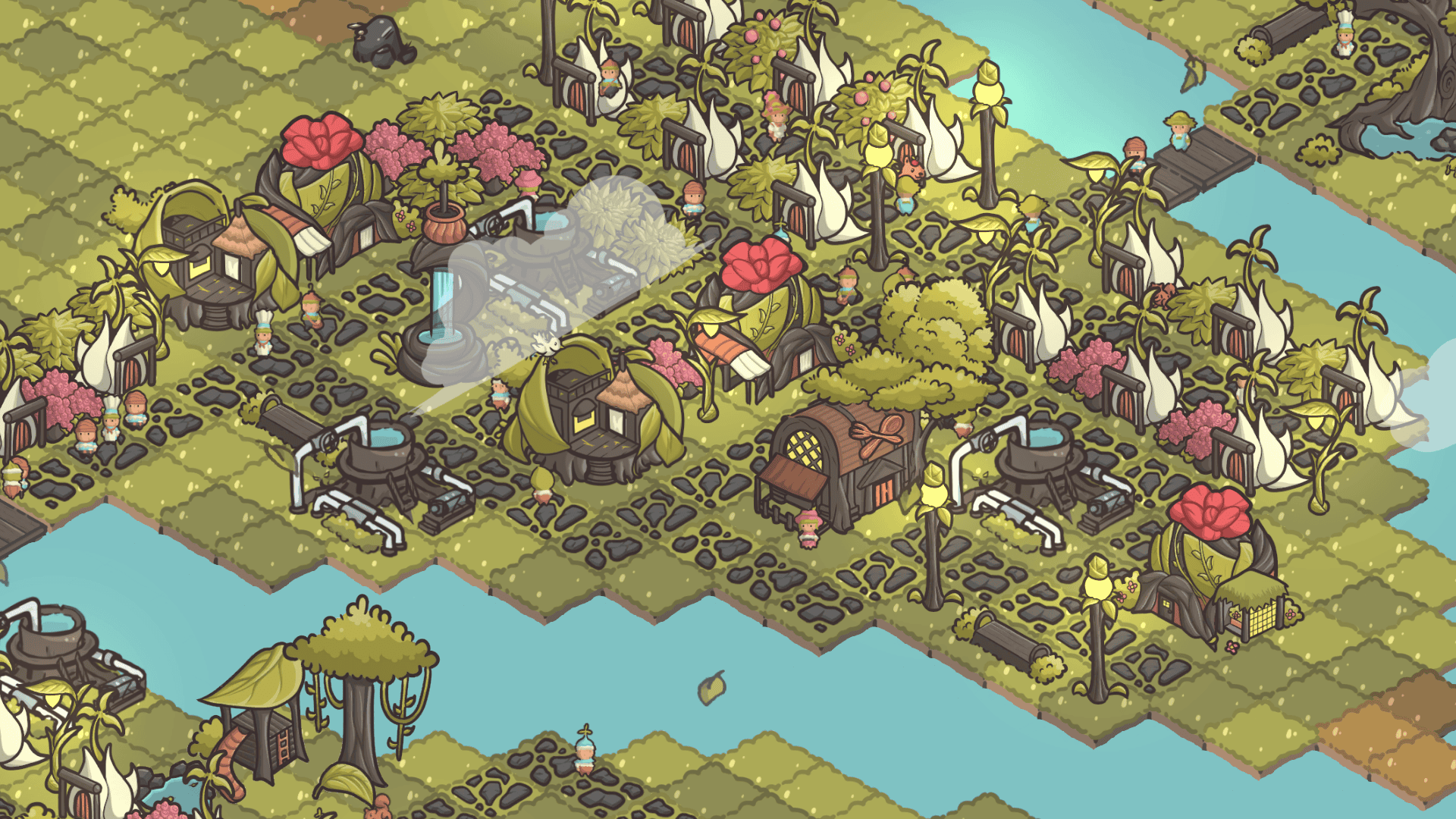
The heart of Verde is that of an extremely simplified city builder.
Houses are built to increase the population of Seedlets, followed by structures capable of meeting their needs. Water, nutrients, entertainment, and other services must be distributed across the area, paying special attention to the range of influence of the buildings. Happy Seedlets produce leaves, the primary resource used to continue building and expanding the village.
The core cycle is this: build, increase population, satisfy a need, obtain more resources, and build again.
There’s no true pursuit of efficiency, and Verde rarely expects every inch of the city to be optimised. You can naturally consider building placement and seek better configurations, but the game always leaves plenty of room for aesthetics and personal creativity. It’s precisely here that one of its best features emerges: Verde doesn’t intend to punish the player.
There are no sudden catastrophes, economies ready to collapse, or particularly harsh systems. Even a city built without much attention generally continues to function.
Apart from the Story mode, there is a Creative mode, which allows free building with everything immediately available, and a Sandbox mode that retains some resource management but offers greater freedom.
Progression also leads to the discovery of different areas of the map, including green, desert, and snowy zones, introducing additional needs such as heating and cooling.
The system is intuitive and after just a few minutes one already has a clear understanding of practically everything that Verde requires... it is simultaneously its strength and its limitation.
Why, at the start, seeing the jar fill with small houses, shops and Seedlets is pleasant, but over time a certain repetitiveness emerges. Many buildings perform similar functions and the build-need-resource cycle changes very little.
You can continue playing without much effort, but it often lacks that new objective, that mechanic, or simply that surprise capable of truly reigniting interest.
Green is relaxing. Perhaps too much.

Personalisation: the most successful aspect
A significant part of the experience is fortunately dedicated to personalisation.
Many buildings offer aesthetic variants and different colours, while numerous decorations allow you to transform your settlement into something more personal.
For those who primarily enjoy building for the pure pleasure of creating a pleasant environment, Verde probably delivers its best here.
The game allows you to momentarily forget about objectives and simply focus on roads, plants, buildings, and small details.
There remains a certain feeling of limited variety, especially when the same structures needed to meet the population’s needs are repeated multiple times.
The possibilities exist, but they don’t always conceal the underlying simplicity of the systems involved.
Graphics
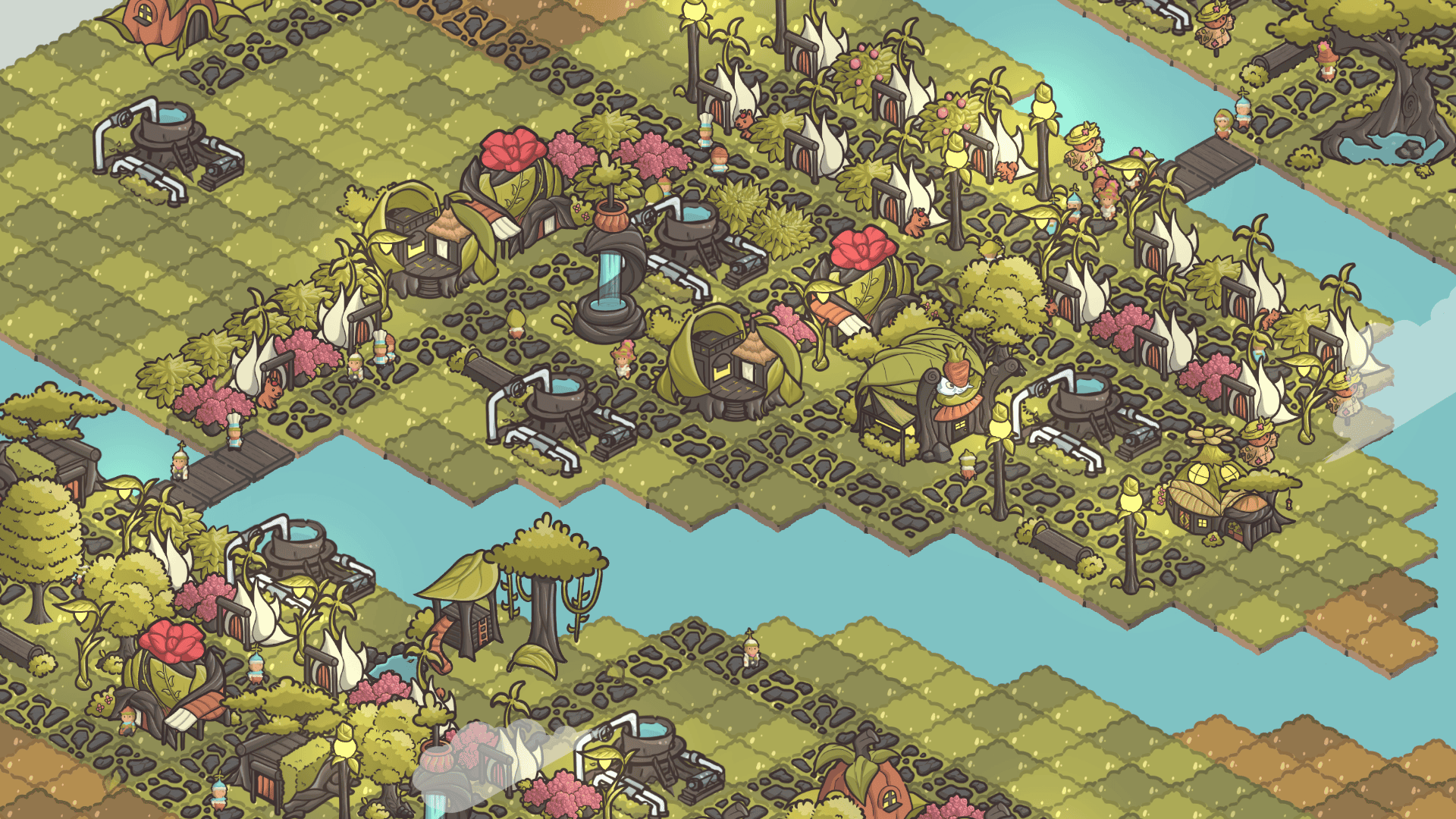
Visually, Verde has a consistent and pleasant artistic direction.
The hand-drawn 2D style, isometric view and soft colour palette build exactly the cozy atmosphere the game wants to convey. The Seedlets are endearing, the buildings have an immediately legible design and seeing an initially empty area gradually transform into a small village filled with elements remains satisfying.
The transition between the different settings manages to slightly break the visual monotony. However, I wouldn’t describe it as a memorable artistic direction.
It’s all nice, tidy and pleasant, but I rarely stop just to observe something or because particularly impressed by a new area.
Green has no obvious visual issues: he simply prefers a safe and consistent solution over one that is truly surprising.

Audio
The audio department also follows exactly the same philosophy.
Calm music, subtle effects and no particularly intrusive elements perfectly accompany the long sessions dedicated to building.
The soundtrack does exactly what it should in a game of this kind: remains in the background. Perhaps even too much?
After shutting down Verde, I find it hard to recall a single specific musical theme. Not because the audio was poorly produced, but because it seems designed primarily to avoid disturbing.
It’s pleasant while you’re playing and practically invisible afterwards.

Conclusions
Green is probably one of the simplest games to judge that I’ve come across recently.
It’s well done. It’s cute. It’s relaxing.
The mechanics work, the graphics are pleasant, the controls are easy to understand, and I found nothing that seriously undermines the experience.
At the same time, however, after several sessions I kept feeling that something was missing. Not necessarily a specific mechanic or greater difficulty.
Rather that little spark capable of turning a simply enjoyable game into something you genuinely want to reopen.
Green builds its identity around the absence of stress, simplicity, and the freedom to create. It is an entirely legitimate choice, and for those seeking exactly this kind of experience, it can work very well.
The flip side of the medal is an extremely predictable progression.
You build something, watch the Seedlets arrive, meet their needs, and proceed to the next stage. Then to another jar. Then to another area. Everything flows.
Perhaps this is exactly the best definition of Green: a game that runs smoothly without ever truly bothering, yet also rarely manages to surprise.
I can’t point to a genuinely flawed element, nor do I struggle to identify one that sticks in my mind. It’s a small cozy, honest experience, accessible and well-packaged, which does exactly what it promises.
Nothing less. But also a little more.

About the Author