During the digital era of cinematography, the post-processing work on acquired footage is impressive. One can spend so much time adjusting the parameters of the various clips that make up the film that it effectively amounts to shooting the same scene multiple times.
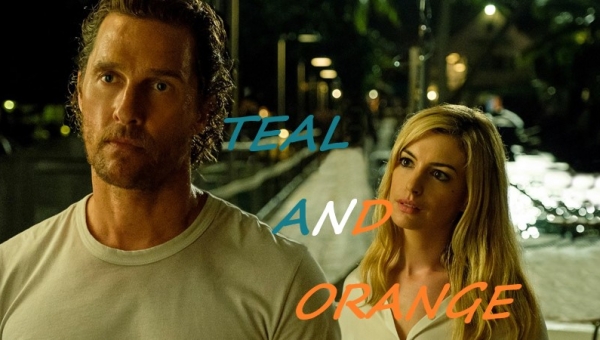
A particular technique used in the filming of the new movies is so-called Teal & Orange.
This technique relies on highlighting the actors’ skin to better guide the human eye watching the film. In simple terms, contrasting colours are used as backgrounds or surrounding the character framed, opposite to human skin tones, which generally lean towards orange — in this case, blue-green or “Teal” in English.
The actor stands out thus through the complementarity of colours, that is, when two colours added together produce a white achromatic light.

Although it is clear that it is not a wrong technique, it is being used more and more, and in some cases to an excessive degree, transforming natural colours such as white or grey into a blue palette to create contrast.
There’s such a pervasive use in some films that “natural” colours are completely distorted just to create a little extra contrast for the protagonist — when have we ever seen entire shops painted blue? Yet in films like “Glass”, here we see that comic books and shelves, which are themselves white, become subtly tinted with a blue hue

In Gemini Man the night streets and their lights emit blue light

In Avengers the destroyed buildings and their ashes are tinged with orange

And so we can keep going on to emphasise that it doesn’t matter what genre the film belongs to or how it’s shot — in fact, it’s even more inappropriate to use this effect in “The Revenant”, where it had been marketed as having used only natural lighting, but then, as soon as it’s needed, they also go to great lengths to turn the forest turquoise, forgetting the dark green of the trees that make it up and the brown of its branches.

As previously stated, it is not the effect itself that is the issue — nothing is wrong with the intention to highlight our actors — the problem lies in the desire to apply such an effect to every single film until it becomes excessive, forgetting natural colours in favour of a unique, faded, orange or blue tint.
Fortunately, at the moment, no game imposes such colours, leaving the effect confined to the game covers. A light will be lit tonight in the hope that this remains so.

About the Author