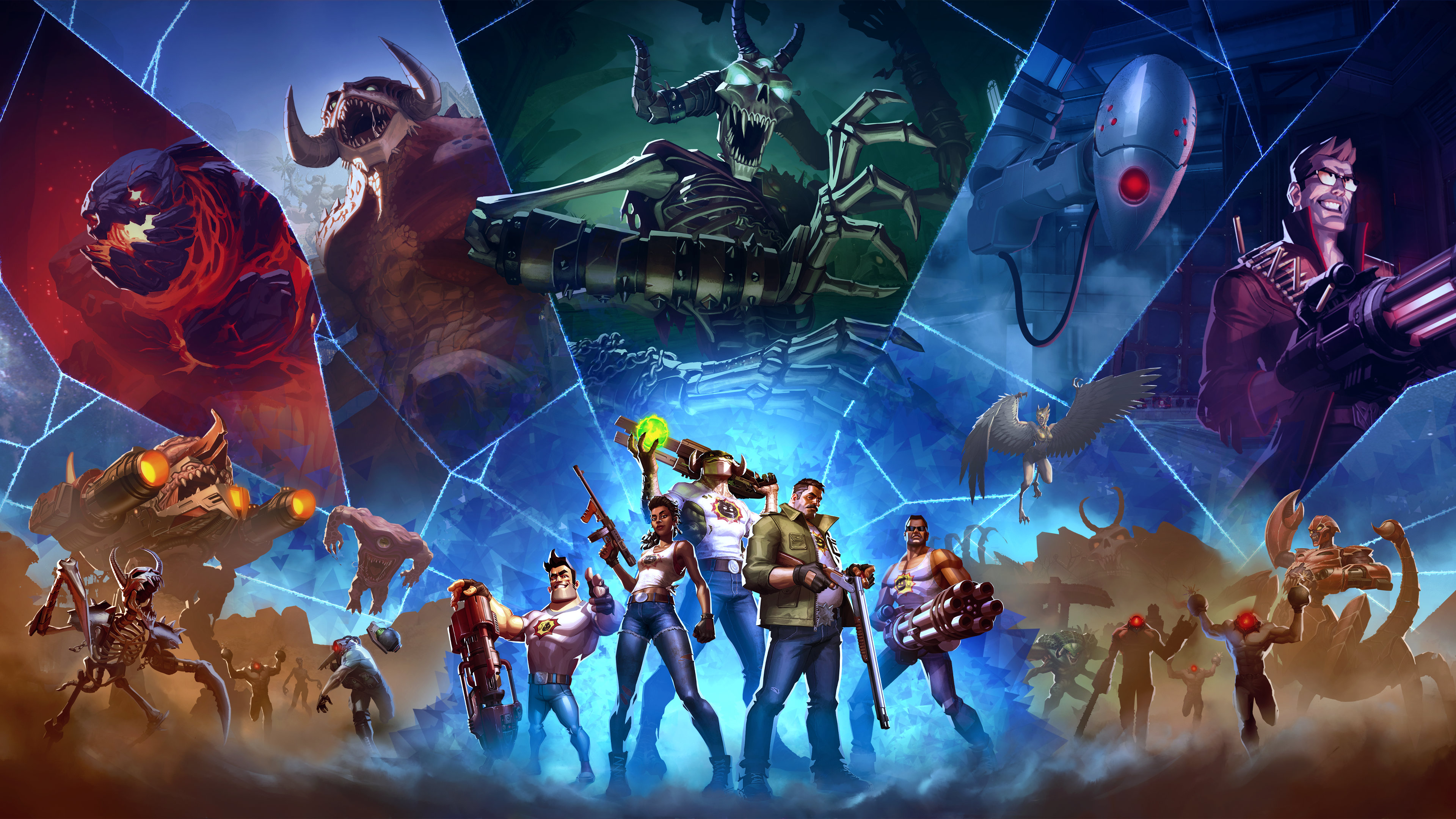
When you tackle a saga that has shaped not just a genre, but the media itself, it’s genuinely hard to create a product that satisfies both longtime fans and new audiences simultaneously. In fact, however, turning Serious Sam into a co-op roguelike wasn’t, on paper, such an absurd idea. Indeed: waves of enemies, arenas to clear, over-the-top weapons, and a progression built around constantly seeking ever-more-destructive combinations seem like perfect ingredients for a formula of this kind. Serious Sam: Shatterverse, developed by Behaviour Interactive and published by Devolver Digital, attempts exactly to take this path, allowing groups of one to five players to traverse alternate universes, collect upgrades, and face the forces of Mental one run after another.
The problem is that Shatterverse seems to understand only partially what makes both Serious Sam and a good roguelike enjoyable. There are moments when chaos finally takes shape, arenas fill with enemies, and the game delivers that instinctual satisfaction typical of boomer shooters. Too often, however, one must endure excessive grinding, questionable balancing choices, and underdeveloped systems before reaching that feeling. The result is a spin-off with some good ideas, but unable to fully exploit either the name it carries or the structure it has chosen to adopt.
This content is provided by YouTube. To view it, you must allow external content. Activation may result in data being shared with the third party.
So it's Serious Sam?
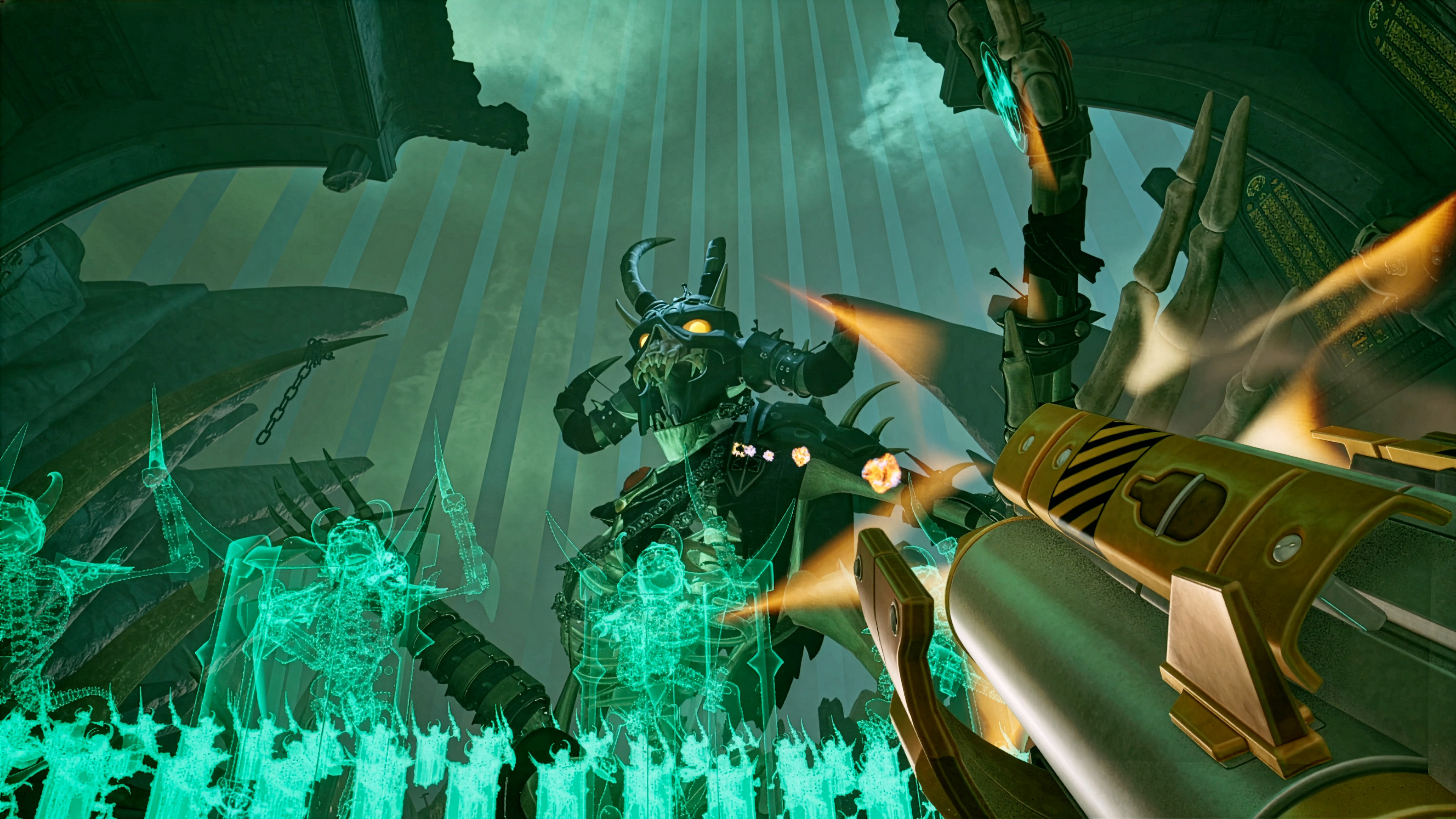
The first question arises almost spontaneously: how much of Serious Sam is actually in Shatterverse? Aesthetically and narratively, enough to recognise the brand. The various versions of Sam retain the usual action-hero attitude — incapable of solving a problem without blowing it up — interspersed with deliberately stupid jokes, enormous enemies, and environments that occasionally openly evoke the series’ past. Some scenarios, especially those closer to the classic Serious Sam iconography, even manage to evoke a certain nostalgia. On the gameplay front, however, the distance from the main chapters is evident. Shatterverse is not simply Serious Sam with roguelike elements, but an arcade shooter built much more around permanent progression, perks, trinkets, rare equipment, and character abilities. Those seeking the massive arenas of the main series, immediate control over hordes, and a rapidly available arsenal will therefore find themselves facing something surprisingly different.
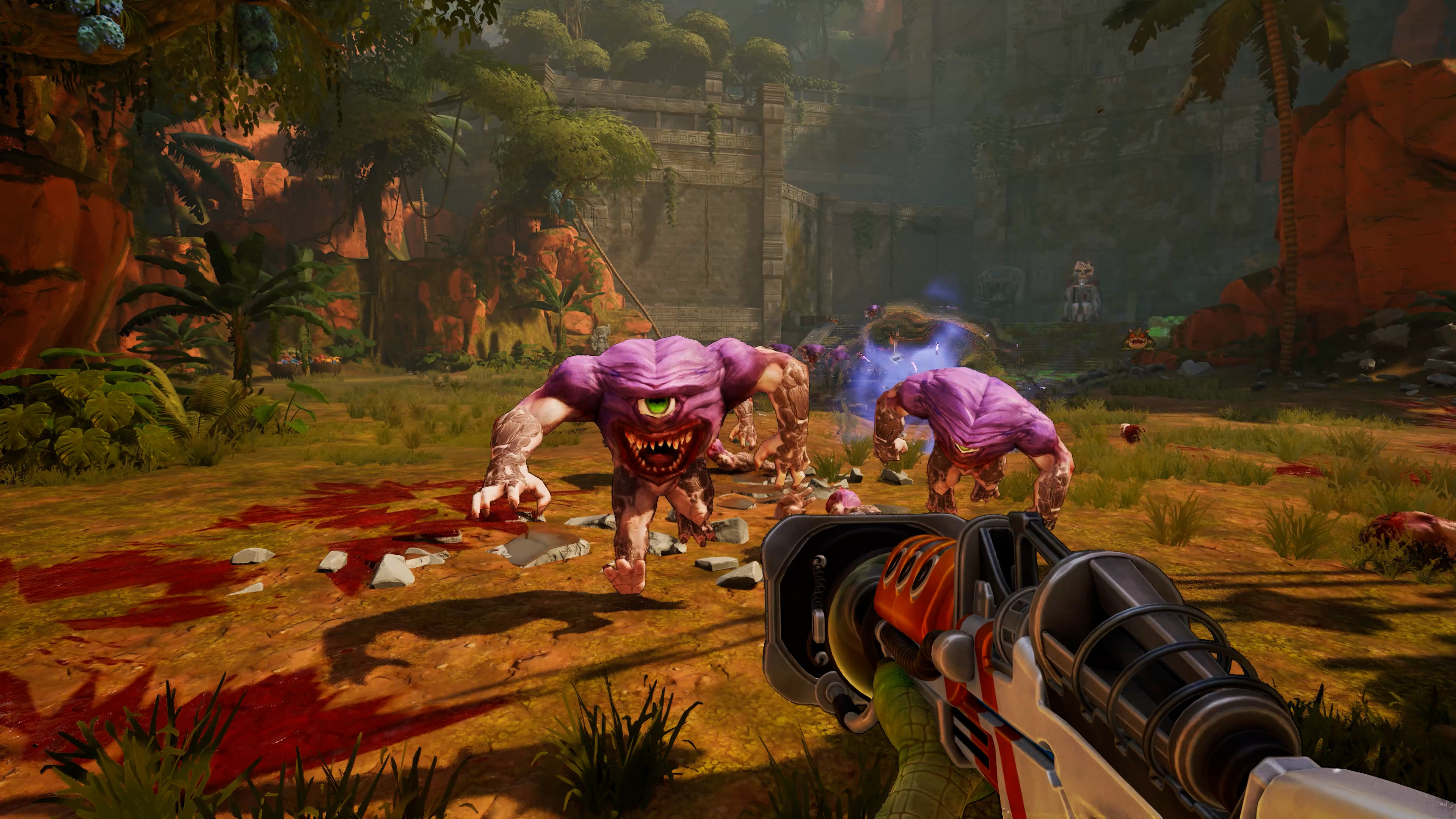
The cooperative mode for up to five players definitely helps to highlight the formula. When the arena fills up, enemies come from all directions and the team starts combining weapons, abilities, and upgrades, Shatterverse reaches its best moments. The problem is that the movement feels slightly floaty and less precise than expected, while the gunplay often lacks the physicality needed to support a game almost entirely built around the pleasure of shooting. Shots, sounds, and weapon feedback generally feel underwhelming. The pump-action rifle at least manages to deliver a decent sense of power at close range, but the pistol and initial Thompson feel extremely anonymous. It’s especially a problem in the early hours, because the game inexplicably decides to show its least interesting version precisely to new players.
Yeah, but nothing serious...
It becomes clear from the outset that the most obvious limitation of Shatterverse is progression. The first run is approached with an extremely limited initial selection, consisting essentially of a pistol, shotgun, and machine gun. Much of the most interesting weapons, modifiers, and customization options become available only later, through the currency earned by completing runs. The concept of starting weak and gradually building a stronger character is fundamental in many roguelikes. The problem is the pace at which Shatterverse distributes this growth. The game demands you grind through runs before you’ve even demonstrated why it’s worth your time.
A single run typically lasts between 45 and 60 minutes, and the first act essentially serves as a massive tutorial. Enemies deal minimal damage, health is generously distributed, and the limited arsenal makes combat far less spectacular than one might expect from Serious Sam. Reaching the truly interesting part therefore requires enduring a long, repetitive, and paradoxically unrepresentative introduction. From the second act, things improve. Difficulty increases, combat pressure and density grow, and the arsenal’s expansion finally allows for the construction of more interesting builds. The weapon prefixes also manage to significantly alter certain firearms, restoring some of the personality missing from the base versions. However, several balancing issues remain. Some weapons are clearly more useful than others, certain categories quickly become irrelevant, and many rewards end up appearing as mere statistical variations rather than genuine opportunities to change strategy. Facing a new weapon that offers only minor percentage differences compared to the one already wielded fails to generate the curiosity that should fuel a run.
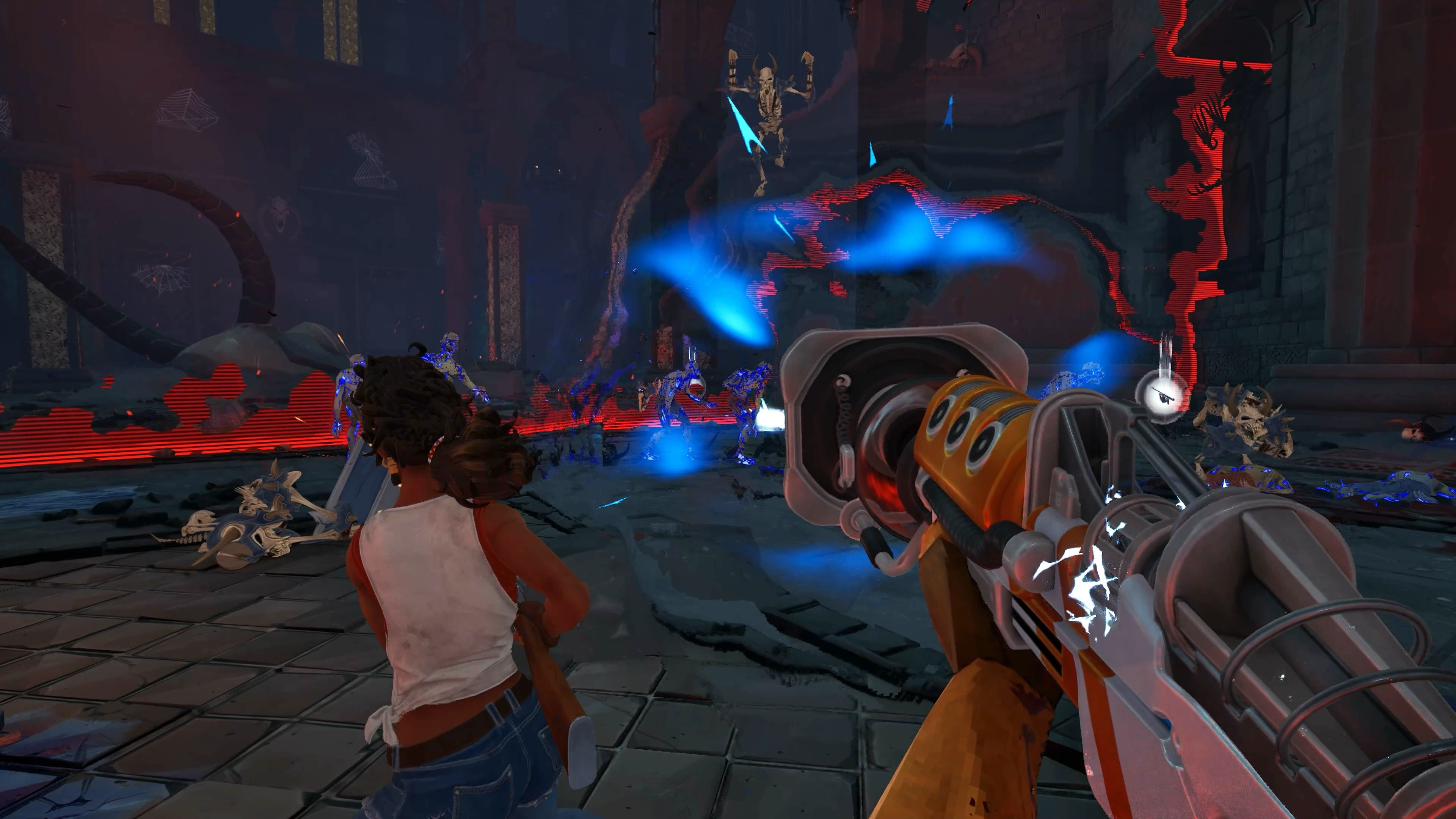
The same goes for the Intel, essentially purchasable during matches. Many simply adjust a value by percentage, while others appear to conflict with the proposed game type: bonuses requiring the player to remain stationary, for example, don’t mesh well with an FPS built around constant movement, jumps, and relentless pursuers. Abilities that directly reward aggression and precision work much better, such as those that boost the character while maintaining a high kill streak.
More successful is the Trinket system, which can be equipped between runs. Up to six can be carried, and combining them into sets yields bonuses, adding at least a decent level of planning to the meta component. It’s a good idea, but once again, the amount of hours required to build truly interesting configurations makes the system less satisfying than it could be.
Do (too) ut des (too late)
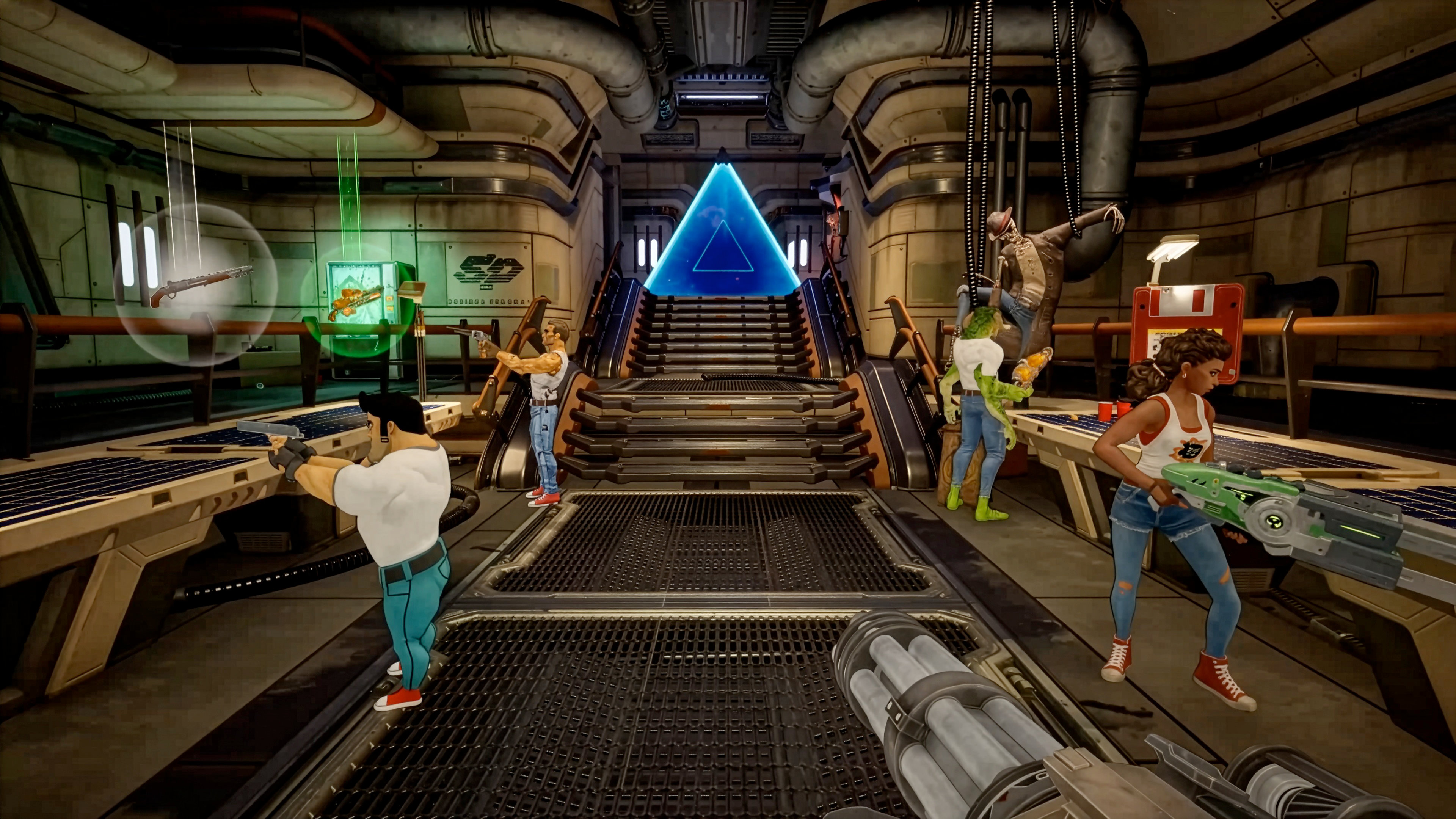
The presence of five different versions of Sam represents one of the most recognisable elements of the spin-off. Each character has specific bonuses, passive abilities, and their own Catalyst Ability. The differences are sufficiently evident to encourage some variation in playstyle, especially once you begin to understand which weapons best exploit each Sam’s unique traits. The special abilities, however, rarely reach the spectacle level one might expect. In a title that constantly unleashes dozens of enemies against the player, it would be natural to anticipate devastating, deliberately exaggerated powers capable of turning the tide of battle. Many Catalyst Ability upgrades instead hover between minor utility improvements and choices so superior to alternatives they become practically mandatory. There’s simply no progression towards a true power fantasy that makes many roguelikes rewarding. Shatterverse certainly allows you to become more powerful, but rarely delivers the sensation of having built a combination so absurd it transforms a run into an uncontrollable spectacle.
Even the bosses show a rather inconsistent quality. Some offer more phases and variations capable of keeping attention high, while others become extremely predictable once their pattern is understood. The enrage that triggers when the fight lasts too long increases attack speed, damage, and attack duration, but often ends up turning a poorly chosen build into an almost unavoidable condemnation. Complicating matters further is the choice to link part of health recovery to melee executions. During fights against multiple enemies, the system creates an interesting dynamic: you must learn when to approach a target and risk it to regain energy. In fights against bosses that summon few or no enemies, however, the mechanic loses all effectiveness.
Even the difficulty doesn’t really manage to evolve convincingly. As you level up, enemy health points, Elite frequency, and general stats increase significantly, while the required strategies remain largely unchanged. The Elites themselves are often tougher versions of already familiar foes, without new patterns capable of seriously altering the player’s priorities.
Technically backward
Technically, Shatterverse leaves some questions. While not particularly impressive graphically, it demands substantial resources—especially when settings are increased. The visual difference between high and maximum presets is often modest compared to the performance impact, making it sensible to reduce some parameters without losing much in terms of aesthetics. The art direction alternates between pleasant environments and others that are far less distinctive. Scenarios that openly reference Serious Sam work significantly better, while areas dominated by few colors and more generic geometries seem to belong to any shooter. Even the boss cutscenes, pre-rendered and integrated into gameplay in an unrefined manner, sometimes evoke a sense of dated product, unintentionally.
There are a few minor issues: AI that can get stuck in geometry, weapon selection that’s not always convenient, an interface that could be improved, and some oddities in the maps. None of these make Shatterverse unplayable, but they contribute to the overall impression of a project hitting the market with several rough edges still to smooth out.
Even the constant dialogue between the various versions of Sam divides easily. The deliberately stupid humour is part of the series’ DNA, but here the volume of repeated jokes and conversations becomes rapidly intrusive. After several runs, the same lines are reused too frequently, sometimes even overlapping with NETRICSA’s interventions. Considering the repetitive nature of the roguelite genre, a greater variety—or simply a more sparing use of dialogue—would have certainly helped. And it’s precisely in this repetition that the real problem lies. After the first act and unlocking the first interesting weapons, Shatterverse improves noticeably. There are fun fights, successful arenas, some enjoyable bosses, and a decent number of systems to build around. In co-op, it’s even easier to ignore its rough edges and embrace the chaos. But a good roguelite should manage to make nearly every run feel like a step forward, even a small one. Here, you too often end a match without truly feeling closer to a new interesting discovery. The game possesses weapons, characters, powers, and modifiers capable of making it more fun, but it seems strangely determined to make us earn them through its least successful parts.
In conclusion
The idea of a Serious Sam roguelite still makes sense, but Shatterverse fails to fully exploit it. After the first few hours, weapons, modifiers, and combinations become more interesting, but the path to getting there is too slow, and the grinding ends up stifling part of the fun. Even when the game clicks, the gunplay remains underwhelming, rewards are often negligible, and variety struggles to sustain the repetitiveness of the runs. In co-op, it still manages to deliver some good moments, especially when waves, explosions, and builds finally start working together. Yet, these are sporadic flashes of potential that remain largely unexpressed. Shatterverse isn’t a bad game, but it’s a half-successful experiment, pleasantly entertaining in small doses, too limited to leave a lasting impression.
About the Author